Plant Profile & Key Characteristics
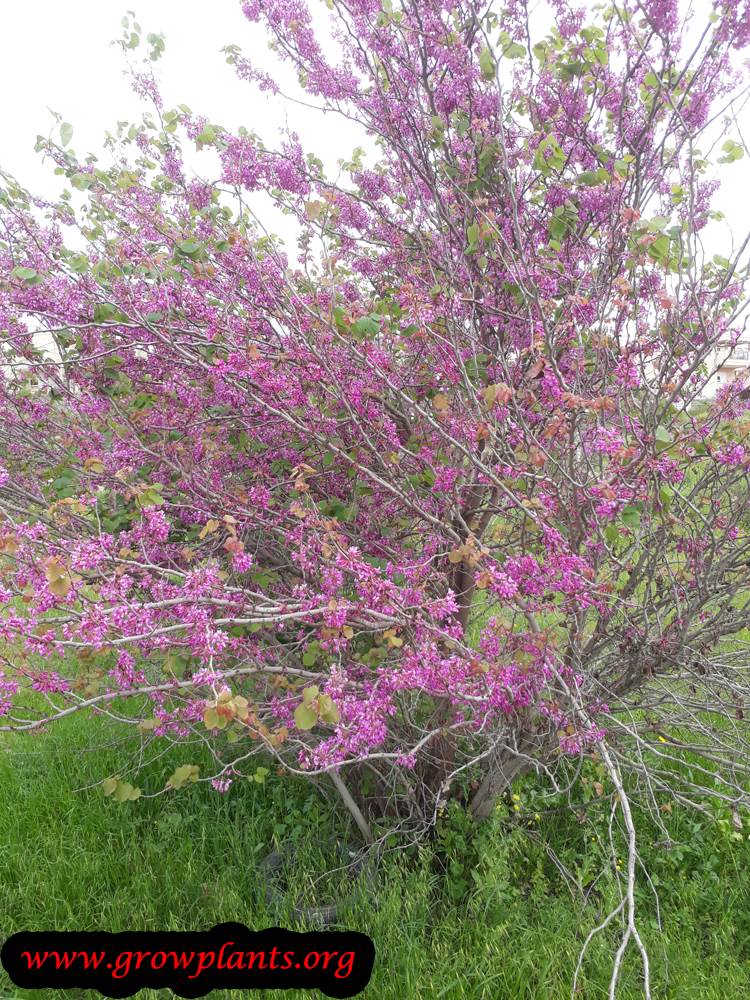
Overview: A small deciduous tree, typically 3-12 m (12-36 ft) tall, grown as an ornamental for its purple spring flowers that open along the bare branches. It is a perennial legume tree valued in Mediterranean and subtropical gardens.
Quick Specifications
| Specification | Attribute |
|---|---|
| Plant Type / Life Cycle | Perennial (deciduous tree) |
| Foliage Type | Deciduous |
| Mature Size | 3-12 m (12-36 ft) tall |
| Growth Rate | Fast to moderate |
| Toxicity | Non-toxic; flowers are edible |
| Hardiness | USDA zone 5-10 |
Growth Form & Structure
- Height & Spread: 3-12 m (12-36 ft) tall depending on water and warmth; can be kept smaller in a large container.
- Growth Habit & Form: Small rounded tree, often multi-stemmed.
- Lifespan & Maturity: Long-lived perennial tree; fast-to-moderate growth to full size.
Anatomy & Physical Features
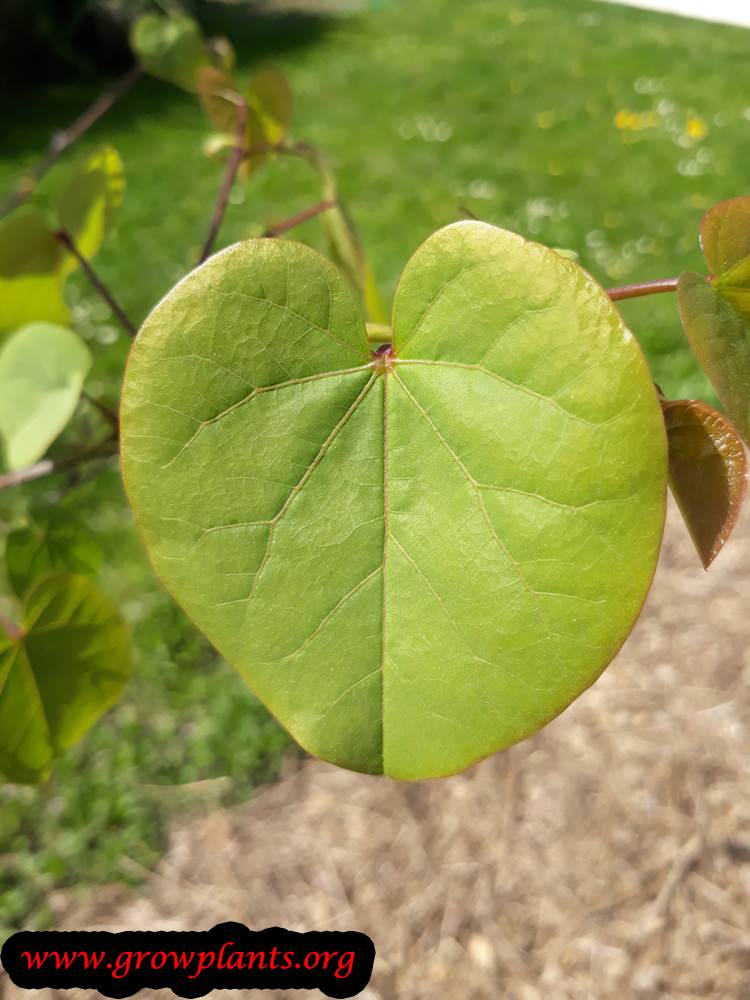
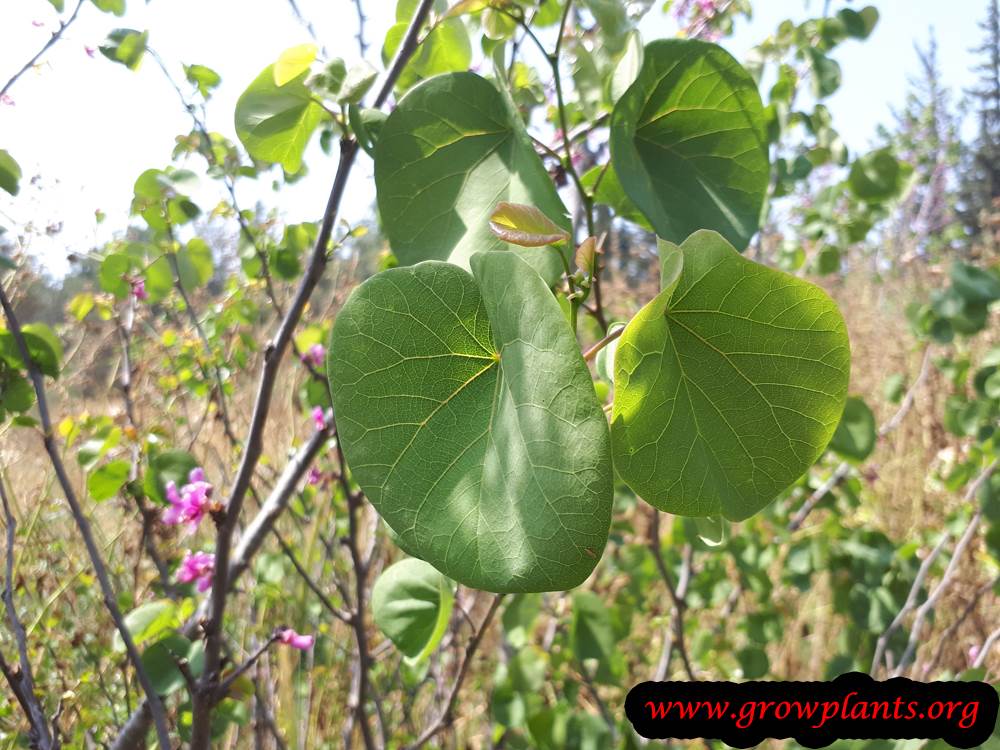
- Leaves & Foliage: Green, rounded heart-shaped leaves.
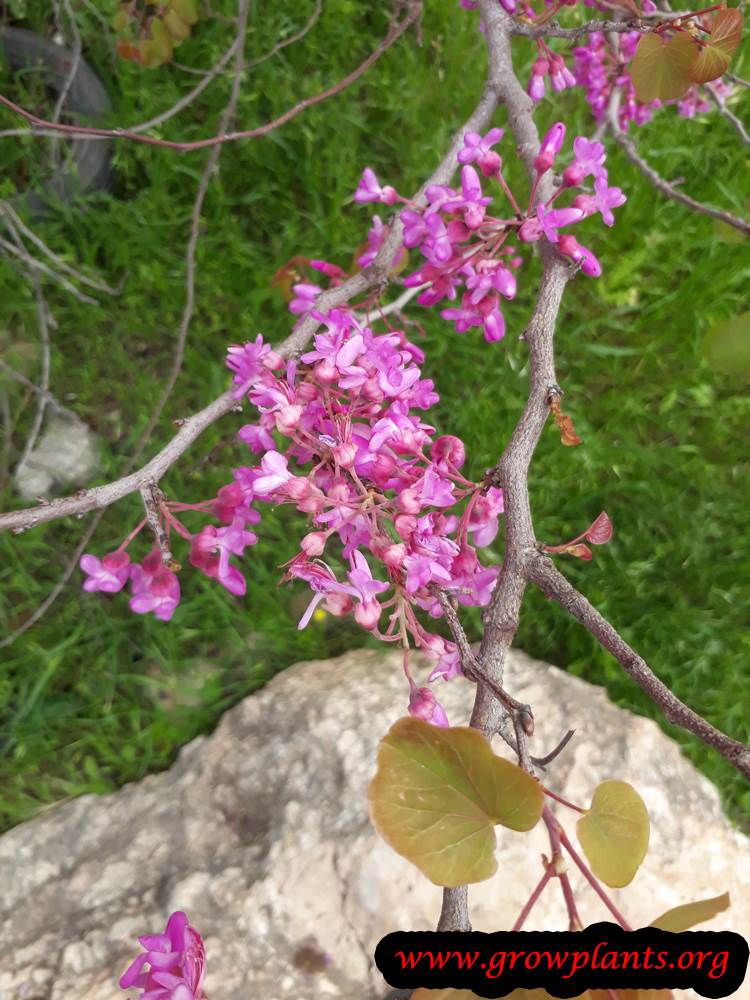
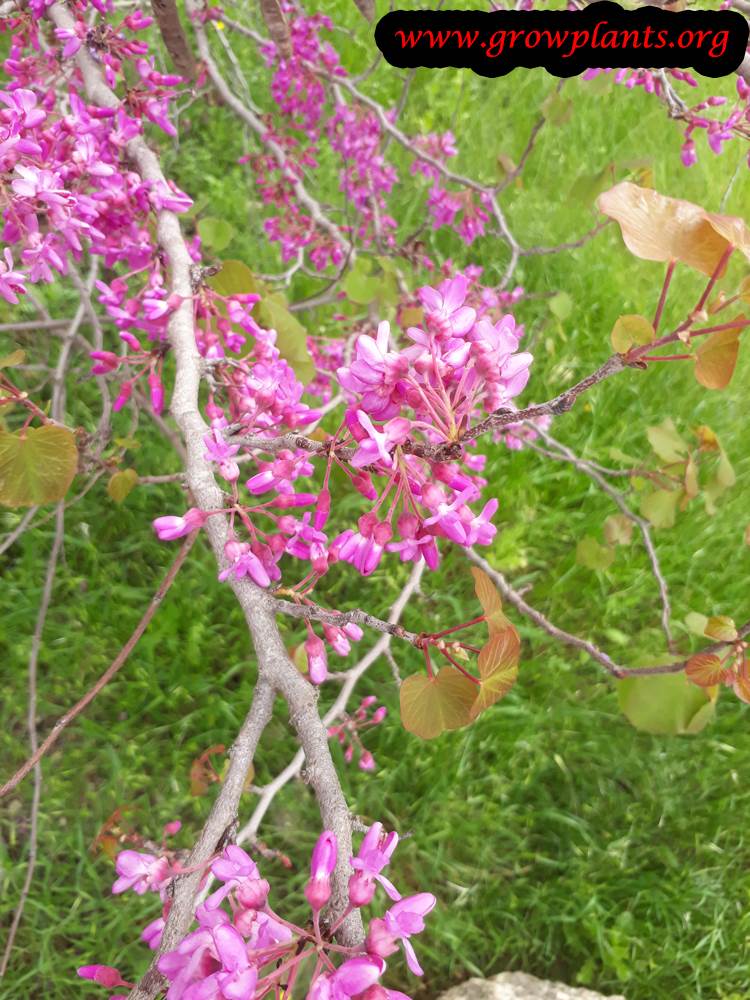
- Flower Characteristics: Purple (occasionally white) pea-like flowers borne on the trunk and branch bases (full detail in the Bloom section).
Primary Uses & Landscape Value
- Edible Uses: The flowers are edible and can be added to salads.
- Functional & Ornamental Roles: Ornamental spring-flowering specimen and shade tree; also noted for medicinal use.
Care Guide: Planting, Soil & Watering
Overview: This deciduous Mediterranean tree loves full sun and well-drained soil, and appreciates a cool to cold winter to flower well. It is fairly drought tolerant once established, needing only low to moderate watering.
Quick Care Requirements
| Requirement | Ideal Condition |
|---|---|
| Planting Season | Spring, or during winter dormancy in mild-winter regions |
| Growth Rate | Moderate to fast |
| Soil Type | Well-draining; tolerates poor and stony ground |
| Water Need | Low to moderate – water young trees, then let mature trees rely on rainfall |
Planting & Establishment
- Best Planting Season: In spring as the soil warms, or during winter dormancy in frost-free regions where bare-root stock can be planted.
- How to Plant:
- Hole Preparation: Dig a hole about twice the width of the root ball and just as deep, loosening the sides so young roots spread easily.
- Soil Amendments: Mix a little compost into the backfill; avoid over-enriching, as this nitrogen-fixing tree thrives in lean, free-draining ground.
- Planting Depth: Set the plant so the root collar sits level with the surrounding soil; never bury the stem or trunk base.
- Growth Speed & Expectations: A moderate to fast grower that can reach 3-12 m depending on water and warmth, developing a broad ornamental crown.
Soil, Watering & Drainage Care
- Soil Mix & Drainage Needs: Plant in free-draining soil; heavy, waterlogged ground is the main risk. Improve drainage with grit on clay sites. It can be grown in a large container of free-draining potting mix, though it is not suited to life indoors.
- Watering Schedule & Technique:
- Young / Newly Planted: Water regularly for the first few weeks so the root ball never dries out completely while the plant establishes.
- Established: Once settled, water deeply but let the top few centimetres dry before watering again; it copes well with short dry spells.
- Seasonal Adjustments: Increase watering during hot, dry weather and cut right back in winter as growth slows.
Climate, Light & Hardiness
Judas tree is a hardy deciduous small tree for Mediterranean and subtropical climates, growing in full sun to half shade. The dataset gives roughly zones 5–10 and notes it wants a cool or cold winter - its winter dormancy makes it far more cold-tolerant than the tender legumes it is related to.
Quick Climate Specifications
| Climate Zones | Mediterranean, subtropical (cool-winter) |
|---|---|
| USDA Hardiness Zones | Approximately 5–10 (per dataset) |
| Optimal Temp Range | Approximately 15–25 °C / 59–77 °F in the growing season |
| Cold Damage Begins | Dormant wood is hardy; late spring frosts can damage early blossom and new growth |
| Approx. Survival Minimum | Established, dormant trees withstand hard winter cold within their zone range (roughly to −20 °C / −4 °F) |
| Frost Tolerance | High (dormant); flowers Low |
| Light Conditions | Full sun to half shade |
| Wind Tolerance | Moderate |
Sunlight & Light Exposure
Optimal Light Setup
Full sun gives the densest crown and the heaviest spring flowering along the branches and trunk; it tolerates half shade with a lighter display.
Best Exposure / Orientation
A warm, open aspect suits it, though a position not prone to early-morning sun after frost helps protect the early blossom.
Temperature Extremes & Hardiness
USDA Hardiness & Regional Limits
Reliably hardy through its cited zone 5–10 range, it actually benefits from a distinct cool winter to complete dormancy and flower well; it is well suited to Mediterranean climates with real winters.
Cold Damage & Frost Sensitivity
The dormant tree takes hard frost, but the very early blossom and tender new shoots can be caught by late spring frosts in exposed sites.
Extreme Heat Tolerance
It copes well with hot, dry Mediterranean summers once established.
Wind, Humidity & Microclimate
Dry-Air Tolerance
Well adapted to dry summer air.
Wind Tolerance
Reasonably wind-firm once established, though a sheltered site protects the spring flowers.
Microclimate Recommendations
A sunny, free-draining spot with some shelter for the early bloom is ideal; it is undemanding once its winter-chill need is met.
Growing in Pots, Balconies & Indoors
The Judas tree is a small flowering tree that can be grown in a large pot while young – ideal for a patio or courtyard – but it eventually wants the open ground and is never a houseplant.
Quick Details
- Container Size: A large, deep pot, 40-60 L (10-16 gal), while young; it outgrows containers with age
- Indoor Suitability: Not an indoor plant; a hardy tree suited to a patio or courtyard while young
- Best Spot: Full sun to light shade
- Soil & Drainage: Water moderately – keep the mix from drying right out while young; established, it tolerates dry spells but pots must drain freely
- Watering in Pots: Houseplant limits: Not a houseplant – it is a tree, far too large and light-hungry for indoors. As a young pot tree: While small it makes a fine patio specimen in a big container; plan to move it to open ground as it matures.
Indoors & On the Windowsill
- Light, heat & wind: Give it the sunniest spot you can. Walls, railings and paving reflect heat, so pots dry quickly – check moisture daily in warm weather, and shelter tall growth from wind. A drip irrigation kit with a timer can take over that watering check automatically.
- Weight & stability: A tree in a large pot is heavy and top-heavy – use a sturdy, wide-based container and shelter it from strong wind.
On a Balcony or Patio
- Pot & drainage: A 40-60 L pot with strong drainage holes; skip a standing water saucer to avoid root rot. Terracotta breathes and dries fast; glazed or plastic holds moisture longer.
- Potting mix: Use a well-aerated, organic-rich mix – peat or coir blended with perlite or vermiculite for free drainage.
- Feeding: Potted plants lose nutrients as watering leaches them from the mix, so feed more often than in open ground – a balanced liquid feed through the growing season.
- Repotting: Pot up or refresh the top of the mix about every two years while young; once it outgrows the largest practical pot, move it to open ground.
Choosing the Pot, Soil & Long-Term Care
Fertilizing & Feeding
A light feeder – an ornamental legume that fixes much of its own nitrogen; a light balanced feed supports growth and bloom, and high-phosphorus bloom boosters are unnecessary.
Quick Fertilizing Specs
| Feeding Level | Light – an ornamental legume that fixes much of its own nitrogen. |
|---|---|
| young_feeding | A modest balanced feed as new plants establish. |
| mature_feeding | Light, occasional balanced feeding through bloom. |
| Main Nutrient Priority | Balanced nutrition with restrained nitrogen. |
| Best Feeding Period | Through spring growth and the blooming period. |
| Organic Options | Compost or well-rotted organic matter. |
| Soil pH | Tolerates a range; near neutral is fine. |
| Reduce/Stop Feeding | Stop feeding as the plant enters dormancy. |
| Micronutrients | Rarely needed; correct only if a deficiency shows. |
Feeding by Growth Stage
Spring flush of growth
Fuel healthy new shoots and leaves as growth resumes.
| Nutrient direction | A balanced complete fertilizer; keep nitrogen restrained since this legume fixes much of its own. |
|---|---|
| Timing | As new growth begins in spring. |
| Frequency | A light feeding as the plant breaks into active growth. |
| Fertilizer types | Balanced complete fertilizer, Compost or well-rotted organic matter |
| Precautions | Avoid heavy nitrogen, which pushes leaves at the expense of flowers. |
Flowering
Sustain steady flowering without forcing soft growth.
| Nutrient direction | Stay with a balanced feed and adequate nitrogen; a high-phosphorus bloom booster does not force more flowers. |
|---|---|
| Timing | Through the blooming period. |
| Frequency | Light, occasional feeding while in bloom. |
| Fertilizer types | Balanced complete fertilizer |
| Precautions | Do not reach for high-phosphorus formulas to push bloom; balanced nutrition and light drive flowering. |
Dormancy / rest period
Let the plant rest with little to no nutrient demand.
| Nutrient direction | None – withhold fertilizer while the plant is dormant. |
|---|---|
| Timing | Through winter dormancy or the seasonal rest period. |
| Frequency | No feeding at this stage. |
| Fertilizer types | No feeding at this stage – withhold fertilizer until active growth resumes. |
| Precautions | Do not fertilize until active growth resumes; excess salts on a resting plant only risk root injury. |
Nutrient Deficiency Signs & Corrections
Overall pale, yellow-green foliage and weak growth even on reasonable soil.
| Possible causes | Poor rhizobial nodulation, so little nitrogen is being fixed, Cold or waterlogged soil suppressing root and nodule activity, Genuinely low soil nitrogen on very poor ground |
|---|---|
| Appears first on | Older, lower leaves first. |
| What to check | Dig a root and look for pink, active nodules, Soil drainage and temperature, Whether the seed or bed carried the right legume inoculant |
| Possible correction | Ensure the right rhizobia are present, improve drainage and warmth, and give only a modest balanced feed if the ground is truly poor. |
Yellowing between the veins of the youngest leaves while the veins stay green.
| Possible causes | High or alkaline soil pH locking up iron and manganese, Waterlogged or cold roots reducing micronutrient uptake, Occasionally low available iron or manganese in the soil |
|---|---|
| Appears first on | New growth at the shoot tips. |
| What to check | Soil pH, Drainage and watering habits, Whether symptoms follow cool, wet spells |
| Possible correction | Correct soil pH toward the plant’s preferred range, improve drainage, and if it persists apply a chelated iron or manganese product per its label. |
Vigorous leafy growth but sparse flowering.
| Possible causes | Excess nitrogen driving foliage at the expense of flowers, Too little light for good bud set, Overly rich or frequent feeding |
|---|---|
| Appears first on | The whole plant, especially the most vigorous shoots. |
| What to check | Recent nitrogen inputs, Light exposure, Overall vigor versus bloom |
| Possible correction | Reduce nitrogen, rely on a balanced feed, and give more light rather than reaching for a high-phosphorus bloom booster, which does not force flowers. |
Scorched leaf edges, wilting, or white crusting on the soil despite adequate water.
| Possible causes | Over-application of fertilizer, Poor leaching in containers or heavy soil, Letting the root zone dry out between heavy feeds |
|---|---|
| Appears first on | Leaf margins and tips; container plants first. |
| What to check | Recent fertilizer amounts, Drainage, Soil crusting or white surface residue |
| Possible correction | Ease off feeding, water thoroughly to flush excess salts from the root zone, then feed only lightly. |
Pruning, Training & Seasonal Maintenance
Judas tree is a small deciduous tree (3–12 m) that needs very little pruning, and the reason is central to how it flowers: it is cauliflorous, carrying its purple pea-flowers directly on old branches and even the bare trunk on wood two or more years old, opening before the leaves in late winter to early spring. Pruning off old wood therefore removes next year’s flowers, so cuts are limited to establishing a sound young framework and removing dead, damaged or crossing growth. It resents hard pruning, heals slowly and is prone to coral spot and canker, so any cutting is done sparingly, in the right season, and in dry weather.
Pruning & the Edible Harvest
The edible spring flowers are borne on mature two-year-old and older wood and directly on the trunk (cauliflory), so dormant or hard pruning of old wood removes next spring’s edible-flower crop; keep pruning light and only just after flowering.
Quick Pruning & Maintenance Specs
| Pruning Tolerance | Low — dislikes hard pruning; wounds heal slowly |
| Primary Pruning Window | Late winter/dormant, or immediately after flowering |
| Secondary Maintenance Window | Dry summer spells for removing dead/diseased wood |
| Typical Frequency | Minimal — formative years, then rarely |
| Main Objective | Build a sound young framework; remove dead/crossing wood only |
| Young Plant Priority | Choose a single leader or multi-stem form; space main limbs |
| Mature Plant Priority | Remove deadwood; preserve flower-bearing old wood and trunk |
| Best Tool Type | Bypass secateurs, loppers, pruning saw by cut size |
| Avoid Heavy Pruning During | Growing season sap flow; wet, disease-favouring weather |
Pruning by Plant Age & Size
Newly Established
Remove only damaged or badly placed shoots. Decide early between a single-stem standard and a multi-stemmed small tree — both suit its naturally branchy, spreading habit — then interfere as little as possible.
Young / Formative
Use light formative pruning in the first years to space a few well-placed main limbs and remove crossing or rubbing shoots, building an open framework. Do this in the dormant season. Because it flowers on old wood and the trunk, avoid removing structural wood you will later want in flower.
Mature / Established
Prune as little as possible. Confine work to removing dead, diseased or crossing branches; leave the old branches and trunk intact, as these carry the spring flower display.
Seasonal Pruning Schedule
Dormant / Winter
Objective: light structural correction in the formative years. Remove: crossing, rubbing, dead or poorly placed limbs. Do NOT remove: sound old wood and trunk that will flower. Expected response: slow, measured regrowth. Flowering impact: minimal if you spare the flowering wood; avoid heavy heading.
Post-Flowering
Objective: make any needed shaping cut with least loss of bloom. Remove: a misplaced limb, only if necessary, just after the flowers fade. Do NOT remove: healthy branches carrying developing pods or next year’s flowering surface. Flowering impact: pruning now sacrifices the least, since the current display is over.
Flowering & Fruiting Wood
This is the defining feature: Judas tree flowers on older wood — on branches two or more years old and directly from the trunk (cauliflory) — in late winter and early spring, before leafing out; flat seed pods follow. Any pruning that removes old branches or cuts into the trunk removes flowering surface for next year. The practical rule is to preserve mature wood, keep cuts to a minimum, and time them so the least bloom is lost — which is why so little pruning is recommended.
Structural Pruning & Training
Aim for a well-spaced, open crown established young; thereafter avoid thinning the canopy hard, because the tree neither needs it nor tolerates the wounds well. Remove only genuinely crossing, rubbing or diseased limbs, taking large ones in stages to avoid tearing the slow-healing bark.
Special Growth to Remove
Remove any suckers arising from the base if a single-stem standard is wanted (retain them if growing a multi-stem form). Take out dead twigs promptly, as die-back can invite coral spot. There are no watersprouts of consequence on this restrained tree.
Container & Small-Space Pruning
A young tree can be grown in a large container; keep to light formative shaping only and accept a smaller crown, rather than trying to dwarf it by hard cutting, which it resents. Preserve some old wood so it still flowers.
Tools
Match the tool to the cut: bypass secateurs for young shoots, loppers for branches up to a few centimetres, and a pruning saw for larger limbs. On a tall specimen, a pole pruner reaches high deadwood without heavy cuts. Never use hedge shears — every cut here is selective.
Tool Hygiene & Disease Risk
Increased risk: the tree is susceptible to coral spot, canker and vascular disease, which enter through wounds. Use clean, sharp tools; disinfect the blade when moving from any diseased or dead wood to healthy wood, and prune in dry conditions so cuts can seal before spores settle.
Cut Placement & Technique
Cut just outside the branch collar, never flush and never leaving long stubs, so the tree can compartmentalise the wound. Reduce large limbs with a three-cut method to prevent bark tearing on the slow-healing wood. Favour clean removal of whole misplaced limbs over stubby heading cuts.
Heavy Pruning & Rejuvenation
Not tolerated: Judas tree does not respond well to hard cutting-back or renovation. Severe pruning gives slow, poor regrowth, opens large wounds prone to canker, and removes years of flowering wood. If a tree has outgrown its space it is better to remove and replace it than to attempt drastic rejuvenation.
Post-Pruning Care
Keep the tree adequately but not excessively watered — it prefers well-drained soil. Monitor pruning wounds for coral spot and cut back to clean wood if any appears. No feeding is needed simply because you pruned; vigorous forced regrowth is not the goal.
Common Pruning Mistakes
- Cutting off old branches or shortening the trunk and losing the cauliflorous flower display.
- Hard renovation pruning, which this slow-healing tree recovers from poorly.
- Pruning in wet weather, letting coral spot and canker into fresh wounds.
- Leaving flush cuts or long stubs that fail to seal.
When NOT to Prune
Avoid pruning in wet, disease-favouring weather and during full sap flow in the growing season. Do not hard-prune an established tree at all, and never remove flowering old wood unless it is dead or diseased.
Recommended Tools (by task)
- bypass_secateurs — for young formative shoots and small crossing twigs.
- loppers — for branches beyond hand-pruner size when removing crossing or dead limbs.
- pruning_saw — for larger structural limbs, cut cleanly outside the collar.
- pole_pruner — to reach high deadwood on a tall specimen without heavy ground cuts.
Pruning Troubleshooting
| Problem | Possible Cause | What to Check | Corrective Action |
| Few or no flowers | Old flowering wood removed by pruning | Whether old branches/trunk were cut | Stop pruning old wood; allow branches to mature and flower |
| Pink pustules and die-back on cuts | Coral spot entering wounds | Cut surfaces and dead twigs | Cut back to clean wood; prune only in dry weather with clean tools |
| Torn bark below a removed limb | Heavy limb cut in one pass | Wound edge below large cuts | Use the three-cut method on large limbs to prevent tearing |
| Poor regrowth after hard cutback | Species resents severe pruning | Extent of wood removed | Limit future work to light, selective cuts; replace if over-pruned |
Propagation Guide
The species comes fairly true from seed, but that seed has both a hard coat and internal dormancy, so it must be scarified and then given a cold-moist period before it will germinate. Cercis roots poorly from cuttings, so — as the site notes for the white-flowered form — selected clones are kept true by grafting, budding or layering rather than from seed.
Quick Propagation Specs
| Best Propagation Method | Seed (scarify then cold-stratify) for the species |
| Alternative Methods | Grafting/budding or air layering for white and selected forms |
| Propagation Difficulty | Moderate from seed; Difficult for cultivars |
| Seed True-to-Type | Usually true-to-type for the species; white/selected forms need vegetative propagation |
| Vegetative True-to-Type | Yes |
| Best Propagation Season | Sow after winter chilling; graft late winter to spring |
| Germination Temperature | Mild after chilling, roughly 15–20°C (59–68°F) |
Growing from Seed
Dormancy & Pre-Sowing Treatment
Scarify the hard coat with a hot-water soak or a nick, then give a cold-moist stratification over winter. Even so, germination is often staggered.
Germination Time
Emergence is slow and uneven; expect it spread over weeks once conditions are met.
Grafting & Budding
Why Grafting Is Used
Because cuttings root poorly, grafting or budding is the practical way to keep the white-flowered form or a selected clone.
Rootstock & Season
Work the scion onto seedling Cercis rootstock in late winter to spring.
Air & Ground Layering
Low branches can be layered as an amateur alternative to grafting, though rooting is slow.
Bloom & Edible Flower Guide
Quick Details
- Bloom Season: Late winter into early spring
- Time to First Bloom: A tree that usually takes several years before it flowers freely
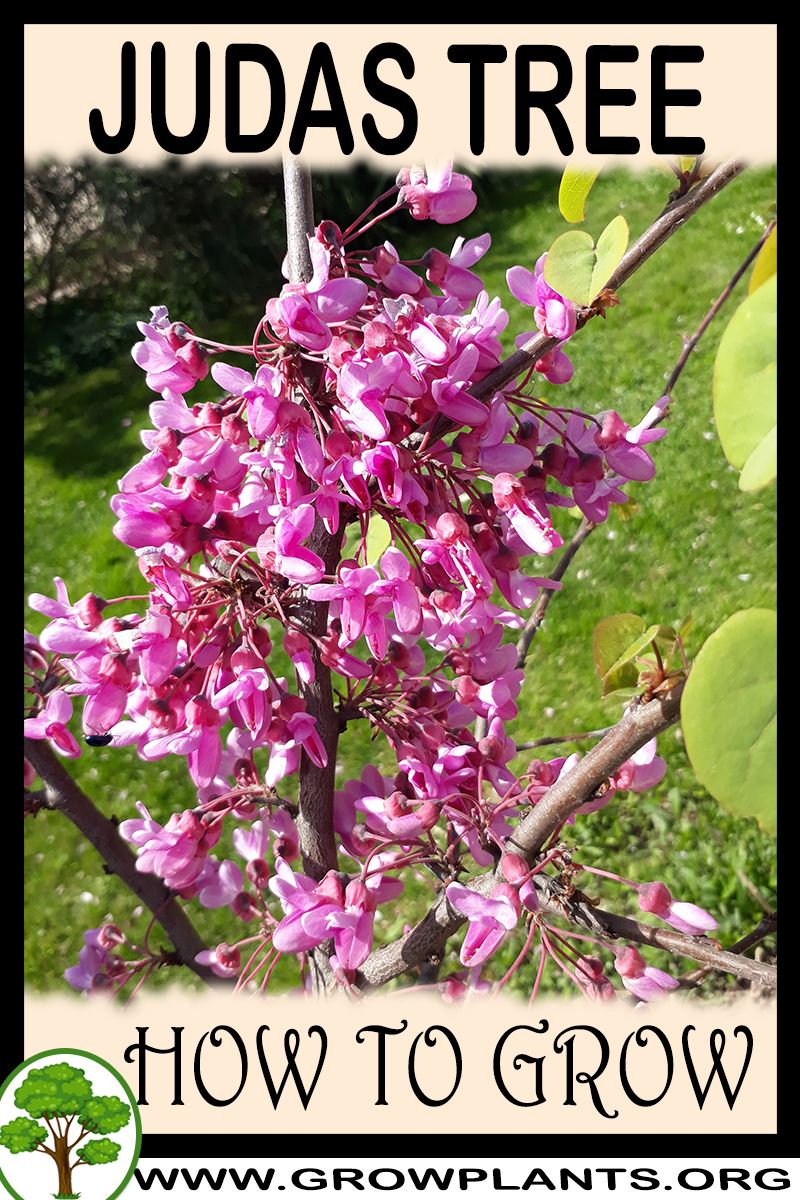
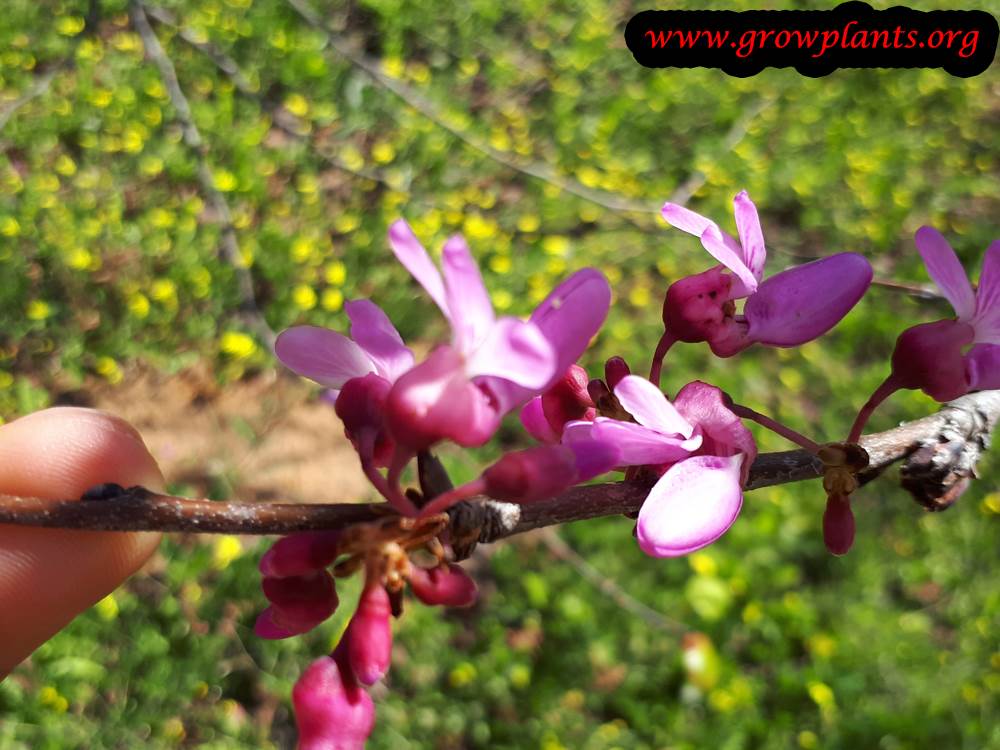
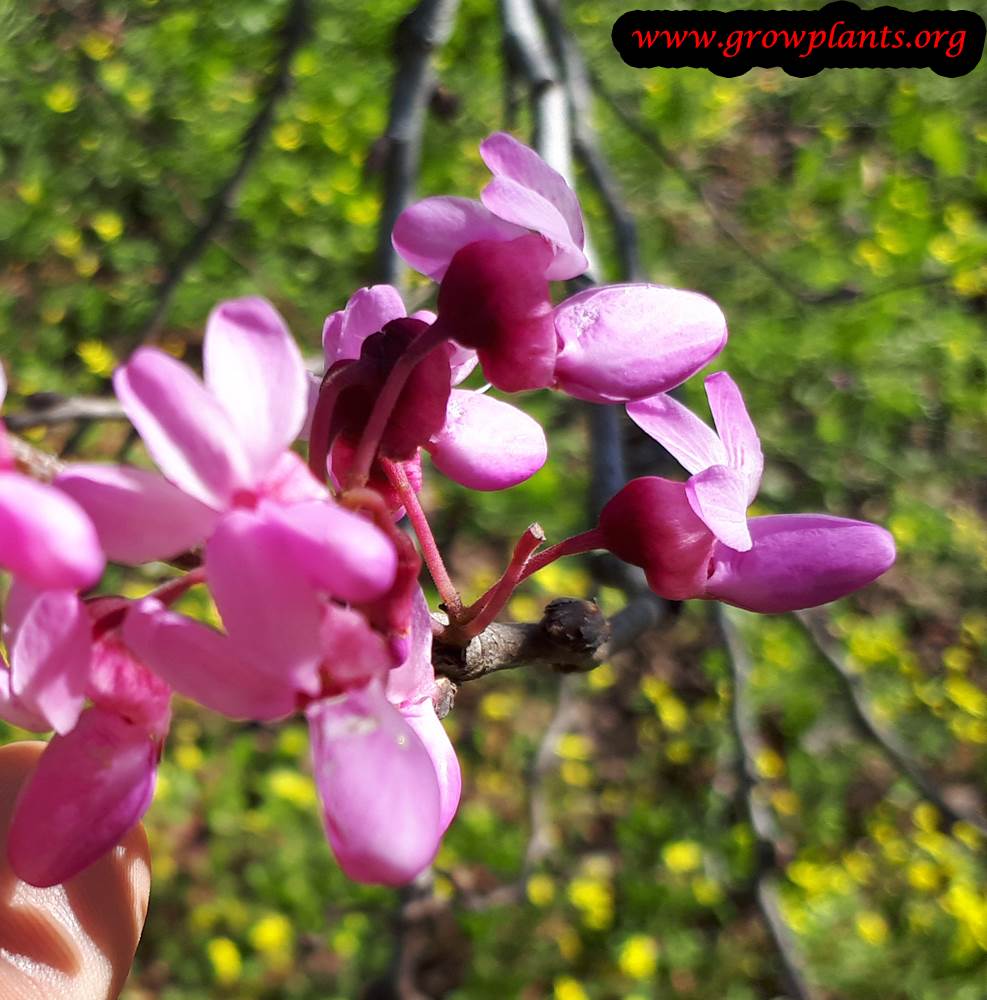
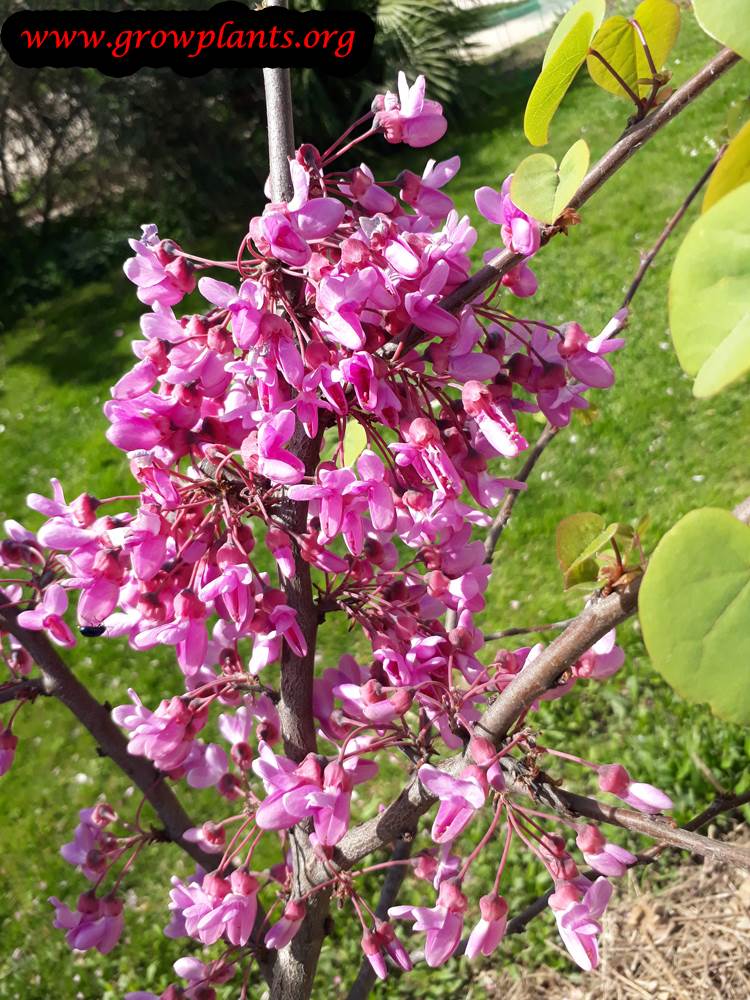
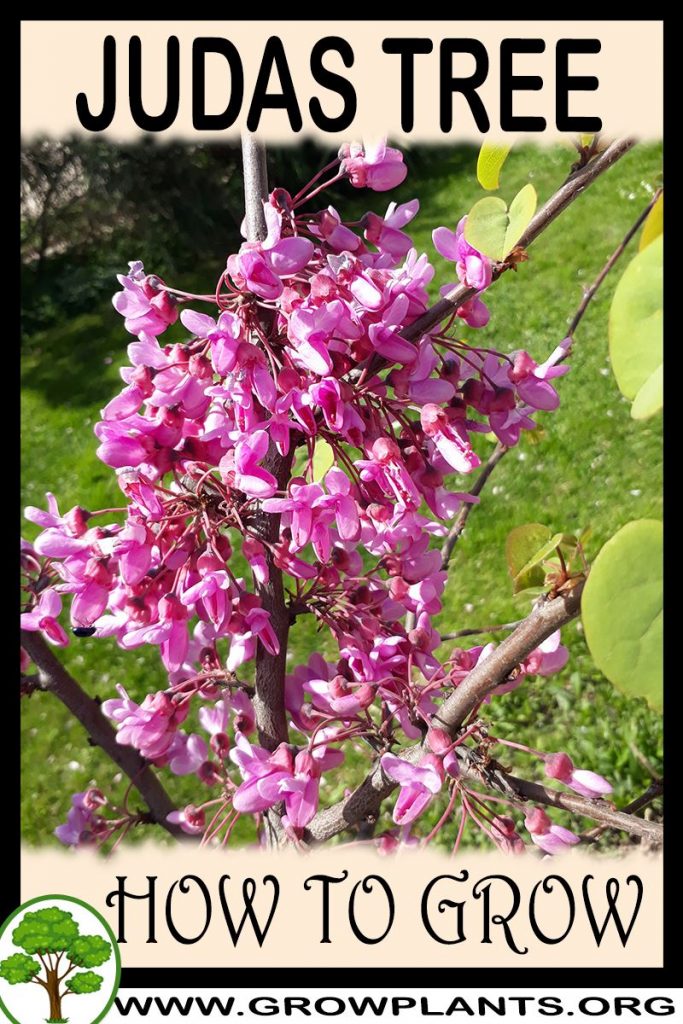
- Flower Appearance: Purple (sometimes white) pea flowers that burst straight from the bare branches and even the trunk, before the leaves
- Edibility: Edible, the tangy flowers are used raw in salads and can be pickled
Detailed Blooming Overview
The Judas tree is one of spring’s great surprises, clothing its bare limbs, and often the trunk itself, in clusters of rosy-purple flowers before a leaf has opened. This habit of flowering on old wood, known as cauliflory, is unusual and unforgettable. The flowers are not only ornamental but edible, with a pleasant tangy taste that suits a salad or a jar of pickles.
Flower Characteristics
- Purple, or occasionally white, flowers shaped like a small open mouth with two ears.
- Borne directly on the branches and trunk, opening ahead of the leaves.
- Edible, tangy, and good raw or pickled.
Bloom Care & Thinning
- Site for flowering: Full sun gives the heaviest bloom; the display is best on mature wood, so avoid hard pruning that removes flowering branches.
- Harvesting flowers: Pick a few open clusters for the kitchen, leaving the rest to run their course.
Bloom Health & Protection
- Cacopsylla pulchella (jumping plant louse): This little sap-feeder is drawn to the Judas tree; interestingly, the predators it attracts then move on to help control related pests on other fruit trees. Where it becomes a nuisance, a wash of water or an insecticidal soap keeps numbers down without harming the flowering display.
Fruit & Uses
Note: this tree is grown here as an ornamental (and nitrogen-fixing) plant and the site records no edible data, so the use below is a traditional one, supplemented and to be treated conservatively. The purple, pea-like flowers that open along the branches are the part traditionally eaten.
Quick Edible Specs
| Edible Parts | Flowers (traditional use) |
|---|---|
| Main Use(s) | Flowers traditionally added to salads or lightly pickled |
| Eaten Raw or Cooked | Flowers used raw in salads, or pickled |
| Preparation Required | Use only the flowers; wash before use |
| Harvest Season | While the tree is in bloom (flowers open on the branches in spring) |
| Safety/Toxicity Caveat | Not a site-documented food; eat only correctly identified flowers and avoid the other parts |
Flowers & Flower Buds
The bright purple (occasionally white), pea-shaped flowers grow directly on the branches and trunk. They are traditionally picked when freshly open and added to salads for colour and a mild, slightly tart flavour, or pickled.
Preparation, Uses & Safety
Use only the flowers, and only from a correctly identified tree; wash before eating. The site otherwise lists the tree as ornamental and medicinal — traditionally used in folk medicine, with no health claims made here. Do not eat the other parts.
Pests, Diseases & Troubleshooting
Overview: The Judas tree is a resilient small ornamental whose serious problems are diseases of the vascular system and bark – Verticillium wilt and canker – while insect pests are mostly cosmetic. Management centres on avoiding stress and wounds, good sanitation and pruning out infected wood rather than spraying.
Quick Troubleshooting Overview
| Issue / Pest | Main Symptom | Primary Solution |
|---|---|---|
| Verticillium wilt | Sudden branch wilt, one-sided dieback | Prune out; no fungicide cure |
| Canker | Sunken bark lesions, branch dieback | Cut back to healthy wood; sanitise tools |
| Caterpillars | Chewed, skeletonised or webbed leaves | Handpick; Bt if heavy |
| Treehoppers & scale | Twig scars, bumps, honeydew | Oil; prune infested twigs |
| Leaf spot | Brown blotches, some leaf drop | Rake leaves; airflow |
| Aphids/leafhoppers | Distorted growth, honeydew, stippling | Water jet; soap if severe |
Common Pests & Management
- Caterpillars (leaf feeders) (Lepidoptera larvae):
- Symptoms: Chewed, notched or skeletonised leaves and occasional webbing from various moth and butterfly larvae; damage is usually cosmetic on an established tree.
- Prevention & Control: Hand-pick and prune out nests, and encourage birds and parasitic wasps. Spot-treat heavy outbreaks with Bacillus thuringiensis (Bt), which targets caterpillars while sparing beneficials.
- Treehoppers (Membracidae):
- Symptoms: Curved rows of egg-laying slits and scarring on twigs, plus honeydew; buffalo-type treehoppers are typical on redbuds.
- Prevention & Control: Prune out scarred twigs, control ant activity that tends them, and tolerate low numbers. Horticultural oil helps if populations are high.
- Scale insects (Coccidae / Diaspididae):
- Symptoms: Immobile brown, tan or white bumps on stems and leaf undersides; sticky honeydew and blackish sooty mould on soft scale. Growth slows and leaves yellow.
- Prevention & Control: Scrape off light infestations by hand and prune heavily-encrusted stems. Smother the rest with horticultural or neem oil, covering undersides; repeat to catch mobile crawlers. Conserve parasitic wasps and ladybirds.
- Aphids (Aphidoidea):
- Symptoms: Clusters of small green, black or grey soft-bodied insects on new shoots, buds and leaf undersides; curled distorted growth, honeydew and sooty mould.
- Prevention & Control: Blast off with a strong jet of water and squash colonies early. Encourage ladybirds, lacewings and hoverflies; avoid excess nitrogen that fuels soft growth. Use insecticidal soap or neem for stubborn outbreaks, sprayed in the evening to spare pollinators.
- Leafhoppers (Cicadellidae):
- Symptoms: Pale stippling and marginal ‘hopperburn’, with insects darting sideways when disturbed.
- Prevention & Control: Encourage predators and tolerate minor feeding; insecticidal soap or oil manages heavy pressure on young trees.
- Spider mites (Tetranychus urticae):
- Symptoms: Fine pale stippling on leaves, a dull bronzed look, and fine webbing on undersides in hot, dry conditions. Leaves dry and drop as numbers build.
- Prevention & Control: Raise humidity and hose down foliage to break the cycle; mites thrive on dry, dusty plants. Release predatory mites where practical, and treat with insecticidal soap or horticultural oil, coating leaf undersides over repeat applications.
Diseases & Fungal Issues
- Verticillium wilt (Verticillium dahliae):
- Symptoms: Sudden wilting, yellowing and dieback of one branch or one side of the canopy; dark streaking may show in the sapwood. A soil-borne vascular disease redbuds are prone to.
- Treatment & Management: There is no cure: prune out affected limbs well below symptoms, disinfect tools between cuts, and keep the tree vigorous with sensible water and mulch. Avoid replanting susceptible species in known-infected soil.
- Canker / dieback (Botryosphaeria spp.):
- Symptoms: Sunken, discoloured bark lesions that girdle twigs and branches, causing wilting and dieback beyond the canker, often after drought or cold stress.
- Treatment & Management: Cut back to clean, healthy wood in dry weather and dispose of prunings; sterilise tools between cuts. Reduce stress with mulch and deep watering in drought – vigorous bark resists infection best.
- Leaf spot & anthracnose (Fungal (various)):
- Symptoms: Brown or purplish blotches on leaves, sometimes with late-season leaf drop in wet years.
- Treatment & Management: Rake and remove fallen leaves, prune for airflow and avoid overhead watering. Fungicides are seldom warranted on a healthy tree.
Growing Difficulties & Abiotic Problems
- Transplant & drainage stress:
- Cause & Symptoms: Redbuds resent root disturbance and wet feet; symptoms are slow establishment, dieback and root rot in soggy soil.
- Correction Strategy: Plant young trees in well-drained soil, disturb roots as little as possible, and water steadily through the first seasons to establish.
- Frost & sun damage to bark:
- Cause & Symptoms: Cracked or sunken bark on trunks after hard winters or sunscald, opening the door to canker.
- Correction Strategy: Protect young trunks from winter sun and mechanical wounds; keep tools away from the trunk base when mowing.
- Chlorosis on alkaline soil:
- Cause & Symptoms: Yellowing leaves with green veins on very chalky soils.
- Correction Strategy: Mulch with organic matter and apply chelated iron if needed; correct underlying drainage.
What Helps – Products & Tools
Because the worst problems are vascular and bark diseases, the best ‘products’ are clean sharp pruning tools, mulch and sensible watering. For insects, keep horticultural/neem oil and insecticidal soap on hand, plus Bt for caterpillars; copper is only an occasional aid for leaf spot in wet seasons.