Plant Profile & Key Characteristics
Also known as: Philippines Medusa, Red hot cat's tail, Fox tail, Chenille plant
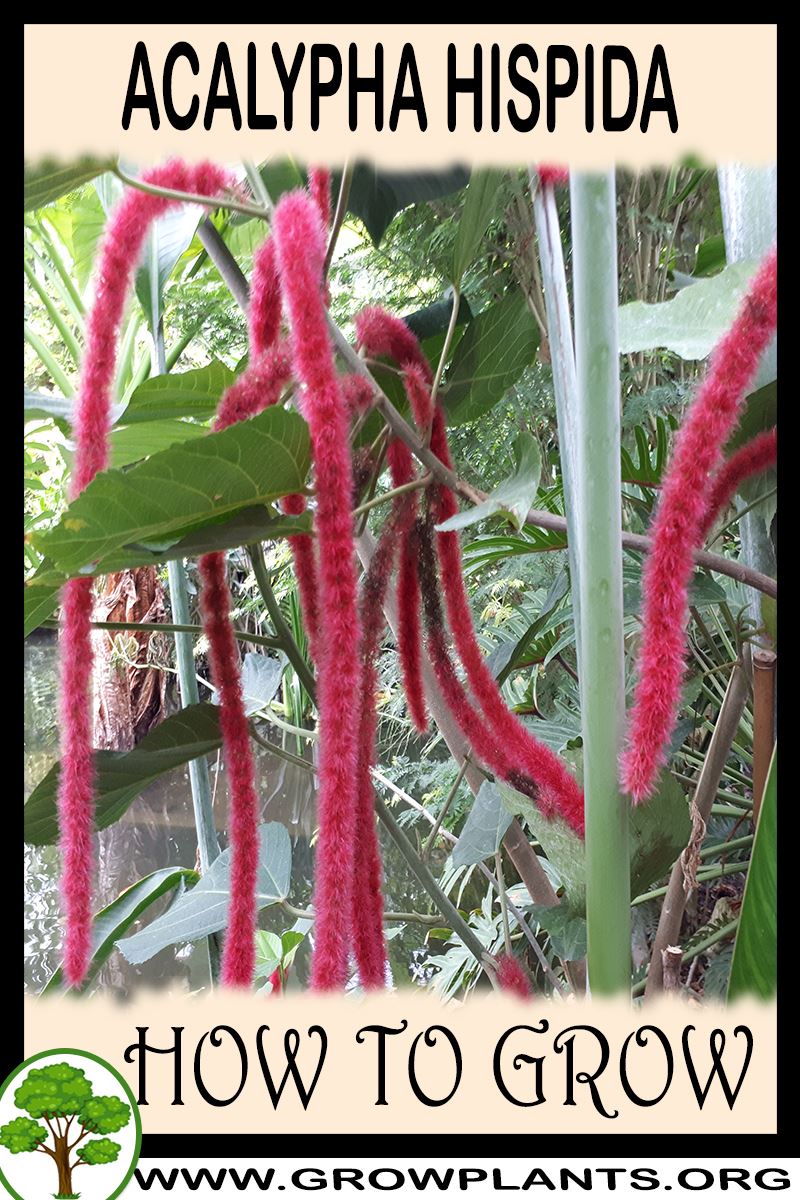
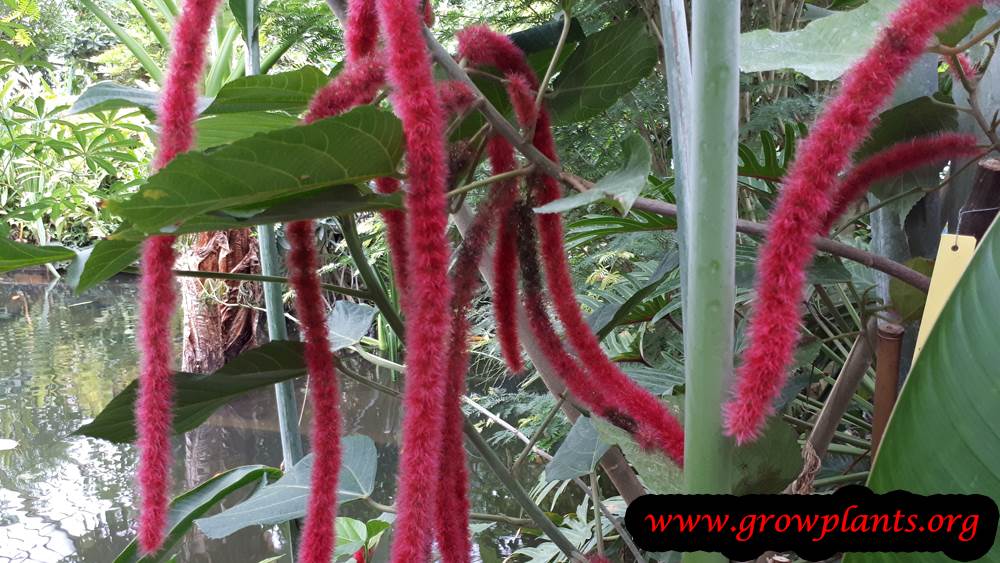
Overview: Acalypha hispida (chenille plant, red-hot cat's tail) is a fast-growing evergreen shrub of 1–3 m, famous for its long, weeping red flower tails. It is an evergreen perennial in the tropics (or a houseplant/annual elsewhere) grown mainly as an ornamental.
Quick Specifications
| Specification | Attribute |
|---|---|
| Plant Type / Life Cycle | Perennial shrub (grown as an annual/houseplant in cold zones) |
| Foliage Type | Evergreen |
| Mature Size | H: 1–3 m (3–10 ft) |
| Growth Rate | Fast to moderate |
| Toxicity | Toxic to pets and animals; foliage is toxic if eaten raw |
| Hardiness | USDA zone 10b+ as perennial; 8+ as annual |
Growth Form & Structure
- Height & Spread: 1–3 m tall as a shrub; kept smaller in containers (~15–25 L pots) and as a houseplant.
- Growth Habit & Form: Upright, bushy evergreen shrub; needs a lot of light to flower well.
- Lifespan & Maturity: Long-lived perennial in warm climates; blooms across spring, summer and autumn once established.
Anatomy & Physical Features
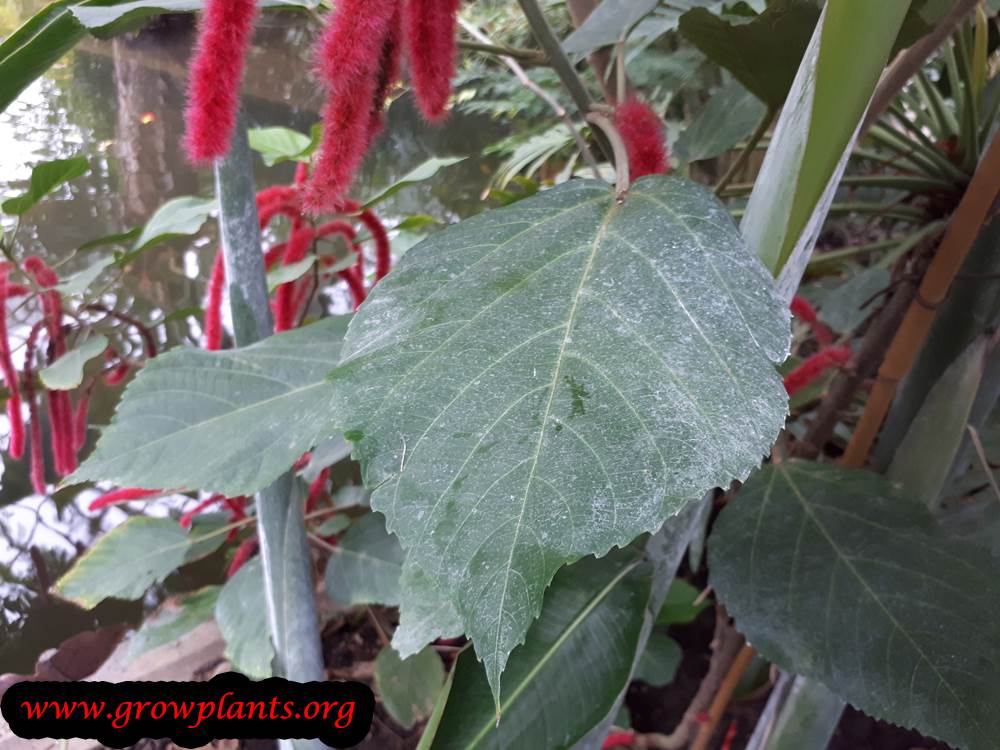
- Leaves & Foliage: Green, oval leaves with a serrated margin.
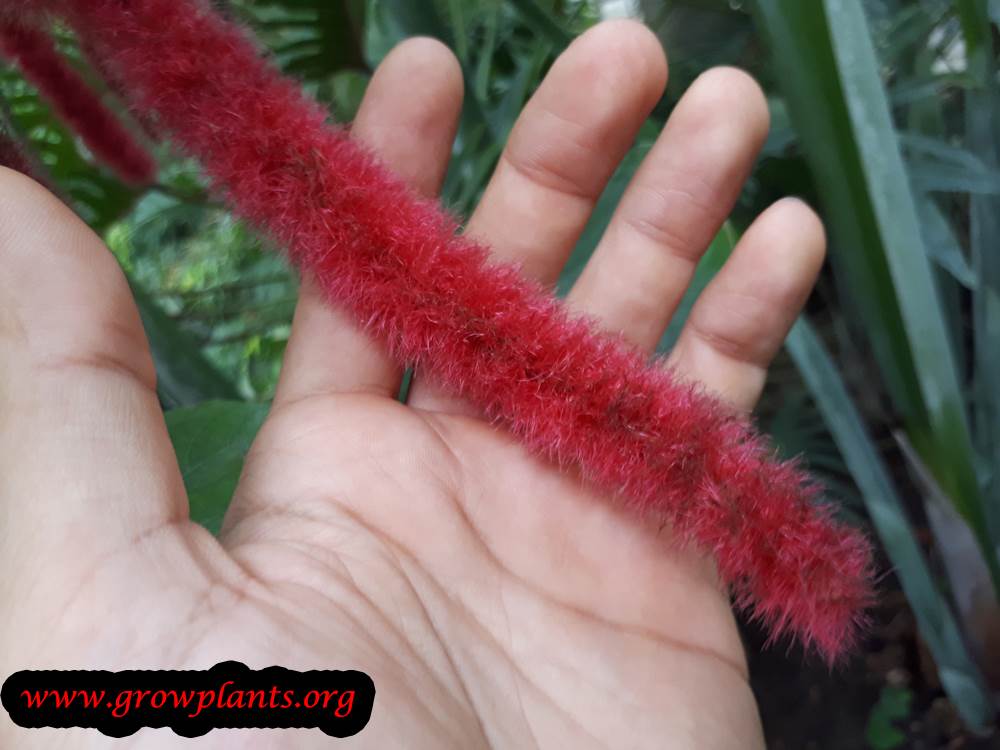
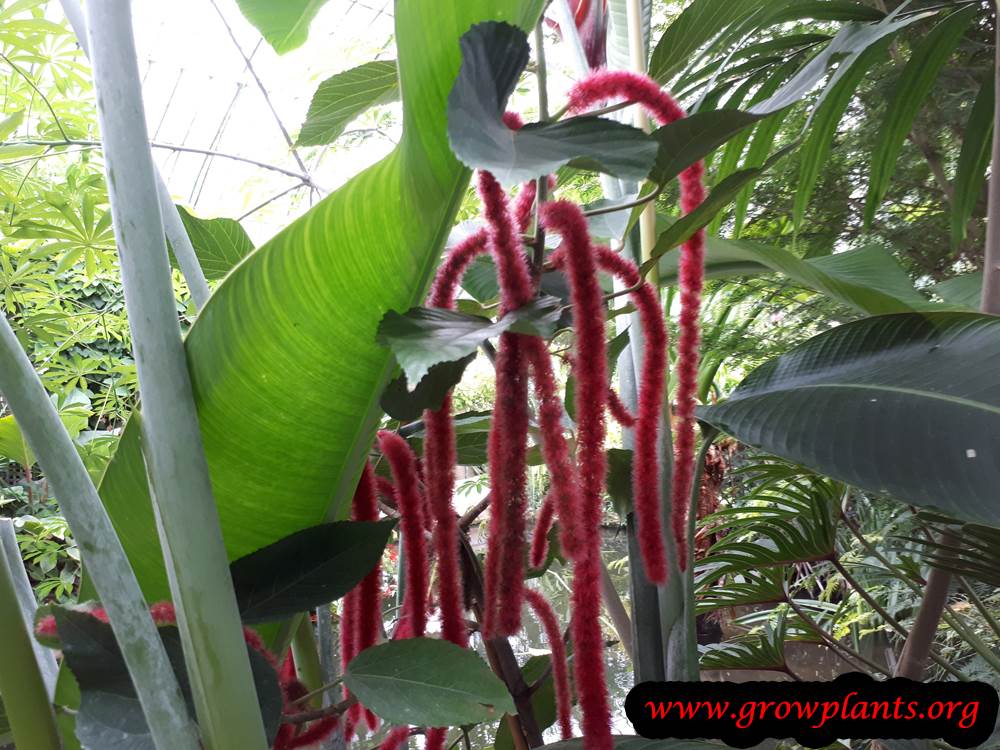
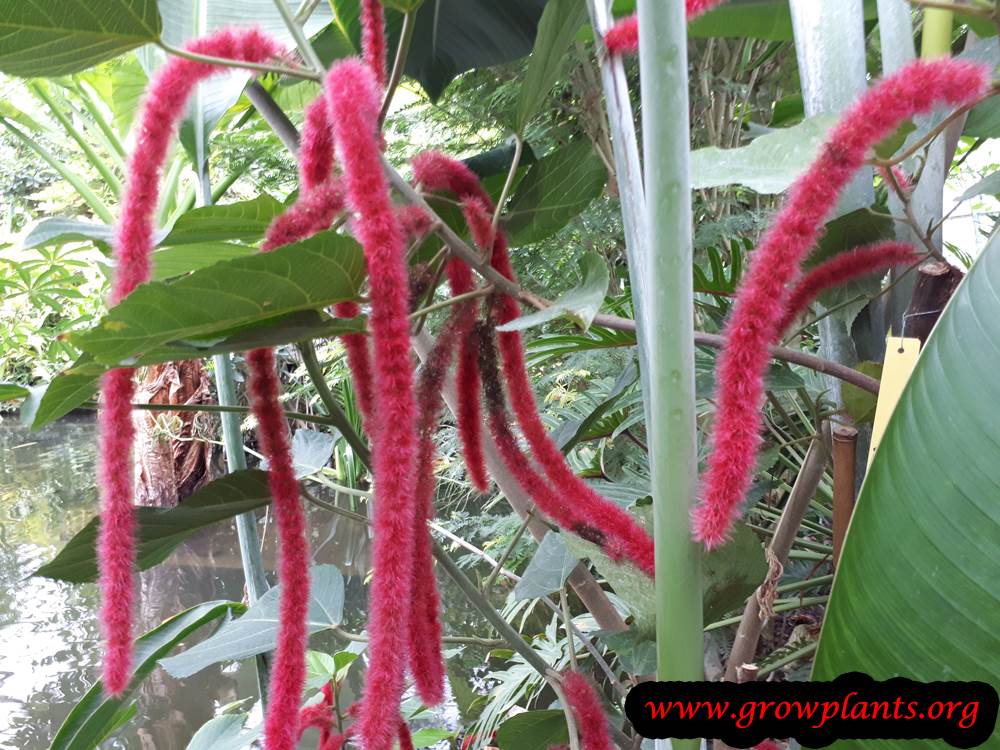
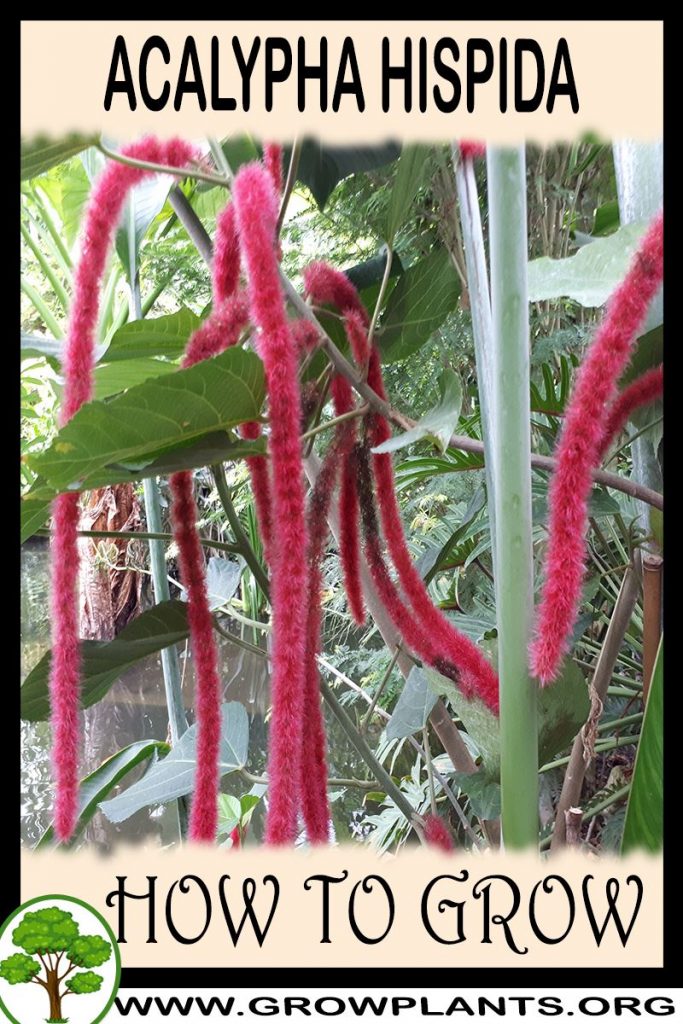
- Flower Characteristics: Signature feature: long (10–30 cm) drooping red bottlebrush catkins; plants are dioecious and cultivated plants are usually female.
Primary Uses & Landscape Value
- Edible Uses: The leaves are reportedly edible only when correctly cooked and have traditional medicinal uses – but they are toxic raw, so this is not a casual food plant.
- Functional & Ornamental Roles: Striking ornamental shrub, container specimen or flowering houseplant grown for its dramatic catkins.
Care Guide: Planting, Soil & Watering
Overview: Chenille plant (Acalypha hispida) is a fast-growing tropical shrub for warm, humid, full-sun to lightly shaded spots that thrives in rich, organic, moisture-retentive soil. It likes generous, steady moisture and high humidity, so keep the soil consistently moist without letting it turn waterlogged.
Quick Care Requirements
| Requirement | Ideal Condition |
|---|---|
| Planting Season | Warm season — spring in mild zones (10b+); year-round in the tropics; started indoors over winter where grown as an annual |
| Growth Rate | Fast (with feeding and organic matter) to moderate |
| Soil Type | Rich, organic, moisture-retentive soil |
| Water Need | Moderate to high — keep the soil consistently moist |
Planting & Establishment
- Best Planting Season: Plant in the warm season — spring in mild zones (10b+), spring through autumn in warmer areas, and year-round in the tropics. Where grown as an annual, start it indoors in winter and move it outdoors after the last frost.
- How to Plant:
- Soil Amendments: Enrich the planting soil generously with organic matter and humus so it holds moisture; mulch newly planted specimens to keep the soil cool and damp while they establish.
- Planting Depth: Set the root ball level with the surrounding soil, keeping the stem base at the surface.
- Growth Speed & Expectations: Fast-growing in warm, humid, well-fed conditions — moderate where feeding or organic matter is limited — maturing into a shrub around 1–3 m tall.
Soil, Watering & Drainage Care
- Soil Mix & Drainage Needs: Wants rich, organic soil that stays moist yet still drains and breathes; in containers use a peat-based or potting mix with perlite and plenty of humus, mulch the surface, and let the pot base drain the same day it is watered.
- Watering Schedule & Technique:
- Young / Newly Planted: Cover the soil with mulch while the plant is young and keep it consistently moist as it establishes.
- Established: Water regularly and generously to keep the soil evenly moist — it enjoys ample water and humidity but dislikes standing in a waterlogged pot.
- Seasonal Adjustments: Water more heavily through summer heat; ease back in cooler weather, and protect from cold where grown outside its hardiness range.
Climate, Light & Hardiness
Acalypha hispida (chenille plant) is a warmth-loving, humidity-craving shrub for tropical, mediterranean, desert, subtropical, and temperate climates or as a houseplant, tolerant of full sun through bright full shade. It is reliably perennial from USDA zone 10b and warmer, usable as an annual from zone 8, and can even be grown as a perennial in zone 4–10a if brought indoors each winter and set back out after the last frost.
Quick Climate Specifications
| Climate Zones | Tropical, mediterranean, desert, subtropical, temperate, or as a houseplant |
|---|---|
| USDA Hardiness Zones | 10b+ as a perennial; 8+ as an annual; possible as a perennial in zone 4–10a if overwintered indoors |
| Frost Tolerance | Very Low |
| Light Conditions | Full Sun / Half Shade / Full Shade (with a lot of light) |
Sunlight & Light Exposure
Optimal Light Setup
Adaptable from full sun to full shade, but needs plenty of light – including increased light hours in early spring – to bloom well, especially as a houseplant.
Direct Sun Requirement
Benefits from direct sun where available; if grown indoors and not flowering, more light is the first thing to increase.
Shade & Heat Management
Full shade is tolerated only with a lot of ambient light – deep, dim shade limits flowering.
Best Exposure / Orientation
A bright spot, indoors or out, supports its long, fuzzy red flower tassels.
Temperature Extremes & Hardiness
USDA Hardiness & Regional Limits
Reliably perennial outdoors only from USDA zone 10b and warmer; it is grown as an annual from zone 8, and gardeners as far as zone 4–10a can keep it as a perennial by moving it indoors each autumn and back out after the last spring frost.
Cold Damage & Winter Protection
Where grown as an annual, plants are often started indoors over winter and moved outside only after the last frost, reflecting essentially no outdoor cold tolerance.
Frost Sensitivity
Highly frost-sensitive; the plant cannot tolerate freezing temperatures outdoors.
Extreme Heat Tolerance
Good, with rich, consistently moist soil and average-to-large water, matching its tropical origins.
Wind, Humidity & Microclimate
Humidity Preferences
Needs high humidity, reflecting its tropical origin; a greenhouse or humid enclosure is even noted as helpful for propagation.
Dry-Air Tolerance
Poor – dry air stresses this humidity-loving plant, particularly indoors.
Microclimate Recommendations
A warm, humid, bright spot suits it whether grown outdoors in the tropics/subtropics or as a container plant moved indoors for winter elsewhere.
Growing in Pots, Balconies & Indoors
The chenille plant (Acalypha hispida) is grown indoors and in containers, and the grower rates it a houseplant – but it needs plenty of light to produce its long red tassels. In a warm, bright spot it makes a striking potted specimen; a container also lets you shelter this tender plant when it turns cold.
Quick Details
- Container Size: Small cultivars in about 15 L, larger ones at least 25 L; start small and pot up as it grows
- Indoor Suitability: A good warm-room houseplant, but it must have strong light to flower well A grow light can supply that strength indoors away from a sunny window.
- Best Spot: Full sun to bright shade; the more light, the more tassels
- Soil & Drainage: Free-draining, organic-rich mix with plenty of holes
- Watering in Pots: Average to generous – keep evenly moist, never waterlogged
Indoors & On the Windowsill
- Houseplant: A genuine houseplant for a warm, bright room. If it will not bloom, give it more hours of bright light as the days lengthen to coax out the flowers.
- Windowsill growing: The sunniest sill you have suits it best; poor light means leaves but no tassels.
- Overwintering: Tender – keep it warm indoors over a cold season and out of cold draughts.
- Safety: Listed as toxic to animals – keep it away from pets, and from children, and never let anyone eat it.
On a Balcony or Patio
- Light & warmth: Needs the warmest, brightest sheltered spot; walls reflect heat so pots dry fast – check moisture often.
- Practicalities: Bring it in well before cold weather, as it will not take frost.
Choosing the Pot, Soil & Long-Term Care
- Pot & drainage: Start in a pot only 30-50% bigger than the plant, with strong drainage holes; a mulch on top keeps the mix moist, and if the base fills with water let it drain dry the same day.
- Soil refresh: Every few years, ideally in the cool dormant season, wash the old soil off the roots, trim the roots, prune the top and replant in fresh mix.
- Potting mix: Well-aerated and organic-rich – a peat- or coir-based mix opened up with perlite or vermiculite and enriched with compost.
- Feeding: Potted plants use up their food faster because frequent watering leaches nutrients away – feed a little more often through the growing season than plants in open ground.
Fertilizing & Feeding
A moderate-to-eager feeder: this fast grower relies on regular feeding and rich organic matter to sustain its long, weeping red flower tassels, with a clear rest during any cool or low-light period.
Quick Fertilizing Specs
| Feeding Level | Moderate feeder |
|---|---|
| Main Nutrient Priority | Nitrogen-forward feeding to fuel fast growth, with adequate overall nutrition to support the long flower tassels |
| Best Feeding Period | Through the warm active growing season, or year-round for actively growing indoor specimens with strong light |
| Organic Options | Rich soil with organic matter and mulch, especially while the plant is young |
| Reduce/Stop Feeding | Ease off as growth slows in cooler weather, lower light, or overwintering indoors |
| Micronutrients | Usually met by rich organic soil and a complete fertilizer; correct only a diagnosed deficiency |
| Soil pH | Prefers rich, evenly moist soil; not fussy about a narrow pH target |
Feeding by Growth Stage
Establishment as a young plant
Help a young plant develop a strong root system and its first flush of foliage.
| Nutrient direction | A balanced, nitrogen-leaning feeding paired with a mulched, organic-rich soil supports vigorous early growth. |
|---|---|
| Timing | While the plant is young and establishing, typically after the last frost outdoors or after potting up indoors. |
| Frequency | Light, regular feeding while the young plant is rooting in. |
| Fertilizer types | A balanced complete fertilizer, Mulch and organic matter over the root zone |
| Precautions | Keep young plants evenly moist when feeding; this species does not tolerate drying out well. |
Active growth and flowering
Fuel the fast growth and long, weeping, bottlebrush-like red flower tassels this species is grown for.
| Nutrient direction | A nitrogen-forward complete fertilizer keeps this fast grower vigorous and well foliaged through bloom. |
|---|---|
| Timing | Through the warm growing season, or continuously indoors if the plant is actively growing under strong light. |
| Frequency | Regular light feedings keep pace with this plant’s fast growth habit. |
| Fertilizer types | A nitrogen-forward complete fertilizer, Organic matter or compost renewed as it breaks down |
| Precautions | Provide plenty of light along with feeding; strong feeding without enough light produces leggy growth and fewer flower tassels. |
Cool-season or low-light rest
Let the plant coast through cooler weather outdoors, or a lower-light indoor period, without pushing tender new growth.
| Nutrient direction | None – withhold fertilizer while the plant is resting, overwintering, or receiving reduced light. |
|---|---|
| Timing | During cool weather outdoors, or an indoor low-light period over winter. |
| Frequency | No feeding during this rest period; resume once active growth clearly returns. |
| Fertilizer types | No feeding at this stage; do not fertilize while growth is resting or light is reduced. |
| Precautions | Do not fertilize a plant that is not actively growing; wait for new growth before resuming. |
Nutrient Deficiency Signs & Corrections
Overall pale green to yellow leaves and noticeably slowed growth for a normally fast grower.
| Possible causes | low available soil nitrogen, leaching from the frequent watering this moisture-loving plant needs, underfeeding relative to its fast growth habit |
|---|---|
| Appears first on | older, lower leaves |
| What to check | recent feeding history, watering frequency and drainage, how long since organic matter or mulch was refreshed |
| Possible correction | Apply a nitrogen-containing complete fertilizer and refresh the organic mulch layer. |
New leaves emerge pale to yellow while the veins stay green.
| Possible causes | alkaline soil or irrigation water limiting iron availability, waterlogged or poorly drained soil, root stress from a cramped container |
|---|---|
| Appears first on | newest leaves |
| What to check | soil or water pH, drainage, container size and root crowding |
| Possible correction | Correct the underlying pH or drainage issue and apply a chelated iron product per its label. |
Vigorous leafy growth but few or no flower tassels forming.
| Possible causes | insufficient light, especially for indoor or heavily shaded plants, excess nitrogen relative to overall light and nutrition balance, irregular watering disrupting flower initiation |
|---|---|
| Appears first on | whole-plant flowering pattern rather than a single leaf |
| What to check | hours of direct or bright light received, recent fertilizer balance, watering consistency |
| Possible correction | Increase light exposure, keep feeding balanced rather than nitrogen-heavy, and even out watering. |
Pruning, Training & Seasonal Maintenance
Acalypha hispida (chenille plant) is a soft-wooded evergreen shrub that flowers on new growth almost continuously in warm, high-light conditions, but in temperate zones (roughly hardiness 4–10a per this plant’s data) it is grown as a container specimen that must be brought indoors for winter and moved back out after the last frost. That overwintering cycle, not dormancy, is the real driver of this plant’s pruning calendar: the main cutback happens in autumn, sizing the plant down before it comes indoors, with a further root-and-top prune often done at winter repotting. Because bloom comes from new growth, this hard autumn/winter cut does not sacrifice a season’s flowers – the plant simply reflowers on the fresh growth it produces once back in strong light.
Quick Pruning & Maintenance Specs
| Pruning Tolerance | High |
| Primary Pruning Window | Autumn (cutting back before moving indoors for winter) |
| Secondary Maintenance Window | Winter, at repotting (root pruning combined with a top prune) |
| Typical Frequency | One significant cutback yearly (autumn/winter) plus light shaping through the growing season |
| Main Objective | Size control for indoor overwintering, and shaping for continuous new-growth flowering |
| Young Plant Priority | Pinch to build a bushy, well-branched young plant |
| Mature Plant Priority | Annual size-down before overwintering; periodic root pruning at repotting |
| Best Tool Type | Bypass secateurs (soft wood, no saw needed at this scale) |
| Avoid Heavy Pruning During | Low-light winter months indoors, and while the plant is setting up flower buds under marginal indoor light |
Pruning by Plant Age & Size
Newly Established
Pinch soft young growth to encourage branching; avoid hard cuts until the plant is well rooted.
Young / Formative
Repeated pinching builds a dense, multi-branched shrub; no formal leader/framework training is used for this species.
Mature / Established
Annual size-reduction cut in autumn before bringing the plant indoors is the main recurring task, since flowering pauses are unavoidable during the low-light indoor months anyway and a smaller plant is far easier to overwinter.
Seasonal Pruning Schedule
| Dormant/Winter | Objective: prepare for and manage the indoor overwintering period. Remove: excess top growth to reduce size before moving indoors, and again at winter repotting when roots are also trimmed. Do not remove: so much growth that little leaf area remains for the plant to sustain itself indoors under lower light. Response: compact plant that regrows strongly once light and warmth increase. Flowering impact: flowering naturally slows or pauses indoors under lower light regardless of pruning – the cut does not cost bloom. |
| Summer Canopy Management | Objective: maintain shape outdoors during active growth. Remove: leggy shoots and spent flower catkins. Response: continued new-growth flowering. Flowering impact: none negative, since flowers form on new wood. |
Flowering & Fruiting Wood
Flowers (the long red catkin-like spikes) form on current-season growth, so cutting the plant back – even hard, before overwintering – does not remove next season’s flower crop; it simply resets where the new flowering growth will come from.
Structural Pruning & Training
No formal framework; the goal is a dense, well-furnished mound. Thin out overly twiggy or crossing interior growth on older plants to keep light reaching the center and maintain even flowering.
Special Growth to Remove
- Spent flower catkins
- Leggy, overextended shoots, especially those that developed under the weaker light of indoor winter conditions
- Any growth showing aphid, spider mite or whitefly damage – all three are noted pests for this species
Container & Small-Space Pruning
This species is grown in containers by necessity in any climate where it must be moved indoors for winter. The source guidance for this plant specifically calls for repotting every few years in winter, at which point the roots are washed, trimmed, and the top growth is cut back to match – a genuine root-and-canopy rebalancing rather than a cosmetic trim. Start with a pot only 30–50% larger than the rootball and size up gradually.
Tools
Bypass secateurs for nearly all cuts, since stems stay soft to semi-woody at typical container size; no saw or hedge shears are appropriate for this selectively-shaped plant.
Tool Hygiene & Disease Risk
Increased care warranted – this species is noted as toxic, and as a member of the Euphorbiaceae, handling cut stems with gloves is a sensible precaution against skin sensitivity. Otherwise, routine clean-tool hygiene is enough; there is no documented highly transmissible disease requiring between-cut disinfection, but tools should be wiped after working through heavily aphid/mite/whitefly-infested growth.
Cut Placement & Technique
Cut just above a healthy leaf node/bud to encourage branching at that point; when root-pruning at repotting, trim cleanly and match the top growth removed to the root mass removed so the plant is not left with more canopy than its reduced roots can support.
Heavy Pruning & Rejuvenation
Tolerates a hard annual cutback well, which is in fact the normal practice here going into winter storage; expect vigorous regrowth once the plant is back outdoors in spring warmth and stronger light.
Post-Pruning Care
Keep soil consistently moist and humid, this species’ preferred conditions; after the autumn cutback, ease the plant into lower indoor light gradually. After spring hard cuts made outdoors, protect regrowth from harsh direct sun until new leaf cover is established. Watch closely for aphids, spider mites and whiteflies on fresh regrowth, all documented pests here.
Common Pruning Mistakes
- Not cutting the plant back before bringing it indoors, leading to a leggy, light-starved plant by spring
- Removing more top growth than the roots can support after a heavy root prune at repotting
- Handling cut stems and sap without gloves given the plant’s documented toxicity
When NOT to Prune
Avoid heavy pruning while the plant is actively flowering outdoors in good light, and avoid combining a hard top cut with a hard root cut outside the recommended winter repotting window.
Recommended Tools (by task)
- bypass_secateurs – the main tool for shaping, pinching and the autumn size-down cut
- garden_spade – for the root-trimming step during winter repotting
- blade_disinfectant – useful precaution given the mix of pests noted (aphids, spider mites, whiteflies) and the plant’s toxicity when handling cut material
Pruning Troubleshooting
| Problem | Possible Cause | What to Check | Corrective Action |
| Leggy, sparse plant by spring | No size-down cut before winter indoor storage, or too little indoor light | Stem length gained indoors vs. light level at the indoor location | Cut back harder in autumn next time; move to the brightest available indoor spot |
| Poor flowering after repotting | Top growth left too large for the freshly trimmed root system | Balance of canopy size to rootball size | Match the top cut to the root prune more closely next time; be patient through the recovery period |
| Wilting or dieback after root pruning | Too much root removed relative to season/temperature | Timing of root work versus the plant’s stated winter repotting window | Keep root pruning to the recommended winter repotting timing and moderate severity |
Propagation Guide
Acalypha hispida is propagated almost exclusively from stem cuttings, since viable seed is very rare in cultivation; cuttings are also the only way to guarantee the sex of this dioecious plant, which matters because most plants grown are female for their showy red catkins. Propagation is moderate in difficulty, needing consistent warmth and high humidity to root well.
Quick Propagation Specs
| Best Propagation Method | Stem Cuttings |
| Alternative Methods | Seed (very rare in cultivation) |
| Propagation Difficulty | Moderate |
| Vegetative True-to-Type | Yes — also the only reliable way to know the plant’s sex, since the species is dioecious |
| Best Propagation Season | Spring — earlier in hot climates, later (after the last frost) in colder ones |
| Cutting Rooting Time | Not precisely stated; roots under warm, humid conditions around 25°C (77°F) |
Stem Cuttings
Cutting Type
Stem cuttings; seed is very rare in this species, so cuttings are the standard way to start new plants.
Best Timing
Spring — earlier in hot climates, later (after the last frost) in colder climates.
Cutting Preparation
Take a stem cutting and prepare it for rooting under warm, humid conditions.
Rooting Setup
Requires high humidity and consistently moist soil that is never allowed to dry out, in half shade. A greenhouse or covered plastic box helps maintain the needed humidity (fog-like conditions work well). Alternatively, cuttings can be rooted in water, changing the water every few days, still under high humidity.
Rooting Hormone
Site recommends using root growth hormone.
Rooting Time
Not precisely stated; conditions around 25°C (77°F) with high humidity are described as favorable for rooting.
Growing from Seed
The site notes that seed is very rare, if it exists at all, for this plant in cultivation. No further detail is available, and stem cuttings are the standard, reliable approach.
Bloom & Flower Guide
Quick Details
- Bloom Season: Spring through autumn
- Flower Appearance: Long, drooping crimson catkins like fuzzy tassels, 10–30 cm and more; male and female flowers on separate plants
- Edibility: Toxic — do not eat the flowers or other parts
Detailed Blooming Overview
Acalypha hispida, the chenille plant, is grown for its remarkable flowers: long, soft, crimson tassels that hang like fuzzy ropes among the leaves from spring into autumn. Each ‘chenille’ is actually a dense catkin of tiny petalless flowers. The plant is dioecious — male and female flowers grow on separate plants — and the ones sold are usually the showier female form.
Flower Characteristics
- Long, drooping, bottlebrush-like crimson catkins (10–30 cm or more).
- Soft and fuzzy, made of many minute flowers.
- Male and female flowers on separate plants; cultivated plants are mostly female.
Bloom Care & Thinning
- Managing the bloom: Keep warm and humid for the longest tassels; pinch stems to stay bushy and remove faded catkins to keep it tidy.
- Safety: The plant is toxic — wear gloves when handling and keep it away from children and pets; do not eat any part.
Fruit & Uses
Acalypha hispida is grown almost entirely as an ornamental plant, and while the site notes the leaves can be eaten, it also warns the plant is toxic and must be prepared correctly – do not eat any part raw. Only the leaves, thoroughly cooked, have any documented edible use; the flowers and sap are not eaten, and the sap can irritate skin.
Quick Edible Specs
| Edible Parts | Leaves (cooked only) |
|---|---|
| Main Use(s) | Cooked leafy green (minor, regional/traditional use) |
| Eaten Raw or Cooked | Cooked only – never raw |
| Preparation Required | Cook thoroughly; remove any tough stems |
| Harvest Season | Year-round where grown as a perennial (see Care) |
| Time to First Harvest | Not meaningful – grown as an ornamental shrub, not a food crop |
| Storage | Use fresh; cook soon after picking |
| Safety/Toxicity Caveat | Plant is mildly toxic if eaten raw or undercooked – can cause nausea, vomiting and diarrhea; the clear sap can cause skin irritation/dermatitis on contact. Do not eat unless you are certain of correct preparation, and avoid entirely if unsure. |
Leaves & Greens
The oval, serrated-edge leaves are the only part with any documented edible use, and only after thorough cooking – the site itself flags that eating them requires “knowing how” because the plant is toxic if not prepared correctly. Do not eat raw leaves, and avoid skin contact with the clear sap when harvesting, as it can cause irritation.
Preparation, Uses & Safety
Cooking is required before eating any leaf material; raw consumption of any part of the plant is not advised. This species is also noted as toxic to animals (see Care/Difficulties), reinforcing that all parts should be treated with caution. Given the limited, non-mainstream documentation of this as a food plant, treat it primarily as an ornamental and only attempt culinary use with reliable knowledge of safe preparation.
Pests, Diseases & Troubleshooting
Overview: Chenille plant (Acalypha hispida), grown for its long red catkin-like tassels, is a tender tropical that mainly suffers from sap-sucking pests (spider mites, whitefly, aphids, mealybugs and scale) on soft growth, plus rots in cold, wet soil. Keep it warm, humid and bright, inspect often, and treat early with soaps and oils; the milky sap can irritate skin, so wear gloves when pruning.
Quick Troubleshooting Overview
| Issue / Pest | Main Symptom | Primary Solution |
|---|---|---|
| Mealybugs | White cottony tufts in leaf axils and on undersides; sticky honeydew and sooty mould | Wipe/spot-treat with alcohol; insecticidal soap or horticultural oil; encourage predators |
| Spider mites | Fine stippling, bronzing and webbing on leaves in warm, dry, dusty conditions | Raise humidity, hose foliage, insecticidal soap or miticidal oil |
| Whiteflies | Clouds of tiny white flies rise when disturbed; yellowing, sticky leaves | Yellow sticky traps, insecticidal soap, Encarsia parasitoids under cover |
| Aphids | Curled, sticky new growth; colonies on soft shoot tips | Blast off with water, insecticidal soap, protect ladybirds and lacewings |
| Leaf/root rot | Wilting, blackened stems or mushy roots in cold, wet soil | Improve drainage, water less, keep warm and well-lit |
Common Pests & Management
- Mealybugs (Planococcus citri):
- Symptoms: White, waxy, cottony masses cluster in leaf axils, on stems and along the midrib; heavy infestations coat the plant in sticky honeydew that turns black with sooty mould and stunts new growth.
- Prevention & Control: Remove light infestations with a cotton bud dipped in rubbing alcohol; rinse the plant and treat with insecticidal soap or horticultural oil at 7-10 day intervals. Isolate new plants, avoid over-feeding with soft nitrogen growth, and release/protect natural predators such as ladybirds and lacewings.
- Spider mites (Tetranychus urticae):
- Symptoms: Leaves lose colour to a fine sand-like stippling, then bronze and dry; look for very fine silk webbing on undersides and tips, worst in hot, dry, dusty air (especially indoors).
- Prevention & Control: Raise humidity and hose the foliage regularly to break the cycle; treat undersides thoroughly with insecticidal soap or a light horticultural/neem oil, repeating every 5-7 days. Keep the plant well-watered and dust-free, as stressed plants are hit hardest.
- Whiteflies (Bemisia tabaci / Trialeurodes vaporariorum):
- Symptoms: Tiny white moth-like insects fly up in a cloud when the plant is shaken; nymphs on leaf undersides suck sap, causing yellowing, weak growth and honeydew.
- Prevention & Control: Hang yellow sticky traps to monitor and reduce adults; spray insecticidal soap or horticultural oil on undersides, and under glass introduce the parasitoid wasp Encarsia formosa. Remove badly infested lower leaves.
- Aphids (Aphis gossypii):
- Symptoms: Soft green, yellow or dark aphids cluster on tender shoot tips and new leaves, distorting and curling growth and leaving sticky honeydew.
- Prevention & Control: Dislodge colonies with a firm jet of water; use insecticidal soap or neem on persistent groups. Encourage ladybirds, lacewings and hoverflies, and avoid excess nitrogen that fuels soft, aphid-prone growth.
- Soft scale (Coccus hesperidum):
- Symptoms: Flat brown or tan bumps along stems and leaf veins that do not brush off easily; associated honeydew and sooty mould.
- Prevention & Control: Scrape off small numbers by hand; treat with horticultural oil to smother crawlers, repeating to catch successive generations. Prune out heavily encrusted twigs.
Diseases & Fungal Issues
- Fungal leaf spot (Cercospora / Corynespora spp.):
- Symptoms: Brown to purplish spots or blotches on the foliage, sometimes with yellow halos, that may merge and cause leaf drop in humid conditions.
- Treatment & Management: Remove and destroy affected leaves, avoid overhead watering and wetting the foliage late in the day, and improve air movement. A copper-based fungicide can be used if spotting is severe and spreading.
- Root and stem rot (Pythium / Phytophthora / Rhizoctonia):
- Symptoms: Wilting despite moist soil, blackened stem bases and soft, brown roots; plants collapse in cold, waterlogged media.
- Treatment & Management: Use free-draining media, water only when the top layer dries, and never leave pots standing in water. Discard severely rotted plants; keep the plant warm, as chilling predisposes it to rot.
- Botrytis (grey mould) (Botrytis cinerea):
- Symptoms: Fuzzy grey-brown mould on damaged or crowded foliage in cool, damp, stagnant air.
- Treatment & Management: Increase airflow, lower humidity, and remove dead or damaged tissue promptly. Space plants and avoid overhead watering.
Growing Difficulties & Abiotic Problems
- Loss of leaf colour:
- Cause & Symptoms: Copperleaf types develop their best red, bronze and variegated tones only in bright light; in low light the foliage reverts toward plain green and growth becomes leggy.
- Correction Strategy: Give bright light (some direct sun outdoors, a bright window or supplemental light indoors) and pinch back to keep growth compact and well-coloured.
- Leaf drop from cold or drafts:
- Cause & Symptoms: A tropical plant that sheds leaves suddenly when exposed to cold drafts, chilling below about 10-13C, or sharp temperature swings.
- Correction Strategy: Keep it warm and away from cold windows, doors and air-conditioning drafts; move it indoors before nights turn cold.
- Leaf scorch / sunburn:
- Cause & Symptoms: Bleached or brown, crisp patches on leaves moved abruptly into intense direct sun or exposed to hot, dry wind.
- Correction Strategy: Acclimatise gradually to stronger light and keep well-watered; provide light afternoon shade in the hottest climates.
- Nutrient deficiency (chlorosis):
- Cause & Symptoms: Pale or yellowing leaves with green veins on hungry or pot-bound plants, or in poor soil.
- Correction Strategy: Feed regularly through the growing season with a balanced fertiliser; repot or top-dress pot-bound specimens and correct soil pH if needed.
What Helps – Products & Tools
For this tender foliage plant, reach first for cultural fixes (bright warm position, good airflow, steady watering) and gentle products: insecticidal soap and horticultural or neem oil for mealybugs, mites, whitefly, aphids and scale; rubbing alcohol on a cotton bud for spot mealybug control; yellow sticky traps to monitor whitefly and aphids; and a copper-based fungicide only if leaf spot becomes severe. Apply oils in the cool of the evening and follow the label to protect beneficial insects.