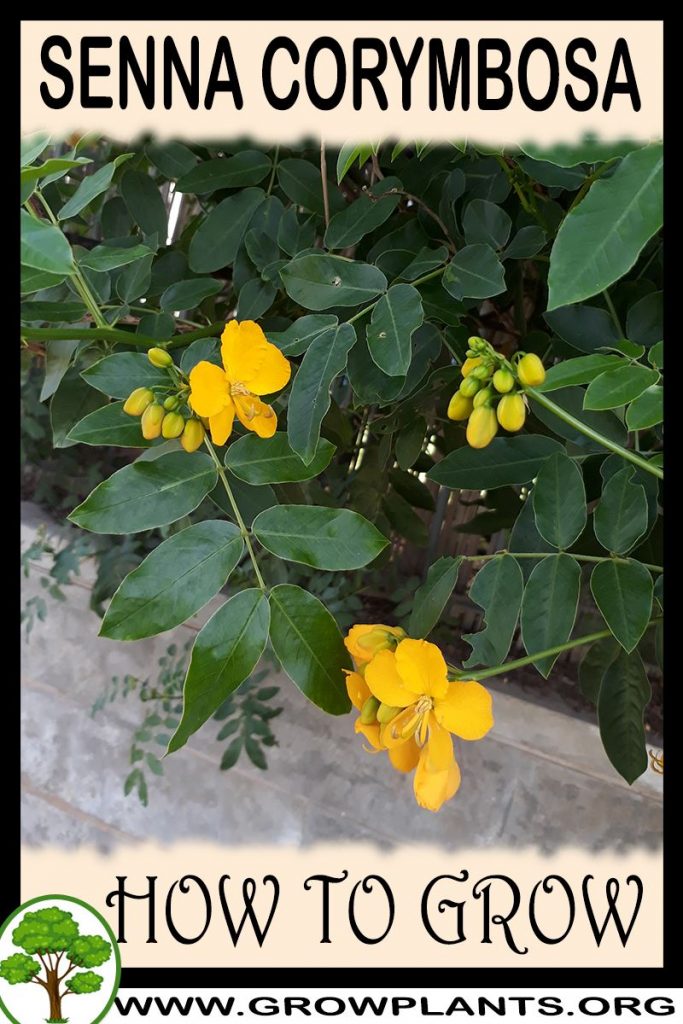
Plant Profile & Key Characteristics
Overview: A evergreen (cold-deciduous) leguminous shrub or small tree with ferny pinnate leaves and clusters of bright yellow flowers. Grown as an ornamental hedge and screen and to attract pollinators.
Quick Specifications
| Specification | Attribute |
|---|---|
| Plant Type / Life Cycle | Shrub or small tree, perennial legume (Fabaceae) |
| Foliage Type | Evergreen to semi-deciduous (drops leaves in cold) |
| Mature Size | 2-5 m (6-16 ft) |
| Growth Rate | Moderate to fast |
| Toxicity | Parts contain anthraquinone compounds (the basis of medicinal senna) and can be purgative or toxic if eaten |
| Hardiness | USDA zone 7+ |
Growth Form & Structure
- Height & Spread: 2-5 m (6-16 ft), kept smaller and denser by pruning; can also be container-grown.
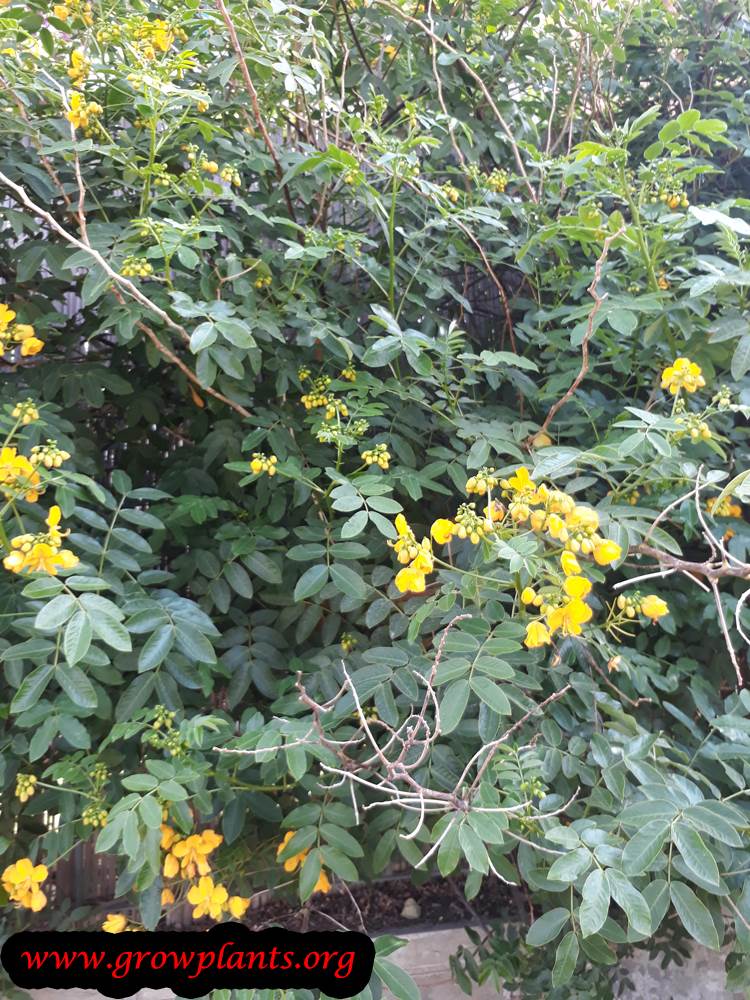
- Growth Habit & Form: Bushy, upright shrub or small tree with arching leafy stems; responds well to shaping as a hedge or screen.
- Lifespan & Maturity: Fast to establish and flower within a few years; a moderately long-lived woody plant.
Anatomy & Physical Features
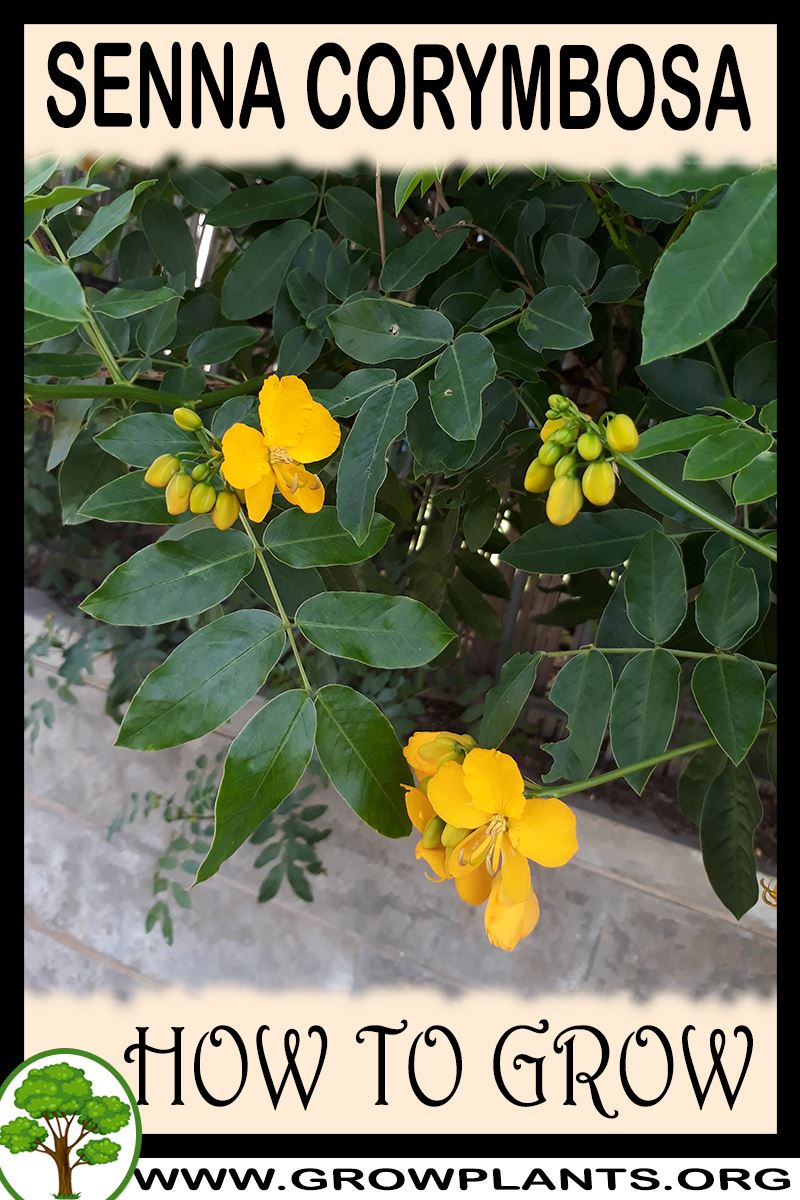
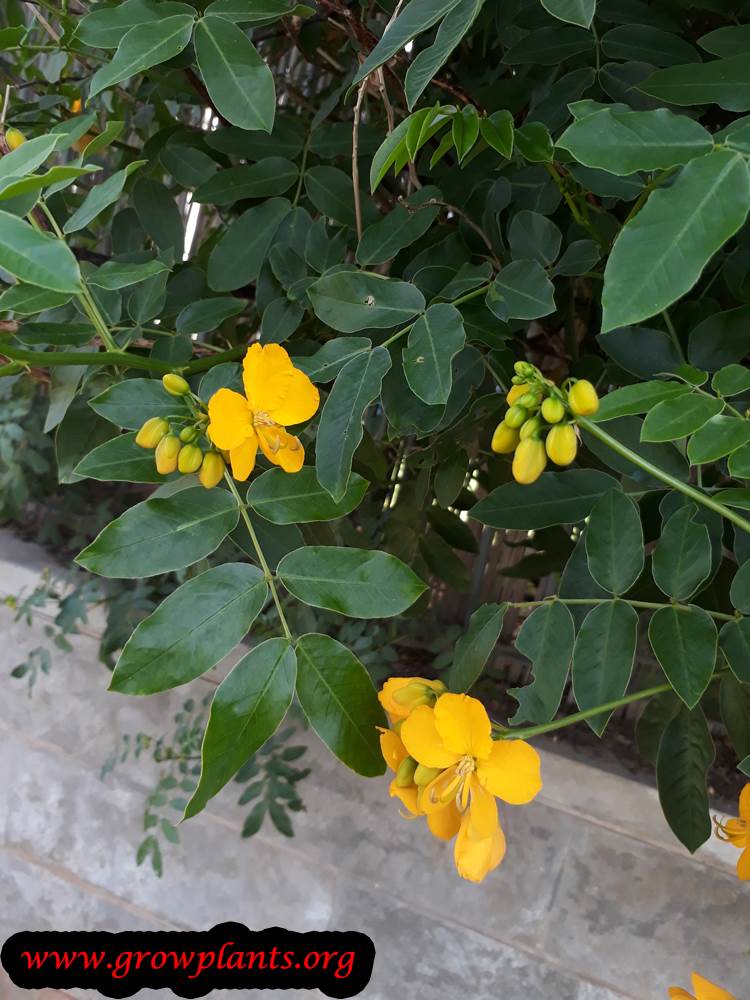
- Leaves & Foliage: Green, elliptic leaflets arranged in pinnate (feather-like) compound leaves.
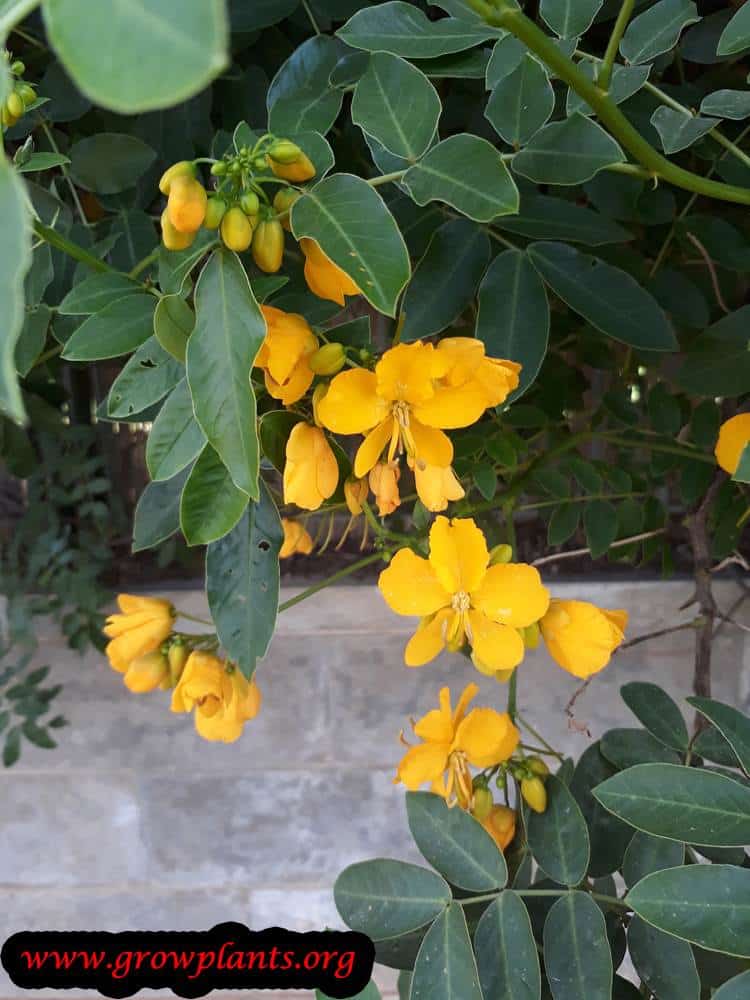
- Flower Characteristics: Bright yellow flowers, rounded in bud and opening bowl-shaped, carried in showy clusters (bean-like seed pods follow).
Primary Uses & Landscape Value
- Functional & Ornamental Roles: Ornamental flowering hedge, screen and specimen shrub, and a valuable pollinator plant that attracts bees and butterflies.
Care Guide: Planting, Soil & Watering
Overview: Senna corymbosa (Argentine senna) is a fast-growing flowering shrub that grows best in full sun to light shade in ordinary, well-drained soil. It is undemanding and fairly drought-tolerant once established, adapting to a wide range of watering from modest to generous.
Quick Care Requirements
| Requirement | Ideal Condition |
|---|---|
| Planting Season | In spring, summer or autumn during warm weather |
| Growth Rate | Moderate to fast |
| Soil Type | Ordinary, well-drained soil; adaptable |
| Water Need | Low to high — adaptable; deep, occasional watering once established |
Planting & Establishment
- Best Planting Season: Plant during the warm season (spring through autumn); it is hardy from zone 7 and warmer, so in colder areas plant after the last frost to give it a full warm season to establish.
- How to Plant:
- Hole Preparation: Dig a planting hole about twice as wide as the root ball and no deeper, loosening the sides so the roots spread easily.
- Soil Amendments: Mix a little compost into the backfill to get it started; it is not a heavy feeder and tolerates lean soils, so avoid over-enriching.
- Planting Depth: Set the plant so the top of the root ball sits level with the surrounding soil — keep the root collar at the surface and never bury the stem.
- Growth Speed & Expectations: Fast, vigorous growth into a 2–5 m tall shrub; it can become aggressive or invasive, so site it where its spread and self-seeding can be managed.
Soil, Watering & Drainage Care
- Soil Mix & Drainage Needs: Provide ordinary, freely draining garden soil; in containers use a quality mix that drains well so the roots never sit in water.
- Watering Schedule & Technique:
- Young / Newly Planted: Water regularly for the first few weeks after planting to settle the roots and establish the shrub.
- Established: Once established it is fairly drought-tolerant — water deeply but occasionally, letting the top few centimetres dry between waterings.
- Seasonal Adjustments: Water more often in hot, dry spells; reduce watering in cool weather and through winter dormancy.
Climate, Light & Hardiness
Argentine senna is an adaptable evergreen (to cold-deciduous) flowering shrub or small tree that blooms in full sun to half shade and copes with a wide range of climates. It is fairly cold-hardy for a senna - the site data gives roughly USDA zone 7 and warmer - where a hard winter may cut it back but it typically resprouts.
Quick Climate Specifications
| Climate Zones | Temperate, mediterranean, desert, subtropical, tropical |
|---|---|
| USDA Hardiness Zones | Approximately 7 and warmer (site data) |
| Optimal Temp Range | Approximately 18–30°C (64–86°F) |
| Cold Damage Begins | Foliage and soft growth suffer with frost, near 0–−2°C (32–28°F) |
| Approx. Survival Minimum | Established plants may be cut back by harder frost yet resprout from the base; varies by age, exposure duration, and conditions |
| Frost Tolerance | Moderate (top damaged, resprouts) |
| Light Conditions | Full sun to half shade |
| Wind Tolerance | Moderate |
Sunlight & Light Exposure
Optimal Light Setup
Full sun gives the densest growth and the longest run of yellow flowers; it also tolerates half shade.
Direct Sun Requirement
Good direct light supports its heavy, extended flowering.
Best Exposure / Orientation
A warm, sunny, open aspect suits it as a hedge or specimen.
Temperature Extremes & Hardiness
USDA Hardiness & Regional Limits
The site places it around zone 7 and up, wider than many sennas. In its cooler zones it may behave as cold-deciduous, dying back in a hard winter and resprouting; in warm zones it stays evergreen and flowers over a long season.
Cold Damage & Winter Protection
Frost nips foliage and soft growth; a harder freeze can cut the plant back, but established specimens usually reshoot from the base. Protect young plants in their first winters.
Frost Sensitivity
Moderately frost-hardy for the genus - young plants are more vulnerable than established ones.
Extreme Heat Tolerance
Very good - it grows through to tropical heat and tolerates hot, dry conditions.
Wind, Humidity & Microclimate
Dry-Air Tolerance
Good - it grows in mediterranean and desert as well as humid climates.
Wind Tolerance
Reasonably wind-tolerant; the fast, soft growth can be tidied after storms.
Microclimate Recommendations
At the cold edge, a warm, sheltered, sunny spot helps it stay evergreen and reduces winter dieback.
Growing in Pots, Balconies & Indoors
This buttercup-yellow senna is a fast flowering shrub – not a houseplant, but the grower says it grows in containers. In a large pot it flowers freely on a sunny balcony or patio.
Quick Details
- Container Size: A large pot for a fast 2-5 m (6-15 ft) shrub, kept pruned
- Indoor Suitability: No – it needs full sun
- Best Spot: Full sun to half shade
- Soil & Drainage: Free-draining mix
- Watering in Pots: Adaptable – small to plenty; pots dry fast, so do not let it fully parch
Indoors & On the Windowsill
- Not a houseplant: It needs full sun to flower – grow it in outdoor pots.
- Overwintering: Somewhat tender; in cold climates a potted plant can shelter frost-free over winter and then be cut back.
On a Balcony or Patio
- Full sun & pruning: A fast, leafy shrub – give it full sun and prune it to keep it in scale in a pot; stake or shelter from wind.
- Safety: Senna pods and leaves are a strong laxative – keep them away from children and pets.
Choosing the Pot, Soil & Long-Term Care
- Large pot & drainage: A large pot with a free-draining mix and strong drainage.
- Feeding: Potted plants exhaust their soil faster as nutrients leach with each watering – feed a little more often than plants in the ground, at reduced strength.
- Repotting: Prune after flowering and pot up or refresh every couple of years.
Fertilizing & Feeding
A light to moderate feeder. As a nitrogen-fixing legume it supplies much of its own nitrogen, so it needs only modest, balanced feeding through spring and the flowering season; heavy nitrogen produces leaves at the expense of flowers.
Quick Fertilizing Specs
| Feeding Level | Light to moderate |
|---|---|
| Main Nutrient Priority | Balanced nutrition; go easy on nitrogen |
| Best Feeding Period | Spring through the flowering season |
| Organic Options | Compost, aged manure or leaf mulch |
| Soil pH | Adapts to a wide range; needs well-drained soil |
| Reduce/Stop Feeding | Ease off as growth slows into dormancy |
Feeding by Growth Stage
Spring flush and canopy growth
Support the new season’s shoot and leaf growth so the plant enters bloom in good health.
| Nutrient direction | A balanced complete fertilizer; because this is a nitrogen-fixing legume it needs only gentle nitrogen, so favour a light balanced feed over a heavy nitrogen push. |
|---|---|
| Timing | As growth resumes in spring. |
| Frequency | A few light feedings spread through the active growing season. |
| Fertilizer types | A balanced granular or slow-release complete fertilizer, Compost or other organic matter worked into the surface |
| Precautions | Keep fertilizer off the trunk and avoid overfeeding nitrogen, which pushes foliage at the expense of flowers. |
Flowering
Sustain flowering without forcing excessive leafy growth.
| Nutrient direction | Continue a balanced complete fertilizer; adequate overall nutrition, not high phosphorus, drives good bloom. |
|---|---|
| Timing | Through the flowering period. |
| Frequency | Light, steady feeding during bloom. |
| Fertilizer types | A balanced complete fertilizer |
| Precautions | Avoid high-phosphorus bloom-booster products; balanced, light nutrition suits this plant better. |
Dormancy or winter rest
Let the plant rest as growth and nutrient demand fall away in the cool season.
| Nutrient direction | None – withhold fertilizer while the plant is dormant. |
|---|---|
| Timing | Autumn into winter, as growth slows. |
| Frequency | No feeding at this stage. |
| Fertilizer types | No feeding at this stage while the plant is dormant. |
| Precautions | Do not fertilize until active growth resumes in spring. |
Nutrient Deficiency Signs & Corrections
Older, lower leaves turn uniformly pale or yellow and overall growth is weak.
| Possible causes | Low soil nitrogen or poor root-nodule activity on this legume, Waterlogged or compacted roots limiting uptake, Very sandy, low-fertility soil |
|---|---|
| Appears first on | Older, lower leaves |
| What to check | How wet the root zone stays and whether the soil drains freely, Whether the plant has been fed at all this season, General soil fertility and organic matter |
| Possible correction | Improve drainage, work in organic matter, and apply a balanced complete fertilizer at a modest rate. |
New leaves are pale or yellow between green veins while the veins stay green.
| Possible causes | High (alkaline) soil pH locking up iron, Waterlogged or cold soil reducing root uptake, A genuine iron shortage in the soil |
|---|---|
| Appears first on | Youngest leaves at the shoot tips |
| What to check | Soil pH and whether the soil is chalky or alkaline, How well the soil drains and whether symptoms follow wet spells, Whether only the new growth is affected |
| Possible correction | Correct soil pH where possible and apply a chelated iron product according to its label; improve drainage. |
Older leaves develop browning, scorched margins.
| Possible causes | Potassium shortage in the soil, Fertilizer or soil salt build-up in the root zone, Drought stress between waterings |
|---|---|
| Appears first on | Margins of older leaves |
| What to check | Recent fertilizer use and any salt crust on the soil surface, Soil moisture and the watering pattern, Whether only leaf edges, not whole leaves, are affected |
| Possible correction | Water thoroughly to rinse excess salts through, even out watering, and use a balanced fertilizer with adequate potassium at a modest rate. |
Pruning, Training & Seasonal Maintenance
Argentine senna is a fast, twiggy evergreen-to-deciduous shrub that flowers yellow over a long season on the current year’s growth. Because it blooms on new wood, it responds very well to being cut back in late winter or early spring to renew flowering shoots and keep it compact — left unpruned it grows leggy, bare-based and sparse. It tolerates fairly hard pruning, which makes it easy to keep in bounds or to reshape.
Quick Pruning & Maintenance Specs
| Pruning Tolerance | Moderate–High — accepts hard cutback and renews on new wood |
| Primary Pruning Window | Late winter / early spring, before the new flush |
| Secondary Maintenance Window | Light tidy/deadhead after flowering flushes |
| Typical Frequency | Annual renewal cutback |
| Main Objective | Keep compact and floriferous by renewing flowering wood |
| Young Plant Priority | Tip-prune to build a bushy multi-stem framework |
| Mature Plant Priority | Shorten last season’s shoots; remove oldest stems at the base |
| Best Tool Type | Bypass secateurs; loppers for old basal stems |
| Avoid Heavy Pruning During | Frost in colder zones; just before the earliest flowers if wanted |
Pruning by Plant Age & Size
Newly Established
Tip-prune the young plant to encourage branching, so it builds a bushy, multi-stemmed framework rather than a few leggy canes.
Young / Formative
Continue light tip-pruning to thicken the framework, and begin the annual habit of shortening the previous season’s growth.
Mature / Established
Renew it each year: shorten the previous season’s shoots to keep it compact, and cut the oldest, weakest stems out at the base so vigorous young flowering wood keeps replacing them.
Seasonal Pruning Schedule
Late Winter / Early Spring (main renewal window)
Objective: renew flowering wood and keep the shrub compact. Shorten last year’s shoots and remove the oldest stems at the base. Do NOT remove all the emerging new growth, which will carry the flowers. Expected response: a flush of new shoots that flower the same year.
After Flowering Flushes (light tidy)
Objective: prolong the display and limit seeding. Deadhead spent flowers and light-trim; this can prompt further flushes on such a long-blooming shrub.
Flowering & Fruiting Wood
Senna corymbosa flowers on the current season’s growth over spring, summer and autumn. That is why a late-winter cutback increases flowering wood rather than removing it, and why deadheading after a flush can bring on more bloom. The only caution is not to shear off the earliest new growth in spring if you want the first flowers.
Structural Pruning & Training
Manage it as a renewable, twiggy shrub: remove the oldest stems at the base to prevent legginess, and control height and spread. It can be kept as an informal flowering screen; formal shearing is possible but costs flowers and opens the base.
Special Growth to Remove
Remove spent seed pods, since it self-seeds and is noted as invasive/aggressive. Among the basal shoots, retain a few strong ones for renewal and thin the excess.
Container & Small-Space Pruning
Grows in a large container. Keep it compact with the same annual cutback plus regular tip-pinching; harder reduction is tolerated, so a pot-grown plant can be kept small and shapely.
Tools
Bypass secateurs handle the shoots and deadheading; loppers take the older basal stems during renewal. Hedge shears only suit a deliberately clipped informal hedge — and even then expect fewer flowers on the sheared faces.
Tool Hygiene & Disease Risk
Routine. Aphids are the main pest rather than a pruning-borne disease; keep tools clean and sharp.
Cut Placement & Technique
Cut to an outward-facing bud when shortening shoots to keep the centre open; remove old stems right at the base; use heading cuts on young plants to build density.
Heavy Pruning & Rejuvenation
Tolerates hard renewal — a leggy plant can be cut back to a low framework in late winter and will resprout and flower on the new wood the same season. This is the standard way to rejuvenate an overgrown Argentine senna.
Post-Pruning Care
Water lightly to support the new flush, and watch for aphids on the soft regrowth. No heavy feeding is needed on this nitrogen-fixer.
Common Pruning Mistakes
- Shearing it like a formal hedge and losing both the flowers and an open, healthy structure.
- Never renewing old stems, so it becomes leggy and bare at the base.
- Letting spent pods seed the plant around where it is invasive.
When NOT to Prune
In colder zones, wait until frost risk passes and growth resumes rather than cutting into cold-damaged tissue; do not shear off the first spring growth if you want the earliest flowers.
Recommended Tools (by task)
- bypass_secateurs — shortening shoots, deadheading and general renewal cuts on flowering wood.
- loppers — removing the oldest, thicker basal stems during annual renewal.
Pruning Troubleshooting
| Problem | Possible Cause | What to Check | Corrective Action |
| Leggy, bare-based, few flowers | No annual renewal; old stems never removed | Age of the main stems; last cutback | Cut back in late winter and remove oldest stems at the base |
| Green, bushy, but sparse bloom | Sheared/over-fed, or first growth removed | Shearing vs selective cuts; nitrogen; spring growth removed | Prune selectively for renewal; ease off nitrogen; keep spring growth |
| Seedlings appearing around the plant | Spent pods left to set and shed seed | Presence of ripening seed pods | Deadhead/remove pods before they shed where it is invasive |
Propagation Guide
Argentine senna is easily raised from seed, its usual method; the hard coat germinates more evenly after a hot-water soak or scarification. Semi-hardwood cuttings also root and are useful for increasing a particular plant. Seedlings are fairly uniform. Easy.
Quick Propagation Specs
| Best Propagation Method | Seed |
| Alternative Methods | Semi-hardwood cuttings |
| Propagation Difficulty | Easy |
| Seed True-to-Type | Mostly uniform |
| Vegetative True-to-Type | Yes |
| Best Propagation Season | Spring to summer (site) |
Growing from Seed
Dormancy & Pre-Sowing Treatment
Hard-coated seed; give a hot-water soak or scarify before sowing.
Sowing Season
Spring to summer, into warm, well-drained soil (site).
Germination Conditions
Warm, moist soil; treated seed germinates within a few weeks and this fast grower establishes quickly.
Stem Cuttings
Semi-hardwood cuttings taken in the warm season root under humidity and are the simplest way to reproduce a chosen plant true to type.
Bloom & Flower Guide
Quick Details
- Bloom Season: Spring through autumn – a long season
- Flower Appearance: Bright yellow flowers, rounded in bud and opening to a shallow bowl of five petals, in clusters
- Edibility: Ornamental – the flowers are not eaten
Detailed Blooming Overview
Argentine senna is a shrubby legume that flowers generously in bright yellow from spring right through autumn. The blooms are popular with bees.
Flower Characteristics
- Yellow flowers, round in bud, opening to a shallow bowl.
- Borne on the stems in clusters.
Bloom Care & Thinning
- Pollination: By bees – the flowers are buzz-pollinated, with bees vibrating pollen loose from the anthers.
- Managing the bloom: Deadhead spent clusters to keep the long display going.
Pests, Diseases & Troubleshooting
Overview: Sennas are fast, sun-loving legume shrubs that are the caterpillar food-plant of sulphur butterflies, so leaf-chewing larvae are their signature ‘pest’ — often a feature rather than a problem for pollinator gardeners. Beyond that they attract the usual sap-suckers, and being legumes they resent wet, poorly drained soil.
Quick Troubleshooting Overview
| Issue / Pest | Main Symptom | Primary Solution |
|---|---|---|
| Sulphur-butterfly caterpillars | Green caterpillars chewing leaves; defoliation | Tolerate for butterflies; hand-pick or Bt if severe |
| Aphids | Clusters on new tips & buds; honeydew, sooty mould | Rinse off; insecticidal soap |
| Whitefly | White flies under leaves; sticky honeydew | Sticky traps; insecticidal soap or neem |
| Scale & mealybugs | Bumps / cottony tufts on stems; sooty mould | Scrape/swab; horticultural oil |
| Powdery mildew | White film on leaves in humid, crowded air | Airflow; sulphur or potassium-bicarbonate spray |
| Root rot / chlorosis | Yellowing, wilting in wet or poor soil | Improve drainage; correct feeding |
Common Pests & Management
- Sulphur-butterfly caterpillars (Phoebis / Eurema spp.):
- Symptoms: Green (sometimes yellow-striped) caterpillars that chew the leaves and can partially defoliate a plant; Senna is a primary larval host for cloudless-sulphur and other pierid butterflies. The damage is usually cosmetic on an established shrub.
- Prevention & Control: For wildlife gardeners this is a benefit — tolerate the feeding and enjoy the butterflies. If defoliation is unacceptable, hand-pick larvae or spray Bacillus thuringiensis (Bt) selectively, accepting that this also removes the butterflies. Healthy shrubs quickly re-flush.
- Aphids (Aphis / Acyrthosiphon spp.):
- Symptoms: Green, black or grey clusters on soft new shoots, flower buds and pods, sucking sap, distorting tips and leaving sticky honeydew and sooty mould; they can also transmit viruses.
- Prevention & Control: Dislodge with a water jet or wipe off; insecticidal soap or a light oil clears heavier infestations. Avoid excess nitrogen, which drives the soft growth aphids favour, and let ladybirds, lacewings and hoverflies do much of the work.
- Whitefly (Bemisia / Trialeurodes spp.):
- Symptoms: Tiny white flies on leaf undersides that rise in clouds when disturbed; nymphs suck sap and excrete honeydew, weakening growth and blackening leaves with sooty mould.
- Prevention & Control: Hang yellow sticky traps and spray insecticidal soap or neem to the undersides in the evening, repeating to break the cycle. Encourage airflow and parasitic wasps (Encarsia) in greenhouses.
- Scale & mealybugs (Coccus / Pseudococcus spp.):
- Symptoms: Brown limpet-like bumps (scale) or white cottony tufts (mealybug) on stems, leaf undersides and axils, sucking sap and producing honeydew and sooty mould, with weakened, yellowing growth.
- Prevention & Control: Scrape or swab off small colonies and treat with horticultural oil to smother crawlers, repeating for successive generations. Prune out badly infested wood and keep plants vigorous and open.
Diseases & Fungal Issues
- Powdery mildew (Erysiphales):
- Symptoms: A white, powdery film on leaves and shoots in humid, crowded, or still conditions, causing yellowing, distortion and early leaf drop, worst on shaded or overcrowded plants.
- Treatment & Management: Improve airflow with correct spacing and pruning, grow in full sun, and avoid wetting foliage late in the day. Remove affected leaves; sulphur, potassium-bicarbonate or a copper spray helps if it persists.
- Leaf spots & root rot (Cercospora / Phytophthora / Pythium spp.):
- Symptoms: Brown or angular leaf spots in warm, wet weather, and, more seriously, root and collar rot causing wilting and yellowing in waterlogged or poorly drained soil — legumes are intolerant of wet feet.
- Treatment & Management: Ensure free-draining soil and avoid overwatering; rake up and remove fallen diseased leaves. For root rot, improve drainage and reduce watering; a copper fungicide can check leaf-spot outbreaks, but cultural control is primary.
Growing Difficulties & Abiotic Problems
- Poor drainage & root rot:
- Cause & Symptoms: Yellowing, wilting and dieback in heavy, waterlogged soil; sennas are adapted to lean, well-drained ground and rot in wet feet.
- Correction Strategy: Plant in free-draining soil, avoid overwatering established shrubs (they are drought-tolerant once settled), and improve heavy ground with grit. Raised beds or slopes help in wet climates.
- Chlorosis (nutrient/pH issues):
- Cause & Symptoms: Yellowing between green veins on new leaves points to iron or manganese lock-out, often in alkaline or waterlogged soil, or general nitrogen shortage in very poor ground.
- Correction Strategy: Correct the soil: improve drainage, add organic matter, and use an iron/manganese chelate for lime-induced chlorosis. Being nitrogen-fixing legumes they rarely need heavy feeding, so avoid over-fertilising.
- Frost & cold damage:
- Cause & Symptoms: Many sennas are frost-tender; cold blackens the foliage and cuts back soft growth, and hard frost can kill young plants.
- Correction Strategy: Grow in a warm, sheltered spot or as a container plant that can be protected; established plants often reshoot from the base after light frost. Cut back damaged growth in spring and delay hard pruning until frost has passed.
What Helps – Products & Tools
Management is mostly organic: Bacillus thuringiensis (Bt) if you must curb caterpillars (though butterfly-lovers tolerate them), insecticidal soap and neem or horticultural oil for aphids, whitefly, scale and mealybugs, and yellow sticky traps for whitefly monitoring. For powdery mildew a sulphur, potassium-bicarbonate or copper fungicide is effective, and an iron/manganese chelate corrects lime-induced chlorosis. The best tools, though, are full sun, free-draining soil and airy spacing.