

Plant Profile & Key Characteristics
Overview: Sempervivum altum (houseleek, hens and chicks) is an evergreen succulent forming low rosettes and spreading mats, with flower stems to about 40 cm. This hardy, drought-tolerant perennial multiplies freely by offsets.
Quick Specifications
| Specification | Attribute |
|---|---|
| Plant Type / Life Cycle | Perennial |
| Foliage Type | Evergreen (succulent) |
| Mature Size | Low rosettes; flower stems 15-40 cm (6-16 in) |
| Growth Rate | Slow |
| Root System | Shallow, fibrous; mat-forming by offsets |
| Toxicity | Non-toxic |
| Hardiness | USDA zone 4+ |
Growth Form & Structure
- Height & Spread: Low ground-hugging rosettes forming spreading mats, with flower stems rising to about 40 cm; excellent in containers and rockeries.
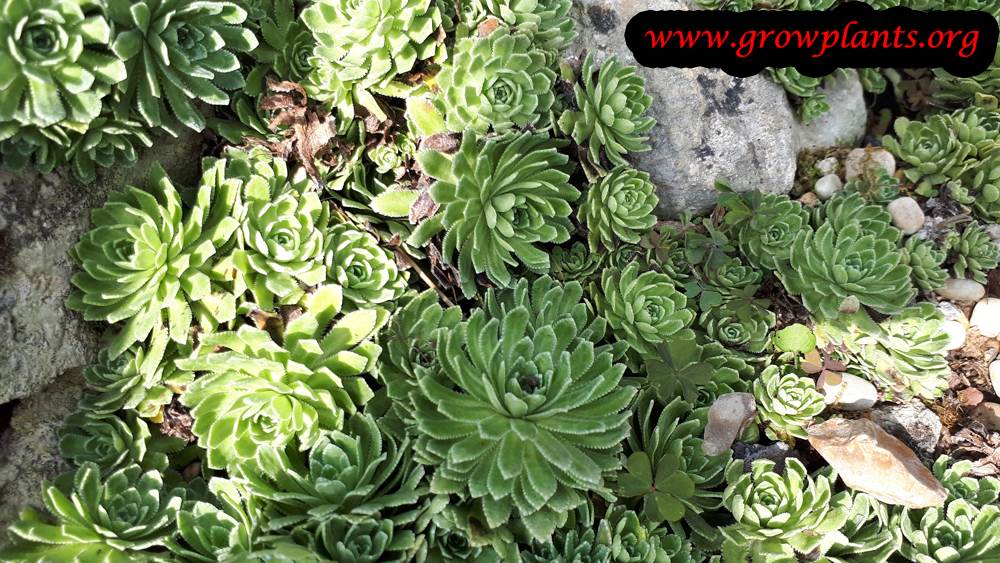
- Growth Habit & Form: Rosette-forming evergreen succulent that produces surrounding offsets (‘chicks’).
- Lifespan & Maturity: Each rosette is monocarpic (dies after flowering) but the offsets carry the colony on; slow-growing.
Anatomy & Physical Features
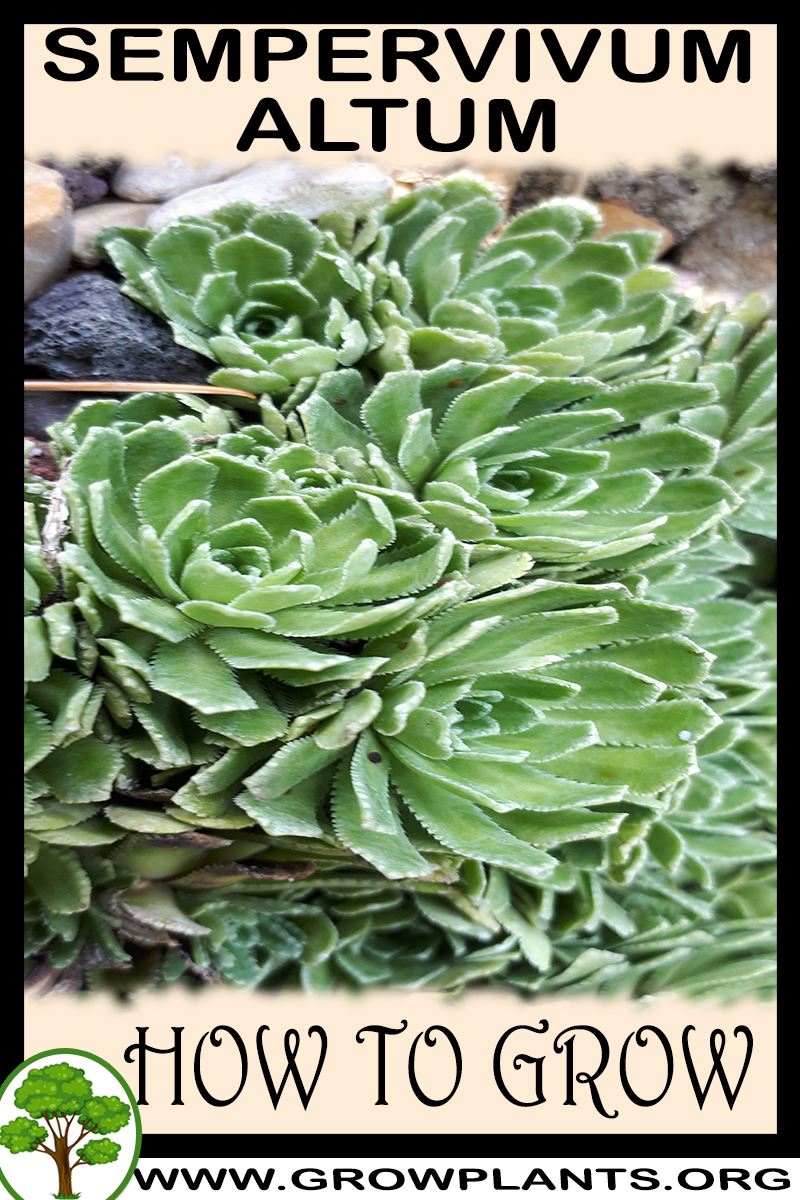
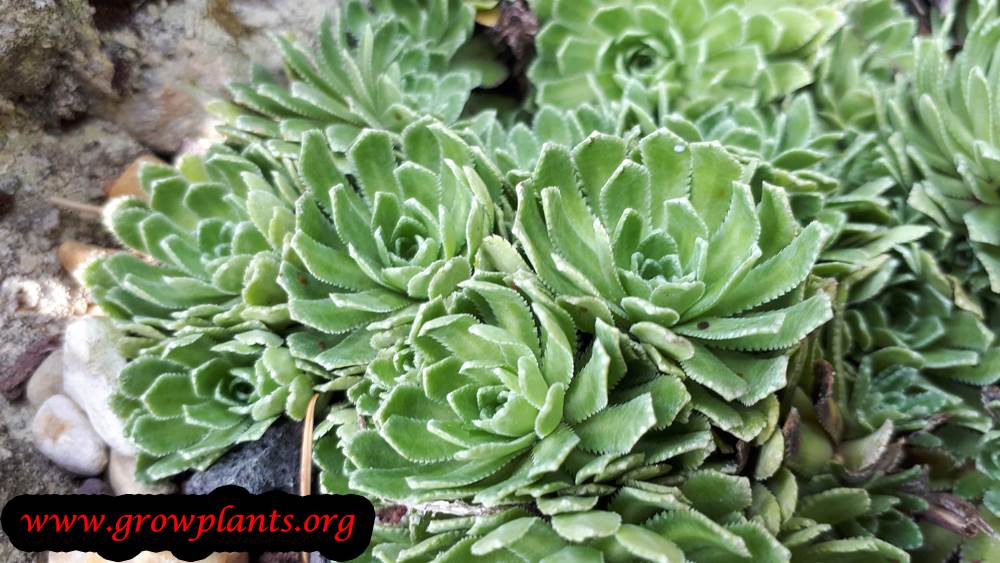
- Leaves & Foliage: Fleshy, pointed, elliptic to wedge-shaped leaves in green, purple, red, yellow or orange.
- Flower Characteristics: Pink to purple star-shaped flowers in an inflorescence on a stem, after which that rosette dies.
Primary Uses & Landscape Value
- Functional & Ornamental Roles: Rockeries, troughs and containers, green roofs, groundcover, xeric/drought plantings and houseplant.
Care Guide: Planting, Soil & Watering
Overview: Sempervivum is a hardy alpine succulent that grows best in full sun to light shade in gritty, sharply drained soil. It stores water in its fleshy rosettes, so it needs very little watering and rots quickly in wet, heavy ground.
Quick Care Requirements
| Requirement | Ideal Condition |
|---|---|
| Planting Season | In spring and summer |
| Growth Rate | Slow |
| Soil Type | Gritty, sharply drained succulent/alpine soil |
| Water Need | Low — let the soil dry out between waterings |
Planting & Establishment
- Best Planting Season: Plant in spring or summer during active growth so rosettes settle in before winter; it is very cold-hardy but happiest not sitting frozen and wet.
- How to Plant:
- Hole Preparation: Dig a shallow hole to suit the shallow roots; a gravelly, raised or rockery position gives the drainage it loves.
- Soil Amendments: Mix plenty of grit, sand or perlite into the soil for fast drainage; avoid rich, moisture-holding mixes.
- Planting Depth: Set the rosette with its base at soil level, crown above the surface, and top-dress with grit to keep the neck dry.
- Growth Speed & Expectations: Slow, spreading gradually by offsets (‘chicks’) to form a tight mat; each rosette flowers once, then dies and is replaced by its offsets.
Soil, Watering & Drainage Care
- Soil Mix & Drainage Needs: Very free-draining, gritty soil is essential; standing moisture around the rosettes causes rot.
- Watering Schedule & Technique:
- Young / Newly Planted: Water lightly after planting, then only when the soil is dry, to settle the roots.
- Established: Water sparingly — soak only when the soil has fully dried; established plants tolerate long dry spells.
- Seasonal Adjustments: A little water in prolonged summer heat; keep nearly dry in winter, especially in cold, wet climates.
Climate, Light & Hardiness
Sempervivum altum (a houseleek/hens-and-chicks) is an unusually cold-hardy succulent, at home in mediterranean, desert, subtropical, temperate, and tropical climates or as a houseplant, and it tolerates full sun through full shade. Unlike most succulents, the genus Sempervivum is genuinely frost-hardy, and this species is listed as hardy from about USDA zone 4 upward.
Quick Climate Specifications
| Climate Zones | Mediterranean, desert, subtropical, temperate, tropical |
|---|---|
| USDA Hardiness Zones | 4+ |
| Approx. Survival Minimum | Approximately −34.4°C to −28.9°C (−30°F to −20°F) at the zone 4 edge of its range |
| Frost Tolerance | High (an exception among succulents) |
| Light Conditions | Full Sun to Full Shade |
Sunlight & Light Exposure
Optimal Light Setup
Adaptable from full sun to full shade, though the most compact rosettes and best leaf color typically develop in full sun.
Temperature Extremes & Hardiness
USDA Hardiness & Regional Limits
Reliably hardy from about zone 4 upward, tolerating real winter cold that would damage most other succulents - the site data notes it can survive frost, though it performs best without prolonged exposure.
Cold Damage & Winter Protection
The main winter risk is cold combined with wet, poorly drained soil rather than cold alone; sharp drainage matters more than added protection within its hardy range.
Frost Sensitivity
Genuinely frost-tolerant for a succulent, which is one of the traits that sets Sempervivum apart from most other rosette succulents.
Wind, Humidity & Microclimate
Dry-Air Tolerance
Well adapted to dry air and drought.
Microclimate Recommendations
A well-drained site (rock gardens, gravel, raised beds) suits it in all climates, since drainage - not temperature - is usually the limiting factor for this species.
Growing in Pots, Balconies & Indoors
Houseleek (hens-and-chicks) is a tough, mat-forming succulent (15-40 cm) the grower rates as a good houseplant – it grows in a shallow pot on a bright windowsill and is equally at home outdoors.
Quick Details
- Container Size: A shallow, well-drained pot or pan
- Indoor Suitability: A good houseplant given bright light
- Best Spot: Full sun to light shade; brightest spot indoors
- Soil & Drainage: Gritty, sharply drained succulent mix
- Watering in Pots: Sparingly – very drought-tolerant
Indoors & On the Windowsill
- A good houseplant: Grow it on the brightest windowsill; the more light, the tighter and more colourful the rosettes. A ready-made cactus and succulent soil mix provides that structure without mixing it yourself.
- Watering: Water sparingly and let it dry out – it stores water in its fleshy leaves and rots if kept wet.
On a Balcony or Patio
- Very hardy: It is completely at home outdoors in full sun and thrives in shallow pots and troughs.
- Watering: Extremely drought-tolerant – let pots dry out between waterings.
Choosing the Pot, Soil & Long-Term Care
- Pot & drainage: A shallow, gritty pot with strong drainage; never leave it standing in water.
- Potting mix: Gritty, sharply drained succulent or cactus mix.
- Feeding: Feed lightly and rarely – it needs very little.
- Long term: Pot up the offsets (chicks) to make new plants and refresh the mix every couple of years.
Fertilizing & Feeding
A very light feeder: this drought-tolerant rosette succulent thrives on minimal, low-nitrogen feeding during active growth and needs none at all while dormant.
Quick Fertilizing Specs
| Feeding Level | Light feeder |
|---|---|
| Main Nutrient Priority | Low-nitrogen feeding to keep rosettes compact rather than soft and stretched |
| Best Feeding Period | During active warm-season growth |
| Organic Options | Not typically needed in the lean, well-drained soil this plant prefers |
| Reduce/Stop Feeding | Stop feeding entirely once growth slows for the dormant rest period |
| Micronutrients | Not typically needed; correct only clearly diagnosed issues |
| Soil pH | Tolerates a wide range in well-drained soil |
Feeding by Growth Stage
Active warm-season growth
Support steady, compact rosette growth and offset production without encouraging soft, stretched leaves.
| Nutrient direction | A very light, low-nitrogen feeding, if used at all, is enough for this naturally slow, drought-tolerant succulent. |
|---|---|
| Timing | During active growth in spring and summer. |
| Frequency | Feeding is rarely needed and, if given, should be infrequent and light. |
| Fertilizer types | A diluted, low-nitrogen fertilizer formulated for succulents or cacti |
| Precautions | Overfeeding produces soft, stretched, less cold-hardy rosettes; when in doubt, feed less rather than more. |
Dormant rest
Let the plant rest through its natural slow-growth period without added nutrient stress.
| Nutrient direction | None – withhold fertilizer entirely while growth is dormant or minimal. |
|---|---|
| Timing | During winter or whenever growth visibly stalls. |
| Frequency | No feeding during this rest; resume only when active growth clearly returns. |
| Fertilizer types | No feeding at this stage; do not fertilize while the plant is dormant. |
| Precautions | Feeding a dormant succulent offers no benefit and raises the risk of salt buildup and rot in slow-draining conditions. |
Nutrient Deficiency Signs & Corrections
Rosettes stretch, become pale, and lose their normally tight, compact form.
| Possible causes | overfeeding, especially with a nitrogen-heavy fertilizer, insufficient light, overwatering compounding soft growth |
|---|---|
| Appears first on | new growth at the center of the rosette |
| What to check | recent feeding amounts and nitrogen content, light exposure, watering frequency |
| Possible correction | Stop feeding, move to brighter light, and let soil dry appropriately between waterings. |
Rosettes turn mushy, discolored, or collapse despite otherwise normal care.
| Possible causes | waterlogged, poorly drained soil, fungal or bacterial rot, fertilizer salt buildup compounding root stress |
|---|---|
| Appears first on | the base of the rosette and roots |
| What to check | soil drainage and recent watering amounts, root and base condition when gently examined, recent feeding history |
| Possible correction | Improve drainage, let the soil dry out, and withhold feeding until healthy new growth resumes. |
New rosettes are unusually small or pale despite otherwise favorable growing conditions.
| Possible causes | very low soil fertility over an extended period, extremely lean, mineral-poor soil, an unusually long stretch without any feeding |
|---|---|
| Appears first on | new offset rosettes |
| What to check | how long it has been since any feeding, soil composition, overall plant vigor compared with prior seasons |
| Possible correction | Apply a light, diluted, low-nitrogen succulent fertilizer during active growth. |
Pruning, Training & Seasonal Maintenance
Sempervivum altum tolerates only minimal, low-impact maintenance – it does not need or tolerate structural pruning. The two things that actually need removing are old, dried lower leaves, and, because each individual rosette of this species is monocarpic (it flowers once and then dies), the spent mother rosette after it blooms, to make room for the offset ‘chicks’ that keep the clump going.
Quick Pruning & Maintenance Specs
| Pruning Tolerance | Low |
| Primary Pruning Window | Any time, as needed (evergreen, no strict season) |
| Typical Frequency | Occasional, as old leaves dry or a rosette finishes flowering |
| Main Objective | Remove old dried leaves and spent flowered rosettes; make room for offsets |
| Best Tool Type | Precision snips / fingers |
| Avoid Heavy Pruning During | Not applicable – this plant is never heavily pruned |
Special Growth to Remove
- Old, dried lower leaves – can simply be removed by hand or snipped away as they naturally dry with age.
- The mother rosette after it flowers – because each Sempervivum rosette is monocarpic and dies after blooming, the spent rosette can be cleared away once it has fully died back, opening space for the surrounding offsets to fill in.
- Offsets (‘chicks’) should generally be left in place to form the natural mat, and only detached if you are propagating or dividing the clump – they are not unwanted growth.
Container & Small-Space Pruning
Very well suited to shallow pots and small spaces given its slow growth and drought tolerance; the same light touch applies – remove dry leaves and spent flowered rosettes, and thin overcrowded offsets only if you want to control the mat’s density in a small container.
Tools
- Precision snips or fingers – sufficient for removing dry leaves and spent rosettes.
- Grafting knife – useful for cleanly dividing offsets from the mat if propagating, keeping a sterile cut on the succulent tissue.
Tool Hygiene & Disease Risk
Routine: clean tools are sufficient. If dividing offsets with a knife, a clean cut helps the exposed tissue callus over cleanly and resist rot, which matters more for this species than any transmissible pathogen risk.
Cut Placement & Technique
Remove dry leaves at their point of attachment; when clearing a spent mother rosette, cut or lift it away at its base once fully dead, taking care not to disturb the roots of surrounding offsets.
Heavy Pruning & Rejuvenation
Not applicable/not tolerated – this succulent has no framework to cut back into, and each rosette’s natural lifecycle (grow, flower once, die, be replaced by offsets) is the plant’s own renewal mechanism rather than something pruning drives.
Common Pruning Mistakes
- Removing offsets (‘chicks’) thinking they are unwanted growth, when they are the plant’s normal means of spreading and its long-term outstock for a rosette lost to flowering.
- Leaving a fully spent, rotting mother rosette in place, where it can encourage moisture/rot issues among the surrounding offsets.
When NOT to Prune
No strict seasonal restriction; simply avoid disturbing healthy, actively growing offsets when clearing a spent rosette or old leaves nearby.
Recommended Tools (by task)
- precision_snips – removing dry leaves and spent flowered rosettes.
- grafting_knife – a clean, sterile cut when dividing offsets for propagation.
Propagation Guide
Sempervivum altum is most easily propagated by removing the offset rosettes (“chicks”) that form naturally around the mother rosette (“hen”) – the site confirms this vegetative route is needed if you want new plants identical to the parent. Seed is also viable and produces new genetic variation, but takes longer to reach a mature rosette, so overall propagation is easy.
Quick Propagation Specs
| Best Propagation Method | Offset (“chick”) division |
| Alternative Methods | Seed; leaf cuttings (less reliable in this genus) |
| Propagation Difficulty | Easy |
| Seed True-to-Type | Variable |
| Vegetative True-to-Type | Yes |
| Best Propagation Season | Spring or summer |
| Seed Germination Time | A few weeks, often irregular |
| Germination Temperature | Around 18–22°C (64–72°F) |
| Seed Sowing Depth | Surface-sown or barely covered |
Growing from Seed
Sowing Season
Sow in spring or summer.
Sowing Depth & Orientation
Sow on the surface of a gritty, well-drained mix, pressing seed in lightly rather than burying it.
Germination Conditions
Keep the mix lightly moist (not wet, matching this plant’s preference for well-drained soil and a modest water need) in bright light; warm temperatures around 18–22°C (64–72°F) suit germination.
Germination Time
Typically a few weeks and can be uneven.
Seedling Care
Let seedlings grow on in bright light with minimal watering between drying, since overwatering is the main risk for this drought-tolerant succulent.
Leaf & Root Cuttings
Individual leaves can occasionally be used to start new rosettes, but this is far less reliable in Sempervivum than offset division and is not the recommended method for this species; a healthy, undamaged leaf pulled cleanly from the base, laid on a dry gritty mix, and kept lightly moist may eventually form a tiny rosette, but success is inconsistent.
Division, Offsets, Pups & Suckers
Detach well-formed offset rosettes (“chicks”) from the mother plant once they have their own small root system, using a clean cut or gentle twist at the connecting stolon. Let the cut surface callus for a day in a dry, shaded spot before potting into well-drained soil, then water sparingly until new roots establish, in keeping with the plant’s cold-tolerant, well-drained-soil preference.
Bloom & Flower Guide
Quick Details
- Bloom Season: Summer
- Time to First Bloom: A rosette flowers only once it is mature, usually after a few years of growth
- Flower Appearance: Star-shaped pink to purple flowers held in a cluster on an upright, leafy stem that rises from the centre of the rosette
- Edibility: Grown as an ornamental; the flowers are not eaten
Detailed Blooming Overview
Sempervivum altum is a houseleek, and houseleeks are monocarpic: each rosette flowers just once in its life. When a rosette is mature it stretches upward into a thick, leafy flower stem topped with a cluster of star-shaped flowers, then dies once the bloom is over. This is not a loss — by then the plant has surrounded itself with a ring of offset rosettes (the "chicks") that carry the colony on.
Flower Characteristics
- Star-shaped flowers in pink to purple, carried in a branched cluster.
- Held on a stout, upright stem lined with small leaves.
- The whole flowering rosette elongates dramatically before blooming.
Bloom Care & Thinning
- Let the offsets take over: Once a rosette has flowered and died, twist it out; the surrounding chicks will quickly fill the gap.
- Full sun: Bright light and lean, gritty soil keep the rosettes compact and colourful.
- Enjoy it while it lasts: The bloom is a one-time event for each rosette, so let it run its course before removing the spent stem.
Pests, Diseases & Troubleshooting
Overview: Sempervivums (houseleeks) are among the toughest, most pest-resistant plants you can grow – their real enemies are wet soil and rot, not insects. Grown lean and sharply drained in full sun they need almost nothing; the few genuine pests are vine weevil grubs and mealybugs on the roots, and a curious houseleek-specific rust. Remember, too, that each rosette naturally dies after it flowers, which is not a disease.
Quick Troubleshooting Overview
| Issue / Pest | Main Symptom | Primary Solution |
|---|---|---|
| Crown/root rot | Rosettes soften, brown and collapse from the centre | Sharp gritty drainage; full sun; water sparingly |
| Vine weevil | Rosettes wobble loose; grubs eating roots in pots | Biological nematodes; check root ball; hand-pick adults |
| Root mealybug | White waxy specks on roots; poor, stalled growth | Repot into fresh gritty mix; wash roots; isolate |
| Houseleek rust | Swollen, distorted, yellow-orange rosettes | Remove & destroy affected rosettes; improve airflow |
| Etiolation | Pale, stretched, loose rosettes losing colour | Move to full sun; the more light, the tighter/redder |
| Rosette dies after flowering | Flowered rosette browns and dies (natural) | None needed; offsets (‘chicks’) replace it |
Common Pests & Management
- Vine weevil (Otiorhynchus sulcatus):
- Symptoms: In containers the fat white C-shaped grubs eat the roots and burrow into the fleshy stems, so rosettes suddenly come loose and collapse; adults may notch leaf edges at night but the root damage is what kills.
- Prevention & Control: Check the root ball of wobbly plants and drench pots with parasitic nematodes (Steinernema/Heterorhabditis) when the soil is warm and moist. Hand-pick adults at night and repot survivors into fresh gritty mix, removing any grubs.
- Root mealybug (Rhizoecus spp.):
- Symptoms: Hidden in the root ball, these small white waxy insects coat the roots with a mealy bloom, sapping the plant so it stalls, loses colour and fails to thrive despite good top conditions.
- Prevention & Control: At repotting, wash the roots and remove infested soil, then replant in fresh, gritty, free-draining mix. Isolate new or affected plants and let the pot dry between waterings, which discourages them.
- Mealybugs (Pseudococcus / Planococcus spp.):
- Symptoms: White cottony tufts occasionally lodge between the tightly packed leaves of a rosette, especially on plants grown soft or under glass, leaving a little honeydew.
- Prevention & Control: Dab colonies with an alcohol-tipped swab and rinse; a light insecticidal soap clears heavier cases. Growing plants hard in full sun and airflow keeps them largely mealybug-free.
- Aphids (Aphidoidea):
- Symptoms: When a rosette sends up its flowering stalk, soft aphids can cluster on the tender stem and blooms, with a little honeydew; the fleshy leaves themselves are seldom troubled.
- Prevention & Control: Rinse them off the flower stalk with water or wipe them off; they need little more attention, and predators soon find them outdoors.
Diseases & Fungal Issues
- Crown & root rot (Phytophthora / Pythium / Sclerotinia):
- Symptoms: The overwhelming cause of death: in wet, poorly drained or overwatered conditions (especially cold winter wet) the centre of the rosette and the roots turn soft, brown and mushy, and the plant collapses.
- Treatment & Management: Prevention is everything – grow in a very gritty, sharply drained mix or scree in full sun, water sparingly and let it dry between, and never let plants sit wet in winter. Remove and destroy rotted rosettes; healthy offsets can be re-rooted.
- Houseleek rust (Endophyllum sempervivi):
- Symptoms: A rust specific to Sempervivum: infected rosettes become swollen, elongated, distorted and pale yellow-orange, failing to form normal tight rosettes, and the fungus is systemic within them.
- Treatment & Management: There is no practical cure – remove and destroy affected rosettes (and ideally the whole infected plant) to stop spread, and improve airflow and dryness. Keep new stock separate until you are sure it is clean.
- Grey mould (Botrytis cinerea):
- Symptoms: In cool, damp, still conditions grey fuzzy mould can rot damaged or crowded leaves and spent flower stalks.
- Treatment & Management: Remove dead and damaged material and spent flower stalks promptly, improve airflow, and keep foliage dry. Good ventilation alone usually prevents it.
Growing Difficulties & Abiotic Problems
- Rot from overwatering / winter wet:
- Cause & Symptoms: Too much water, rich soil or poor drainage – particularly cold wet winters – rot the roots and crown; this, not pests, is what kills houseleeks.
- Correction Strategy: Grow lean in gritty, free-draining soil or scree, water sparingly, and protect from prolonged winter wet with an open medium, a gravel collar, or overhead cover for choice alpines.
- Etiolation in low light:
- Cause & Symptoms: In too little light the rosettes stretch, pale, loosen and lose their tight form and red colouring.
- Correction Strategy: Give full sun – the brighter the light, the more compact, colourful and characterful the rosettes; move indoor plants to the sunniest possible spot.
- Monocarpic die-back:
- Cause & Symptoms: Each rosette is monocarpic: after it flowers it naturally browns and dies, which alarms growers but is normal, not disease.
- Correction Strategy: Simply remove the spent flowered rosette; the ring of offsets (‘hens and chicks’) it leaves behind carries the plant on. No treatment is needed.
What Helps – Products & Tools
Houseleeks barely need a product cupboard: parasitic nematodes for vine weevil grubs in pots, rubbing alcohol or a little insecticidal soap for the rare mealybug, and prompt removal (not fungicide) for rust and rot. The single most important ‘tool’ is a gritty, free-draining medium and full sun – get the drainage right and pests and disease are almost a non-issue.