


Plant Profile & Key Characteristics
Overview: A small deciduous cormous geophyte only 10-15 cm tall (Naked lady plant), grown as an ornamental for its goblet-shaped autumn flowers. Its strap leaves and flowers appear at different times of year.
Quick Specifications
| Specification | Attribute |
|---|---|
| Plant Type / Life Cycle | Perennial (deciduous cormous geophyte) |
| Foliage Type | Deciduous (dies back; leaves and flowers appear at different times) |
| Mature Size | 10-15 cm (4-6 in) |
| Growth Rate | Moderate |
| Root System | Cormous (underground corm) |
| Toxicity | Highly toxic — all parts contain colchicine and can be fatal if ingested |
| Hardiness | USDA zone 4-10 |
Growth Form & Structure
- Height & Spread: Low, 10-15 cm (4-6 in); suitable for containers
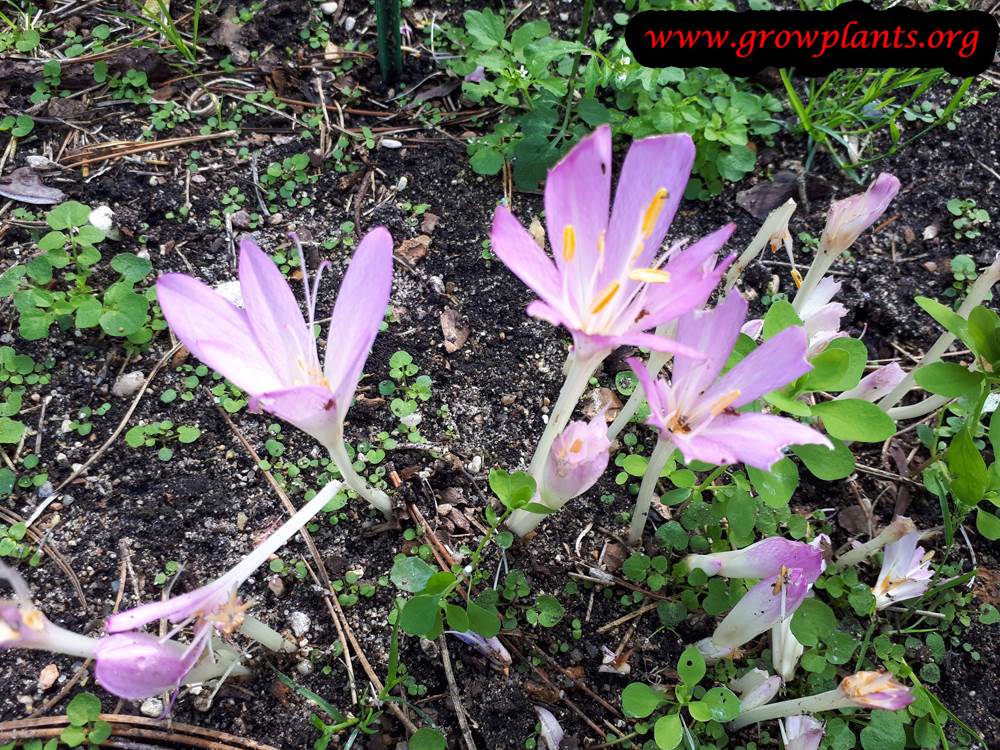
- Growth Habit & Form: Low clumping geophyte; strap-like leaves in spring and leafless flowers in autumn
- Lifespan & Maturity: Perennial from its corm, multiplying by offsets
Anatomy & Physical Features
- Leaves & Foliage: Linear strap-like green leaves that emerge separately from the flowers
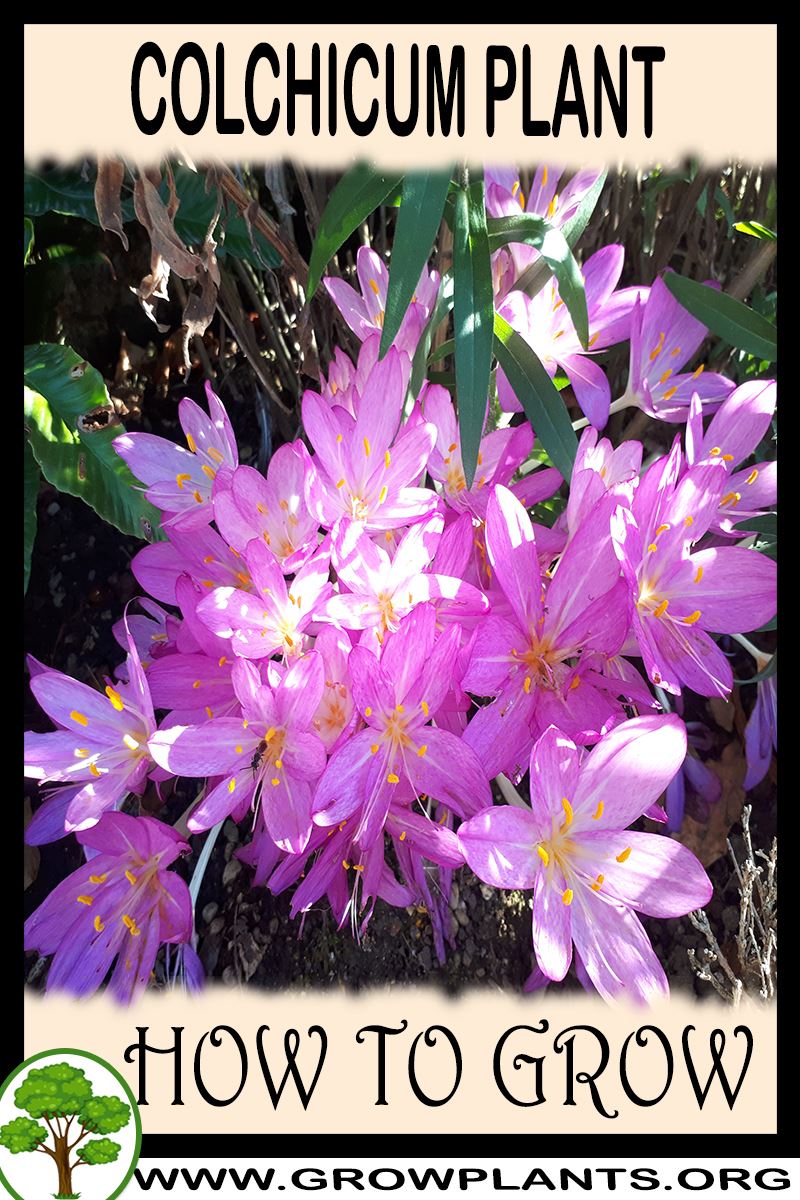
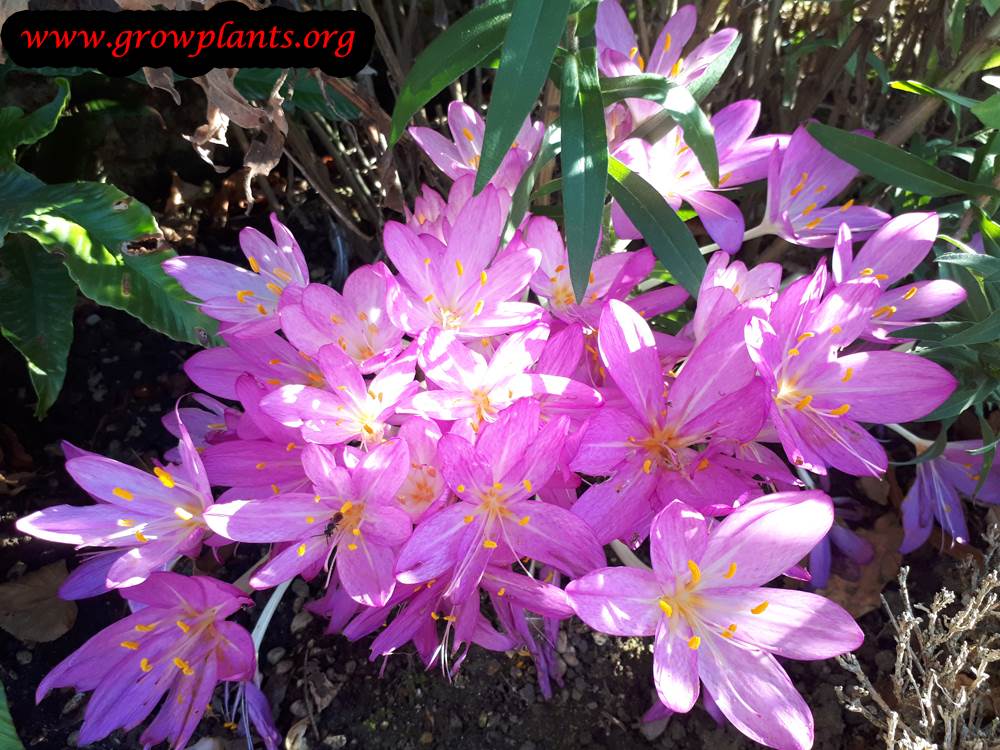
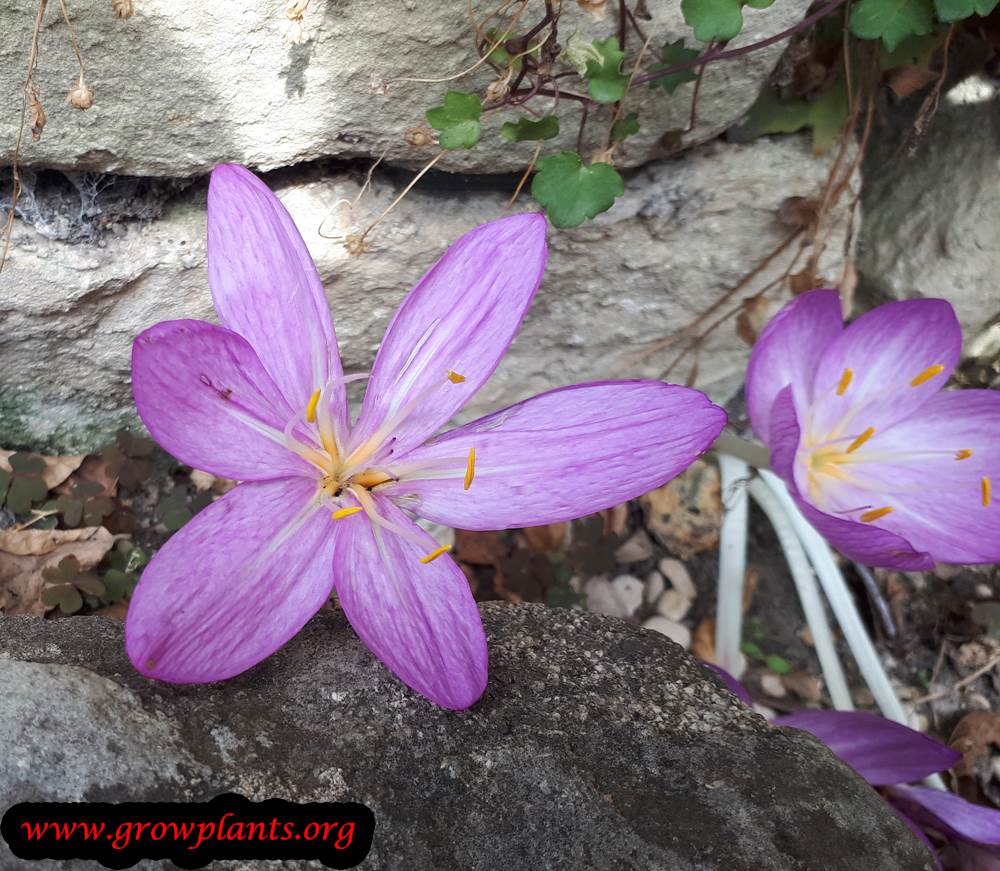
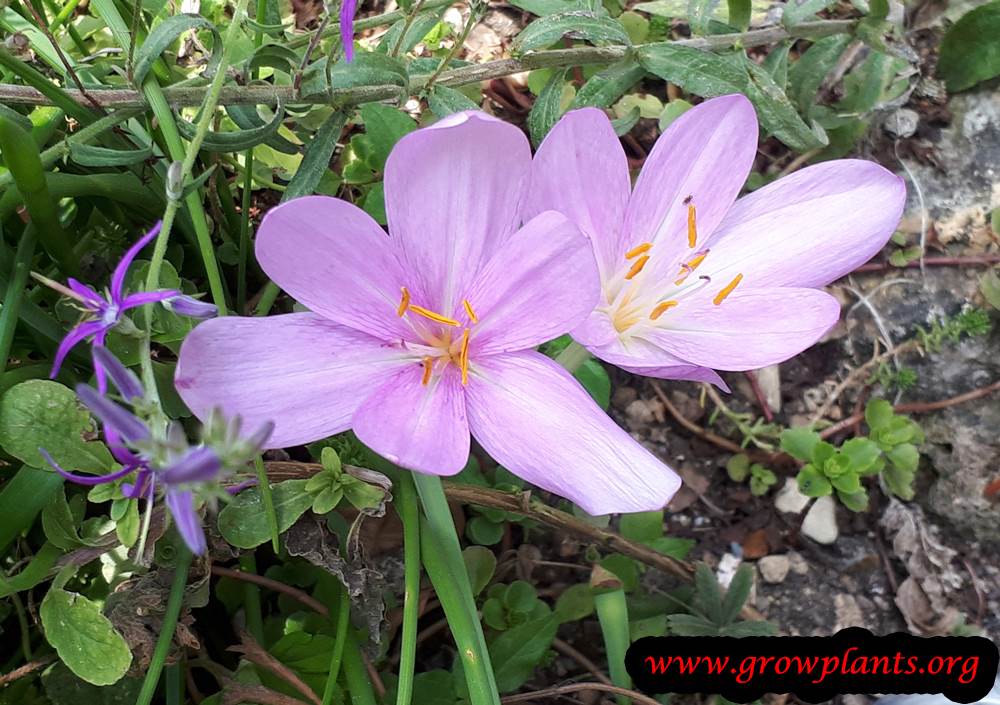
- Flower Characteristics: Bowl-shaped purple, pink, blue or white flowers with yellow-orange stigmas, six tepals and three stigmas
Primary Uses & Landscape Value
- Functional & Ornamental Roles: Ornamental autumn-flowering bulb for borders and naturalising — note that all parts are highly poisonous
Care Guide: Planting, Soil & Watering
Overview: Colchicum is a moderate-growing corm (hardy roughly zones 4–10) that grows in full sun to half shade. It demands sharply well-draining soil and only moderate watering — it is sensitive to excess water and rots in soggy ground.
Quick Care Requirements
| Requirement | Ideal Condition |
|---|---|
| Planting Season | In summer to autumn (corms may also go in through winter in mild areas) |
| Growth Rate | Moderate |
| Soil Type | Sharply well-draining |
| Water Need | Moderate – never waterlogged; sensitive to excess water |
Planting & Establishment
- Best Planting Season: Plant the corms in late summer to autumn so they flower in the same season; in mild areas they can go in through winter.
- How to Plant:
- Hole Preparation: Loosen the soil well and improve drainage before planting; standing water rots the corms.
- Soil Amendments: On heavy soil, dig in grit or coarse sand to sharpen drainage; little feeding is needed.
- Planting Depth: Set each corm roughly 8–10 cm (3–4 in) deep with the pointed growing tip facing upward.
- Growth Speed & Expectations: A moderate grower reaching only 10–15 cm (4–6 in); flowers appear on bare stems ahead of the leaves.
Soil, Watering & Drainage Care
- Soil Mix & Drainage Needs: Free-draining soil is essential to prevent rot; in containers use a gritty, sharply draining mix.
- Watering Schedule & Technique:
- Young / Newly Planted: Water lightly after planting to settle the corms, then only as needed — they store their own moisture.
- Established: Give moderate water during growth and flowering, always letting excess drain freely; avoid overwatering.
- Seasonal Adjustments: Keep drier during the summer dormancy of the corm, and water as growth and flowering resume.
Climate, Light & Hardiness
Colchicum autumnale (Naked lady) is a cold-hardy, deciduous corm suited to temperate, subtropical, and Mediterranean climates. It grows in full sun to half shade and tolerates a wide range of winter cold.
Quick Climate Specifications
| Climate Zones | Temperate, subtropical, Mediterranean |
|---|---|
| USDA Hardiness Zones | 4–10 |
| Light Conditions | Full sun to half shade |
Sunlight & Light Exposure
Optimal Light Setup
Grows well in full sun to half shade, often naturalizing under the light shade of deciduous trees.
Temperature Extremes & Hardiness
USDA Hardiness & Regional Limits
Hardy across USDA zones 4–10, a wide range reflecting its cold-hardy corm and deciduous, dormant-in-summer growth habit.
Cold Damage & Winter Protection
The corm survives winter cold underground within its hardy zones; foliage is deciduous and naturally dies down each year.
Wind, Humidity & Microclimate
Wind Tolerance
The flowers, which emerge on bare stalks in autumn before the leaves, can be knocked down by strong wind and rain, so a sheltered spot helps prolong the bloom.
Growing in Pots, Balconies & Indoors
Colchicum autumnale (autumn crocus) is a small, autumn-flowering bulb for full sun to half shade. The grower does not class it as a houseplant; it grows well in pots outdoors. Note that every part is highly poisonous, so it is not a plant to keep within reach indoors.
Quick Details
- Container Size: A small-to-medium pot suits the low bulb (10-15 cm / 4-6 in in flower)
- Indoor Suitability: Not a houseplant – and highly toxic, so best kept outdoors away from people and pets
- Best Spot: Full sun to half shade
- Soil & Drainage: Free-draining potting mix; strong drainage holes so the bulbs never sit wet
- Watering in Pots: Moderate in growth; keep drier during the bulb’s dormant rest
Indoors & On the Windowsill
- Not a houseplant: The grower does not rate it for indoors – it is an outdoor bulb that needs a proper cool dormancy.
- Windowsill: Not suited to sill growing; grow it in pots outside.
- Safety: All parts contain colchicine and are highly poisonous if eaten – keep it well away from children and pets, and never treat any part as food. (The dry corms can flower on a shelf, but the same severe toxicity applies.)
On a Balcony or Patio
- Light & placement: Give it a sunny to lightly shaded spot; it is compact and undemanding in a pot.
- Drainage: Make sure the pot drains freely – bulbs rot in waterlogged mix.
Choosing the Pot, Soil & Long-Term Care
- Pot & drainage: A free-draining pot with good holes; skip a standing-water saucer so the bulbs never sit wet.
- Potting mix: A free-draining potting mix.
- Feeding: A light feed as the leaves grow builds the bulb for next year’s flowers.
- Dormancy: Keep the pot drier while the bulb rests, then resume watering as it returns to growth.
Fertilizing & Feeding
Colchicum flowers appear on bare ground with no leaves present, so feeding at bloom time is not useful; the corm is best fed during its later leafy growth period, when it can actually put nutrients to use.
Quick Fertilizing Specs
| Feeding Level | Light |
|---|---|
| Main Nutrient Priority | Balanced feeding while the strap-like leaves are actively growing, since feeding during the leafless flowering period cannot be used by the plant |
| Best Feeding Period | While the leaves are green and growing, after the flowers have already faded |
| Soil pH | Grows well in ordinary well-drained garden soil without needing a particular pH |
| Reduce/Stop Feeding | Stop feeding once the leaves yellow and die back for the corm’s summer rest |
| Organic Options | A light amount of organic matter worked into well-drained soil at planting |
Feeding by Growth Stage
Leaf growth after flowering
Let the corm rebuild its reserves through its leafy growth period, which follows the leafless autumn flowers rather than accompanying them.
| Nutrient direction | Balanced feeding while the broad, strap-like leaves are green and actively growing supports the corm for next year’s flowers. |
|---|---|
| Timing | After the autumn flowers have faded, once the leaves emerge and continue growing into the following months. |
| Frequency | A light feeding while the foliage is green and actively growing is enough for this corm. |
| Fertilizer types | A balanced, complete fertilizer suited to spring-flowering bulbs and corms, applied while leaves are green and actively growing |
| Precautions | This plant is noted as sensitive to too much water, so keep the site well drained rather than letting water stand around the corms even during active feeding. |
Summer dormancy and leafless autumn flowering
Let the corm rest through summer dormancy and then flower on its own stored reserves, since no leaves are present to use fertilizer at bloom time.
| Nutrient direction | None – withhold fertilizer through summer dormancy and during the leafless flowering period, since there is no foliage to take up nutrients. |
|---|---|
| Timing | From when the leaves yellow and die back in summer, through the corm’s rest, and across the leafless flowering display in late summer or autumn. |
| Frequency | No feeding at this stage. |
| Fertilizer types | No feeding at this stage; the corm flowers on stored reserves with no leaves present to use fertilizer. |
| Precautions | Do not fertilize during dormancy or while the corm is flowering leafless; without foliage present, the plant cannot use any nutrients applied. |
Nutrient Deficiency Signs & Corrections
Few or smaller flowers appear on bare ground in late summer or autumn when a fuller display is expected.
| Possible causes | the corm not building up enough reserves during the previous leafy growth period, including insufficient feeding then, waterlogged soil during the growing or rest period, which this plant tolerates poorly, a young or recently divided corm not yet mature enough to flower fully |
|---|---|
| Appears first on | whole-planting effect rather than a single-leaf symptom |
| What to check | whether the corms received a light balanced feed during their last leafy growth period, soil drainage and any history of standing water, corm age and division history |
| Possible correction | Feed lightly during the next leafy growth period if the corms were underfed previously, and improve drainage where flooding is a risk. |
The broad leaves look pale or grow weakly during their growth period after flowering.
| Possible causes | nitrogen deficiency from no feeding during the leafy growth period, root stress from waterlogged, poorly drained soil, fungal disease affecting the foliage |
|---|---|
| Appears first on | leaves overall, most visible on the newest growth |
| What to check | whether a light balanced feed was applied once leaves emerged, soil drainage and any standing water, signs of fungal spotting on the leaves |
| Possible correction | Apply a light balanced feed while leaves are actively growing if none has been given, and improve drainage where flooding occurs. |
Corms feel soft or discolored when handled, or fail to produce leaves or flowers at their expected time.
| Possible causes | waterlogged or poorly drained soil during dormancy, fungal rot organisms thriving in constantly wet ground, mechanical damage to the corm during planting or division |
|---|---|
| Appears first on | the corm itself, often not visible until digging or a missed growth cycle |
| What to check | soil drainage at the planting site, recent watering or rainfall during dormancy, handling care during any recent division |
| Possible correction | Improve site drainage, avoid watering during summer dormancy, and discard any visibly rotted corms rather than feeding the planting. |
Pruning, Training & Seasonal Maintenance
Colchicum flowers appear leafless in autumn (hence “naked lady”), with the strap-like leaves only following afterward to photosynthesize and recharge the corm before dying back by summer. The only real “pruning” task is trimming those leaves away once they have fully yellowed and collapsed in summer – never earlier, since removing green leaves starves the corm and weakens or prevents next autumn’s bloom. There is no wood, no training system and no fruiting-wood logic to manage here.
Quick Pruning & Maintenance Specs
| Pruning Tolerance | Low – one seasonal leaf clean-up only |
| Primary Pruning Window | Summer, once foliage has fully died back |
| Typical Frequency | Once a year |
| Main Objective | Tidy fully dead foliage without cutting the corm’s food supply short |
| Best Tool Type | Precision snips |
| Avoid Heavy Pruning During | Late winter through spring, while leaves are green and active; and during the naked autumn bloom |
Seasonal Pruning Schedule
Summer (post-foliage die-back)
Objective: remove the season’s spent leaves once they are fully brown and dry. What to remove: dead, collapsed foliage only. What NOT to remove: any leaf that is still green or yellowing but not fully dry – it is still feeding the corm. Flowering impact: cutting green leaves early reduces the energy stored for the following autumn’s flower display; waiting until they are fully dead has no negative impact.
Special Growth to Remove
Dead leaves once fully dried in summer. The bare flower stalks that emerge in autumn can be left to collapse naturally or tidied away once fully spent – there is no seed or fruiting structure worth preserving for most garden purposes.
Container & Small-Space Pruning
In pots, the same rule applies: let leaves die back completely before removing them, since a container corm has no other way to recharge for next year’s bloom.
Tools
Precision snips for the soft, strap-like leaves – no other tool is relevant to this small corm.
Tool Hygiene & Disease Risk
Routine: clean, sharp snips are sufficient. Wear gloves when handling any part of the plant, as Colchicum is toxic (contains colchicine) and can irritate skin.
Cut Placement & Technique
Cut dead leaves near the base, at soil level, once they are fully brown.
Common Pruning Mistakes
Removing leaves while still green to “tidy up” after the flowers have faded – this is the single most damaging mistake for this genus, since the leaves emerge after the flowers specifically to recharge the corm. Braiding or tying down still-green foliage for neatness has the same weakening effect as cutting it.
When NOT to Prune
Never cut back foliage while it is still green, even if it looks untidy after flowering has finished. Avoid disturbing the corm during its leafless autumn bloom.
Recommended Tools (by task)
- precision_snips – the only cut this plant ever needs is removing fully dead, soft strap leaves at the base.
Propagation Guide
The practical way to propagate Colchicum is by splitting the corm during its summer dormancy; the site itself treats vegetative propagation as the standard method. Seed propagation is biologically possible but is slow and mainly used by specialists or breeders rather than home growers, so corm division is by far the easier, recommended route. Overall this is an Easy plant to propagate by corm division.
Quick Propagation Specs
| Best Propagation Method | Corm division |
| Alternative Methods | Seed (slow; mainly for specialists/breeders) |
| Propagation Difficulty | Easy |
| Seed True-to-Type | Cultivar-dependent – named forms do not come true from seed |
| Vegetative True-to-Type | Yes |
| Best Propagation Season | Mid-summer, while the plant is dormant |
| Time Until Division Establishes | New roots begin forming by the start of autumn |
Rhizomes, Tubers, Bulbs & Corms
Corm Division: split the corm in mid-summer, once the foliage has died back and the plant is dormant. New roots begin forming by the start of autumn, ahead of the leafless autumn flowers. Because the plant is leafless and dormant at this stage, divided corms are commonly handled bare (dry) for a short period before replanting, which is standard trade practice for Colchicum. Treat and site the newly divided corms the same as an established plant – well-drained soil in full sun to half shade.
Bloom & Flower Guide
Quick Details
- Bloom Season: Late summer into autumn (and into winter in mild areas)
- Time to First Bloom: In its first autumn after planting – the leafless flowers appear straight from the corm
- Flower Appearance: Bowl-shaped flowers in purple, pink, blue or white, with six tepals, three styles and yellow-orange stigmas
- Edibility: Highly poisonous – every part contains colchicine and can be fatal if eaten. Never consume any part, and handle with care around children and pets
Detailed Blooming Overview
Colchicum, the Naked Lady, flowers in a surprising way: bare, goblet-shaped blooms push up straight from the corm in autumn, without leaves, which follow later. The flowers open in shades of purple, pink, blue or white, each with six tepals and bright yellow-orange stigmas at the centre. It is a lovely thing in the autumn garden – but it must be treated with respect, because the whole plant is dangerously toxic.
Flower Characteristics
- Bowl- or goblet-shaped flowers in purple, pink, blue or white.
- Six tepals surrounding three styles and yellow-orange stigmas.
Bloom Care & Thinning
- Encouraging bloom: Plant the corms in late summer in free-draining soil and sun; they naturalise and increase over the years.
- Spent flowers: The delicate autumn blooms are knocked down naturally by wind and rain; simply clear the faded flowers.
- Pollination: The autumn flowers are visited by bees.
- Safety: Wear gloves when handling the corms, keep them away from anything edible, and site the plant where children and pets will not be tempted to taste it.
Bloom Health & Protection
- Grey mould (botrytis): In a wet autumn the soft flowers can spot and rot; giving them an open, airy spot and clearing fallen petals helps, and a suitable garden fungicide can be used if it becomes persistent.
Pests, Diseases & Troubleshooting
Overview: Autumn crocus is a corm-forming plant that is highly toxic (it contains colchicine), which conveniently makes it unpalatable to deer, rabbits and rodents; its few real problems are grey mould and rots in wet conditions, slug grazing on emerging leaves and flowers, and occasional aphids or bulb pests. Sharp drainage and lifting and dividing crowded clumps prevent most trouble.
Quick Troubleshooting Overview
| Issue / Pest | Main Symptom | Primary Solution |
|---|---|---|
| Slugs & snails | Grazed leaves and delicate flowers | Hand-pick, barriers, iron-phosphate bait |
| Aphids | Clusters on leaves; can spread viruses | Water jet, insecticidal soap |
| Grey mould (Botrytis) | Fuzzy grey rot on flowers and leaves in damp | Remove affected parts, improve airflow |
| Bulb/corm rot | Soft, rotting corms in wet soil | Sharpen drainage, lift and dry |
| Smut | Dark sooty spots and streaks on leaves | Remove and destroy affected foliage |
| Bulb mites/fly | Tunneled, softened corms | Discard infested corms, inspect at planting |
Common Pests & Management
- Slugs & snails (Deroceras / Cornu spp.):
- Symptoms: Grazed, holed leaves and shredded, delicate autumn flowers, with slime trails, especially in damp shade.
- Prevention & Control: Hand-pick after dark, use grit or copper barriers, clear damp debris, and scatter iron-phosphate bait around the crowns.
- Aphids (Aphis / Dysaphis spp.):
- Symptoms: Clusters of soft insects on emerging leaves and flower stems with honeydew; important as virus vectors on bulbs.
- Prevention & Control: Hose off or use insecticidal soap; conserve predators; control promptly to limit virus spread.
- Bulb mites (Rhizoglyphus spp.):
- Symptoms: Tiny mites tunnel into softened or damaged corms, worse where rot has already begun, hastening decay.
- Prevention & Control: Discard soft/infested corms, plant only firm healthy stock, keep storage cool and dry, and avoid damaging corms at lifting.
- Narcissus bulb fly (Merodon equestris):
- Symptoms: A single grub hollows the corm, causing weak or failed growth; the corm feels soft and light.
- Prevention & Control: Discard affected corms, firm soil around necks after foliage dies to deter egg-laying, and inspect stock before planting.
Diseases & Fungal Issues
- Grey mould (Botrytis):
- Symptoms: Fuzzy grey mould rotting flowers and leaves in damp, still, crowded conditions.
- Treatment & Management: Remove affected parts promptly, improve airflow and spacing, avoid overhead watering; avoid overcrowding clumps.
- Colchicum smut (Urocystis colchici):
- Symptoms: Dark sooty spots, streaks and swellings on leaves that rupture to release black spore masses.
- Treatment & Management: Remove and destroy affected foliage, avoid moving soil/spores, and do not replant in known infected ground.
- Corm/basal rot (Fusarium / Sclerotium / Pythium):
- Symptoms: Soft, discoloured, rotting corms and basal plate in wet, poorly drained soil, causing failure to emerge.
- Treatment & Management: Plant in sharply drained soil, lift and dry crowded clumps, discard rotted corms, and avoid waterlogging.
- Virus (mosaic viruses (aphid-vectored)):
- Symptoms: Mottling, streaking and distortion of leaves with weakened growth.
- Treatment & Management: Remove infected plants, control aphid vectors, and use clean stock; no cure once infected.
Growing Difficulties & Abiotic Problems
- Corm rot from waterlogging:
- Cause & Symptoms: The main issue – heavy, wet soil rots the corms, especially during summer dormancy.
- Correction Strategy: Plant in free-draining soil or raised beds, add grit, and avoid summer irrigation over dormant corms.
- Confusing leaf/flower cycle:
- Cause & Symptoms: The ‘naked’ flowers appear in autumn without leaves, then large leaves follow in spring – often mistaken for a problem.
- Correction Strategy: None needed – this is normal; site where the coarse spring foliage can die back without looking untidy.
- Poor flowering:
- Cause & Symptoms: Too much shade, overcrowding, or immature/small corms give few flowers.
- Correction Strategy: Grow in sun to light shade, lift and divide congested clumps periodically, and plant good-sized corms at proper depth.
- Toxicity caution:
- Cause & Symptoms: All parts are highly toxic (colchicine) – a safety rather than a pest issue.
- Correction Strategy: Handle with care, wear gloves, wash hands, and keep away from children, pets and livestock; this same toxicity deters most animal pests.
What Helps – Products & Tools
Cultural control does almost everything – sharp drainage, division of clumps, tidy debris and a night slug patrol. When needed, iron-phosphate bait manages slugs, insecticidal soap handles aphids, and removing affected foliage plus improving airflow checks grey mould and smut; discard any soft or infested corms.