Plant Profile & Key Characteristics
Overview: A small deciduous cormous geophyte only 10-15 cm tall (Autumn crocus / Meadow saffron), grown as an ornamental for its goblet-shaped autumn flowers. Its strap leaves and flowers appear at different times of year.
Quick Specifications
| Specification | Attribute |
|---|---|
| Plant Type / Life Cycle | Perennial (deciduous cormous geophyte) |
| Foliage Type | Deciduous (dies back; leaves and flowers appear at different times) |
| Mature Size | 10-15 cm (4-6 in) |
| Growth Rate | Moderate |
| Root System | Cormous (underground corm) |
| Toxicity | Highly toxic — all parts contain colchicine and can be fatal if ingested |
| Hardiness | USDA zone 4-10 |
Growth Form & Structure
- Height & Spread: Low, 10-15 cm (4-6 in); suitable for containers
- Growth Habit & Form: Low clumping geophyte; strap-like leaves in spring and leafless flowers in autumn
- Lifespan & Maturity: Perennial from its corm, multiplying by offsets
Anatomy & Physical Features
- Leaves & Foliage: Linear strap-like green leaves that emerge separately from the flowers
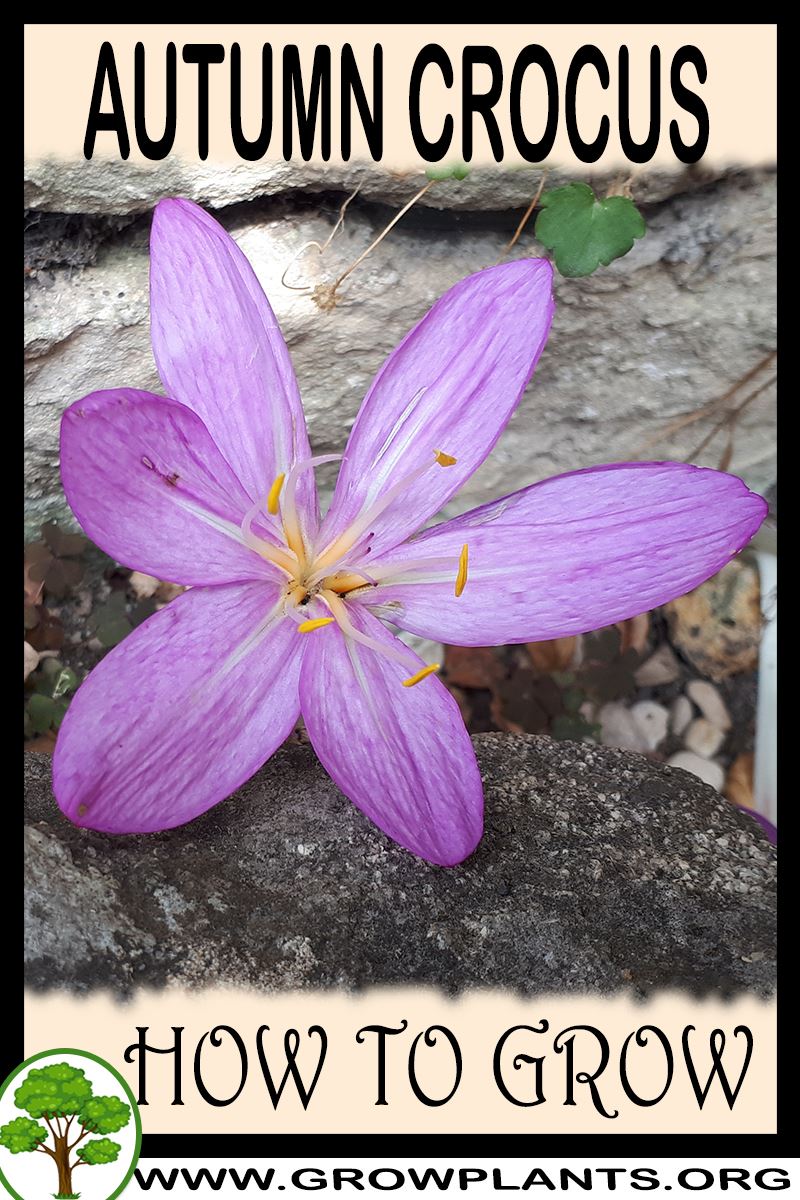
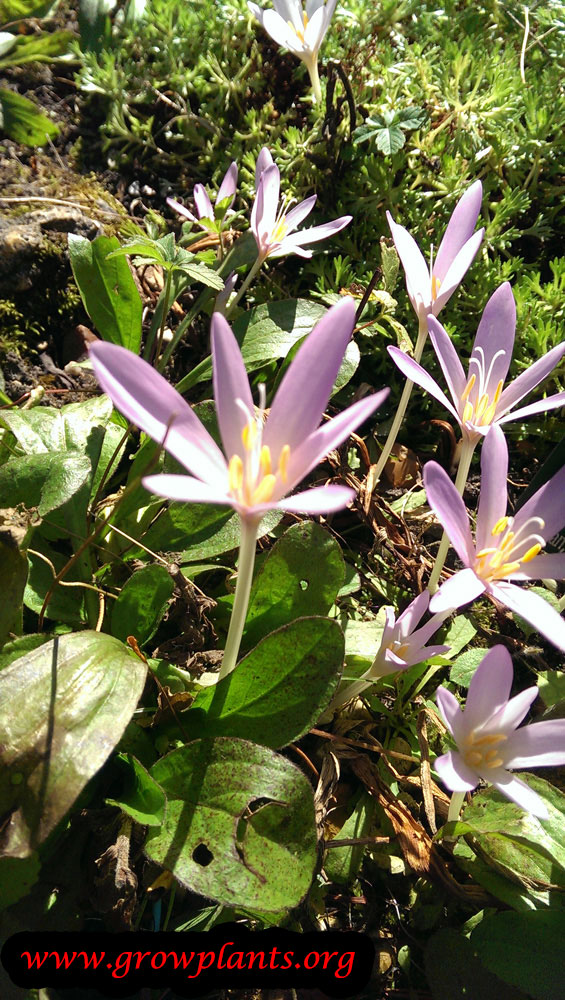
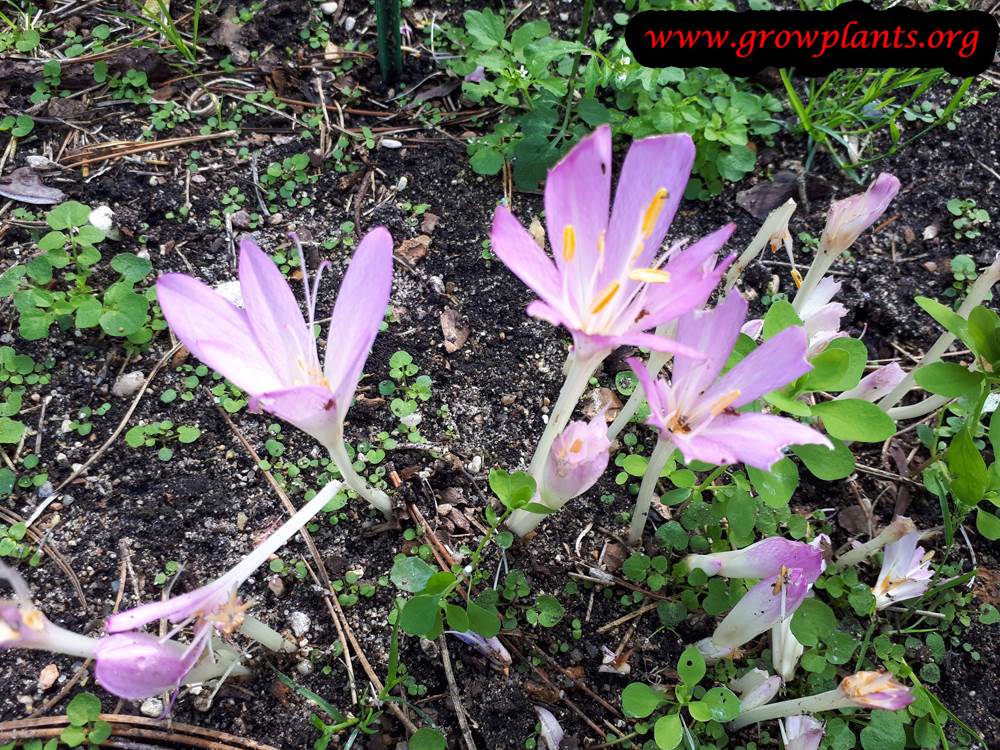
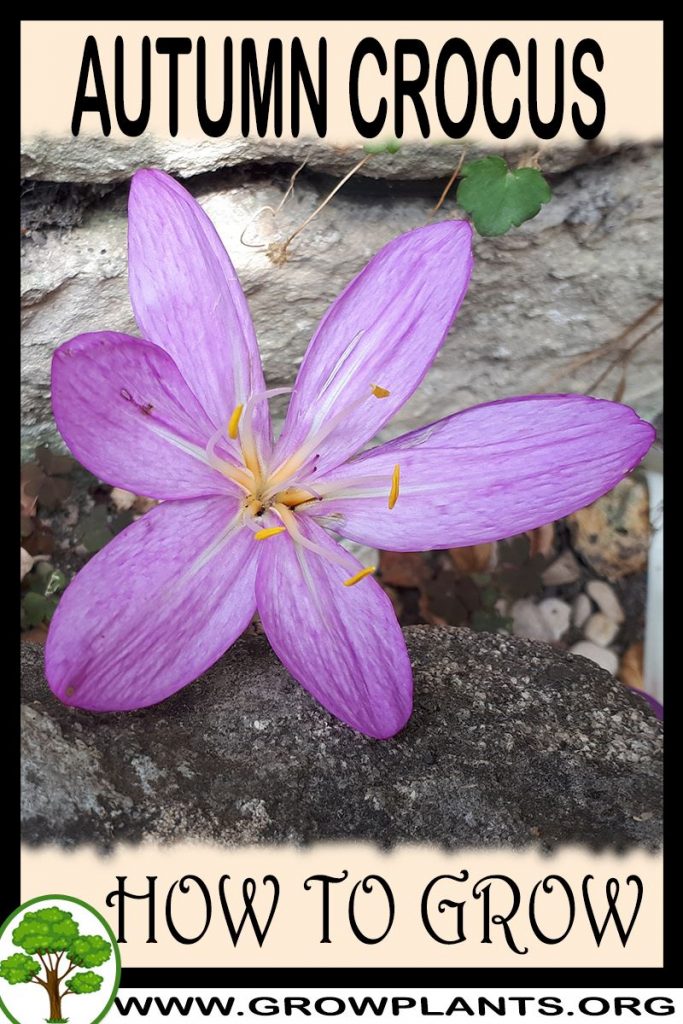
- Flower Characteristics: Goblet-shaped purple or white flowers with yellow-orange stigmas, six tepals and three stigmas, appearing in autumn
Primary Uses & Landscape Value
- Functional & Ornamental Roles: Ornamental autumn-flowering bulb for borders and naturalising — note that all parts are highly poisonous
Care Guide: Planting, Soil & Watering
Overview: Autumn crocus (Colchicum autumnale) is a moderate-growing corm (hardy roughly zones 4–10) that grows in full sun to half shade. It demands sharply well-draining soil and only moderate watering — it is sensitive to excess water and rots in soggy ground.
Quick Care Requirements
| Requirement | Ideal Condition |
|---|---|
| Planting Season | In summer to autumn (corms may also go in through winter in mild areas) |
| Growth Rate | Moderate |
| Soil Type | Sharply well-draining |
| Water Need | Moderate – never waterlogged; sensitive to excess water |
Planting & Establishment
- Best Planting Season: Plant the corms in late summer to autumn so they flower in the same season; in mild areas they can go in through winter.
- How to Plant:
- Hole Preparation: Loosen the soil well and improve drainage before planting; standing water rots the corms.
- Soil Amendments: On heavy soil, dig in grit or coarse sand to sharpen drainage; little feeding is needed.
- Planting Depth: Set each corm roughly 8–10 cm (3–4 in) deep with the pointed growing tip facing upward.
- Growth Speed & Expectations: A moderate grower reaching only 10–15 cm (4–6 in); flowers appear on bare stems ahead of the leaves.
Soil, Watering & Drainage Care
- Soil Mix & Drainage Needs: Free-draining soil is essential to prevent rot; in containers use a gritty, sharply draining mix.
- Watering Schedule & Technique:
- Young / Newly Planted: Water lightly after planting to settle the corms, then only as needed — they store their own moisture.
- Established: Give moderate water during growth and flowering, always letting excess drain freely; avoid overwatering.
- Seasonal Adjustments: Keep drier during the summer dormancy of the corm, and water as growth and flowering resume.
Climate, Light & Hardiness
Autumn crocus (Colchicum autumnale) is a deciduous corm restricted to temperate climates, growing best in full sun to half shade with well-drained soil. It is quite cold-hardy (USDA zone 4–10) but sensitive to excess water.
Quick Climate Specifications
| Climate Zones | Temperate |
|---|---|
| USDA Hardiness Zones | 4–10 |
| Frost Tolerance | High |
| Light Conditions | Full Sun / Half Shade |
| Wind Tolerance | Low (for the flowers) |
Sunlight & Light Exposure
Optimal Light Setup
Full sun to half shade both suit this corm well.
Direct Sun Requirement
Not mandatory - it grows well in either full sun or partial shade.
Best Exposure / Orientation
An open bed or naturalized area, ideally with some shelter, given its flowers' sensitivity to wind and rain.
Temperature Extremes & Hardiness
USDA Hardiness & Regional Limits
Hardy across USDA zones 4–10, restricted to temperate climates rather than the warmer subtropical or Mediterranean range some other autumn-blooming bulbs tolerate.
Cold Damage & Winter Protection
No special winter protection is generally needed within its zone range; the dormant corm handles cold winters well.
Frost Sensitivity
Good winter frost tolerance, consistent with its zone-4 rating.
Wind, Humidity & Microclimate
Wind Tolerance
The leafless autumn flowers are easily thinned and damaged by wind and rain, so a sheltered spot extends bloom life even though the plant itself is otherwise hardy.
Rainfall & Seasonal Moisture
Sensitive to excess water; avoid waterlogged or constantly wet soil, and be careful not to overwater, especially outside its active growing period.
Microclimate Recommendations
A sheltered position away from strong wind and heavy rain protects the delicate autumn blooms; well-drained soil is essential given the plant's water sensitivity.
Growing in Pots, Balconies & Indoors
Autumn crocus (Colchicum autumnale) is a small cormous plant of 10-15 cm (4-6 in) that flowers leafless in the cool season. The grower does not rate it as a houseplant but confirms it grows well in pots and containers. It famously flowers even sitting dry on a windowsill, but that is a novelty, not houseplant culture.
Quick Details
- Container Size: 10-15 cm bulb pan or a 3-8 L pot in a group
- Indoor Suitability: Not a houseplant; can be brought indoors briefly for its flowers
- Best Spot: Full sun to part shade
- Soil & Drainage: Sharply drained, gritty loam-based mix
- Watering in Pots: Average in growth, then keep dry through dormancy after the foliage dies back
Indoors & On the Windowsill
- Not a houseplant: The grower does not grow it indoors – like most hardy bulbs it needs the seasonal rhythm and strong light of the outdoors to build and flower well.
- Temporary indoor flowering: Bulbs like this are often potted and brought into a cool, bright room just for their brief flowering, then moved back outside – a short display, not a permanent houseplant.
- Dormancy, not overwintering: After flowering and leaf die-back it rests underground; keep the pot cooler and much drier through the dormant season rather than bringing it into warmth.
- Safety: Extremely toxic – every part contains colchicine and can be fatal if eaten. Never grow it where children or pets might reach it, and wash hands after handling.
On a Balcony or Patio
- Light & wind: Give it the brightest spot the balcony offers; shelter exposed plants from strong wind and stake any tall or top-heavy growth. Walls and paving reflect heat, so pots dry quickly – check moisture often in warm weather.
- Practicalities: A filled pot is heavy once watered, so make sure the balcony can take the weight and stand it where drainage runoff will not be a nuisance.
Choosing the Pot, Soil & Long-Term Care
- Pot & drainage: 10-15 cm bulb pan or a 3-8 L pot in a group with strong drainage holes; skip a standing water saucer so the roots never sit wet. Terracotta breathes and dries fast, while glazed or plastic pots hold moisture longer.
- Potting mix: A gritty, sharply drained loam-based mix; good drainage prevents the dormant bulbs rotting.
- Watering: Water while in leaf and flower, then keep the pot dry through the dormant rest – a container makes that dry period easy to manage.
- Feeding: Potted plants exhaust their soil faster because nutrients leach out with every watering – feed lightly but regularly through the growing season.
- Repotting: Refresh the mix or pot up about every couple of years, teasing out and lightly trimming the roots of established plants.
Fertilizing & Feeding
Autumn crocus flowers appear directly from the corm in autumn before any leaves are present, with the leaves only emerging afterward through winter and spring before dying back for a dry summer rest. Feeding is therefore focused on that leafy period, when the plant can actually use it to rebuild the corm, and skipped during the flower-only and dormant phases.
Quick Fertilizing Specs
| Feeding Level | Light |
|---|---|
| Main Nutrient Priority | Balanced feeding during the leafy growth period following flowering helps rebuild the corm; this plant does not need feeding while it is leafless and flowering, or while dormant |
| Best Feeding Period | Through winter and spring, once the leaves have emerged after the autumn flowers |
| Soil pH | Grows well in ordinary well-drained garden soil without needing a particular pH |
| Reduce/Stop Feeding | Stop feeding once the leaves begin to yellow and die back heading into the dry summer rest |
| Organic Options | Working a modest amount of organic matter into well-drained soil at planting suits this corm well |
Feeding by Growth Stage
Post-bloom leaf growth
Support the corm through the leafy growth that follows its leafless autumn flowers, rebuilding it for the next flowering cycle
| Nutrient direction | Balanced feeding once leaves are present supports the corm-building this plant relies on, since the flowers themselves emerge with no leaves to feed them |
|---|---|
| Timing | Through winter and into spring, once the strap-like leaves emerge after the autumn flowers have faded |
| Frequency | A light feeding or two while the leaves are actively green and growing is enough for this corm |
| Fertilizer types | A balanced, complete fertilizer suited to spring-flowering bulbs and corms, applied while leaves are green and actively growing |
| Precautions | This plant is sensitive to excess water, so keep soil well drained rather than constantly wet even while actively feeding; all parts are toxic if handled or ingested carelessly, so wear gloves when working around the corm and leaves |
Dry summer dormancy
Let the corm rest through its dry summer dormant period after the leaves have died back and are trimmed away
| Nutrient direction | None – withhold fertilizer while the corm is dormant through the dry summer |
|---|---|
| Timing | Through summer, once the leaves have dried and been trimmed away and before the next flowering cycle begins in autumn |
| Frequency | No feeding at this stage |
| Fertilizer types | No feeding at this stage; let the corm rest undisturbed through its dry summer dormancy |
| Precautions | Do not fertilize or overwater during this dry dormant period, since the corm needs a dry rest and feeding now offers no benefit |
Nutrient Deficiency Signs & Corrections
Few or no flowers appear in autumn when they are expected
| Possible causes | The corm not having been allowed to build up reserves during the previous leafy growth period, including insufficient feeding then, Soil that stayed too wet during the summer dormant period, which this plant tolerates poorly, A young or recently divided corm that has not yet matured enough to flower, Corms planted too shallowly or in a site that dried out excessively during the growing period |
|---|---|
| Appears first on | Whole-planting effect rather than a single-leaf symptom |
| What to check | Whether the corm received balanced feeding during its last leafy growth period, Soil drainage and moisture through the summer dormant period, Corm age and division history, Planting depth and site conditions |
| Possible correction | Feed lightly during the next leafy growth period if the corm was underfed previously, ensure the site drains well through summer dormancy, and allow young corms time to mature |
Leaves that emerge after the autumn flowers look pale or grow weakly through winter
| Possible causes | Nitrogen deficiency from no feeding during the leafy growth period, Waterlogged soil causing root stress, since this plant is noted to be sensitive to excess water, Fungal disease affecting the foliage, which is a known issue for this plant, Naturally slow growth during cold winter conditions |
|---|---|
| Appears first on | Leaves overall, most visible on the newest growth |
| What to check | Whether a light balanced feed was applied once leaves emerged, Soil drainage and standing moisture, Any signs of fungal spotting or damage on the leaves, Recent weather and temperature conditions |
| Possible correction | Apply a light balanced feed while leaves are actively growing if none has been given; improve drainage if soil stays wet, and address any fungal disease directly since feeding alone will not resolve it |
Pruning, Training & Seasonal Maintenance
Autumn crocus flowers directly from the corm in autumn before any leaves are present, with the strap-like foliage emerging afterward and persisting through winter and spring before dying back naturally by early summer. Pruning is minimal and entirely tied to this cycle: leaves must be left in place, uncut, until they have fully yellowed and dried, since they are recharging the corm for next autumn’s bloom. Only then, in summer, should the dead foliage be trimmed away.
Caution: all parts of this plant contain colchicine and are toxic if ingested; wear gloves when handling and cutting, and keep cut material away from pets, livestock and children.
Quick Pruning & Maintenance Specs
| Pruning Tolerance | Low (little pruning is needed or wanted) |
| Primary Pruning Window | Summer, once leaves have fully died back |
| Typical Frequency | Once yearly |
| Main Objective | Remove spent, fully-dried foliage; sanitation |
| Best Tool Type | Precision snips |
| Avoid Heavy Pruning During | While leaves are green (autumn through spring) |
Pruning by Plant Age & Size
Newly Established
Do not cut back leaves in the first year; the corm needs the foliage to build up reserves for future flowering.
Mature / Established
Annual removal of fully-dried summer foliage; otherwise left alone.
Seasonal Pruning Schedule
Summer
Objective: clear spent foliage once it has completely died back on its own. Do not cut green or yellowing-but-still-attached leaves early – premature removal starves the corm and reduces or prevents the following autumn’s flowers.
Special Growth to Remove
- Fully dried summer foliage – the only routine removal this plant needs
Container & Small-Space Pruning
Suits pots well; let foliage die back completely in the pot before tidying, and avoid disturbing the corm during its summer rest.
Tools
- Precision snips – the only tool needed, for removing dried leaves
Tool Hygiene & Disease Risk
Routine, with attention to aphids and fungal issues (both documented on this species) – remove and dispose of visibly affected leaf tissue rather than composting it.
Cut Placement & Technique
Cut or pull away only foliage that comes free easily once fully dried; avoid tugging on leaves still attached to green tissue, which can disturb the corm.
Heavy Pruning & Rejuvenation
Not applicable – this plant does not tolerate or require rejuvenation pruning; corm clumps are refreshed by division after foliage dies back, not by cutting.
Post-Pruning Care
No watering or feeding is needed after summer tidy-up – the corm is entering its natural dry rest ahead of autumn flowering.
Common Pruning Mistakes
- Cutting back leaves too early (while still green), which weakens the corm and reduces autumn flowering
- Handling cut material without gloves, given the plant’s toxicity
When NOT to Prune
Never cut foliage while it is green and attached, from autumn flowering through the leaves’ natural die-back the following spring/early summer.
Recommended Tools (by task)
- precision_snips – removing fully-dried foliage once a year; a small, soft-tissue cut needing no larger tool
Propagation Guide
Autumn crocus is propagated almost entirely by dividing its corms, which reliably reproduces the plant and can flower again the following season; raising it from seed is possible for the species but takes several years to reach flowering size, so it is rarely used by home gardeners. Propagation by corm division is easy.
Quick Propagation Specs
| Best Propagation Method | Corm division (offsets) |
| Alternative Methods | Seed (species only, slow to flower) |
| Propagation Difficulty | Easy |
| Seed True-to-Type | Yes (species, not a named hybrid) |
| Vegetative True-to-Type | Yes |
| Best Propagation Season | Mid-summer, once the corms are dormant after the leaves have died back |
Growing from Seed
Seed is rarely used for Autumn crocus because seedlings take several years to reach flowering size; when tried, sow fresh seed in autumn and expect slow, uneven germination.
Rhizomes, Tubers, Bulbs & Corms
Corm Division
Lift and split the corms in mid-summer once the leaves have fully died back and the corms are dormant. New roots begin forming at the start of autumn, so replant the divided corms promptly so they can root before winter. Separate the offset corms from the mother corm by hand; treat the divisions the same as an established plant afterward (well-drained soil, average watering). Handle the corms with gloves, since Colchicum corms and foliage are toxic if handled or ingested carelessly.
Bloom & Flower Guide
Quick Details
- Bloom Season: Autumn into winter
- Time to First Bloom: Corms usually flower in their first autumn after planting
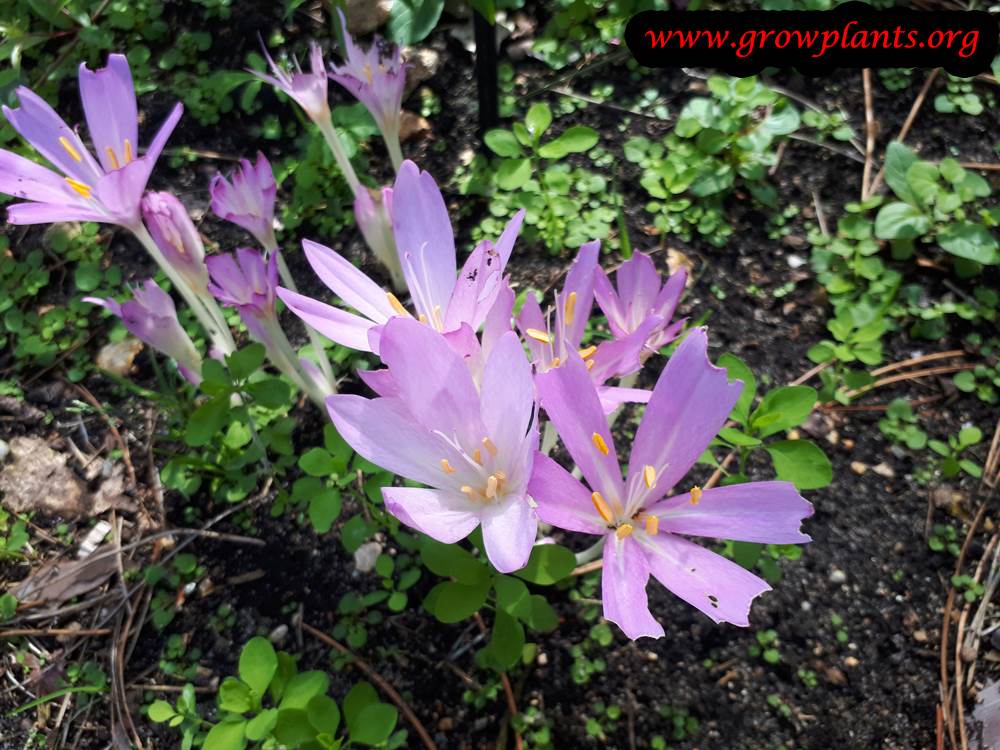
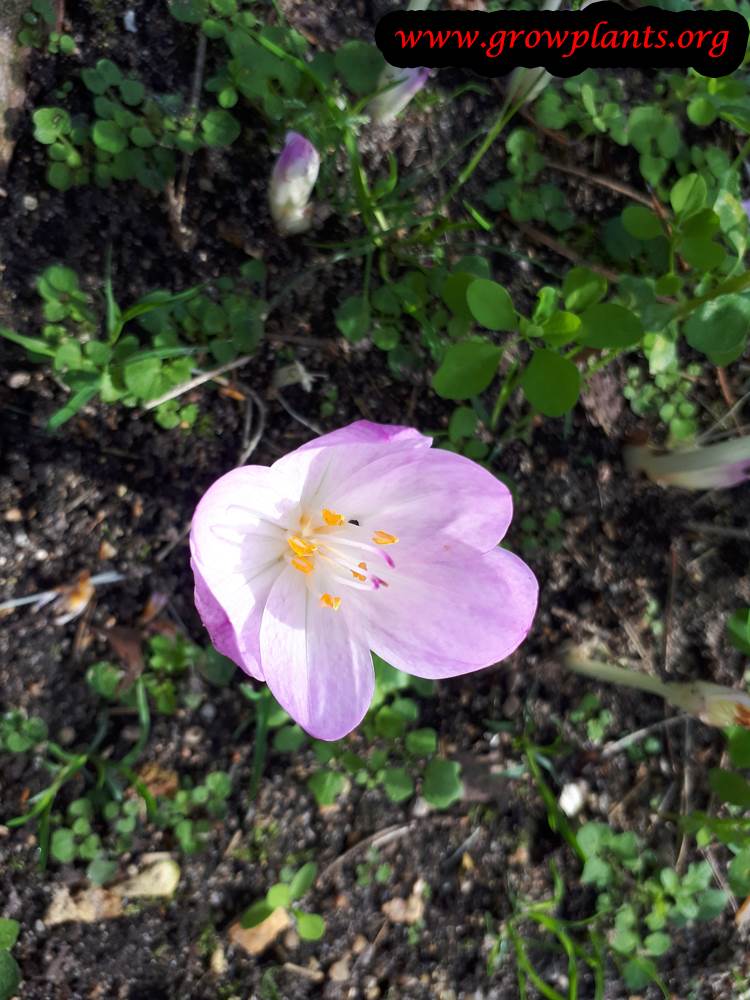
- Flower Appearance: Goblet-shaped, crocus-like flowers in purple or white with yellow-orange stigmas, six tepals and three stigmas
- Edibility: Highly toxic – every part contains colchicine and must never be eaten; despite the name “meadow saffron” it is NOT culinary saffron
Detailed Blooming Overview
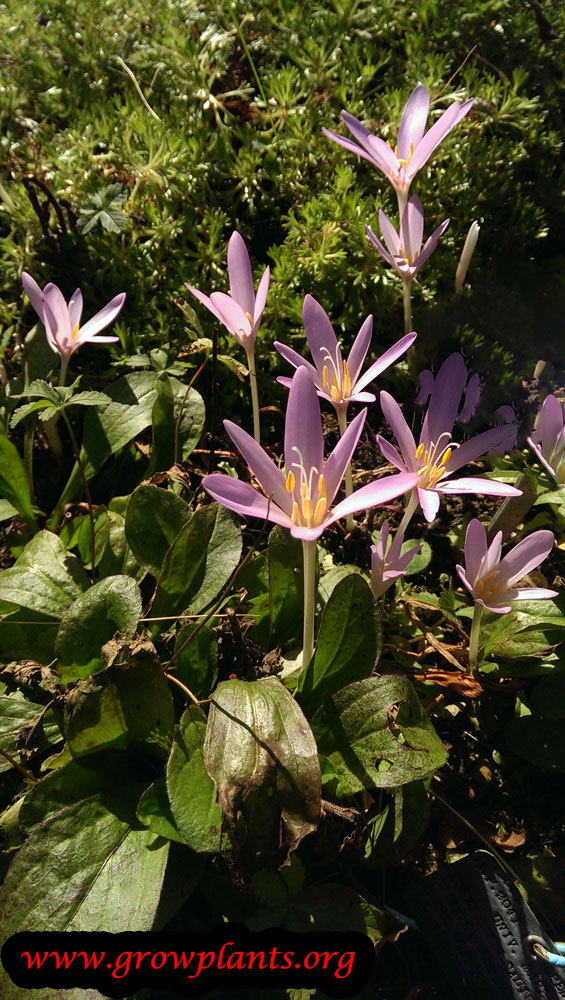
Autumn crocus flowers leafless in autumn, its goblet-shaped blooms rising straight from the corm before any foliage appears (the broad leaves follow in spring). The display is charming, but the plant is dangerously poisonous and should be sited away from where it could be mistaken for food.
Flower Characteristics
- Six tepals in purple or white, with three yellow-orange stigmas.
- Appears without leaves, giving the bare-stemmed “naked ladies” look.
Bloom Care & Thinning
- Deadheading: Remove spent blooms; wind and rain flatten the delicate flowers, so a sheltered spot keeps them looking their best.
- Pollination: Late-season bees visit the flowers.
- Safety: Extremely poisonous (colchicine). Do not confuse it with the true saffron crocus (Crocus sativus) – handle with gloves and keep well away from children and pets.
Pests, Diseases & Troubleshooting
Overview: Autumn crocus is a corm-forming plant that is highly toxic (it contains colchicine), which conveniently makes it unpalatable to deer, rabbits and rodents; its few real problems are grey mould and rots in wet conditions, slug grazing on emerging leaves and flowers, and occasional aphids or bulb pests. Sharp drainage and lifting and dividing crowded clumps prevent most trouble.
Quick Troubleshooting Overview
| Issue / Pest | Main Symptom | Primary Solution |
|---|---|---|
| Slugs & snails | Grazed leaves and delicate flowers | Hand-pick, barriers, iron-phosphate bait |
| Aphids | Clusters on leaves; can spread viruses | Water jet, insecticidal soap |
| Grey mould (Botrytis) | Fuzzy grey rot on flowers and leaves in damp | Remove affected parts, improve airflow |
| Bulb/corm rot | Soft, rotting corms in wet soil | Sharpen drainage, lift and dry |
| Smut | Dark sooty spots and streaks on leaves | Remove and destroy affected foliage |
| Bulb mites/fly | Tunneled, softened corms | Discard infested corms, inspect at planting |
Common Pests & Management
- Slugs & snails (Deroceras / Cornu spp.):
- Symptoms: Grazed, holed leaves and shredded, delicate autumn flowers, with slime trails, especially in damp shade.
- Prevention & Control: Hand-pick after dark, use grit or copper barriers, clear damp debris, and scatter iron-phosphate bait around the crowns.
- Aphids (Aphis / Dysaphis spp.):
- Symptoms: Clusters of soft insects on emerging leaves and flower stems with honeydew; important as virus vectors on bulbs.
- Prevention & Control: Hose off or use insecticidal soap; conserve predators; control promptly to limit virus spread.
- Bulb mites (Rhizoglyphus spp.):
- Symptoms: Tiny mites tunnel into softened or damaged corms, worse where rot has already begun, hastening decay.
- Prevention & Control: Discard soft/infested corms, plant only firm healthy stock, keep storage cool and dry, and avoid damaging corms at lifting.
- Narcissus bulb fly (Merodon equestris):
- Symptoms: A single grub hollows the corm, causing weak or failed growth; the corm feels soft and light.
- Prevention & Control: Discard affected corms, firm soil around necks after foliage dies to deter egg-laying, and inspect stock before planting.
Diseases & Fungal Issues
- Grey mould (Botrytis):
- Symptoms: Fuzzy grey mould rotting flowers and leaves in damp, still, crowded conditions.
- Treatment & Management: Remove affected parts promptly, improve airflow and spacing, avoid overhead watering; avoid overcrowding clumps.
- Colchicum smut (Urocystis colchici):
- Symptoms: Dark sooty spots, streaks and swellings on leaves that rupture to release black spore masses.
- Treatment & Management: Remove and destroy affected foliage, avoid moving soil/spores, and do not replant in known infected ground.
- Corm/basal rot (Fusarium / Sclerotium / Pythium):
- Symptoms: Soft, discoloured, rotting corms and basal plate in wet, poorly drained soil, causing failure to emerge.
- Treatment & Management: Plant in sharply drained soil, lift and dry crowded clumps, discard rotted corms, and avoid waterlogging.
- Virus (mosaic viruses (aphid-vectored)):
- Symptoms: Mottling, streaking and distortion of leaves with weakened growth.
- Treatment & Management: Remove infected plants, control aphid vectors, and use clean stock; no cure once infected.
Growing Difficulties & Abiotic Problems
- Corm rot from waterlogging:
- Cause & Symptoms: The main issue – heavy, wet soil rots the corms, especially during summer dormancy.
- Correction Strategy: Plant in free-draining soil or raised beds, add grit, and avoid summer irrigation over dormant corms.
- Confusing leaf/flower cycle:
- Cause & Symptoms: The ‘naked’ flowers appear in autumn without leaves, then large leaves follow in spring – often mistaken for a problem.
- Correction Strategy: None needed – this is normal; site where the coarse spring foliage can die back without looking untidy.
- Poor flowering:
- Cause & Symptoms: Too much shade, overcrowding, or immature/small corms give few flowers.
- Correction Strategy: Grow in sun to light shade, lift and divide congested clumps periodically, and plant good-sized corms at proper depth.
- Toxicity caution:
- Cause & Symptoms: All parts are highly toxic (colchicine) – a safety rather than a pest issue.
- Correction Strategy: Handle with care, wear gloves, wash hands, and keep away from children, pets and livestock; this same toxicity deters most animal pests.
What Helps – Products & Tools
Cultural control does almost everything – sharp drainage, division of clumps, tidy debris and a night slug patrol. When needed, iron-phosphate bait manages slugs, insecticidal soap handles aphids, and removing affected foliage plus improving airflow checks grey mould and smut; discard any soft or infested corms.