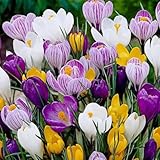

Plant Profile & Key Characteristics
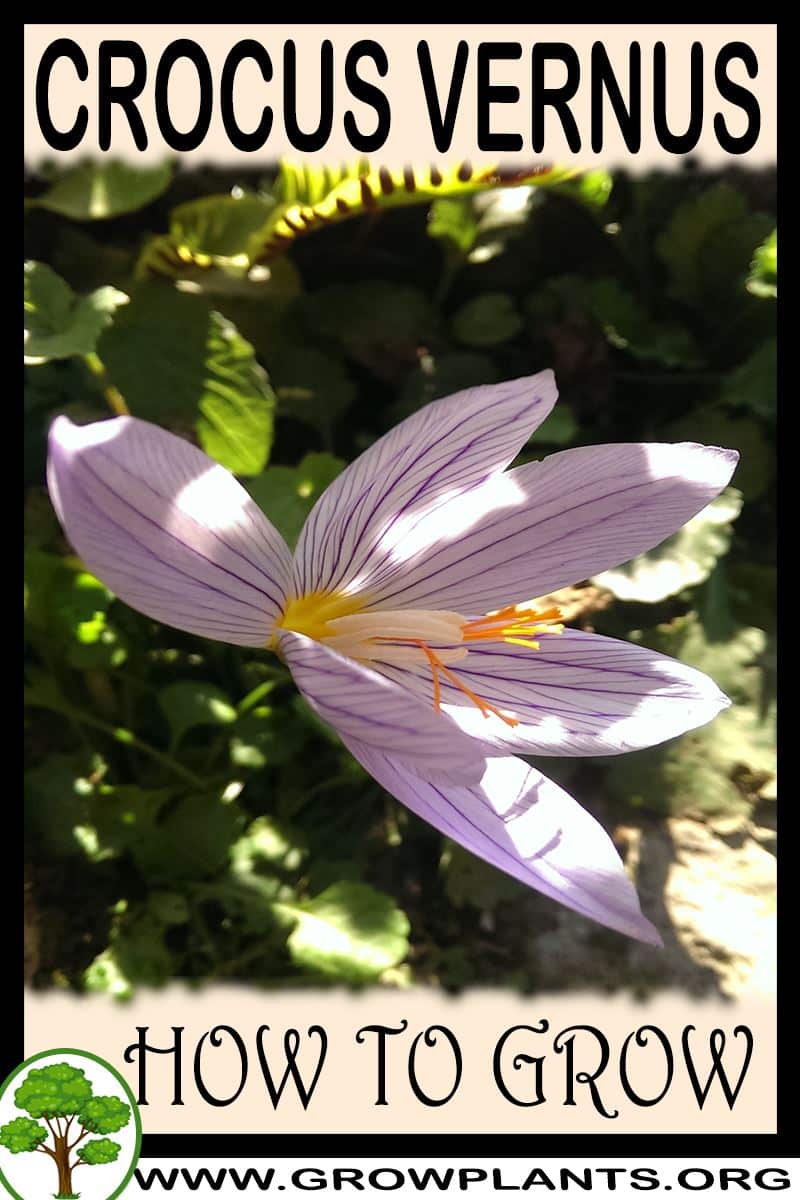
Overview: Crocus vernus (Spring Crocus) is a small deciduous cormous perennial only 10–15 cm (4–6 in) tall, with grassy leaves and goblet-shaped flowers rising directly from the corm. It is grown as an ornamental spring-flowering bulb.
Quick Specifications
| Specification | Attribute |
|---|---|
| Plant Type / Life Cycle | Perennial cormous geophyte |
| Foliage Type | Deciduous |
| Mature Size | 10–15 cm (4–6 in) tall |
| Growth Rate | Moderate |
| Root System | Cormous geophyte |
| Hardiness | USDA zones 3–9 |
Growth Form & Structure
- Height & Spread: A low geophyte only 10–15 cm (4–6 in) tall; grown massed in borders, rock gardens, lawns and shallow pots, spreading by offset corms.
- Growth Habit & Form: Compact tuft of narrow, grass-like leaves with stemless flowers emerging straight from the corm.
- Lifespan & Maturity: Long-lived corm that multiplies over the years into clumps.
Anatomy & Physical Features
- Leaves & Foliage: Narrow, grass-like linear leaves, often with a pale central stripe.
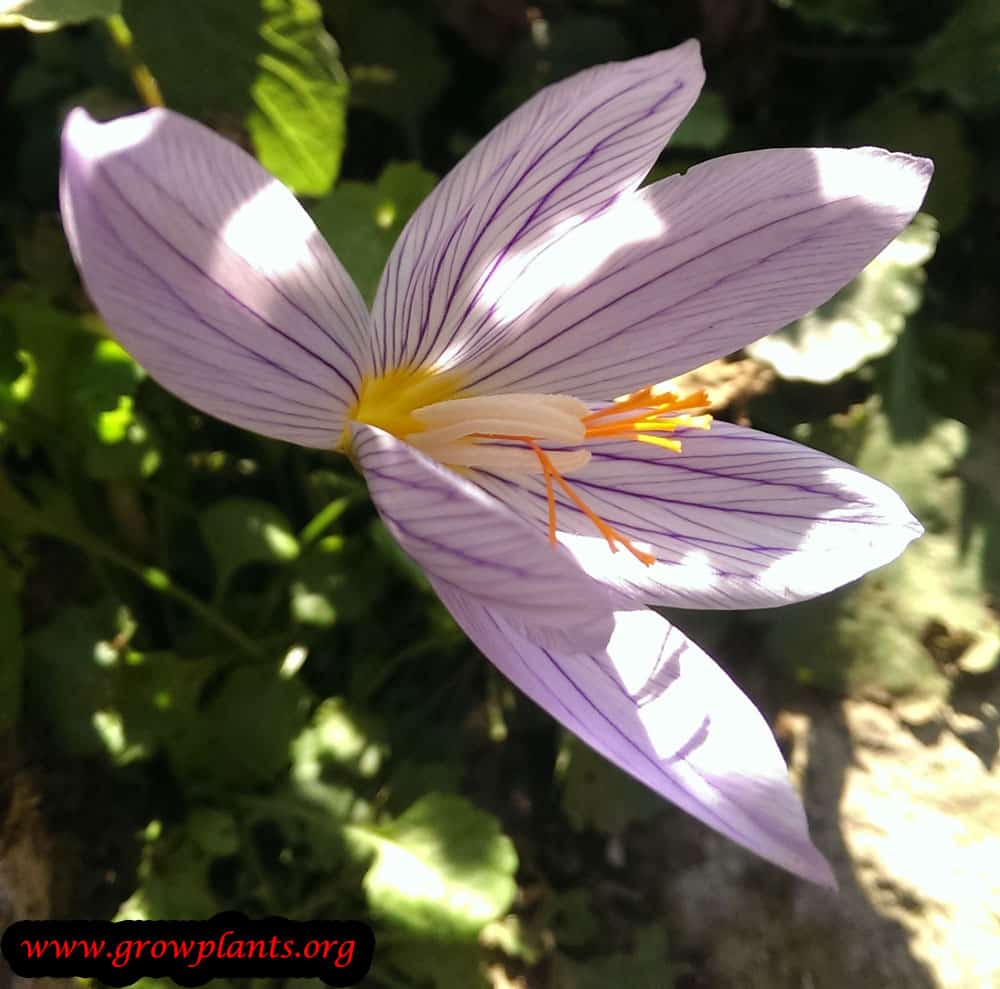
- Flower Characteristics: Purple or white goblet-shaped flowers with six petals and yellow-orange stigmas, in late winter to spring.
Primary Uses & Landscape Value
- Functional & Ornamental Roles: Ornamental spring-flowering bulb for borders, rock gardens, containers and naturalising in grass.
Care Guide: Planting, Soil & Watering
Overview: Crocus vernus (Spring crocus) is a hardy corm that needs sharply drained soil and full sun to part shade, as it is highly sensitive to waterlogging. Give it free-draining ground and moderate water while in growth.
Quick Care Requirements
| Requirement | Ideal Condition |
|---|---|
| Planting Season | Plant corms from summer through autumn (into winter in mild areas) for late-winter to spring bloom |
| Growth Rate | Moderate |
| Soil Type | Sharply drained soil — the corm rots in wet ground |
| Water Need | Moderate while in leaf and flower |
Planting & Establishment
- Best Planting Season: Plant the corms from summer into autumn, and into winter in milder areas, so they establish and flower from late winter into spring; choose a sunny to lightly shaded, sharply drained spot.
- How to Plant:
- Hole Preparation: Set the corms about 5–8 cm deep in loosened, free-draining soil; add grit if the ground is heavy.
- Soil Amendments: Improve drainage with coarse sand or grit rather than rich feeding; the priority is preventing standing water.
- Planting Depth: Plant with the pointed growing tip upward, a few centimetres below the surface.
- Growth Speed & Expectations: Growth is moderate; corms multiply over time to form spreading drifts.
Soil, Watering & Drainage Care
- Soil Mix & Drainage Needs: Demands sharply drained soil, as the corm is very sensitive to flooding and rot. In containers use a free-draining, gritty mix so water never pools around the corm.
- Watering Schedule & Technique:
- Young / Newly Planted: Keep the soil lightly moist as the corms root and send up leaves.
- Established: Water moderately while the plant is in leaf and flower, letting the surface dry between waterings and easing off as the foliage dies back.
- Seasonal Adjustments: Give moderate water through the growing period and keep the corms dry during their summer dormancy.
Climate, Light & Hardiness
Crocus vernus (spring crocus) is a deciduous corm restricted to temperate climates, growing in full sun to half shade with well-drained soil. Its USDA zone 3–9 rating shows very strong winter cold tolerance, but the corm is sensitive to flooding.
Quick Climate Specifications
| Climate Zones | Temperate |
|---|---|
| USDA Hardiness Zones | 3–9 |
| Frost Tolerance | High |
| Light Conditions | Full Sun / Half Shade |
| Wind Tolerance | Low (for the flowers) |
Sunlight & Light Exposure
Optimal Light Setup
Full sun to half shade both suit this corm well.
Direct Sun Requirement
Not mandatory - it grows well in either full sun or partial shade.
Best Exposure / Orientation
An open bed or naturalized lawn/rockery area, ideally with some shelter for the early-season blooms.
Temperature Extremes & Hardiness
USDA Hardiness & Regional Limits
Hardy across USDA zones 3–9, one of the most cold-tolerant corms on this site, restricted to temperate climates with real winter cold.
Cold Damage & Winter Protection
No special winter protection is generally needed within its zone range; the dormant corm handles hard winter freezes well.
Frost Sensitivity
Excellent winter frost tolerance, consistent with its zone-3 rating.
Wind, Humidity & Microclimate
Wind Tolerance
The delicate late-winter/spring flowers are thinned and damaged by wind and rain, so a sheltered spot extends bloom life.
Rainfall & Seasonal Moisture
Sensitive to flooding; avoid low, poorly drained spots where water pools after heavy rain or snowmelt.
Microclimate Recommendations
Sharp drainage and some wind shelter matter most; otherwise this is one of the easiest bulbs to naturalize across cold temperate gardens.
Growing in Pots, Balconies & Indoors
Crocus vernus (spring / Dutch crocus) is a small cormous plant of 10-15 cm (4-6 in). The grower does not rate it as a houseplant but confirms it grows well in pots and containers.
Quick Details
- Container Size: 10-12 cm bulb pan or a small 3-6 L pot in a generous group
- Indoor Suitability: Not a houseplant; can be brought indoors briefly for its flowers
- Best Spot: Full sun to part shade
- Soil & Drainage: Sharply drained, gritty loam-based mix
- Watering in Pots: Average in growth, then keep dry through dormancy after the foliage dies back
Indoors & On the Windowsill
- Not a houseplant: The grower does not grow it indoors – like most hardy bulbs it needs the seasonal rhythm and strong light of the outdoors to build and flower well.
- Temporary indoor flowering: Bulbs like this are often potted and brought into a cool, bright room just for their brief flowering, then moved back outside – a short display, not a permanent houseplant.
- Dormancy, not overwintering: After flowering and leaf die-back it rests underground; keep the pot cooler and much drier through the dormant season rather than bringing it into warmth.
- Safety: The corms can cause mild stomach upset if eaten – keep them from curious pets, and do not confuse this true crocus with the deadly autumn crocus (Colchicum).
On a Balcony or Patio
- Light & wind: Give it the brightest spot the balcony offers; shelter exposed plants from strong wind and stake any tall or top-heavy growth. Walls and paving reflect heat, so pots dry quickly – check moisture often in warm weather.
- Practicalities: A filled pot is heavy once watered, so make sure the balcony can take the weight and stand it where drainage runoff will not be a nuisance.
Choosing the Pot, Soil & Long-Term Care
- Pot & drainage: 10-12 cm bulb pan or a small 3-6 L pot in a generous group with strong drainage holes; skip a standing water saucer so the roots never sit wet. Terracotta breathes and dries fast, while glazed or plastic pots hold moisture longer.
- Potting mix: A gritty, sharply drained loam-based mix; good drainage prevents the dormant bulbs rotting.
- Watering: Water while in leaf and flower, then keep the pot dry through the dormant rest – a container makes that dry period easy to manage.
- Feeding: Potted plants exhaust their soil faster because nutrients leach out with every watering – feed lightly but regularly through the growing season.
- Repotting: Refresh the mix or pot up about every couple of years, teasing out and lightly trimming the roots of established plants.
Fertilizing & Feeding
Spring crocus grows its leaves and flowers together in late winter and spring, then dies back and rests for the rest of the year. As with most small spring-flowering corms, feeding is only useful during that active leafy window while the plant can put nutrients to use.
Quick Fertilizing Specs
| Feeding Level | Light |
|---|---|
| Main Nutrient Priority | Balanced feeding while leaves and flowers are actively growing supports the corm; feeding once foliage has faded is not useful |
| Best Feeding Period | In late winter and spring, while the leaves are green and the flowers are opening |
| Soil pH | Grows well in ordinary well-drained garden soil without needing a particular pH |
| Reduce/Stop Feeding | Stop feeding once the flowers fade and the foliage begins to decline heading toward its longer rest period |
| Organic Options | A light amount of organic matter worked into well-drained soil at planting suits this corm well |
Feeding by Growth Stage
Spring leaf growth and bloom
Support the corm through its combined leaf growth and flowering period, rebuilding reserves for the following year
| Nutrient direction | Balanced feeding while leaves and flowers are both present supports the corm without pushing unnecessary lush growth |
|---|---|
| Timing | In late winter and through spring, as the leaves and purple flowers emerge and develop together |
| Frequency | A light feeding or two while the foliage is green and actively growing is enough for this corm |
| Fertilizer types | A balanced, complete fertilizer suited to spring-flowering bulbs and corms, applied while leaves are green and actively growing |
| Precautions | This plant is sensitive to flooding, so keep the site well drained rather than letting water stand around the corms even during active feeding |
Post-flowering dormancy
Let the corm rest through the extended period after flowering, once the foliage has faded and been trimmed away
| Nutrient direction | None – withhold fertilizer once foliage has faded and the corm has entered its rest period |
|---|---|
| Timing | From when the foliage fades and is trimmed away through the rest of the year, until leaf growth resumes the following late winter |
| Frequency | No feeding at this stage |
| Fertilizer types | No feeding at this stage; let the corm rest undisturbed until leaf growth resumes |
| Precautions | Do not fertilize during this extended rest period, since feeding offers no benefit once the leaves have faded and there is no foliage to use it |
Nutrient Deficiency Signs & Corrections
Few or smaller flowers appear in late winter or spring when a fuller display is expected
| Possible causes | The corm not having built up enough reserves during the previous leafy growth period, including insufficient feeding then, Flooded or waterlogged soil during the growing or rest period, which this plant tolerates poorly, A young or recently divided corm that has not yet matured enough to flower fully, Overcrowded corms competing for space and nutrients and due for division |
|---|---|
| Appears first on | Whole-planting effect rather than a single-leaf symptom |
| What to check | Whether the corms received a light balanced feed during their last leafy growth period, Soil drainage and any history of standing water, Corm age and division history, How crowded the planting has become |
| Possible correction | Feed lightly during the next leafy growth period if the corms were underfed previously, improve drainage where flooding is a risk, and divide overcrowded plantings |
Leaves look pale or grow weakly during their brief late winter and spring growth period
| Possible causes | Nitrogen deficiency from no feeding during the leafy growth period, Root stress from waterlogged soil, since this plant is sensitive to flooding, Fungal disease affecting the foliage, which is a known issue for this plant, Aphid feeding weakening young growth |
|---|---|
| Appears first on | Leaves overall, most visible on the newest growth |
| What to check | Whether a light balanced feed was applied once leaves emerged, Soil drainage and any standing water, Signs of fungal spotting on the leaves, Presence of aphids on new growth |
| Possible correction | Apply a light balanced feed while leaves are actively growing if none has been given, improve drainage where flooding occurs, and address fungal disease or aphids directly since feeding alone will not resolve either |
Pruning, Training & Seasonal Maintenance
Crocus vernus is a small deciduous corm that needs almost no pruning. Flowers appear end of winter into spring, with the narrow, needle-like leaves following; those leaves are left to grow until fully dead, then trimmed in autumn per the source – the corm’s one pruning event, timed so it can fully recharge underground before the next bloom.
Quick Pruning & Maintenance Specs
| Pruning Tolerance | Low |
| Primary Pruning Window | Autumn, once foliage is fully dead |
| Secondary Maintenance Window | Late winter–spring, after bloom fades, to remove spent flower stems |
| Typical Frequency | Once or twice per year |
| Main Objective | Clear dead foliage without cutting into green leaf tissue |
| Young Plant Priority | None – leave a newly planted corm’s first leaves untouched |
| Mature Plant Priority | Trim dead leaves once fully dried, in autumn |
| Best Tool Type | Precision snips |
| Avoid Heavy Pruning During | Late winter through spring, while leaves are green and photosynthesizing |
Pruning by Plant Age & Size
Newly Established
No cutting on a newly planted corm; its first leaf cycle builds reserves.
Young / Formative
No structural training applies to a corm.
Mature / Established
Optionally tidy spent flower stems after bloom; trim the full dead leaf set in autumn once it has fully dried.
Seasonal Pruning Schedule
Post-Flowering (late winter–spring)
Objective: tidiness. What to remove: spent flower stems only. What not to remove: leaves, which are still green and feeding the corm at this point.
Autumn (source’s stated pruning season)
Objective: prepare the corm for dormancy. What to remove: fully dead leaves, trimmed per the source. What not to remove: any leaf tissue still green. Expected response: clean dormancy and stronger flowering next spring.
Special Growth to Remove
- Spent flower stems after bloom.
- Fully dead leaves in autumn.
- Any leaf showing fungal spotting, removed promptly on sight rather than left until autumn (the source flags fungal disease as a pest risk for this species).
Container & Small-Space Pruning
Crocus vernus grows well in containers per the source. The same dead-leaf-only rule applies; potted soil dries and warms faster, so foliage can finish drying earlier than in the ground – judge by the leaves, not a fixed date.
Tools
- precision_snips – all cuts are through thin, soft leaf and flower-stem tissue.
Tool Hygiene & Disease Risk
Increased – the source names fungal disease as a risk for this species, so blades should be wiped between plants when cutting out any fungal-affected leaf. Routine end-of-season removal of already-dead foliage needs no special disinfection.
Cut Placement & Technique
Cut spent flower stems near the base; cut dead leaves at the base, leaving any green tissue in place.
Heavy Pruning & Rejuvenation
Not applicable – there is no woody growth to rejuvenate. Congested clumps are refreshed by lifting and dividing corms, not by cutting back hard.
Post-Pruning Care
After the autumn leaf trim, avoid overwatering while the corm rests, and keep an eye on new spring growth for aphids, the source’s other listed pest.
Common Pruning Mistakes
- Cutting green leaves too early, which weakens next spring’s bloom.
- Leaving fungal-affected leaves in place until the normal autumn trim instead of removing them promptly.
When NOT to Prune
Never cut green, actively growing leaves; avoid disturbing the corm while it is in flower.
Recommended Tools (by task)
- precision_snips – for both routine dead-leaf/flower-stem removal and any sanitary cut.
- blade_disinfectant – only when cutting out fungal-affected leaf tissue, to avoid spreading infection between corm clumps.
Propagation Guide
Spring crocus is propagated almost entirely by dividing its corms, which reliably reproduces the plant and matches the timing the site’s own data describes in detail; growing it from seed is possible for the species but takes a couple of years to reach flowering size, so it’s mainly used by specialist growers. Propagation by corm division is easy.
Quick Propagation Specs
| Best Propagation Method | Corm division (offsets) |
| Alternative Methods | Seed (species only, slow to flower) |
| Propagation Difficulty | Easy |
| Seed True-to-Type | Yes (species, not a named hybrid) |
| Vegetative True-to-Type | Yes |
| Best Propagation Season | End of summer, once the corms are dormant after the leaves have died back |
Growing from Seed
Seed is not the site’s listed start method for this crocus; when grown from seed, expect several seasons before plants reach flowering size, so most growers rely on corm division instead.
Rhizomes, Tubers, Bulbs & Corms
Corm Division
Lift and split the corms at the end of summer, once they are dormant. The site’s own data notes root growth begins at the start of the growing season, so replant divided corms promptly to let them root ahead of the bloom period. Separate the offset corms from the mother corm by hand, and treat the divisions the same as an established plant afterward (well-drained soil, average watering, full sun to half shade).
Bloom & Flower Guide
Quick Details
- Bloom Season: Late winter to spring
- Time to First Bloom: Corms flower in their first spring after autumn planting
- Flower Appearance: Goblet-shaped flowers in purple (or white) with yellow-orange stigmas, six petals and three stigmas
- Edibility: Ornamental only – the spring crocus is not the culinary (saffron) crocus and is best not eaten
Detailed Blooming Overview
Spring crocus is among the earliest bulbs to bloom, pushing up its goblet-shaped flowers as winter loosens its grip. Planted in autumn, the corms naturalise happily in grass and borders and multiply from year to year.
Flower Characteristics
- Six petals in purple or white, with three yellow-orange stigmas at the centre.
- Opens wide in sun and closes in dull, cold weather.
Bloom Care & Thinning
- Deadheading: Little needed; wind and rain can batter the blooms, so shelter prolongs them.
- Foliage: Leave the leaves to die back so the corm can feed for next year.
- Pollination: An early nectar source for bees.
Pests, Diseases & Troubleshooting
Overview: Crocus are small cormous plants whose biggest enemies are hungry animals rather than insects – mice, voles, squirrels and birds dig up and eat the corms and shred the flowers. The insect and disease problems they do get are those of the iris/gladiolus family: aphids (and the viruses they spread), gladiolus thrips, and above all corm rots – Fusarium dry rot and Botrytis/tulip-fire storage rots. Good drainage, animal protection and clean corms cover most of it.
Quick Troubleshooting Overview
| Issue / Pest | Main Symptom | Primary Solution |
|---|---|---|
| Rodents / squirrels | Corms dug up and eaten; holes; missing plantings | Wire mesh over plantings; grit; deter diggers |
| Birds | Flowers (esp. yellow) shredded and pecked | Netting or cotton/threads; deterrents over blooms |
| Aphids | Colonies on growth; honeydew; virus spread | Hose off; encourage predators; soap if heavy |
| Gladiolus thrips | Silvery flecking on leaves and petals | Sticky traps; clean corms; soap/oil if severe |
| Corm rot (Fusarium/dry rot) | Rotten, discoloured corms; failure to emerge | Plant sound corms; good drainage; lift and cull rot |
| Botrytis / tulip fire | Grey mould, spotting on leaves/flowers in wet cool spells | Airflow; remove debris; avoid overhead wet |
Common Pests & Management
- Mice, voles & squirrels (Rodentia):
- Symptoms: The classic Crocus problem: newly-planted corms are dug up and eaten, leaving holes and gaps where plantings simply fail to appear, and clumps dwindle year on year as rodents harvest them underground.
- Prevention & Control: Plant corms under a layer of wire mesh or in mesh baskets, and lay chicken-wire over autumn plantings until the ground settles. A collar of sharp grit in the planting hole deters digging. Interplanting with less-palatable bulbs and keeping the area tidy of cover also helps.
- Birds (e.g. sparrows):
- Symptoms: Birds – house sparrows especially – peck and shred open crocus flowers, particularly yellow ones, tearing the petals to tatters even though they rarely eat much.
- Prevention & Control: Protect prized displays with netting, or with the traditional criss-cross of black cotton or thread stretched over the flowers. Shiny deterrents can help. The damage is to the blooms only and does not harm the corm.
- Aphids (Aphididae):
- Symptoms: Soft green aphids on emerging leaves, buds and flowers, with honeydew; their real significance is as vectors that spread mosaic and other viruses between corms.
- Prevention & Control: Hose off colonies, encourage ladybirds and hoverflies, and use insecticidal soap where numbers are high. Controlling aphids limits virus spread – an important reason to keep them in check.
- Gladiolus thrips (Thrips simplex):
- Symptoms: Tiny slender insects that rasp leaves and petals, leaving silvery streaks and pale flecking and a dirty, distorted look on the blooms; they can carry over on stored corms.
- Prevention & Control: Lift and inspect stored corms, remove old debris, and use blue sticky traps to monitor. Insecticidal soap or horticultural oil controls heavy infestations. Store corms cool and dry to suppress carry-over.
- Bulb mites (Rhizoglyphus spp.):
- Symptoms: Tiny pale mites that infest corms already wounded or rotting, feeding on the soft tissue and hastening decay in storage and in wet soil.
- Prevention & Control: They are chiefly secondary to damage and rot: handle corms gently, cure and store them cool, dry and airy, and discard any soft, damaged or rotting corms. Sound, firm corms in well-drained soil are rarely troubled.
Diseases & Fungal Issues
- Fusarium corm rot / dry rot (Fusarium oxysporum (and Stromatinia)):
- Symptoms: Corms rot with brown-to-black, sometimes concentric or sunken lesions; plants fail to emerge, or come up weak and yellow before collapsing. It spreads on infected corms and builds in poorly-drained, replanted ground.
- Treatment & Management: No cure once a corm is infected: plant only firm, clean corms in free-draining soil, avoid waterlogging, and lift and discard any soft or discoloured corms. Rotate plantings away from ground where rot has occurred, and store lifted corms cool and dry.
- Botrytis / tulip fire (Botrytis (B. croci / tulipae)):
- Symptoms: Grey furry mould and spotting on leaves and flowers, with rot spreading from damaged or congested tissue in cool, damp, still conditions; stored corms can develop a soft rot.
- Treatment & Management: Improve airflow and drainage, remove faded flowers and dying leaves promptly, and avoid overhead watering that keeps foliage wet. Discard rotting corms and store the rest dry and airy; a protective fungicide helps only in persistent problem sites.
- Mosaic & other viruses (aphid-borne viruses):
- Symptoms: Pale streaking, mottling or ‘breaking’ of flower colour and mottled or flecked leaves, with gradual loss of vigour. Spread by aphids and by dividing infected corms.
- Treatment & Management: There is no cure – rogue out and destroy clearly virused plants, control aphids that spread it, and propagate only from healthy stock. Buy virus-free corms from reputable sources.
Growing Difficulties & Abiotic Problems
- Waterlogging & corm rot:
- Cause & Symptoms: Corms in heavy, wet, poorly-drained soil suffocate and rot, and plantings fail or dwindle – the single biggest cultural killer.
- Correction Strategy: Plant in free-draining soil (add grit to heavy ground), choose a sunny, well-drained spot, and avoid sites that stay wet. In pots use a gritty mix and never leave them standing in water.
- Failure to naturalise / thin flowering:
- Cause & Symptoms: Crocus flower and multiply poorly in deep shade, in soil that is too rich and wet, or where the leaves are cut down before they yellow.
- Correction Strategy: Grow in full sun, let the foliage die back naturally to feed next year’s corm, and avoid heavy feeding. Lift and divide overcrowded clumps when flowering declines.
- Premature dormancy in heat:
- Cause & Symptoms: In hot, dry conditions the foliage yellows and dies down early; this is largely natural but can weaken corms if very early.
- Correction Strategy: Allow the natural summer dormancy, keep corms dry at rest, and site where they get spring moisture and light before the heat. Avoid watering dormant corms.
What Helps – Products & Tools
The most useful ‘tools’ here are physical: wire mesh or baskets and sharp grit against rodents, and netting or cotton threads against birds. For the minor insect and disease issues, suitable types are insecticidal soap for aphids and thrips, blue sticky traps for monitoring thrips, and a protective fungicide only on sites with a real Botrytis or Fusarium history. Above all, plant firm, clean corms in sharply-drained soil. Spray any oils in the evening to protect pollinators.