

Plant Profile & Key Characteristics
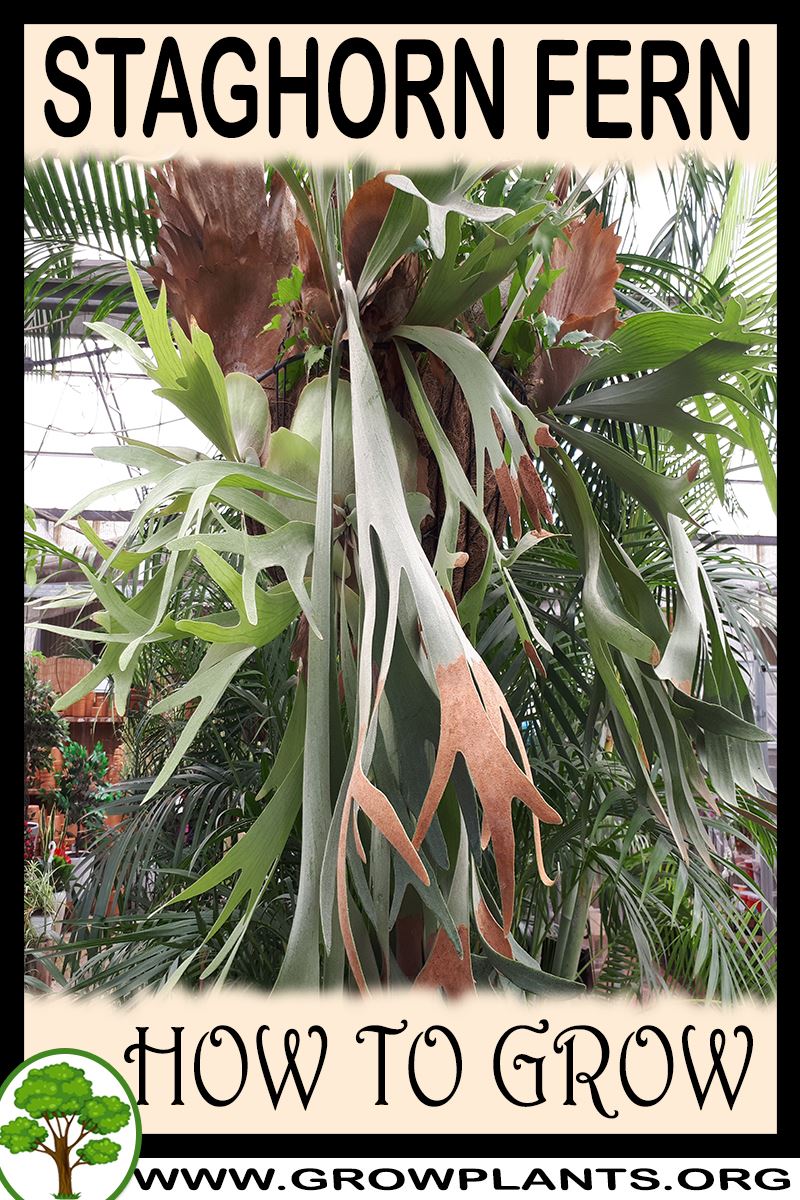
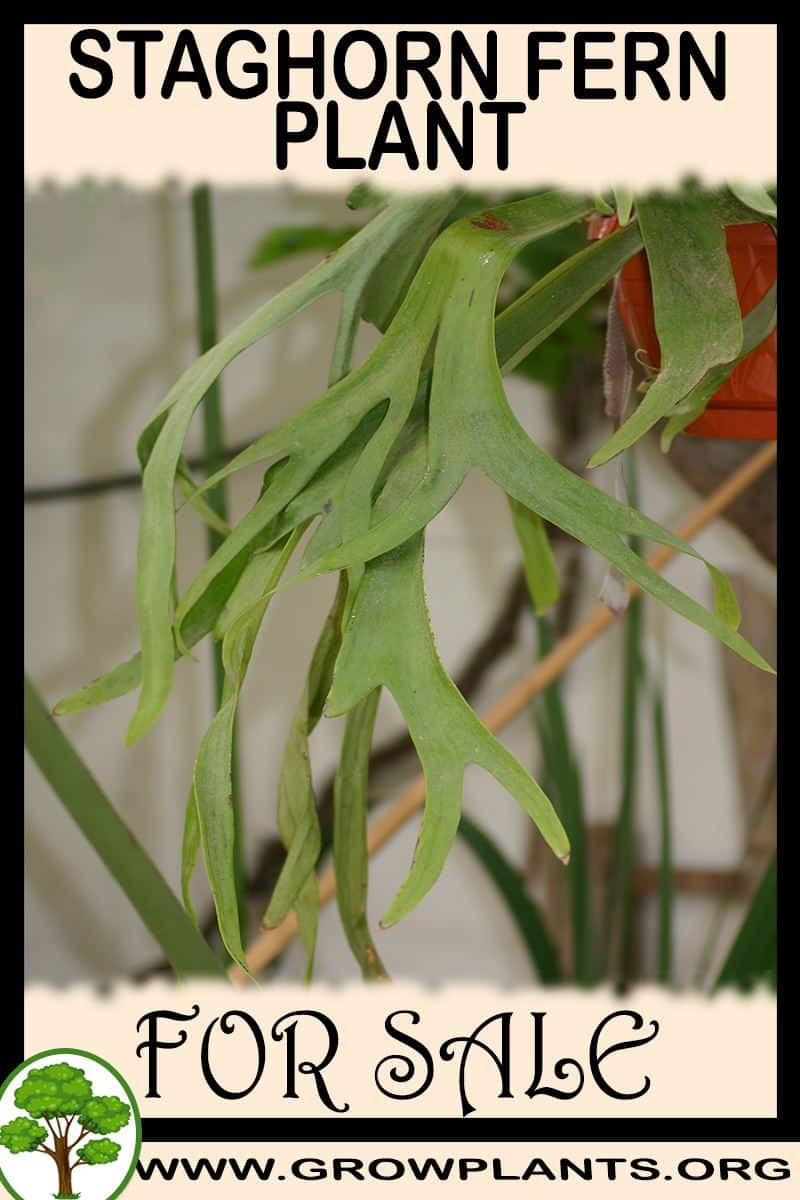
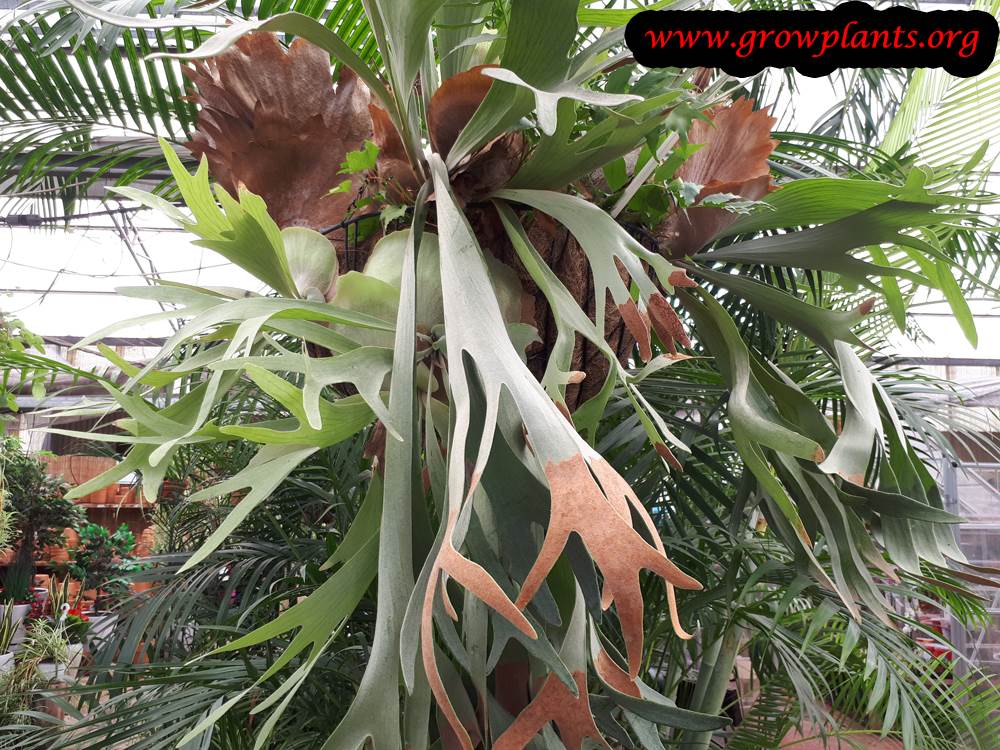
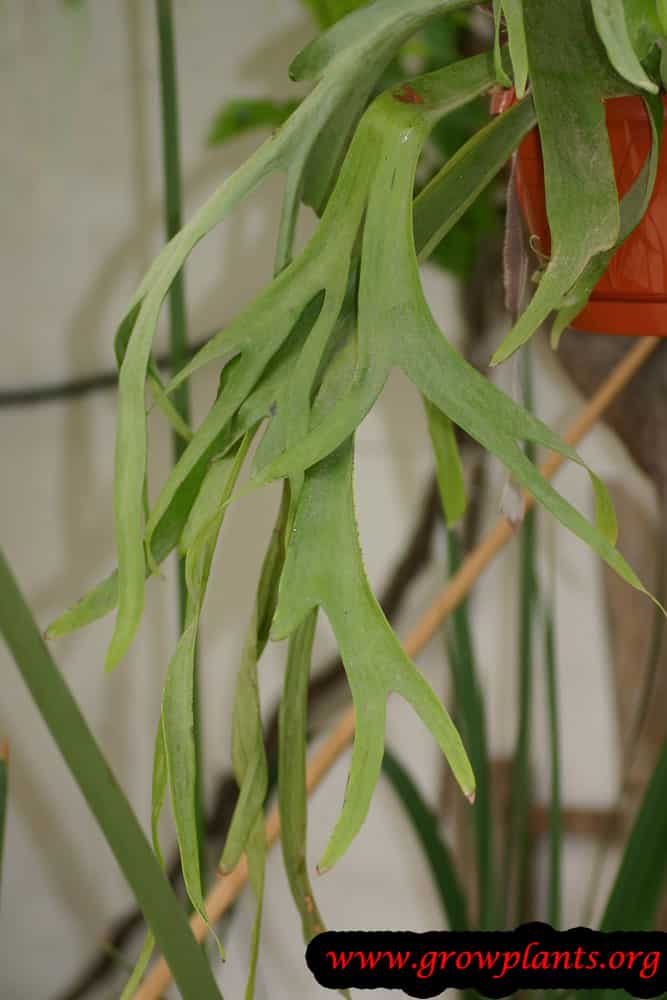
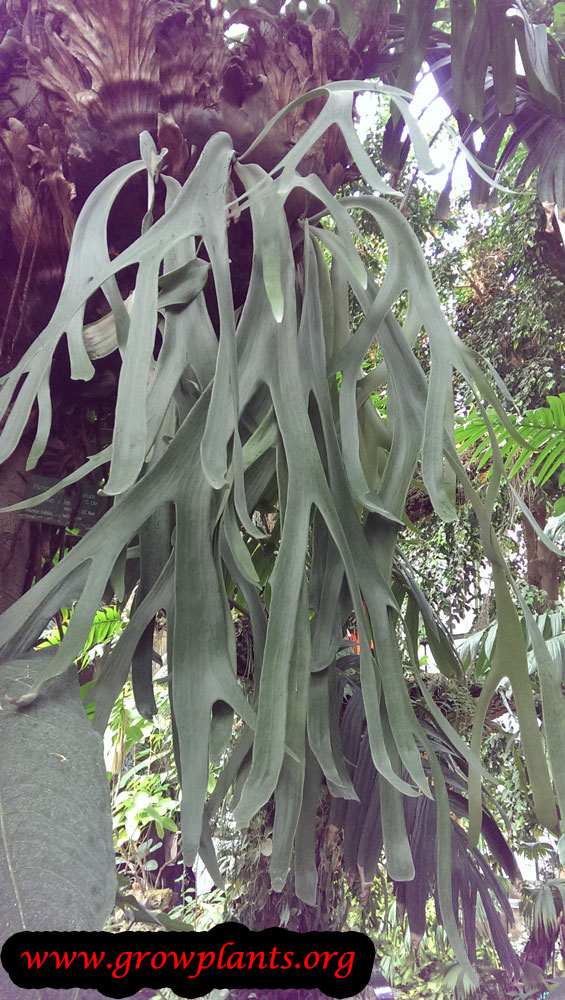
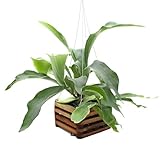
Overview: The staghorn fern (Platycerium bifurcatum) is an evergreen epiphytic fern reaching 0.4–1.6 m (16–64 in), grown for its distinctive antler-shaped fronds. It is a popular mounted or potted houseplant for warm, humid, shaded spots.
Quick Specifications
| Specification | Attribute |
|---|---|
| Plant Type / Life Cycle | Perennial evergreen epiphytic fern |
| Foliage Type | Evergreen |
| Mature Size | 0.4–1.6 m (16–64 in) |
| Growth Rate | Slow to moderate |
| Root System | Epiphytic — small anchoring roots only; grows mounted on wood or bark rather than in soil |
| Toxicity | Non-toxic — considered safe around cats and dogs |
| Hardiness | USDA zone 10b and warmer (grown as a houseplant elsewhere) |
Growth Form & Structure
- Height & Spread: Fronds reach 0.4–1.6 m (16–64 in); usually displayed mounted on a board or in a hanging basket rather than a conventional pot.
- Growth Habit & Form: Epiphyte that grips its support with rounded shield fronds while arching, antler-like fertile fronds spread outward.
- Lifespan & Maturity: A long-lived perennial that grows steadily and can form large clustered specimens over years; offsets (pups) can be divided off.
Anatomy & Physical Features
- Leaves & Foliage: Two frond types: flat, rounded grey-green ‘shield’ fronds that clasp the base, and arching, forked grey-green antler-like fertile fronds.
Primary Uses & Landscape Value
- Functional & Ornamental Roles: Sculptural ornamental houseplant, mounted wall feature or hanging specimen for shaded, humid interiors, patios and greenhouses.
Care Guide: Planting, Soil & Watering
Overview: The staghorn fern (Platycerium bifurcatum) is an epiphytic fern (hardiness zone 10b and warmer) that grows on trees or mounted boards rather than in soil, drawing moisture from humid air. It needs warmth above about 3 °C, high humidity, bright indirect light and mineral-free (rain) water.
Quick Care Requirements
| Requirement | Ideal Condition |
|---|---|
| Planting Season | Year-round in the tropics; in spring elsewhere |
| Growth Rate | Slow to moderate |
| Soil Type | None – epiphytic; mounted on bark or a board with a pad of sphagnum moss |
| Water Need | Moderate – keep the moss pad moist, letting it dry slightly between waterings |
Planting & Establishment
- Best Planting Season: Mount or divide plants year-round in the tropics; in cooler climates do so in spring as growth resumes.
- How to Plant:
- Mounting Surface: Fix the fern to a board, slab of bark or basket rather than potting it in soil.
- Moss Pad: Pack a generous pad of sphagnum moss around the root ball behind the shield fronds, then tie the plant on until it anchors itself.
- Positioning: Site in bright indirect light with good air movement and high humidity, keeping the growing point exposed and not buried.
- Growth Speed & Expectations: Growth is slow to moderate; fronds spread 0.4-1.6 m (16-64 in) over time.
Soil, Watering & Drainage Care
- Soil Mix & Drainage Needs: Instead of soil, keep the sphagnum pad open and airy; it must drain and dry slightly between waterings so the roots never stay sodden and rot.
- Watering Schedule & Technique:
- Young / Newly Planted: While establishing, keep the moss pad evenly moist and mist frequently to maintain humidity.
- Established: Water by soaking or misting the moss pad when it begins to dry, ideally with rainwater, then let it dry a little before the next watering.
- Seasonal Adjustments: Water more often in warm, dry conditions and reduce in cool weather, never letting temperatures fall near freezing.
Climate, Light & Hardiness
The Staghorn Fern (Platycerium bifurcatum) is an epiphyte suited to humid tropical, subtropical, or mild Mediterranean climates, or to mounted/basket culture as a houseplant. It grows best in half shade to full shade and, at USDA hardiness zone 10b+, has some frost tolerance for a tropical epiphyte - site data notes it can survive briefly above about 3°C (37°F) - but it is not reliably cold-hardy and needs protection anywhere winters bring real cold.
Quick Climate Specifications
| Climate Zones | Tropical, subtropical, or mild Mediterranean; otherwise mounted/basket houseplant |
|---|---|
| USDA Hardiness Zones | 10b+ |
| Optimal Temp Range | approximately 16–27°C (61–81°F) |
| Cold Damage Begins | The felty gray shield fronds and green foliar fronds typically show cold damage somewhat above freezing, roughly below 7–10°C (45–50°F). |
| Approx. Survival Minimum | Site data indicates a mounted, established plant can briefly tolerate temperatures a little above 3°C (37°F); true freezing is expected to be fatal. |
| Frost Tolerance | Very Low |
| Light Conditions | Half Shade (mostly shade) / Full Shade |
| Wind Tolerance | Low |
| Salt / Coastal Tolerance | Not suitable |
Sunlight & Light Exposure
Optimal Light Setup
Bright, filtered light or dappled shade suits it best, similar to its natural position mounted on tree trunks under forest canopy.
Shade & Heat Management
More shade is needed as heat and light intensity rise; the felty shield fronds can scorch in hot, unfiltered sun.
Best Exposure / Orientation
Mount or hang it on the shaded-to-dappled side of a tree, wall, or patio, out of intense midday sun.
Temperature Extremes & Hardiness
USDA Hardiness & Regional Limits
Reliable outdoors, mounted or in a basket, only within zone 10b+; elsewhere it should be brought under cover or indoors before cold weather arrives.
Cold Damage & Winter Protection
Because it is grown mounted rather than in soil, its root mass has little insulation, so it is more exposed to cold snaps than an in-ground plant of similar hardiness; moving mounted plants to a sheltered porch or indoors before cold nights is the main protection strategy.
Frost Sensitivity
High; any frost is likely to damage or kill exposed fronds and the growing point.
Extreme Heat Tolerance
Tolerated with adequate humidity and regular watering of the mount; hot, dry conditions dehydrate the shield fronds quickly.
Wind, Humidity & Microclimate
Humidity Preferences
High; as an epiphyte with no soil moisture reserve, it depends more on ambient humidity and regular watering/misting than in-ground ferns do.
Dry-Air Tolerance
Low; dry air dehydrates the mount and fronds faster than in soil-grown ferns, since there is no surrounding soil to buffer moisture swings.
Wind Tolerance
Low; large, heavy fronds can be damaged by strong wind, and a mounted plant is more exposed than one rooted in the ground.
Coastal / Salt Tolerance
Not suitable for salt spray. Separately, site data notes a preference for rainwater over tap water - this reflects sensitivity to minerals/chlorine in irrigation water, a distinct issue from coastal salt-air exposure.
Rainfall & Seasonal Moisture
Native to consistently humid, high-rainfall climates; a pronounced dry season is poorly tolerated without supplemental misting/watering of the mount.
Microclimate Recommendations
A shaded, humid, wind-sheltered spot - such as under a porch roof or tree canopy - combined with rainwater or filtered water for irrigation gives the best long-term results.
Growing in Pots, Balconies & Indoors
Staghorn fern (Platycerium bifurcatum) is one of the classic epiphytic ferns and an outstanding houseplant – the grower confirms it grows happily indoors and in containers. It is usually mounted on a board or grown in a hanging basket rather than a deep pot, thriving in the bright, humid, shaded conditions of a room or a sheltered balcony.
Quick Details
- Container Size: A shallow pot, hanging basket, or a mounted board – the roots are small; it grows as an epiphyte rather than in a deep pot of soil
- Indoor Suitability: A genuine houseplant – happy in a bright, shaded room
- Best Spot: Bright, indirect light to shade – keep out of hot, direct sun, which scorches the fronds
- Soil & Drainage: Rich, moisture-retentive but free-draining mix; it likes constant moisture without waterlogging
- Watering in Pots: Keep the mix evenly moist and never let it dry out – pots dry fast, and ferns resent drought; high humidity is key
Indoors & On the Windowsill
- A true houseplant: Excellent indoors – mount it on a board or grow it in a basket and hang it in bright, indirect light. Water by soaking the root ball, then let excess drain.
- Humidity: Loves a humid room; mist regularly or grow it in a bathroom or kitchen where the air stays moist.
- Overwintering: Tender types (from warm, frost-free climates) should spend cold winters indoors as houseplants; hardier maidenhairs can stay outside in mild areas, but a pot lets you shelter them from hard frost – a key reason to grow ferns in containers.
On a Balcony or Patio
- Light & shelter: Choose a shaded, sheltered corner – a north or east aspect, or under a canopy. Ferns dislike wind, hot sun and reflected heat from walls and railings, all of which dry and crisp the fronds.
- Moisture: Pots on a balcony dry out quickly, so check daily in warm weather and keep the mix moist; grouping pots together raises humidity around the fronds.
- Practicalities: Provide free drainage and mind the runoff on paving or a shared balcony; a large planter is heavy once wet, so position it before filling.
Choosing the Pot, Soil & Long-Term Care
- Mount or basket: Grow it on a board with sphagnum moss, or in a basket – not a deep pot of dense soil. Whatever you use must drain freely so the roots never sit wet.
- Medium: A loose, airy, bark-and-moss based mix (or pure sphagnum on a mount) suits this epiphyte far better than ordinary potting soil.
- Feeding: Potted plants need feeding more often than those in the ground, as watering leaches nutrients away; give a dilute, balanced feed through the warm growing season and ease off in the cool season.
- Repotting: Refresh the mix and pot up about every two years; divide crowded clumps or rhizomes in the growing season and trim away any dead or tired fronds.
Growing this plant in a greenhouse
A greenhouse can give staghorn fern frost protection, cold protection, humidity control and extra warmth. In the right climate it may also be kept growing through winter, depending on how much warmth and light are provided.
Greenhouse at a glance
| Greenhouse suitability | Good - clearly useful |
|---|---|
| Main benefits | frost protection, cold protection, humidity control, extra warmth |
| Season extension | earlier spring & later autumn |
| Outdoor protection advisable below | about 10°C |
| Maintain greenhouse minimum | around 10°C for active growth |
| Suitable types | heated greenhouse, polycarbonate greenhouse |
| Heating | Heating is recommended in cold climates for continuous growth. |
Related greenhouse guides
- Greenhouses: How to Choose the Right Greenhouse
- Best Greenhouse Heaters
- Greenhouse Climate Control: Temperature, Ventilation and Humidity
- Polycarbonate Greenhouses: What to Look for Before Buying
Fertilizing & Feeding
An epiphyte grown mounted on wood or bark rather than in soil, it draws few nutrients from a growing medium in the wild, so feeding stays light and dilute, applied to the mount or shield frond rather than watered into ordinary potting soil.
Quick Fertilizing Specs
| Feeding Level | light |
|---|---|
| Main Nutrient Priority | A dilute, balanced feed applied to the mount or growing medium supports the fronds; this epiphyte draws few nutrients from soil |
| Best Feeding Period | Spring through summer while new fronds are actively forming |
| Reduce/Stop Feeding | Taper off as growth slows in cooler, lower-light months |
| Soil pH | Grown mounted or in an open, fast-draining epiphytic mix rather than ordinary potting soil |
| Organic Options | Well-rotted organic matter or sphagnum moss packed around the roots suits its epiphytic habit |
| Micronutrients | Iron and manganese support healthy frond color from a complete, dilute feed |
Feeding by Growth Stage
Settling in after mounting or repotting
Let the plant anchor its roots to a new mount or growing medium before adding any fertilizer.
| Nutrient direction | None – withhold fertilizer while the plant anchors itself to its new mount or medium. |
|---|---|
| Timing | The first stretch after mounting, dividing, or repotting. |
| Frequency | No feeding at this stage. |
| Fertilizer types | No feeding at this stage; let the plant anchor itself before adding any fertilizer. |
| Precautions | Do not fertilize a freshly mounted or disturbed plant; keep humidity high and mist regularly instead. |
Active frond growth
Support new shield fronds and the antler-like foliar fronds during the growing season.
| Nutrient direction | A dilute, balanced feed applied to the growing medium or misted onto the shield frond supports steady growth; as an epiphyte with no soil reservoir, it takes up nutrients in small, gentle amounts. |
|---|---|
| Timing | Spring through summer while new fronds are actively forming. |
| Frequency | Light, regular feedings through the growing season, easing off if growth slows. |
| Fertilizer types | A diluted balanced liquid fertilizer misted onto the shield frond or watered into the mount’s growing medium, An occasional very dilute foliar feed formulated for epiphytes |
| Routine trace nutrients | iron, manganese |
| Precautions | Keep concentrations well diluted, since this epiphyte has no soil to buffer excess fertilizer salts, and avoid letting concentrated feed pool against the shield frond. |
Low-light and cool-season slowdown
Match feeding to reduced demand once light and warmth drop and new fronds stop forming.
| Nutrient direction | None – withhold feeding while growth is minimal in low light or cool conditions. |
|---|---|
| Timing | Autumn through winter, or whenever light and warmth drop and growth stalls. |
| Frequency | No feeding at this stage. |
| Fertilizer types | No feeding at this stage; resume once active frond growth restarts. |
| Precautions | Do not fertilize while growth is stalled; continue misting and steady humidity instead. |
Mineral and salt buildup maintenance
Prevent fertilizer and mineral buildup on the shield frond and mount, which this salt-sensitive epiphyte tolerates poorly.
| Nutrient direction | None – this is a maintenance step, not a feeding stage. |
|---|---|
| Timing | Periodically, independent of the feeding schedule, especially where tap water is hard. |
| Frequency | No feeding at this stage; this is a rinsing maintenance step. |
| Fertilizer types | No feeding at this stage; periodically rinse the mount and shield frond with plain water to clear mineral buildup instead of adding fertilizer. |
| Precautions | Do not fertilize during a rinsing maintenance pass; let the mount drain and dry appropriately afterward. |
Nutrient Deficiency Signs & Corrections
Pale, sparse fronds with a noticeably slower flush of new shield and foliar fronds.
| Possible causes | Insufficient feeding while the plant is actively growing, Low light reducing the plant’s ability to use available nutrients, A growing medium that has broken down and lost its organic content |
|---|---|
| Appears first on | New shield and foliar fronds |
| What to check | Recent feeding history, Light levels, Condition of the mount or growing medium |
| Possible correction | Resume light, diluted balanced feeding while the plant is actively growing and refresh the mount’s organic medium if it has broken down. |
New fronds emerge pale yellow-green while the fine veins stay darker green.
| Possible causes | A growing medium or water source that is too alkaline for iron uptake, Poor airflow or waterlogging around the mounted roots, A fertilizer lacking iron and other micronutrients |
|---|---|
| Appears first on | Newest fronds |
| What to check | Water source and mineral content, Airflow and moisture around the mount, Whether the fertilizer used includes micronutrients |
| Possible correction | Improve airflow around the mount and apply a chelated iron product per its label if chlorosis persists. |
The shield frond or fertile fronds develop brown, dead patches, especially after feeding.
| Possible causes | Fertilizer applied too strong or too often for this salt-sensitive epiphyte, Mineral buildup from hard tap water on the mount, Fertilizer pooling directly against the shield frond instead of draining away |
|---|---|
| Appears first on | The shield frond |
| What to check | Strength and frequency of recent feeding, Water source and mineral content, Whether feed is pooling against the shield frond instead of draining |
| Possible correction | Rinse the mount thoroughly with plain water to clear buildup and return to a much more dilute feed applied away from the shield frond. |
Pruning, Training & Seasonal Maintenance
Staghorn fern produces two structurally different frond types, and that distinction drives everything about how it should be pruned: round, shield-like basal fronds that clasp the mount and protect the plant’s base, and the green, antler-shaped foliar fronds that do the photosynthesizing. Pruning tolerance is low and objective-specific – the only safe removals are fully dead foliar fronds and damaged tissue, since the shield fronds must stay in place even after they brown. Cuts can be made whenever needed through the year, and pruning has no effect on flowering since this fern reproduces by spores, not flowers.
Quick Pruning & Maintenance Specs
| Pruning Tolerance | Low – sanitary removal of dead foliar fronds only |
| Primary Pruning Window | All year, as needed |
| Typical Frequency | Occasional, tied to frond condition |
| Main Objective | Remove dead/damaged antler fronds; never disturb shield fronds |
| Young Plant Priority | Leave all fronds, including browning shield fronds, undisturbed |
| Mature Plant Priority | Selective removal of spent antler fronds only |
| Best Tool Type | Precision snips |
Pruning by Plant Age & Size
Newly Established
Avoid any pruning while the plant is mounting/rooting in; even fronds that look tired are best left to support establishment, given this species is noted as ‘vulnerable’ to stress.
Young / Formative
No structural training applies. As an epiphyte with no soil-based framework, its form develops naturally around its mount; the only intervention is occasionally securing new shield growth to the mount if it has not yet clasped on.
Mature / Established
Ongoing removal of fully dead, brittle antler fronds at their base. Brown, papery shield fronds are always left in place – they continue protecting the root mass and mounting point even after they die.
Seasonal Pruning Schedule
Ongoing Sanitary
Objective: remove spent foliar growth to reduce pest harborage, since aphids and spider mites are noted problems on this species. Remove: fully dead, dried antler fronds. Do not remove: shield/nest fronds at any stage, including brown ones – removing them exposes and damages the base the plant depends on. No flowering/fruiting impact, as this fern does not flower.
Special Growth to Remove
- Dead or pest-damaged antler (foliar) fronds – cut at the base.
- Shield fronds are never removed, brown or green – they are structural, not decorative, tissue.
Container & Small-Space Pruning
Grown mounted or in a hanging container as commonly done for this species, pruning stays limited to spent antler fronds; there is no meaningful size-control pruning since removing shield fronds (the only way to limit its spread across a mount) would harm the plant.
Tools
- precision_snips – the only tool needed for this soft-tissue epiphyte.
Tool Hygiene & Disease Risk
Routine – clean, sharp snips are sufficient; the plant’s noted vulnerabilities are pest-related (aphids, spider mites), not pruning-transmissible pathogens.
Cut Placement & Technique
Cut dead antler fronds at their base without disturbing neighboring shield tissue; never cut into or peel back shield fronds even to ‘clean up’ their appearance.
Heavy Pruning & Rejuvenation
Not tolerated: there is no hard-pruning or rejuvenation technique for this species. A staghorn fern in decline needs a review of mounting, watering (it prefers rainwater) and light, not a heavier prune.
Post-Pruning Care
Maintain the humidity and regular misting/watering this species already requires; do not fertilize simply because a few fronds were trimmed.
Common Pruning Mistakes
- Removing brown shield fronds thinking they are ‘dead leaves’ to clean up – this is the single most damaging mistake for this species.
- Cutting green, healthy antler fronds for size control, which does not meaningfully reduce the plant’s spread and removes functional foliage.
When NOT to Prune
Avoid pruning shortly after mounting or repotting, and avoid any pruning during visible pest stress (aphids/spider mites) until the pest issue is addressed, since the plant is already noted as vulnerable under stress.
Recommended Tools (by task)
- precision_snips – for careful removal of dead antler fronds only, working close to but never into the shield-frond base.
Propagation Guide
Staghorn fern is most easily propagated by removing the basal pups (offsets) that form around the mother plant, which the site notes is easier than starting from spores. Spore propagation will also reproduce the species but takes much longer and needs more exacting conditions, so it is best left to more experienced growers.
Quick Propagation Specs
| Best Propagation Method | Basal pups (offsets) |
| Alternative Methods | Spores |
| Propagation Difficulty | Easy (pups); Specialist (spores) |
| Vegetative True-to-Type | Yes |
| Best Propagation Season | Year-round in warm climates; spring is best in cooler climates |
Division, Offsets, Pups & Suckers
New pups form at the base of the plant, partly covered by the rounded shield (nest) fronds that protect the root mass. Wait until a pup has grown several of its own fronds and its own root system before separating it – cut through the connecting tissue with a clean blade, keeping some shield/root material attached to the pup. Mount the separated pup on a board, in a basket, or in a shallow pot with a humidity-retentive medium such as sphagnum moss, and keep it humid and out of direct hot sun until new growth confirms it has re-established; this matches the plant’s general need for humidity and protection from more than a light freeze.
Spores
Spores form as brown, felty patches on the undersides of the fertile, antler-shaped fronds; collect them once mature and sow on a sterile, constantly moist medium under high humidity and bright, indirect light. Germination and establishment are slow and the young plants are more delicate to raise than a separated pup, which is why the site describes vegetative propagation as the easier route.
Pests, Diseases & Troubleshooting
Overview: Staghorn ferns are epiphytes whose biggest threat is not an insect but rot — overwatering the round shield fronds and the crown quickly causes fatal collapse. The common staghorn fern is the most forgiving and vigorous species, but even it succumbs quickly to crown rot if the shield fronds stay wet. Their main true pests are scale and mealybugs, which cling stubbornly to the fronds, plus occasional aphids and mites. Because ferns can be damaged by oil and soap sprays, gentle physical removal and correct watering (soak-and-dry, never soggy) are the heart of their care.
Quick Troubleshooting Overview
| Issue / Pest | Main Symptom | Primary Solution |
|---|---|---|
| Scale insects | Brown/black bumps on fronds; weak, spotted growth | Wipe/scrape off gently; very dilute oil (test first) on tough cases |
| Mealybugs | White cottony tufts in crown and frond bases | Dab with alcohol; remove by hand; isolate the plant |
| Aphids | Sticky, distorted new fronds | Rinse off; avoid harsh sprays on tender fronds |
| Spider mites | Fine stippling, dull fronds in dry air | Raise humidity; rinse foliage; avoid strong miticides |
| Rhizome / crown rot | Blackened, mushy shield fronds; collapse | Reduce watering; improve airflow and drainage; remove rotten tissue |
| Frond browning | Brown tips/patches from dry air, salt or sun | Raise humidity; use soft water; shade from harsh sun |
Common Pests & Management
- Scale insects (Coccidae / Diaspididae):
- Symptoms: Brown, black or waxy bumps clinging to the fronds and their undersides, sometimes mistaken for the fern’s natural brown spore patches; heavy infestations weaken and spot the fronds and leave honeydew.
- Prevention & Control: Wipe or gently scrape scale off by hand with a soft cloth or cotton bud — the most reliable method on ferns. For stubborn cases use a very dilute horticultural oil, testing on one frond first, since ferns can be scorched by oils; isolate infested plants and check the crown.
- Mealybugs (Pseudococcus, Planococcus spp.):
- Symptoms: White cottony tufts tucked into the crown, frond bases and the spongy shield-frond layer, with sticky honeydew and stalled growth.
- Prevention & Control: Dab colonies with rubbing alcohol on a cotton bud and physically remove them, repeating weekly; isolate the plant and inspect the sheltered shield-frond cavity where they hide. Avoid drenching the crown, which invites rot.
- Aphids (Aphididae):
- Symptoms: Soft insects on soft, newly unfurling fronds, causing distortion and sticky honeydew.
- Prevention & Control: Rinse off gently with water and remove by hand; avoid harsh insecticides and strong soaps on the tender new fronds, and support natural predators on outdoor plants.
- Spider mites (Tetranychus urticae):
- Symptoms: Fine pale stippling and a dull, dry look on fronds in hot, dry, low-humidity air.
- Prevention & Control: Raise humidity, keep the plant out of hot dry drafts, and rinse the fronds; avoid strong miticides that ferns tolerate poorly, relying on humidity and washing instead.
Diseases & Fungal Issues
- Rhizome and crown rot (Rhizoctonia, Pythium, Phytophthora spp.):
- Symptoms: The number-one killer: the round shield (basal) fronds and crown turn black, soft and mushy after overwatering or water trapped in the crown, and the plant collapses.
- Treatment & Management: Water by soaking then letting the mount or medium dry, never keep the crown wet, and ensure strong airflow and free drainage on the mount. Remove rotted tissue and reduce watering sharply; there is no reliable cure once the crown rots, so prevention is everything.
- Black spot / bacterial leaf blight (Rhizoctonia; bacterial pathogens):
- Symptoms: Dark, sometimes water-soaked spots that spread on fronds kept wet in still, humid air.
- Treatment & Management: Keep water off the fronds, improve air movement, and remove affected fronds; avoid overhead watering and crowding.
- Anthracnose / frond blight (Colletotrichum and related fungi):
- Symptoms: Brown, enlarging blotches on fronds in warm, wet, stagnant conditions.
- Treatment & Management: Improve ventilation and remove infected fronds; a copper-based fungicide is a cautious last resort, testing first as ferns can be sensitive.
Growing Difficulties & Abiotic Problems
- Overwatering (the master problem):
- Cause & Symptoms: Water sitting in the crown or a constantly soggy mount rots the shield fronds — by far the most common way these ferns die.
- Correction Strategy: Soak the mount thoroughly then let it dry appreciably before the next watering, water less in cool or low-light conditions, and never let water pool in the crown.
- Low humidity / frond browning:
- Cause & Symptoms: Dry indoor air browns and crisps frond tips and edges and invites spider mites.
- Correction Strategy: Raise humidity by grouping plants, misting occasionally, or using a humidifier, and keep away from heating vents and cold drafts.
- Hard water / fertilizer salt / sunburn:
- Cause & Symptoms: Mineral-rich water and over-feeding leave brown, scorched patches, and sudden strong sun burns fronds adapted to bright shade.
- Correction Strategy: Use soft or rainwater where possible, feed sparingly and dilute, flush the mount periodically, and provide bright, indirect light rather than harsh direct sun.
What Helps — Products & Tools
Because staghorn ferns are sensitive to sprays, the best ‘tools’ are your hands and a soft cloth for scale and mealybugs, rubbing alcohol for spot-treating, and above all correct culture — a well-draining mount, soft water, good humidity and airflow, and disciplined soak-and-dry watering. Use any horticultural oil, soap or copper only cautiously and test on one frond first.