Plant Profile & Key Characteristics
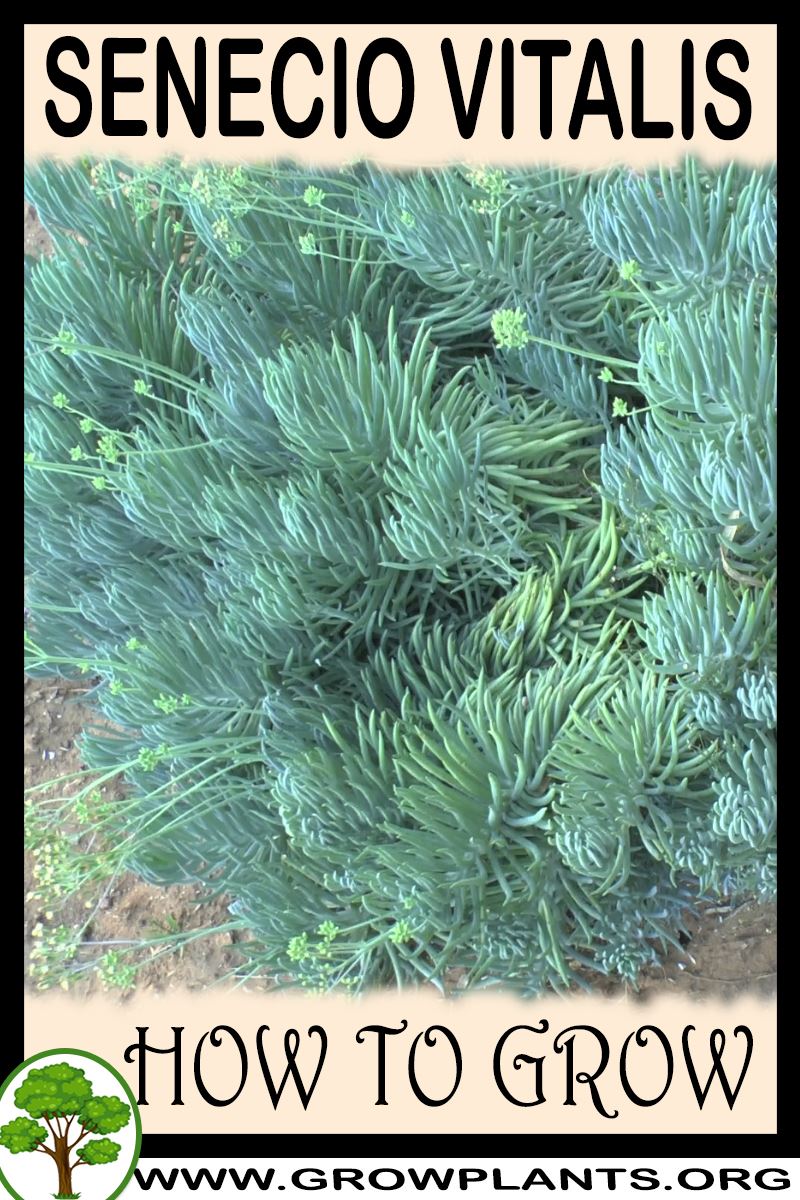
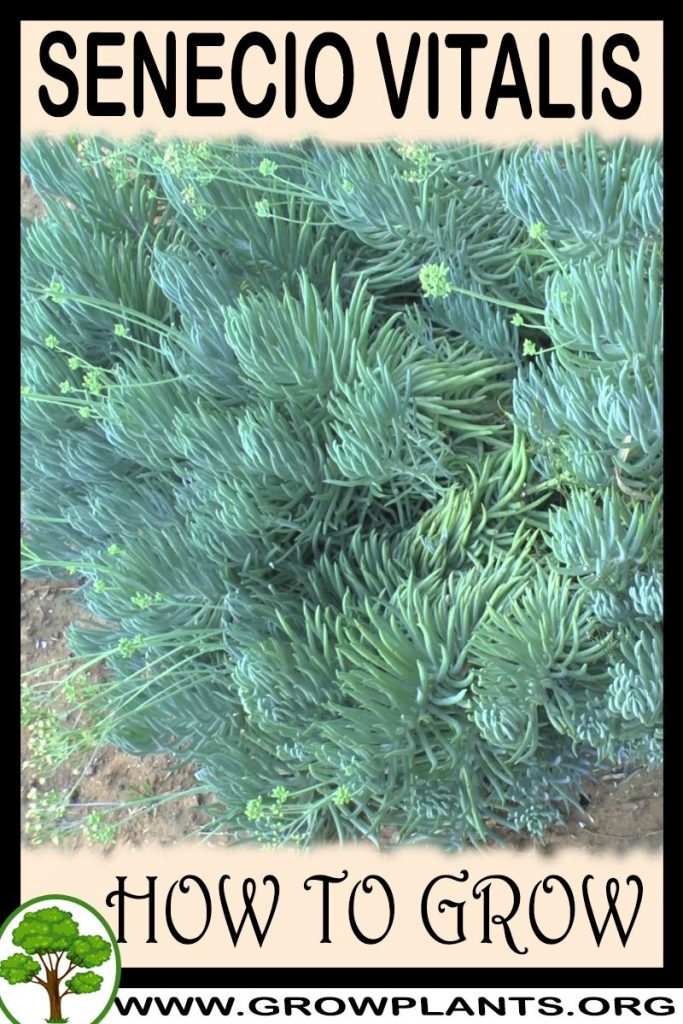
Overview: A low, spreading evergreen succulent reaching about 20-60 cm (8-24 in), forming a carpet of upright blue-grey, finger-like leaves. Grown as a drought-tolerant ornamental groundcover for its cool, chalky colour.
Quick Specifications
| Specification | Attribute |
|---|---|
| Plant Type / Life Cycle | Evergreen succulent perennial (subshrub) |
| Foliage Type | Evergreen |
| Mature Size | 20-60 cm (8-24 in) tall, spreading wider |
| Growth Rate | Slow to moderate |
| Root System | Shallow and fibrous; creeping stems root where they touch the soil |
| Toxicity | Toxic if eaten – like other Senecio it contains pyrrolizidine alkaloids and is considered poisonous to people and pets |
| Hardiness | USDA zones 10-12 |
Growth Form & Structure
- Height & Spread: 20-60 cm (8-24 in) tall tall and spreading into a broad mat in the ground; stays neater and makes an attractive spiller in a container.
- Growth Habit & Form: Low, spreading succulent with upright, cylindrical (finger-like) leaves crowded along fleshy, ground-hugging stems.
- Lifespan & Maturity: Long-lived evergreen perennial that establishes quickly and is easily renewed from cuttings.
Anatomy & Physical Features
- Leaves & Foliage: Fleshy, narrow, cylindrical to linear leaves in green to grey-blue, pointing upward like fingers.
- Flower Characteristics: Small yellow, cone-shaped flower heads clustered at the stem tips in the warm season (grown mainly for foliage).
Primary Uses & Landscape Value
- Functional & Ornamental Roles: Drought-tolerant groundcover for slopes, rockeries and borders, water-wise colour-contrast planting, and an attractive container succulent.
Care Guide: Planting, Soil & Watering
Overview: Senecio vitalis (Narrow-leaf chalksticks) is a fast, easygoing succulent that grows best in full sun to light shade with well-drained soil. Its fleshy leaves store water, so it needs only modest, occasional irrigation and sharp drainage to stay healthy.
Quick Care Requirements
| Requirement | Ideal Condition |
|---|---|
| Planting Season | In spring, summer or autumn during the warm season |
| Growth Rate | Slow to moderate |
| Soil Type | Well-drained, gritty or sandy soil |
| Water Need | Low to moderate — let the surface dry between waterings |
Planting & Establishment
- Best Planting Season: Plant during the warm season (spring through autumn); it is suited to frost-free zones 10–12, so avoid planting where it will face cold, wet conditions.
- How to Plant:
- Hole Preparation: Dig a hole slightly wider than the root ball in a free-draining spot.
- Soil Amendments: Work coarse sand, grit or perlite into heavy soil to sharpen drainage; it needs no rich feeding.
- Planting Depth: Set the plant at the same depth it grew before, with the base of the stems at the soil surface — do not bury the fleshy stems.
- Growth Speed & Expectations: Growth is slow to moderate; it spreads outward into a spreading, ground-covering mound of blue-green foliage.
Soil, Watering & Drainage Care
- Soil Mix & Drainage Needs: Use a gritty, free-draining succulent or cactus mix; in containers ensure excess water drains away freely, since soggy soil quickly rots the stems and roots.
- Watering Schedule & Technique:
- Young / Newly Planted: Water lightly after planting to settle the roots, then allow the soil to dry before watering again.
- Established: Once established it is drought-tolerant — water deeply only when the soil has dried out.
- Seasonal Adjustments: Water a little more in summer heat and cut back sharply in winter to keep the roots from sitting cold and wet.
Climate, Light & Hardiness
Senecio vitalis (Narrow Leaf Chalksticks) is a drought-tolerant succulent for subtropical, Mediterranean, desert, and temperate climates, growing best in full sun to half shade. It is frost-tender and best suited to mild-winter climates within its zone 10–12 range.
Quick Climate Specifications
| Climate Zones | Subtropical, Mediterranean, Desert, Temperate |
| USDA Hardiness Zones | Approximately 10–12 |
| Optimal Temp Range | Approximately 18–29°C (65–85°F) |
| Cold Damage Begins | As temperatures approach freezing (around 0°C / 32°F) |
| Approx. Survival Minimum | Established plants may briefly tolerate a light frost, but a hard freeze is likely to cause significant damage |
| Frost Tolerance | Low |
| Light Conditions | Full Sun / Half Shade |
Sunlight & Light Exposure
Optimal Light Setup
Full sun to half shade suits its upright, finger-like foliage best.
Direct Sun Requirement
Direct sun is well tolerated and generally beneficial for compact growth.
Shade & Heat Management
Half shade is a reasonable option in the hottest climates to prevent stress.
Best Exposure/Orientation
An open, sunny to lightly shaded bed.
Temperature Extremes & Hardiness
USDA Hardiness & Regional Limits
The site places it in hardiness zone 10–12, meaning it is best suited to mild, largely frost-free climates.
Cold Damage & Winter Protection
Keep it frost-free where possible; young or newly propagated plants are more cold-sensitive than mature clumps.
Frost Sensitivity
Low frost tolerance - frost is likely to damage the fleshy, gray-green foliage.
Extreme Heat Tolerance
Good - as a drought-tolerant succulent it handles warm-climate summer heat well.
Wind, Humidity & Microclimate
Humidity Preferences
Prefers drier air over constantly humid conditions.
Dry-Air Tolerance
High - well suited to arid and semi-arid climates.
Wind Tolerance
Moderate; its upright, slender foliage copes reasonably well in open sites.
Rainfall & Seasonal Moisture
Best suited to climates with a dry period and well-drained soil (per the site's drainage guidance); in wetter climates, sharp drainage prevents rot.
Microclimate Recommendations
A sunny, well-drained, frost-free site suits it best.
Growing in Pots, Balconies & Indoors
Senecio vitalis (narrow-leaf chalksticks) is a compact, sun-loving succulent – a natural for pots and troughs on a bright patio or balcony. It is not a true deep-room houseplant (it wants more direct sun than most interiors offer), but it does well on a very sunny windowsill.
Quick Details
- Container Size: A pot a little larger than the root ball; wide and fairly shallow suits its spreading roots
- Indoor Suitability: Best outdoors or on a sunny sill, not deep indoors
- Best Spot: Bright light to full sun
- Soil & Drainage: Free-draining cactus/gritty mix – drainage is everything
- Watering in Pots: Water only when the mix has dried out; pots must never stay soggy
Indoors & On the Windowsill
- As a houseplant: Not really a deep-room plant – it wants more direct sun than most interiors give and will stretch and weaken in low light. A ready-made cactus and succulent soil mix provides that structure without mixing it yourself.
- Windowsill growing: It still does well on your sunniest windowsill (south or west facing) with several hours of direct sun; keep it in the brightest spot you have.
- Overwintering: A pot makes it easy to shelter indoors on a bright, cool sill through frosty months.
- Keep it safe: Senecio is mildly toxic if eaten – keep it away from children and pets.
On a Balcony or Patio
- Light, heat & wind: Give it the brightest spot you have; walls and railings throw back a lot of heat and pots dry fast, so check the mix often in warm weather. Move tender succulents under cover before frost.
- Practicalities: Raise the pot on feet so water drains away freely and does not pool on the balcony floor.
Choosing the Pot, Soil & Long-Term Care
- Pot & drainage: Use a pot with strong drainage holes and skip a standing saucer of water – wet feet are the fastest way to rot a succulent. Terracotta breathes and dries quickly, which suits it well; glazed or plastic holds moisture longer, so water more sparingly.
- Potting mix: A free-draining cactus/succulent mix, or a standard mix opened up with plenty of perlite, pumice or coarse sand; a layer of gravel, lava rock or pebbles in the base helps water clear.
- Feeding: Potted plants use up their soil, so feed lightly once or twice through the growing season with a dilute cactus or balanced feed – far less than a leafy houseplant needs.
- Refreshing the mix: After a couple of years the mix stops draining freely – tip the plant out, trim any tired roots and repot into fresh gritty mix.
Growing this plant in a greenhouse
A greenhouse can give senecio vitalis frost protection, cold protection, humidity control and extra warmth.
Greenhouse at a glance
| Greenhouse suitability | Conditional - depends on your climate |
|---|---|
| Main benefits | frost protection, cold protection, humidity control, extra warmth |
| Outdoor protection advisable below | about 2°C |
| Maintain greenhouse minimum | around 2°C for active growth |
| Suitable types | unheated greenhouse, polycarbonate greenhouse |
| Heating | Heating is optional - useful mainly for winter growing in cold areas. |
Related greenhouse guides
- Greenhouses: How to Choose the Right Greenhouse
- Polycarbonate Greenhouses: What to Look for Before Buying
- Greenhouse Climate Control: Temperature, Ventilation and Humidity
Fertilizing & Feeding
A light feeder: this narrow-leaved, upright succulent is grown as a drought-tolerant border or accent plant, and light, infrequent feeding is enough to keep its blue-green columns firm and upright.
Quick Fertilizing Specs
| Feeding Level | Light feeder |
|---|---|
| Main Nutrient Priority | Low-nitrogen feeding that keeps the narrow, fleshy stems firm rather than soft and floppy |
| Best Feeding Period | During the active growing season, spring through autumn |
| Organic Options | Compost worked into well-drained garden soil at planting |
| Reduce/Stop Feeding | Ease off feeding as growth slows in cooler weather |
| Micronutrients | Rarely needed in well-drained soil; treat only a diagnosed issue |
| Soil pH | Tolerates a wide range; drainage matters more than exact pH |
Feeding by Growth Stage
Active growing season
Support firm, upright growth of the narrow, fleshy foliage without softening it.
| Nutrient direction | A light, low-nitrogen feeding is enough for this naturally thrifty upright succulent. |
|---|---|
| Timing | During the active growing season, spring through autumn. |
| Frequency | Light, infrequent feeding suits this moderate to slow grower. |
| Fertilizer types | A diluted low-nitrogen or balanced fertilizer worked in during watering, Compost mixed into well-drained garden soil |
| Precautions | Keep feeding light; rich or frequent feeding softens the fleshy stems and can make them flop. |
Cooler-season rest
Let the plant rest through its slower season without pushing new growth.
| Nutrient direction | None – withhold fertilizer while growth has slowed for the year. |
|---|---|
| Timing | Through the cooler months when growth visibly slows. |
| Frequency | No feeding at this stage. |
| Fertilizer types | No feeding at this stage; do not fertilize until active growth resumes. |
| Precautions | Do not fertilize while growth is slow; unused nutrients simply build up as salts in the soil. |
Nutrient Deficiency Signs & Corrections
Stems and foliage look pale overall and new growth is sparse.
| Possible causes | low available nitrogen in lean, fast-draining soil, nutrients leaching away with routine watering, root stress limiting nutrient uptake |
|---|---|
| Appears first on | older, lower stems and leaves |
| What to check | feeding history, soil condition, root and base condition |
| Possible correction | Give a light, diluted low-nitrogen feeding during active growth rather than a strong dose. |
Newest growth emerges pale yellow while any visible veining stays green.
| Possible causes | high soil pH tying up available iron, compacted or waterlogged soil limiting root uptake, alkaline irrigation water affecting nutrient availability |
|---|---|
| Appears first on | newest growth |
| What to check | soil or water pH, drainage and root health, recent soil amendments |
| Possible correction | Improve drainage and check pH first; apply a chelated iron product per its label only if the pattern persists. |
Stem tips weaken or flop and older growth shows marginal yellowing.
| Possible causes | low potassium relative to nitrogen in recent feeding, an imbalanced or overly diluted feeding routine, lean soil supplying little potassium on its own |
|---|---|
| Appears first on | older stems and leaf margins |
| What to check | recent fertilizer balance, soil condition, overall plant vigor |
| Possible correction | Shift to a balanced, low-nitrogen feeding during active growth rather than a nitrogen-heavy one. |
Pruning, Training & Seasonal Maintenance
Senecio vitalis (narrow-leaf chalksticks) grows as an upright cluster of fleshy, blue-green stems that tends to flop and sprawl as it ages or after its summer–autumn bloom. Pruning tolerance is moderate: cutting back is mainly cosmetic/structural (per the plant’s own “just for design” guidance) rather than tied to fruiting, and the plant’s own winter pruning window is a sound choice – it keeps the cut away from the summer–autumn flower display and lets fresh growth firm up before next season’s bloom.
Quick Pruning & Maintenance Specs
| Pruning Tolerance | Moderate |
| Primary Pruning Window | Winter |
| Secondary Maintenance Window | After the summer–autumn bloom, to remove spent flower clusters |
| Typical Frequency | Annually, or as sprawl develops |
| Main Objective | Control sprawl/legginess and keep an upright habit |
| Young Plant Priority | Pinch tips to encourage a bushier upright form |
| Mature Plant Priority | Cut back flopped/sprawling stems; take cuttings to replace old lax growth |
| Best Tool Type | Bypass secateurs (semi-woody base) / precision snips (soft tip growth) |
| Avoid Heavy Pruning During | Active summer–autumn bloom, if the flower display is wanted |
Pruning by Plant Age & Size
Newly Established
No pruning; let the clump build height and fill in.
Young / Formative
Pinch growing tips to encourage branching and a denser upright habit before the plant is old enough to flop.
Mature / Established
In winter, cut back stems that have flopped or gone bare-based, taking them back to a lower node; older woody-based stems that sprawl are best replaced by rooting fresh tip cuttings rather than trying to restore them upright.
Seasonal Pruning Schedule
Dormant/Winter
Objective: renew a compact, upright form before the next growth flush.
Remove: leggy or sprawling stems, cut back to a lower node.
Do not remove: all of the clump at once – leave enough growth to reshoot.
Expected response: fresh, more upright growth through spring.
Flowering impact: removes some potential flowering stems, but the plant reblooms on new growth by the following summer–autumn season.
Ongoing Sanitary
Remove spent yellow flower clusters after the summer–autumn bloom fades, and any dead stems.
Structural Pruning & Training
Height and habit control is the core structural task – the upright form loosens and flops with age, so periodic cutback keeps the clump from sprawling outward.
Special Growth to Remove
- Spent flower clusters, after summer–autumn bloom.
- Sprawling or flopped stems that have lost their upright form.
Container & Small-Space Pruning
Grows well in a pot; cut back more readily than an in-ground planting to stop the clump toppling or outgrowing the container, and to keep it from crowding neighboring plants in a mixed pot.
Tools
Bypass secateurs for the thicker, semi-woody base stems; precision snips for soft tip growth and deadheading.
Tool Hygiene & Disease Risk
Routine: a clean, sharp blade is sufficient – no major transmissible disease is documented for this species. Senecio sap is a known skin and eye irritant across the genus, so wear gloves and avoid touching the face while pruning.
Cut Placement & Technique
Cut just above a leaf node or joint; an angled cut on the fleshy stems sheds moisture and lowers rot risk at the wound.
Heavy Pruning & Rejuvenation
Tolerates a fairly hard winter cutback of sprawling stems to restore a compact form; new growth resprouts from the woody base. This costs at most one season’s flower display, not a fruit crop.
Post-Pruning Care
Let cuts dry slightly before watering – fleshy stems are prone to rot if kept wet right after cutting. No fertilizer push needed. Newly exposed inner stems from a mid-summer cut can be more sunburn-prone; prefer the winter window instead.
Common Pruning Mistakes
- Leaving sprawling stems unpruned until the clump flops open and stems root wherever they touch soil.
- Cutting hard during peak summer–autumn bloom and losing the flower display for the year.
- Handling stems without gloves, given the genus’s irritant sap.
When NOT to Prune
Avoid hard pruning right before or during the summer–autumn bloom if the flowers are wanted. Avoid cutting during extreme heat, which stresses the fleshy stems at a fresh wound.
Recommended Tools (by task)
- bypass_secateurs – for cutting back thicker, semi-woody base stems during the winter renewal cut.
- precision_snips – for pinching tips and removing spent flower clusters.
Propagation Guide
Senecio vitalis (Narrow-leaf Chalksticks) is most practically propagated from stem cuttings, which root quickly and reliably; site data confirms vegetative propagation isn’t strictly necessary since seed also grows true for this species, but cuttings are the faster and more predictable route for home growers. This is an easy plant to propagate.
Quick Propagation Specs
| Best Propagation Method | Stem cuttings |
| Alternative Methods | Seed |
| Propagation Difficulty | Easy |
| Seed True-to-Type | Usually true-to-type |
| Vegetative True-to-Type | Yes |
| Best Propagation Season | Spring through autumn |
| Cutting Rooting Time | Typically a few weeks |
Growing from Seed
Seed Handling & Viability
No site-specific storage data is available; as with most succulent Asteraceae, sowing fresher seed tends to give more even germination.
Germination Conditions
Warm temperatures, bright light and a well-drained but evenly moist mix suit germination; timing can be irregular.
Stem Cuttings
Cutting Type
Stem-tip cuttings a few inches long, with the lower leaves removed.
Best Timing
Spring through autumn, during active growth.
Cutting Preparation
Let the cut end callus over for a day or two before inserting it, which helps prevent rot in this fleshy-stemmed succulent.
Rooting Setup
Insert into a gritty, well-drained mix and water sparingly until roots form.
Rooting Hormone
Not necessary; this species roots readily on its own.
Rooting Time
Roots typically form within a few weeks.
Bloom & Flower Guide
Quick Details
- Bloom Season: Summer into autumn
- Flower Appearance: Small, brush-like yellow flower heads in clusters at the tips of the stems
- Edibility: Not edible – this Senecio is toxic to pets and people; grow it for its foliage only
Detailed Blooming Overview
Narrow-leaf chalksticks is grown for its finger-like blue-green foliage, and in summer and autumn it lifts small, rounded, brush-like yellow flower heads on top of the stems. As a daisy-family plant, the little heads do draw bees and flies, though many growers snip the flower stems off – the blooms are modest and some find their scent unpleasant.
Flower Characteristics
- Small, rounded, brush-like flower heads in yellow
- Held in clusters at the tips of the stems
- More curiosity than showpiece – the foliage is the main draw
Bloom Care & Thinning
- Managing the bloom: If you prefer a neat cushion of foliage, cut the flower stems off as they rise; otherwise leave them for the pollinators.
- Pollination: Insect-pollinated – small bees and flies visit the open heads.
- Safety: All parts are toxic if eaten – keep it out of reach of pets and children, and wash hands after handling.
Pests, Diseases & Troubleshooting
Overview: These fleshy succulent senecios (several now placed in Curio) are easy, drought-adapted plants whose troubles come mainly from soft-bodied sap-suckers, molluscs on tender growth, and above all from overwatering. Keep them lean, bright and sharply drained and they stay largely pest- and disease-free.
Quick Troubleshooting Overview
| Issue / Pest | Main Symptom | Primary Solution |
|---|---|---|
| Mealybugs | White cottony fluff on stems/leaf axils; honeydew | Alcohol swab; insecticidal soap or neem |
| Aphids | Clusters on soft new tips; sticky, distorted growth | Rinse off; insecticidal soap |
| Scale | Brown/tan limpet bumps on stems; sooty mould | Scrape off; horticultural oil |
| Slugs & snails | Ragged holes, slime trails on fleshy leaves | Hand-pick at night; traps; grit/iron-phosphate bait |
| Root & stem rot | Mushy, blackened, translucent stems; collapse | Cut back to firm tissue; dry gritty mix |
| Etiolation | Stems stretch and thin, wide gaps, pale colour | Give brighter light; grow harder |
Common Pests & Management
- Mealybugs (Pseudococcus spp.):
- Symptoms: White, cottony, waxy tufts nestled in leaf axils, along stems and on the roots, with sticky honeydew and sooty mould in bad cases. The soft, fleshy growth of these succulents is a favourite site.
- Prevention & Control: Wipe or spot-treat with a cotton bud dipped in diluted rubbing alcohol, then follow with insecticidal soap or neem oil, repeating weekly to catch crawlers. Check the roots at repotting for root mealybug and refresh into clean gritty mix. Quarantine new arrivals.
- Aphids (Aphis / Myzus spp.):
- Symptoms: Green or black clusters on the softest new tips and, especially, on flower stalks; they distort growth, leave honeydew, and can spread virus. Common on vigorous, well-fed growth.
- Prevention & Control: Dislodge with a water jet or wipe off small colonies; insecticidal soap or a light oil clears the rest. Avoid over-feeding, which drives the soft growth they love, and let natural predators (ladybirds, hoverflies, lacewings) do much of the work outdoors.
- Scale insects (Coccus / Saissetia spp.):
- Symptoms: Small brown, tan or blackish limpet-like bumps fixed to stems and leaf undersides, sucking sap and producing honeydew and sooty mould; growth becomes weak and yellowed.
- Prevention & Control: Scrape off with a fingernail or old toothbrush and treat with horticultural oil to smother crawlers, repeating to catch successive generations. Prune out badly encrusted stems and keep plants unstressed and open.
- Slugs & snails (Gastropoda):
- Symptoms: Ragged holes and grazed patches in the fleshy leaves and silvery slime trails, worst in damp, shaded, mild conditions and overnight; young plants and trailing stems on soil are most exposed.
- Prevention & Control: Hand-pick after dark, remove daytime hiding places, and keep the base clear and drier. Copper barriers, grit, beer traps, or iron-phosphate pellets (pet- and wildlife-safer) give further control; raising trailing stems off wet soil helps a lot.
Diseases & Fungal Issues
- Root, stem & basal rot (Pythium / Phytophthora / Fusarium spp.):
- Symptoms: Stems turn soft, translucent, brown or black and collapse, often from the base or a buried node; the near-universal result of overwatering, poor drainage, or cold wet soil. Fleshy senecios are very unforgiving of wet feet.
- Treatment & Management: Prevention is a gritty, free-draining mix, careful watering (let it dry well between drinks, much less in cool weather), and good airflow. Cut affected stems back to firm, clean tissue, let the cuttings callus, and re-root in dry gritty medium; discard badly rotted plants and their soil.
- Powdery mildew & grey mould (Erysiphales / Botrytis cinerea):
- Symptoms: White powdery patches (mildew) or fuzzy grey mould (botrytis) on crowded growth in humid, still, or overcrowded conditions, causing distortion and dieback of soft tissue.
- Treatment & Management: Improve airflow and light, thin congested growth, and avoid wetting the foliage in humid spells. Remove affected parts promptly; sulphur or a biological/copper fungicide can be used if it persists, but ventilation and drier conditions usually resolve it.
Growing Difficulties & Abiotic Problems
- Overwatering & rot:
- Cause & Symptoms: Yellowing, softening and mushy translucent stems signal too much water or a mix that holds moisture; the commonest killer of these succulents.
- Correction Strategy: Use a sharply draining succulent/cactus mix, water thoroughly then let it dry substantially, and cut watering right back in cool, low-light periods. Ensure the pot drains freely and never let it stand in water.
- Etiolation (insufficient light):
- Cause & Symptoms: Stems stretch, thin and space out with pale, washed-out colour when light is too low, and trailing types grow lax and weak.
- Correction Strategy: Give bright light to some direct sun (acclimatising gradually to avoid scorch). Indoors, choose the brightest window or add a grow light; prune leggy growth to restore a compact habit.
- Sunburn:
- Cause & Symptoms: Sudden intense sun on plants moved from shade causes bleached, scorched or brown patches on the fleshy leaves.
- Correction Strategy: Acclimatise gradually to stronger light and provide light shade in the fiercest midday sun, especially for plants recently indoors or newly bought.
What Helps – Products & Tools
Reach for the mild organic staples: insecticidal soap and neem or horticultural oil for mealybugs, aphids and scale, rubbing alcohol on a cotton bud to spot-treat mealybugs, and iron-phosphate slug pellets, copper tape or beer traps for molluscs. There is little disease to treat beyond the odd sulphur or copper spray for mildew in humid spells. The real essentials are a gritty, free-draining cactus/succulent mix and honest light — get those right and these plants need almost nothing else.