

Plant Profile & Key Characteristics
Overview: A vigorous evergreen shrubby vine reaching 1-2 m (3-6.5 ft), with glossy, fleshy heart-shaped leaves and yellow daisy flowers. Used as a fast ornamental screen and hedge – but it is aggressive and invasive and needs regular control.
Quick Specifications
| Specification | Attribute |
|---|---|
| Plant Type / Life Cycle | Evergreen succulent shrubby vine / scrambling climber (perennial) |
| Foliage Type | Evergreen |
| Mature Size | 1-2 m (3-6.5 ft), scrambling wider |
| Growth Rate | Moderate to fast |
| Root System | Shallow and fibrous; stems root where they touch the soil |
| Toxicity | Toxic if eaten – like other Senecio it contains pyrrolizidine alkaloids and is considered poisonous to people and pets |
| Hardiness | USDA zone 9+ |
Growth Form & Structure
- Height & Spread: Climbs and scrambles to 1-2 m (3-6.5 ft) and much wider if left unchecked; can be grown in a large pot to help restrain it.
- Growth Habit & Form: Scrambling, semi-succulent climbing shrub with lax stems that clamber over supports and walls; aggressive and invasive.
- Lifespan & Maturity: Fast to establish and long-lived, spreading readily from stem fragments – keep it away from natural areas.
Anatomy & Physical Features
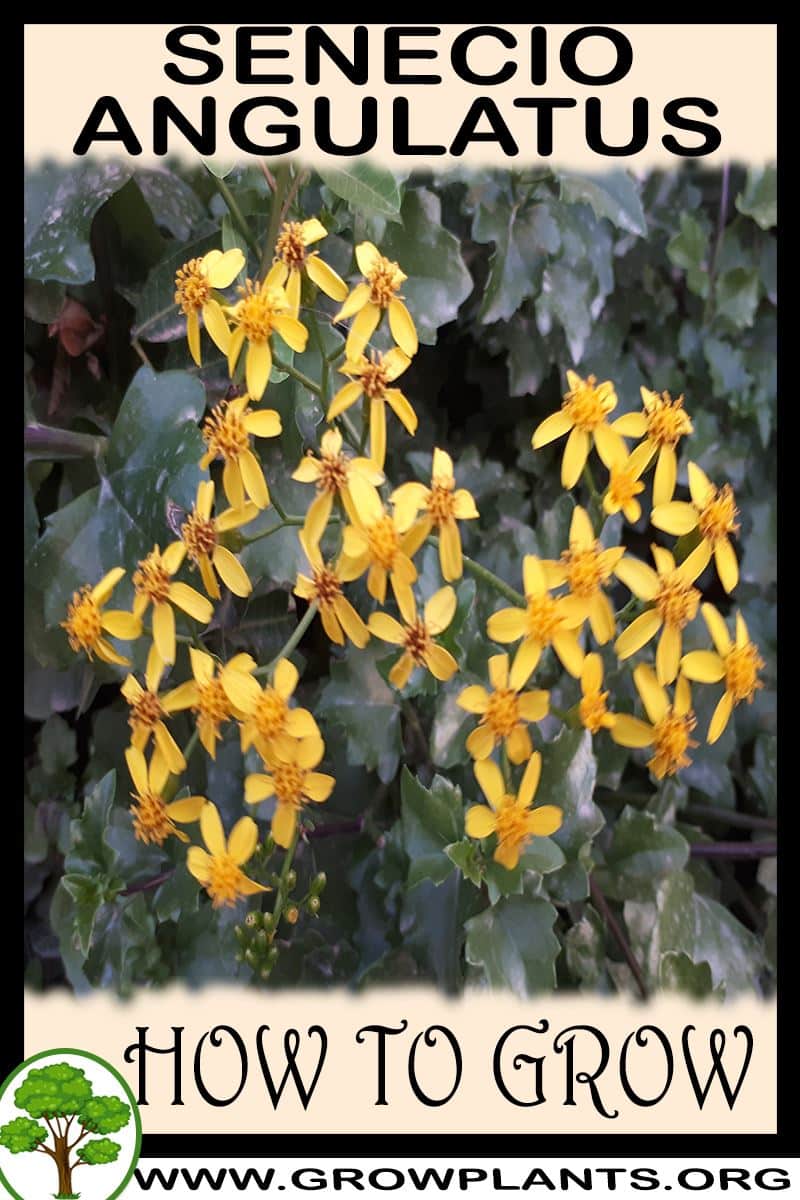
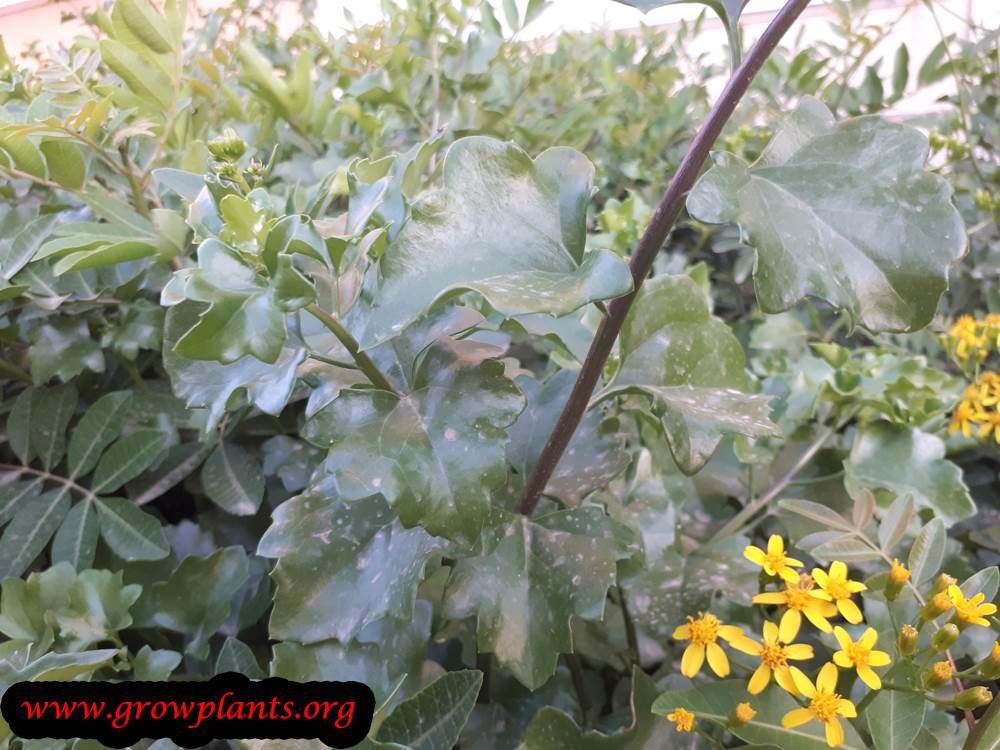
- Leaves & Foliage: Glossy green, fleshy, heart-shaped leaves that are slightly lobed.
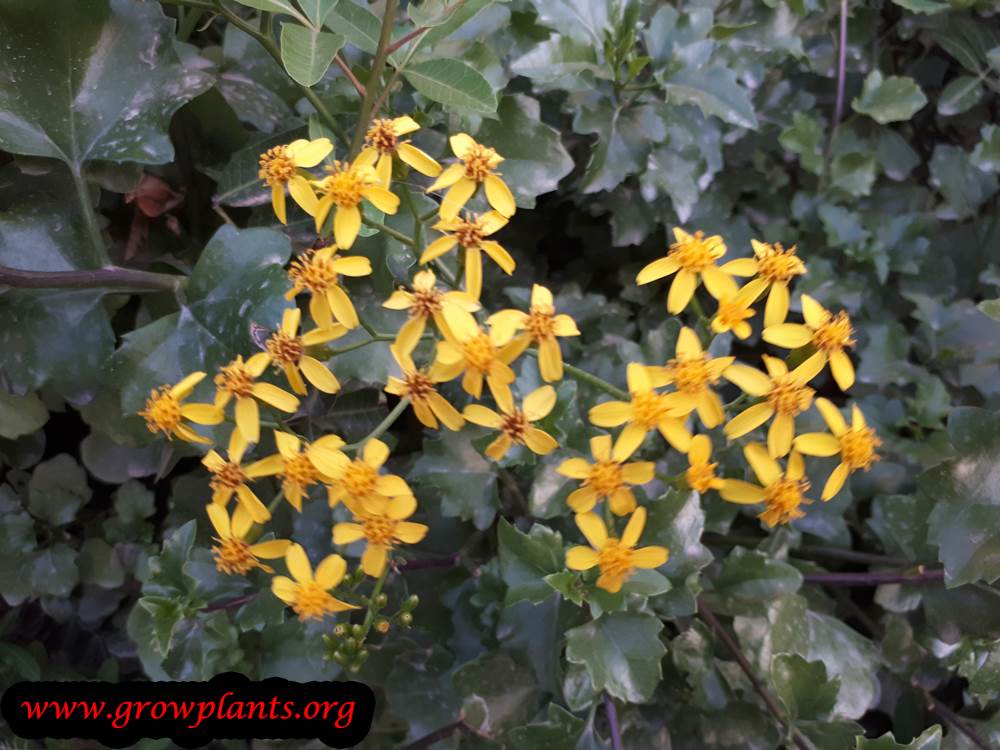
- Flower Characteristics: Yellow, daisy-shaped flower heads borne in clusters.
Primary Uses & Landscape Value
- Functional & Ornamental Roles: Fast screening hedge, wall cover and bank cover where it can be contained; drought-tolerant ornamental – best avoided near bushland because of its invasiveness.
Care Guide: Planting, Soil & Watering
Overview: Senecio angulatus (Creeping groundsel) is a vigorous, fast-growing succulent climber that grows best in full sun with well-drained soil. Its fleshy leaves store water, so it is drought-tolerant and needs only modest watering once established.
Quick Care Requirements
| Requirement | Ideal Condition |
|---|---|
| Planting Season | In spring, summer or autumn during the warm season |
| Growth Rate | Moderate to fast |
| Soil Type | Well-drained soil |
| Water Need | Low to moderate — let the soil dry between waterings |
Planting & Establishment
- Best Planting Season: Plant during the warm season (spring through autumn); it is hardy in zone 9 and warmer, so avoid planting into cold, wet ground.
- How to Plant:
- Hole Preparation: Dig a hole slightly wider than the root ball near a support, fence or trellis it can scramble over.
- Soil Amendments: Work grit or coarse sand into heavy soil to improve drainage; it is not fussy and needs little feeding.
- Planting Depth: Set the plant at its original depth with the root collar at the soil surface — do not bury the stems.
- Growth Speed & Expectations: Fast, vigorous growth as a scrambling climber or hedge cover; it can become aggressive and invasive, so plant it where its spread can be controlled.
Soil, Watering & Drainage Care
- Soil Mix & Drainage Needs: Use free-draining soil; in containers ensure excess water drains away, as the fleshy roots rot in soggy ground.
- Watering Schedule & Technique:
- Young / Newly Planted: Water lightly after planting to settle the roots, then let the soil dry before watering again.
- Established: Drought-tolerant once established — water deeply only when the soil has dried out.
- Seasonal Adjustments: A little extra water in summer heat; reduce watering over the cooler, wetter months.
Climate, Light & Hardiness
Senecio angulatus (creeping groundsel) is a succulent vine suited to subtropical, Mediterranean, desert, and tropical climates. It grows in full sun for the heaviest bloom, tolerates half shade with reduced flowering, and has little tolerance for freezing weather.
Quick Climate Specifications
| Climate Zones | Subtropical, Mediterranean, Desert, Tropical |
|---|---|
| USDA Hardiness Zones | 9 and warmer |
| Frost Tolerance | Low |
| Light Conditions | Full Sun to Half Shade |
Sunlight & Light Exposure
Optimal Light Setup
Full sun produces the best flowering; half shade is tolerated but reduces bloom.
Temperature Extremes & Hardiness
USDA Hardiness & Regional Limits
Hardy outdoors as a perennial in USDA zone 9 and warmer. Being both succulent and native to a mild climate, it has little built-in resistance to hard freezes.
Frost Sensitivity
Frost damages the fleshy foliage; protect it or treat as an annual/container plant outside its hardy zones.
Wind, Humidity & Microclimate
Dry-Air Tolerance
As a succulent, it tolerates dry air and arid conditions well, consistent with its adaptation to desert and Mediterranean climates.
Growing in Pots, Balconies & Indoors
Cape ivy is a vigorous scrambling climber best given a large pot with support in full sun – it is not a houseplant. Note two cautions: it is toxic if eaten, so keep it from children and pets, and it can be invasive, so never let it escape into the wild from a balcony.
Quick Details
- Container Size: 20-40 L (5-10 gal) with a trellis or support
- Indoor Suitability: Not a houseplant – a sun-loving, scrambling climber
- Best Spot: Full sun (it blooms less in half shade)
- Soil & Drainage: Ordinary free-draining potting mix
- Watering in Pots: Small to average – drought-tolerant once established
Indoors & On the Windowsill
- Houseplant limits: Not a houseplant – it is a rampant climber that wants full sun to flower and quickly outgrows indoor space.
- Safety: All parts are toxic if eaten – keep it well away from children and pets.
- Keep it contained: It can be invasive; grow it only where you can control it, and never let stems root into the ground or dump prunings in the wild.
On a Balcony or Patio
- Light & support: Give it full sun and a trellis, obelisk or railing to scramble up; in half shade it flowers less. It tolerates heat, wind and drought well.
- Practicalities: A filled pot is heavy once watered – check the balcony can take the load, and stand it where drainage runoff will not be a nuisance. Cut it back hard to keep it in bounds and to stop it spreading.
Choosing the Pot, Soil & Long-Term Care
- Pot & drainage: A 20-40 L pot with strong drainage holes and never leave it standing in a saucer of water, or the roots rot. Terracotta breathes and dries faster; glazed or plastic holds moisture longer.
- Potting mix: A well-aerated, organic-rich mix – potting compost, or peat/coir with perlite or vermiculite.
- Feeding: Feed only lightly – it is vigorous enough without encouragement.
- Repotting: Refresh the top layer of mix and pot up roughly every couple of years; for perennials, lightly trim the root ball and top growth when you do. Prune hard to control both size and self-seeding.
Fertilizing & Feeding
A light feeder: this vigorous, drought-tolerant succulent vine establishes with a modest feeding and needs only occasional light feeding through active growth, with no feeding needed once growth slows for the season.
Quick Fertilizing Specs
| Feeding Level | Light feeder |
|---|---|
| Main Nutrient Priority | Balanced feeding kept on the light side, since heavy nitrogen is not needed on this already vigorous grower |
| Best Feeding Period | Spring through autumn while the vine is actively growing |
| Organic Options | Compost or organic matter worked into the soil at planting |
| Reduce/Stop Feeding | Stop feeding as growth slows going into the cooler, less active part of the year |
| Micronutrients | Usually met by a complete fertilizer and organic soil; correct only if a specific deficiency is diagnosed |
Feeding by Growth Stage
Establishment
Help newly planted vines root in and begin covering their support or hedge line.
| Nutrient direction | A balanced feeding supports steady rooting and early stem growth as the vine establishes. |
|---|---|
| Timing | Soon after planting, in spring, summer, or autumn. |
| Frequency | A light feeding at establishment is usually sufficient. |
| Fertilizer types | A balanced complete fertilizer, Compost or organic matter worked into the planting soil |
| Precautions | Keep feeding light; this is an aggressive, fast-spreading grower and does not need extra encouragement. |
Active growth
Maintain healthy foliage and seasonal yellow daisy-like bloom without fueling excess spread.
| Nutrient direction | Light, low-nitrogen feeding maintains good foliage color without pushing the already vigorous growth further. |
|---|---|
| Timing | Through the main spring-to-autumn growing and flowering period. |
| Frequency | Occasional light feeding is usually enough for an established planting. |
| Fertilizer types | A balanced complete fertilizer used sparingly, Compost as an occasional top-dressing |
| Precautions | Avoid regular heavy feeding, which can worsen this plant’s tendency to spread aggressively and outcompete neighbors. |
Cool-season rest
Let the vine coast through the cooler, slower part of the year without forcing new growth.
| Nutrient direction | None – withhold fertilizer while growth is slow. |
|---|---|
| Timing | During the cooler months when growth is minimal. |
| Frequency | No feeding at this stage. |
| Fertilizer types | No feeding at this stage; resume only once active growth returns. |
| Precautions | Do not fertilize while growth is slow; unused nutrients simply go to waste and can encourage weed-like spread nearby. |
Nutrient Deficiency Signs & Corrections
Older leaves pale to yellow and overall vigor drops on an otherwise fast-growing plant.
| Possible causes | low available soil nitrogen, very poor, sandy soil with little organic matter, root competition from surrounding plants |
|---|---|
| Appears first on | older, lower leaves |
| What to check | recent feeding history, soil organic matter level, overall vigor compared to normal |
| Possible correction | Apply a balanced fertilizer and work in organic matter; true deficiency is uncommon on this vigorous grower. |
Fleshy leaves turn soft, yellow, or drop, and growth stalls despite feeding.
| Possible causes | poorly drained soil holding excess moisture, overwatering, root rot from prolonged wet conditions |
|---|---|
| Appears first on | lower stems and fleshy leaves |
| What to check | soil drainage and recent watering, root condition if the plant can be inspected, signs of rot at the base |
| Possible correction | Improve drainage and reduce watering before considering any fertilizer adjustment; feeding will not fix a drainage problem. |
Leaf tips or margins brown and growth stalls even with adequate watering.
| Possible causes | fertilizer salt buildup in the root zone, over-fertilizing an already vigorous plant, under-watering that concentrates salts |
|---|---|
| Appears first on | leaf margins and tips |
| What to check | recent fertilizer amounts, watering consistency, soil drainage |
| Possible correction | Ease off feeding and water thoroughly to help flush excess salts from the root zone. |
Pruning, Training & Seasonal Maintenance
Senecio angulatus is a vigorous, fast-to-medium growing succulent-leaved scrambling shrub/vine used mainly as a hedge or informal screen; because it is noted as aggressive and invasive in cultivation, pruning here is primarily about control rather than shaping for flowers – it tolerates cutting back hard at almost any time of year, and regular cutting back is the main tool for keeping its spread in check.
Quick Pruning & Maintenance Specs
| Pruning Tolerance | High |
| Primary Pruning Window | Any season (year-round per growing data) |
| Typical Frequency | Regular, as needed for control |
| Main Objective | Contain spread/size and shape as a hedge |
| Young Plant Priority | Pinch/cut back early to build a dense, branched hedge base rather than a single sprawling stem |
| Mature Plant Priority | Repeated cutting back to control spread and maintain hedge shape |
| Best Tool Type | Hedge shears (formal hedge) or bypass secateurs (informal shaping) |
| Avoid Heavy Pruning During | Cold spells at the cooler edge of its zone 9+ range |
Pruning by Plant Age & Size
Newly Established
Pinch or tip back young growth early to encourage branching from the base rather than a single long scrambling stem.
Young / Formative
No formal leader training – instead, repeatedly cut back to build a dense, multi-stemmed hedge or screen base.
Mature / Established
Routine cutting back (shearing if kept as a formal hedge, or selective cuts if informal) to control this species’ naturally aggressive spread and keep it from scrambling into neighboring plants or structures.
Seasonal Pruning Schedule
Ongoing Sanitary / Control
Cut back spreading or scrambling stems whenever they exceed the desired footprint, essentially year-round in mild (zone 9+) climates.
Post-Flowering
A heavier shape-up in spring or after the main summer/autumn bloom flush keeps the hedge dense without sacrificing the following bloom, since flowers form on new growth.
Flowering & Fruiting Wood
This species flowers on current-season growth, so cutting back at any time simply delays the next flush of daisy-like flowers rather than removing next year’s wood – there is no old-wood flowering habit to protect.
Structural Pruning & Training
Control height and spread with regular cutting back given its aggressive, scrambling habit; thin overly dense mats of stems occasionally to keep air moving through the hedge and reduce the tangled, self-layering growth typical of this species.
Special Growth to Remove
- Stems rooting where they touch the ground – this species can self-layer and spread this way; remove or dig out unwanted rooted sections to stop it colonizing beyond the hedge line.
Container & Small-Space Pruning
In a container, cut back more frequently and harder than an in-ground hedge specimen, since its vigorous, spreading habit will otherwise quickly outgrow a pot; this also keeps the fleshy stems from becoming top-heavy.
Tools
Hedge shears for a formally clipped hedge line; bypass secateurs for informal, selective cutting back and for removing self-layered stems.
Tool Hygiene & Disease Risk
Routine – aphids are the only reported pest and are not spread via pruning tools.
Cut Placement & Technique
Shear to the desired hedge line, or make selective cuts just above a leaf/node for informal shaping; cut back rooted, self-layered stems at their point of origin.
Heavy Pruning & Rejuvenation
Well tolerated – an overgrown specimen can be cut back hard at almost any time of year and will regrow quickly given its fast growth rate; expect a temporary gap in flowering after a hard cut.
Post-Pruning Care
Water normally; no extra feeding is needed, since encouraging further vigorous growth on an already aggressive, fast-growing species is generally undesirable.
Common Pruning Mistakes
- Under-pruning, which lets this species live up to its aggressive, invasive reputation and scramble into neighboring beds or plants.
- Letting cut stems or trimmings root where they fall, spreading the plant further.
When NOT to Prune
Avoid heavy cutting back during a hard cold snap at the cooler edge of its hardiness range; otherwise this species can be pruned almost any time given its year-round pruning season.
Recommended Tools (by task)
- hedge_shears – shaping and maintaining a formal hedge line on this vigorous grower.
- bypass_secateurs – selective control cuts and removing self-layered stems.
Pruning Troubleshooting
| Problem | Possible Cause | What to Check | Corrective Action |
| Hedge outgrowing its space or scrambling into neighbors | Infrequent cutting back on a naturally aggressive species | Time since last cutback | Increase pruning frequency; cut back hard if needed |
| New unwanted plants appearing nearby | Self-layering of stems that touch the soil | Rooted stem sections near the hedge base | Remove or dig out self-layered rooted stems promptly |
Propagation Guide
Senecio angulatus is most easily propagated from stem cuttings, which is the standard practical method for this fleshy-leaved succulent vine and roots very readily; seed also works and is not required to keep it true to type. Trailing stems that touch the soil will often root on their own at the nodes, which is part of why this vigorous grower is listed as aggressive/invasive.
Quick Propagation Specs
| Best Propagation Method | Stem cuttings |
| Alternative Methods | Seed; self-layering at stem nodes in contact with soil |
| Propagation Difficulty | Easy |
| Vegetative True-to-Type | Yes |
| Best Propagation Season | Spring through autumn, matching this plant’s planting season |
| Cutting Rooting Time | Often within a few weeks under warm conditions |
Growing from Seed
Seed is a secondary option for this species; sow in a well-drained mix in warm conditions, as is typical for this succulent, daisy-flowered genus. The site does not give detailed sowing figures for this plant.
Stem Cuttings
Cutting Type
Stem tip cuttings with a few of the fleshy, heart-shaped leaves.
Best Timing
Spring through autumn during active growth.
Cutting Preparation
Let the cut end callus briefly before inserting, as is typical for succulent-stemmed plants, to reduce rot risk.
Rooting Setup
A well-drained mix kept lightly moist roots this vigorous vine readily.
Rooting Hormone
Not necessary – this succulent vine roots easily on its own.
Rooting Time
Often within a few weeks under warm conditions.
Air & Ground Layering
Trailing stems resting on soil frequently root at the nodes on their own; once a rooted section has developed its own roots it can be cut free from the parent and grown on independently.
Bloom & Flower Guide
Quick Details
- Bloom Season: Spring, summer and autumn, often heaviest in the cooler end of the season
- Time to First Bloom: Once the vine is established and has scrambled up its support
- Flower Appearance: Small yellow, daisy-like flowers carried in clusters
- Edibility: Toxic – not edible; this plant contains natural alkaloids that are poisonous if eaten
Detailed Blooming Overview
Creeping groundsel is a scrambling, succulent-stemmed vine that smothers itself in small yellow daisy flowers over a long season, with a strong flush as the weather cools. The clustered blooms are lightly fragrant and popular with bees, and they make the plant showy as a hedge or bank cover. It is vigorous – often weedy – so it is best kept in check.
Flower Characteristics
- Small yellow, daisy-shaped flowers in dense clusters.
- Lightly fragrant and attractive to bees.
- Produced freely on a fast-growing, scrambling plant.
Bloom Care & Thinning
- Safety first: All parts, including the flowers, contain pyrrolizidine alkaloids and are poisonous to people and livestock – never eat any part, and wash hands after handling.
- Managing the bloom: Trim after flowering to control its spread and prevent unwanted self-seeding.
Pests, Diseases & Troubleshooting
Overview: Cape ivy is a vigorous, semi-succulent scrambling climber that is so robust it is invasive in mild climates; it suffers few serious pests or diseases, and its main ‘problem’ is over-vigour. The pests it does attract are soft-bodied sap-suckers on lush new growth, best handled culturally.
Quick Troubleshooting Overview
| Issue / Pest | Main Symptom | Primary Solution |
|---|---|---|
| Aphids | Clusters on soft new shoots & buds; honeydew | Rinse off; insecticidal soap |
| Mealybugs | White cottony tufts in leaf axils; sticky | Alcohol swab; insecticidal soap or neem |
| Scale | Brown limpet bumps on stems; sooty mould | Scrape off; horticultural oil |
| Whitefly | Tiny white flies under leaves; sooty mould | Sticky traps; insecticidal soap |
| Powdery mildew | White powdery film on leaves in humid/crowded air | Improve airflow; sulphur/copper if needed |
| Over-vigour / invasiveness | Smothers supports and neighbours; roots at nodes | Prune hard; contain; remove strayed stems |
Common Pests & Management
- Aphids (Aphis / Myzus spp.):
- Symptoms: Green or black clusters on the soft new shoots and flower buds, sucking sap, distorting tips and coating growth in sticky honeydew and sooty mould.
- Prevention & Control: Hose off or wipe away colonies; insecticidal soap or a light oil deals with heavier numbers. The plant’s vigour means it shrugs off aphids, and predators usually keep them in check outdoors.
- Mealybugs (Pseudococcus spp.):
- Symptoms: White cottony tufts in leaf axils and on stems, with honeydew and sooty mould, especially on sheltered or indoor plants.
- Prevention & Control: Spot-treat with alcohol on a cotton bud and follow with insecticidal soap or neem, repeating to catch crawlers. Keep the plant open and unstressed.
- Scale insects (Coccus / Saissetia spp.):
- Symptoms: Brown or tan limpet-like bumps on older stems and leaf undersides, sucking sap and producing honeydew.
- Prevention & Control: Scrape off and treat with horticultural oil to smother crawlers; prune out heavily encrusted stems, which this vigorous plant readily replaces.
- Whitefly (Trialeurodes vaporariorum):
- Symptoms: Tiny white flies clustering on leaf undersides and lifting off in clouds when disturbed, with honeydew and sooty mould on lush growth.
- Prevention & Control: Use yellow sticky traps and spray insecticidal soap or neem to the undersides in the evening, repeating every few days; improve airflow around congested growth.
Diseases & Fungal Issues
- Powdery mildew (Erysiphales):
- Symptoms: A white, powdery coating on leaves and stems in humid, crowded or still-air conditions, causing distortion and premature leaf drop on soft growth.
- Treatment & Management: Improve airflow and light, thin dense growth, and avoid overhead watering late in the day. Remove affected leaves; sulphur or a potassium-bicarbonate/copper spray helps if it persists.
- Root & stem rot (Pythium / Phytophthora spp.):
- Symptoms: Softening and blackening of stems and roots in waterlogged or poorly drained soil; uncommon in this drought-tolerant plant but possible in heavy, wet ground.
- Treatment & Management: Grow in free-draining soil and avoid waterlogging; cut out rotten stems and improve drainage. The plant’s vigour usually lets it outgrow minor rot once conditions dry.
Growing Difficulties & Abiotic Problems
- Over-vigour & invasiveness:
- Cause & Symptoms: The plant grows rampantly, roots wherever stems touch soil, and can smother shrubs, fences and neighbours; in mild climates it is a recognised weed.
- Correction Strategy: Site it where it can be contained, prune hard and often, and remove strayed or grounded stems promptly. Bag and dispose of prunings rather than composting, and never let it escape into wild ground.
- Frost damage:
- Cause & Symptoms: Soft, semi-succulent stems are damaged or cut down by hard frost, blackening and collapsing.
- Correction Strategy: In cold areas grow against a warm wall or in a container that can be sheltered; it usually reshoots from the base after light frost. Cut back damaged growth in spring.
- Sunburn / leaf scorch:
- Cause & Symptoms: Leaves bleach or scorch when a shade-grown plant is suddenly exposed to intense sun or drought stress.
- Correction Strategy: Acclimatise gradually to full sun and keep soil from drying out completely during establishment; light shade in the fiercest heat prevents scorch.
What Helps – Products & Tools
Little is needed: insecticidal soap and neem or horticultural oil cover aphids, mealybugs, scale and whitefly, with yellow sticky traps for monitoring whitefly. A sulphur, potassium-bicarbonate or copper spray handles powdery mildew if airflow alone is not enough. The most important ‘tool’ for Cape ivy is a good pair of secateurs — managing its vigour and keeping it contained matters far more than any pesticide.