

Plant Profile & Key Characteristics
Overview: A small clump-forming stem succulent only about 5-15 cm (2-6 in) tall, grown as a curiosity ornamental for its ribbed, spiny stems and striking waxy star-shaped flowers. It is drought-tolerant and makes an easy houseplant.
Quick Specifications
| Specification | Attribute |
|---|---|
| Plant Type / Life Cycle | Perennial (succulent) |
| Foliage Type | Evergreen (leafless, photosynthetic stems) |
| Mature Size | 5-15 cm (2-6 in) tall |
| Growth Rate | Slow |
| Hardiness | USDA zone 10-12 |
Growth Form & Structure
- Height & Spread: 5-15 cm (2-6 in) tall, spreading into low clumps; well suited to shallow pots and as a houseplant.
- Growth Habit & Form: Low, clumping succulent of upright, angular stems that branch from the base.
- Lifespan & Maturity: Long-lived perennial succulent; slow-growing but readily propagated from stem cuttings.
Anatomy & Physical Features
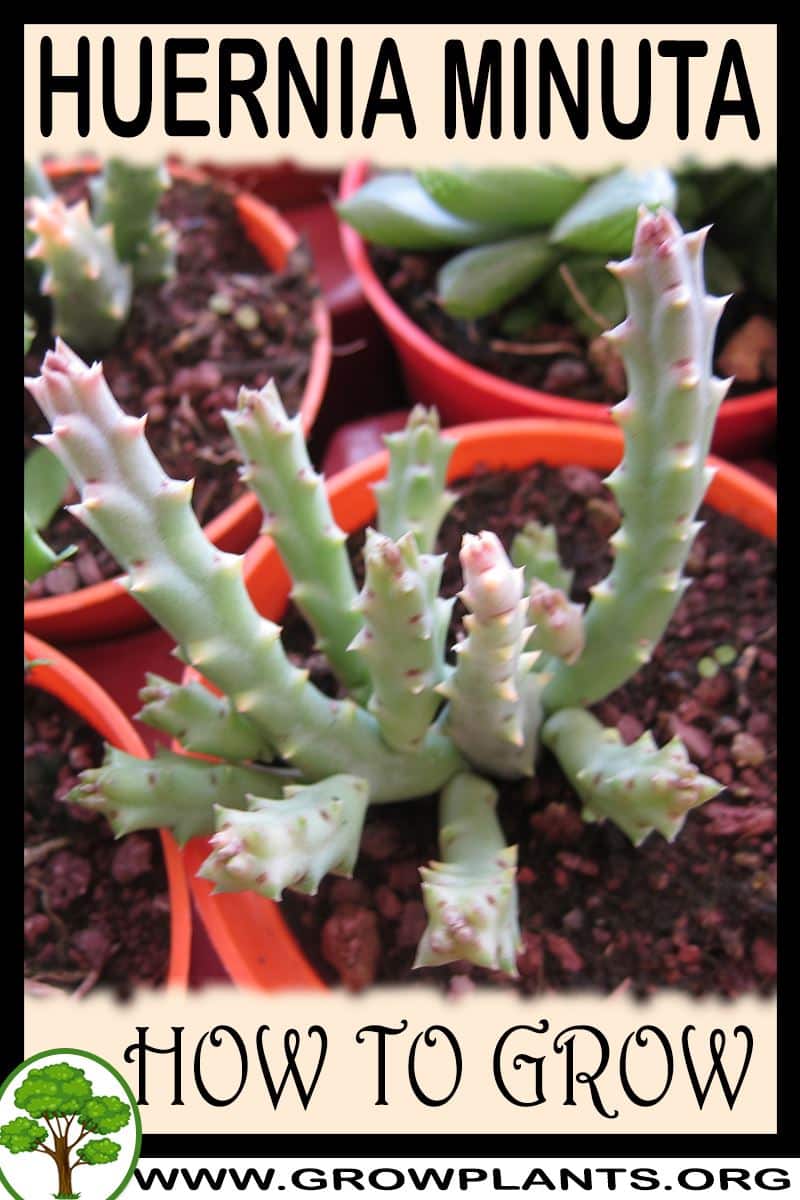
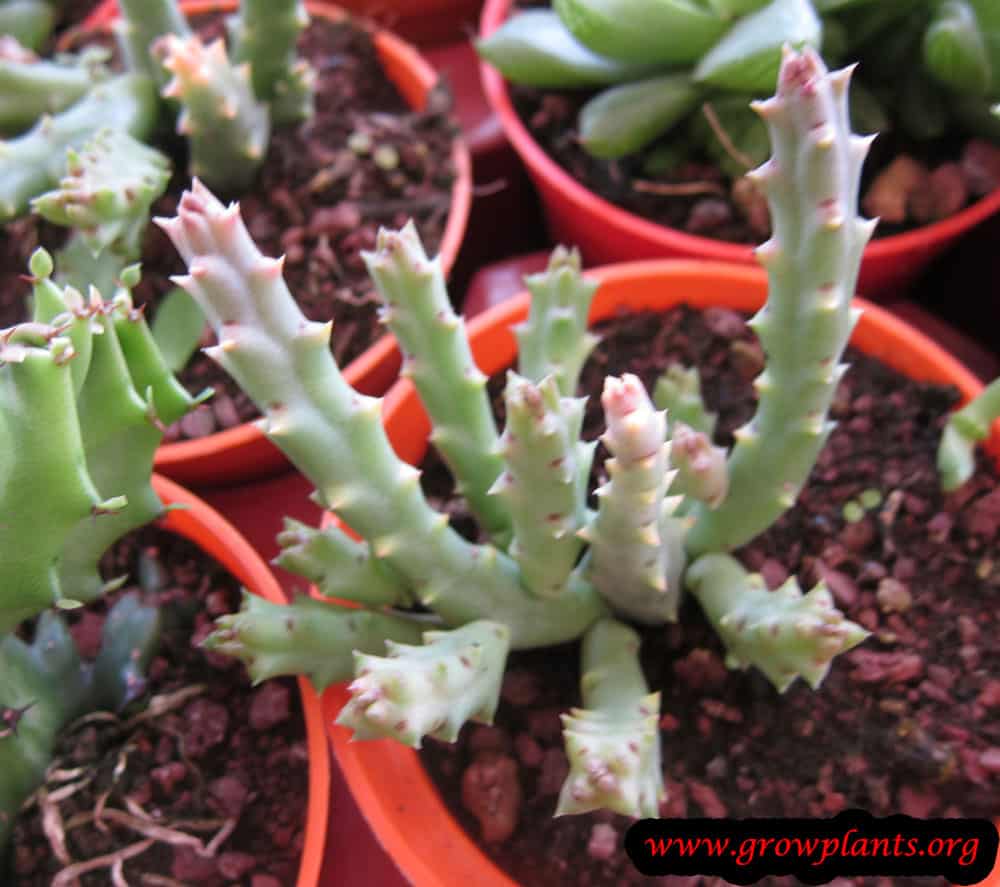
- Leaves & Foliage: Leafless green stems (sometimes flushed red or purple), four- to five-angled, lobed and toothed with soft spines.
- Flower Characteristics: Waxy, star-shaped flowers in many colours, often spotted or striped with a darker centre (full detail in the Bloom section).
Primary Uses & Landscape Value
- Functional & Ornamental Roles: Drought-tolerant ornamental succulent for rockeries, dish gardens, containers and as a houseplant.
Care Guide: Planting, Soil & Watering
Overview: Huernia minuta is a small, drought-tolerant succulent for frost-free to lightly-frosted warm climates (best kept above about 5°C) that grows well in pots or as a houseplant. It needs a gritty, sharply-drained soil and careful, sparing watering, as it is highly prone to rot if kept too wet.
Quick Care Requirements
| Requirement | Ideal Condition |
|---|---|
| Planting Season | Warm season — spring, summer and autumn |
| Growth Rate | Slow |
| Soil Type | Gritty, very free-draining cactus / succulent mix |
| Water Need | Low — water sparingly and let the soil dry out between waterings |
Planting & Establishment
- Best Planting Season: Plant during the active warm season, from spring through autumn, while growth is underway and the soil stays warm; protect from frost and cold, damp conditions.
- How to Plant:
- Hole Preparation: Use a shallow container only a little larger than the plant; these shallow-rooted succulents dislike a large volume of damp soil around them.
- Soil Amendments: Mix plenty of grit, coarse sand or perlite into a cactus mix for the fast drainage and open structure the roots need.
- Planting Depth: Set the plant with the base of the stems resting at the soil surface; burying the stems in moist soil encourages rot.
- Growth Speed & Expectations: Growth is slow; these compact, spreading succulents fill a pot gradually.
Soil, Watering & Drainage Care
- Soil Mix & Drainage Needs: A very free-draining, gritty medium and a pot with drainage holes are essential; standing moisture quickly causes stem and root rot.
- Watering Schedule & Technique:
- Young / Newly Planted: Water lightly to settle the plant in, then allow the soil to dry before watering again.
- Established: Water sparingly and only once the soil has fully dried; err on the side of too little, as Huernia are very sensitive to overwatering.
- Seasonal Adjustments: Water a little more during warm, active growth and keep nearly dry through cool winter weather.
Climate, Light & Hardiness
Huernia minuta is a low-growing stapeliad succulent for mediterranean and subtropical climates or a bright indoor spot, doing best in half shade to filtered sun with light adjusted for temperature extremes. It has some tolerance for a brief, light frost when mulched, but sustained cold below about 5°C (41°F) is risky, and full sun should generally be avoided in very hot spells.
Quick Climate Specifications
| Climate Zones | Mediterranean and subtropical climates outdoors; also grown as a houseplant |
|---|---|
| USDA Hardiness Zones | Zone 10–12 |
| Optimal Temp Range | Approximately 18–27°C (64–81°F) |
| Cold Damage Begins | Below approximately 5°C (41°F) |
| Approx. Survival Minimum | Can briefly survive a light frost if mulched, but colder or prolonged freezing is not tolerated |
| Frost Tolerance | Low |
| Light Conditions | Half Shade preferred; Full Sun or Full Shade used seasonally (see below) |
Sunlight & Light Exposure
Optimal Light Setup
Half shade generally gives the best overall growth. Its sun/shade needs actually shift with temperature: in very hot weather around 40°C (104°F), move it into full shade, while in cold weather around 5°C (41°F), full sun helps keep it warm and healthy.
Direct Sun Requirement
Full sun is tolerated and can help the plant through cold spells, but the stem tips can scorch in strong, hot summer sun.
Shade & Heat Management
Full shade is tolerated in very hot weather and protects the plant from heat stress, though prolonged deep shade can reduce flowering, since good light is needed before buds form.
Best Exposure / Orientation
A bright but filtered position - light shade cloth outdoors, or a lightly curtained bright window indoors - suits it best through most of the year.
Temperature Extremes & Hardiness
USDA Hardiness & Regional Limits
Reliable outdoors year-round only in zone 10–12 and comparably mild, essentially frost-free climates; elsewhere it is best grown as a houseplant or container succulent brought under cover for winter.
Cold Damage & Winter Protection
Mulching over the plant offers some protection during a light frost, but this is a stopgap rather than a substitute for a frost-free site or proper winter shelter.
Frost Sensitivity
Some tolerance for a brief, light frost when mulched, but not reliably frost-hardy - treat it as frost-sensitive for planning purposes.
Extreme Heat Tolerance
Tolerates heat, but in very hot conditions (around 40°C/104°F) it benefits from full shade to avoid stress and scorching.
Wind, Humidity & Microclimate
Humidity Preferences
As with most stapeliads, moderate humidity with good air movement suits it better than still, damp air, which can encourage stem rot.
Dry-Air Tolerance
Good; a succulent adapted to dry conditions between waterings.
Microclimate Recommendations
In marginal climates, grow it in a container that can be moved to full sun during cold snaps and to shade during extreme summer heat, following the same temperature-based light shifts described above.
Growing in Pots, Balconies & Indoors
Huernia minuta (Huernia minuta) is a small, clumping stapeliad succulent that makes an easy houseplant and a neat pot plant for a bright balcony or patio. Give it plenty of light – it needs good light to produce its striking, star-shaped flowers. Give it good light and a very free-draining mix, and let it dry out between waterings.
Quick Details
- Container Size: A small pot only a little larger than the root ball – it stays compact and dislikes a lot of wet soil around the roots
- Indoor Suitability: A good houseplant in bright light
- Best Spot: Bright light to part shade; shield stem tips from scorching midday sun in the hottest spots, and give full sun only in cooler conditions
- Soil & Drainage: Very free-draining, well-aerated mix; drainage holes essential
- Watering in Pots: Sparingly – it is sensitive to overwatering, so let it dry between waterings
Indoors & On the Windowsill
- A real houseplant: The grower confirms Huernia minuta grows well indoors. Keep it in a bright window where the stems stay firm and plump.
- Windowsill growing: A bright sill suits it best; good light keeps growth compact and, for flowering, brings on the blooms.
- Light for flowers: It will only bloom with enough light, so keep it in your brightest window.
- Overwintering: Frost-tender – in cold climates keep it as a potted plant that winters indoors on a bright, cool sill with very little water.
On a Balcony or Patio
- Light, heat & wind: It takes full sun to shade, but in very hot spots the stem tips can scorch, so give afternoon shade where summers are fierce; in cool conditions it enjoys full sun. Pots dry fast, yet it prefers to run dry rather than stay wet.
- Practicalities: Use a pot with open drainage holes and tip out any saucer runoff after rain.
Choosing the Pot, Soil & Long-Term Care
- Pot & drainage: A small pot with strong drainage holes and no standing-water saucer; these succulents rot quickly in wet, airless soil. Terracotta suits them, breathing and drying fast.
- Potting mix: A gritty, well-aerated, very free-draining mix – a cactus/succulent blend with added perlite or grit.
- Feeding: Only light feeding is needed, but nutrients leach from pots, so a weak, occasional feed in the growing season is enough.
- Refreshing the mix: Repot into fresh gritty mix every couple of years, moving up only one pot size at a time. A ready-made cactus and succulent soil mix provides that structure without mixing it yourself.
Grower’s Container Tip
- Small pot, sharp drainage: The grower keeps the container only a little larger than the root ball and stresses a well-ventilated, sharply drained mix – drainage is the single most important thing for this plant.
Growing this plant in a greenhouse
A greenhouse can give huernia minuta frost protection and cold protection.
Greenhouse at a glance
| Greenhouse suitability | Good - clearly useful |
|---|---|
| Main benefits | frost protection, cold protection |
| Outdoor protection advisable below | about 5°C |
| Maintain greenhouse minimum | around 5°C for active growth |
| Suitable types | unheated greenhouse, polycarbonate greenhouse |
| Heating | Heating is optional - useful mainly for winter growing in cold areas. |
Related greenhouse guides
- Greenhouses: How to Choose the Right Greenhouse
- Polycarbonate Greenhouses: What to Look for Before Buying
- Greenhouse Climate Control: Temperature, Ventilation and Humidity
Fertilizing & Feeding
A very light feeder: a weak, dilute feeding during the warm active growing season is plenty, and feeding pauses while the plant rests in cool or low-light periods.
Quick Fertilizing Specs
| Feeding Level | Light feeder |
|---|---|
| Main Nutrient Priority | A dilute, low-nitrogen balanced feed to support slow, compact growth |
| Best Feeding Period | During warm-season active growth |
| Organic Options | A little compost or worm castings worked into a gritty mix |
| Reduce/Stop Feeding | Pause feeding through the cool, low-light dormant rest |
| Micronutrients | Usually met by a complete fertilizer; correct only a diagnosed issue |
| Soil pH | Tolerates a wide range, near neutral |
Feeding by Growth Stage
Warm-season active growth
Support slow, compact, well-colored growth during the warm growing season.
| Nutrient direction | A weak, well-diluted balanced or low-nitrogen fertilizer keeps growth firm and compact without forcing soft, leggy stems. |
|---|---|
| Timing | Through the warm active growing season when the plant is putting on new growth. |
| Frequency | Light, occasional feeding is usually enough; this plant is a sparse feeder. |
| Fertilizer types | A dilute balanced or low-nitrogen liquid fertilizer, A little compost or worm castings in a gritty, fast-draining mix |
| Precautions | Feed sparingly and keep the mix fast-draining; overfeeding produces weak, stretched growth and can burn the fine roots. |
Cool-season dormant rest
Let the plant rest through cool, low-light conditions without pushing tender growth.
| Nutrient direction | None – withhold fertilizer while the plant is resting and not in active growth. |
|---|---|
| Timing | During the cool, low-light dormant period. |
| Frequency | No feeding at this stage; resume only when warm-season growth returns. |
| Fertilizer types | No feeding at this stage; do not fertilize until active growth resumes. |
| Precautions | Withhold fertilizer now; feeding a resting succulent wastes nutrients and risks salt buildup and rot. |
Nutrient Deficiency Signs & Corrections
Older, lower leaves fade to pale green or yellow and overall growth becomes very slow.
| Possible causes | low available soil nitrogen, nutrients leached from a long-unfed, fast-draining mix, spent, exhausted potting medium |
|---|---|
| Appears first on | older, lower leaves |
| What to check | how long since the last feeding, age and condition of the potting mix, watering and drainage |
| Possible correction | Apply a dilute nitrogen-containing balanced fertilizer during active growth and refresh tired potting mix. |
Leaf tips and margins brown or scorch and roots look damaged despite reasonable watering.
| Possible causes | fertilizer salt buildup in a small pot, overfeeding or feeding too concentrated a solution, poor drainage concentrating salts |
|---|---|
| Appears first on | leaf tips and margins |
| What to check | recent fertilizer strength and amount, drainage and pot size, white salt crust on soil or pot |
| Possible correction | Ease off feeding, water thoroughly to flush accumulated salts from the mix, then return to lighter feeding. |
Newest leaves come in pale or yellow with the veins staying greener than the leaf tissue.
| Possible causes | iron made unavailable by overly alkaline mix or water, waterlogged roots limiting uptake, not a true shortage of iron in the soil |
|---|---|
| Appears first on | youngest new leaves |
| What to check | mix and irrigation-water alkalinity, drainage and root health, overall watering habits |
| Possible correction | Correct alkalinity and drainage, and if needed apply a chelated iron product per its label. |
Pruning, Training & Seasonal Maintenance
Huernia minuta grows as a low, spreading clump of soft-toothed, four-angled stems rather than leaves, and it tolerates only minimal cutting – mainly removal of dead or infected stem sections, plus occasional thinning of a crowded clump to keep air moving through it. Because flowers are the main ornamental feature and this species needs vegetative (cutting) propagation to reproduce its exact flower coloring true-to-type, any healthy stem removed is worth rooting rather than discarding. The safest time to cut is outside the spring/summer bloom period.
Quick Pruning & Maintenance Specs
| Pruning Tolerance | Low |
| Primary Pruning Window | Autumn, after spring/summer bloom finishes |
| Typical Frequency | As needed for dead/infected stem removal; occasional clump thinning |
| Main Objective | Remove dead or rotting stems promptly; keep the clump open enough for airflow to reduce rot risk |
| Young Plant Priority | Leave undisturbed while establishing – slow growth overall |
| Mature Plant Priority | Remove dead/infected stems at the base; thin an overcrowded clump |
| Best Tool Type | Precision snips |
| Avoid Heavy Pruning During | Spring/summer bloom period |
Pruning by Plant Age & Size
Newly Established
No pruning; remove only clearly dead stem tissue.
Young / Formative
No structural training applies to a clump-forming stapeliad. As the clump spreads via basal stems, no thinning is usually needed yet.
Mature / Established
Once the clump is dense, remove a few older or weaker stems at the base each year to maintain airflow, especially important given this species’ sensitivity to overwatering and rot. Healthy removed stems root readily as cuttings.
Seasonal Pruning Schedule
Post-Flowering
Objective: tidy and thin the clump once the spring/summer flowers have faded. Remove: spent flower remains and, if needed, a few older stems for airflow. Do not remove: young, actively growing stems. Expected response: improved airflow through the clump, reduced rot risk heading into any wetter season.
Ongoing Sanitary
Objective: stop rot from spreading. Remove: any soft, collapsed, or discolored stem sections as soon as seen, cutting back into firm healthy tissue. Do not remove: firm stems, even if oddly colored (green/red/purple stem color variation is normal for this species).
Special Growth to Remove
- Dead or infected stem sections – remove promptly, cutting into clean healthy tissue.
- Excess crowded stems in a dense clump – thin for airflow; save healthy removals as propagation cuttings, since cuttings preserve the exact flower coloring that seed may not.
Container & Small-Space Pruning
Almost always container-grown; because overwatering sensitivity is the main risk, container specimens benefit from clump-thinning more than in-ground plantings would, since dense growth in a pot holds moisture and airflow around the base longer.
Tools
Precision snips or a fine sharp blade – all cuts are through soft stem tissue.
Tool Hygiene & Disease Risk
Increased: this species is explicitly sensitive to overwatering and stem rot, so disinfect the blade before and after every cut into dead or infected tissue, and cut well back into firm, healthy stem to avoid leaving infected material behind.
Cut Placement & Technique
Cut cleanly at the stem base into firm tissue, well clear of any soft or discolored section; let the cut end dry/callus for a day or two before it is potted as a cutting or before the plant is next watered.
Heavy Pruning & Rejuvenation
Not tolerated as a hard cut-back; a declining or overly congested clump is refreshed by removing rotten material and propagating healthy stem cuttings rather than pruning hard.
Post-Pruning Care
Withhold water for several days after any cut, especially after removing rot, to let the area dry fully; do not fertilize right after cutting. Watch remaining stems near any removed rot for signs it has spread.
Common Pruning Mistakes
- Leaving rotten or infected stem tissue in place instead of cutting it out promptly.
- Not cutting far enough back into healthy tissue when removing infected stems, leaving infection behind.
- Overwatering after cutting, which is the single biggest risk factor for this species.
When NOT to Prune
Avoid cutting during the spring/summer bloom display, and never delay removing visibly rotting tissue – that is the one exception where prompt cutting, even during bloom, is warranted to protect the rest of the clump.
Recommended Tools (by task)
- precision_snips – for removing dead/infected stems and thinning the clump; all cuts are through soft stem tissue.
- blade_disinfectant – essential given this species’ documented sensitivity to rot; disinfect between every cut into dead or infected material.
Propagation Guide
Huernia minuta does not require grafting for routine propagation.
Quick Propagation Specs
| Preferred Method | Stem cuttings or offsets/divisions where naturally produced |
| Grafting | Not required for routine propagation unless specifically used for a named cultivar |
Vegetative Propagation
Use healthy vegetative material appropriate to the plant, such as cuttings, offsets, suckers or divisions where naturally available. Establish propagules in a clean, free-draining growing medium.
Seed
Where seed is biologically appropriate, it may be used to raise new plants, but seedlings of named cultivars may vary.
Bloom & Flower Guide
Quick Details
- Bloom Season: Spring into summer
- Flower Appearance: Waxy, star-shaped flowers that may be purple, pink, yellow, white or green, often striped or spotted brown or red, with a darker red, black or brown centre
- Edibility: Ornamental only – the flowers are not eaten.
Detailed Blooming Overview
Huernia are the show-stoppers of the succulent world, opening low on the clustering stems with thick, waxy, five-pointed star flowers. The blooms of Huernia minuta are short-lived but come in succession through the warm months, and their faint, musty scent is aimed squarely at their pollinators.
Flower Characteristics
- Waxy, star-shaped flowers that may be purple, pink, yellow, white or green, often striped or spotted brown or red, with a darker red, black or brown centre.
- Thick and waxy, five-lobed and star-shaped, sometimes flat and sometimes raised with small bumps, with a fleshy ring at the centre.
- Carried near the base of the stems on new growth, opening a few at a time.
Bloom Care & Thinning
- Encouraging bloom: Bright light and warmth bring on the most buds; a drier, cooler winter rest sets the plant up to flower.
- After flowering: The blooms are naturally short-lived, so simply remove them as they fade.
- Pollination: The flowers mimic decaying matter in colour and scent and are pollinated mainly by flies.
Bloom Health & Protection
- Mealybugs: Watch developing buds and stem joints for mealybugs; a cotton bud dipped in alcohol, or a neem oil or insecticidal soap treatment, keeps them down.
Pests, Diseases & Troubleshooting
Overview: Huernias are small, clumping stapeliad succulents (carrion-flower relatives) that are naturally pest-resistant. H. minuta is a tiny, low-clumping species whose small stems rot especially fast if kept wet. Their real enemies are mealybugs – including the sneaky root mealybug – and, above all, overwatering: a soft, blackening rot at the stem base can kill a whole clump within days, so lean gritty soil and restraint with the watering can matter far more than any spray.
Quick Troubleshooting Overview
| Issue / Pest | Main Symptom | Primary Solution |
|---|---|---|
| Stem / root rot | Soft, blackening, translucent base that collapses, usually after overwatering or cold | Cut back to firm green tissue, dry, re-root; gritty mix, water sparingly |
| Root mealybug | White waxy deposits on roots, stunting and unexplained decline | Bare-root and rinse, drench with systemic, repot into fresh dry mix |
| Mealybug | Cottony white tufts nestled in the stem grooves and around buds | Alcohol swab, insecticidal soap, repeat weekly |
| Spider mites | Fine bronzing or rusty scarring of stems in hot, dry air | Rinse, raise humidity a little, miticide if persistent |
| Aphids | Clusters on flower buds and stalks | Rinse off, insecticidal soap |
| Fungus gnats | Small flies over the soil; larvae in constantly wet mix | Let mix dry, use gritty top-dressing and sticky traps |
Common Pests & Management
- Mealybug (incl. root mealybug) (Planococcus citri, Rhizoecus spp.):
- Symptoms: White, cottony, waxy insects tucked into the grooves and tubercles of the stems and around the flower buds; the root-infesting form coats the rootball in white waxy powder and causes slow decline with no visible above-ground pest, so it is easily missed.
- Prevention & Control: Dab visible colonies with 70% isopropyl alcohol and treat with insecticidal soap or neem, repeating weekly; at every repot, inspect and rinse the roots – for root mealybug, bare-root the plant, wash the roots, and repot into fresh dry gritty mix, using a systemic soil drench for stubborn cases; isolate new plants.
- Spider mites (Tetranychus urticae):
- Symptoms: Fine stippling and a dull, rusty bronzing of the stem surface in hot, dry, still air, sometimes with faint webbing; damage is permanent scarring on the succulent stems.
- Prevention & Control: Rinse the plant and nudge humidity up a little with airflow; apply a miticide or repeated soap/oil sprays; avoid baking the plant in stagnant hot air behind glass.
- Aphids (Aphis / Myzus spp.):
- Symptoms: Small soft insects clustering on the buds, flowers and tender new stem tips, with sticky honeydew; mainly a nuisance around blooming time.
- Prevention & Control: Rinse off with water and treat with insecticidal soap; remove badly infested buds; they seldom persist on the tough stems once flowering ends.
- Scale insects (Diaspididae / Coccidae):
- Symptoms: Small brown or greyish bumps stuck to the stems, sometimes with honeydew and sooty mould; less common than mealybug but similar in effect.
- Prevention & Control: Scrape or wipe off, spray with horticultural oil to smother crawlers, and repeat; inspect the shaded, hidden sides of the stems.
- Fungus gnats (Bradysia spp.):
- Symptoms: Tiny dark flies running over the soil surface; their larvae live in persistently wet mix and can nibble fine roots of already-stressed plants.
- Prevention & Control: The cure is drier soil: let the mix dry out, top-dress with grit, use yellow sticky traps and a BTI drench if needed – their presence is really a warning that you are watering too much.
Diseases & Fungal Issues
- Black stem / soft rot (Fusarium, Pythium, Erwinia (bacterial)):
- Symptoms: The classic killer of stapeliads: a soft, water-soaked, blackening rot that starts at the base or a wound and spreads up the stem, turning segments mushy and hollow, triggered by overwatering, cold-and-wet, or damage.
- Treatment & Management: Act fast – cut well back into clean, firm green tissue with a sterilised blade, let the cuttings callus in dry air, and re-root the healthy tops in dry gritty mix; discard rotten material and its soil, keep the plant warm, dry and airy, and water only when truly dry.
- Fungal stem spot (various fungi):
- Symptoms: Sunken brown or black spots and blotches on the stems in damp, stagnant conditions, sometimes following sunburn or pest wounds.
- Treatment & Management: Improve airflow and reduce humidity and watering; remove or cut past affected areas; dust cut surfaces with sulfur or use a copper fungicide on valued plants.
- Sooty mould (Capnodium spp.):
- Symptoms: A harmless but unsightly black film over honeydew left by mealybugs, aphids or scale.
- Treatment & Management: Clear the sap-sucking pests, then wipe the film off; it will not return once the honeydew source is gone.
Growing Difficulties & Abiotic Problems
- Overwatering rot:
- Cause & Symptoms: By far the most common problem: too much water, especially in cool weather or dense soil, suffocates the roots and rots the stem base, which turns soft, dark and collapses.
- Correction Strategy: Use a very gritty, fast-draining cactus mix in a pot with drainage; water thoroughly but only when the soil is fully dry, and keep the plant nearly dry and cool in winter.
- Cold damage:
- Cause & Symptoms: Mushy, glassy or blackened stem segments after exposure below about 8-10 C, especially if also wet.
- Correction Strategy: Keep above ~10 C and dry in cold spells; move indoors before frost; remove damaged tissue once the plant is warm and firm again.
- Etiolation (stretching):
- Cause & Symptoms: Thin, pale, elongated stems that lean toward the light when grown too dark.
- Correction Strategy: Give bright light with some gentle direct sun; move gradually to brighter conditions to avoid scorching soft growth.
- Sunburn:
- Cause & Symptoms: Bleached, corky or scorched patches where a shaded plant is suddenly exposed to intense direct sun.
- Correction Strategy: Acclimatise slowly to stronger light, provide light shade in the fiercest midday sun, and accept that scarred patches are permanent.
What Helps – Products & Tools
The best ‘product’ for Huernia is the right soil and a light hand with water: a gritty, free-draining cactus mix, plus 70% isopropyl alcohol and insecticidal soap for mealybug and a systemic drench for root mealybug. Keep sulfur or a copper fungicide to dust cuttings and treat stem spot, yellow sticky traps for fungus gnats, and a sharp sterilised blade to cut out rot early.