Plant Profile & Key Characteristics
Overview: A small clump-forming stem succulent only about 5-15 cm (2-6 in) tall, grown as a curiosity ornamental for its ribbed, spiny stems and striking waxy star-shaped flowers. It is drought-tolerant and makes an easy houseplant.
Quick Specifications
| Specification | Attribute |
|---|---|
| Plant Type / Life Cycle | Perennial (succulent) |
| Foliage Type | Evergreen (leafless, photosynthetic stems) |
| Mature Size | 5-15 cm (2-6 in) tall |
| Growth Rate | Slow |
| Hardiness | USDA zone 9-12 |
Growth Form & Structure
- Height & Spread: 5-15 cm (2-6 in) tall, spreading into low clumps; well suited to shallow pots and as a houseplant.
- Growth Habit & Form: Low, clumping succulent of upright, angular stems that branch from the base.
- Lifespan & Maturity: Long-lived perennial succulent; slow-growing but readily propagated from stem cuttings.
Anatomy & Physical Features
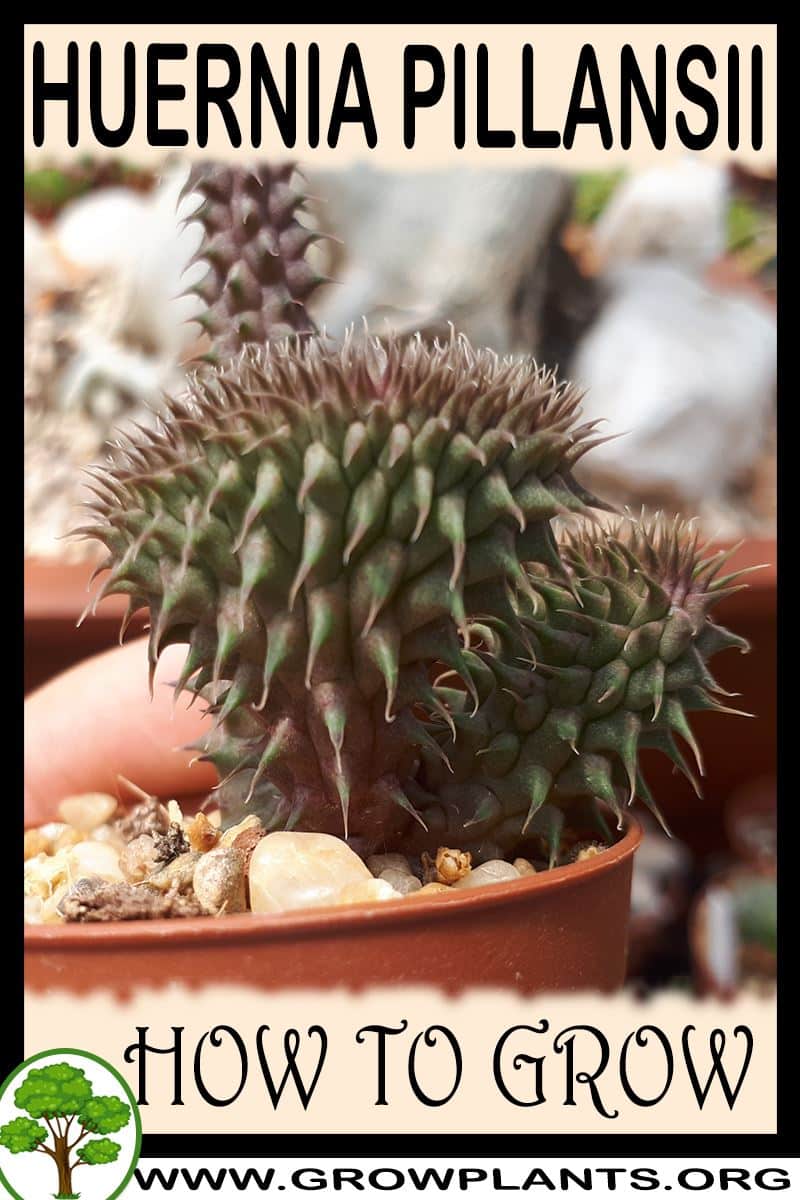
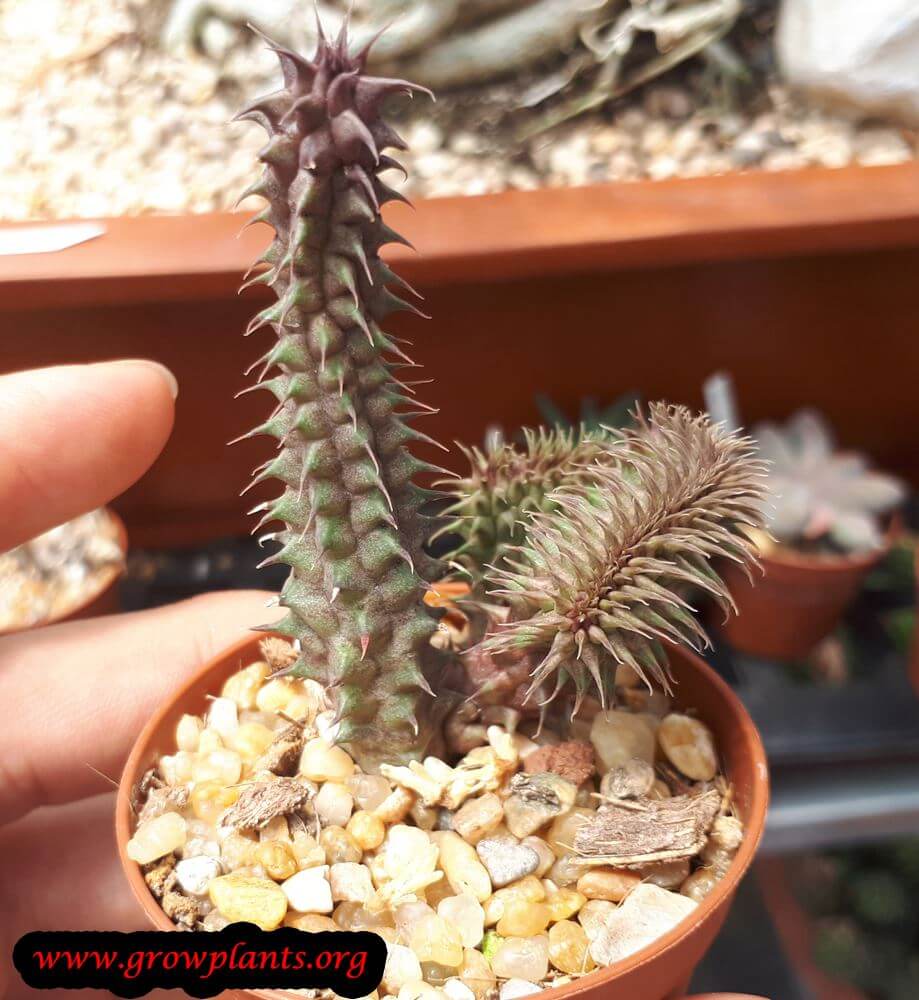
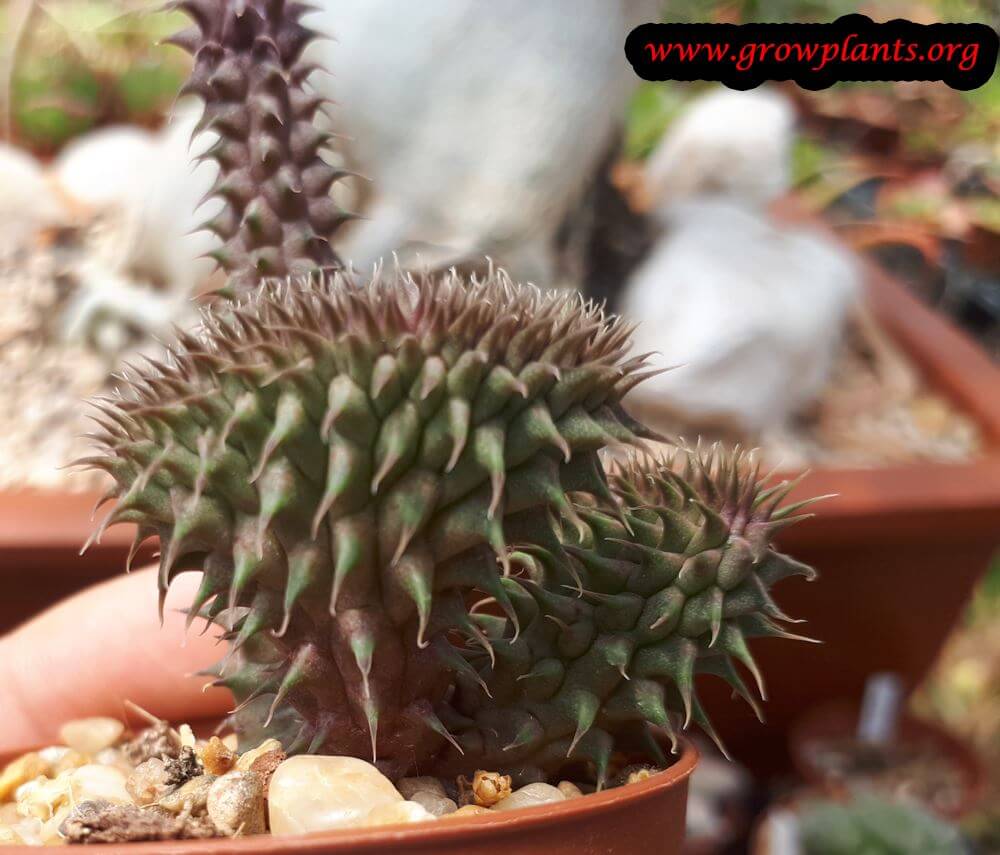
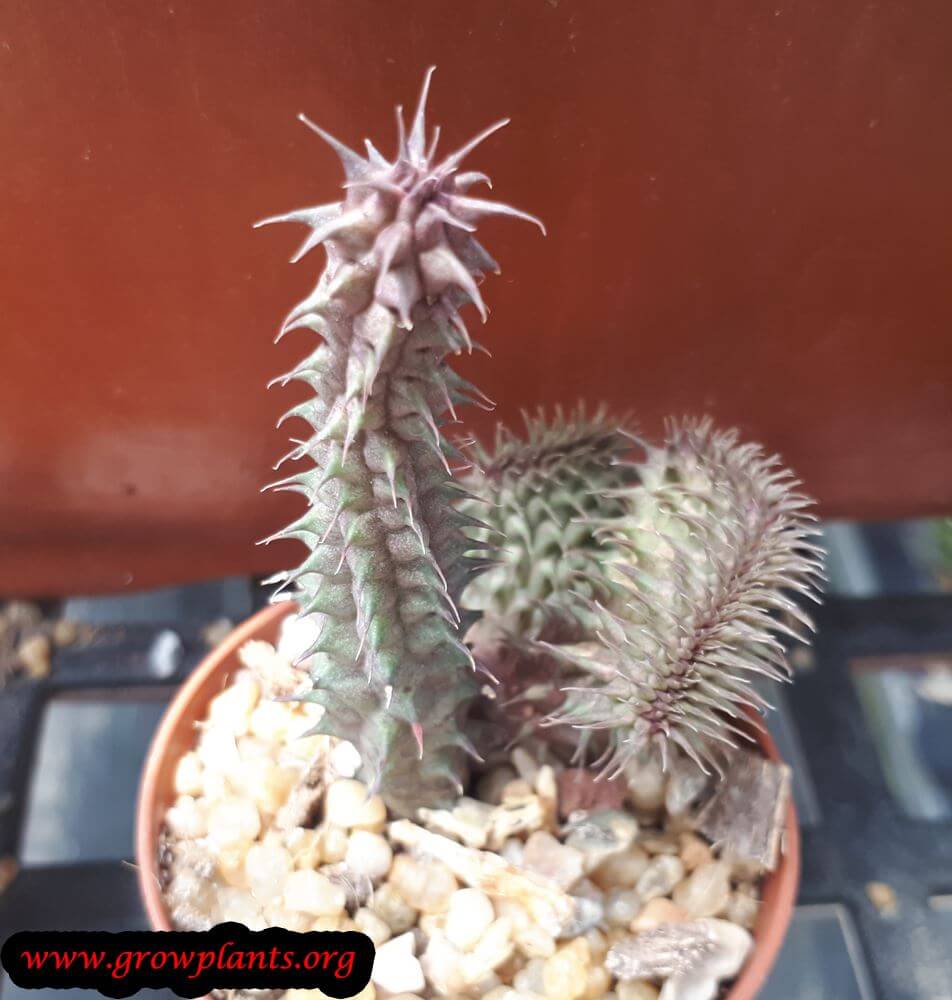
- Leaves & Foliage: Leafless green stems densely covered in soft bristle-tipped tubercles, giving a distinctive furry appearance.
- Flower Characteristics: Waxy, star-shaped flowers in many colours, often spotted with a darker centre (full detail in the Bloom section).
Primary Uses & Landscape Value
- Functional & Ornamental Roles: Drought-tolerant ornamental succulent for rockeries, dish gardens, containers and as a houseplant.
Care Guide: Planting, Soil & Watering
Overview: Huernia pillansii is a small, drought-tolerant succulent for frost-free to lightly-frosted warm climates (best kept above about 5°C) that grows well in pots or as a houseplant. It needs a gritty, sharply-drained soil and careful, sparing watering, as it is highly prone to rot if kept too wet.
Quick Care Requirements
| Requirement | Ideal Condition |
|---|---|
| Planting Season | Warm season — spring, summer and autumn |
| Growth Rate | Slow |
| Soil Type | Gritty, very free-draining cactus / succulent mix |
| Water Need | Low — water sparingly and let the soil dry out between waterings |
Planting & Establishment
- Best Planting Season: Plant during the active warm season, from spring through autumn, while growth is underway and the soil stays warm; protect from frost and cold, damp conditions.
- How to Plant:
- Hole Preparation: Use a shallow container only a little larger than the plant; these shallow-rooted succulents dislike a large volume of damp soil around them.
- Soil Amendments: Mix plenty of grit, coarse sand or perlite into a cactus mix for the fast drainage and open structure the roots need.
- Planting Depth: Set the plant with the base of the stems resting at the soil surface; burying the stems in moist soil encourages rot.
- Growth Speed & Expectations: Growth is slow; these compact, spreading succulents fill a pot gradually.
Soil, Watering & Drainage Care
- Soil Mix & Drainage Needs: A very free-draining, gritty medium and a pot with drainage holes are essential; standing moisture quickly causes stem and root rot.
- Watering Schedule & Technique:
- Young / Newly Planted: Water lightly to settle the plant in, then allow the soil to dry before watering again.
- Established: Water sparingly and only once the soil has fully dried; err on the side of too little, as Huernia are very sensitive to overwatering.
- Seasonal Adjustments: Water a little more during warm, active growth and keep nearly dry through cool winter weather.
Climate, Light & Hardiness
Huernia pillansii is an arid-adapted stapeliad succulent suited to subtropical, Mediterranean, and desert-type climates with well-drained soil, growing equally well outdoors or as a houseplant. It prefers filtered, part-shade light rather than harsh direct sun and has only modest cold hardiness, needing protection whenever temperatures approach freezing.
Quick Climate Specifications
| Climate Zones | Subtropical, Mediterranean, desert; also grown as a houseplant |
|---|---|
| USDA Hardiness Zones | Approximately 9–12 (site data) |
| Approx. Survival Minimum | Approximately 5°C (41°F) for an established plant, briefly (site data) |
| Frost Tolerance | None |
| Light Conditions | Half Shade to Full Shade |
Sunlight & Light Exposure
Optimal Light Setup
Bright, filtered or indirect light suits this species best; site data lists half shade to full shade as the optimal condition rather than intense sun.
Direct Sun Requirement
Not required, and strong, direct sun - especially through glass or in hot, dry climates - can scorch the tubercled stems.
Shade & Heat Management
In hot climates, light shade with good air movement keeps the stems from overheating while still allowing enough light for compact growth.
Best Exposure / Orientation
An east-facing window indoors, or a partly shaded spot outdoors such as beneath open shrubs or shade cloth in harsh desert sun.
Temperature Extremes & Hardiness
USDA Hardiness & Regional Limits
Site data places this species in zones 9–12, meaning reliable outdoor culture is limited to mild, essentially frost-free climates; elsewhere it should be grown in a container that can be moved indoors for winter.
Cold Damage & Winter Protection
Keep above roughly 5°C (41°F); protect from cold drafts and bring container specimens indoors well before the first frost.
Frost Sensitivity
Frost sensitive with no meaningful frost tolerance; even a light frost is likely to damage or kill the stems.
Extreme Heat Tolerance
Good, provided the soil is well-drained and not kept overly moist - excess moisture in heat raises the risk of stem rot far more than the heat itself.
Wind, Humidity & Microclimate
Humidity Preferences
Prefers moderate to low humidity typical of arid and subtropical climates; it does not need or particularly benefit from high ambient moisture.
Dry-Air Tolerance
High - well suited to the dry indoor air of centrally heated or air-conditioned rooms.
Rainfall & Seasonal Moisture
Adapted to low, seasonal rainfall with a pronounced dry period; consistently wet climates or soil increase the risk of rot.
Microclimate Recommendations
A bright windowsill or a sheltered, partly shaded outdoor spot with fast-draining soil; in marginal zones, container culture allows the plant to be moved to protection for winter.
Growing in Pots, Balconies & Indoors
This little stapeliad succulent is grown by the grower as a houseplant and does well in a pot on a sheltered balcony too. It prefers part to full shade rather than blazing sun, which makes it an easy, compact plant for a bright sill.
Quick Details
- Container Size: A small, shallow pot a step larger than the root ball
- Indoor Suitability: A good houseplant in bright, indirect light
- Best Spot: Half to full shade – bright but out of harsh direct sun
- Soil & Drainage: Gritty cactus/succulent mix; sharp drainage – a bagged cactus and succulent soil saves mixing your own
- Watering in Pots: Small amounts – let it dry well between waterings; overwatering rots it
Indoors & On the Windowsill
- A genuine houseplant: Grows well indoors in bright, indirect light; it stays small and clumps neatly, ideal for a sill or shelf.
- Windowsill growing: A bright sill out of scorching sun suits it; keep it dry and airy and turn it for even growth.
- Care: Water sparingly indoors and keep it warm and out of cold, damp conditions.
On a Balcony or Patio
- Light & wind: Part to full shade outdoors; shelter from fierce sun and from rain that would waterlog the shallow pot.
- Practicalities: A neat, small succulent for shallow dishes and mixed pots; easy to move under cover.
Choosing the Pot, Soil & Long-Term Care
- Pot & drainage: A small, shallow pot with strong drainage holes and grit at the base; skip a standing-water saucer.
- Potting mix: Use a free-draining cactus/succulent mix with a layer of gravel, lava rock or pebbles at the base, and make plenty of drainage holes; the grower notes the mix loses its drainage over a few years, so replace it then.
- Feeding: Potted plants exhaust their mix faster than those in open ground – nutrients leach away with each watering – so feed lightly through the active growing season. Feed sparingly.
- Repotting: Repot into fresh gritty mix every few years or once roots fill the pot.
Fertilizing & Feeding
A light feeder: occasional, dilute low-nitrogen feeding during active growth is enough, with no feeding at all during the cooler rest period.
Quick Fertilizing Specs
| Feeding Level | Light feeder |
|---|---|
| Main Nutrient Priority | Low-nitrogen feeding during active growth only |
| Best Feeding Period | The warm growing season, spring through autumn |
| Organic Options | Not a major factor; a mineral, fast-draining succulent mix matters more than added organic matter |
| Reduce/Stop Feeding | No feeding during the cool-season rest or whenever watering is reduced |
| Micronutrients | Usually adequate from a complete succulent fertilizer; correct only diagnosed issues |
| Soil pH | Prefers a well-drained, mineral potting mix over any particular pH |
Feeding by Growth Stage
Active growing season
Support steady stem growth and blooming during the warm season.
| Nutrient direction | A dilute, low-nitrogen succulent fertilizer supports slow, healthy stem growth without encouraging soft, rot-prone tissue. |
|---|---|
| Timing | During the warm growing season, spring through autumn. |
| Frequency | Light, infrequent feeding through active growth suits this slow grower. |
| Fertilizer types | A dilute, low-nitrogen succulent or cactus fertilizer |
| Precautions | Feed only when actively watering and growing; overfeeding can push soft tissue that’s prone to rot and pests like mealybug. |
Cool-season dormancy
Let the plant rest through cooler weather without pushing new growth.
| Nutrient direction | None – withhold fertilizer while the plant is resting in cooler weather. |
|---|---|
| Timing | During cooler weather when watering is reduced and growth slows. |
| Frequency | No feeding at this stage; feeding resumes once warmth and active growth return. |
| Fertilizer types | No feeding at this stage; a resting succulent has no use for fertilizer. |
| Precautions | Do not fertilize during the cool rest period; unused nutrients can build up as salts around shallow roots. |
Nutrient Deficiency Signs & Corrections
Pale or dull stem color and stalled growth during the growing season.
| Possible causes | low available nitrogen in old potting mix, root stress from overwatering, insufficient light |
|---|---|
| Appears first on | new stem growth |
| What to check | age of the potting mix, recent watering pattern, light exposure |
| Possible correction | Repot into fresh, well-drained mix and resume light, dilute feeding during active growth. |
Soft, discolored, or mushy stem tissue, especially at the base.
| Possible causes | overwatering or poor drainage causing rot, fertilizing while the plant is dormant or overly wet, mealybug or other pest damage opening the tissue to infection |
|---|---|
| Appears first on | the base and lower stems |
| What to check | soil moisture and drainage, recent feeding timing, signs of pests such as mealybug |
| Possible correction | Correct watering and drainage first, treat any pest issue, and hold feeding until healthy growth resumes. |
Healthy stems but few or no flowers during the bloom season.
| Possible causes | insufficient light for flower initiation, nutrient imbalance such as excess nitrogen relative to overall feeding, plant still immature or recently repotted |
|---|---|
| Appears first on | absence of buds despite otherwise healthy stems |
| What to check | light exposure, recent feeding balance, plant maturity and recent repotting |
| Possible correction | Increase light first, then keep feeding light and low-nitrogen rather than pushing extra growth. |
Pruning, Training & Seasonal Maintenance
Huernia pillansii is a low, clump-forming stem succulent with no woody framework and essentially no routine pruning need. The only recurring task is removing dead or infected stem segments and, as clumps become congested, dividing them. Any cutting is safest during active growth (spring–summer) when tissue heals fastest; this fleshy-stemmed genus is prone to rot spreading quickly through cut or damaged tissue, so prompt, clean removal of any infected part matters more here than for many other succulents. Pruning has no bearing on flowering, which arises from the base of the stems.
Quick Pruning & Maintenance Specs
| Pruning Tolerance | Low – sanitary/division only, no shaping |
| Primary Pruning Window | Spring–summer active growth |
| Typical Frequency | As needed, when rot, damage or clump congestion appears |
| Main Objective | Remove dead/infected tissue promptly; divide congested clumps |
| Young Plant Priority | Leave untouched unless damaged |
| Mature Plant Priority | Watch for and remove rot immediately; divide crowded clumps for airflow |
| Best Tool Type | Sterile knife blade, not shears or snips |
| Avoid Heavy Pruning During | Cold or dormant winter conditions |
Pruning by Plant Age & Size
Newly Established
No pruning – let a new plant or division settle in undisturbed.
Young / Formative
No structural training applies to this low, clumping succulent.
Mature / Established
Inspect regularly for rot or dieback and remove it promptly; as clumps thicken and stems crowd each other, divide to improve airflow and reduce the rot risk that congestion encourages.
Special Growth to Remove
- Dead or infected stem segments – cut back into firm, healthy tissue as soon as noticed, since rot spreads through this fleshy-stemmed genus quickly.
- Congested basal stems – thin or divide overcrowded clumps to restore airflow and vigor; vegetative/division propagation is the standard way to keep true-to-type flowers.
Container & Small-Space Pruning
Grown in a well-drained succulent mix in shallow pots; keep any cut or divided piece out of wet mix until the wound calluses, and ensure divided clumps have enough spacing in the pot for airflow, which matters more for rot-prone stapeliads than for many other succulents.
Tools
A sterile, sharp knife blade for any cut – rot removal or division of clumping stems; snips, loppers and shears have no appropriate use on these soft, fleshy stems.
Tool Hygiene & Disease Risk
High-risk – stem rot in this genus spreads readily on a contaminated blade and can move quickly through a congested clump. Disinfect the blade before and after every cut, especially when removing infected tissue, and between different plants.
Cut Placement & Technique
Cut well into visibly firm, healthy tissue when removing rot or infection, leaving no discolored material; when dividing, cut cleanly at a natural stem junction and let all cut surfaces dry and callus in a dry, shaded spot before replanting or watering.
Heavy Pruning & Rejuvenation
Not applicable in the structural sense – there is no framework to rejuvenate by cutting back. If a clump has substantially rotted, renewal comes from taking and rooting healthy stem cuttings from unaffected portions rather than any hard-pruning technique.
Post-Pruning Care
Withhold water until cuts have fully calloused; keep in bright, airy, dry conditions during healing; recheck the cut margin over the following weeks to confirm rot has not resumed.
Common Pruning Mistakes
- Cutting rot away without reaching fully healthy tissue, leaving infection to continue spreading.
- Watering immediately after cutting, before the wound has calloused.
- Letting a clump grow overcrowded without dividing, which raises rot risk from poor airflow.
When NOT to Prune
Avoid cutting during cold, damp winter conditions when wounds heal slowly and rot risk is highest, and avoid dividing or cutting a freshly potted plant before it has settled.
Recommended Tools (by task)
- Removing rot/infected tissue, dividing congested clumps → grafting_knife: a sterile, sharp blade gives the clean cut this soft, fleshy stem tissue needs.
- Between-cut and between-plant sanitation → blade_disinfectant: essential given how readily rot spreads in this genus.
Propagation Guide
Huernia pillansii is most practically increased by dividing an established clump or taking stem-segment cuttings, since the site notes that vegetative propagation is needed to reproduce the same flower pattern and color; seed-grown plants of this freely cross-pollinating succulent family can vary in flower appearance. Propagation from cuttings or division is generally easy, while growing from seed is possible but does not guarantee a matching flower.
Quick Propagation Specs
| Best Propagation Method | Stem cuttings / offset division |
| Alternative Methods | Seed |
| Propagation Difficulty | Easy (cuttings/division); Moderate (seed) |
| Seed True-to-Type | Variable — flower color and pattern often differ from the parent when grown from seed |
| Vegetative True-to-Type | Yes |
| Best Propagation Season | Spring through autumn |
Growing from Seed
Sowing Season
Spring through summer, matching the plant’s own recommended growing season.
Sowing Depth & Orientation
Surface-sow onto a gritty, free-draining mix, as is typical for fine succulent seed.
Germination Conditions
Warm, humid conditions with bright but indirect light suit germination; keep the mix lightly moist without waterlogging, consistent with this plant’s own preference for only a small amount of water.
Seedling Care
Grow seedlings on in the same well-drained, half-to-full-shade conditions the mature plant prefers, watering sparingly as they establish.
Stem Cuttings
Cutting Type
Segments of the lobed, spined stem.
Best Timing
Spring through autumn, during the plant’s active growing season.
Cutting Preparation
Cut a healthy stem segment and let the cut end dry and callus for several days to about a week in a warm, shaded spot before potting, which helps prevent rot.
Rooting Setup
Pot the callused cutting into a gritty, well-drained succulent mix; water sparingly at first, letting the mix dry between waterings, matching this plant’s own preference for a small amount of water.
Rooting Hormone
Not indicated as necessary by the site; generally optional for a stem succulent that roots readily once callused.
Rooting Time
Not specified by the site; roots typically develop over a few weeks once the cutting is callused and lightly watered.
Division, Offsets, Pups & Suckers
This species clumps and produces multiple stems from the base over time; an established clump can be lifted and separated into rooted sections, ideally keeping some existing roots on each section, then replanted into the same free-draining mix — a straightforward way to increase the plant true-to-type without waiting on seed.
Bloom & Flower Guide
Quick Details
- Bloom Season: Spring into summer
- Flower Appearance: Waxy, five-pointed star flowers, often bumpy-textured; colours of purple, pink, yellow, white or green with brown or red spotting and a darker throat
- Edibility: Ornamental only – grown for its unusual flowers, not for eating
Detailed Blooming Overview
Huernia pillansii is a clumping succulent grown as much for its remarkable flowers as its bristly stems. From spring into summer it opens waxy, five-pointed star flowers, sometimes flat and sometimes studded with small bumps, in a patchwork of purple, pink, yellow, white and green with fine spotting and a darker centre. Like its stapeliad relatives, the flowers are pollinated by flies drawn to the low-slung blooms.
Flower Characteristics
- Five-pointed and star-shaped, with a waxy surface that can be smooth or bumpy.
- Complex colouring – pale grounds with brown or red dots and a darker throat.
- Held low on the stems, close to the pot rim.
Bloom Care & Thinning
- Encouraging bloom: Bright light and a warm growing season with careful watering bring the best flowering.
- Pollination: Flies are the natural pollinators, attracted to the open stars.
Pests, Diseases & Troubleshooting
Overview: Huernias are small, clumping stapeliad succulents (carrion-flower relatives) that are naturally pest-resistant. H. pillansii is the distinctive soft-bristly ‘cocklebur’ species whose hairy stems can trap moisture and debris, so airflow matters. Their real enemies are mealybugs – including the sneaky root mealybug – and, above all, overwatering: a soft, blackening rot at the stem base can kill a whole clump within days, so lean gritty soil and restraint with the watering can matter far more than any spray.
Quick Troubleshooting Overview
| Issue / Pest | Main Symptom | Primary Solution |
|---|---|---|
| Stem / root rot | Soft, blackening, translucent base that collapses, usually after overwatering or cold | Cut back to firm green tissue, dry, re-root; gritty mix, water sparingly |
| Root mealybug | White waxy deposits on roots, stunting and unexplained decline | Bare-root and rinse, drench with systemic, repot into fresh dry mix |
| Mealybug | Cottony white tufts nestled in the stem grooves and around buds | Alcohol swab, insecticidal soap, repeat weekly |
| Spider mites | Fine bronzing or rusty scarring of stems in hot, dry air | Rinse, raise humidity a little, miticide if persistent |
| Aphids | Clusters on flower buds and stalks | Rinse off, insecticidal soap |
| Fungus gnats | Small flies over the soil; larvae in constantly wet mix | Let mix dry, use gritty top-dressing and sticky traps |
Common Pests & Management
- Mealybug (incl. root mealybug) (Planococcus citri, Rhizoecus spp.):
- Symptoms: White, cottony, waxy insects tucked into the grooves and tubercles of the stems and around the flower buds; the root-infesting form coats the rootball in white waxy powder and causes slow decline with no visible above-ground pest, so it is easily missed.
- Prevention & Control: Dab visible colonies with 70% isopropyl alcohol and treat with insecticidal soap or neem, repeating weekly; at every repot, inspect and rinse the roots – for root mealybug, bare-root the plant, wash the roots, and repot into fresh dry gritty mix, using a systemic soil drench for stubborn cases; isolate new plants.
- Spider mites (Tetranychus urticae):
- Symptoms: Fine stippling and a dull, rusty bronzing of the stem surface in hot, dry, still air, sometimes with faint webbing; damage is permanent scarring on the succulent stems.
- Prevention & Control: Rinse the plant and nudge humidity up a little with airflow; apply a miticide or repeated soap/oil sprays; avoid baking the plant in stagnant hot air behind glass.
- Aphids (Aphis / Myzus spp.):
- Symptoms: Small soft insects clustering on the buds, flowers and tender new stem tips, with sticky honeydew; mainly a nuisance around blooming time.
- Prevention & Control: Rinse off with water and treat with insecticidal soap; remove badly infested buds; they seldom persist on the tough stems once flowering ends.
- Scale insects (Diaspididae / Coccidae):
- Symptoms: Small brown or greyish bumps stuck to the stems, sometimes with honeydew and sooty mould; less common than mealybug but similar in effect.
- Prevention & Control: Scrape or wipe off, spray with horticultural oil to smother crawlers, and repeat; inspect the shaded, hidden sides of the stems.
- Fungus gnats (Bradysia spp.):
- Symptoms: Tiny dark flies running over the soil surface; their larvae live in persistently wet mix and can nibble fine roots of already-stressed plants.
- Prevention & Control: The cure is drier soil: let the mix dry out, top-dress with grit, use yellow sticky traps and a BTI drench if needed – their presence is really a warning that you are watering too much.
Diseases & Fungal Issues
- Black stem / soft rot (Fusarium, Pythium, Erwinia (bacterial)):
- Symptoms: The classic killer of stapeliads: a soft, water-soaked, blackening rot that starts at the base or a wound and spreads up the stem, turning segments mushy and hollow, triggered by overwatering, cold-and-wet, or damage.
- Treatment & Management: Act fast – cut well back into clean, firm green tissue with a sterilised blade, let the cuttings callus in dry air, and re-root the healthy tops in dry gritty mix; discard rotten material and its soil, keep the plant warm, dry and airy, and water only when truly dry.
- Fungal stem spot (various fungi):
- Symptoms: Sunken brown or black spots and blotches on the stems in damp, stagnant conditions, sometimes following sunburn or pest wounds.
- Treatment & Management: Improve airflow and reduce humidity and watering; remove or cut past affected areas; dust cut surfaces with sulfur or use a copper fungicide on valued plants.
- Sooty mould (Capnodium spp.):
- Symptoms: A harmless but unsightly black film over honeydew left by mealybugs, aphids or scale.
- Treatment & Management: Clear the sap-sucking pests, then wipe the film off; it will not return once the honeydew source is gone.
Growing Difficulties & Abiotic Problems
- Overwatering rot:
- Cause & Symptoms: By far the most common problem: too much water, especially in cool weather or dense soil, suffocates the roots and rots the stem base, which turns soft, dark and collapses.
- Correction Strategy: Use a very gritty, fast-draining cactus mix in a pot with drainage; water thoroughly but only when the soil is fully dry, and keep the plant nearly dry and cool in winter.
- Cold damage:
- Cause & Symptoms: Mushy, glassy or blackened stem segments after exposure below about 8-10 C, especially if also wet.
- Correction Strategy: Keep above ~10 C and dry in cold spells; move indoors before frost; remove damaged tissue once the plant is warm and firm again.
- Etiolation (stretching):
- Cause & Symptoms: Thin, pale, elongated stems that lean toward the light when grown too dark.
- Correction Strategy: Give bright light with some gentle direct sun; move gradually to brighter conditions to avoid scorching soft growth.
- Sunburn:
- Cause & Symptoms: Bleached, corky or scorched patches where a shaded plant is suddenly exposed to intense direct sun.
- Correction Strategy: Acclimatise slowly to stronger light, provide light shade in the fiercest midday sun, and accept that scarred patches are permanent.
What Helps – Products & Tools
The best ‘product’ for Huernia is the right soil and a light hand with water: a gritty, free-draining cactus mix, plus 70% isopropyl alcohol and insecticidal soap for mealybug and a systemic drench for root mealybug. Keep sulfur or a copper fungicide to dust cuttings and treat stem spot, yellow sticky traps for fungus gnats, and a sharp sterilised blade to cut out rot early.