


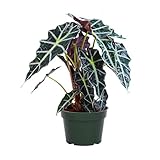

Plant Profile & Key Characteristics
Overview: Gerbera viridifolia (Transvaal daisy) is an evergreen perennial 20-120 cm (8-48 in) tall, grown as a perennial in frost-free gardens and as an annual in colder ones. It is prized purely as an ornamental and long-lasting cut flower.
Quick Specifications
| Specification | Attribute |
|---|---|
| Plant Type / Life Cycle | Evergreen perennial (grown as an annual in cold climates) |
| Foliage Type | Evergreen |
| Mature Size | 20-120 cm (8-48 in) tall |
| Growth Rate | Moderate |
| Root System | Fibrous roots |
| Toxicity | Non-toxic — Gerbera daisies are listed as non-toxic to cats and dogs |
| Hardiness | USDA zones 10+ as a perennial; grown as an annual from zone 4+ |
Growth Form & Structure
- Height & Spread: Forms a basal rosette 20-120 cm (8-48 in) tall, with flowers held above the leaves on bare stalks; well suited to pots.
- Growth Habit & Form: Clump-forming rosette of leaves rising from a central crown.
- Lifespan & Maturity: A long-lived perennial where frost-free, flowering from spring through autumn.
Anatomy & Physical Features
- Leaves & Foliage: Green leaves with wavy margins, mostly deeply serrated and lobed, arranged in a basal rosette.
- Flower Characteristics: Large daisy-type blooms with many narrow elliptic petals around a central disc, in pink, orange, white or yellow.
Primary Uses & Landscape Value
- Functional & Ornamental Roles: A border and container ornamental and a classic long-lasting cut flower for floristry.
Care Guide: Planting, Soil & Watering
Overview: Gerbera (Transvaal daisy) is a tender, medium-growing perennial — hardy in zone 10+ and grown as an annual in colder zones — that flowers best in full sun and light, rich, well-drained soil. It wants steady, moderate moisture, but sharp drainage and a crown kept just above the soil line are essential to prevent rot.
Quick Care Requirements
| Requirement | Ideal Condition |
|---|---|
| Planting Season | All year in frost-free zone 10+; in cold climates in spring |
| Growth Rate | Moderate |
| Soil Type | Light, rich, well-draining soil |
| Water Need | Moderate — keep evenly moist but let the surface dry between waterings |
Planting & Establishment
- Best Planting Season: Plant year-round in warm, frost-free zone 10+; where winters are cold, plant in spring once frost has passed. A winter mulch helps it through brief chill down to about -1°C.
- How to Plant:
- Hole Preparation: Dig a hole roughly twice the width of the root ball and no deeper, loosening the surrounding soil.
- Soil Amendments: Work in compost or organic matter to enrich the soil and improve drainage.
- Planting Depth: Set the plant high, with the crown sitting slightly above the soil line — burying the crown invites rot.
- Growth Speed & Expectations: Moderate — expect steady growth to a flowering clump, with blooms from spring through autumn.
Soil, Watering & Drainage Care
- Soil Mix & Drainage Needs: Give it light, well-aerated, sharply drained soil; in a container use a free-draining potting mix to keep the crown from staying wet.
- Watering Schedule & Technique:
- Young / Newly Planted: Water regularly to settle the roots and keep the soil lightly moist while the plant establishes, watering at the base rather than over the crown.
- Established: Water deeply, then let the top few cm dry before watering again; avoid wetting the crown and foliage.
- Seasonal Adjustments: Ease off in cool winter weather and water more often during summer heat.
Climate, Light & Hardiness
Gerbera prefers a warm, sunny subtropical-to-mediterranean climate with full sun exposure and mild winters. It is frost-tender and reliably hardy outdoors only in warm-winter regions (USDA zone 10+), so it is commonly grown as a spring-to-autumn annual with winter mulch protection farther north.
Quick Climate Specifications
| Climate Zones | Tropical, Mediterranean, Subtropical, Temperate (with winter protection) |
|---|---|
| USDA Hardiness Zones | 10+ as a perennial; commonly grown as an annual from approximately zone 4+ |
| Optimal Temp Range | Typically around 18–27°C (65–80°F) |
| Cold Damage Begins | Approximately at or just above freezing, around 0°C (32°F) |
| Approx. Survival Minimum | Around −1°C (30°F) briefly, with mulch protecting the crown; hard frost kills foliage |
| Frost Tolerance | Low |
| Light Conditions | Full Sun |
Sunlight & Light Exposure
Optimal Light Setup
Full sun outdoors gives the strongest, most compact growth and the fullest bloom.
Direct Sun Requirement
Needs several hours of direct sun daily; too much shade leads to leggy growth and fewer flowers.
Shade & Heat Management
In hot-summer or desert climates, light afternoon shade helps prevent leaf and flower scorch during the hottest hours.
Best Exposure & Orientation
South- or west-facing beds with morning sun and good airflow work well in cooler climates; an east-facing spot with afternoon shade suits hot regions better.
Temperature Extremes & Hardiness
USDA Hardiness & Regional Limits
Reliably perennial only in USDA zone 10+ per site guidance; in colder zones (down to about zone 4) it is grown as a warm-season annual and replanted each year, since it cannot survive freezing winters outdoors.
Cold Damage & Winter Protection
Site guidance places safe cold tolerance at more than −1°C (30°F), with mulch recommended over the crown and root zone in winter; cold damage to foliage and flowers begins near freezing.
Frost Sensitivity
Frost-tender: foliage and flower buds are damaged or killed by frost, and repeated hard freezes will kill the plant outright.
Extreme Heat Tolerance
Tolerates warm summers reasonably well with consistent watering, though prolonged extreme heat can reduce flowering.
Wind, Humidity & Microclimate
Humidity Preferences
Prefers moderate humidity with good air movement around the foliage; stagnant, humid air favors powdery mildew.
Dry-Air Tolerance
Tolerates drier air reasonably well provided soil moisture is maintained.
Wind Tolerance
Moderate: reasonably tolerant of open, breezy sites, though strong wind can damage its soft flower stems.
Rainfall & Seasonal Moisture
Best suited to climates without prolonged waterlogged winters, since cold, wet soil combined with low temperatures increases the risk of crown rot and frost damage.
Microclimate Recommendations
In marginal zones, a warm, sheltered, south-facing spot with winter mulch improves survival odds.
Growing in Pots, Balconies & Indoors
Gerberas are neat, sun-loving perennials that make cheerful container and patio plants, but they are not true deep-room houseplants – away from a window the light is usually too weak for good flowering. On a very bright, sunny windowsill, or outdoors in a free-draining pot on a sunny balcony or patio, they perform well.
Quick Details
- Container Size: Roughly 5-15 L (1-4 gal), sized to the clump (mature spread about 20-120 cm (8-48 in))
- Indoor Suitability: Not a deep-indoor houseplant; can grow and flower on a bright, sunny sill
- Best Spot: Full sun – a bright balcony, patio or sunny windowsill
- Soil & Drainage: Aerated, organic-rich mix (peat/coir with perlite or vermiculite); must drain freely
- Watering in Pots: Keep evenly moist but never waterlogged – pots dry faster; avoid wetting the crown
Indoors & On the Windowsill
- Houseplant limits: The grower marks it as not a true houseplant – deep in a room the light is too weak for it to flower well.
- Windowsill growing: On a bright sill with some direct sun it can grow and bloom; keep it compact and turn the pot now and then for even growth.
- Overwintering indoors: In cold climates, move potted plants into a cool, bright, frost-free spot over winter and keep them on the dry side until growth resumes.
On a Balcony or Patio
- Light & wind: Give it the sunniest spot; walls and paving reflect heat, so pots dry quickly – check moisture daily in warm weather, and shelter the flower stems from strong wind. A drip irrigation kit with a timer can take over that watering check automatically.
- Practicalities: Make sure pots drain freely and raise them on feet so runoff escapes and will not stain the balcony.
Choosing the Pot, Soil & Long-Term Care
- Pot & drainage: A pot with strong drainage holes; skip a standing-water saucer to avoid crown and root rot. Terracotta breathes and dries fast; glazed or plastic holds moisture longer.
- Potting mix: Well-aerated and organic-rich – peat or coir with perlite or vermiculite.
- Feeding: Potted plants need feeding more often than those in the ground because nutrients leach out – a balanced feed through the growing season.
- Repotting: Refresh the mix or pot up about every two years; divide congested clumps and trim any tired roots.
Growing this plant in a greenhouse
A greenhouse can give gerbera viridifolia frost protection and cold protection.
Greenhouse at a glance
| Greenhouse suitability | Conditional - depends on your climate |
|---|---|
| Main benefits | frost protection, cold protection |
| Season extension | earlier spring & later autumn |
| Outdoor protection advisable below | about 5°C |
| Maintain greenhouse minimum | around 5°C for active growth |
| Suitable types | unheated greenhouse, polycarbonate greenhouse |
| Heating | Heating is optional - useful mainly for winter growing in cold areas. |
Related greenhouse guides
- Greenhouses: How to Choose the Right Greenhouse
- Polycarbonate Greenhouses: What to Look for Before Buying
Fertilizing & Feeding
A moderate feeder: light, regular balanced feeding through the active growing and blooming season, backed by organic matter, with feeding held off during cool-season rest.
Quick Fertilizing Specs
| Feeding Level | Moderate feeder |
|---|---|
| Main Nutrient Priority | Balanced feeding with adequate nitrogen; avoid high-phosphorus bloom formulas |
| Best Feeding Period | Spring through the warm active growing and blooming season |
| Organic Options | Compost, well-rotted manure, and other organic matter |
| Reduce/Stop Feeding | Hold off feeding during cool-season rest and slow growth |
| Micronutrients | Usually supplied by a complete fertilizer and organic matter; correct only diagnosed issues such as iron chlorosis |
| Soil pH | Slightly acidic to near neutral |
Feeding by Growth Stage
Spring flush of growth
Support fresh leafy growth as Gerbera viridifolia wakes up and prepares to flower.
| Nutrient direction | A balanced complete fertilizer with adequate nitrogen to build healthy foliage and set up bloom. |
|---|---|
| Timing | As growth resumes in spring or the start of the warm active season. |
| Frequency | A light feeding as active growth begins. |
| Fertilizer types | A balanced complete fertilizer, Compost or well-rotted organic matter worked in |
| Precautions | Keep early feeding balanced; adequate nitrogen and healthy foliage drive later bloom. |
Blooming period
Sustain steady flowering and keep foliage healthy while Gerbera viridifolia is in bloom.
| Nutrient direction | A balanced complete fertilizer supports continued bloom; adequate nitrogen and overall balance matter more than extra phosphorus. |
|---|---|
| Timing | Through the main blooming period in the warm season. |
| Frequency | Light, regular feeding spread across the blooming period. |
| Fertilizer types | A balanced complete fertilizer, A slow-release balanced fertilizer for steady feeding |
| Precautions | Avoid high-phosphorus bloom formulas; balanced feeding and good light drive flowering. |
Repeat flushes of bloom
Keep Gerbera viridifolia pushing successive flushes of flowers through its long blooming season.
| Nutrient direction | Continue balanced feeding to fuel repeated bloom cycles without forcing soft, weak growth. |
|---|---|
| Timing | Between and during successive bloom flushes in the active season. |
| Frequency | Ongoing light feeding to match the plant’s repeated flowering. |
| Fertilizer types | A balanced complete fertilizer, A slow-release balanced fertilizer |
| Precautions | Feed lightly and consistently rather than heavily; deadheading spent flowers also encourages rebloom. |
Cool-season rest
Let Gerbera viridifolia rest through the cool season without pushing tender growth.
| Nutrient direction | None – withhold fertilizer while the plant is resting and not in active growth. |
|---|---|
| Timing | During cool weather or winter when the plant is not actively growing or blooming. |
| Frequency | No feeding at this stage; resume only when active growth and bloom return. |
| Fertilizer types | No feeding at this stage; do not fertilize until active growth resumes. |
| Precautions | Do not fertilize now; feeding a resting plant wastes nutrients and risks salt buildup and tender, cold-sensitive growth. |
Nutrient Deficiency Signs & Corrections
Older, lower leaves fade to pale green or uniform yellow and overall growth and flowering slow.
| Possible causes | low available soil nitrogen, nitrogen leaching from heavy watering or rain, thin, low-organic-matter soil |
|---|---|
| Appears first on | older, lower leaves |
| What to check | recent feeding history, soil organic matter, watering and drainage |
| Possible correction | Apply a nitrogen-containing complete fertilizer and build soil organic matter, then water evenly. |
Interveinal yellowing on the youngest leaves while the veins stay green, worst on new growth.
| Possible causes | high or alkaline soil pH locking up iron, waterlogged or poorly drained roots, genuinely low available iron |
|---|---|
| Appears first on | newest, youngest leaves |
| What to check | soil pH, drainage and root health, whether symptoms are on new growth |
| Possible correction | Correct soil pH and drainage first, then apply a chelated iron product per its label if the deficiency persists. |
Leaf margins brown or scorch and growth stalls despite adequate watering.
| Possible causes | fertilizer salt buildup in the root zone, under-watering that concentrates salts, excessive or too-frequent feeding |
|---|---|
| Appears first on | leaf margins and tips |
| What to check | recent fertilizer amounts, watering consistency, drainage, especially in containers |
| Possible correction | Ease off feeding, water thoroughly to flush accumulated salts, then return to lighter feeding. |
Pruning, Training & Seasonal Maintenance
Gerbera viridifolia is a wild species notable as one of the ancestral parents (alongside G. jamesonii) of cultivated garden Gerbera hybrids, but on its own terms it is still a basal rosette plant: flowers carried singly on leafless stalks from the crown, no woody growth to train. Maintenance stays light – deadhead spent stalks and clear tired leaves through the spring–summer–autumn bloom season to sustain flowering and keep the crown airy against the powdery mildew and aphids already noted for this plant, with the main clean-up falling in late winter.
Quick Pruning & Maintenance Specs
| Pruning Tolerance | Low–Moderate – light maintenance only, no hard cutback of the crown |
| Primary Pruning Window | Late winter – clear old or damaged foliage before spring regrowth |
| Secondary Maintenance Window | Ongoing through the spring–summer–autumn bloom season |
| Typical Frequency | Deadhead as each flower fades; remove yellowing leaves as they appear |
| Main Objective | Prolong bloom and keep the crown open and airy |
| Young Plant Priority | Let the crown establish before letting it bloom freely |
| Mature Plant Priority | Routine deadhead and leaf clean-up; lift and divide congested clumps every 2–3 years |
| Best Tool Type | Precision snips – all cuts are soft flower stalks and leaves at the crown |
| Avoid Heavy Pruning During | Peak bloom flush, and humid or wet weather when foliage is mildew-prone |
Pruning by Plant Age & Size
Newly Established
Remove only damaged or transplant-shock leaves; keep healthy green foliage while the crown roots in.
Young / Formative
No structural training applies to a basal rosette; let the plant build foliage before its first full bloom cycle.
Mature / Established
Ongoing deadheading and leaf clean-up through the bloom season; once the clump crowds and flowering thins, divide the crown as the renewal step, typically every 2–3 years.
Seasonal Pruning Schedule
Pre-Growth / Late Winter
Objective: tidy the crown before spring growth. Remove: tattered, cold-damaged or yellowed leaves at their base. Do not remove: healthy green leaves. Expected response: cleaner crown, stronger spring flush.
Ongoing Sanitary
Objective: sustain flowering and reduce disease pressure. Remove: spent flower stalks as blooms fade, and yellowing leaves as they appear. Bloom impact: deadheading redirects energy into new buds instead of seed.
Special Growth to Remove
- Spent flower stalks – cut or pull fully at the base near the crown.
- Dead or yellowing leaves – remove at their base attachment point.
Container & Small-Space Pruning
Suits container growing; keep ahead of leaf and stalk clean-up in pots, where crown airflow is more limited and mildew pressure runs higher.
Tools
- Precision snips – the only tool needed for this plant’s soft flower stalks and leaves.
Tool Hygiene & Disease Risk
Routine – clean, sharp snips are enough; powdery mildew spreads by airborne spores, not through pruning cuts.
Cut Placement & Technique
Cut or pull flower stalks flush at the base near the crown rather than partway down. Remove leaves at their base attachment point.
Heavy Pruning & Rejuvenation
No woody framework to hard-cut back. Renewal comes from lifting and dividing a congested clump every 2–3 years, not from a heavy cut.
Post-Pruning Care
Keep the exposed crown from sitting in standing water after leaf or stalk removal; water at soil level where practical.
Common Pruning Mistakes
- Cutting stalks partway down instead of at the base.
- Removing too much green foliage in one pass.
- Handling wet, mildew-affected foliage during humid weather.
When NOT to Prune
Avoid heavy leaf removal during an active bloom flush, and avoid handling wet, mildew-affected foliage until it dries.
Recommended Tools (by task)
- precision_snips – deadheading and leaf clean-up at the crown; the only cut type this plant needs.
Propagation Guide
Gerbera viridifolia is most easily grown from seed, which the site notes is sufficient without grafting or vegetative propagation, and as a true species it can reasonably be expected to come true from seed if not grown near other Gerbera. Dividing an established clump is an easy alternative, useful mainly for rejuvenating older plantings. Propagation is easy by either method.
Quick Propagation Specs
| Best Propagation Method | Seed |
| Alternative Methods | Division of established clumps |
| Propagation Difficulty | Easy |
| Seed True-to-Type | Usually true-to-type when not grown near other Gerbera species |
| Vegetative True-to-Type | Yes |
| Best Propagation Season | Spring in cooler climates; can be done year-round in warm climates |
| Seed Germination Time | Typically a few weeks, and can be somewhat uneven |
| Germination Temperature | Roughly 20–24°C (68–75°F) |
| Seed Sowing Depth | Surface-sown or barely covered – light can aid germination |
Growing from Seed
Seed Handling & Viability
Gerbera seed is relatively short-lived; use fresh seed where possible, since germination tends to decline within a matter of months of harvest. Store any leftover seed cool and dry.
Sowing Depth & Orientation
Sow on the surface of the mix or just barely cover, pressing the seed lightly into contact with the soil.
Germination Conditions
Keep the mix evenly moist and warm, with bright but not harsh direct light, until seedlings emerge.
Germination Time
Germination is usually seen within a few weeks, though timing and evenness can vary.
Seedling Care
Pot seedlings on once they have several true leaves and grow them on in bright light before moving to their final position.
Division, Offsets, Pups & Suckers
Established clumps can be divided, typically every couple of years, to rejuvenate older plants and increase numbers. Divide after the main flowering flush or in early spring, keeping several leaves and growing points with roots attached to each division; reducing leaf area at replanting can help the division establish.
Bloom & Flower Guide
Quick Details
- Bloom Season: Spring, summer and autumn; longest where winters are mild
- Time to First Bloom: Within its first season – young plants flower in a few months, and seed-raised plants bloom the same year
- Flower Appearance: Daisy heads in pink, orange, white or yellow
- Edibility: Ornamental / cut flower – not eaten (the plant is non-toxic but grown for display)
Detailed Blooming Overview
Gerbera viridifolia, known as the Transvaal daisy and a South African member of the daisy family (Asteraceae), carries one large, solitary daisy head on each long, leafless stem – the form that makes gerberas such prized cut flowers. What reads as a many-petalled bloom is really a flower head: a ring of strap-shaped ray florets around a central eye. Given full light and steady feeding it reblooms over a long spring-to-autumn season.
Flower Characteristics
- Daisy heads in pink, orange, white or yellow.
- Large solitary head held on a tall, bare stem – excellent for cutting.
- Elliptic ray florets joined around a central disc, whose eye may be yellow, black or brown.
Bloom Care & Thinning
- Deadheading: Remove spent blooms by pulling or cutting the stem cleanly at the base to encourage more buds and prevent rot.
- Crown and watering: Keep the crown at or just above soil level and water at the base; wet crowns and foliage invite disease.
Bloom Health & Protection
- Grey mould (Botrytis): Gerbera blooms and stems are prone to this fuzzy grey rot in damp, still air; good spacing, airflow and base watering help, and affected blooms are best removed promptly.
- Thrips: These tiny insects rasp the petals, streaking and distorting the flowers; sticky traps with neem oil or insecticidal soap are common, gentle controls.
Pests, Diseases & Troubleshooting
Overview: Gerberas are prized but somewhat demanding daisies whose troubles cluster around two themes: sap-sucking pests under warm, still conditions (whitefly, thrips, aphids and spider mites) and moisture-driven rots at the crown. Thrips are doubly dangerous because they transmit tospoviruses. The golden rule is to plant with the crown sitting proud of the soil and to water at the base, never into the heart of the plant. Manage with airflow, hygiene and biological controls first.
Quick Troubleshooting Overview
| Issue / Pest | Main Symptom | Primary Solution |
|---|---|---|
| Whitefly | Clouds of tiny white flies from the leaf undersides; sticky, sooty foliage | Yellow sticky traps, Encarsia parasitoid, soap/neem; keep plants uncrowded |
| Thrips | Silvery streaks, distorted buds; spreads spotted-wilt virus | Blue sticky traps, remove infested buds, predatory mites; strict virus rogueing |
| Crown/Botrytis rot | Grey mould and mushy, blackened crown; wilting | Plant crown HIGH, water at base, improve airflow, remove dead leaves |
| Spider mites | Fine pale stippling, webbing, bronzed leaves in dry heat | Raise humidity, hose undersides, predatory mites; miticidal oil if severe |
| Powdery mildew | White powdery coating on leaves | Airflow and spacing, avoid wet leaves; sulfur or bicarbonate spray |
| Root/crown rot (Phytophthora/Pythium) | Sudden wilt, blackened roots and crown in wet mix | Free-draining mix, never waterlogged, plant high, avoid overwatering |
Common Pests & Management
- Greenhouse whitefly (Trialeurodes vaporariorum):
- Symptoms: Tiny white moth-like flies that rise in a cloud when disturbed; scale-like nymphs on leaf undersides excrete honeydew that turns leaves sticky and sooty, weakening the plant.
- Prevention & Control: Hang yellow sticky traps to monitor and reduce adults; release Encarsia formosa parasitoid wasps under cover. Keep plants uncrowded and spot-treat with insecticidal soap or neem, targeting leaf undersides in the evening.
- Western flower thrips (Frankliniella occidentalis):
- Symptoms: Slender pale insects hiding in buds and flowers; feeding leaves silvery streaks and flecks, distorts opening buds, and – critically – transmits tomato/tobacco spotted wilt virus.
- Prevention & Control: Use blue sticky traps, remove and destroy infested buds, and introduce predatory mites (Amblyseius spp.). Rogue out any virus-symptomatic plant immediately; control weeds that harbour thrips.
- Aphids (Myzus persicae / Aphis spp.):
- Symptoms: Green or black soft-bodied colonies on new growth, buds and flower stalks, causing distortion, honeydew and sooty mould; also spread viruses.
- Prevention & Control: Wash off with water, support ladybirds and lacewings, and treat stubborn colonies with insecticidal soap or neem in the cool of the evening.
- Two-spotted spider mite (Tetranychus urticae):
- Symptoms: Fine pale stippling that bronzes leaves, with fine webbing on undersides in hot, dry, still air; foliage dulls and dries.
- Prevention & Control: Raise humidity, hose leaf undersides, and release predatory mites (Phytoseiulus persimilis). Use horticultural oil or a labelled miticide for heavy infestations, rotating modes of action.
- Leaf miners (Liriomyza spp.):
- Symptoms: Winding, pale serpentine tunnels within the leaf blade, with pinprick feeding spots; heavy mining reduces vigour.
- Prevention & Control: Pick off and destroy mined leaves, use yellow sticky traps for adult flies, and encourage parasitoid wasps. Neem can deter egg-laying; systemic products only for severe cases.
- Leafhoppers (Empoasca spp.):
- Symptoms: Pale stippling and marginal leaf yellowing, with small wedge-shaped insects that jump; can vector pathogens.
- Prevention & Control: Maintain vigour, use sticky traps, and support predators; insecticidal soap for heavy populations.
Diseases & Fungal Issues
- Botrytis / crown rot (Botrytis cinerea):
- Symptoms: Fuzzy grey mould on flowers, stems and leaves, and a soft brown rot at the crown where water sits; entire plant can wilt and collapse.
- Treatment & Management: Plant the crown proud of the soil surface, water only at the base, and maximise airflow and spacing. Remove dead flowers and leaves promptly; apply a suitable fungicide preventively under persistent humidity.
- Phytophthora / Pythium root & crown rot (Phytophthora cryptogea / Pythium spp.):
- Symptoms: Sudden wilting despite moist soil, blackened mushy roots and a rotted crown; plants topple and die in wet, poorly drained media.
- Treatment & Management: Use a sterile, free-draining mix, never let plants sit waterlogged, and plant high. Discard badly affected plants and their soil; drenches help only if drainage is corrected first.
- Powdery mildew (Podosphaera / Golovinomyces spp.):
- Symptoms: White powdery patches on upper leaf surfaces and stalks, with yellowing and curling in warm days and cool nights.
- Treatment & Management: Improve airflow and spacing, avoid wetting foliage, and remove affected leaves. Treat with sulfur or a potassium-bicarbonate spray as needed.
- Spotted wilt virus (Tomato/Tobacco spotted wilt virus (TSWV/INSV)):
- Symptoms: Ring spots, bronzing, necrotic streaks and stunting spread by thrips; there is no cure once infected.
- Treatment & Management: Control thrips rigorously, rogue and destroy infected plants immediately, and manage nearby weed hosts. Buy clean, virus-tested stock.
- Fungal & bacterial leaf spots (Alternaria / Phyllosticta / Xanthomonas):
- Symptoms: Brown, tan or water-soaked spots that enlarge and merge, sometimes with yellow haloes, in wet conditions.
- Treatment & Management: Remove spotted leaves, keep foliage dry, and improve airflow. Copper sprays help with bacterial types; sanitation is the mainstay.
Growing Difficulties & Abiotic Problems
- Crown rot from deep planting:
- Cause & Symptoms: The commonest killer: burying the crown or watering into the heart traps moisture and invites rot; the plant wilts and blackens at the base.
- Correction Strategy: Always set the crown 1–2 cm above soil level, mulch with grit rather than organic matter around the neck, and irrigate only at the root zone.
- Iron/manganese chlorosis:
- Cause & Symptoms: Yellowing between veins on new leaves in alkaline or waterlogged soil where micronutrients lock up.
- Correction Strategy: Correct drainage, acidify the mix slightly, and apply chelated iron; avoid overwatering, which mimics and worsens the symptom.
- Overwatering & poor drainage:
- Cause & Symptoms: Yellowing lower leaves, soft stems and general decline in heavy, constantly wet soil.
- Correction Strategy: Let the top of the mix dry between waterings, use a gritty free-draining medium, and ensure pots drain freely.
- Poor flowering:
- Cause & Symptoms: Few blooms from too little light, over-rich nitrogen, or an exhausted, congested clump.
- Correction Strategy: Give bright light, feed with a balanced/high-potassium feed rather than high nitrogen, and divide tired clumps.
What Helps – Products & Tools
Core kit is preventive and biological: yellow and blue sticky traps, predatory mites and parasitoid wasps, and a gritty free-draining mix that lets you plant the crown high. For sap-suckers use insecticidal soap or neem/horticultural oil in the evening; for mildew, sulfur or potassium-bicarbonate; and a preventive fungicide against Botrytis under humid conditions.