
Polycarbonate has become the default glazing for home greenhouses, and for good reason: it’s light, shatter-resistant and better insulated than single-pane glass. But panels vary a lot in thickness and quality, so knowing what to check saves disappointment. This guide covers what actually matters before you buy.
GrowPlants is reader-supported. We may earn a commission from qualifying purchases made through links on this page, at no extra cost to you.
How polycarbonate panels are built
Most greenhouse polycarbonate is twin-wall or multi-wall — two or more sheets separated by ribs that trap insulating air. Thickness ranges from about 4 mm (light, budget) up to 10 mm+ (stiffer, warmer). Thicker multi-wall holds heat better and resists sagging; thin single panels are cheaper but flimsier.
Insulation and light
The air gaps in multi-wall polycarbonate cut heat loss compared with single-pane glass, so the greenhouse warms faster and holds temperature longer. The trade-off is clarity: polycarbonate diffuses light rather than transmitting a clear image. Diffused light is actually helpful — it spreads more evenly and reduces leaf scorch — but you lose the see-through look of glass.
What to check before buying
- Panel wall thickness — thicker multi-wall = better insulation and rigidity.
- UV-protected panels — a UV-stabilised layer stops premature yellowing and brittleness (manufacturer-stated).
- Frame — aluminium or coated steel sized to your wind exposure; panels are only as secure as the bars and clips holding them.
- Panel retention — good clip systems stop panels popping out in wind; check reviews for this common weak point.
- Ventilation — roof and side vents (see ventilation).
- Anchoring — a base kit or ground anchors are essential.
Durability, snow and wind
Polycarbonate is far more impact-resistant than glass, which is why it suits homes with children, pets or exposed sites. Rely only on the manufacturer’s stated snow- and wind-load ratings for your model — these vary by panel thickness and frame, and no general claim substitutes for the spec sheet.
Polycarbonate greenhouses
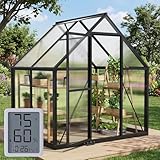


Panels, clips & repair


Where glass still wins
On a sheltered site where you want maximum light clarity and a long-lived, premium look — and don’t mind the fragility — horticultural glass is still excellent. For most other situations, multi-wall polycarbonate is the safer, warmer, more forgiving choice. Compare options in the main greenhouses.
Quick questions
What thickness polycarbonate is best? Thicker multi-wall (e.g. 6–10 mm) insulates and resists sagging better than thin 4 mm; match to your climate and budget.
Does polycarbonate block the light plants need? No — it transmits plenty of light but diffuses it, which spreads light evenly and reduces scorch.