



Plant Profile & Key Characteristics
Overview: An evergreen perennial shrub to small tree reaching 2-6 m (6.5-20 ft), flowering for much of the year and prized as an ornamental, hedge and bonsai subject. All parts, especially the berries, are toxic.
Quick Specifications
| Specification | Attribute |
|---|---|
| Plant Type / Life Cycle | Perennial (evergreen shrub to small tree) |
| Foliage Type | Evergreen |
| Mature Size | 2-6 m tall (6.5-20 ft) |
| Growth Rate | Moderate to fast |
| Toxicity | Toxic – berries and foliage are poisonous |
| Hardiness | USDA zone 8+ |
Growth Form & Structure
- Height & Spread: 2-6 m (6.5-20 ft) in the ground; readily kept much smaller in a container or trained as bonsai.
- Growth Habit & Form: Shrub to small tree with slender, arching to weeping branches; responds well to shaping and can be self-seeding and invasive in warm climates.
- Lifespan & Maturity: Long-lived evergreen perennial that reaches flowering size quickly.
Anatomy & Physical Features
- Leaves & Foliage: Golden-yellow, elliptic leaves.
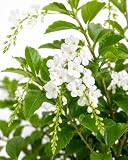
- Flower Characteristics: White flowers carried in hanging clusters. Blooms for most of the year and attracts pollinators.
- Fruit Profile: Small round berries 1-2 cm across in orange to yellow – ornamental but toxic.
Primary Uses & Landscape Value
- Functional & Ornamental Roles: Ornamental flowering shrub for borders, screens and hedges, a pollinator plant, and popular for bonsai and container culture.
Care Guide: Planting, Soil & Watering
Overview: Duranta is a fast-growing subtropical to tropical shrub or small tree (hardiness zone 8+) for full sun to part shade, happiest in light, well-drained soil. Once established it is fairly drought-tolerant, needing only light to moderate water, and it resents heavy, waterlogged ground.
Quick Care Requirements
| Requirement | Ideal Condition |
|---|---|
| Planting Season | Warm season — spring, summer or autumn (hardiness zone 8+) |
| Growth Rate | Fast to Moderate |
| Soil Type | Light, well-draining soil |
| Water Need | Low to Moderate — water when the top few cm dry out |
Planting & Establishment
- Best Planting Season: Plant during the warm months of spring through autumn in frost-free zone 8+, giving the roots time to settle before any cool weather.
- How to Plant:
- Hole Preparation: Dig a hole about twice the width of the root ball and the same depth, loosening the surrounding soil.
- Soil Amendments: Lighten heavy soil with compost and grit to keep it free-draining — Duranta prefers a light, open soil.
- Planting Depth: Set the plant so the root collar sits level with the surrounding soil; don’t bury the stem.
- Growth Speed & Expectations: Fast to moderate — expect quick, bushy growth that responds well to pruning for shape.
Soil, Watering & Drainage Care
- Soil Mix & Drainage Needs: Give it light, sharply drained soil to prevent root rot; in a container use a free-draining potting mix.
- Watering Schedule & Technique:
- Young / Newly Planted: Water regularly to settle the roots and keep the soil lightly moist while the plant establishes.
- Established: Water deeply, then let the top few cm dry before watering again; established plants shrug off short dry spells.
- Seasonal Adjustments: Cut watering right back in cool winter weather and water more often during heat.
Climate, Light & Hardiness
Duranta is a warm-climate evergreen shrub to small tree suited to subtropical, mediterranean, and tropical gardens, growing best in full sun to half shade. It is reliably cold-hardy outdoors only in warm-winter regions (USDA zone 8+) and suffers frost damage or dieback farther north.
Quick Climate Specifications
| Climate Zones | Subtropical, Mediterranean, Tropical |
|---|---|
| USDA Hardiness Zones | 8+ |
| Optimal Temp Range | Typically warm, roughly 18–30°C (65–86°F) during the growing season |
| Cold Damage Begins | Approximately near 0°C (32°F), when foliage can show frost damage |
| Approx. Survival Minimum | Established plants may briefly survive a few degrees below freezing with top dieback; cold tolerance varies by plant age, exposure duration, and conditions |
| Frost Tolerance | Low |
| Light Conditions | Full Sun / Half Shade |
Sunlight & Light Exposure
Optimal Light Setup
Full sun gives the densest growth and best flowering; half shade is tolerated with looser growth and somewhat fewer flowers.
Direct Sun Requirement
Full sun is ideal, especially in milder coastal or overcast climates.
Shade & Heat Management
In intense inland or desert summer heat, light afternoon shade helps prevent leaf scorch.
Best Exposure & Orientation
Open, sunny sites with some wind protection favor flowering and reduce cold-air pooling around the plant in winter.
Temperature Extremes & Hardiness
USDA Hardiness & Regional Limits
Grown outdoors year-round in USDA zone 8+ per site guidance; farther north it needs a warm microclimate, container culture brought indoors for winter, or heavy winter protection.
Cold Damage & Winter Protection
Frost causes leaf drop and blackened foliage, and a hard freeze can kill stems back to the ground, though established plants often resprout from the roots in spring; young plants are generally more cold-sensitive than mature, established specimens.
Frost Sensitivity
Frost-sensitive, especially when young; mulching the root zone and siting against a warm wall helps marginal-zone plantings.
Extreme Heat Tolerance
Tolerates hot subtropical and tropical summers well once established.
Wind, Humidity & Microclimate
Humidity Preferences
Adapted to the humid conditions typical of tropical and subtropical climates, but also performs well in the drier air of mediterranean-type climates.
Dry-Air Tolerance
Reasonably tolerant of drier air once established, given adequate soil moisture.
Wind Tolerance
Generally tolerant of open, breezy garden sites; a sheltered spot is preferable in marginal cold zones to reduce wind-chill damage.
Rainfall & Seasonal Moisture
Adapted to climates with a warm, humid or seasonally wet growing period; cold, waterlogged winter soil increases the risk of frost damage and root rot.
Microclimate Recommendations
In zone 8 or marginal areas, a south-facing wall or courtyard planting position adds useful winter warmth.
Growing in Pots, Balconies & Indoors
Duranta is a vigorous flowering shrub or small tree (reaching about 2-6 m / 80-240 in in the ground), so it is not a long-term houseplant – it is far too large and too light-hungry for a room. It does, however, make a fine container patio plant while young, and in cold climates it is often potted specifically so it can be moved under shelter over winter.
Quick Details
- Container Size: A large, heavy pot (about 30-60 L / 8-15 gal, larger as it grows); pot up as it fills its container
- Indoor Suitability: Not a houseplant – too large and light-hungry; bring under cover only to overwinter
- Best Spot: Full sun to half shade, outdoors
- Soil & Drainage: Aerated, organic-rich mix that drains freely
- Watering in Pots: Water when the top few cm dry – it takes small to average water; pots dry faster, but never leave it standing wet
Indoors & On the Windowsill
- Houseplant limits: The grower marks it as not a houseplant. It grows into a large shrub and wants full sun, so it will not thrive as a permanent indoor plant.
- Overwintering indoors: Its real indoor role is winter shelter – in frost-prone climates move the pot into a cool, bright, frost-free spot (a porch, conservatory or bright garage) and water sparingly until growth restarts. Prune it back to keep it manageable.
- Safety: Duranta leaves and especially the ripe berries are poisonous if eaten – keep potted plants away from children and pets, particularly when brought indoors over winter.
On a Balcony or Patio
- Light & wind: Give it the sunniest spot; it flowers best in full sun. On an exposed balcony, stake young plants and shelter them from strong wind, which can shred the arching stems.
- Practicalities: A mature plant in a large pot is heavy – stand it on a wheeled base if you will move it for winter, and make sure drainage runoff can escape.
Choosing the Pot, Soil & Long-Term Care
- Pot & drainage: A large pot with strong drainage holes; skip a standing-water saucer to avoid root rot. Terracotta breathes and dries fast; glazed or plastic holds moisture longer.
- Potting mix: Well-aerated, organic-rich – peat or coir with perlite or vermiculite.
- Feeding: Potted plants leach nutrients faster, so feed more often than in the ground – a balanced feed through the growing season supports flowering.
- Repotting: Pot up or refresh the mix about every two years; a hard prune of both top growth and roots keeps a container specimen in bounds.
Growing this plant in a greenhouse
A greenhouse can give duranta repens sheena's gold frost protection and cold protection. In the right climate it may also be kept growing through winter, depending on how much warmth and light are provided.
Greenhouse at a glance
| Greenhouse suitability | Conditional - depends on your climate |
|---|---|
| Main benefits | frost protection, cold protection |
| Season extension | earlier spring & later autumn |
| Outdoor protection advisable below | about 5°C |
| Maintain greenhouse minimum | around 5°C for active growth |
| Suitable types | unheated greenhouse, polycarbonate greenhouse, lean-to |
| Heating | Heating is optional - useful mainly for winter growing in cold areas. |
Related greenhouse guides
- Greenhouses: How to Choose the Right Greenhouse
- Best Lean-To Greenhouses
- Polycarbonate Greenhouses: What to Look for Before Buying
Fertilizing & Feeding
A moderate feeder: a balanced complete fertilizer through the warm growing season supports steady growth and the long flowering display, with feeding eased back as the shrub slows in cool weather.
Quick Fertilizing Specs
| Feeding Level | Moderate feeder |
|---|---|
| Main Nutrient Priority | A balanced complete fertilizer, with adequate nitrogen for growth and balanced nutrition carrying the long bloom |
| Best Feeding Period | Spring through the warm active growing season |
| Organic Options | Compost or well-rotted organic matter worked in and renewed as mulch |
| Reduce/Stop Feeding | Ease back as growth slows in cool weather |
| Micronutrients | Usually supplied by a complete fertilizer and organic matter; correct only a diagnosed deficiency |
| Soil pH | Adaptable, from slightly acidic to near neutral |
Feeding by Growth Stage
Spring flush of growth
Fuel new shoots and foliage as growth resumes in warm weather.
| Nutrient direction | A balanced complete fertilizer with adequate nitrogen to build a healthy framework of leaves and stems. |
|---|---|
| Timing | As growth resumes in spring or the start of the warm season. |
| Frequency | A light feeding as active growth begins, repeated modestly through spring. |
| Fertilizer types | A balanced complete fertilizer, Compost or well-rotted organic matter |
| Precautions | Keep early-season feeding moderate; overly rich nitrogen produces soft growth at the expense of flowers. |
Flowering through the warm season
Sustain the long display of clustered flowers through the warm months.
| Nutrient direction | Continue a balanced complete fertilizer; steady balanced nutrition supports flowering better than forcing phosphorus. |
|---|---|
| Timing | Through the warm active growing and flowering season. |
| Frequency | Light, regular feeding spread across the flowering season. |
| Fertilizer types | A balanced complete fertilizer, Compost or organic mulch renewed as needed |
| Precautions | Avoid heavy nitrogen now, which can push leafy growth and dull the flowering. |
Cool-season slowdown
Let the shrub coast through cool weather without pushing tender new growth.
| Nutrient direction | None – withhold fertilizer while the plant is not in active growth. |
|---|---|
| Timing | During cool weather when growth slows or stops. |
| Frequency | No feeding at this stage; resume only when warm-season growth returns. |
| Fertilizer types | No feeding at this stage; do not fertilize until active growth resumes. |
| Precautions | Withhold fertilizer now; feeding a resting plant wastes nutrients and can lead to salt buildup. |
Nutrient Deficiency Signs & Corrections
Older, lower leaves turn pale green to yellow and overall growth and flowering slow.
| Possible causes | low available soil nitrogen, nitrogen leaching after heavy rain or watering, thin soil low in organic matter |
|---|---|
| Appears first on | older, lower leaves |
| What to check | recent feeding history, soil organic matter, watering and drainage |
| Possible correction | Apply a nitrogen-containing complete fertilizer and build soil organic matter, then water evenly. |
The newest leaves yellow between the veins while the veins themselves stay green.
| Possible causes | high soil pH reducing iron availability, waterlogged or poorly drained roots limiting uptake, low available soil iron |
|---|---|
| Appears first on | youngest leaves |
| What to check | soil pH and drainage, root health and watering, whether symptoms begin on new growth |
| Possible correction | Correct soil pH and drainage and, if needed, apply a chelated iron product per its label. |
Leaf margins brown or scorch and growth stalls despite adequate watering.
| Possible causes | fertilizer salt buildup in the root zone, under-watering that concentrates salts, excessive or too-frequent feeding |
|---|---|
| Appears first on | leaf margins and tips |
| What to check | recent fertilizer amounts, watering consistency, drainage, especially in containers |
| Possible correction | Ease off feeding, water thoroughly to flush accumulated salts, then return to lighter feeding. |
Pruning, Training & Seasonal Maintenance
Duranta repens 'Sheena's Gold' is grown primarily for its consistently golden-yellow foliage on a fast-to-medium-growing shrub (2–6 m if unchecked); its white flowers are a secondary feature to the colored leaf display. Because new leaves carry the brightest gold color and it flowers on new growth for most of the year, regular pruning to refresh the canopy also keeps the plant at its most colorful, and can be done at almost any time.
Quick Pruning & Maintenance Specs
| Pruning Tolerance | High |
| Primary Pruning Window | Any time during active growth (near year-round in frost-free sites) |
| Secondary Maintenance Window | Light touch-up shaping through the growing season |
| Typical Frequency | 2–4 shapings per growing season, plus spot removal of reverted green shoots |
| Main Objective | Refresh new gold foliage; maintain compact, dense form |
| Young Plant Priority | Establish 3–5 well-spaced main stems |
| Mature Plant Priority | Renewal-thin old, duller interior growth; remove reverted green shoots |
| Best Tool Type | Bypass secateurs for routine work; hedge shears only if kept as a clipped hedge |
| Avoid Heavy Pruning During | Just before an expected cold snap in marginal (zone 8) sites; peak of summer heat, when a hard cut leaves new leaves prone to scorch |
Pruning by Plant Age & Size
Newly Established
Minimal pruning – remove only damaged or reverted growth while the plant establishes.
Young / Formative
Multi-leader open shrub form, or an informal hedge line; pinch tips to build a dense, low-branching plant that shows more gold foliage surface.
Mature / Established
Periodically cut back older growth, since foliage color is brightest on new leaves and dulls with age; thin interior twiggy growth for light penetration.
Seasonal Pruning Schedule
Pre-Growth / Early Spring
Objective: refresh the canopy before the spring flush and remove winter cold damage. Remove dead or frost-blackened tips; don't cut healthy wood until the true extent of any damage shows. Response: strong, brightly colored new growth.
Ongoing Sanitary
Remove reverted all-green shoots as soon as seen – on a golden cultivar these will outcompete and eventually swamp the gold foliage if left; deadhead spent flower/fruit clusters (fruit is toxic).
Flowering & Fruiting Wood
Flowers form on the current season's new growth, so pruning at almost any time removes little upcoming bloom; because this cultivar is grown mainly for foliage, flower loss from pruning is a minor consideration compared with keeping the canopy full of fresh gold leaves.
Structural Pruning & Training
- Control height and spread on this fast-to-medium grower
- Remove crossing or rubbing stems
- Thin dense twiggy interior growth for airflow and to let light reach lower foliage
- Renewal-prune congested old wood on mature specimens to keep a high proportion of fresh gold leaves
Special Growth to Remove
- Reverted plain-green shoots – the single most important cut on this cultivar; remove at the base as soon as spotted, since green growth is more vigorous than gold and will take over
- Spent flower/fruit clusters (fruit is toxic)
- Basal root suckers, if present
Container & Small-Space Pruning
Suitable for container growing (not as an indoor houseplant); a popular choice for colorfoliage pots and low hedging. Frequent light pinching keeps a compact, densely gold plant proportionate to its pot.
Tools
- Bypass secateurs – all routine shaping and reversion-shoot removal
- Hedge shears – only if grown as a clipped low hedge/edging
- Loppers – occasional thicker old-wood removal on a mature specimen
Tool Hygiene & Disease Risk
Routine: no serious transmissible disease reported; aphids are the main pest noted. Keep tools clean and sharp.
Cut Placement & Technique
Use thinning cuts back to a side branch or bud to control shape without stubs; cut reverted shoots flush at their point of origin; head back to just above an outward-facing bud.
Heavy Pruning & Rejuvenation
Tolerates hard cutback well given its fast growth rate. An overgrown or leggy plant can be cut back by roughly a third to half in early spring; expect vigorous, brightly colored regrowth within one growing season.
Post-Pruning Care
Water regularly to support the regrowth flush. After a hard cut in hot climates, some temporary shading can help prevent leaf scorch on the tender new gold foliage until it hardens off. Do not fertilize immediately after pruning. Watch tender new growth for aphids.
Common Pruning Mistakes
- Leaving reverted green shoots in place until they overtake the golden foliage – the most common failure with this cultivar
- Shearing into a tight ball repeatedly instead of selective renewal cuts, which ages the foliage color
- Hard-pruning in peak summer heat, risking scorch on the tender regrowth
When NOT to Prune
Avoid heavy pruning immediately before an expected frost or cold event in zone-8 margins, and avoid hard cutbacks during the hottest part of summer where sun scorch on tender new leaves is a risk.
Recommended Tools (by task)
- bypass_secateurs – routine shaping and reversion-shoot removal on soft-to-semi-woody stems
- hedge_shears – maintaining a clipped low hedge or edging, if grown that way
- loppers – older, thicker interior wood on a mature specimen
Pruning Troubleshooting
| Problem | Possible Cause | What to Check | Corrective Action |
| Green shoots taking over the gold foliage | Reverted shoots left unremoved | Plain-green stems anywhere on the plant | Cut reverted shoots flush to their point of origin as soon as seen |
| Dull, less vivid gold color | Aging foliage with no renewal pruning, or too much shade | Proportion of old vs. new leaves; light exposure | Renewal-prune older growth to encourage fresh gold leaves; increase sun exposure |
| Leaf scorch after a hard cut | Hard pruning during peak summer heat | Timing of the last major cutback | Prune hard in early spring instead; shade tender regrowth in extreme heat |
Propagation Guide
Duranta repens Sheena's gold (Duranta erecta) is best propagated from semi-hardwood stem cuttings, which is the reliable way to keep this cultivar's golden foliage; seed is usable but seedlings will not consistently show the gold leaf color. Propagation is easy by either method.
Quick Propagation Specs
| Best Propagation Method | Semi-hardwood stem cuttings |
| Alternative Methods | Seed (gives species-type seedlings, not true to the golden-leaf form) |
| Propagation Difficulty | Easy |
| Seed True-to-Type | No (golden-leaf trait is not reliably passed to seedlings) |
| Vegetative True-to-Type | Yes |
| Best Propagation Season | Spring through summer, matching the plant's spring–summer–autumn planting season |
| Seed Germination Time | Often slow and uneven, typically several weeks to a couple of months |
| Cutting Rooting Time | Usually a few weeks under warm, humid conditions |
| Germination Temperature | Warm, roughly 21–27°C (70–80°F) |
| Seed Sowing Depth | Shallow – barely cover the seed |
Growing from Seed
Seed Handling & Viability
Seed is enclosed in a toxic orange-to-yellow berry; handle fruit with gloves and clean pulp from the seed before sowing to reduce rot risk.
Sowing Season
Spring, aligned with the plant's spring–summer–autumn planting season.
Germination Conditions
Warm conditions suit this subtropical/tropical shrub (hardiness zone 8+); germination can be irregular.
Seedling Care
Grow seedlings on before transplanting; check leaf color as plants develop, since seed-grown plants often revert toward green foliage.
Stem Cuttings
Cutting Type
Semi-hardwood tip cuttings from non-flowering shoots showing good gold leaf color.
Best Timing
Spring to summer, during active growth.
Cutting Preparation
Take a several-node cutting, remove the lower leaves, leave a few leaves at the tip.
Rooting Setup
Free-draining, light propagation mix; keep warm and humid.
Rooting Hormone
Optional; can improve rooting speed and consistency but is not strictly required.
Rooting Time
Typically a few weeks under warm, humid conditions.
Air & Ground Layering
Air layering an older branch is occasionally used to obtain an already-rooted, heavier-caliper start, including for bonsai training, though it is not needed for routine propagation.
Bloom & Flower Guide
Quick Details
- Bloom Season: Most of the year in mild, frost-free climates
- Time to First Bloom: Fast – young plants flower once established in warmth
- Flower Appearance: Small white (to pale blue) flowers carried in loose clusters
- Edibility: Not edible – the plant’s leaves and berries are toxic if eaten, so the flowers are for enjoyment only
Detailed Blooming Overview
Grown here for its golden foliage, this Duranta also flowers freely, carrying small clusters of dainty flowers for most of the year in warm climates. The blooms are a magnet for bees and butterflies. Note that although the flowers are ornamental and pollinator-friendly, the foliage and the berries that follow are toxic if eaten, so keep it in mind around children and pets.
Flower Characteristics
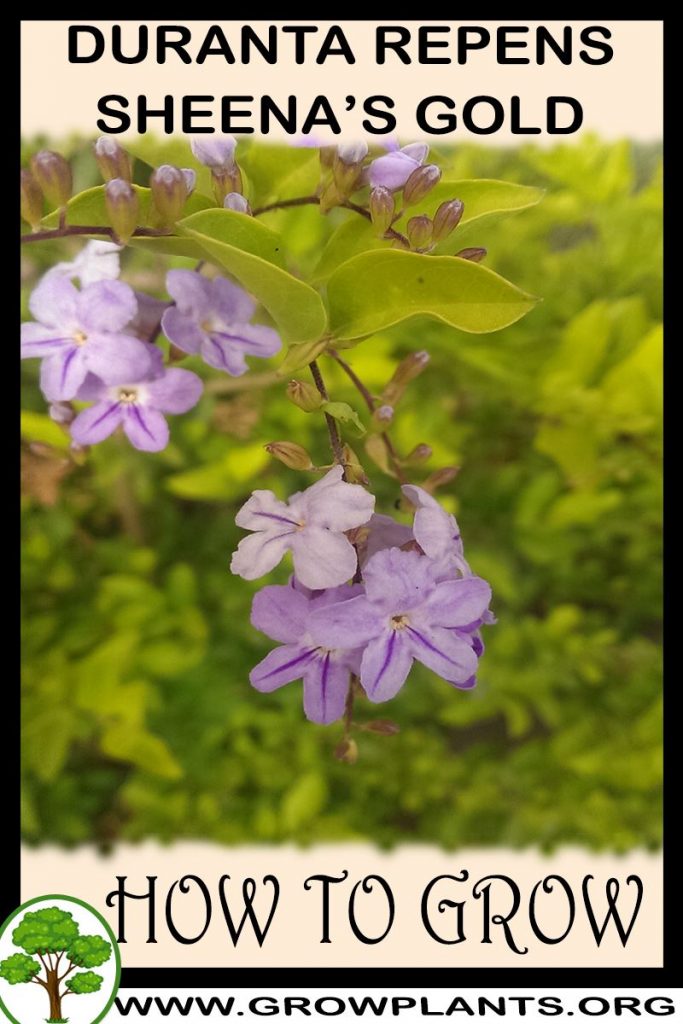
- Small flowers, typically white to pale blue, in loose sprays.
- Carried over a very long season in mild climates.
- Nectar-rich and highly attractive to bees and butterflies.
Bloom Care & Thinning
- Pruning for bloom: Light, regular trimming keeps it shapely and encourages fresh flowering shoots.
- Pollinators: Leave some flowers un-trimmed to feed visiting bees and butterflies.
- Safety: The foliage and berries are toxic; site and prune with children and pets in mind.
Pests, Diseases & Troubleshooting
Overview: Duranta is a vigorous, fast-growing tropical/subtropical shrub, most troubled by sap-sucking pests on a hedge – whitefly above all, plus spider mites in heat, aphids on soft tips, scale and mealybug – whose honeydew brings sooty mould. It is generally tough and recovers well from pruning, so cultural control (airflow, hosing, healthy vigour and beneficial insects) handles most problems. Note that the berries and foliage are toxic to people and pets.
Quick Troubleshooting Overview
| Issue / Pest | Main Symptom | Primary Solution |
|---|---|---|
| Whitefly | Clouds of tiny white flies under leaves; sticky honeydew & sooty mould | Hose off, yellow traps, encourage beneficials |
| Spider mites | Fine stippling & webbing in hot, dry spells | Raise humidity, hose foliage, predatory mites/oil |
| Aphids | Curled, sticky new tips; ants farming them | Blast off; insecticidal soap; ladybirds |
| Scale insects | Brown/white bumps on stems & leaf veins; sooty mould | Prune out, horticultural oil, scrub off |
| Root-knot nematodes | Poor vigour, galled roots on old plants in sandy soil | Improve soil, mulch, resistant siting |
| Leaf spot | Brown/purple spots on leaves in wet weather | Improve airflow, remove litter, avoid wet foliage |
Common Pests & Management
- Whitefly (Trialeurodes vaporariorum & Bemisia tabaci):
- Symptoms: Tiny white moth-like insects that fly up in clouds when the shrub is disturbed; nymphs are flat scales on leaf undersides. They suck sap, yellow and weaken the foliage, and coat leaves with honeydew that turns to black sooty mould. The commonest and most persistent Duranta pest, especially on clipped hedges.
- Prevention & Control: Hose the undersides of leaves regularly to knock down populations, hang yellow sticky traps, and avoid over-feeding with nitrogen (soft flushes attract them). Conserve natural enemies (Encarsia parasitic wasps, ladybirds, lacewings). If needed, treat undersides with insecticidal soap or horticultural/neem oil in the evening, repeating on the life-cycle interval.
- Spider mites (Tetranychus urticae):
- Symptoms: Fine pale stippling and a dull, bronzed look to the leaves, with delicate webbing on undersides and tips during hot, dry weather or on dusty roadside plants. Leaves may dry and drop.
- Prevention & Control: Raise humidity and hose the foliage forcefully to dislodge mites and dust; keep plants unstressed and well-watered. Introduce predatory mites (Phytoseiulus) where practical. Spot-treat hot outbreaks with horticultural oil or a miticidal soap, covering leaf undersides.
- Aphids (Aphis spp.):
- Symptoms: Colonies of small green, black or brown insects on the soft new shoots and flower stems, causing curling, sticky honeydew and attendant ants; heavy feeding distorts young growth.
- Prevention & Control: Squash or hose off small colonies, tolerate a few to feed ladybirds and lacewings, and control ants that protect them. Insecticidal soap or neem on the growing tips clears stubborn infestations without harming the shrub.
- Scale insects (Coccidae & Diaspididae):
- Symptoms: Immobile brown, tan or white bumps clustered along stems, twigs and leaf veins; soft scales excrete honeydew and sooty mould, armoured scales cause yellow spots and dieback on heavily infested branches.
- Prevention & Control: Prune out and destroy encrusted twigs, scrub light infestations off with a soft brush, and encourage parasitic wasps and ladybird predators. Thorough horticultural-oil sprays smother crawlers and adults; time repeat sprays to the crawler stage.
- Mealybugs (Pseudococcidae):
- Symptoms: White, cottony masses in leaf axils, on stems and around the roots of container plants; sap-sucking causes yellowing, stunting and honeydew.
- Prevention & Control: Wipe off or dab colonies, hose the plant, and check roots of potted specimens for root mealybug. Beneficials (Cryptolaemus ladybird, lacewings) help outdoors; horticultural oil or soap gives contact control.
- Root-knot nematodes (Meloidogyne spp.):
- Symptoms: Above-ground decline, wilting in heat, and poor growth on established plants in warm sandy soils; roots carry characteristic knotty galls that impair water and nutrient uptake.
- Prevention & Control: Cannot be sprayed away – build soil biology with organic matter and mulch, keep plants vigorous and watered, and avoid moving infested soil. Where nematodes are known, plant in enriched or raised beds and rotate/choose sites carefully.
Diseases & Fungal Issues
- Leaf spot (Cercospora / Pseudocercospora & bacterial spots):
- Symptoms: Small brown, purple or greyish spots on the leaves that enlarge and merge in warm, wet, crowded conditions, sometimes with yellowing and premature leaf drop. Mostly cosmetic on a vigorous hedge.
- Treatment & Management: Improve air circulation by thinning and spacing, water at the base to keep foliage dry, and rake up fallen infected leaves. Copper-based fungicide is rarely needed and reserved for persistent wet-season outbreaks.
- Sooty mould (Capnodium spp.):
- Symptoms: A superficial black, soot-like film coating leaves and stems, growing on the honeydew excreted by whitefly, aphids, scale and mealybug. It blocks light and looks unsightly but does not infect the plant directly.
- Treatment & Management: Control the sap-sucking insects producing the honeydew and the mould loses its food; wash off residue with water and a little soap. No fungicide targets sooty mould itself.
- Root & collar rot (Phytophthora / Pythium spp.):
- Symptoms: Wilting, yellowing and branch dieback despite moist soil, with darkened, decayed roots and stem base – brought on by waterlogged, poorly drained ground or over-watered containers.
- Treatment & Management: Plant in well-drained soil, never let the base sit in water, and ease off irrigation. Remove badly affected plants; improve drainage and raise beds before replanting.
Growing Difficulties & Abiotic Problems
- Toxic berries & foliage (safety):
- Cause & Symptoms: The attractive yellow berries and the leaves contain saponins and other toxins and are poisonous if eaten; they have caused sickness and worse in children, dogs and cats. This is the most important ‘problem’ to manage with Duranta.
- Correction Strategy: Site away from areas used by small children and pets, or choose sparsely fruiting/low-berry cultivars, and clean up fallen berries. Wear gloves when pruning – the stems of many forms also bear sharp thorns.
- Leaf scorch & reversion (golden/variegated forms):
- Cause & Symptoms: Golden and variegated cultivars (e.g. ‘Gold Mound’, ‘Cuban Gold’, ‘Sheena’s Gold’, ‘Golden Edge’) have less chlorophyll and can scorch – brown, bleached patches – in intense direct sun or dry wind, and shoots may revert to plain green in shade.
- Correction Strategy: Give bright light but some protection from the fiercest afternoon sun in hot climates, keep moisture even, and prune out any all-green reverting shoots to preserve the colour.
- Chlorosis (iron / manganese deficiency):
- Cause & Symptoms: Yellowing leaves with green veins, worst on new growth, on plants in alkaline or high-pH soils where iron and manganese become unavailable – golden-leaf cultivars can be mistaken for chlorotic and vice versa.
- Correction Strategy: Correct soil pH with organic matter and elemental sulphur where soils are limey, and apply chelated iron/manganese for a quick response. Mulch and steady watering keep uptake even.
- Cold / frost damage:
- Cause & Symptoms: Blackened, wilted shoots and leaf drop after frost – Duranta is frost-tender and cut back hard by cold, though established plants usually reshoot from the base in spring.
- Correction Strategy: In marginal climates site in a warm, sheltered spot, mulch the roots, and delay pruning frosted growth until the danger of cold has passed, then cut back to live wood.
What Helps – Products & Tools
The Duranta toolkit is aimed at sap-suckers and their honeydew: strong water jets, yellow sticky traps, insecticidal soap and horticultural/neem oil for whitefly, mites, aphids, scale and mealybug, plus copper fungicide only for persistent wet-season leaf spot and chelated iron for chlorosis on limey soils. Favour beneficial insects and good hedge airflow before reaching for sprays.