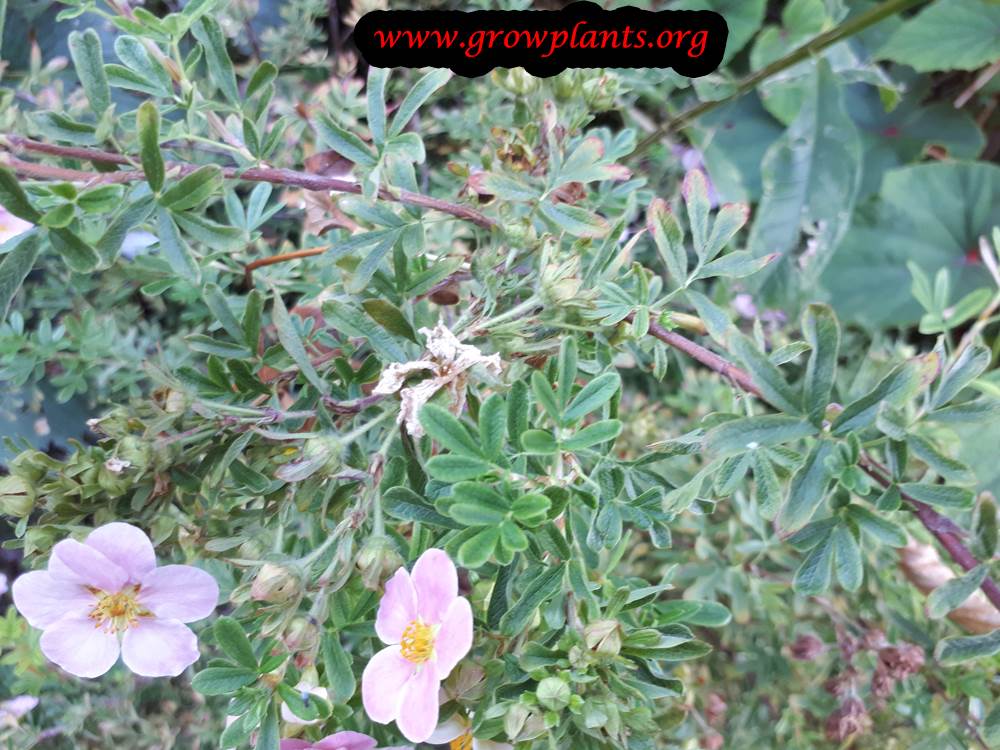



Plant Profile & Key Characteristics
Overview: Dasiphora fruticosa (Shrubby Cinquefoil, syn. Potentilla fruticosa) is a compact deciduous shrub 30-90 cm tall, extremely cold-hardy and grown as a long-flowering ornamental. It carries small bowl-shaped flowers over fine, pinnate foliage.
Quick Specifications
| Specification | Attribute |
|---|---|
| Plant Type / Life Cycle | Perennial (deciduous shrub) |
| Foliage Type | Deciduous |
| Mature Size | Height 30-90 cm (12-36 in) |
| Growth Rate | Moderate to fast |
| Toxicity | Non-toxic (foliage historically used for herbal tea) |
| Hardiness | USDA zones 2-8 (very cold-hardy) |
Growth Form & Structure
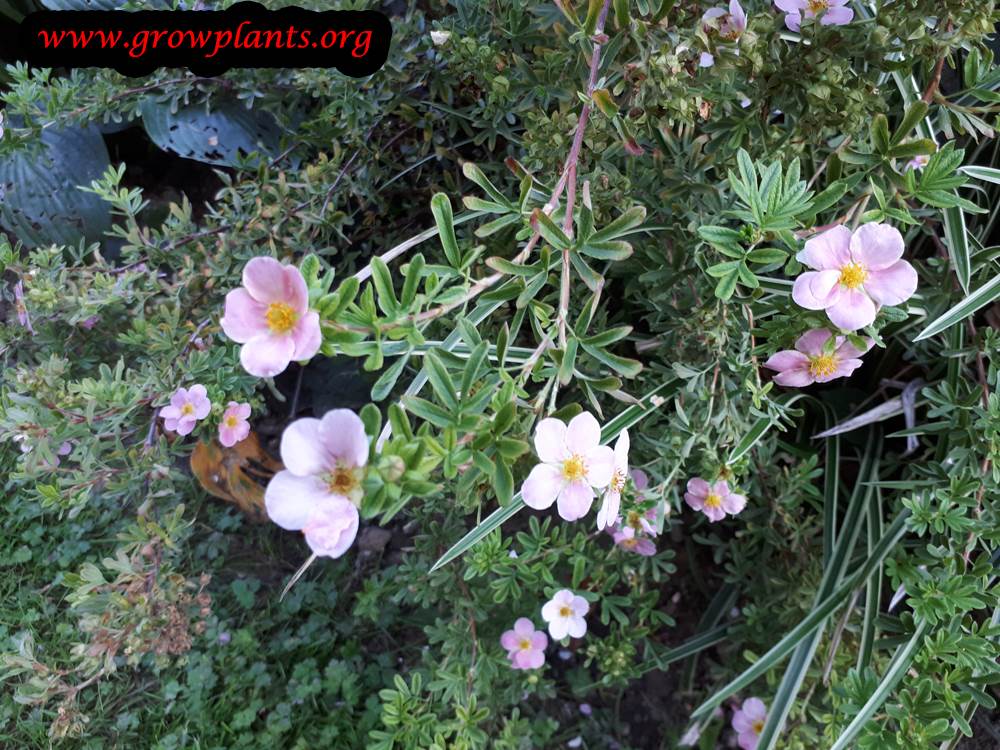
- Height & Spread: A rounded shrub 30-90 cm (12-36 in) tall and roughly as wide; also suited to container growing.
- Growth Habit & Form: Dense, twiggy, mound-forming deciduous shrub.
- Lifespan & Maturity: Long-lived hardy shrub; reaches mature size in a few seasons.
Anatomy & Physical Features
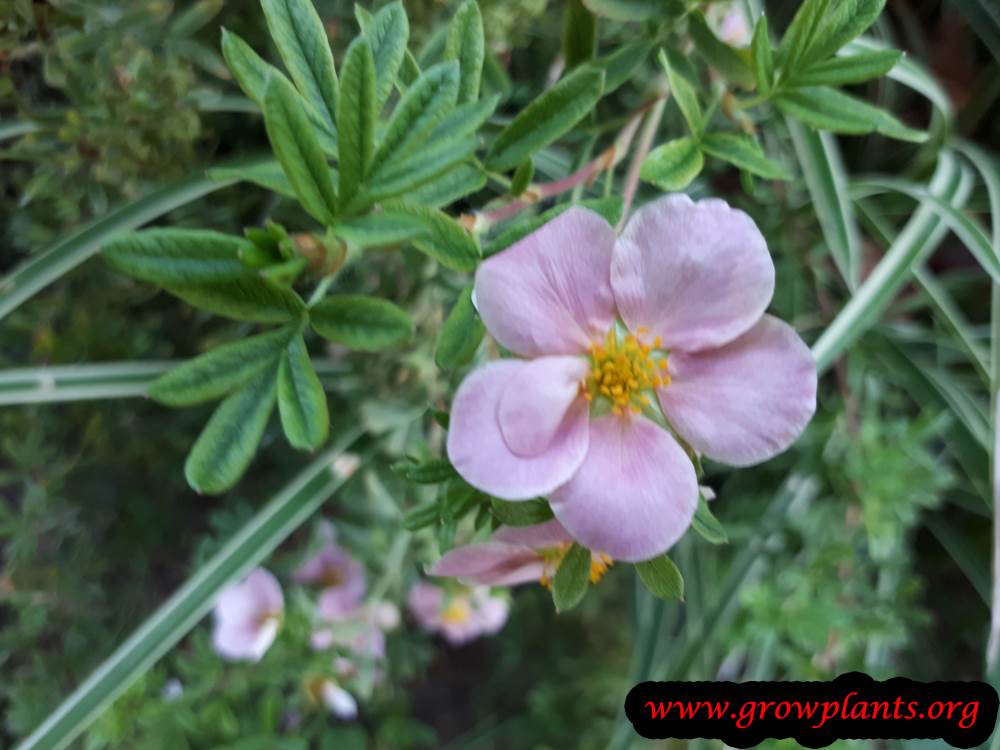
- Leaves & Foliage: Small green elliptic leaflets arranged in a pinnate (compound) structure.
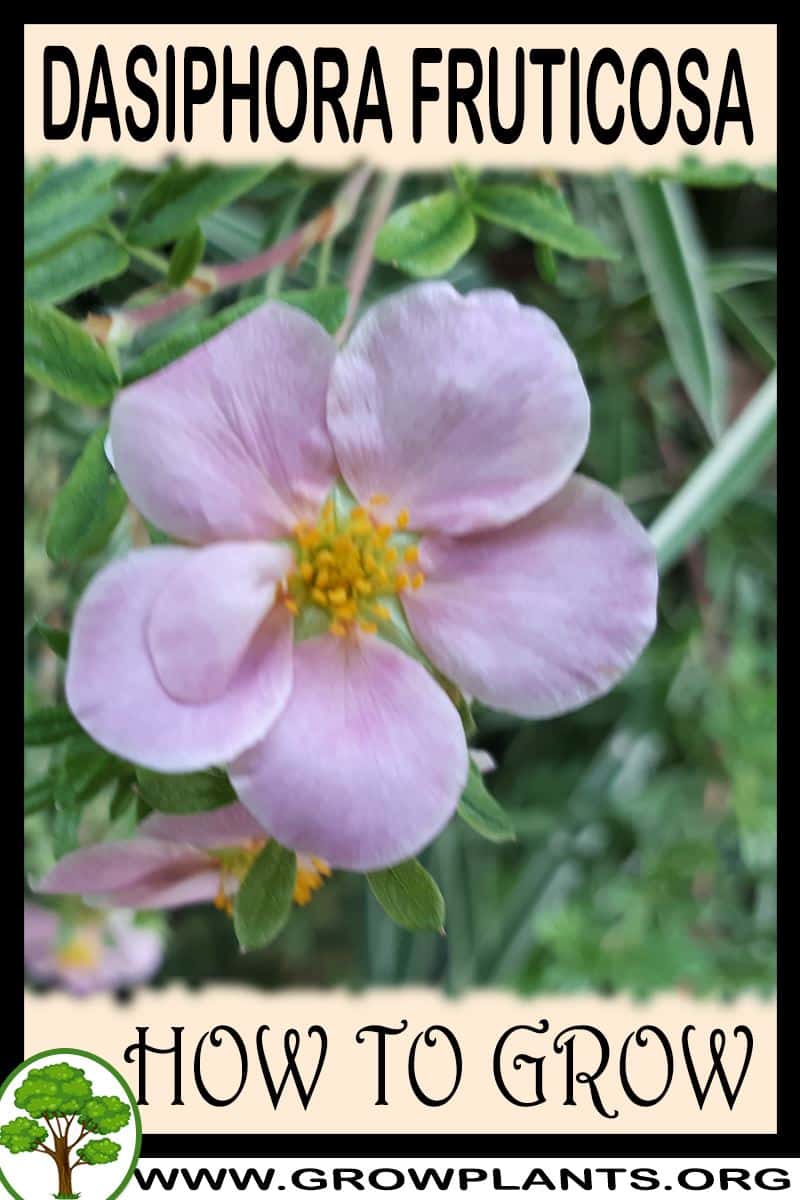
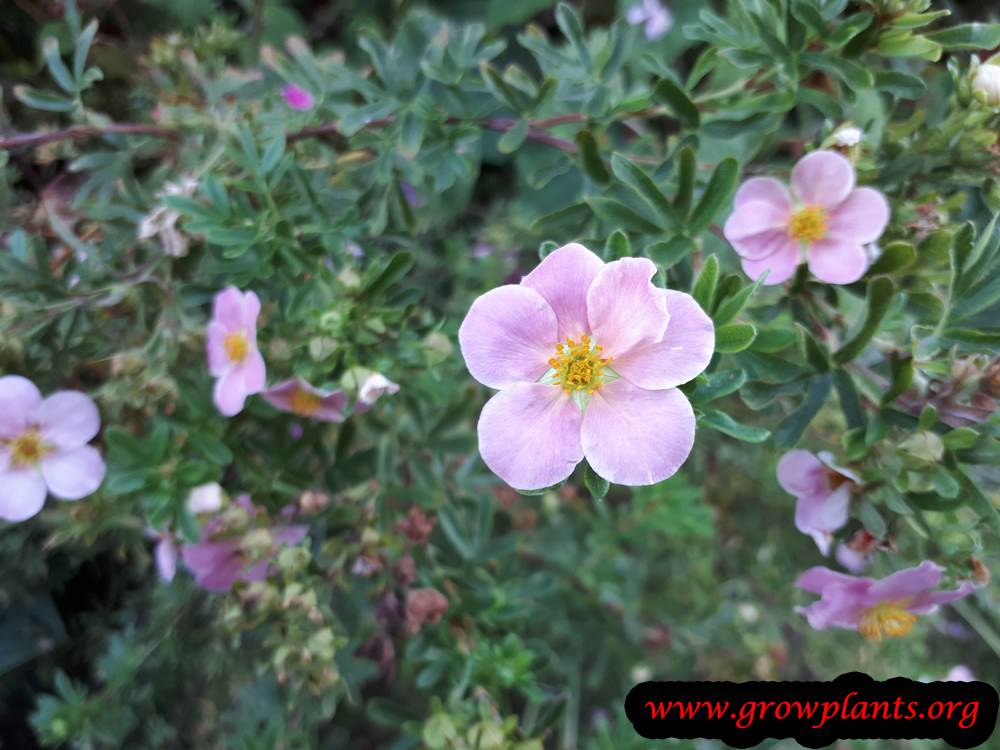
- Flower Characteristics: Numerous small bowl-shaped flowers in yellow, white, orange, pink or red over a long season (full detail in the Bloom guide).
Primary Uses & Landscape Value
- Functional & Ornamental Roles: Ornamental low hedge, border filler, foundation and mass planting; valued for cold-hardiness and long bloom.
Care Guide: Planting, Soil & Watering
Overview: Shrubby cinquefoil is a tough, very cold-hardy shrub that grows in most well-drained soils in full sun to part shade. It appreciates moderate, regular moisture but tolerates a wide range of conditions once established.
Quick Care Requirements
| Requirement | Ideal Condition |
|---|---|
| Planting Season | From the dormant season into the warm season (late winter in mild areas through spring and summer) |
| Growth Rate | Moderate to Fast |
| Soil Type | Well-draining, adaptable soil |
| Water Need | Moderate to High – keep evenly moist |
Planting & Establishment
- Best Planting Season: Plant from late winter in mild areas through spring and summer.
- How to Plant:
- Hole Preparation: Dig a hole about twice as wide as the root ball on a well-drained site.
- Soil Amendments: Work in compost or organic matter; the shrub is adaptable and not fussy about fertility.
- Planting Depth: Set the root ball with its top level with the surrounding soil.
- Growth Speed & Expectations: Moderate to fast, forming a rounded shrub of about 30-90 cm.
Soil, Watering & Drainage Care
- Soil Mix & Drainage Needs: Well-drained soil; it tolerates poor soils but dislikes waterlogging.
- Watering Schedule & Technique:
- Young / Newly Planted: Water regularly through the first season to establish the roots.
- Established: Moderate watering; fairly drought-tolerant once established but flowers best with even moisture.
- Seasonal Adjustments: Less in winter, more in summer heat.
Climate, Light & Hardiness
Dasiphora fruticosa (shrubby cinquefoil) is a notably cold-hardy, deciduous flowering shrub for temperate and subtropical climates, growing in full sun to half shade. It is exceptionally hardy for this batch of plants, surviving through USDA zone 2–8, and is a good choice for regions with genuinely harsh winters.
Quick Climate Specifications
| Climate Zones | Temperate or subtropical |
|---|---|
| USDA Hardiness Zones | Approximately 2–8 |
| Frost Tolerance | High |
| Light Conditions | Full sun to half shade |
Sunlight & Light Exposure
Optimal Light Setup
Full sun brings the best flowering; half shade is tolerated with somewhat looser growth.
Direct Sun Requirement
Grows and flowers well with plenty of direct sun.
Temperature Extremes & Hardiness
USDA Hardiness & Regional Limits
Reliably hardy through an unusually cold range, USDA zone 2–8, making it one of the most cold-tolerant plants in this dataset and well suited to true continental or northern winters.
Cold Damage & Winter Protection
As a deciduous shrub it naturally sheds its leaves and enters dormancy for winter, needing no special winter protection within its hardy range.
Frost Sensitivity
Very frost-tolerant once dormant; only very tender new spring growth is at any real risk from a late frost.
Extreme Heat Tolerance
Performs best in temperate conditions and can struggle in prolonged, intense subtropical heat compared with its excellent cold tolerance.
Growing in Pots, Balconies & Indoors
Dasiphora fruticosa (shrubby cinquefoil) is a hardy, deciduous flowering shrub (30-90 cm). The grower does not rate it as a houseplant – and rightly so, as it needs a cold winter rest – but it grows happily in a container on a sunny balcony or patio.
Quick Details
- Container Size: A medium-to-large pot; it stays a manageable size (30-90 cm)
- Indoor Suitability: Not a houseplant – it needs full sun and a cold winter dormancy
- Best Spot: Full sun to half shade, outdoors
- Soil & Drainage: Free-draining potting mix
- Watering in Pots: Average to generous in growth; do not let a potted plant bake dry
Indoors & On the Windowsill
- Not a houseplant: The grower marks it unsuitable indoors. It is a cold-hardy shrub that actually needs winter cold – a warm room would harm it, so keep it outdoors.
- Deciduous & hardy: It drops its leaves and rests in winter; leave the pot outside to get its chill rather than bringing it in.
On a Balcony or Patio
- Sun & hardiness: Give a sunny to lightly shaded balcony spot; it is very cold-tolerant, so it overwinters outdoors. In a pot the roots are more exposed, so water in dry spells and it flowers for months.
Choosing the Pot, Soil & Long-Term Care
- Pot & drainage: A medium-to-large pot with strong drainage holes and no standing saucer.
- Use a well-aerated, organic-rich mix – potting compost or peat/coir with perlite or vermiculite for free drainage.
- Potted plants exhaust and leach nutrients faster than those in the ground, so feed more often – a balanced feed through the growing season.
- Repotting & pruning: Pot on or refresh the mix every couple of years and give a light trim after flowering to keep it neat.
Fertilizing & Feeding
A tough, cold-hardy deciduous shrub known for a long bowl-flower display; it performs well in average landscape soil with only light feeding and goes fully dormant over winter.
Quick Fertilizing Specs
| Feeding Level | Light feeder |
|---|---|
| Main Nutrient Priority | Balanced overall, without heavy nitrogen |
| Best Feeding Period | In spring as new growth begins, with optional light feeding through summer bloom |
| Organic Options | A yearly layer of compost or mulch worked lightly into the surrounding soil |
| Micronutrients | Rarely an issue in average landscape soil; correct specific issues only when diagnosed |
| Soil pH | Tolerates a wide range of well-drained soils |
Feeding by Growth Stage
Spring growth flush
Support new stem and leaf growth as the shrub breaks dormancy.
| Nutrient direction | A balanced, modest feeding to support new growth without forcing excessive vigor. |
|---|---|
| Timing | Early spring as new leaves emerge and growth resumes. |
| Frequency | A single light feeding in spring is usually enough for the year on established shrubs. |
| Fertilizer types | A balanced complete landscape fertilizer used sparingly, Compost or aged mulch worked into the surrounding soil |
| Precautions | Avoid heavy feeding, which can produce lanky growth at the expense of flowering. |
Main bloom flush
Support the first strong flush of bowl-shaped flowers.
| Nutrient direction | Keep feeding light and balanced; established plants flower reliably without extra nitrogen. |
|---|---|
| Timing | Late spring into early summer as the first main bloom flush opens. |
| Frequency | Feeding is rarely needed at this stage on an established, well-mulched shrub. |
| Fertilizer types | A balanced, low-dose complete fertilizer only if growth or bloom looks weak |
| Precautions | Avoid nitrogen-heavy feeding, which favors leafy growth over flowers. |
Extended summer-into-autumn reflowering
Sustain this shrub’s characteristic long bloom season, which can continue from summer into autumn.
| Nutrient direction | A light, balanced feeding can help sustain vigor through repeated flushes on plants showing reduced flowering. |
|---|---|
| Timing | Summer into autumn, as the shrub continues to produce new flowers on new growth. |
| Frequency | An optional light feeding in midsummer supports continued flowering on plants that seem to be slowing. |
| Fertilizer types | A balanced, low-dose complete fertilizer applied lightly |
| Precautions | Skip this feeding on vigorous, well-flowering shrubs; more nitrogen favors foliage over bloom. |
Winter dormancy
Let the shrub complete leaf drop and go fully dormant for winter.
| Nutrient direction | None – withhold fertilizer once leaves drop and growth stops for the season. |
|---|---|
| Timing | Autumn leaf drop through winter, before new spring growth begins. |
| Frequency | No feeding at this stage. |
| Fertilizer types | No feeding at this stage; resume only with new spring growth |
| Precautions | Do not fertilize dormant, leafless shrubs; late-season feeding can also push tender growth vulnerable to frost. |
Nutrient Deficiency Signs & Corrections
Older leaves turn pale green to yellow and overall growth and flowering slow.
| Possible causes | low available soil nitrogen, nitrogen leaching from heavy rain or irrigation, thin, low-organic-matter soil |
|---|---|
| Appears first on | older, lower leaves |
| What to check | recent feeding history, soil organic matter, watering and drainage |
| Possible correction | Apply a balanced complete fertilizer lightly in spring and build soil organic matter with mulch or compost. |
New leaves show yellowing between the veins while the veins themselves stay green.
| Possible causes | alkaline or high-pH soil limiting iron availability, compacted or waterlogged soil restricting root uptake, root stress in poorly drained planting sites |
|---|---|
| Appears first on | newest growth |
| What to check | soil pH, drainage and soil compaction, planting site conditions |
| Possible correction | Correct soil pH toward neutral and improve drainage; apply a chelated iron product per its label if the issue persists. |
Lush, leafy growth but noticeably fewer flowers than expected.
| Possible causes | overfeeding with a nitrogen-heavy fertilizer, planting site that is unusually rich, such as near a lawn fed regularly, excessive shade reducing bloom regardless of feeding |
|---|---|
| Appears first on | whole-plant growth and flower count |
| What to check | recent fertilizer type and amount, proximity to heavily fertilized turf or beds, available sunlight |
| Possible correction | Stop supplemental feeding for a season and let the shrub draw down excess soil fertility before reassessing. |
Pruning, Training & Seasonal Maintenance
Dasiphora fruticosa (shrubby cinquefoil) is a small, twiggy, deciduous shrub that flowers on its current season’s new growth throughout spring, summer and autumn. Because next season’s flowers come from wood that has not even grown yet, dormant-season pruning – done in late winter before growth resumes – does not cost any bloom and in fact stimulates more of the vigorous new shoots that flower most freely. Left unpruned for years, the shrub tends to build up a dense, twiggy, increasingly unproductive interior, so its main long-term need is annual renewal thinning rather than shaping.
Quick Pruning & Maintenance Specs
| Pruning Tolerance | Moderate to High |
| Primary Pruning Window | Late winter / early spring, before new growth begins |
| Typical Frequency | Annual light renewal thinning |
| Main Objective | Prevent twiggy congestion, stimulate vigorous new flowering wood, maintain a natural mounded form |
| Young Plant Priority | Little to no formal pruning; light shaping only |
| Mature Plant Priority | Remove about a third of the oldest, thickest stems at the base each year |
| Best Tool Type | Bypass secateurs; loppers for thicker old basal stems |
| Avoid Heavy Pruning During | Full leaf and bloom in summer (beyond light deadheading), and right before the last hard frost of the season |
Pruning by Plant Age & Size
Newly Established
Little to no pruning – remove only damaged or dead growth and let the young shrub (30–90cm at maturity) fill out its naturally mounded shape.
Young / Formative
No formal leader or framework training is needed for this low, naturally mounding shrub; light shaping cuts to even out the outline are enough.
Mature / Established
Each late winter, remove roughly a third of the oldest, thickest, or most crowded stems at the base to open the center and keep replacing old wood with vigorous new flowering shoots.
Seasonal Pruning Schedule
| Stage | Objective | Remove | Do Not Remove | Response / Bloom Impact |
| Pre-Growth/Early-Spring | Renew the shrub before the growth flush | About a third of the oldest, thickest stems at the base; dead or crossing twigs | Younger, well-placed stems | Stimulates vigorous new shoots that flower the same season – no bloom is sacrificed |
Flowering & Fruiting Wood
This species flowers on new growth produced in the current season, not on one-year or older wood. This is the key fact that shapes its whole pruning approach: unlike old-wood bloomers, cutting it back hard in late winter does not remove any flower buds – it simply produces more of the vigorous young shoots that carry the season’s flowers most heavily.
Structural Pruning & Training
Renewal is the main structural task: annually removing the oldest, woodiest stems at the base prevents the dense, twiggy, shaded interior this species is prone to developing with age, and keeps the natural rounded-mound form instead of a sheared, flower-poor outer shell.
Special Growth to Remove
- Dead, weak, or crossing twigs, at any time noticed.
- Old, thick, unproductive stems at the base as part of annual renewal.
Container & Small-Space Pruning
Since this is already a compact shrub (30–90cm) and grows well in containers, potted specimens generally need only the same light annual renewal thinning, not size-reduction pruning; repot and root-prune lightly every few years as the container fills.
Tools
Bypass secateurs for most stems and thinning cuts; loppers for the occasional thick old stem at the base on a mature specimen. A hedge shears is not appropriate – shearing ruins the natural form and the flowering display.
Tool Hygiene & Disease Risk
Routine – clean, sharp tools between plants is sufficient; no significant tool-transmissible disease is documented for this species.
Cut Placement & Technique
Use thinning cuts at the base to remove whole old stems rather than heading cuts partway up, which encourage dense, twiggy regrowth exactly where congestion is already a problem.
Heavy Pruning & Rejuvenation
Tolerates being cut back hard, close to the ground, on an old, overgrown, or very twiggy specimen in late winter. Because it blooms on new wood, it resprouts vigorously and typically reflowers well the same season.
Post-Pruning Care
Water normally after pruning; no extra feeding is needed, since the pruning itself already stimulates vigorous new growth.
Common Pruning Mistakes
- Shearing the whole shrub into a ball, which produces a dense flower-poor shell instead of the airy, floriferous mound this species naturally forms.
- Skipping annual renewal thinning for years, leading to a congested, twiggy, sparsely flowering center.
- Pruning too late, after new growth has already started, risking damage to tender new shoots from a late cold snap.
When NOT to Prune
Avoid pruning in full summer leaf and bloom beyond light deadheading, since it sacrifices current flowers unnecessarily, and avoid pruning very early in the coldest part of its range (hardiness zone 2–8) before the last hard frost has passed.
Recommended Tools (by task)
- bypass_secateurs – annual thinning cuts on most stems.
- loppers – removing the occasional thick old basal stem on a mature shrub.
Pruning Troubleshooting
| Problem | Possible Cause | What to Check | Corrective Action |
| Sparse flowering after a ‘neat’ trim | Shrub was sheared into a ball instead of thinned | Look for a rounded, sheared outline with flowers only on the outer shell | Switch to base thinning cuts; stop shearing |
| Dense, twiggy, unproductive center | No renewal pruning for several years | Check stem age and density at the base | Remove about a third of the oldest stems at the base each late winter |
| Dieback after a pruning session | Pruned too late, after new growth started, and a cold snap followed | Check pruning date against the local last-frost date | Prune in late winter before growth resumes next time |
Propagation Guide
Shrubby cinquefoil is most reliably propagated from softwood or semi-hardwood stem cuttings, which root readily and are the standard nursery method, especially for keeping named flower-colour selections true; seed also germinates without special pretreatment but tends to produce variable flower colour, so pink, red, or white named forms should be kept vegetatively. Propagation is easy.
Quick Propagation Specs
| Best Propagation Method | Softwood or semi-hardwood stem cuttings |
| Alternative Methods | Seed (for the species type) |
| Propagation Difficulty | Easy |
| Seed True-to-Type | Variable; flower colour, especially in pink or red selections, may not come true |
| Vegetative True-to-Type | Yes |
| Best Propagation Season | Cuttings: early to mid-summer; Seed: spring |
| Cutting Rooting Time | Commonly a few weeks under warm, humid conditions |
Growing from Seed
Sowing Season
Spring.
Sowing Depth & Orientation
Sow shallowly; the seed is fine and benefits from being only just barely covered.
Germination Conditions
Germination can be slow and somewhat irregular; keep the sowing medium consistently moist in a bright, cool position.
Germination Time
Variable; can take from several weeks to a few months.
Seedling Care
Keep evenly moist; because named colour forms don’t reliably come true, note the flower colour once seedlings first bloom before selecting plants to keep.
Stem Cuttings
Cutting Type
Softwood cuttings in late spring to early summer, or semi-hardwood cuttings in mid-to-late summer.
Best Timing
Early to mid-summer, from firm current-season growth.
Cutting Preparation
Take a few-node tip cutting, remove the lower leaves, and lightly wound the base if using semi-hardwood wood.
Rooting Setup
A well-drained, moist propagating mix (such as a perlite/peat blend) with good humidity.
Rooting Hormone
Optional; can improve rooting percentage and speed, though this shrub generally roots without it.
Rooting Time
Typically a few weeks under warm, humid conditions.
Bloom & Flower Guide
Quick Details
- Bloom Season: Late spring through autumn — one of the longest flowering seasons of any hardy shrub
- Time to First Bloom: Usually within a year or two of planting; young nursery plants often flower their first summer
- Flower Appearance: Small, five-petalled bowl-shaped flowers in yellow, white, orange, pink or red
- Edibility: Grown as an ornamental — the flowers are not eaten
Detailed Blooming Overview
Shrubby cinquefoil is prized for its remarkably long display, sending out a steady succession of buttercup-like blooms from late spring right through to autumn. The flowers stud the whole rounded shrub and keep coming with very little effort from the gardener.
Flower Characteristics
- Bowl-shaped flowers, each with five rounded petals.
- Colour ranges across yellow, white, orange, pink and red depending on the variety.
- Borne singly or in small clusters at the ends of the shoots.
Bloom Care & Thinning
- Site for best flowering: Full sun gives the heaviest bloom; a little afternoon shade helps the pink and red forms hold their colour, as they can bleach in strong heat.
- Keeping it flowering: A light shear after the first main flush encourages fresh growth and more flowers; a harder prune in late winter keeps the shrub compact.
- Pollination: Open, accessible flowers that are readily worked by bees and other insects.
Fruit & Uses
Dasiphora fruticosa (shrubby cinquefoil) is grown almost entirely as an ornamental flowering shrub, not as a food plant. It does have one genuine but marginal traditional use: the leaves can be dried (and sometimes lightly fermented first) and steeped as a regional herbal tea, rather than eaten as food.
Quick Edible Specs
| Edible Parts | Leaves (tea use only) |
| Main Use(s) | Traditional herbal tea (regional folk beverage) – not a culinary food |
| Eaten Raw or Cooked | Steeped as tea from dried leaves |
| Preparation Required | Dry (sometimes lightly ferment) the leaves before steeping |
| Storage | Store dried leaves like any dried herb, in a sealed, dry container out of light |
| Safety/Toxicity Caveat | this is a minor, regional/traditional use, not an established food; no reliable toxicity is documented for the leaf tea, but treat it as a marginal herbal use rather than a proven everyday edible, and this plant should otherwise be treated as ornamental only |
Leaves & Greens
In parts of the Russian Far East and neighboring regions, the leaves of shrubby cinquefoil are traditionally air-dried, and sometimes lightly fermented first in a manner similar to preparing black tea, then steeped in hot water as a folk beverage occasionally called “Kuril tea.” This is a regional, traditional practice passed down locally rather than a widespread or commercially established food use, and it is not part of this plant’s documented growing facts on this site.
Preparation, Uses & Safety
Preparation is simple: leaves are picked and air-dried, or lightly fermented and then dried, before steeping in hot water, similar in principle to preparing tea from other garden herbs. No cooking is required. Because this is a marginal, traditional use without strong modern safety documentation, it should be treated as an unconfirmed, minor use rather than a confirmed, everyday edible use – for practical purposes this plant is best treated as an ornamental garden shrub, with the leaf tea noted only as a traditional curiosity, not a recommended food.
Pests, Diseases & Troubleshooting
Dasiphora fruticosa (shrubby cinquefoil, formerly Potentilla fruticosa) is an exceptionally tough, hardy Rosaceae shrub with very few pest or disease problems. Its main risks are spider mites in hot, dry, dusty conditions and root rot in heavy, wet soil; otherwise it shrugs off most trouble. Good drainage, full sun and occasional renewal pruning keep it dense and healthy.
Quick Troubleshooting Overview
| Issue / Pest | Main Symptom | Primary Solution |
|---|---|---|
| Spider mites | Fine stippling, dull bronzed leaves in hot dry sites | Hose foliage, raise humidity, horticultural oil |
| Aphids | Sticky new tips, minor curling | Rinse off, insecticidal soap if heavy |
| Powdery mildew | White film on leaves in humid, crowded plants | Prune for airflow, avoid overhead water |
| Leaf spot / dieback | Brown spots, twig dieback in wet seasons | Prune out, clear debris, improve airflow |
| Root rot | Yellowing, sparse growth, dieback in wet clay | Improve drainage; do not overwater |
Common Pests & Management
- Spider mites (Tetranychus urticae):
- Symptoms: In hot, dry, dusty spells the small leaves take on a fine pale stippling, then a dull bronzed cast; fine webbing may show on undersides in bad cases.
- Prevention & Control: Hose the foliage to knock mites down and lay dust; keep the plant unstressed with occasional deep watering; encourage predatory mites; treat persistent cases with horticultural oil or insecticidal soap on the undersides.
- Aphids (Aphididae spp.):
- Symptoms: Small colonies of green aphids may gather on soft new shoots, with minor curling and sticky honeydew; seldom serious on this shrub.
- Prevention & Control: Dislodge with a water jet, rely on ladybirds and lacewings, and spot-treat heavy clusters with insecticidal soap in the evening.
- Leafhoppers / capsids (Cicadellidae / Miridae spp.):
- Symptoms: Light pale flecking or small distorted patches on leaves from occasional sap-feeding; largely cosmetic.
- Prevention & Control: Tolerate minor damage; keep weeds down; intervention is rarely needed on a healthy plant.
Diseases & Fungal Issues
- Powdery mildew (Erysiphales):
- Symptoms: A white dusty coating can appear on leaves where plants are crowded, shaded or in humid, still air, causing some yellowing.
- Treatment & Management: Prune to open the shrub and improve airflow, site in full sun, and avoid overhead watering; remove affected shoots; sulphur or potassium bicarbonate can be used if it persists, though it rarely warrants spraying.
- Leaf spot / twig dieback (Various fungi):
- Symptoms: Brown or dark spots on leaves and small areas of twig dieback appear in wet seasons or on stressed, congested plants.
- Treatment & Management: Prune out affected twigs into healthy wood, clear fallen leaves, and thin the shrub for air movement; renewal-prune old congested plants to keep them vigorous.
Growing Difficulties & Abiotic Problems
- Root rot in wet soil:
- Cause & Symptoms: In heavy clay or poorly drained ground the roots suffer, giving yellowing, sparse growth and gradual dieback.
- Correction Strategy: Plant in free-draining soil, improve heavy ground with grit and organic matter, and avoid overwatering; this xeric-tolerant shrub prefers it on the dry side.
- Leaf scorch / flower fade:
- Cause & Symptoms: In very hot, exposed sites foliage can scorch and pale-flowered forms bleach in fierce sun.
- Correction Strategy: Give full sun in most climates but light afternoon shade in the hottest regions; keep lightly mulched and watered through prolonged drought.
- Legginess / poor flowering:
- Cause & Symptoms: Old, unpruned plants become woody and open with fewer flowers.
- Correction Strategy: Prune in late winter, removing a third of the oldest stems and lightly shaping, to keep the shrub dense and free-flowering.
What Helps – Products & Tools
Shrubby cinquefoil needs little intervention. Keep horticultural oil or insecticidal soap on hand for occasional spider mites and aphids, and a sulphur or potassium-bicarbonate fungicide in reserve for rare powdery mildew. Its real needs are sharp drainage and light annual pruning; avoid overwatering and overfeeding.