Plant Profile & Key Characteristics
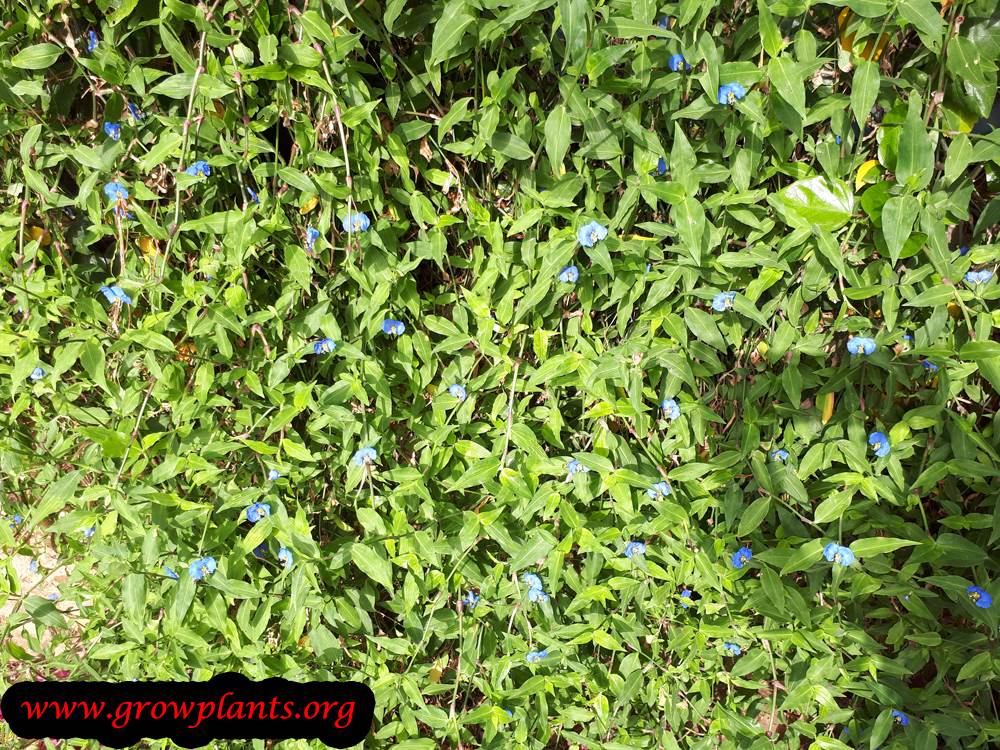
Overview: Commelina communis (Asiatic dayflower) is a low, sprawling herbaceous plant reaching 30-100 cm (12-40 in) with soft green foliage. It is a tender perennial grown as an evergreen groundcover in frost-free areas and as a fast annual in cooler climates, valued as an ornamental and casual edible green.
Quick Specifications
| Specification | Attribute |
|---|---|
| Plant Type / Life Cycle | Perennial in warm climates, commonly grown as an annual |
| Foliage Type | Evergreen where frost-free (herbaceous) |
| Mature Size | 30-100 cm (12-40 in) tall, spreading |
| Growth Rate | Fast |
| Root System | Fibrous, rooting readily at the stem nodes as it creeps |
| Toxicity | Non-toxic (young leaves and shoots are edible when cooked) |
| Hardiness | USDA zone 11+ as a perennial, zone 4+ as an annual |
Growth Form & Structure
- Height & Spread: Reaches 30-100 cm (12-40 in) high with a trailing, spreading habit; adapts well to planters, hanging pots and indoor culture.
- Growth Habit & Form: Sprawling, mat-forming herbaceous groundcover with succulent, jointed stems that root where they touch the soil.
- Lifespan & Maturity: Fast to establish and fill space within a single season; short-lived but persists and spreads readily by self-seeding.
Anatomy & Physical Features
- Leaves & Foliage: Green, elliptic leaves that are hairy toward the base, carried on fleshy jointed stems.
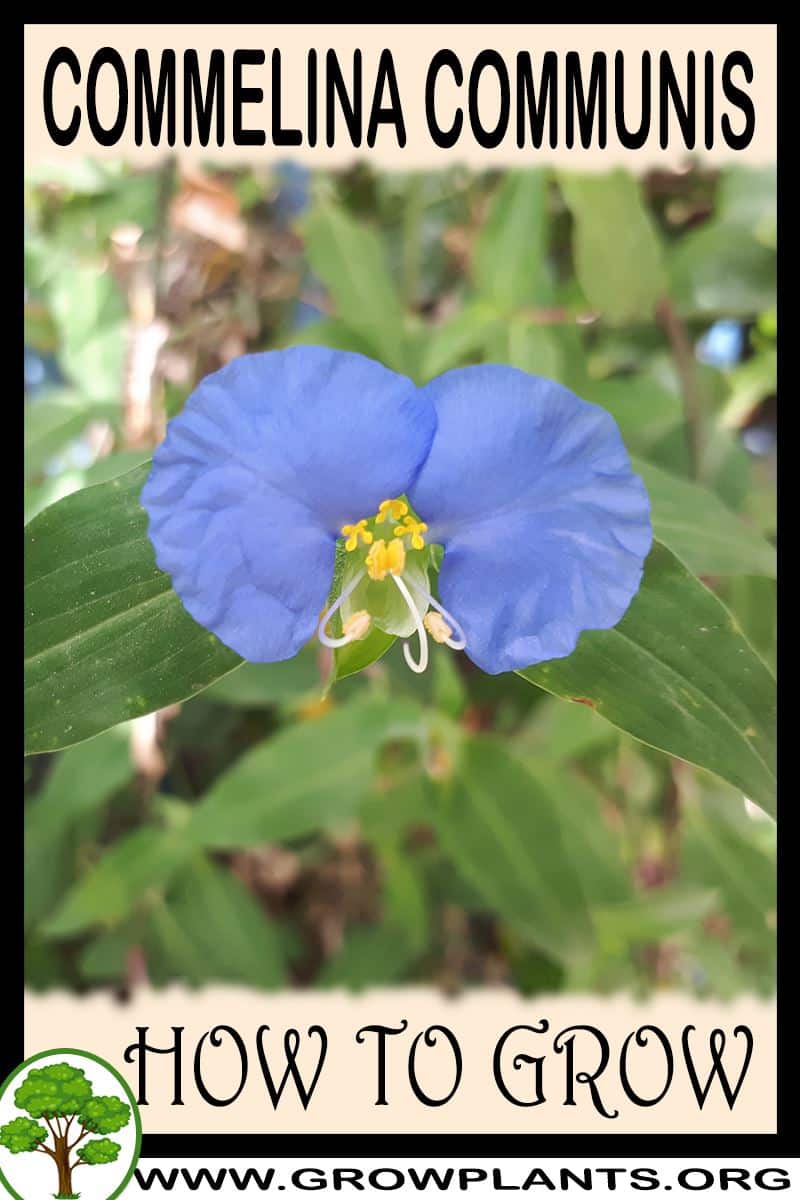
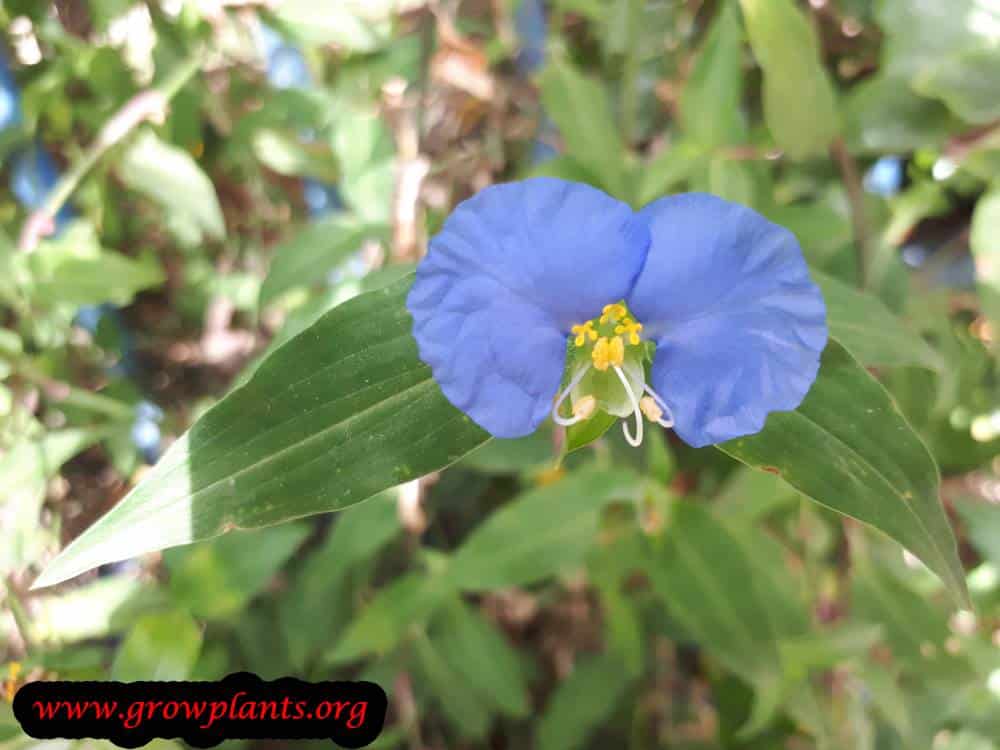
- Flower Characteristics: Small blue flowers with two upper blue petals, a smaller white lower petal and yellow stamens.
Primary Uses & Landscape Value
- Edible Uses: Young leaves and tender shoots are eaten cooked as a leafy vegetable in parts of East Asia.
- Functional & Ornamental Roles: Ornamental groundcover and container or house plant; spreads aggressively, so best contained where it cannot escape into wild areas.
Care Guide: Planting, Soil & Watering
Overview: A fast-growing, adaptable herbaceous groundcover that tolerates a wide range of soils and moisture and grows in sun or shade. Note that it is highly invasive.
Quick Care Requirements
| Requirement | Ideal Condition |
|---|---|
| Planting Season | Year-round in frost-free zones (11+); spring to summer where grown as an annual (zone 4+) |
| Growth Rate | Fast |
| Soil Type | Adaptable; ordinary, well-draining soil |
| Water Need | Moderate and adaptable – tolerates dry to consistently moist soil |
Planting & Establishment
- Best Planting Season: Plant year-round in frost-free climates; in colder zones plant in spring to summer as an annual.
- How to Plant:
- Hole Preparation: Dig a hole about twice the width of the root ball and equally deep.
- Soil Amendments: Undemanding; light compost aids establishment.
- Planting Depth: Set the crown at soil level, not buried.
- Growth Speed & Expectations: Fast-growing and spreading; site it where its vigor can be contained.
Soil, Watering & Drainage Care
- Soil Mix & Drainage Needs: Undemanding but does best with reasonable drainage; it is container-friendly in ordinary potting mix.
- Watering Schedule & Technique:
- Young / Newly Planted: Water regularly to help it establish.
- Established: Adaptable – it tolerates dry spells but grows lushest with steady moisture; in pots let the top few cm dry between waterings.
- Seasonal Adjustments: Water more in summer heat and less in cool weather.
Climate, Light & Hardiness
Commelina communis (Asiatic dayflower) is a highly adaptable, weedy groundcover that tolerates full sun through full shade and grows across an unusually wide range of climates. It is reliably perennial to about USDA zone 11, but its cold tolerance as a self-seeding annual extends much further, down to about zone 4, and it is noted as highly invasive and aggressive wherever it is grown.
Quick Climate Specifications
| Climate Zones | Mediterranean, desert, subtropical, temperate, tropic, or grown as a houseplant |
|---|---|
| USDA Hardiness Zones | Approximately 11 and warmer as a perennial; commonly grown (and self-seeding) as an annual from about zone 4 upward |
| Frost Tolerance | Low for foliage; seed is very cold-hardy |
| Light Conditions | Full sun, half shade, or full shade |
Sunlight & Light Exposure
Optimal Light Setup
Extremely adaptable, growing well from full sun through full shade.
Temperature Extremes & Hardiness
USDA Hardiness & Regional Limits
Reliably perennial only where winters stay frost-free (about USDA zone 11 and warmer); further north, down to about zone 4, it behaves as a self-seeding annual, with cold-hardy seed carrying it through winter rather than the plant itself.
Cold Damage & Winter Protection
Frost kills the top growth, but because the species self-seeds so readily, this rarely limits its spread; regular pruning before seed drop is the main way to keep it in check.
Frost Sensitivity
Foliage is frost-sensitive, though the wide reported hardiness range reflects how easily this species naturalizes as an annual weed well beyond its perennial limit.
Growing in Pots, Balconies & Indoors
Commelina communis, the Asiatic dayflower, is an easy, adaptable plant that the grower confirms grows both indoors and in containers. It tolerates sun to full shade and a wide range of watering, making it a forgiving houseplant or patio pot filler with charming blue flowers.
Quick Details
- Container Size: A small-to-medium pot; it is happy to spread and trail over the rim
- Indoor Suitability: A good, easy-going houseplant in bright, indirect light
- Best Spot: Very flexible – full sun to full shade (brightest for the most flowers)
- Soil & Drainage: Ordinary free-draining potting mix
- Watering in Pots: Adaptable – from modest to generous; just avoid leaving it waterlogged
Indoors & On the Windowsill
- An easy houseplant: The grower grows it indoors – it takes bright light or shade and is very tolerant, so it suits most spots near a window.
- Keep it tidy: It grows fast and self-seeds freely; pinch it back to keep it bushy and remove spent flowers to limit seeding.
On a Balcony or Patio
- Anywhere bright to shady: On a balcony it copes with sun or shade; water more in sun. It can be weedy, so keep it contained in its pot and deadhead to stop it spreading.
Choosing the Pot, Soil & Long-Term Care
- Pot & drainage: A small-to-medium pot with strong drainage holes and no standing saucer.
- Use a well-aerated, organic-rich mix – potting compost or peat/coir with perlite or vermiculite for free drainage.
- Potted plants exhaust and leach nutrients faster than those in the ground, so feed more often – a balanced feed through the growing season.
- Refresh the mix and pot on about every two years, lightly root-pruning and top-pruning to keep it vigorous.
Fertilizing & Feeding
A fast-spreading, self-seeding groundcover that grows vigorously with little to no help; it thrives in average garden soil and rarely needs more than light feeding, if any.
Quick Fertilizing Specs
| Feeding Level | light |
|---|---|
| Main Nutrient Priority | A light, balanced fertilizer is enough if feeding at all; this plant is not a heavy feeder and can grow well on native soil fertility alone |
| Best Feeding Period | Early in the growing season while seedlings are getting established, if feeding is done at all |
| Organic Options | Working a little compost into the bed at planting is generally sufficient |
| Soil pH | Tolerates a wide range of soil types and pH without special adjustment |
| Reduce/Stop Feeding | Feeding is not needed once the plant is established and spreading; let it grow on ambient soil fertility through the rest of the season |
Feeding by Growth Stage
Germination and Establishment
Help young seedlings root in without pushing excess soft growth on a plant that is naturally vigorous
| Nutrient direction | Light, balanced feeding at most; often unnecessary in average garden soil |
|---|---|
| Timing | As seedlings emerge and establish early in the growing season |
| Frequency | At most a single light feeding while seedlings establish; many plantings need none |
| Fertilizer types | A light, balanced fertilizer if the soil is notably poor, A little compost worked into the bed at planting |
| Precautions | Avoid feeding this naturally aggressive spreader more than lightly, since extra fertility can encourage it to spread even faster |
Active Spreading Growth
Let the plant fill in as a groundcover and produce its small blue flowers without encouraging excess vigor
| Nutrient direction | Minimal feeding is usually enough; this plant grows readily on ambient soil fertility |
|---|---|
| Timing | Through the main growing season as the plant spreads and flowers |
| Frequency | Feed sparingly, if at all, once the planting is established |
| Fertilizer types | A light, balanced fertilizer only if growth is notably weak |
| Precautions | Because this species is considered highly invasive and aggressive, avoid extra feeding that could increase its spread beyond the intended area |
Seed Set and Seasonal Decline
Let the annual planting complete its cycle and set seed without pushing new growth
| Nutrient direction | None – withhold fertilizer as the plant finishes its cycle |
|---|---|
| Timing | Late in the growing season as flowering slows and seed forms |
| Frequency | No feeding at this stage |
| Fertilizer types | No feeding at this stage |
| Precautions | Do not fertilize as the planting winds down; remove spent growth promptly to limit self-seeding if spread is a concern |
Nutrient Deficiency Signs & Corrections
Pale, washed-out green leaves and thinner-than-usual growth for this normally vigorous species
| Possible causes | Nitrogen deficiency in very poor or heavily leached soil, Waterlogged soil limiting root uptake, Heavy shade reducing overall vigor |
|---|---|
| Appears first on | Older leaves first |
| What to check | Soil fertility and organic matter content, Drainage in the planting area, Light levels reaching the planting |
| Possible correction | A light, balanced feeding is usually enough to restore normal color and vigor |
New leaves yellowing between the veins while the veins remain green
| Possible causes | High soil pH limiting iron availability, Waterlogged or compacted soil restricting root function, General micronutrient shortage in poor soil |
|---|---|
| Appears first on | Newest leaves |
| What to check | Soil pH, Drainage around the roots, Whether the pattern is interveinal on new growth |
| Possible correction | Correct soil pH toward a more favorable range; a chelated iron product per its label can help if the pattern persists |
Wilting or yellowing despite consistently moist soil, with generally weak growth
| Possible causes | Waterlogged soil starving roots of oxygen, Root rot from prolonged saturation, Nutrient lockout caused by poor drainage rather than a true deficiency |
|---|---|
| Appears first on | Whole-plant decline, often starting with lower leaves |
| What to check | Soil drainage and standing water, Root condition if the plant can be checked, Recent rainfall or irrigation pattern |
| Possible correction | Improve drainage before adjusting feeding, since poor drainage rather than nutrient shortage is the more likely cause |
Pruning, Training & Seasonal Maintenance
Commelina communis (Asiatic dayflower) is a soft, sprawling herbaceous groundcover that the plant’s own care notes flag as highly invasive and aggressive. Here, pruning is less about shaping and more about containment: cutting it back regularly through the growing season to control spread and, critically, to stop it setting and dropping seed. It tolerates being cut hard and often, and responds with fresh growth rather than being weakened by frequent cutting.
Quick Pruning & Maintenance Specs
| Pruning Tolerance | High (regrows readily from cutting back) |
| Primary Pruning Window | All year, wherever it is actively growing |
| Typical Frequency | Frequent – regular cutting back through the growing season, not a once-a-year job |
| Main Objective | Contain spread and prevent seed-set, not ornamental shaping |
| Best Tool Type | Hand shears or precision snips |
Special Growth to Remove
- Sprawling stems that have touched down and rooted at their nodes – a genuine trait of this species – cut and lift these before they establish as new, separate plants.
- Flower and developing seed heads, removed before they mature and shatter, given how readily this species self-sows.
Container & Small-Space Pruning
Growing it in a container is itself a useful control strategy for this spreading species, isolating the roots and creeping stems from open ground; even so, still deadhead before seed-set and trim back stems that reach over the pot’s rim and root where they touch soil.
Tools
Hand shears or precision snips are all that is needed on this soft-stemmed annual/short-lived perennial – there is no woody growth calling for secateurs, loppers or a saw.
Tool Hygiene & Disease Risk
Routine hygiene for the tools themselves; the real hygiene issue is disposal – because cut stem fragments can root where they lie on moist soil and because it is a prolific self-seeder, do not leave cuttings on the ground or add them to compost that will be spread back into beds. Bag and dispose of them instead.
Cut Placement & Technique
Cut stems back close to a lower node to encourage bushier regrowth rather than a single long runner; when removing rooted, sprawling stems, lift and remove the rooted node itself, not just the top growth, or it will resprout from that point.
Post-Pruning Care
No special aftercare is needed; simply keep up with the removal schedule, since this species regrows and reflowers quickly after cutting.
Common Pruning Mistakes
- Leaving cut stems lying on moist soil or in a compost pile, letting them root or dropping viable seed right back into the garden.
- Treating a single cutback as sufficient control – given how aggressively this species spreads and self-seeds, it needs repeated attention through the season, not a one-off prune.
When NOT to Prune
There is no meaningful window to avoid; if anything, the risk is under-pruning rather than over-pruning, since infrequent attention lets it seed and spread further.
Recommended Tools (by task)
- precision_snips – light, frequent cutting back of soft stems and flower/seed heads through the season.
Propagation Guide
Commelina communis propagates itself almost too easily: stem sections root readily at the nodes in moist soil or even plain water, and the plant also self-sows freely from seed. Because the site notes it is highly invasive and aggressive, propagation here is trivially easy — the real challenge is containing it, not multiplying it.
Quick Propagation Specs
| Best Propagation Method | Stem cuttings / division of rooted stem sections |
| Alternative Methods | Seed (self-sows readily) |
| Propagation Difficulty | Easy |
| Seed True-to-Type | Usually true-to-type |
| Vegetative True-to-Type | Yes |
| Best Propagation Season | Spring through summer (warm season); year-round where grown as a perennial |
Growing from Seed
Seed Handling & Viability
Seed needs no special treatment to germinate; the plant self-sows freely on its own.
Sowing Season
Warm season, spring through summer as an annual, or all year where grown as a perennial.
Germination Conditions
Ordinary moist garden soil in sun to part shade is sufficient — the site notes this plant tolerates a wide range of light and water conditions.
Because the site flags this species as highly invasive and aggressive, allow seed to develop only where self-seeding is wanted, and remove spent flowering stems before seed drops if spread needs to be controlled.
Stem Cuttings
Cutting Type
A short section of trailing stem with at least one node.
Rooting Setup
Place the cutting in moist soil or simply stand it in water — like its relatives in the Commelinaceae family (e.g. Tradescantia), stem sections root at the nodes with little effort.
Rooting Hormone
Unnecessary — cuttings root readily on their own.
Runners & Stolons
Trailing stems root wherever a node touches moist soil, naturally producing new plantlets along the stem. These rooted sections can simply be severed from the parent once they have their own roots and moved or left in place to establish independently.
Bloom & Edible Flower Guide
Quick Details
- Bloom Season: Spring through autumn (and year-round where grown as a perennial)
- Flower Appearance: Two rounded sky-blue upper petals above a small white lower petal, with bright yellow stamens
- Edibility: Edible — the blue flowers and young shoots are eaten (a foraged wild green and garnish)
Detailed Blooming Overview
Commelina communis, the Asiatic dayflower, earns its name because each bright blue bloom lasts only a single morning before fading — but the plant produces a steady succession of them from spring into autumn. The two upper petals are a vivid sky-blue, set above a smaller white petal, with cheerful yellow stamens at the center. The flowers and tender shoots are edible.
Flower Characteristics
- Two sky-blue upper petals and one small white lower petal.
- Bright yellow stamens; each flower is ephemeral, opening for one morning.
- Produced freely over a long season.
Bloom Care & Thinning
- Managing the bloom: It self-seeds readily and can become weedy — deadhead to keep it in check; it thrives in moist, part-shaded spots.
- At the table: Use only clean, unsprayed flowers and young shoots as a wild green or a blue garnish.
Fruit & Uses
Asiatic dayflower is grown here as an ornamental groundcover, but its young leaves and shoots are a well-documented foraged wild vegetable in East Asian cuisines, eaten raw when very young or lightly cooked once more mature. This edible use is not part of the site’s own data for this plant and should be treated as a minor foraged use rather than a cultivated food crop.
Quick Edible Specs
| Edible Parts | Young leaves and shoots; flowers occasionally as a garnish |
|---|---|
| Main Use(s) | Foraged cooked green (stir-fried or blanched as a side dish); very young leaves sometimes raw; flowers as a decorative garnish |
| Eaten Raw or Cooked | Mostly cooked; the youngest leaves can be eaten raw |
| Preparation Required | None for very young raw leaves beyond rinsing; brief blanching or stir-frying for older leaves and shoots |
| Harvest Season | Spring to summer, while growth is young and before the plant flowers heavily and sets seed |
| Time to First Harvest | Once new growth is young and tender, before it toughens |
| Storage | Best used fresh; not typically stored |
| Safety/Toxicity Caveat | Generally regarded as a safe foraged green; sap can mildly irritate sensitive skin, as with other Commelinaceae; not a verified cultivated food crop, so confirm identification before eating |
Leaves & Greens
The youngest leaves and shoot tips are the parts eaten, picked while still tender in spring and summer. A small amount of very young leaf can be eaten raw, but it is more commonly blanched briefly or stir-fried, in the style of other East Asian foraged greens. Once the plant flowers and begins setting seed the leaves toughen and become less palatable, so harvest before or during early flowering for the best texture.
Flowers & Flower Buds
The small blue-and-white flowers are sometimes used as an edible garnish and have a traditional use as a source of natural blue pigment/dye in parts of East Asia. This is a decorative use rather than a meaningful food source.
Preparation, Uses & Safety
Rinse leaves and shoots well before use. Very young leaves can go raw into salads; more mature growth is best blanched or stir-fried, which softens the texture. The site itself flags this plant as highly invasive and aggressive – harvesting the leaves regularly for food can double as a way to help control its spread. As with any wild-foraged plant, confirm correct identification before eating, since this edible use is a foraging tradition rather than a documented, cultivated food crop.
Pests, Diseases & Troubleshooting
Overview: Dayflower is a fast, ground-hugging herbaceous plant (often semi-weedy) that is easy to grow and largely untroubled, but its soft, succulent foliage attracts sap feeders and slugs and can show fungal spotting in damp shade. The main pests are aphids, spider mites and slugs/snails, with occasional leaf spot, rust and mosaic virus. Good airflow, lean watering and slug control keep it clean.
Quick Troubleshooting Overview
| Issue / Pest | Main Symptom | Primary Solution |
|---|---|---|
| Aphids | Sticky, curled new growth; honeydew | Water jet, insecticidal soap |
| Slugs & snails | Ragged holes, slime trails on soft leaves | Hand-pick at night, iron-phosphate bait, barriers |
| Spider mites | Stippling and webbing in hot, dry sites | Hose undersides, horticultural oil |
| Whitefly | White flies rise when disturbed; yellowing | Sticky traps, insecticidal soap |
| Leaf spot / rust | Brown or rusty spots on leaves in damp shade | Airflow, remove leaves, copper fungicide |
| Mosaic virus | Mottled, distorted leaves | Rogue plants, control aphids |
Common Pests & Management
- Aphids (Aphis/Myzus spp.):
- Symptoms: Soft-bodied clusters on juicy new shoots and leaf undersides; curling, yellowing and sticky honeydew with sooty mold.
- Prevention & Control: Blast off with water and rely on lady beetles and lacewings; insecticidal soap clears heavy colonies. Avoid overfeeding, which produces the soft growth aphids prefer.
- Slugs & snails (Deroceras, Helix spp.):
- Symptoms: Irregular chewed holes and stripped seedlings, with tell-tale silvery slime trails; damage worst in damp, shaded, mulch-covered spots overnight.
- Prevention & Control: Hand-pick after dark, remove damp hiding places, set beer traps or copper barriers, and scatter iron-phosphate bait, which is safe around wildlife and pets.
- Spider mites (Tetranychus spp.):
- Symptoms: Fine stippling turning bronze, with light webbing on undersides in hot, dry conditions.
- Prevention & Control: Keep plants adequately watered, hose the undersides, and use horticultural oil or insecticidal soap if mites persist.
- Whitefly (Trialeurodes/Bemisia spp.):
- Symptoms: Tiny white flies that lift off in a cloud when disturbed; nymphs on undersides cause yellowing and honeydew.
- Prevention & Control: Monitor and trap with yellow sticky cards, spray insecticidal soap on undersides, and encourage parasitic wasps.
- Leaf miners & leaf-eating caterpillars:
- Symptoms: Pale winding trails inside leaves (miners) or chewed holes and notches (caterpillars) with frass.
- Prevention & Control: Pick off and destroy mined leaves, hand-remove caterpillars, and apply Bacillus thuringiensis (Bt) for caterpillars; keep beneficials active.
Diseases & Fungal Issues
- Fungal leaf spot (Cercospora/Colletotrichum spp.):
- Symptoms: Brown or tan spots, sometimes with darker margins, on soft leaves in wet, shaded, crowded plantings; spotting can merge and cause dieback.
- Treatment & Management: Space plants, water at the base, and remove spotted foliage; copper fungicide protects in prolonged wet weather.
- Rust (Uromyces spp.):
- Symptoms: Small orange-to-brown powdery pustules on leaf undersides, with yellow flecks above; leaves may yellow and drop.
- Treatment & Management: Improve airflow, remove infected leaves promptly, and use sulfur or a suitable fungicide if rust recurs; avoid overhead watering.
- Mosaic virus (Commelina/CMV-type):
- Symptoms: Light-and-dark mottling, distortion and stunting; Commelina species are noted reservoirs of some mosaic viruses.
- Treatment & Management: There is no cure – remove and destroy infected plants, control aphid vectors, and keep tools clean; do not propagate from affected stock.
Growing Difficulties & Abiotic Problems
- Invasive spread
- Cause & Symptoms: Dayflowers root readily at the nodes and self-seed, quickly overrunning beds.
- Correction Strategy: Confine to containers or edged beds, deadhead before seed set, and pull rooting stems; treat as a spreader, not a fault.
- Leaf scorch
- Cause & Symptoms: Bleached, crisp patches when thin soft leaves face harsh midday sun or dry out.
- Correction Strategy: Provide light afternoon shade in hot climates and keep soil evenly moist.
- Chlorosis in poor soil
- Cause & Symptoms: Overall pale, yellow foliage on hungry or waterlogged plants.
- Correction Strategy: Feed lightly with a balanced fertilizer and ensure the soil drains; improve organic matter.
What Helps – Products & Tools
Cultural control leads – airflow, base watering, and prompt removal of spotted leaves and slug hiding spots. Insecticidal soap and neem or horticultural oil handle aphids, mites and whitefly; iron-phosphate slug bait and copper-tape barriers manage slugs and snails, and Bacillus thuringiensis (Bt) covers caterpillars. Copper fungicide or sulfur addresses leaf spot and rust. Follow the label and protect pollinators when spraying.