


Plant Profile & Key Characteristics
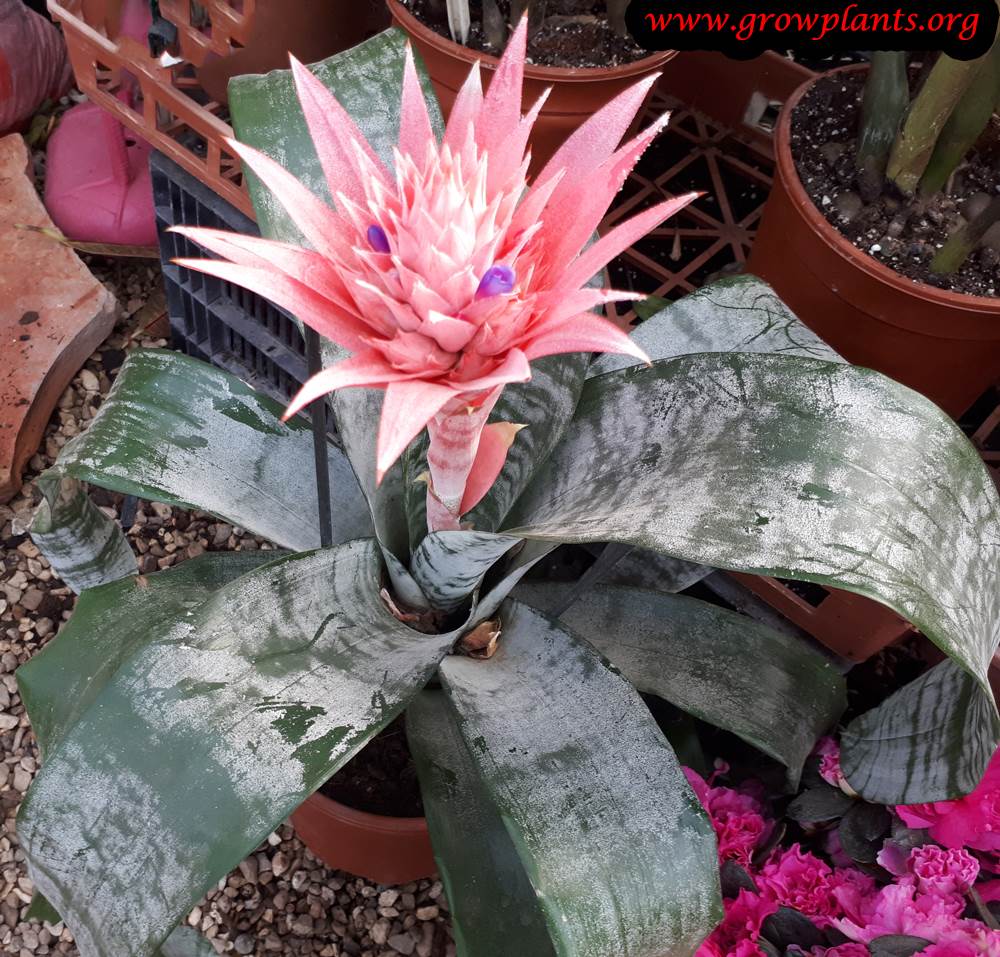
Overview: An evergreen, rosette-forming bromeliad grown for its bold foliage and long-lasting, colourful flower spike. This epiphytic perennial forms a water-holding rosette about 30-80 cm (12-32 in) tall and is used as an ornamental, a cut flower or an easy-care houseplant.
Quick Specifications
| Specification | Attribute |
|---|---|
| Plant Type / Life Cycle | Perennial (evergreen bromeliad; often grown as a houseplant) |
| Foliage Type | Evergreen |
| Mature Size | 30-80 cm (12-32 in) tall |
| Growth Rate | Moderate |
| Root System | Epiphytic – mostly anchoring roots, with water and nutrients taken up through the central leaf rosette (non-invasive) |
| Toxicity | Non-toxic to cats and dogs |
| Hardiness | USDA zone 10b+ |
Growth Form & Structure
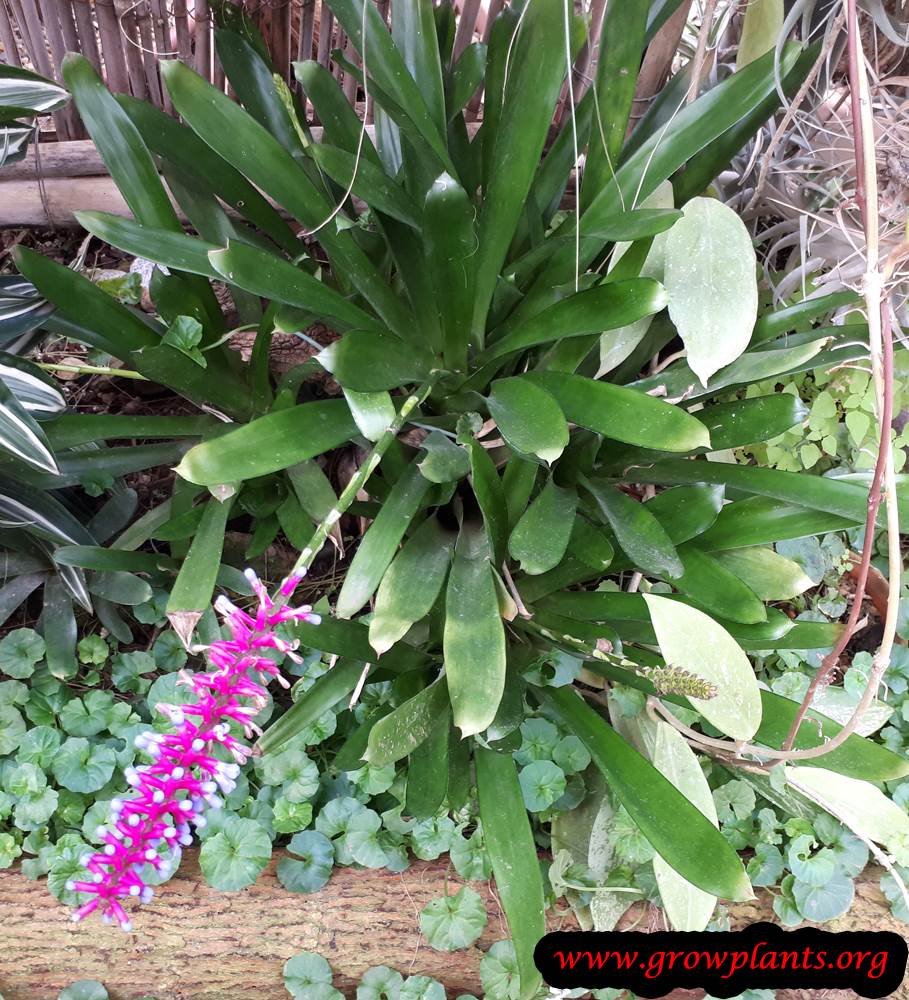
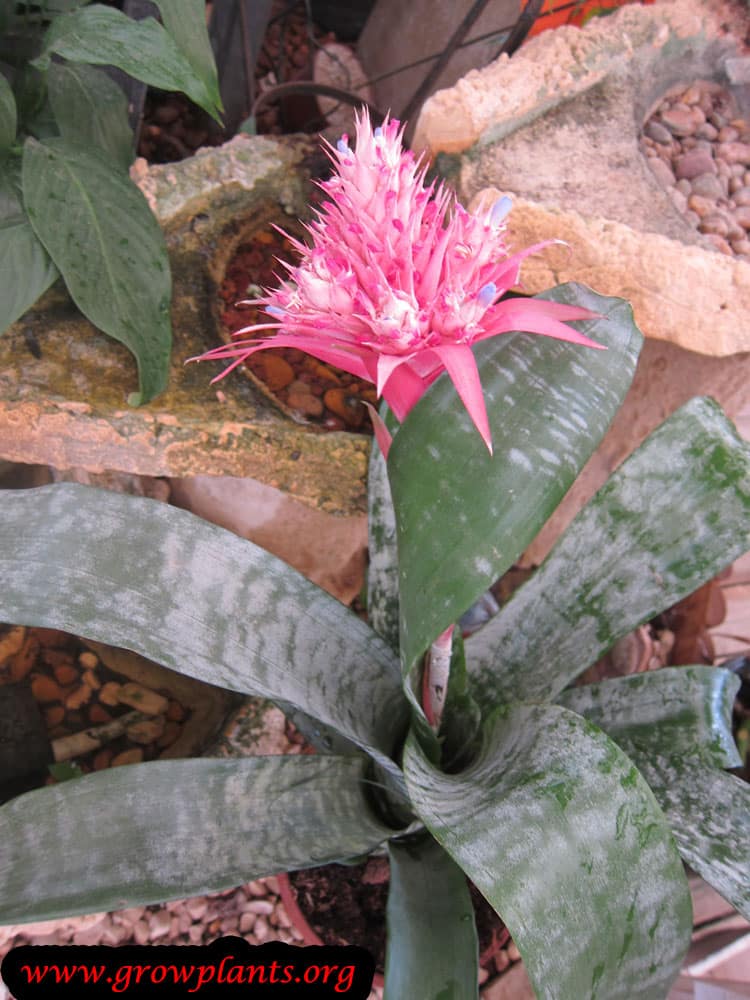
- Height & Spread: About 30-80 cm (12-32 in) tall, forming a vase-like rosette of arching leaves; grows equally well mounted on bark or cork or in a free-draining pot.
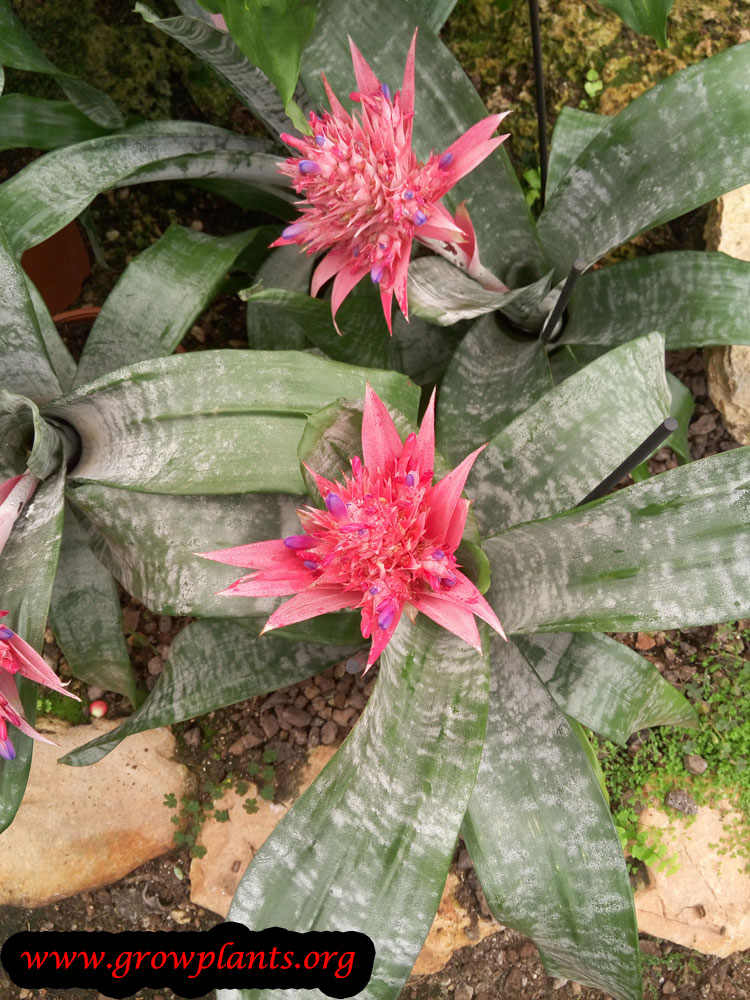
- Growth Habit & Form: Clump-forming epiphytic herb built around a central water-holding ‘tank’ rosette; each rosette flowers once, then offsets (pups) continue the clump.
- Lifespan & Maturity: The mother rosette dies after flowering, but the pups that replace it make the plant effectively long-lived.
Anatomy & Physical Features
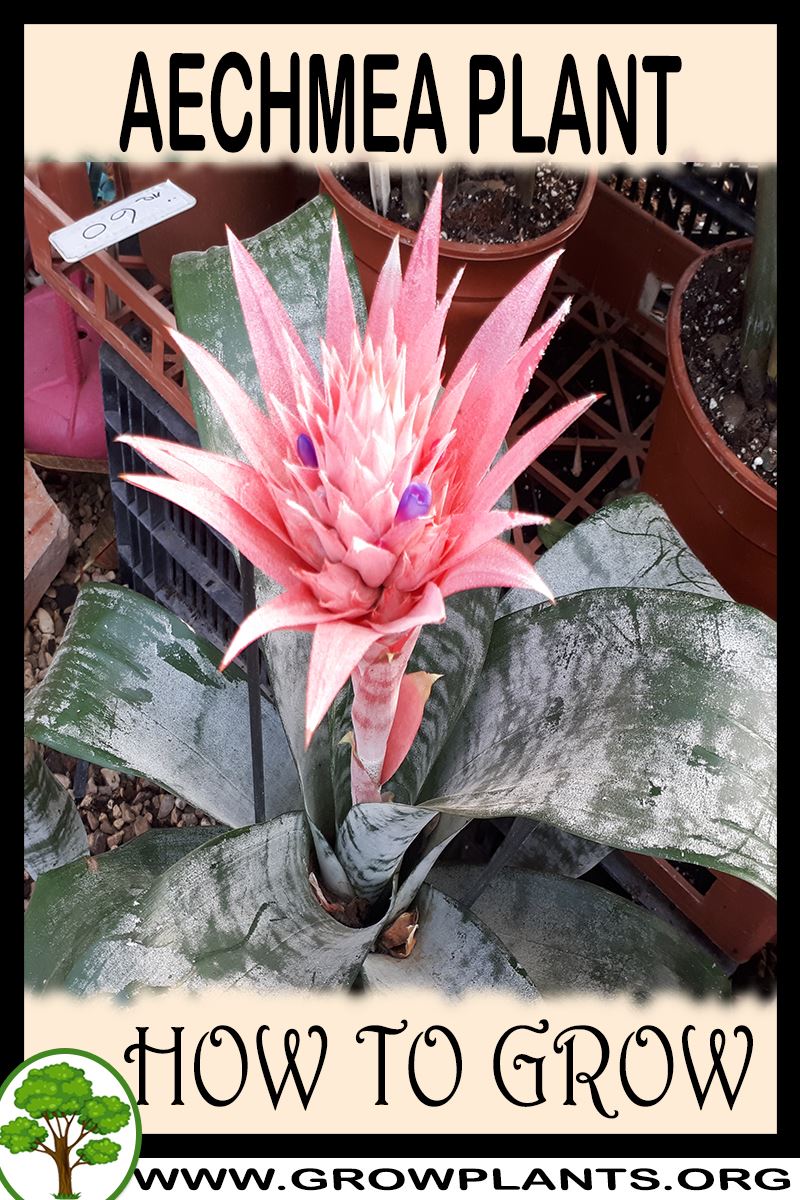
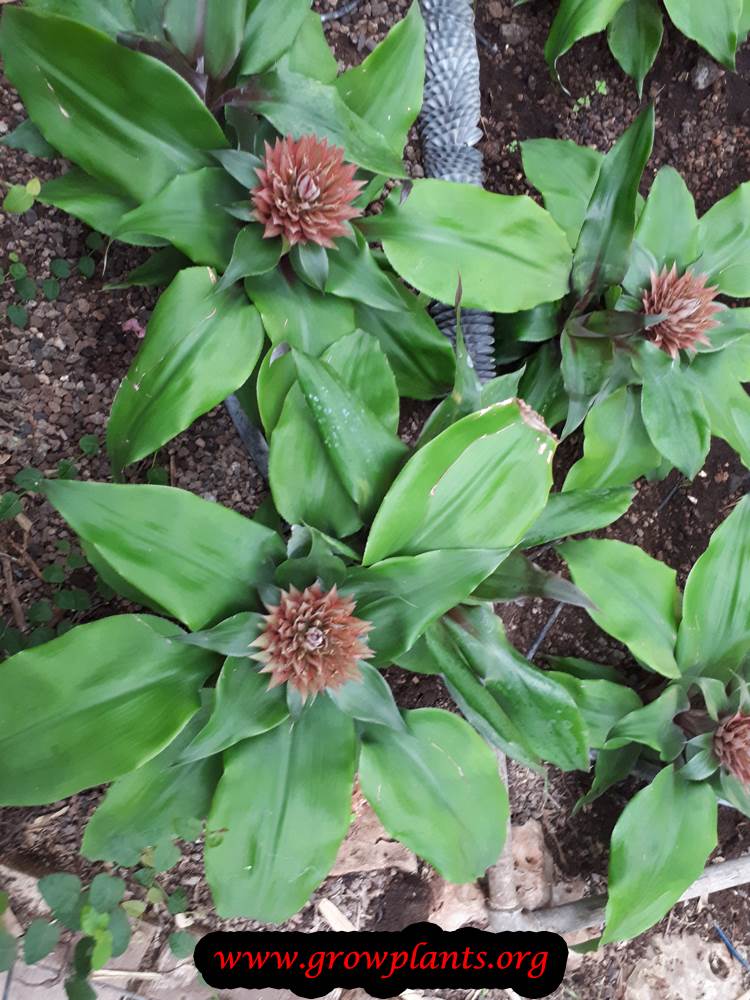
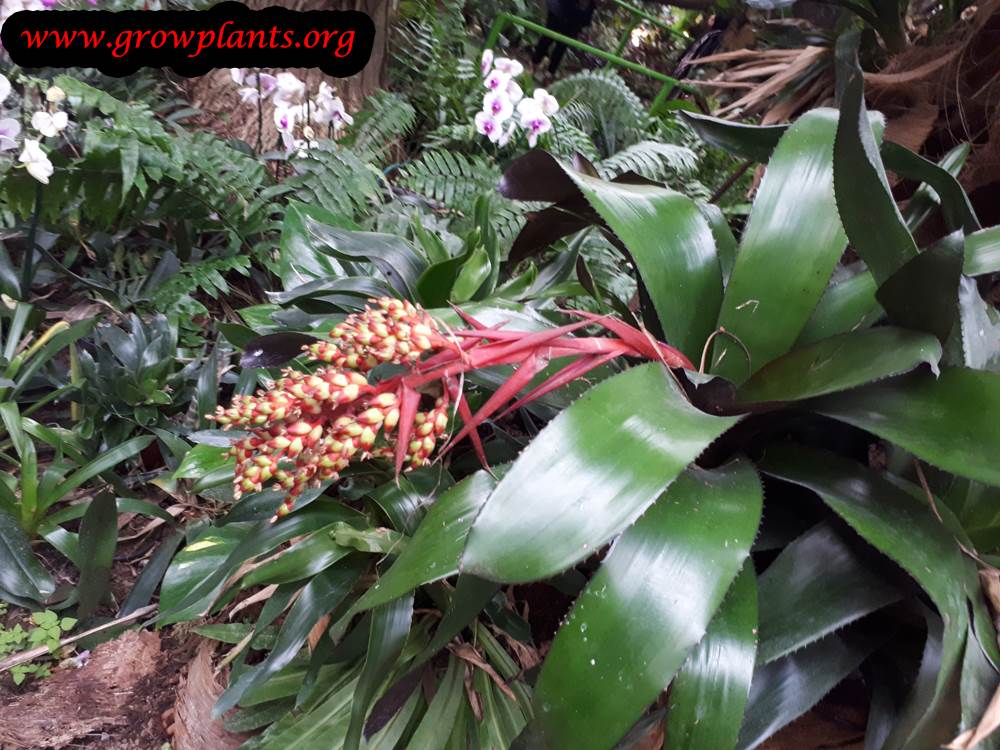
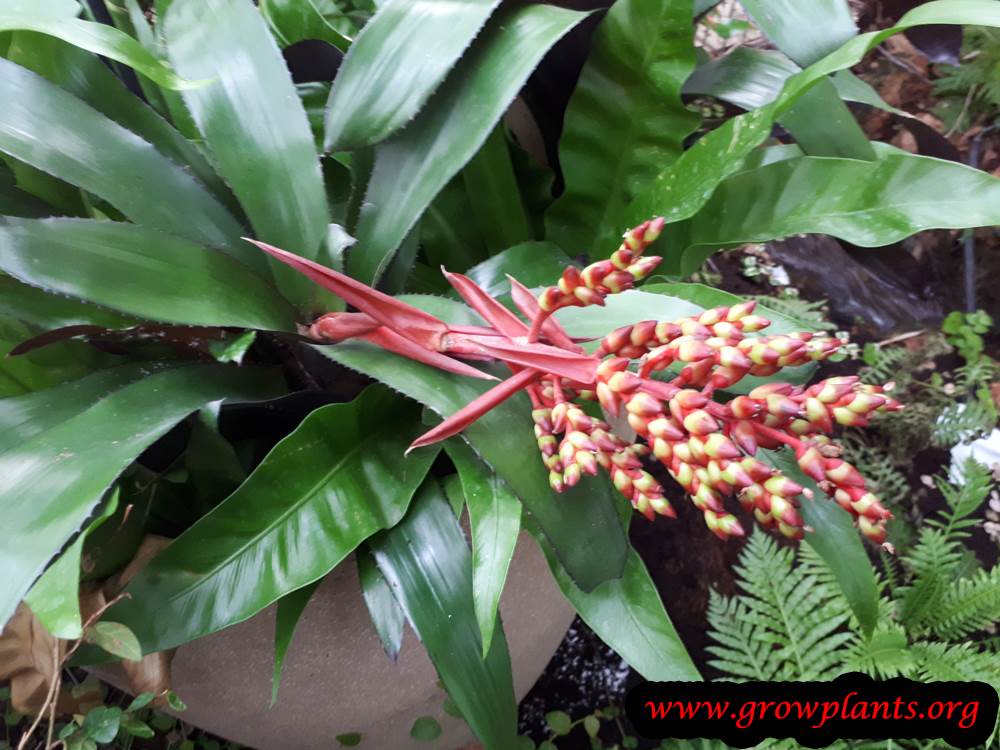
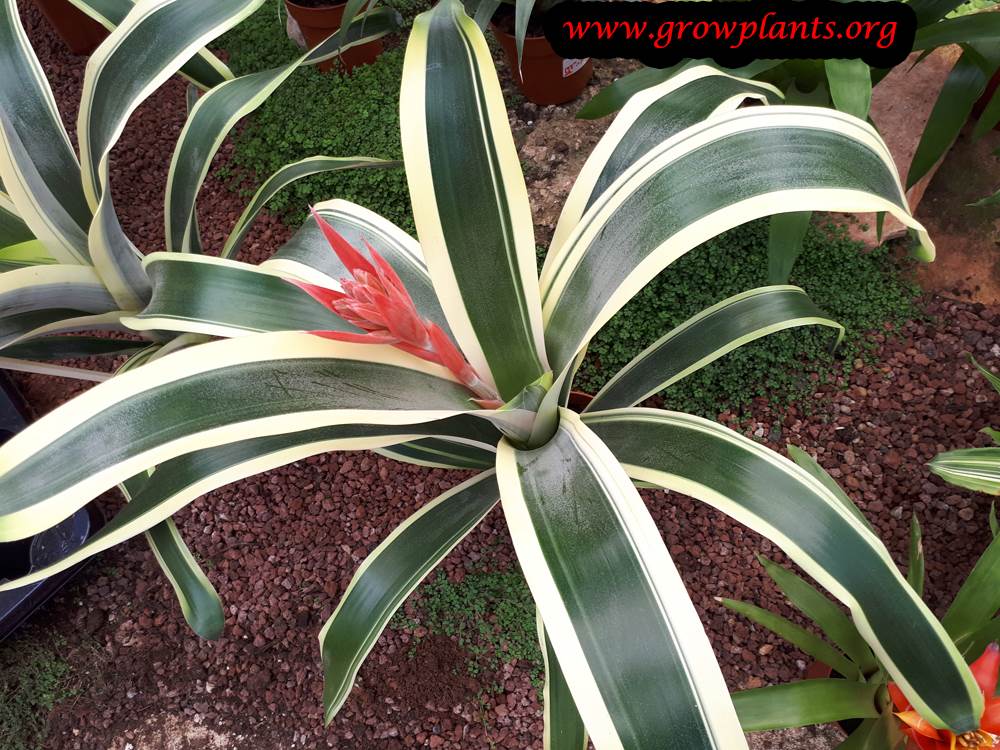
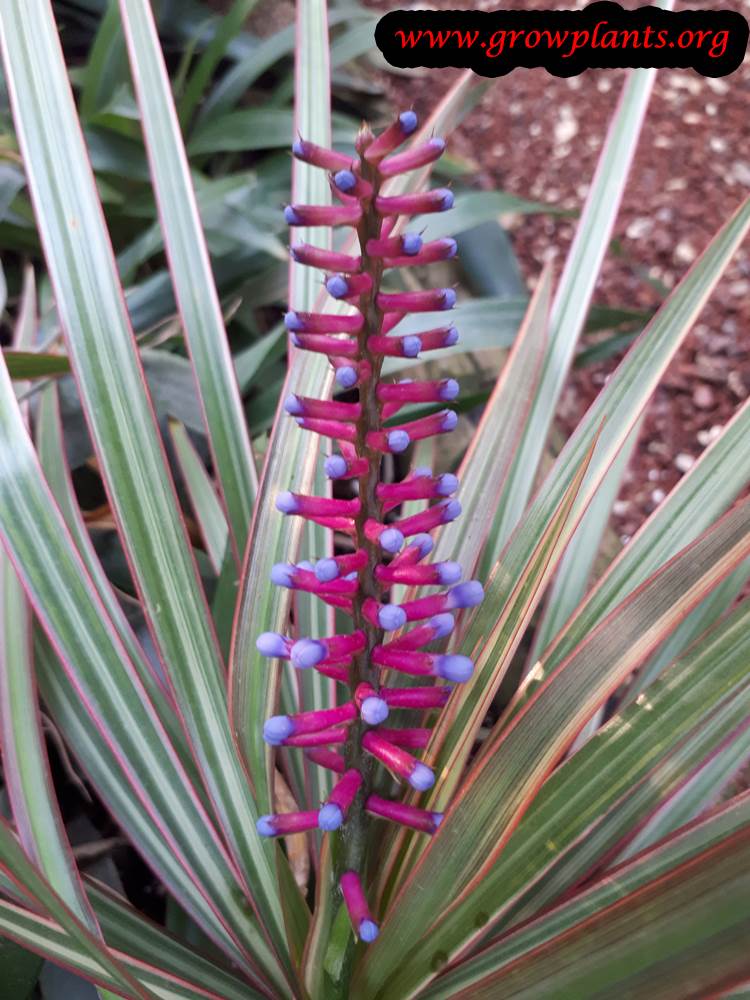
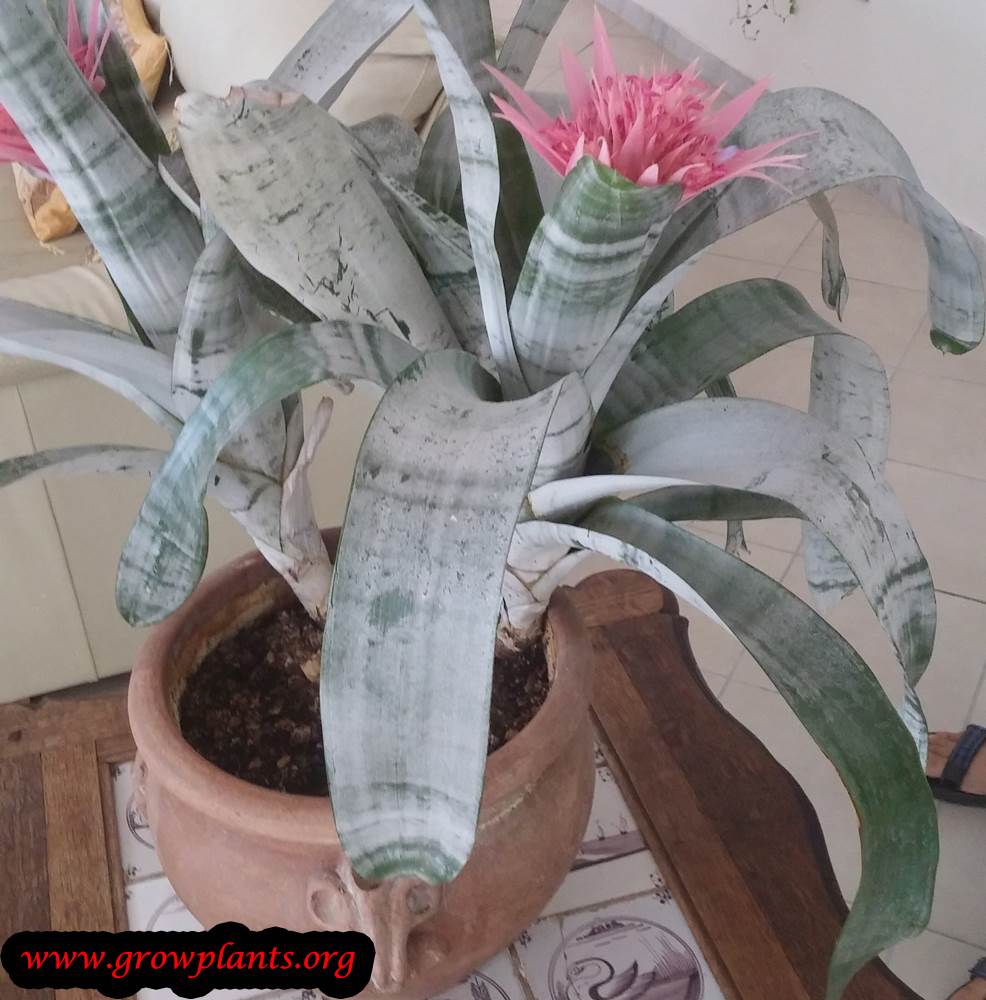
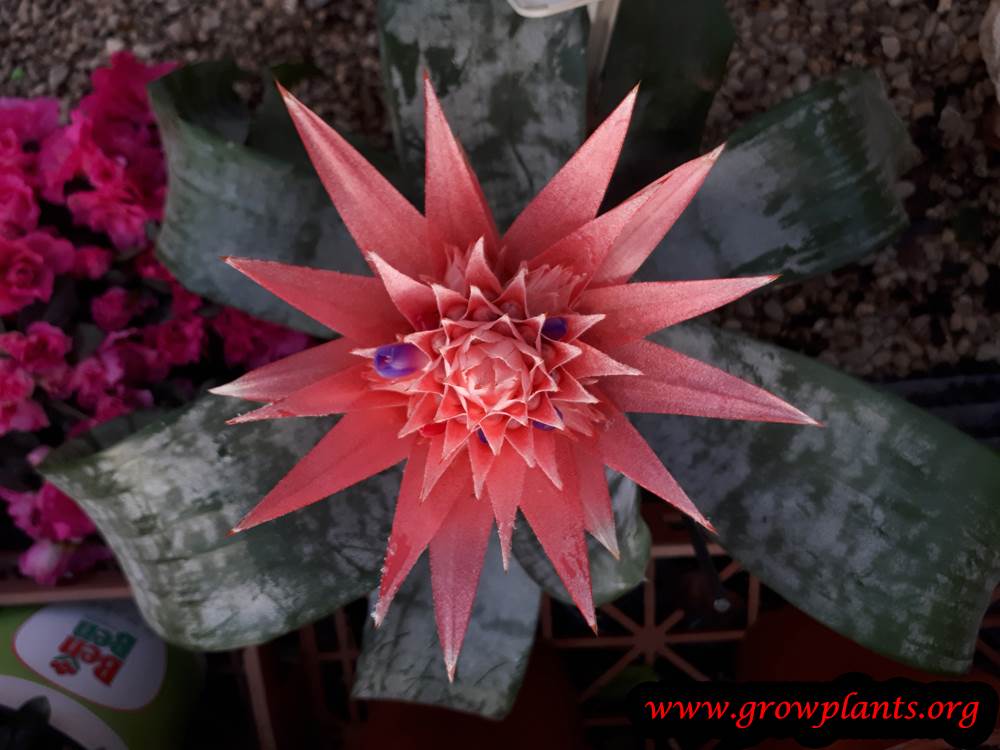
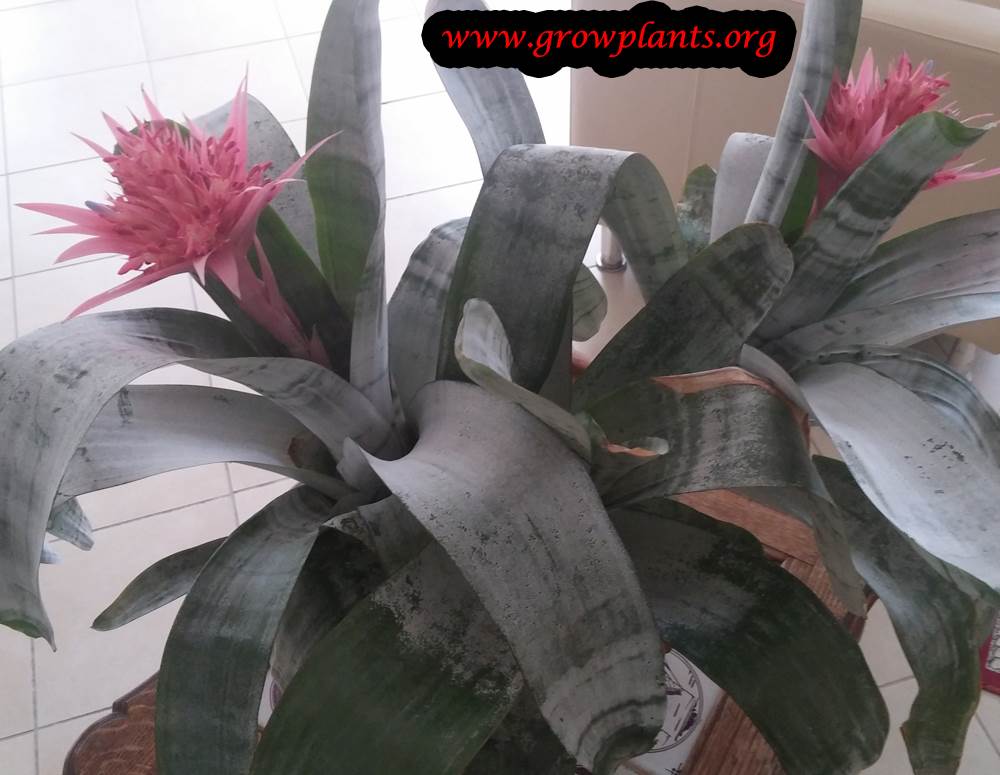
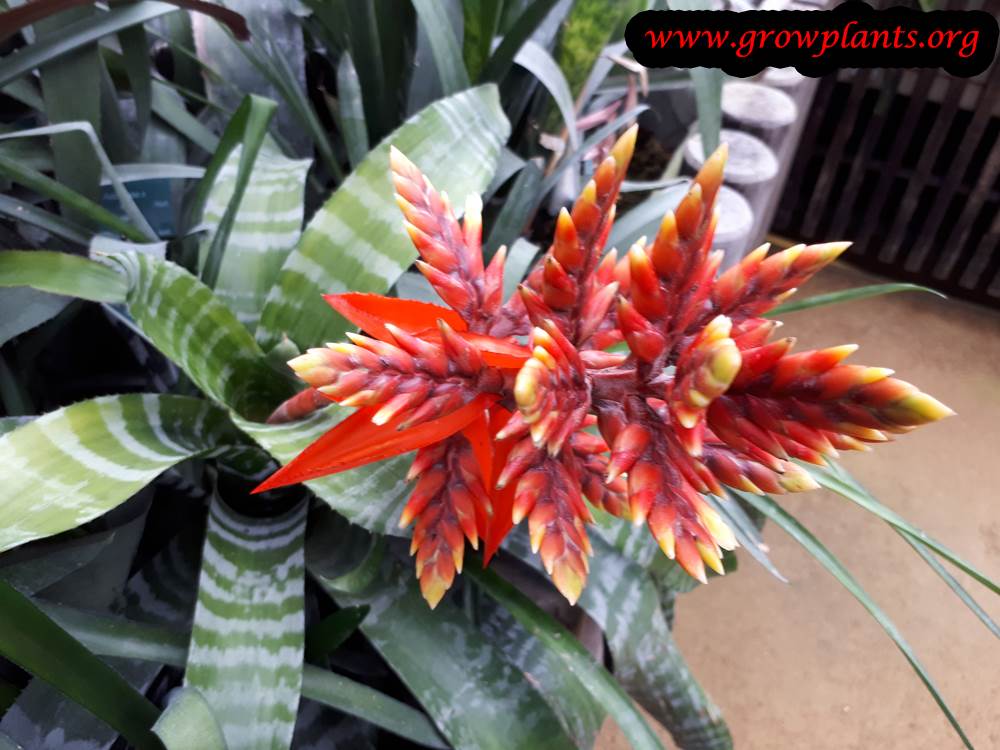
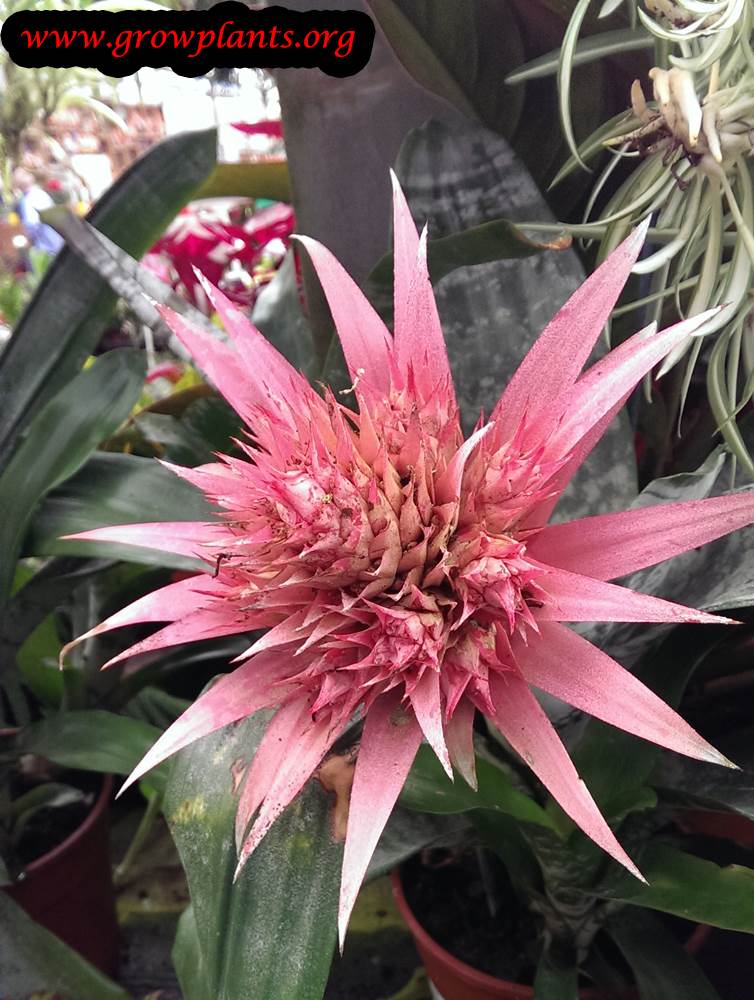
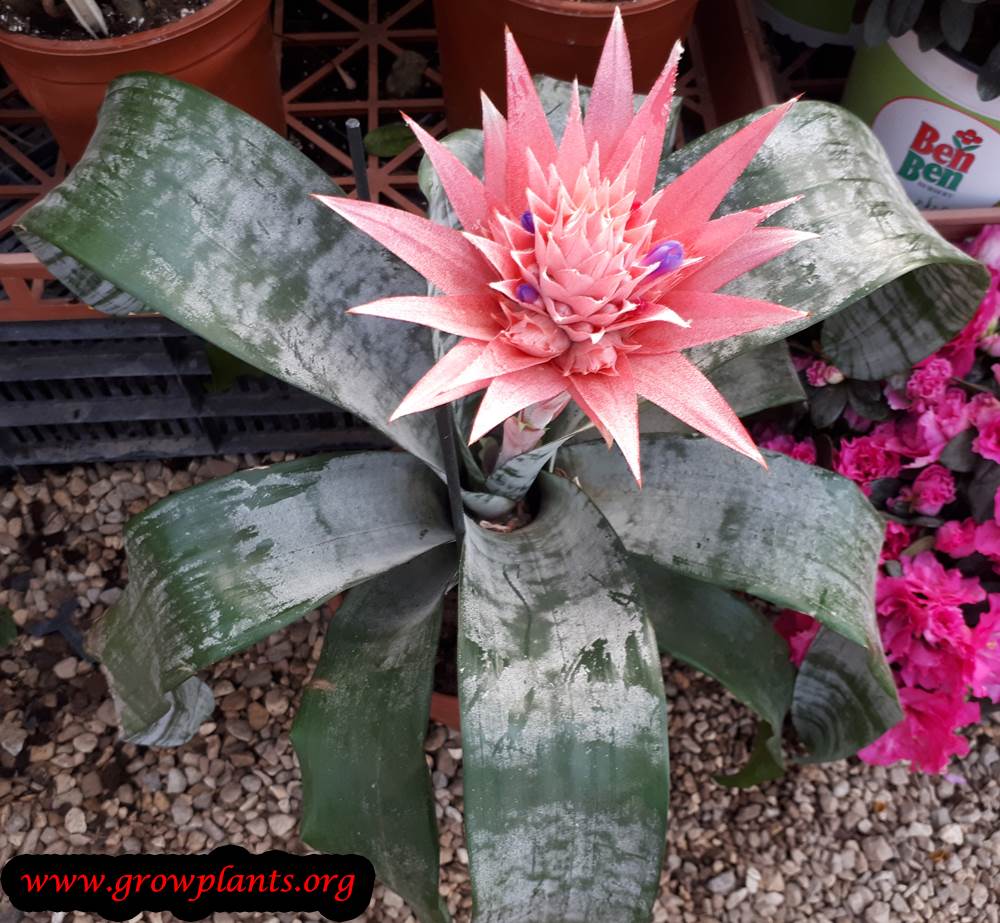
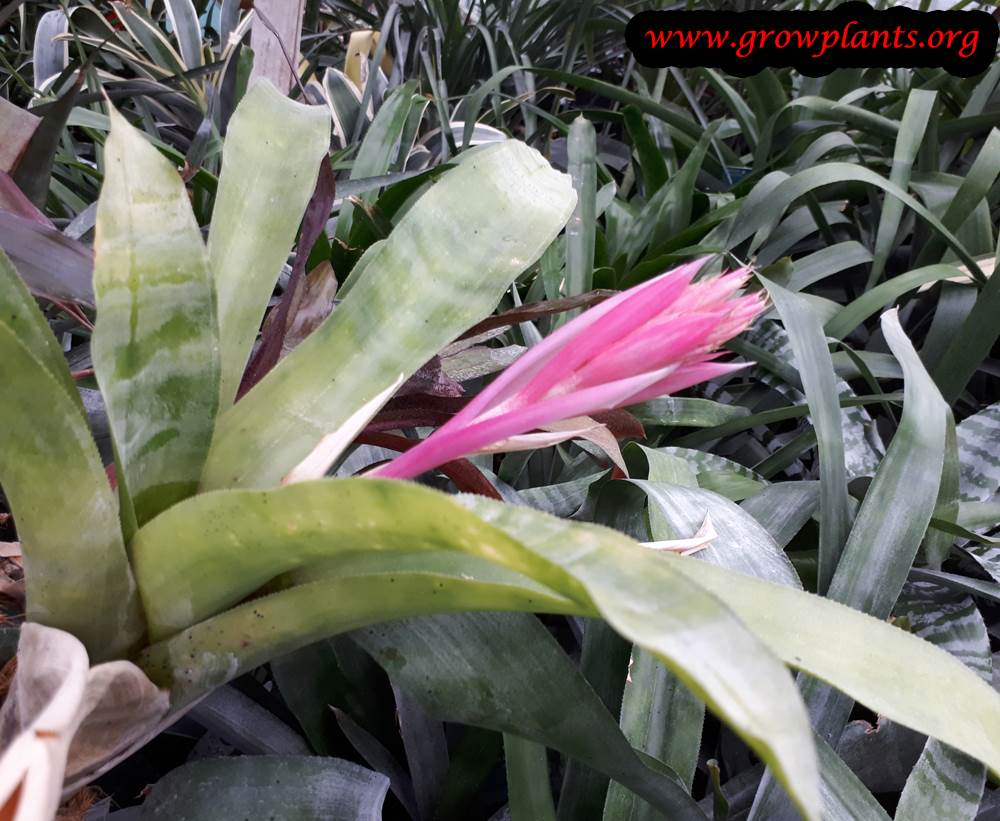
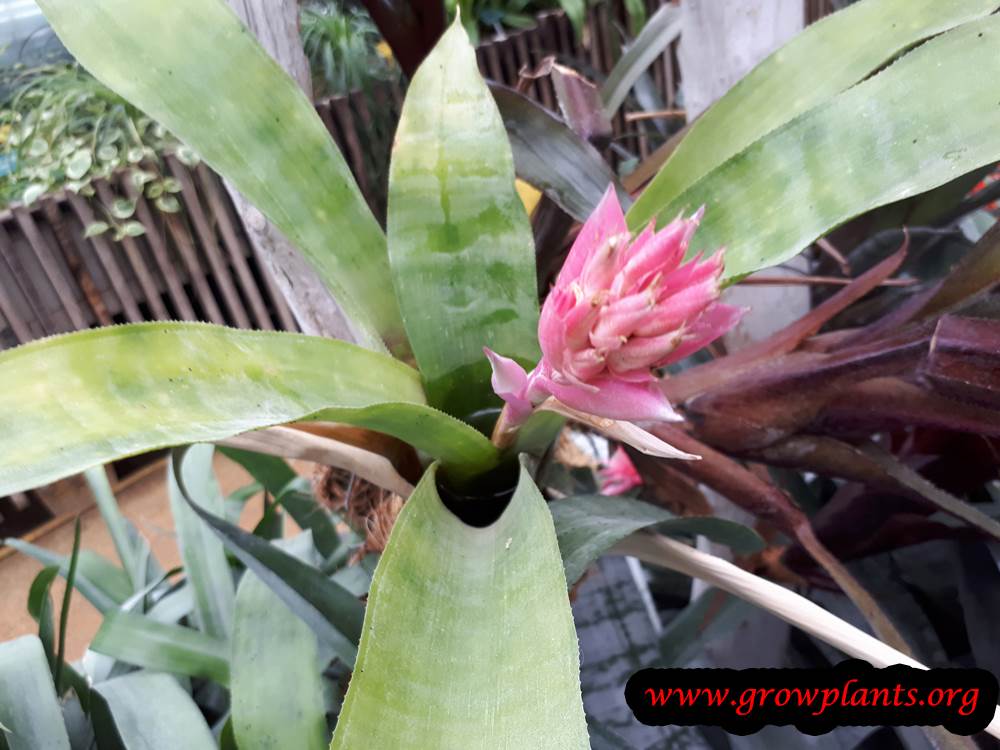
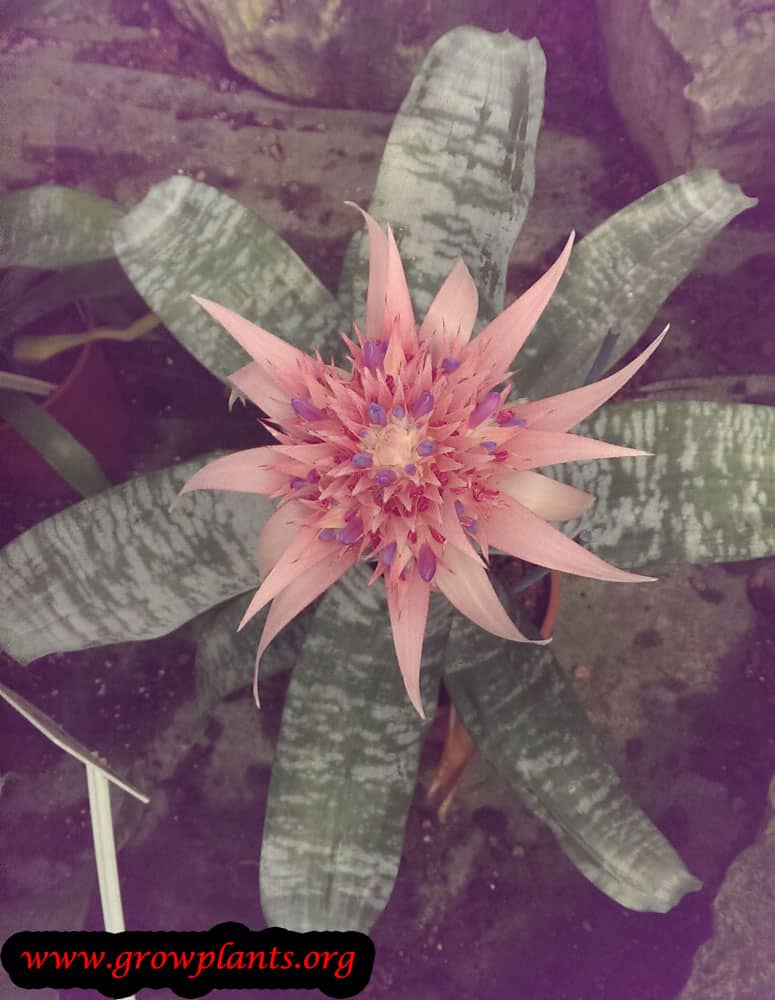
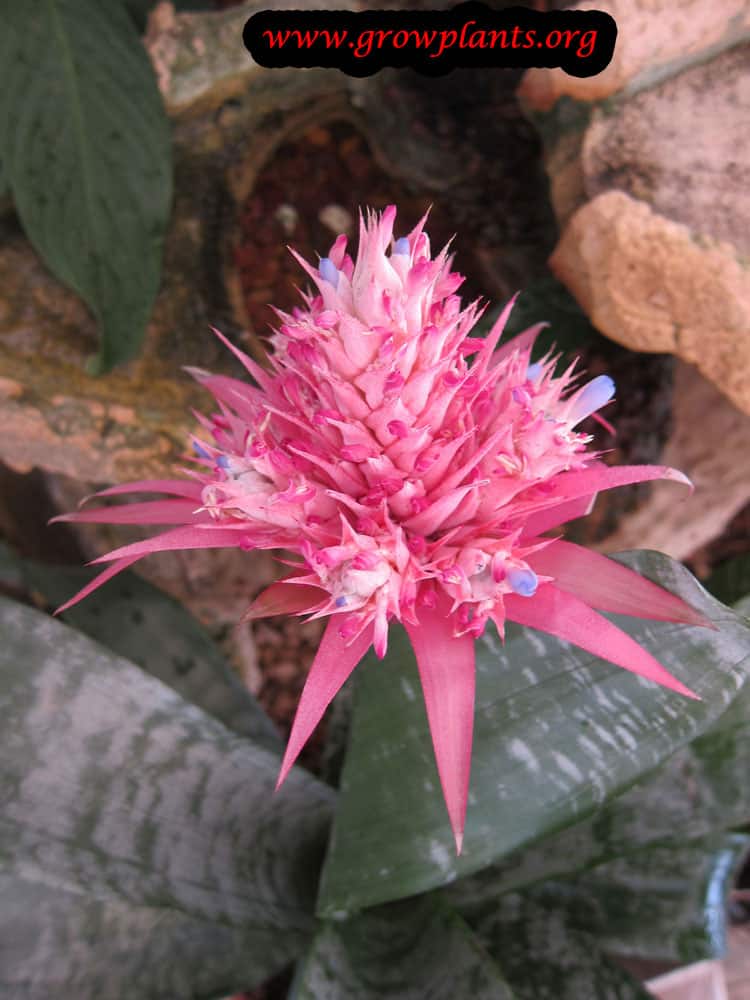
- Leaves & Foliage: Green to purple leaves, sometimes silver-banded or variegated, strap- to spear-shaped and usually spiny-margined, in a rosette.
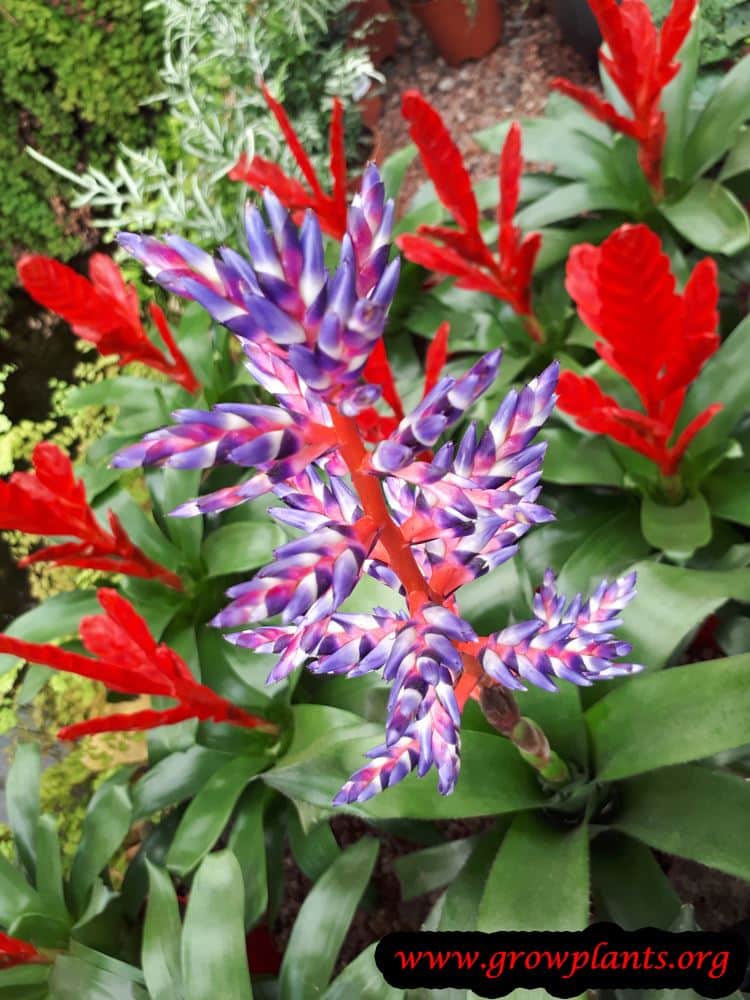
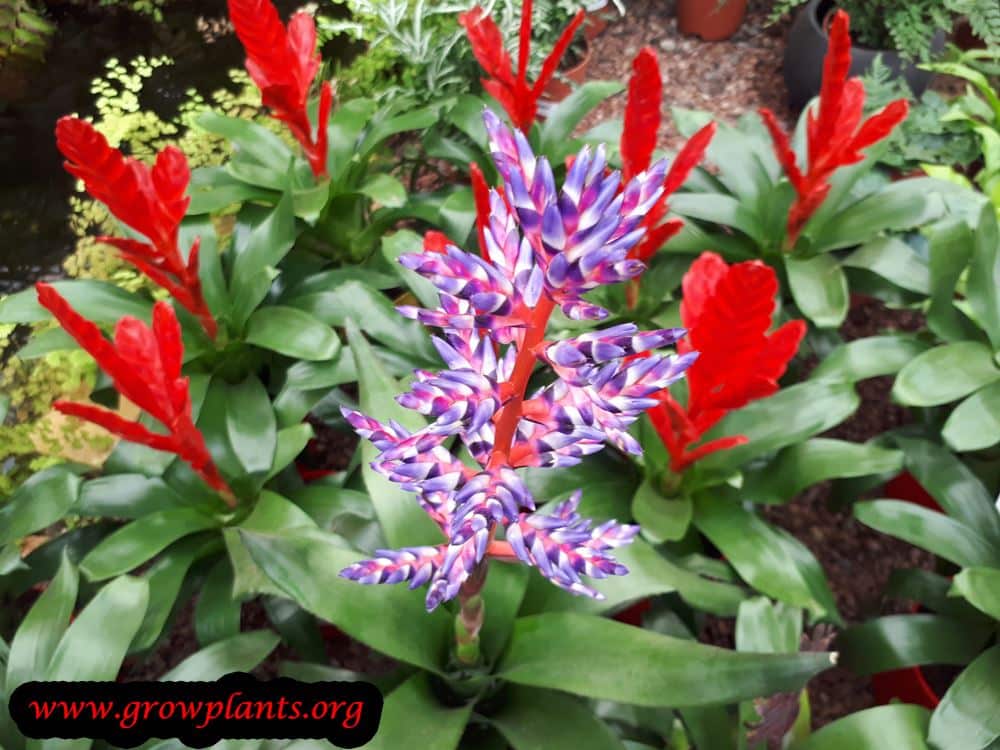
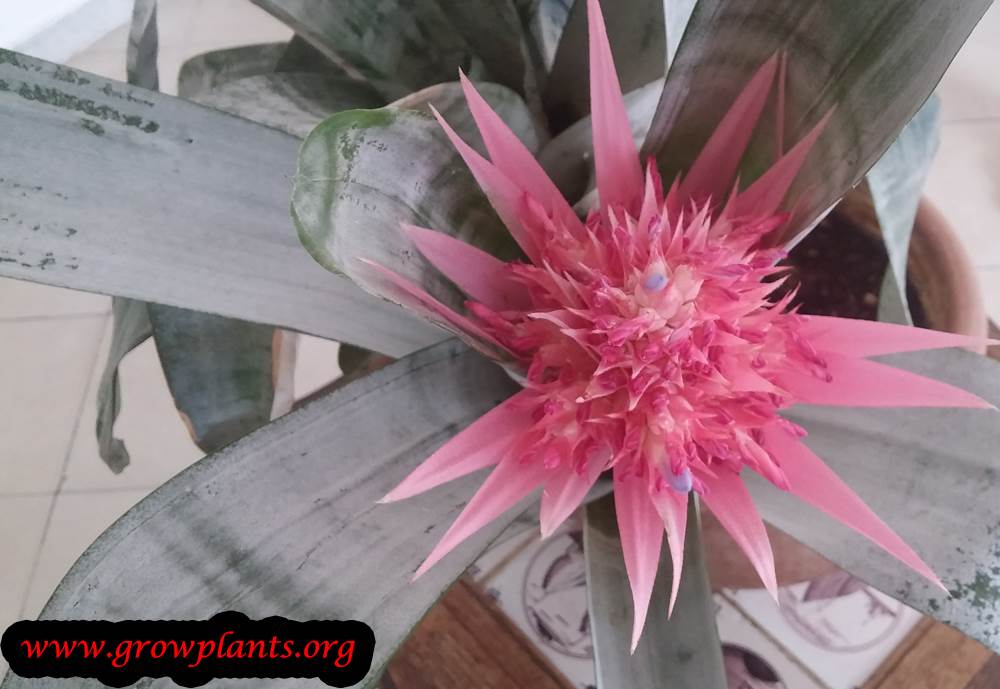
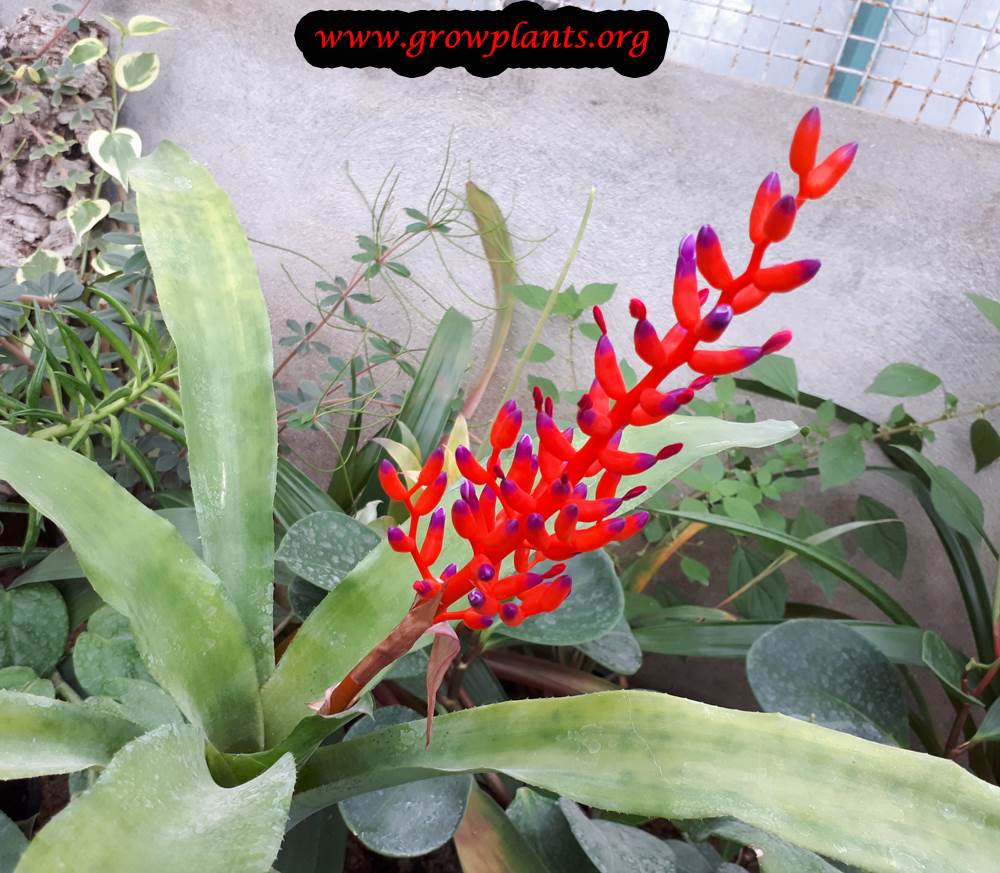
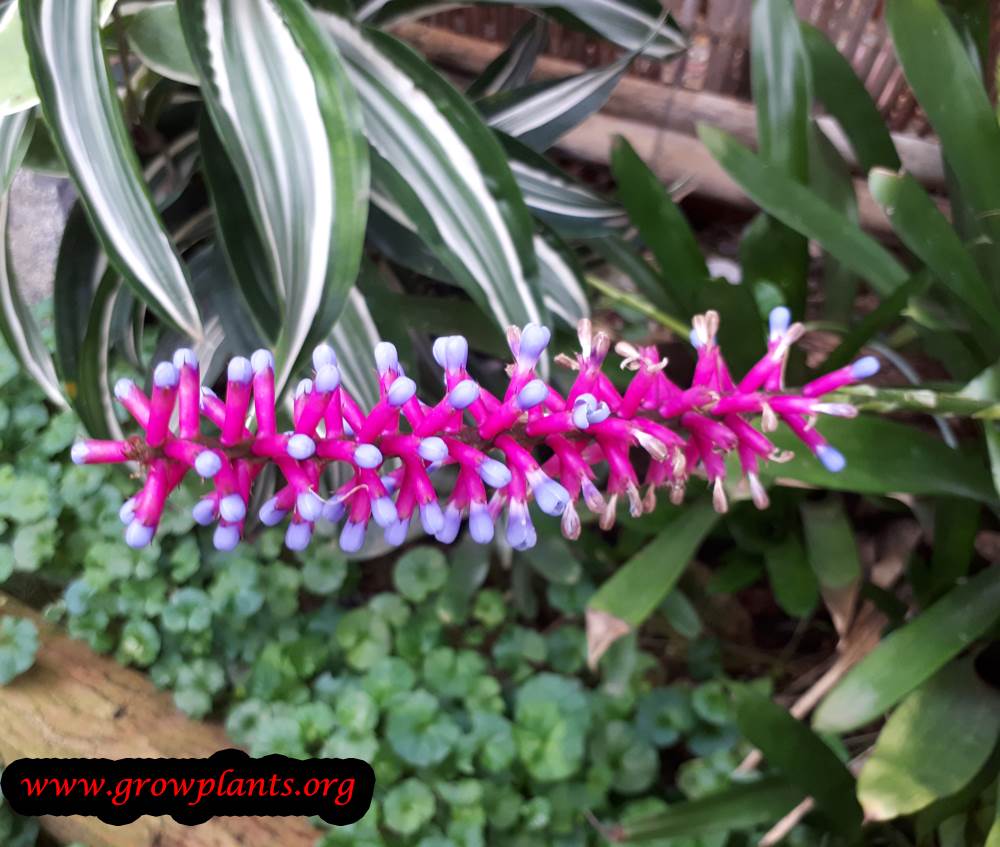
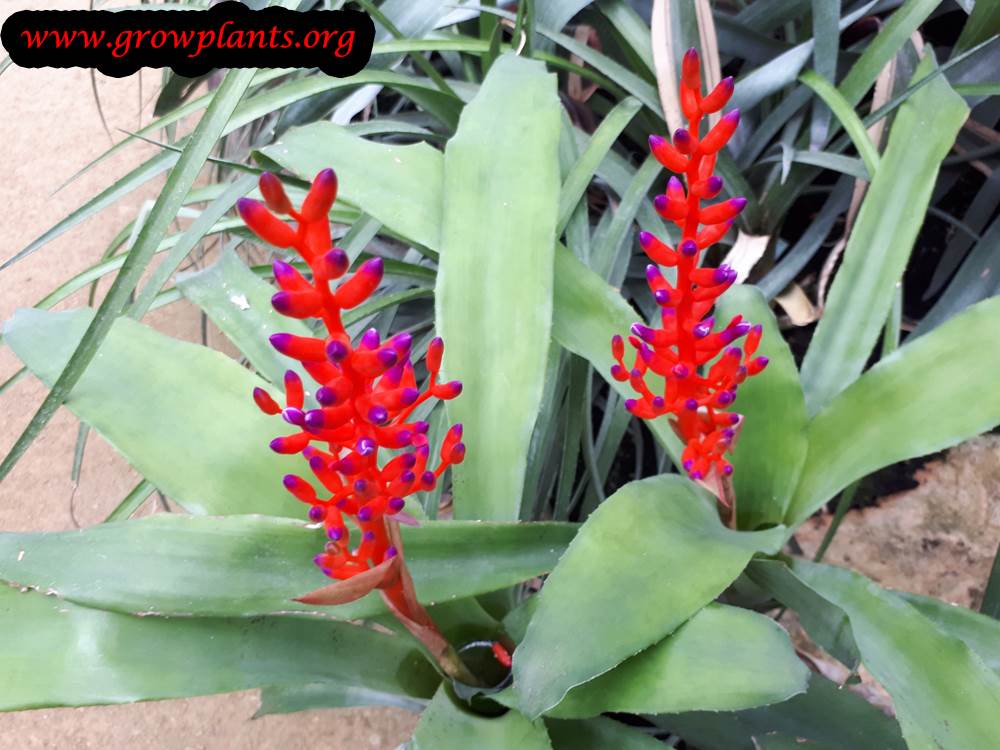
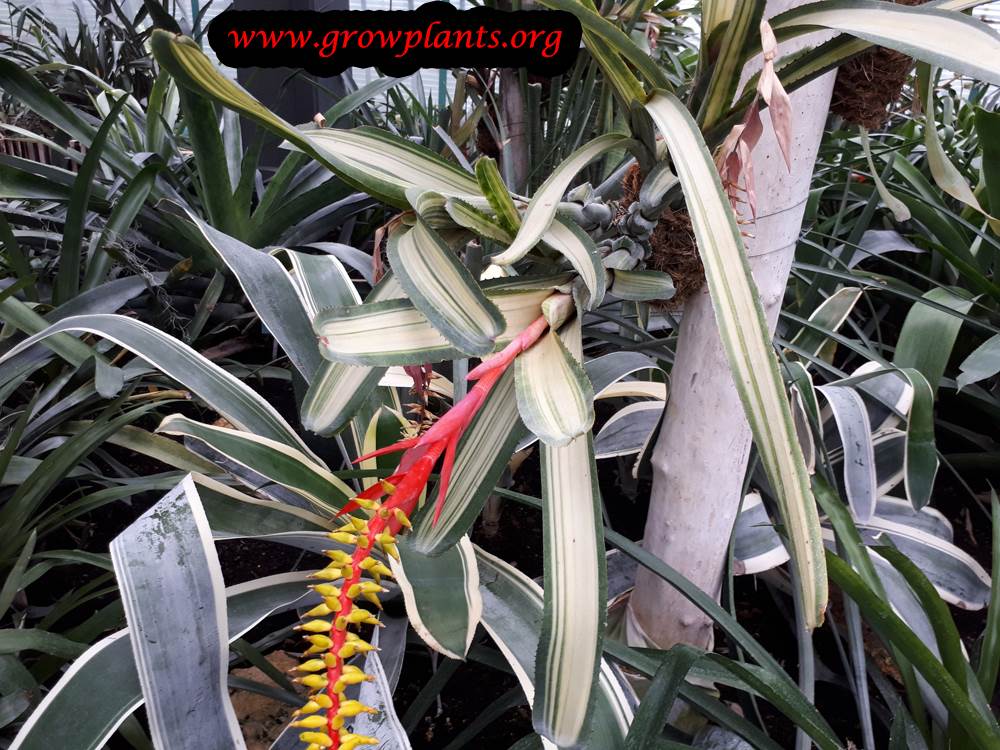
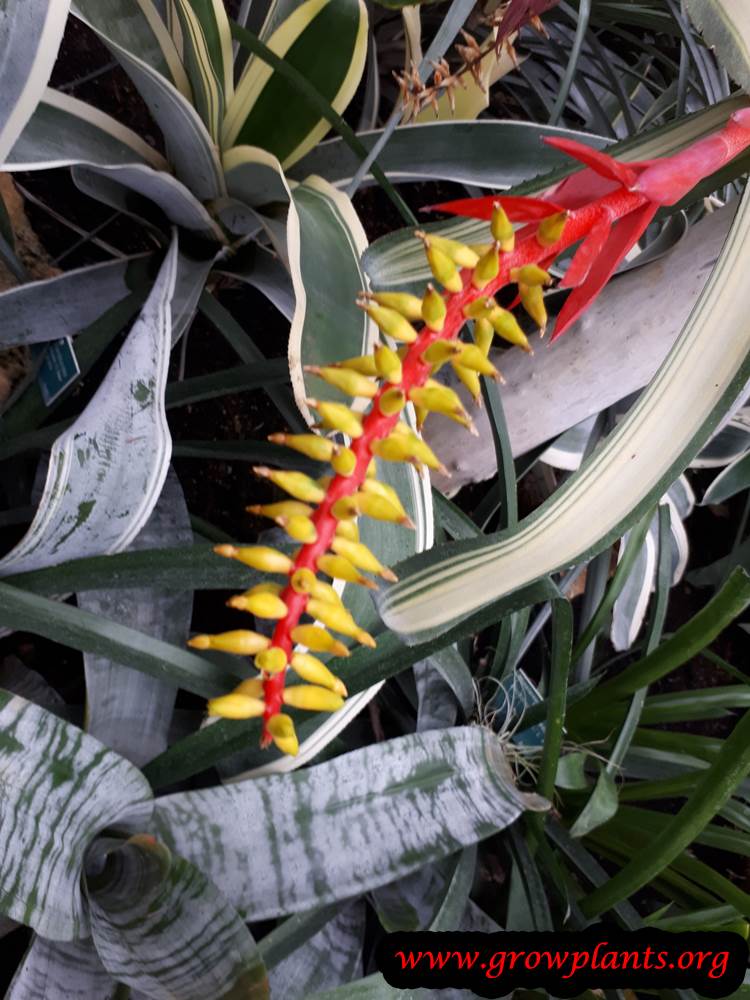
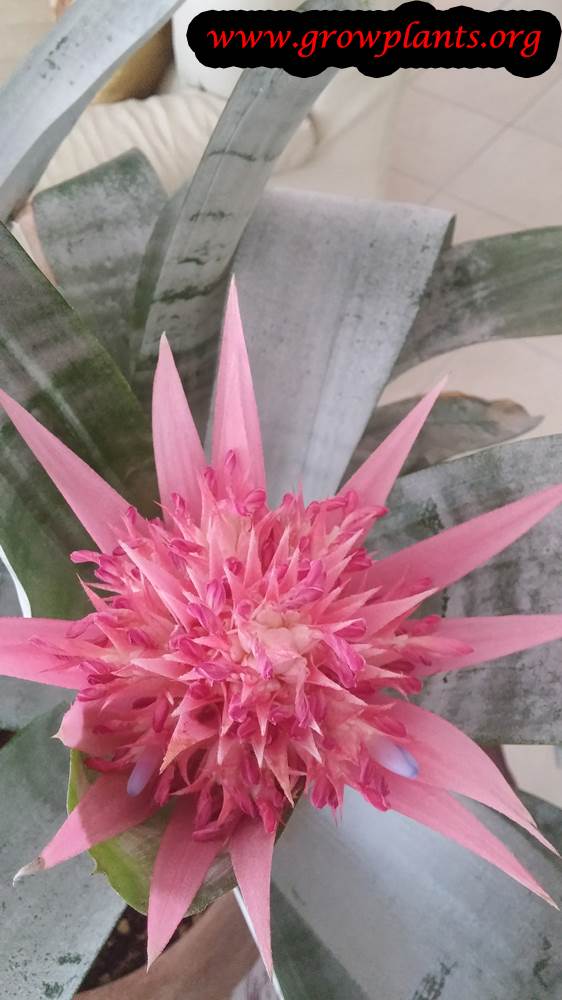
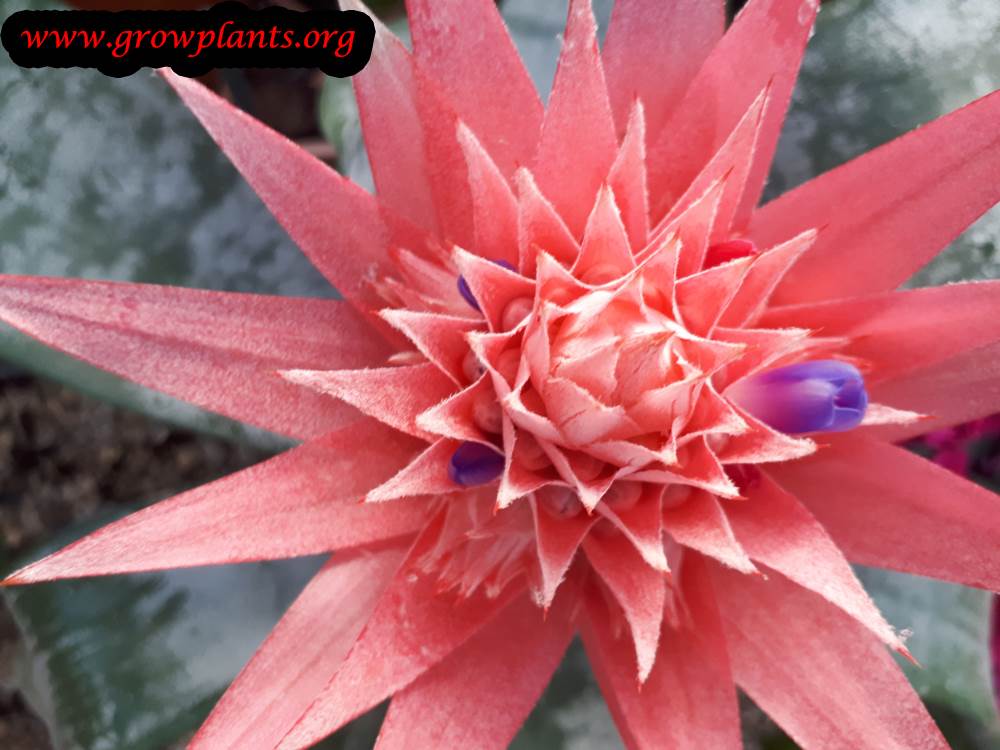
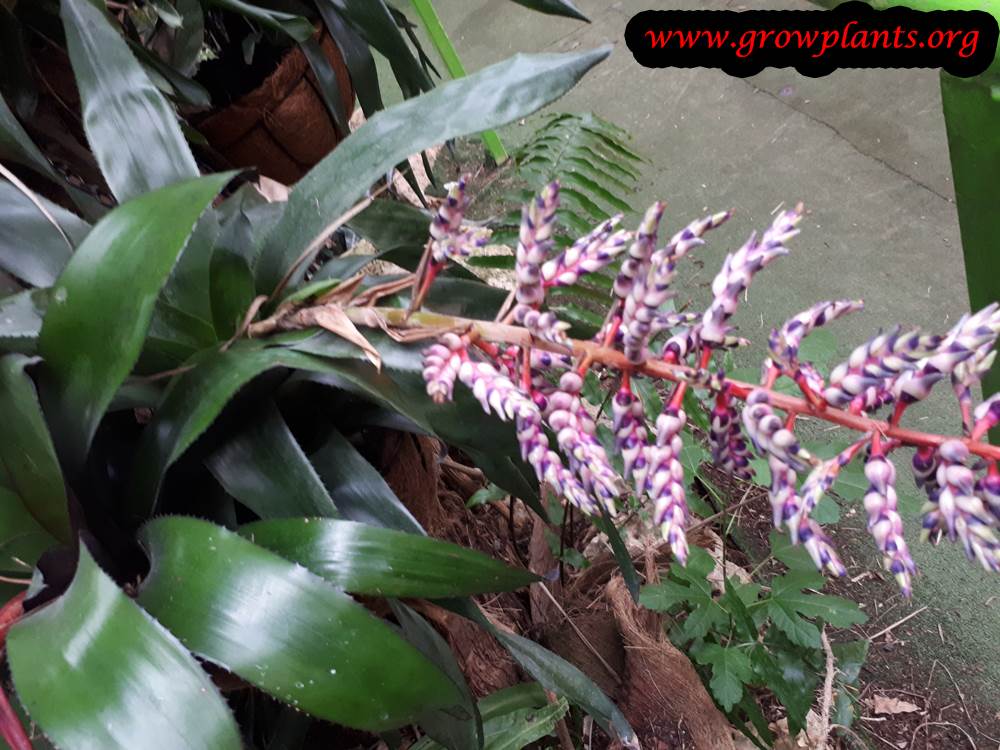
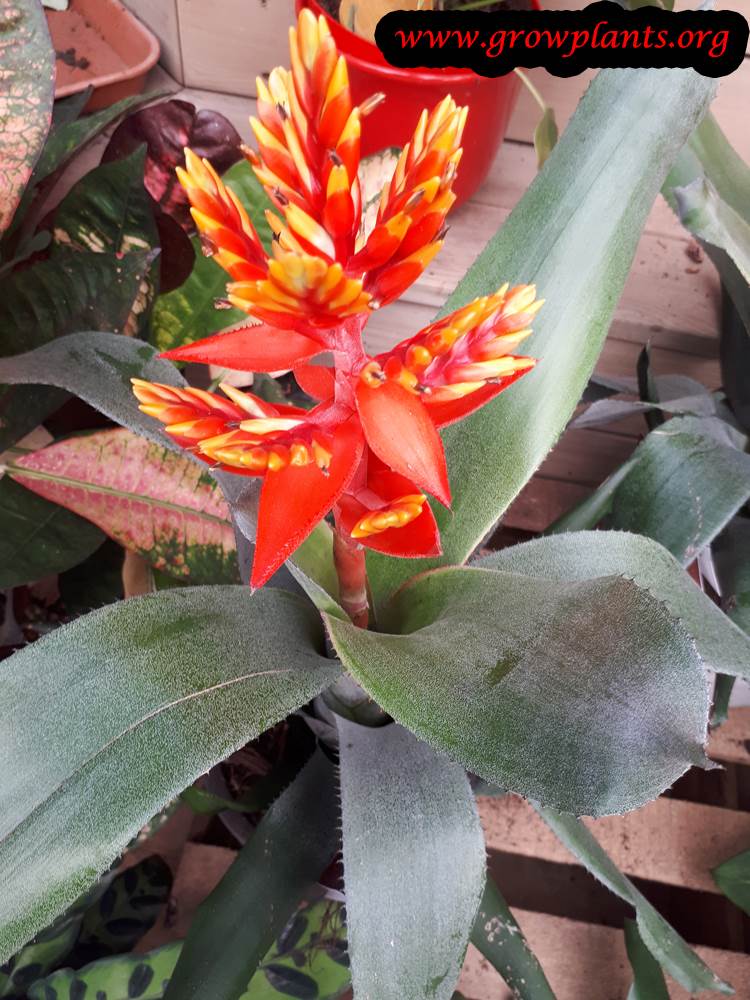
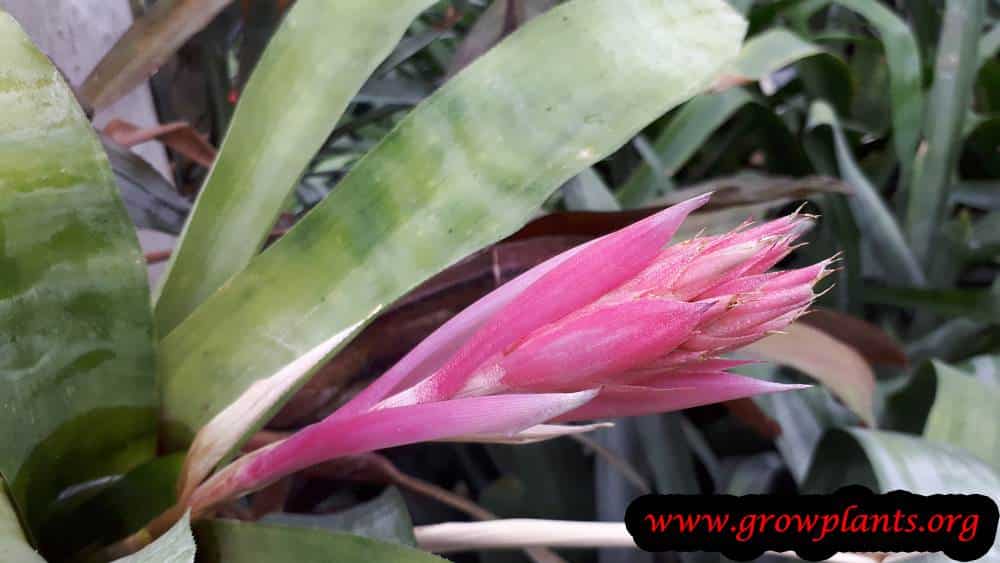
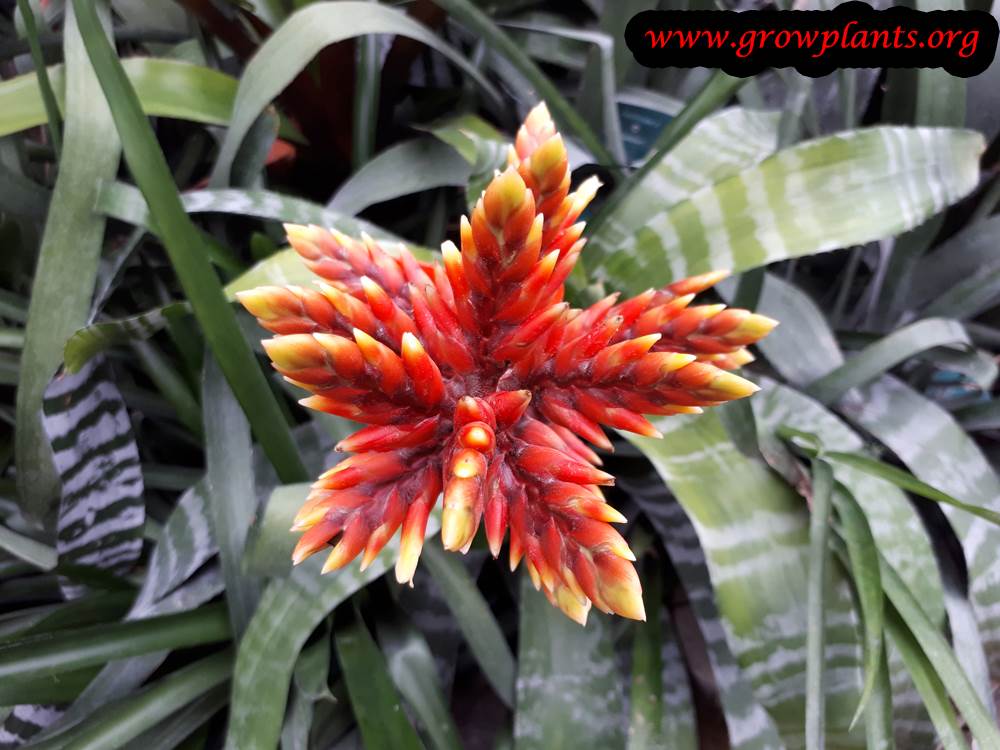
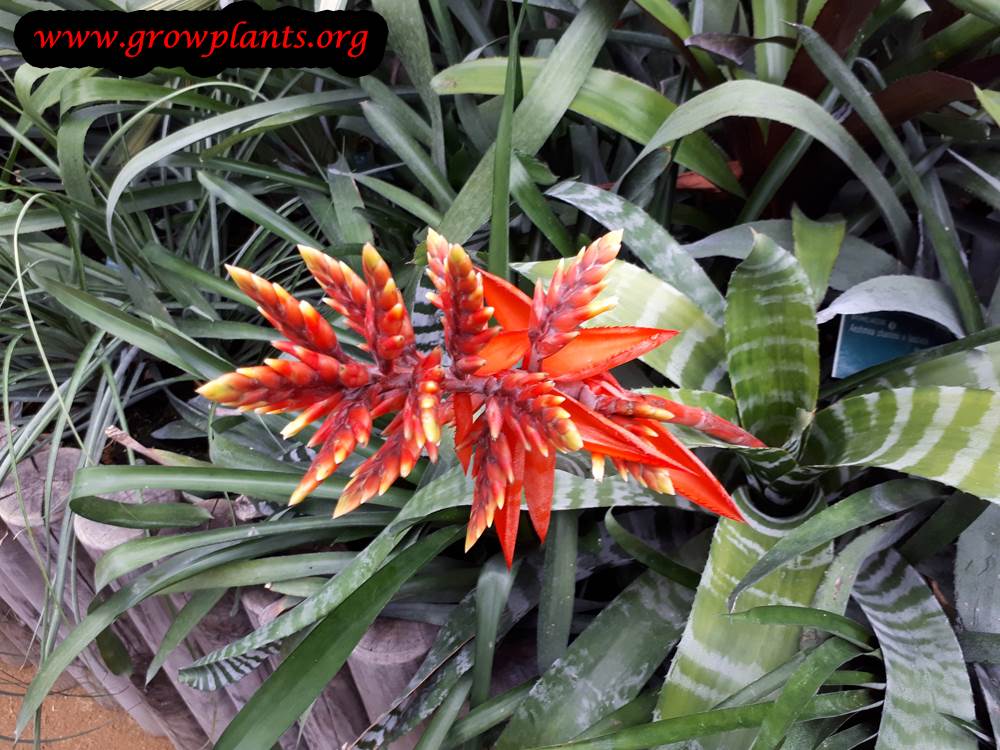
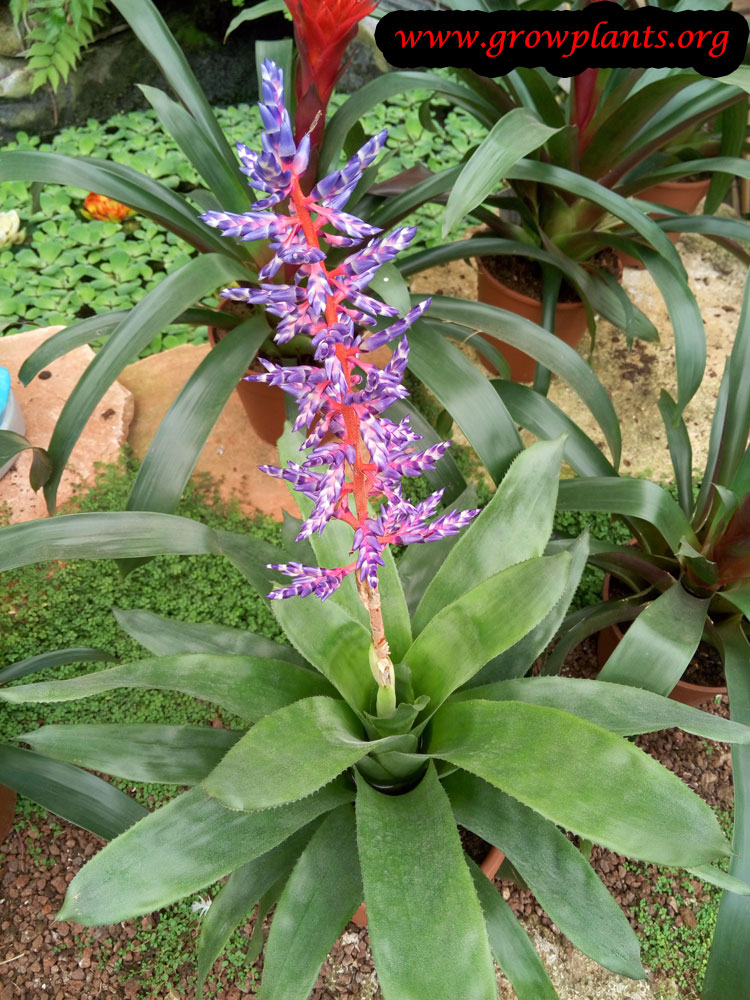
- Flower Characteristics: Colour varies widely (purple, pink, red, orange, yellow and more) in cone, drop, round or hive-shaped inflorescences.
Primary Uses & Landscape Value
- Functional & Ornamental Roles: Ornamental houseplant and cut flower; often displayed mounted on cork or bark to show off its epiphytic habit.
Care Guide: Planting, Soil & Watering
Overview: Aechmea is a bromeliad — in the wild an epiphyte — that grows best in warm, humid conditions (above about 15°C) with bright, indirect light and a very light, airy, fast-draining medium. Its roots mainly anchor it, so keep the mix barely moist and water into the central rosette cup rather than soaking the roots.
Quick Care Requirements
| Requirement | Ideal Condition |
|---|---|
| Planting Season | Year-round in warm, frost-free conditions; spring to summer in cooler zone 10b |
| Growth Rate | Moderate |
| Soil Type | Light, airy, fast-draining epiphyte/bromeliad mix (bark, perlite); never heavy or waterlogged |
| Water Need | Low at the roots — keep the central rosette cup topped up and the mix only lightly moist |
Planting & Establishment
- Best Planting Season: Plant year-round in warm, frost-free conditions (above about 15°C); in cooler zones favour spring to summer so it establishes in the warmth.
- How to Plant:
- Hole Preparation: Being an epiphyte, plant it shallowly in a small pot of open mix, or mount it on cork or bark — do not pack the roots into heavy soil.
- Soil Amendments: Use an open, bark-based bromeliad mix with perlite for maximum aeration and drainage.
- Planting Depth: Keep the base of the rosette at the surface with the crown above the mix — burying the rosette causes it to rot.
- Growth Speed & Expectations: Moderate, slowly forming a vase-shaped rosette that flowers once and then produces offsets (pups).
Soil, Watering & Drainage Care
- Soil Mix & Drainage Needs: Use a very open, fast-draining, airy medium — or mount the plant on cork/bark — since the roots anchor more than they feed. Free drainage is critical, as a heavy or soggy mix quickly rots the roots.
- Watering Schedule & Technique:
- Young / Newly Planted: Keep the mix lightly moist and a little water in the central cup as it establishes.
- Established: Keep the central rosette topped up with clean water (preferably rain or purified water), flushing and refreshing it regularly so it does not stagnate and breed mosquitoes; keep the mix only barely moist.
- Seasonal Adjustments: Water and mist more in summer heat for humidity; in cool winter weather water less and empty the cup during cold spells to prevent rot.
Climate, Light & Hardiness
Aechmea, as a genus, spans warm tropical, subtropical, and Mediterranean climates, with individual species varying in exact cold tolerance. All need bright but indirect light and consistently warm, humid conditions.
Quick Climate Specifications
| Climate Zones | Tropics, subtropical, Mediterranean |
|---|---|
| USDA Hardiness Zones | Generally 10b+; some species are less cold-tolerant and are safest treated as zone 11+ or 12+ |
| Optimal Temp Range | Warm year-round, generally above 15°C (59°F) |
| Approx. Survival Minimum | Can briefly tolerate around 10°C (50°F), though this is not recommended |
| Frost Tolerance | None |
| Light Conditions | Half shade to full shade (bright, indirect light) |
Sunlight & Light Exposure
Optimal Light Setup
Wants plenty of bright light but no direct sun, which burns the leaves and flowers across the genus.
Temperature Extremes & Hardiness
USDA Hardiness & Regional Limits
Most Aechmea species need USDA zone 10b or warmer for outdoor, year-round growth; because cold tolerance varies noticeably by species, more cold-sensitive types are safer treated as zone 11+ or even 12+.
Cold Damage & Winter Protection
Best kept above roughly 15°C (59°F); can briefly withstand about 10°C (50°F) but sustained cold is not recommended.
Frost Sensitivity
Frost sensitive across the genus; grow in containers and bring under cover wherever frost occurs.
Wind, Humidity & Microclimate
Humidity Preferences
Needs high humidity, in keeping with the genus’s epiphytic, tropical-forest origins.
Microclimate Recommendations
A warm, humid, bright-but-shaded spot – greenhouse or indoor culture is often easiest outside the tropics.
Growing in Pots, Balconies & Indoors
Aechmea is a bromeliad the grower actually finds easier to grow as a houseplant than in the ground – because it is an epiphyte, it is happiest mounted on cork or bark, or set in a planter away from heavy soil, exactly as it grows on trees in the wild. That makes it a striking, low-fuss indoor plant (30-80 cm / 12-32 in).
Quick Details
- Container Size: A small planter, or mount it on cork/bark – as an epiphyte it needs little or no soil
- Indoor Suitability: An excellent houseplant – the grower says it is easier grown indoors
- Best Spot: Bright shade with plenty of light but no direct sun, which scorches the leaves and flowers
- Soil & Drainage: Very open and airy – bark/epiphyte mix, or no soil at all when mounted
- Watering in Pots: Water into the central rosette (the “cup”); keep humidity high but roots well aired
Indoors & On the Windowsill
- A natural houseplant: The grower rates it as easier to grow indoors. Keep it in bright, indirect light and top up the central cup with water; mist for humidity, especially in dry rooms.
- Windowsill growing: A bright sill out of direct sun is ideal – direct rays burn the foliage and leave permanent marks.
- Overwintering: Tender to cold, so keep it warm and indoors through winter; ease off watering while growth is slow.
On a Balcony or Patio
- Light & shelter: A warm, bright, shaded and sheltered spot – never full sun. Good airflow keeps the roots healthy.
- Watch the cup: Standing water in the central rosette can breed mosquitoes outdoors (a problem the grower notes) – flush and refresh it regularly.
Choosing the Pot, Soil & Long-Term Care
- Pot & mounting: Use a small planter with a very open bark mix, or mount the plant on cork or bark, disconnected from soil.
- Keep the roots moist: On cork or bark, wrap the roots with bark or moss to hold humidity, and mist so they never dry out completely.
- Feeding: Feed lightly and occasionally – a dilute feed to the cup and foliage is plenty for an epiphyte.
- After flowering: The main rosette slowly dies after flowering but produces offsets (“pups”) you can grow on to replace it.
Grower’s Container Tip
- Grow it as an epiphyte: Rather than potting it in soil, mount it on cork or bark and keep the roots covered and moist – the grower finds this closest to how it grows in nature and the easiest way to keep it healthy.
- Water the rosette: Fill the central cup of leaves with water rather than soaking a root ball.
Fertilizing & Feeding
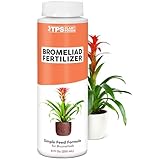
As a genus, these are light-feeding epiphytes that take nutrients mainly through their leaves and rosette cup: keep any fertilizer dilute and infrequent, favor foliar misting over soil feeding, and let feeding pause when growth slows in cool conditions.
Quick Fertilizing Specs
| Feeding Level | Light feeder |
|---|---|
| Main Nutrient Priority | Balanced feeding delivered mainly by foliar misting rather than through the soil |
| Best Feeding Period | Warm months when new growth and the flower spike are actively developing |
| Organic Options | Occasional light misting; heavy organic soil feeding is not appropriate for this epiphyte |
| Reduce/Stop Feeding | Stop feeding in the coolest part of the year when growth slows |
| Micronutrients | Iron and manganese usually come from a complete foliar feed; correct chlorosis only if it appears |
| Soil pH | Not soil-grown; tolerates a light, open, well-aerated mounting or potting medium |
Feeding by Growth Stage
Warm-season foliar growth
Support steady rosette and leaf growth through the warm active-growth months.
| Nutrient direction | A dilute, balanced complete fertilizer misted onto the foliage and into the central rosette cup, since this epiphyte draws nutrients mainly through its leaves rather than a soil root system. |
|---|---|
| Timing | Through the warm months when new leaves are actively forming. |
| Frequency | Light, infrequent foliar feedings are enough; this is a naturally low-demand epiphyte. |
| Fertilizer types | A dilute balanced fertilizer applied as a foliar mist to the leaves and rosette cup, A bromeliad- or orchid-labeled liquid feed diluted well below full strength |
| Routine trace nutrients | iron, manganese |
| Precautions | Keep any feed dilute and rinse the rosette cup with plain water occasionally; concentrated fertilizer collecting in the cup can scorch the base of the leaves. |
Flowering period
Maintain the plant’s vigor while it produces its colorful stemmed flower spike and bracts.
| Nutrient direction | Continue the same light, balanced foliar feeding; a balanced feed supports the bloom without pushing soft, weak growth. |
|---|---|
| Timing | While the flower spike and bracts are developing and in bloom. |
| Frequency | Feed lightly and only occasionally during this period. |
| Fertilizer types | A dilute balanced fertilizer applied as a foliar mist, continued at the same light rate as active growth |
| Routine trace nutrients | iron, manganese |
| Precautions | Avoid switching to a heavier or high-phosphorus feed for bloom; extra phosphorus does not improve flowering in this genus and can go unused in the mounting or potting medium. |
Cool-season rest
Let growth slow naturally when temperatures drop and light levels fall.
| Nutrient direction | None – withhold fertilizer while growth is slow in cooler conditions. |
|---|---|
| Timing | During the coolest part of the year, when the plant is kept toward the cool end of its tolerated range. |
| Frequency | No feeding at this stage; resume once warmer, actively growing conditions return. |
| Fertilizer types | No feeding at this stage; hold off fertilizing until warm active growth resumes. |
| Precautions | Do not fertilize a plant that is not actively growing; unused fertilizer salts can accumulate in the rosette cup and injure the leaf bases. |
Nutrient Deficiency Signs & Corrections
Older, outer leaves fade to pale green and overall rosette growth slows.
| Possible causes | low nutrient availability from too little foliar feeding, an old, spent mounting or potting medium with little organic matter, insufficient light limiting growth and nutrient uptake |
|---|---|
| Appears first on | older, outer leaves |
| What to check | recent feeding history, age and condition of the mounting or potting medium, light levels |
| Possible correction | Resume a light, balanced foliar feed and refresh the mounting or potting medium if it is old and depleted. |
Leaf tips and margins brown or scorch, especially near the rosette cup.
| Possible causes | fertilizer or mineral salts concentrating in the rosette cup, use of hard tap water instead of purified or rain water, overly concentrated or too-frequent feeding |
|---|---|
| Appears first on | leaf tips and the base of leaves near the cup |
| What to check | water source and hardness, fertilizer concentration used, how often the cup has been flushed with plain water |
| Possible correction | Flush the rosette cup with plain, low-mineral water, switch to purified or rain water, and dilute any future feed further. |
New, innermost leaves emerge pale yellow while the veins stay greener.
| Possible causes | iron made unavailable by hard, alkaline irrigation water, poor nutrient uptake from a waterlogged or old mounting medium, general low-fertility conditions |
|---|---|
| Appears first on | newest, innermost leaves |
| What to check | irrigation water pH and hardness, drainage and moisture of the mounting or potting medium, overall feeding history |
| Possible correction | Switch to purified or rain water, improve drainage, and apply a chelated iron product per its label if the pale color persists. |
Pruning, Training & Seasonal Maintenance
Aechmea species are tank-forming epiphytic bromeliads with no woody structure, so pruning tolerance is low and limited to grooming: dead leaves, and the flower/bract stem once it has finished its display. Each rosette flowers only once in its life and then slowly declines while basal pups take over, so cutting is driven by the plant’s own condition rather than a fixed calendar and can be done year-round. Because cold hardiness varies noticeably within the genus (roughly zone 10b+, with some species needing 11+ or even 12+), how cautious to be about cutting into a plant heading into cool weather depends on the individual species being grown.
Quick Pruning & Maintenance Specs
| Pruning Tolerance | Low – maintenance cuts only |
| Primary Pruning Window | All year, as needed |
| Typical Frequency | Light, ongoing |
| Main Objective | Remove dead leaves and the spent flower/bract stem; keep the tank clean |
| Young Plant Priority | Let pups establish their own roots before separating them |
| Mature Plant Priority | Clear the spent mother rosette once its pups are self-sufficient |
| Best Tool Type | Precision snips |
Pruning by Plant Age & Size
Newly Established
Limit work to removing clearly damaged or browned leaf tips; leave the rosette otherwise undisturbed while it settles into its new spot (potted, mounted, or grown in a tree crotch as an epiphyte).
Young / Formative
No structural training applies to a bromeliad rosette. The main early decision is when to separate a pup from the mother clump – generally once it has grown its own roots and reached roughly a third of the parent’s size – versus leaving it attached to build a fuller clump.
Mature / Established
Once the inflorescence (the colorful bracts and true flowers held above the foliage) has faded, cut the stem back to where it emerges from the rosette. The flowered rosette itself then declines gradually over the following months; remove it once its pups are well rooted, or leave it in place as long as it isn’t collapsing onto neighbors.
Seasonal Pruning Schedule
Ongoing Sanitary
Objective: a tidy, rot-free tank and rosette. Remove: dead or browning leaves, the faded flower/bract stem, and the declining mother rosette once pups are established. Do not remove: healthy leaves or small pups still drawing on the parent’s resources. Expected response: none – cutting does not stimulate new growth from a spent rosette. Flowering impact: none, since each individual rosette blooms only once regardless of pruning timing.
Structural Pruning & Training
Clump renewal: the clump renews itself through pups rather than by cutting back the flowered rosette. The only structural decision is how many pups to let mature in place versus dividing some off to keep the clump a manageable size on its mount or in its pot.
Special Growth to Remove
- Spent flower/bract stems: cut back to the rosette once the display has fully faded.
- Dead or damaged leaves: snip at the leaf base rather than pulling, which can tear live tissue.
- Offsets/pups: retain until self-rooted; separate afterward only if the clump needs thinning or for propagation.
- Tank debris: clear decaying leaf and flower material from the water-holding rosette center to prevent rot and stagnant buildup (also reduces mosquito breeding, a difficulty noted for this genus).
Container & Small-Space Pruning
Most commonly grown potted or mounted on cork/bark rather than in soil, consistent with the epiphytic habit. Control clump size in a confined pot or mount by separating rooted pups rather than trying to prune the rosette itself smaller, and disturb roots as little as possible when dividing.
Tools
Precision snips handle every cut needed – leaf and flower-stem tissue is soft with nothing woody to cut through, though the sharp marginal leaf spines noted for this genus warrant care (and gloves) when reaching in.
Tool Hygiene & Disease Risk
Increased. The genus is noted as susceptible to scale insects and mealybugs, both of which spread readily via sap residue left on blades; disinfect tools between plants if maintaining more than one Aechmea or a mixed bromeliad collection.
Cut Placement & Technique
Cut the flower/bract stem close to the rosette once fully spent, and remove dead leaves cleanly at their base rather than tearing. Wear gloves given the spined leaf margins typical of the genus.
Heavy Pruning & Rejuvenation
Not tolerated – a hard-cut rosette has no dormant tissue to regrow from. Renewal comes only from the pups the clump produces, not from cutting the existing rosette back.
Post-Pruning Care
Resume normal watering into the tank/rosette cup; no feeding or special treatment is needed after routine grooming cuts. Watch new growth for the pests typical of the genus (aphids, thrips, weevils, scale, mealybugs).
Common Pruning Mistakes
- Removing the mother rosette before its pups have rooted independently.
- Letting spent leaf and flower debris rot inside the water-holding tank instead of clearing it out.
- Tearing leaves off by hand instead of cutting cleanly at the base, which can injure the rosette.
When Not to Prune
Avoid cutting a still-colorful inflorescence purely for tidiness – it will not rebloom, so there’s no benefit to removing it early. For the more cold-tender species within this genus (those needing 11+ or 12+), avoid pruning right before a cold snap, since fresh cuts add stress a tender epiphyte doesn’t need going into cool weather.
Recommended Tools (by task)
- precision_snips – for spent flower/bract stems and dead leaf removal at the base.
- blade_disinfectant – to avoid spreading scale or mealybugs between plants via tool residue.
Propagation Guide
Across the Aechmea genus, offsets (daughter plants) removed from the base of the mother rosette are the most practical way to start new plants, since they grow into an exact copy of the parent; seed is also workable and is the route used to raise new plants at scale or from species crosses. Difficulty is easy by offsets, while raising from seed is a slower, more involved process best suited to patient growers.
Quick Propagation Specs
| Best Propagation Method | Division of offsets (daughter plants) |
| Alternative Methods | Seed |
| Propagation Difficulty | Easy (by offsets); Moderate by seed |
| Seed True-to-Type | Usually true-to-type for straight species; cultivar-dependent and unreliable for named hybrids and color selections |
| Vegetative True-to-Type | Yes |
| Best Propagation Season | End of spring to early autumn for sowing seed; offsets can generally be separated whenever they reach a viable size |
| Seed Germination Time | 1–2 months |
| Germination Temperature | 25–30°C (77–86°F) by day, cooler at night |
| Seed Sowing Depth | On the surface of the soil (not covered) |
Growing from Seed
Seed Handling & Viability
Use fresh seed for best results. Between collection and sowing, keep seed in a dry, dark location.
Sowing Season
End of spring to early autumn.
Sowing Depth & Orientation
Sow directly on the surface of sphagnum (peat moss) soil rather than burying the seed; keep the medium moist. Space seed at roughly 3×2cm (1.5×1 inch) if sowing multiple seeds in a tray.
Germination Conditions
Keep the sowing medium moist with high humidity, in a light, moist soil, at around 25–30°C (77–86°F) during the day with cooler night temperatures, and with plenty of light. Water lightly and avoid overwatering.
Germination Time
About 1–2 months.
Seedling Care
Care for seedlings the same as a mature plant, and move them on to a growing spot that stays free of algae buildup.
Division, Offsets, Pups & Suckers
It is not strictly necessary to propagate vegetatively, but starting from daughter plants (pups) is the easier and more common route. Wait until the pup has several leaves of its own and has reached a reasonable fraction of the mother’s size before separating it with a clean, sharp knife at the base; attached roots help but are not required. Pot the offset into the same well-drained, epiphyte-style mix used for mature plants and keep humidity elevated until it is established.
Bloom & Flower Guide
Quick Details
- Bloom Season: Can flower at almost any time of year, and a mature plant can be nudged into bloom in any season
- Time to First Bloom: Once the rosette matures (commonly three to four years); each rosette flowers once, then offsets (pups) carry on
- Flower Appearance: Inflorescences in many colours – purple, pink, red, green, orange, yellow or mixed – in a variety of shapes
- Edibility: Ornamental only – grown as a cut flower and houseplant, not for eating
Detailed Blooming Overview
Aechmea is a large bromeliad genus grown for bold, long-lasting flower spikes. Across the genus the flowers grow on stems in inflorescences of many shapes, and the true flowers are usually small and held among showy, brightly coloured bracts. With warmth and good light these plants can bloom in almost any season; as with most bromeliads, each rosette flowers a single time and then produces pups that become the next generation.
Flower Characteristics
- Flowers may be purple, pink, red, green, orange, yellow or more than one colour, borne on stems in varied inflorescences.
- Bracts take shapes such as cone, teardrop, round, spear or hive, and often carry most of the colour.
Bloom Care & Thinning
- Encouraging bloom: Bright light and steady warmth trigger flowering; a mature plant can be brought into bloom at any time of year.
- After flowering: Keep the pups – they replace the spent rosette for future blooms.
- Pollination: In the wild the flowers are visited by hummingbirds and insects; not needed indoors.
Pests, Diseases & Troubleshooting
Overview: This profile covers the Aechmea genus as a whole (Aechmea spp.), a large group of tank-forming bromeliads. Aechmea is a tough tank bromeliad that is largely pest-resistant; its defining vulnerability is crown and root rot from water mismanagement, followed by scale and mealybug in the sheltered leaf axils. Management is cultural first – clean water in the tank, an open fast-draining mix, good airflow – with hand-removal and beneficials for pests. Note that bromeliads are copper-sensitive, so copper fungicides are best avoided.
Quick Troubleshooting Overview
| Issue / Pest | Main Symptom | Primary Solution |
|---|---|---|
| Scale (Boisduval) | White scales & yellow flecks on leaf undersides/axils | Scrape off; remove old leaves; light oil off the tank |
| Mealybugs | Cottony masses in axils & tank, honeydew | Cotton-bud dab; remove leaves; beneficials; control ants |
| Bromeliad weevil | Bored, hollowed core; rosette collapse (outdoors) | Destroy infested plants; monitor; screening |
| Crown / heart rot | Soft brown smelly centre, core leaves pull out | Fresh moving water in tank; warmth & airflow; use pups |
| Leaf-tip browning | Brown crisp tips, crusty deposits | Rainwater in tank; feed lightly; flush salts |
| Copper injury | Scorched foliage after copper contact | Avoid all copper near bromeliads |
Common Pests & Management
- Bromeliad (Boisduval) scale (Diaspis boisduvalii):
- Symptoms: Circular white, greyish or pale scales encrusting the undersides and bases of the leaves, often in the shaded leaf axils, causing yellow chlorotic flecks and weakened, disfigured foliage – the classic and most damaging bromeliad scale.
- Prevention & Control: Wipe or scrape scales from the tough leaves with a cloth or soft brush, remove badly infested older leaves, and isolate new plants – scale usually arrives on imports. Encourage parasitic wasps and predatory beetles. If spraying, use a light horticultural oil, but keep oils out of the central tank and off the growing point.
- Mealybugs (Pseudococcus & Planococcus spp.):
- Symptoms: Cottony white masses in the leaf axils and around the tank and roots, with honeydew and sooty mould; leaves pale and lose vigour.
- Prevention & Control: Flush the tank and dab colonies with a cotton bud (dilute alcohol, kept off the growing point). Remove infested leaves, quarantine new plants, and release ladybirds or lacewings under cover. Control ants that tend them.
- Aphids (Aphis & Myzus spp.):
- Symptoms: Soft green or black insects clustering on the emerging flower spike and tender bracts, causing sticky, distorted inflorescences.
- Prevention & Control: Rinse off with a gentle spray or wipe away; encourage ladybirds and hoverflies. A dilute insecticidal soap spot-treatment handles heavy runs, kept off the open flowers and tank.
- Mexican bromeliad weevil (Metamasius callizona):
- Symptoms: In warm outdoor climates, the large larvae bore through the base and heart of the plant, hollowing the core and causing sudden collapse of the whole rosette – a serious threat to bromeliads grown outside in affected regions.
- Prevention & Control: Inspect for entry holes and frass at the leaf bases, destroy infested plants to break the cycle, and use pheromone monitoring where available. There are biological-control programmes in affected areas; for prized plants outdoors, protective screening helps.
- Two-spotted spider mite (Tetranychus urticae):
- Symptoms: Fine pale stippling and a dull, silvery cast on the leaves, with faint webbing, in hot, dry, poorly-ventilated conditions.
- Prevention & Control: Raise humidity and airflow, and rinse the foliage. Introduce predatory mites under cover; treat stubborn cases with a light oil, kept out of the tank and off the growing point.
- Thrips (Frankliniella & Thrips spp.):
- Symptoms: Silvery streaks, flecking and tiny black excrement specks on leaves and, especially, on bracts and flowers, with distorted new growth in warm dry spells.
- Prevention & Control: Use blue sticky traps to monitor, remove weeds and spent flowers that harbour them, and encourage predatory mites and minute pirate bugs. Spot-treat with insecticidal soap or spinosad if pressure is high, protecting pollinators.
Diseases & Fungal Issues
- Crown & heart rot (Phytophthora spp. and bacterial soft rot (Pectobacterium / Erwinia)):
- Symptoms: The central growing point and cup turn brown, soft and foul-smelling, and the core leaves pull out easily – the single most serious bromeliad disease, triggered by cold water standing in the tank, crown injury or overwet, airless conditions.
- Treatment & Management: Keep water moving through the tank and empty and refresh it, avoid cold water sitting in the cup in cool weather, and never let the growing point be damaged or waterlogged. Remove and destroy affected plants; a healthy offset (pup) is the best insurance. Because bromeliads are copper-sensitive, avoid copper products – rely on sanitation, warmth and airflow.
- Root rot (Pythium & Phytophthora spp.):
- Symptoms: Blackened, mushy roots and a wobbly, declining plant in an over-heavy, waterlogged potting mix – these epiphytes resent wet feet.
- Treatment & Management: Grow in a very open, fast-draining epiphyte mix (bark, perlite, coir), water the mix sparingly and rely more on the tank, and never leave the pot standing in water. Repot rotted plants into fresh open mix after trimming dead roots.
- Fungal leaf spots & rust (Helminthosporium/Bipolaris, Colletotrichum (anthracnose), rust fungi):
- Symptoms: Brown, black or reddish spots and blotches, sometimes with yellow halos or, for rust, powdery pustules on the leaf underside, in persistently wet, still conditions.
- Treatment & Management: Keep foliage drier and better ventilated, avoid overhead watering late in the day, remove spotted leaves, and space plants. Sanitation and airflow usually suffice; avoid copper fungicides on bromeliads and choose a bromeliad-safe product only if truly needed.
Growing Difficulties & Abiotic Problems
- Leaf-tip browning from salts / hard water:
- Cause & Symptoms: Fluoride, chlorine and dissolved salts in hard tap water, or excess fertiliser, brown the leaf tips and margins of these salt-sensitive epiphytes and leave crusty deposits.
- Correction Strategy: Fill and flush the tank with rainwater, distilled or filtered water, feed very lightly if at all, and periodically flush the mix and empty the cup to prevent salt build-up.
- Sunburn & bleaching:
- Cause & Symptoms: Sudden or excessive direct sun bleaches leaves pale and scorches them to dry brown patches, while insufficient light dulls the colour and prevents flowering.
- Correction Strategy: Provide bright, filtered light; acclimatise gradually to any direct sun. Adjust light to restore colour – many Aechmea need bright light to develop their markings and to bloom.
- Copper & chemical sensitivity:
- Cause & Symptoms: Bromeliads are notably sensitive to copper (and to some oils and systemics), which can scorch foliage and damage the plant – a common accidental injury from copper fungicides, treated wire or copper-tainted runoff.
- Correction Strategy: Avoid copper fungicides, copper wire and copper-containing runoff around bromeliads, and test any spray on one leaf first, keeping products out of the central tank.
- Overwatering the pot vs. the tank:
- Cause & Symptoms: Growers water the mix like a normal houseplant while also filling the tank, waterlogging the roots and rotting them; the plant declines despite a full cup.
- Correction Strategy: Water the potting mix only lightly and let it approach dryness, keeping the central tank topped with clean water as the main moisture source. Use an open epiphyte mix in a well-drained pot.
- Post-bloom decline of the mother plant:
- Cause & Symptoms: After flowering, the mother rosette naturally yellows and slowly dies over many months – mistaken for disease – while producing offsets (pups) at its base.
- Correction Strategy: This is the normal monocarpic life cycle, not a problem. Leave the pups attached until they reach about a third to a half of the parent’s size, then divide and pot them to continue the plant.
What Helps – Products & Tools
Cultural tools matter most: rainwater or filtered water for the tank, an open bark/perlite epiphyte mix, and good air movement. For pests keep cotton buds with dilute alcohol and a soft brush for scale and mealybug, light horticultural oil or insecticidal soap (kept out of the tank), blue sticky traps and spinosad for thrips, and predatory mites or ladybirds under cover. Crucially, avoid copper fungicides – rely on sanitation and airflow for disease. Individual species vary in size and spininess, but all share this tank-bromeliad pest and disease profile.