Plant Profile & Key Characteristics
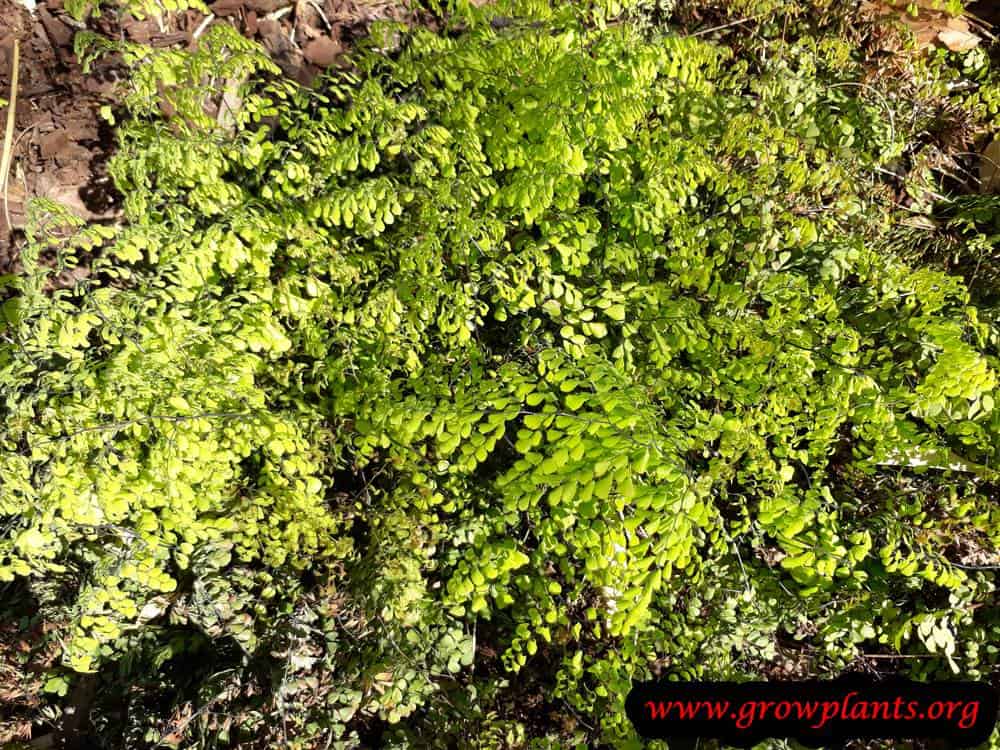
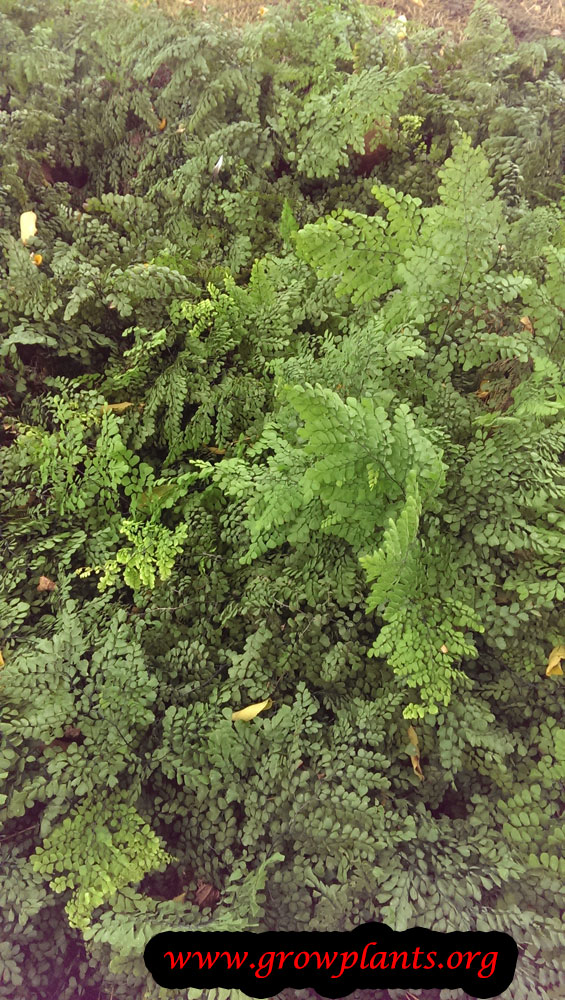
Overview: A compact Himalayan maidenhair fern grown for its delicate, finely divided fronds carried on the characteristic wiry black stems. This rhizomatous, evergreen (deciduous where winters are cold) perennial reaches roughly 30-70 cm (12-28 in) and is used as an ornamental foliage plant in mild climates or as a houseplant.
Quick Specifications
| Specification | Attribute |
|---|---|
| Plant Type / Life Cycle | Perennial (rhizomatous fern) |
| Foliage Type | Evergreen (deciduous in cold winters) |
| Mature Size | 30-70 cm (12-28 in) tall, with a similar spread |
| Growth Rate | Moderate |
| Root System | Rhizomatous, with fine fibrous shallow roots |
| Toxicity | Non-toxic to people and pets |
| Hardiness | USDA zone 5-10 |
Growth Form & Structure
- Height & Spread: About 30-70 cm (12-28 in) tall and roughly as wide in the ground; stays similarly compact in a pot or hanging container.
- Growth Habit & Form: Clump-forming fern that spreads by short rhizomes, producing arching, fan-shaped fronds on slender black stalks.
- Lifespan & Maturity: Long-lived perennial that reaches full size within a few seasons; being a fern it neither flowers nor fruits, reproducing instead by spores.
Anatomy & Physical Features
- Leaves & Foliage: Green fronds of small, ovate pinnae in triangular, pinnate fans; the fine texture and dark, wiry rachis are the classic maidenhair trait.
Primary Uses & Landscape Value
- Functional & Ornamental Roles: Ornamental foliage plant for shaded beds, terrariums and containers, and a popular indoor houseplant. Also has traditional medicinal use.
Care Guide: Planting, Soil & Watering
Overview: Adiantum venustum is a maidenhair fern that thrives in warm, humid, shaded spots with bright indirect light and rich, moist, well-draining soil. It needs steady moisture and humidity around the roots and fronds, so keep the soil consistently damp — never letting it dry out — while still allowing excess water to drain freely.
Quick Care Requirements
| Requirement | Ideal Condition |
|---|---|
| Planting Season | Spring through autumn during the warm season; avoid cold and frost |
| Growth Rate | Moderate |
| Soil Type | Rich, humus-rich, moisture-retentive but well-draining |
| Water Need | Moderate to High — keep consistently moist, never let it dry out |
Planting & Establishment
- Best Planting Season: Plant through the warm season, from spring into autumn, once the risk of cold has passed — these ferns dislike frost and prefer warm, sheltered, shaded ground.
- How to Plant:
- Hole Preparation: Dig a hole a little wider than the root ball in loose, humus-rich soil in a shaded, sheltered position.
- Soil Amendments: Work in plenty of compost, leaf mould and organic matter to hold moisture while keeping the soil open and free-draining.
- Planting Depth: Set the rhizome/crown at soil level, keeping it at the surface — do not bury the crown, which can cause it to rot.
- Growth Speed & Expectations: Moderate in optimal warm, humid conditions, steadily filling out into a soft mound of arching fronds (about 30–70 cm tall).
Soil, Watering & Drainage Care
- Soil Mix & Drainage Needs: Wants a rich, airy, moisture-retentive mix that still drains freely; in containers use a peat- or humus-based potting mix with a little perlite. Good drainage is essential — the fern likes damp soil but rots in standing water.
- Watering Schedule & Technique:
- Young / Newly Planted: Keep the soil evenly moist as the fern settles in, and maintain high humidity around it.
- Established: Water regularly so the soil stays consistently moist — maidenhairs collapse quickly if the soil dries out — but let excess water drain away.
- Seasonal Adjustments: Water more often in summer heat and dry air (misting helps); ease back a little in cool winter weather, but never let the roots go bone dry.
Climate, Light & Hardiness
Adiantum venustum thrives in humid, sheltered temperate, subtropical, or Mediterranean conditions typical of woodland-floor or understory growing sites; it tolerates a range from full sun (mainly in cool, humid, or overcast climates) to full shade, though hot or dry direct sun tends to scorch its delicate fronds. It is classed for USDA hardiness zone 5–10, giving it strong cold tolerance for an evergreen or deciduous woodland fern, and being semi-evergreen to cold-deciduous it is one of the more cold-tolerant maidenhairs, useful as a woodland-garden groundcover.
Quick Climate Specifications
| Climate Zones | Temperate, subtropical, or mediterranean |
|---|---|
| USDA Hardiness Zones | 5–10 |
| Optimal Temp Range | approximately 10–24°C (50–75°F) during active growth |
| Cold Damage Begins | Older fronds may brown and collapse in hard freezes, but new growth emerges reliably from the hardy rhizome each spring; this is largely normal seasonal behaviour rather than serious injury. |
| Approx. Survival Minimum | Established rootstocks are reliable through the stated zone range with a protective winter mulch at the coldest end. |
| Frost Tolerance | High |
| Light Conditions | Full Sun / Half Shade / Full Shade |
| Wind Tolerance | Low |
| Salt / Coastal Tolerance | Not suitable |
Sunlight & Light Exposure
Optimal Light Setup
Filtered or dappled light gives the most reliable results; full sun is only advisable in consistently cool, humid, or overcast climates where soil moisture can be kept constant.
Direct Sun Requirement
Not required, and risky in hot or dry climates - strong midday sun combined with low humidity quickly scorches and browns the fine foliage.
Shade & Heat Management
In warm climates, afternoon shade and consistent moisture prevent frond burn; in cooler, humid climates the plant tolerates more light.
Best Exposure / Orientation
An east-facing aspect (gentle morning sun, shade by midday) or a spot under open tree canopy generally works well outdoors; indoors, a bright spot out of direct south- or west-facing window glare is preferable.
Temperature Extremes & Hardiness
USDA Hardiness & Regional Limits
Reliably grown outdoors year-round within USDA zone 5–10; outside that range it needs container culture, winter protection, or indoor/greenhouse growing over the cold months.
Cold Damage & Winter Protection
Older fronds may brown and collapse in hard freezes, but new growth emerges reliably from the hardy rhizome each spring; this is largely normal seasonal behaviour rather than serious injury.
Frost Sensitivity
Established plants generally tolerate light frost, though soft new growth is more vulnerable; young or recently divided plants are noticeably more cold-sensitive than established clumps.
Extreme Heat Tolerance
Sustained heat is tolerated only with high humidity and consistently moist soil; hot, dry air causes rapid frond browning regardless of hardiness zone.
Wind, Humidity & Microclimate
Humidity Preferences
High ambient humidity is important for healthy, unblemished fronds.
Dry-Air Tolerance
Low - dry indoor air (especially from heating or air-conditioning) commonly causes crisping, browning frond tips and margins; grouping plants, a pebble humidity tray, or occasional misting helps.
Wind Tolerance
Poor; fronds are thin and tear or brown in exposed, windy positions, so a sheltered courtyard, understory, or indoor location is preferred over open, breezy sites.
Coastal / Salt Tolerance
Not suitable for direct salt spray or exposed coastal planting; the fine foliage is easily burned by airborne salt.
Rainfall & Seasonal Moisture
Native to consistently moist, humid climates; it adapts poorly to a pronounced dry season and performs best where atmospheric and soil moisture stay fairly even year-round.
Microclimate Recommendations
Site it out of direct wind and hot afternoon sun, ideally near other foliage or a humid microclimate (courtyard, shaded patio, bathroom/kitchen window indoors).
Growing in Pots, Balconies & Indoors
Himalayan maidenhair (Adiantum venustum) is an excellent houseplant – the grower confirms it grows well indoors and in containers. Like most ferns it prefers steady moisture, high humidity and bright, indirect light rather than harsh direct sun, which makes a shaded windowsill, bathroom or shaded patio its natural home in a pot.
Quick Details
- Container Size: A modest 5-15 L (1-4 gal) pot suits its compact 30-70 cm (12-28 in) size; pot up as the rhizome fills out
- Indoor Suitability: A genuine houseplant – happy in a bright, shaded room
- Best Spot: Bright, indirect light; it tolerates shade and will take gentle morning sun, but hot direct sun burns the fronds
- Soil & Drainage: Rich, moisture-retentive but free-draining mix; it likes constant moisture without waterlogging
- Watering in Pots: Keep the mix evenly moist and never let it dry out – pots dry fast, and ferns resent drought; high humidity is key
Indoors & On the Windowsill
- A true houseplant: The grower confirms it grows well indoors. Give it bright, indirect light, steady moisture and high humidity – it is a natural for a shaded windowsill, a bathroom, or a terrarium.
- Humidity & light: Dry indoor air and hot direct sun are its main enemies. Keep it off scorching south-facing sills; mist the fronds, stand the pot on a humidity tray, or group it with other plants.
- Overwintering: Tender types (from warm, frost-free climates) should spend cold winters indoors as houseplants; hardier maidenhairs can stay outside in mild areas, but a pot lets you shelter them from hard frost – a key reason to grow ferns in containers.
On a Balcony or Patio
- Light & shelter: Choose a shaded, sheltered corner – a north or east aspect, or under a canopy. Ferns dislike wind, hot sun and reflected heat from walls and railings, all of which dry and crisp the fronds.
- Moisture: Pots on a balcony dry out quickly, so check daily in warm weather and keep the mix moist; grouping pots together raises humidity around the fronds.
- Practicalities: Provide free drainage and mind the runoff on paving or a shared balcony; a large planter is heavy once wet, so position it before filling.
Choosing the Pot, Soil & Long-Term Care
- Pot & drainage: Any pot with strong drainage holes; skip a standing water saucer to avoid root rot. Terracotta breathes and dries fast (you will water more often), while glazed or plastic pots hold moisture longer – useful for a thirsty fern.
- Potting mix: A rich, well-aerated organic mix – peat or coir with perlite or vermiculite, plus leaf mould if you have it – holds the steady moisture ferns need while still draining.
- Feeding: Potted plants need feeding more often than those in the ground, as watering leaches nutrients away; give a dilute, balanced feed through the warm growing season and ease off in the cool season.
- Repotting: Refresh the mix and pot up about every two years; divide crowded clumps or rhizomes in the growing season and trim away any dead or tired fronds.
Fertilizing & Feeding
A cold-hardy, woodland groundcover fern adapted to lean humus soil; it needs only light feeding as new fronds emerge in spring, and excess fertilizer tends to push weak, floppy growth.
Quick Fertilizing Specs
| Feeding Level | light |
|---|---|
| Main Nutrient Priority | A light, balanced feed as new fronds emerge in spring supports this cold-hardy groundcover fern |
| Best Feeding Period | Spring as the flush of new fronds emerges |
| Reduce/Stop Feeding | Feeding tapers off naturally as fronds mature over summer and stops once the plant goes dormant or semi-dormant in cold winters |
| Soil pH | Prefers a humus-rich, well-drained woodland soil on the neutral to slightly acidic side |
| Organic Options | Compost or leaf mold top-dressing suits this woodland fern well |
| Micronutrients | Not usually a concern in humus-rich garden soil |
Feeding by Growth Stage
Spring frond flush
Support the flush of new fronds as this cold-hardy fern breaks dormancy in spring.
| Nutrient direction | A light, balanced feed encourages fresh fronds without pushing soft, salt-sensitive growth. |
|---|---|
| Timing | Early to mid spring as new fronds emerge. |
| Frequency | A light application as new growth begins is usually enough for this modest-demand woodland fern; a further light feeding can follow later in spring if growth looks vigorous. |
| Fertilizer types | A diluted balanced granular or liquid garden fertilizer worked in as new fronds emerge, A light compost or leaf mold top-dressing |
| Precautions | Keep feeding light; this fern is adapted to lean woodland soil and excess fertilizer can push weak, floppy growth. |
Summer maintenance
Maintain steady, unhurried growth through summer without pushing excess soft growth.
| Nutrient direction | Minimal feeding is usually enough once the spring flush has hardened off; rely mainly on organic matter already in the soil. |
|---|---|
| Timing | Through summer once spring fronds have matured. |
| Frequency | Feeding needs drop off considerably; a single light top-up is worthwhile only if growth looks pale or sparse. |
| Fertilizer types | A light balanced feed only if growth looks pale or sparse, Compost or organic mulch to maintain soil fertility |
| Precautions | Avoid routine feeding through summer; rely on soil organic matter and step in only if the fern shows clear signs of hunger. |
Cold-season dormancy
Let the fern rest through the cold season when growth stops.
| Nutrient direction | None – withhold feeding through dormancy or the cold-season slowdown. |
|---|---|
| Timing | Winter, or the cold-season rest period in colder zones. |
| Frequency | No feeding at this stage. |
| Fertilizer types | No feeding at this stage; resume only once new spring growth begins. |
| Precautions | Do not fertilize dormant or resting plants; let the soil’s organic matter carry it through winter. |
Nutrient Deficiency Signs & Corrections
Pale, stunted fronds with a noticeably thin spring flush.
| Possible causes | Nutrient-poor or compacted garden soil, Heavy competition from nearby plants for available nutrients, Insufficient organic matter built up in the soil |
|---|---|
| Appears first on | New spring fronds |
| What to check | Soil fertility and structure, Competing nearby plant roots, Recent organic matter or feeding history |
| Possible correction | Work compost or a light balanced feed into the soil as spring growth begins and improve soil organic matter over time. |
New fronds emerge pale yellow-green while the fine veins stay darker green.
| Possible causes | Alkaline garden soil limiting iron uptake, Waterlogged, poorly drained planting sites, Iron tied up and unavailable in high-pH soil |
|---|---|
| Appears first on | Newest fronds |
| What to check | Soil pH, Drainage at the planting site, Overall root health |
| Possible correction | Improve drainage and work in organic matter to acidify the soil, applying a chelated iron product per its label if chlorosis persists. |
Older fronds show yellowing between the veins while the veins stay green.
| Possible causes | Leaching from heavy rain or frequent irrigation, Sandy or nutrient-poor soil low in magnesium, A long history of feeding with a fertilizer that skips secondary nutrients |
|---|---|
| Appears first on | Older, lower fronds |
| What to check | Soil texture and drainage, Rainfall or irrigation frequency, Which fertilizer, if any, has been used |
| Possible correction | Improve soil organic matter and switch to a complete fertilizer that includes secondary nutrients if symptoms persist. |
Pruning, Training & Seasonal Maintenance
Himalayan maidenhair is the most cold-hardy fern in this group (zone 5–10) and, unlike its more tender relatives, reliably behaves as cold-deciduous in temperate gardens: its ovate-pinnae fronds collapse and brown after the first hard frost. This makes an annual dormant-season cutback genuinely useful rather than optional cosmetic tidying – it clears frost-killed foliage before the new fiddleheads push through in spring and keeps this low, spreading groundcover fern looking clean through its bare season. Cutting live fronds has no bearing on flowering, since ferns spread by rhizome and reproduce by spores rather than by flowering.
Quick Pruning & Maintenance Specs
| Pruning Tolerance | Moderate-High – tolerates a full annual cutback to the ground very well, more so than most relatives in this group, since it naturally dies back each winter anyway |
| Primary Pruning Window | Late winter/very early spring, after the frost-killed fronds have fully collapsed but before new fiddleheads emerge |
| Secondary Maintenance Window | Light grooming through the growing season, removing any damaged fronds |
| Typical Frequency | One thorough annual cutback plus occasional light tidying |
| Main Objective | Clear collapsed frost-killed foliage to keep the crown clean and let the spring flush emerge unobstructed |
| Young Plant Priority | Hands-off in the first year – let the rhizome establish and spread before any hard cutback |
| Mature Plant Priority | Annual dormant-season cutback to the ground; divide or contain the spreading rhizome mat as it expands |
| Best Tool Type | Precision snips for individual fronds, or shears for a quick whole-mat cutback given how reliably this species regrows from the base |
| Avoid Heavy Pruning During | While new fiddleheads are actively unfurling in spring |
Pruning by Plant Age & Size
Newly Established
In the first year, remove only fronds damaged in planting; let the young rhizome mat establish and spread before any hard cutback. No structural training applies to this groundcover fern.
Mature / Established
Once established, this species takes a full annual cutback to the ground well – the standard maintenance approach for it as a groundcover – and benefits from occasional division to keep the spreading mat within bounds.
Seasonal Pruning Schedule
Dormant/Winter
Cut all collapsed, frost-killed fronds down to the crown in late winter, once the die-back is complete but before new croziers appear. What NOT to remove: the crown/rhizome itself, which survives frost even though the foliage above it does not. Expected response: a fresh flush of new fronds emerges reliably in spring.
Ongoing Sanitary
During the growing season, remove any individually damaged or off-color fronds as noticed.
Special Growth to Remove
Collapsed frost-killed fronds, cut or raked away at the crown each winter. Because this species spreads by rhizome to form a groundcover mat, runners extending beyond the intended planting area can be cut back or dug out to contain spread; sections of rhizome removed this way can be replanted elsewhere.
Container & Small-Space Pruning
Where grown in a pot rather than as an open groundcover, its spreading habit means the rhizome will reach the container edge and need periodic division to stay in bounds; the annual winter cutback still applies and, in a container, makes a good moment to divide and repot at the same time.
Tools
Precision snips for selective grooming; hand shears are reasonable for the annual whole-mat cutback given how reliably and uniformly this species regrows from the base, something not recommended for its non-hardy relatives.
Tool Hygiene & Disease Risk
Routine – keep blades clean and sharp. No specific transmissible pathogen is documented; noted pest pressure is snails and slugs, particularly on the fresh spring flush emerging through old leaf litter.
Cut Placement & Technique
For the annual cutback, cut fronds at or just above ground level across the mat; for spot-grooming, cut individual stipes at the base. Avoid cutting into the crown/rhizome itself.
Heavy Pruning & Rejuvenation
A full cutback to the ground is not just tolerated but the normal annual maintenance for this species – unlike its frost-tender relatives, it is built to regrow completely from the rhizome each spring. Older, congested mats can also be lifted and divided during this window to rejuvenate vigor.
Post-Pruning Care
After the winter cutback, keep the bed or pot consistently moist as the spring flush emerges; no fertilizer is needed to “push” regrowth – the dormant cutback itself triggers it. Watch for slugs finding the tender new fiddleheads.
Common Pruning Mistakes
Cutting back too early, before frost has finished collapsing the foliage, which can mean a second round of dieback to clean up; leaving the winter cutback too late and damaging emerging fiddleheads; letting the spreading rhizome mat go undivided for years, leading to a congested, less vigorous center.
When NOT to Prune
Avoid cutting while new fiddleheads are actively unfurling in spring; there is no flowering season or fruit set to work around for this fern.
Recommended Tools (by task)
- precision_snips – for selective grooming and cleanup around emerging fiddleheads.
- hedge_shears – a quick, even option for the annual whole-mat dormant cutback, appropriate here specifically because this species reliably regrows uniformly from the base, unlike its non-hardy relatives.
- garden_spade – for dividing and containing the spreading rhizome mat.
Propagation Guide
Himalayan maidenhair is one of the more cold-hardy and vigorously spreading Adiantum species, forming a creeping groundcover mat that is easily and productively multiplied by rhizome division; spore propagation also works but is far slower. Because established colonies spread readily, division is one of the easiest and most productive propagation methods among cultivated ferns for this species.
Quick Propagation Specs
| Best Propagation Method | Rhizome division |
| Alternative Methods | Spores |
| Propagation Difficulty | Easy |
| Vegetative True-to-Type | Yes |
| Best Propagation Season | Early spring, as new fronds emerge (within the site’s spring-summer-autumn planting window) |
Rhizomes, Tubers, Bulbs & Corms
Rhizome Division
Divide established plantings in early spring, ideally just as new growth resumes, giving divisions a full season to root in before the semi-evergreen foliage goes through its cooler-season rest. Because this species spreads by creeping rhizomes to form a mat, small rooted offshoots can often be lifted from the margin of an established colony without disturbing the whole planting, provided each piece keeps enough rhizome, roots, and fronds attached. Replant immediately into a rich, well-drained, moisture-retentive mix and keep consistently moist and shaded until new growth confirms establishment.
Spores
Fertile fronds carry sori under the reflexed leaflet-margin tips; once mature, collect and sow them onto a sterile, constantly moist medium kept enclosed, humid, and in bright indirect light. Germination and development to a visible young fern is slow, typically taking many weeks to a few months, and is a specialist alternative to the much faster and simpler division method.
Fruit & Uses
Safety note first: Adiantum venustum (Himalayan maidenhair fern, known regionally as "Hansraj") is not a mainstream food crop – any edible use is a local/traditional one, not a validated modern vegetable, and the young fronds must always be cooked, never eaten raw. In the Himalayan region the young unfurling fronds (rachises) are traditionally boiled and eaten as a wild green, and the whole frond is more widely used as a boiled herbal decoction (tea) for coughs, colds and fevers rather than as a everyday food.
Quick Edible Specs
| Edible Parts | Young unfurling fronds / shoots (rachises); mature fronds mainly as a boiled decoction, not eaten as such |
|---|---|
| Main Use(s) | Traditional/local wild green (young shoots); medicinal-note – fronds boiled as a folk herbal tea/decoction |
| Eaten Raw or Cooked | Cooked only – never eaten raw |
| Preparation Required | Cook (boil); discard the cooking water |
| Harvest Season | Spring flush, when new fronds are young and still unfurling (fiddlehead stage) |
| Time to First Harvest | Not applicable in a crop sense – this is a wild-gathered/foraged use from an established, actively growing fern, not a planted food crop with a harvest timeline |
| Storage | Best used fresh shortly after picking; not typically stored or preserved |
| Safety/Toxicity Caveat | Only very young, tender fronds are used, and always after boiling; like many ferns, mature or raw fronds are considered unsuitable for eating, and this is a local/traditional use, not a recommended everyday vegetable – do not substitute for identified edible fiddlehead ferns (e.g. ostrich fern) without proper species confirmation |
Shoots & Stems
The tender, still-curled young fronds (fiddleheads) that emerge in spring are the part traditionally gathered. They are picked while small and soft, before they unfurl and the stipes (stems) harden and darken, then boiled before eating as a foraged green – this softens the tissue and is the traditional preparation step. This is a minor, local/foraged use rather than a cultivated vegetable crop, and picking young growth for eating will reduce the number of fronds left to mature and photosynthesize, so it should be done lightly on an established plant.
Leaves & Greens
Beyond the young shoot stage, the mature fronds (leaves) of this fern are the part used to make a traditional herbal decoction: fronds are boiled in water and the liquid is drunk as a folk remedy for coughs, colds and fever in Himalayan/Ayurvedic traditional practice, where the plant is known as "Hansraj." The fronds themselves are not eaten at this stage – only the boiled liquid is consumed.
Harvesting
For the young-shoot use, gather only the newest, still-curled fronds in spring; for the decoction use, mature green fronds can be cut and dried or used fresh. Either way, take a modest amount at a time so the plant retains enough foliage to keep growing – see Pruning for general frond-cutting guidance.
Preparation, Uses & Safety
Both uses require cooking: young fronds are boiled before being eaten as a wild green, and mature fronds are boiled to make the traditional decoction, which is drunk rather than eaten. This species has a long history of traditional/folk use in the Himalayan region for coughs, colds and fever, but this is a traditional practice, not a validated medical treatment – no dosing or health claims are made here, and these preparations should not replace proper medical care. Because this is a foraged/traditional use rather than a widely cultivated vegetable, positive identification of the species and moderation are both advised.
Pests, Diseases & Troubleshooting
Overview: The Himalayan maidenhair is the hardiest species, semi-evergreen and frost-tolerant as a groundcover, so outdoors slugs, snails and Botrytis in damp shade matter more than indoor humidity. Maidenhair ferns (Adiantum venustum) are rarely destroyed by insects; their real weaknesses are cultural – humidity, water quality and drainage – with sap-suckers (scale, mealybug, aphid) and moisture-loving fungi as secondary problems. Because the fine fronds burn easily, management leans hard on cultural and organic methods first: correct the environment, use mechanical removal and biological controls, and treat with chemicals only diluted and cautiously.
Quick Troubleshooting Overview
| Issue / Pest | Main Symptom | Primary Solution |
|---|---|---|
| Scale / mealybug | Waxy bumps or cottony tufts on stalks, sticky honeydew | Wipe off by hand; isolate; very dilute oil/soap only if needed |
| Fungus gnats | Tiny flies over wet peat; roots grazed | Let surface dry; grit top-dressing; Bt-israelensis / nematodes |
| Spider mites | Dull stippled fronds, fine webbing in dry air | Raise humidity & airflow; predatory mites |
| Crown / root rot | Blackened mushy crown, collapse in wet mix | Free-draining mix; even moisture, never soggy |
| Tip / frond browning | Even brown crisp tips and margins | Boost humidity; use pure water; flush salts; trim & regrow |
| Leaf spot / grey mould | Brown-black spots or grey fuzz on fronds | Keep foliage dry; ventilate; remove affected fronds |
Common Pests & Management
- Scale insects (Coccus, Pinnaspis & Hemiberlesia spp.):
- Symptoms: Small brown, tan or white waxy bumps clinging to stipes (leaf stalks), rachises and the undersides of pinnules; sticky honeydew and later sooty mould on soft scale species; fronds pale, weak and thin. Easily mistaken for spore-bearing sori, which are neat, regular rows or margins on the underside – scale is scattered and lumpy.
- Prevention & Control: Ferns resent oils and many contact sprays, so lead with mechanical control: wipe or dab individual scales off the tough stalks with a cotton bud, prune out heavily infested fronds, and isolate new plants. Encourage predatory beetles and parasitic wasps. Only if pressure is high, use a very dilute horticultural-oil or insecticidal-soap solution, tested first on one frond, applied in cool shade – never on stressed or sun-hit fronds.
- Mealybugs (including root mealybugs) (Pseudococcus longispinus, Planococcus citri, Rhizoecus spp.):
- Symptoms: Cottony white tufts in frond crotches, at the crown and along stalks; root mealybugs show as white waxy ‘mould’ on the root ball and pot wall with sudden loss of vigour. Honeydew and sooty mould accompany foliar colonies.
- Prevention & Control: Dab visible colonies with a cotton bud (avoid alcohol at strength on delicate pinnae – it scorches). For root mealybug, unpot, wash the roots clean, discard old mix and repot into fresh sterile medium. Keep plants uncrowded, inspect the crown regularly, and release beneficials in a greenhouse.
- Fungus gnats (Bradysia & Sciara spp. (Sciaridae)):
- Symptoms: Tiny dark flies drifting up from constantly moist peat; translucent, black-headed larvae in the top layer that graze tender roots and fern prothalli, weakening young or freshly-divided plants.
- Prevention & Control: Let the surface dry slightly between waterings, top-dress with a layer of coarse grit or sand, and use yellow sticky cards to catch adults. Bacillus thuringiensis israelensis drenches or beneficial nematodes control larvae without harming the fern. Avoid the chronically waterlogged mix these ferns are prone to.
- Aphids (Myzus persicae, Aphis spp.):
- Symptoms: Clusters of soft green, black or pinkish insects on unfurling croziers and the newest, tenderest pinnae, causing distorted, sticky new growth; shed white skins and honeydew.
- Prevention & Control: Dislodge with a gentle water rinse, pinch off badly curled new fronds, and let ladybirds, lacewings and hoverflies build up. Insecticidal soap works but must be very dilute and rinsed off, as maidenhair foliage burns readily.
- Two-spotted spider mite (Tetranychus urticae):
- Symptoms: Fine pale stippling and a dull, dry look to the fronds, with faint webbing at pinnae junctions in hot, dry indoor air – the very conditions that already stress a humidity-loving maidenhair. Fronds bronze and crisp.
- Prevention & Control: Raise humidity and air movement, which both suppress mites and suit the fern; rinse foliage periodically. Introduce predatory mites (Phytoseiulus persimilis) under cover. Miticidal soaps and oils risk frond burn, so use only diluted and sparingly on a tested frond.
- Slugs & snails (Deroceras, Helix & Cornu spp.):
- Symptoms: Ragged holes and chewed, shredded new croziers and pinnae, with slime trails, on plants grown outdoors, in terrariums or in shaded damp beds – fresh fern growth is a favourite.
- Prevention & Control: Hand-pick after dark, remove damp hiding places and leaf litter nearby, set beer traps or copper barriers around pots, and scatter iron-phosphate pellets, which are pet-safe, where damage is active.
Diseases & Fungal Issues
- Root & crown rot (Pythium & Rhizoctonia spp.):
- Symptoms: Blackened, mushy crown and roots, wilting despite moist soil, and collapse of the whole plant – the commonest killer of maidenhairs, driven by a soggy, airless mix.
- Treatment & Management: Use an open, free-draining peat/perlite/bark mix, water to keep evenly moist but never waterlogged, and never let the pot stand in water. Remove and destroy rotted plants; salvage healthy crown divisions into fresh sterile mix. Improve drainage and airflow rather than reaching for fungicide.
- Grey mould / Botrytis blight (Botrytis cinerea):
- Symptoms: Fuzzy grey-brown mould on fronds, with soft tan blotches spreading in cool, still, over-humid air, especially on crowded or damaged foliage.
- Treatment & Management: Increase ventilation and spacing, avoid wetting foliage late in the day, and promptly cut out affected fronds. Clear fallen debris. Only persistent cases warrant a fern-safe fungicide once cultural airflow is corrected.
- Fungal & bacterial leaf spot / tip blight (Cylindrocladium, Colletotrichum, Pseudomonas spp.):
- Symptoms: Brown or black spots, blotches, or blackened advancing frond tips, sometimes with yellow halos; may spread along a wet frond. Distinguish from harmless brown sori and from salt-scorch, which is even and marginal.
- Treatment & Management: Keep foliage dry, water at the base, remove infected fronds and improve air circulation. Sanitise tools between plants. Copper products can be used cautiously but ferns are sensitive, so prioritise sanitation and dryness of the foliage.
Growing Difficulties & Abiotic Problems
- Frond browning & crisping (low humidity / drafts):
- Cause & Symptoms: Maidenhairs demand consistently high humidity; dry indoor air, heating vents, air-conditioning or cold drafts cause tips and whole pinnae to brown, curl and shrivel, often the number-one complaint.
- Correction Strategy: Grow in a humid, draft-free spot (bathroom, grouped plants, pebble tray or humidifier), away from radiators and vents. Trim dead fronds to the base to force fresh growth; recovery is usually good if the crown stays alive.
- Salt & fertiliser scorch:
- Cause & Symptoms: These ferns are very salt-sensitive; strong feed or accumulated salts burn the delicate pinnae, giving even brown margins and tips and a crusty pot rim.
- Correction Strategy: Feed at quarter to half strength with a balanced fertiliser during active growth only, and flush the pot with plain water periodically to leach salts. Never feed a dry or stressed plant.
- Chlorine / fluoride tip burn:
- Cause & Symptoms: Tap water high in chlorine, chloramine or fluoride causes browned frond tips and margins in these sensitive ferns.
- Correction Strategy: Water with rainwater, filtered or distilled water, or tap water left to stand, and keep the mix evenly moist to avoid concentrating salts.
- Under- or over-watering:
- Cause & Symptoms: A single drying-out can crisp an entire maidenhair, while chronic sogginess rots the crown – both are common because the fern’s moisture window is narrow.
- Correction Strategy: Keep the mix evenly, lightly moist at all times; water when the surface just begins to dry, using a free-draining medium and a pot with drainage. If a plant dries and browns, cut it back and keep the crown moist – it often reflushes.
- Leaf scorch from direct sun:
- Cause & Symptoms: Direct sun bleaches and scorches fronds to papery brown patches; maidenhairs are understorey plants adapted to shade.
- Correction Strategy: Provide bright indirect light or dappled shade; shield from midday sun. Move plants gradually to avoid shock.
What Helps – Products & Tools
For this fern reach first for cultural and gentle tools: a humidifier or pebble tray, yellow sticky traps, cotton buds for hand-removal, coarse grit top-dressing, and rainwater or filtered water. If treatment is unavoidable, use very dilute insecticidal soap or light horticultural oil (tested on one frond, applied in cool shade), Bacillus thuringiensis israelensis or beneficial nematodes for gnats, iron-phosphate slug pellets outdoors, and only sparing copper for leaf spot. Grown outdoors, prioritise slug/snail control and airflow over the humidity concerns of tender indoor species.
Frequently Asked Questions
What is Adiantum venustum (Himalayan maidenhair fern)?
Adiantum venustum, the Himalayan maidenhair fern, is a compact fern grown for its delicate, finely divided fronds carried on characteristic wiry black stems. It’s a rhizomatous perennial that stays evergreen in mild climates but is deciduous where winters are cold, reaching roughly 30-70 cm (12-28 in) tall. It’s grown as an ornamental and traditional medicinal groundcover for shaded gardens.
How do you care for Himalayan maidenhair fern?
Adiantum venustum thrives in warm, humid, shaded spots with bright indirect light and rich, moist, well-draining soil. Keep the soil consistently damp and never let it dry out, while still allowing excess water to drain freely. Water more often in summer heat and dry air (misting helps), and ease back a little in cool winter weather, but never let the roots go bone dry.
Is Himalayan maidenhair fern toxic to pets?
No. Himalayan maidenhair fern is non-toxic to people and pets.
Can Adiantum venustum be grown indoors as a houseplant?
Yes. Himalayan maidenhair is an excellent houseplant that grows well indoors and in containers. A modest 5-15 L (1-4 gal) pot suits its compact 30-70 cm (12-28 in) size, potting up as the rhizome fills out.
How do you propagate Himalayan maidenhair fern?
Rhizome division is the easiest and most productive method. Divide established plantings in early spring, ideally just as new growth resumes, giving divisions a full season to root in before the semi-evergreen foliage goes through its cooler-season rest. Small rooted offshoots can often be lifted from the margin of an established colony without disturbing the whole planting, provided each piece keeps enough rhizome, roots, and fronds attached. Spores are an alternative, but germination and development to a visible young fern is slow, typically taking many weeks to a few months.
Should Himalayan maidenhair fern be cut back in winter?
Yes. This is the most cold-hardy maidenhair, and its fronds collapse and brown after the first hard frost, so an annual dormant-season cutback is genuinely useful. Cut all collapsed, frost-killed fronds down to the crown in late winter, once the die-back is complete but before new croziers appear. Once established, this species takes a full annual cutback to the ground well as its standard maintenance.