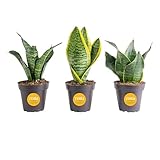
Snake plant (Dracaena trifasciata, reclassified from Sansevieria trifasciata in 2017 and still widely sold under that older name) is one of the most forgiving houseplants there is. Indoors, the two things that matter most are light for good leaf colour and restraint with the watering can – nearly all indoor snake plant problems come from too much water, not too little.
Light and placement
Snake plant tolerates almost any indoor light, from a bright south-facing window down to a dim corner, which is why it’s such a common low-light houseplant recommendation. It will survive in low light, but leaf colour and growth are best in bright, indirect light, and flowering (which is rare and unpredictable indoors anyway) is more likely with more brightness. Avoid days of intense direct sun through unfiltered glass, which can scorch the leaves – if moving a plant from a dim spot into a sunny window, do it gradually.
Watering indoors
Water only once the soil has dried out almost completely, then water thoroughly and let it drain fully – never let the pot sit in a saucer of standing water. Indoors, with less light and airflow than outdoors, soil stays wet for longer, so err on the side of underwatering. In winter, when growth slows further, cut back to watering only occasionally.
Soil and container drainage
Use a fast-draining mix – a cactus or succulent potting mix, or a standard mix opened up with extra perlite or coarse sand – in a pot with drainage holes. Poor drainage is the single biggest cause of indoor snake plant failure, since standing moisture rots the rhizome. A wide, shallow pot suits the plant’s shallow rhizome better than a tall, deep one.
Temperature
Normal indoor room temperature suits it well; keep it away from cold drafts, single-glazed windowsills in winter, and heating vents that blast hot, dry air directly onto the leaves.
Common indoor mistakes
The most common problem is overwatering – soft, mushy, yellowing leaves or a collapsing base usually mean the roots or rhizome have started to rot from staying wet. Other frequent issues indoors: a pot with no drainage hole, a saucer left full of water after watering, and moving a shade-grown plant into direct sun too quickly, which scorches the leaves. Before bringing a snake plant in from outdoors for winter, check it over for pests, since there are no natural predators indoors to keep them in check.
Repotting
Snake plant grows slowly and is happy pot-bound for a long time, so repotting is rarely urgent. Move up a pot size when the rhizome mass fully fills the container or growth stalls; if you want it to flower, keep it in a snug pot rather than moving up early, since a slightly pot-bound plant blooms more readily than one with lots of spare room.
Quick questions
Why are my snake plant’s leaves going soft and mushy? This is almost always overwatering or poor drainage causing rot at the base – let the soil dry out fully and check the pot has drainage holes.
Can snake plant survive in a room with no natural light? It tolerates low light better than most houseplants, but it needs at least some ambient daylight to stay healthy long-term – it isn’t suited to a windowless room.
Is Sansevieria the same plant as Dracaena trifasciata? Yes – it’s the same species; Sansevieria was merged into Dracaena in 2017, but both names are still used interchangeably.
Related guides
If watering consistency is the issue, see our guide to watering cans, tools and drip irrigation.