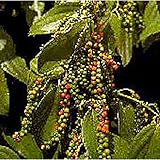
Black pepper (Piper nigrum) is a climbing vine, not a bush or tree – and that single fact drives almost everything about growing it successfully. Give it warmth, high humidity, and something to climb, and a single vine can produce peppercorns for years.
Climate and temperature
Black pepper is a true tropical plant. It grows actively between 20-35°C (68-95°F), with 23-32°C (73-90°F) the productive range and around 28°C (82°F) widely considered optimal. Growth stops below about 18°C (64°F), so night temperatures should stay above 15-18°C. Outside the tropics, this means container growing with a move indoors (or into a heated greenhouse) whenever nights turn cool.
Humidity
This is the detail most home growers underestimate: black pepper wants high humidity, ideally 60-90%, with around 80% considered optimal. Dry indoor air is a common reason potted plants struggle. Grouping plants together, standing the pot on a pebble tray, or running a humidifier nearby all help.
Support: it’s a vine, not a shrub
Piper nigrum is a climbing vine that naturally scrambles up trees in the wild. Give it a trellis, moss pole, or stake from an early age so it has something to climb – without support, it sprawls rather than growing into a productive plant.
Light
Bright light with some shade from the harshest midday sun suits it best – dappled light similar to a forest edge, rather than full baking sun all day.
Soil and watering
Use a well-draining potting mix. Keep the soil evenly moist through the growing season, but let the top 2 inches dry out slightly between waterings – black pepper dislikes both drought and waterlogging.
Container vs. ground
Outside true tropical climates (roughly hardiness zone 12), black pepper is best grown in a large container so it can be moved to shelter when temperatures drop. In the ground, it’s only reliably perennial in consistently warm, humid, frost-free regions.
Propagation
Black pepper is most commonly propagated from stem cuttings, which root and mature faster than seed-grown plants. Growing from seed is possible but slower to reach a productive size.
Flowering, fruiting, and harvesting peppercorns
Black pepper is slow-growing and typically takes a couple of years to produce its first flowers. Small flower spikes are followed by clusters of berries (the peppercorns), which start green and turn red as they ripen. For black pepper, berries are usually picked while still green to just-turning-red, then dried in the sun for several days – the drying process is what turns them black. (White pepper, cracked pepper, and other forms come from different processing of the same fruit, not a different plant.)
Quick questions
Is black pepper a tree? No – it’s a climbing vine that needs support, unlike the unrelated Capsicum “pepper” plants (chilies and bell peppers), which are a different genus entirely.
How long until I get peppercorns? Expect a couple of years of growth before the first flowers and fruit, even under good conditions.
Can I grow it indoors? Yes, as a houseplant given bright light, high humidity, warmth, and a support to climb – many growers keep it in a pot year-round and move it to a sheltered spot if temperatures drop.
Related guides
If natural light is limited, see our guide to choosing a grow light.