Blue agave – Agave tequilana, sold in nurseries as Agave azul – is one of the few ornamental succulents that is also a crop plant. Everything about growing it well follows from one biological fact: it flowers once, and then it dies. Understand that, and the watering, the pruning, the eight-year wait for nectar and the whole business of harvesting the heart all fall into place.
The one-bloom life of a blue agave
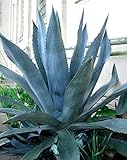
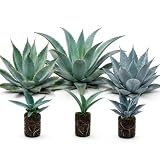
Blue agave is a perennial evergreen succulent that spends years building a rosette of thick, blue-green, spear-shaped leaves, each ending in a spine. It is slow growing by nature, and slower still outside its native heat: grown in a cooler climate than it comes from, the leaves come more slowly and the bloom is delayed by several more years.
All that time the plant is doing one thing – storing sugar in the swollen base of the rosette, the part growers call the heart. When it finally has enough, usually after 8 years or more, it sends up a flower stalk 4–6 m (12–18 ft) tall carrying umbels of sweet yellow flowers. That stalk consumes the sugar reserve the plant spent a decade accumulating, and the mother plant dies afterwards. Daughter plants – pups around the base – carry on in its place.
 Agralife Soil Mix 4 Quarts Premium Organic Cactus & Succulent
 Back to the Roots 100% Organic Succulent & Cacti Mix (6 Quart) | Made
Like other agaves, blue agave needs gritty, fast-draining soil: As an Amazon Associate we earn from qualifying purchases.
So a gardener has a choice. Let it bloom, get a spectacular flower spike and a crop of pups, and lose the parent. Or cut the flower stalk out as soon as it appears, keep the sugar locked in the heart, and keep the plant alive. That second option is not a trick – it is exactly what tequila production is built on.
What blue agave is used for
Almost every part of this plant is edible, and each part is used differently.
The heart (piña)
The basal rosette – the trimmed, pineapple-shaped core left when the leaves are stripped off – is the prize. It is dense with the sugar the plant was saving for its bloom, and it is cooked, roasted or baked, which converts those stored sugars into something sweet and caramelised. It is also the raw material for tequila: the roasted heart is crushed, its juice fermented and distilled. The heart is not usable young. You need to wait at least 5 years before there is enough stored sugar in it to be worth harvesting.
The leaves
The fleshy leaves are edible too, and are prepared the same way – cooked, roasted or baked. They are never eaten raw: they are fibrous, and the whole point of the slow roast is to soften the tissue and sweeten it. Handle them with the spines in mind, and cut off the terminal spike before you do anything else with a leaf.
The flowers, buds and stalk
The yellow flowers are edible and genuinely sweet, and the buds and the flower stalk itself are edible as well. The flowers are used for alcohol, juice and syrup. This is the one harvest that costs you the plant, since the flowers only appear on the stalk that ends its life – which is why the flower crop belongs to gardeners who already have pups coming on at the base.
Agave nectar
Agave nectar comes from the flowering side of the plant – the sweet flowers and the stalk that carries them – and it is used for syrup, juice and alcohol. The reason it takes so long is simply the bloom itself: 8+ years before a blue agave flowers at all, and longer in a cool climate. There is no way to hurry it. The plant is slow because it is banking sugar, and the sugar is the product.
How to harvest the blue agave heart
Harvest season is mostly early autumn, and the plant should be at least five years old.
- Prevent the bloom first. As soon as a flower stalk starts to rise, cut it out. If you let it run, the sugar you are harvesting for is pumped into the flower spike and the heart is left hollow and fibrous.
- Let the plant sit. With the stalk removed the rosette keeps thickening its base instead of flowering, and the heart continues to sweeten.
- Strip the leaves. Cut every leaf off close to the base, working from the outside in. This is the dangerous part – the leaves are spiny and stiff, so wear thick gloves, long sleeves and eye protection.
- Lift and trim the heart, then cook it – roasting or baking is what turns the stored starch and sugar into the sweet, edible core.
Climate and cold tolerance
Blue agave grows in desert, Mediterranean, subtropical, tropical and temperate climates, and is at home in hardiness zone 10 and warmer, where winter lows stop at around −1 °C (30 °F). With the right winter care it can be grown in zone 9, roughly −7 °C (20 °F), but that is the edge of what it will accept and it needs help to get there.
What actually kills agave in a marginal winter is rarely cold alone – it is cold plus wet. A saturated crown at low temperature rots. If you are growing at the cold limit, keep the plant dry through winter and mulch young plants; mature rosettes cope far better than small ones. A genuinely frost-free position is always the safer choice.
Soil, drainage and planting
Well-drained soil is not a preference here, it is the whole game. Sandy soil is best. Blue agave dislikes sitting in water and will die if it stands in a puddle, so in a rainy area plant it above the natural ground level – a raised bed, a mound or a slope – so water runs away from the crown rather than collecting around it.
Time planting to your zone:
- Zone 9 – spring only, so the plant has the whole warm season to establish before winter.
- Zone 10a – spring to summer.
- Zone 10b – spring to autumn.
- Zone 11 and warmer – any time of year.
Choose the spot with the mature plant in mind. The rosette reaches 0.5–2 m (2–6 ft), every leaf ends in a spine, and moving an established agave is an unpleasant job. Keep it well back from paths, doorways and anywhere children play.
Watering, light and feeding
Blue agave needs a small amount of water. Let the soil dry between waterings and err on the side of too little – overwatering is the most common way gardeners lose these plants, and the damage happens underground where you cannot see it until leaves start collapsing at the base.
Give it full sun to half shade. Full sun produces the tightest, bluest rosette; in half shade the leaves stretch a little and the colour softens.
Feeding is minimal: fertiliser once a year is enough. On a young plant, add mulch through a cold winter for insulation – but keep it off the crown itself, so you are not holding damp against the base of the rosette.
Growing blue agave from seed
Seed is the slowest route, but it is straightforward and gives you many plants at once. Sow in spring; in a hot climate autumn works as well.
- Choose a spot in full sun with well-drained soil, or fill trays with a free-draining mix.
- Make a shallow hole and set the seed about 0.5 cm (¼ in) below the surface, then cover it.
- Wet the soil – but do not overwater. Seed sitting in cold, sodden compost rots before it germinates.
- Keep the surface slightly moist until germination, then return to the normal dry-between-waterings routine as soon as the seedlings are up.
Propagation from pups and cuttings
Vegetative propagation is faster than seed and it is the only way to reproduce a named form. If you want the variegated cultivar, you must start from a daughter plant or a cutting – variegation does not come true from seed.
The method that matters is callusing:
- Take the material in late spring to early summer outdoors; indoors you can do it at any time of year.
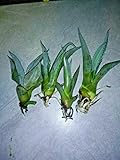
- Remove a leaf, or detach a daughter plant at the base, by hand rather than with a blade. A clean break at the natural joint heals better than a sliced wound, and you are not carrying rot from plant to plant on a knife.
- Let the wound dry and seal before planting. A leaf needs at least 24 hours; a cut at the base or into the stem needs several days until the tissue has healed over. Planting a wet, open wound into soil is the fastest way to rot a cutting.
- Set the callused piece into well-drained soil.
- Water every few days to two weeks – let it approach dryness between waterings, but not bone dry while it is trying to root.
- Roots appear in a few weeks to a month. Resist the urge to tug at it; wait for new growth in the centre as your signal.
Grafting is not needed and is not used for agave.
Pruning
You can prune blue agave at any time of year, and there are only three jobs: remove dead leaves, remove a dead mother plant after it has bloomed to make room for the pups, and cut out the flower stalk if you want to keep the plant alive.
One thing worth getting right: do not cut a leaf that is only starting to die. As an agave leaf fades, the plant pulls its nutrients back out of it and into the rosette. Cut it off early and you throw that away. Wait until the leaf is genuinely dead and dry, then remove it – for tidiness and for the health of the plant. The exception is an infected leaf, which should come off immediately.
Containers and indoors
Blue agave is not a houseplant – it needs far more light than an interior can give it. In a container outdoors it does well, provided you get the pot size right: choose a container 30–50% larger than the root ball, and when the roots fill it, move up to the next size. A pot much too large holds a reservoir of wet soil the roots cannot reach, and that is the same drainage problem again. Use a gritty, free-draining mix and make sure the drainage holes are open.
Pests, problems and handling
- Agave snout weevil – the serious one. The adult bores into the base of the rosette to lay eggs, and the grubs destroy the heart from the inside while the plant still looks fine on top. The usual first sign is a rosette that suddenly wilts and folds down; by then the crown is often lost. Remove and destroy affected plants so the weevils do not move on to the next agave.
- Snails and slugs – chew the softer tissue of young plants and pups. Most damaging on small plants and cuttings that are still rooting.
- Rot from overwatering or a puddled site – technically not a pest, but the most frequent cause of death. Improve drainage, plant high, water less.
- The spines – the recognised difficulty of growing this plant. Every leaf ends in a hard, sharp point, and the leaf edges are toothed. Gloves, sleeves and eye protection are sensible for any work on a mature rosette, and siting the plant away from traffic is better than dealing with it every time you weed.
For the full plant profile see our Blue agave plant growing page.
For the equipment that makes propagating easier (heat mats, humidity domes, rooting hormone), see our propagation equipment guide.