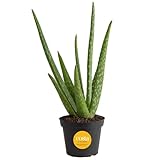
Aloe haworthioides is a small, slow, undemanding succulent that people nonetheless manage to lose — almost always to water, occasionally to a single cold night they did not plan for. It is grown for its foliage rather than its flowers: a tight rosette of narrow green leaves edged with fine, hair-like spines, giving it the look of a Haworthia, which is where the name comes from. A mature plant is only 10–30 cm (4–12 inches) across, a natural for pots, rockeries and collections where space is limited.
Light: bright, but with room to negotiate
Optimal growth comes in full sun to half shade, and in practice the species tolerates anywhere from deep shade to full sun as long as it genuinely receives light. But the two ends of that range give different plants: in strong light the rosette stays tight and well coloured, while in shade the leaves lengthen and the rosette opens up and loses its shape.
Bear that in mind before trying it indoors. It is not a houseplant: few windowsills deliver the light intensity a desert succulent evolved for, and the usual result is a stretched rosette on a plant that is also being watered more often than it wants, because it dries out so slowly indoors.
Watering — the one rule that matters
Aloe haworthioides is drought tolerant and wants a small amount of water. The technique is more important than the quantity:
- Water thoroughly, then let the soil become almost completely dry before watering again.
- Never water on a schedule. Check the soil instead — drying time changes enormously between a hot week and a cool one.
- Do not overwater. This plant has very little tolerance for sitting wet, and the leaves in particular rot easily.
The reason the dry interval matters as much as the volume is that succulent roots need air. Continuously damp soil suffocates them and hands the plant to rot organisms — which is why an underwatered Aloe haworthioides looks slightly shrunken and recovers in days, while an overwatered one collapses and does not come back.
Soil and how to plant
Well-drained soil is the base requirement. When planting into the ground:
- Dig a hole 50–100% larger than the root ball. The point is not depth but loosened, aerated soil around the roots, so water moves away from the crown instead of collecting against it.
- Mix the excavated soil with a small amount of organic matter — a small amount. Heavy compost holds moisture, which is the opposite of what you want here.
- Set the plant in and cover it lightly. Do not bury the base of the rosette.
- In a rainy garden, plant high — slightly above ground level or on a low mound, so puddles cannot form around it. This one adjustment prevents most winter losses in Mediterranean climates, where the wet season and the cold season arrive together.
Planting season depends on climate: spring to summer in hardiness zone 10a, spring to autumn in 10b, all year in zone 11 and warmer. The pattern is simple — plant early enough that the roots establish before the coldest part of your year.
Growing Aloe haworthioides in a pot
Containers suit it well, and for gardeners at the cold edge of its range they are the safest option because the pot can be moved.
- Choose a container 30–50% larger than the root ball. Resist going bigger — a slow-growing succulent in an oversized pot sits surrounded by wet soil its roots cannot reach or use.
- Use a gritty, sandy mix: sandy soil with lava grit or other inert material, or a ready-made cactus potting mix. That said, it grows perfectly well in regular potting mix with a small amount of organic matter, provided drainage is genuinely free.
- Make sure there are plenty of drainage holes. Sharp soil in a pot that cannot drain is still a wet pot.
- Never leave the saucer full. With a plant this small and slow, standing water is the fastest route to root rot.
Fertilising is minimal — once a year is enough. Slow-growing succulents use little, and excess feed produces soft growth that is more prone to both pests and rot.
Cold tolerance and overwintering
The species is rated for hardiness zone 10b and above — roughly winter minima of 1.7–4.4°C (35–40°F) and warmer. It can survive light frost, and with proper overwinter care it can be grown in zone 10a, where winter lows sit around −1.1 to 1.7°C (30–35°F). What it cannot take is a sustained freeze.
When frost is expected:
- Site it out of the wind. Wind strips away the thin layer of warmer air the plant and soil hold around themselves, and cold wind on a frosted succulent does far more damage than still cold at the same temperature.
- Mulch around the plant, and pile dead leaves over the rosette itself. A loose insulating layer buys the few degrees that separate a light frost from a killed plant, and dead leaves are ideal because they trap air without holding water against the foliage.
- Keep it dry through the cold. Cold plus wet is what kills succulents; cold alone is survivable at this level.
- Remove the covering once the risk passes, so the rosette gets its light back and does not sit damp underneath.
In colder gardens, grow it in a pot and bring it under cover for winter — a cold but frost-free spot with good light, kept nearly dry.
Flowering and pruning
The flowers are light orange and cone-shaped, carried on stems that rise from the centre of the rosette. In warm climates the plant can bloom at almost any time of year; in cooler climates flowering settles into the summer.
Pruning is light work and can be done all year, though the best moment is just after flowering. Remove:
- dead and dried leaves from around the base — these hold moisture against the plant and give slugs and snails somewhere to hide;
- spent bloom stems, once the flowers have finished;
- old stems on plants that have become leggy over time.
Handle the plant with care while you work. The main difficulty growers report with this species is the fine spines along the leaf edges — they look soft and hair-like, but they catch.
Propagation: three routes, in order of ease
1. Daughter plants (offsets)
The easiest and most reliable method. The plant produces offsets around the base of the rosette. Wait until a daughter plant has at least 2–3 leaves of its own before separating it — by then it has enough leaf area and root to support itself, whereas a smaller offset is still living off the parent and usually stalls or rots. Once detached, treat it exactly as an adult plant: same soil, same light, same sparing watering.
2. Cuttings
Both stem and leaf cuttings work, with one non-negotiable step:
- Take the cutting cleanly.
- Leave it in a dry, airy place until the cut surface has healed and callused over. Putting a fresh, wet cut straight into soil is an open invitation to rot — this waiting period is the whole technique.
- Insert the healed cutting into sandy soil with good drainage.
- Water lightly, and let the soil become almost dry between waterings, exactly as for an established plant.
Leaf cuttings deserve extra caution: leaves are more sensitive to pests and rot far more readily than stems. Use sterile soil for them — a few minutes in the microwave does it — to remove the fungi and pests already living in ordinary potting mix.
3. Seed
Seed is not difficult, just slower and less certain than starting from a cutting or an offset. If you want to try it:
- Sow in spring, into well-drained soil.
- Make a shallow hole about 3–4 mm deep, drop the seed in and cover it lightly. Burying succulent seed deeply is a common cause of failure.
- Keep it slightly moist — this is the one stage where the usual rule is reversed. Do not let seed or seedlings dry out completely, but do not overwater either. A germinating seedling has no water reserves to fall back on; an adult plant does.
- Move the seedlings onto the normal dry-between-waterings regime once they have formed a small rosette.
Note that grafting is unnecessary for this species, and vegetative propagation is not required either — it is simply the fastest and most predictable route.
Pests and common mistakes
Aphids gather on the flower stem and in the centre of the rosette; catch them early, before they settle deep among the leaves where they are hard to reach. Slugs and snails chew the leaves, usually at night, and are especially destructive on small plants and fresh offsets — clearing dead leaves and other damp hiding places from around the base removes most of the problem.
The mistakes that actually lose plants: watering on a fixed schedule instead of checking whether the soil has dried; planting at ground level in a rainy garden, so water collects around the crown in winter; potting up too generously, leaving a slow plant surrounded by permanently damp soil; rooting cuttings before the cut has callused; separating offsets before they have 2–3 leaves; and treating it as an indoor plant, then wondering why the rosette stretched.
For the full plant profile see our Aloe haworthioides growing page.
If something looks wrong with the plant beyond this, see our plant problems diagnosis guide.