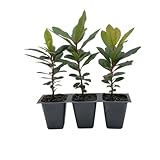
Arbutus unedo — the strawberry tree, or Irish strawberry tree — is a perennial evergreen that grows as a large shrub or small tree, with green serrated leaves, white bell-shaped flowers and round red fruit whose seeds are so small they go unnoticed. It suits temperate, Mediterranean and subtropical gardens in hardiness zones 7–11 and is genuinely easy once it is in the right place. The two things that catch people out are its pace — this is a slow tree in its early years — and its unusual fruiting cycle, which puts flowers and ripe fruit on the branches at the same time.
Climate, and Why the Planting Season Depends on Your Zone
Arbutus unedo needs a minimum cool winter and, just as importantly, it dislikes being planted into heat. That single preference explains the whole planting calendar:
- In zones 7–10a, plant in spring or summer — the winter is cold enough that a young plant needs the warm season to root in before it faces frost.
- In zones 10b–11, plant in autumn or winter. Here the risk runs the other way: summer heat is what kills a newly planted tree, so it goes in during the cool months and uses them to establish.
The nursery season follows the same logic — the time to buy a strawberry tree is autumn, winter and into spring.
Once established the tree wants full sun, though it grows perfectly well in half shade, and only a small to average amount of water. Soil must be well drained; that is the one non-negotiable. It is not possible to grow Arbutus unedo indoors — it needs the cool winter air, and an evergreen kept warm year-round never gets the rest that drives its flowering.
How to Start One: Seed, Cutting or a Big Plant
You can start Arbutus unedo from seed, from a cutting, or from a plant, and grafting is not necessary — although vegetative propagation or grafting does give better fruit, because it reproduces a known plant instead of a seedling lottery.
In practice the best way to start is with the biggest plant you can buy. The reason is simply the tree’s speed. A seedling spends its first years barely moving, and every year you buy in the nursery is a year you do not spend waiting. A tree started from a plant or cutting begins bearing fruit in about 2–4 years.
Shrub or Tree? Decide Early
This is the single most important decision with a strawberry tree, and it has to be made while the plant is young. Left to itself, Arbutus unedo grows as a multi-stemmed shrub. To get a tree you have to impose it:
- Choose one main trunk — the straightest, strongest stem.
- Prune away all the other branches arising from the base.
- Keep repeating as new stems appear, until the plant has committed to growing as a tree and stops trying to rebuild the shrub.
Do this early. Because the tree is slow-growing, it pays to remove branches you do not want while they are still young and thin: a small cut on a young stem heals fast and leaves no scar, while removing an established limb years later leaves a large wound on a tree that takes a long time to grow over it.
Going the other way is equally deliberate. If you want a shrub from a plant that has already made a single trunk, cut the main trunk back to force other stems to break from the base.
Pruning can be done all year, which makes this an unusually relaxed tree to shape.
Size and Growth Rate
Expect 2–6 m (6–20 ft) at maturity, with medium growth overall — but the pattern matters more than the average. Arbutus unedo is slow while young and picks up speed once it has established. If your newly planted tree seems to be doing nothing in its first year or two, that is normal, not a problem.
Most gardeners deliberately keep the tree at the lower end of its range. A smaller strawberry tree is far easier to pick fruit from, and since the fruit is the reason most people plant it, height is not doing you any favours.
Flowers and Fruit: The Year-Long Cycle
The white bell-shaped flowers open in autumn and winter and are pollinated by bees. The fruit is then harvested in autumn to early winter — a full year after those flowers.
That twelve-month lag is what gives the strawberry tree its famous look: at the same moment the tree is carrying this year’s fresh white flowers and last year’s ripe red fruit together. It also has a practical consequence. When you prune in autumn or winter you are cutting among both the current bloom and the crop that is about to ripen, so if fruit matters to you, shape the tree at a quieter point in the year.
Judging ripeness is easy once you know what to look for. The rind looks rough and warty, but that is appearance only — as the fruit ripens the rind turns soft. Softness, not colour alone, is the signal. The peel is edible along with the flesh, and the seeds are so small and fine that you will not notice them.
Using the Crop
Arbutus unedo fruit is edible and needs no special treatment on the tree — no bagging, no thinning. With a big harvest you can:
- Eat it raw, picked soft and ripe.
- Cook it into jams, where the fine seeds and soft rind disappear entirely.
- Press it for juice.
- Bake it into cakes.
Pests and Problems
Arbutus unedo is close to trouble-free. The main pest is aphids, which cluster on soft new growth and distort it; a young tree pushing tender shoots is the usual target, and a hosing off or an insecticidal soap deals with them. On the fruit, the problem is birds — another argument for keeping the tree small enough to net.
Beyond that, the failures you see are almost always down to drainage or to planting at the wrong time of year for your zone.
Arbutus unedo Marina
Marina is grown in exactly the same way as the species. It takes an average amount of water, it is not difficult to grow, and it shares the same slow, steady pace. Start it as you would any strawberry tree: from a cutting or, better, a large plant, in well-drained soil, in full sun to half shade, with a cool winter. Like the species it cannot be grown indoors.
Arbutus unedo vs the Greek Strawberry Tree
The Greek strawberry tree is a different species, Arbutus andrachne — a perennial evergreen or summer-deciduous shrub or tree, most recognisable by its red trunk. It is the source of the well-known Greek strawberry tree honey, produced from its bloom.
Its requirements overlap with unedo but are not identical:
- Cool winter and hot summer — it wants both extremes, where unedo simply asks for a cool winter and resents being planted into heat.
- Alkaline soil, and well drained.
- Small to average water, and full sun to half shade — the same as unedo.
The training method is identical: leave one main trunk and remove all other branches until it grows as a tree, or cut the main trunk to force a multi-stemmed shrub.
Containers and Bonsai
Arbutus unedo grows well in a planter or container, and its slow growth and small, neat leaves make it a natural bonsai subject. Bonsai care here is mostly pruning, plus four conditions to get right before you buy one:
- Well-drained soil. As in the ground, this is the thing that kills them.
- A small pot, deliberately restricting the roots so the plant does not try to grow beyond the size you want.
- At least half shade. A restricted root ball in a small pot dries out fast in full sun.
- Cool air in winter. This is the one most often missed — a strawberry tree bonsai kept indoors year-round is being denied the winter it needs.
For the full plant profile see our Arbutus unedo growing page.
Browse our other fruit growing guides for related trees and berries.