![Greenwood Nursery: Live Perennial Plants - Firewitch + Dianthus Gratianopolitanus - [Qty: 2X 3.5 Pots] - (Click for Other Available Plants/Quantities)](https://m.media-amazon.com/images/I/51S-G5CApjL._SL160_.jpg)

![Greenwood Nursery: Live Perennial Plants - Bath's Pink + Dianthus Gratianopolitanus - [Qty: 2X Pint Pots] - (Click for Other Available Plants/Quantities)](https://m.media-amazon.com/images/I/51YUGLxQmZL._SL160_.jpg)

Plant Profile & Key Characteristics
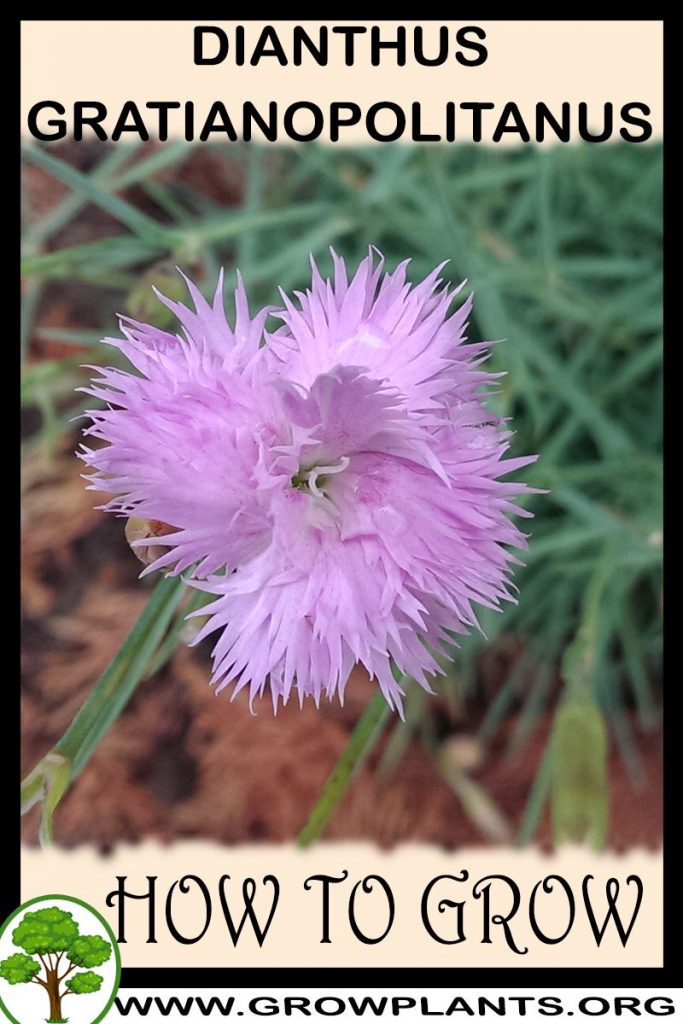
Overview: Dianthus gratianopolitanus (Cheddar Pink) is a clump-forming herbaceous plant grown for its fragrant, jagged-edged flowers and neat grey-green foliage. It is an evergreen perennial in mild zones and is often grown as an annual where winters are cold.
Quick Specifications
| Specification | Attribute |
|---|---|
| Plant Type / Life Cycle | Perennial (grown as an annual in cold climates) |
| Foliage Type | Evergreen (or annual) |
| Mature Size | Height 10-30 cm (4-12 in) |
| Growth Rate | Moderate to fast |
| Toxicity | Mildly toxic to cats and dogs (ASPCA) |
| Hardiness | USDA zones 10b-11 as perennial, 3-9 as annual |
Growth Form & Structure
- Height & Spread: Forms a low mat 10-30 cm (4-12 in) tall; grows well in 5-10 L containers.
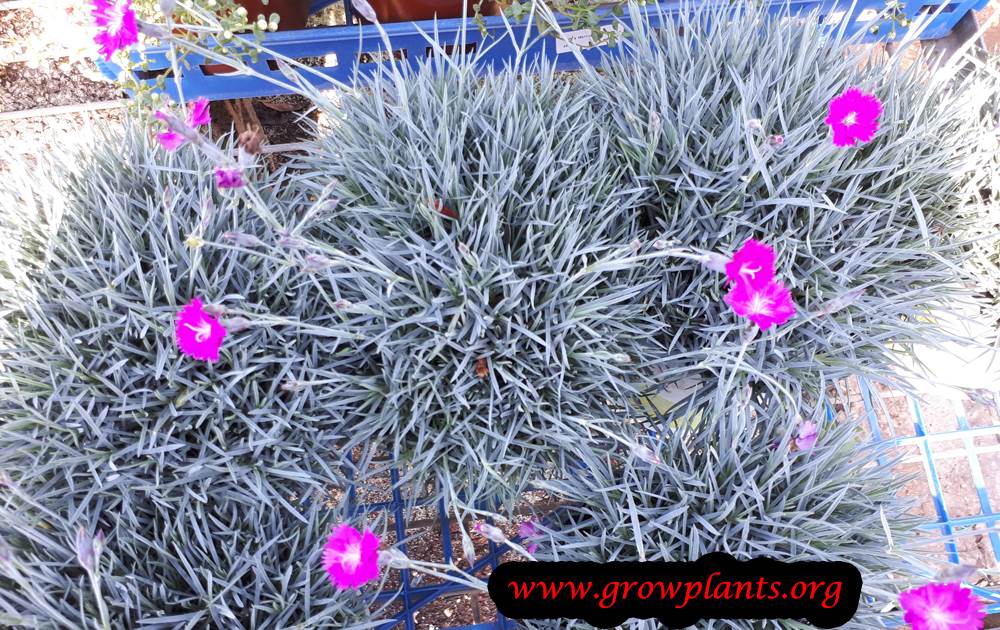
- Growth Habit & Form: Low, clump- to mat-forming herbaceous plant with grassy grey-green foliage and wiry flower stems.
- Lifespan & Maturity: Short-lived evergreen perennial (or annual); fast to reach flowering size.
Anatomy & Physical Features
- Leaves & Foliage: Grey-green, elliptic, grass-like leaves.
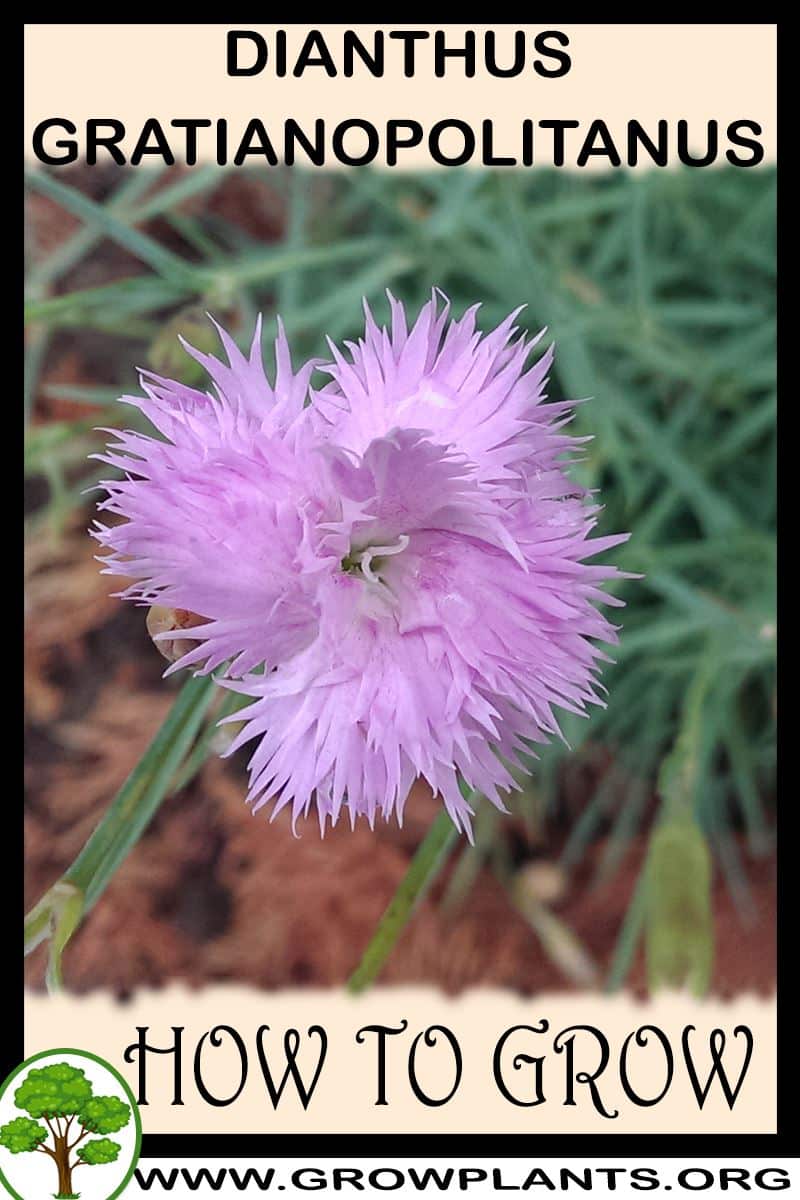
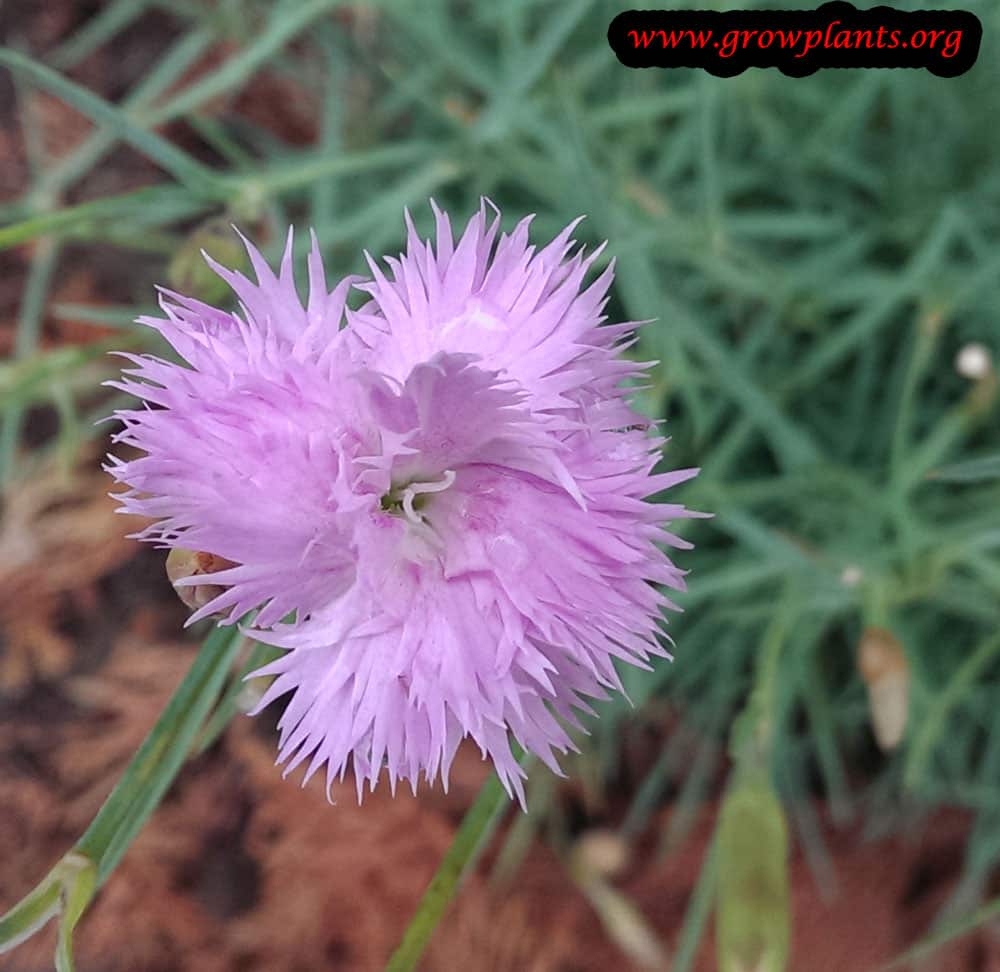
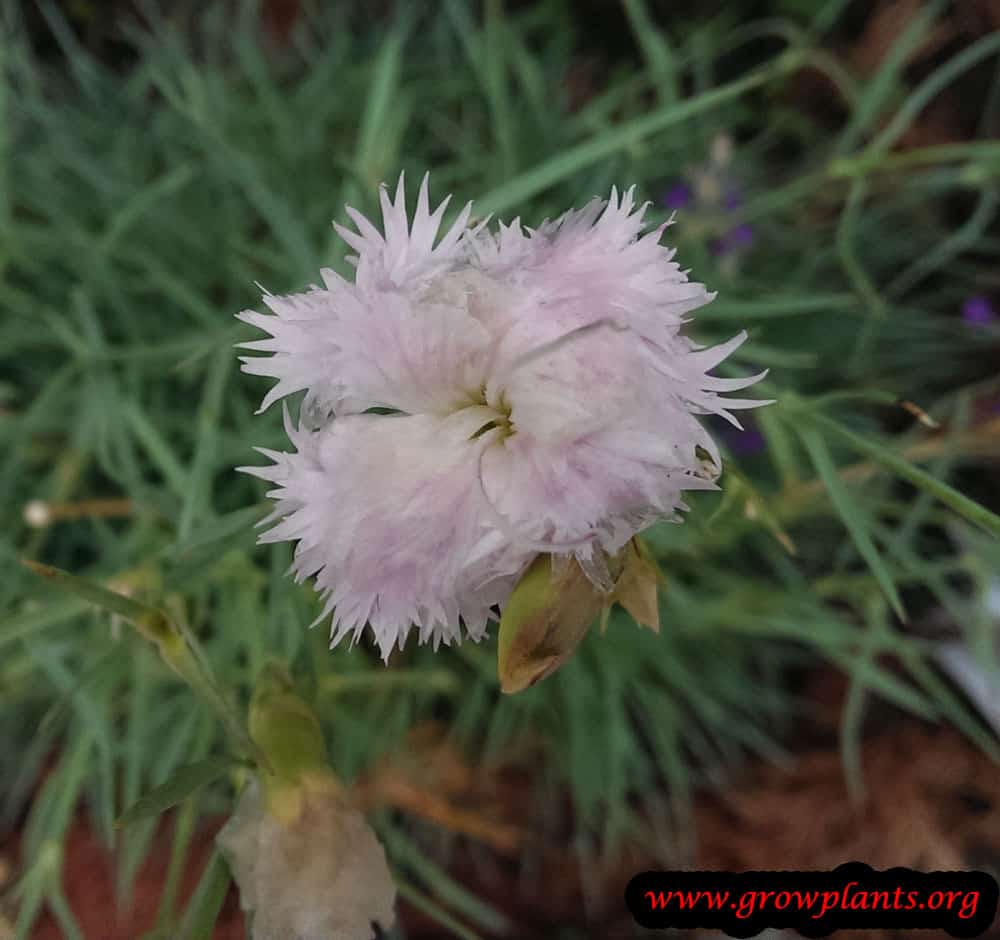
- Flower Characteristics: Fragrant, five-petalled flowers with jagged edges in shades from pink to white (full detail in the Bloom guide).
Primary Uses & Landscape Value
- Functional & Ornamental Roles: Ornamental for borders, edging, rockeries and containers, and a popular fragrant cut flower.
Care Guide: Planting, Soil & Watering
Overview: Cheddar pink grows best in full sun with well-drained, slightly alkaline soil and even moisture during the blooming season. Good drainage and a light mulch keep the crown healthy while the plant flowers freely.
Quick Care Requirements
| Requirement | Ideal Condition |
|---|---|
| Planting Season | In spring (year-round except winter in frost-free zones 10b-11) |
| Growth Rate | Moderate to Fast |
| Soil Type | Well-draining soil enriched with organic matter |
| Soil pH | Neutral to slightly alkaline |
| Water Need | Moderate to High – keep moist through the flowering season |
Planting & Establishment
- Best Planting Season: Plant in spring where grown as an annual; in frost-free zones 10b-11 plant at any time except winter.
- How to Plant:
- Hole Preparation: Dig a hole larger than the root ball.
- Soil Amendments: Mix in organic matter, chopped dead leaves and humus, and apply a mulch to help retain moisture.
- Planting Depth: Set the plant and cover it lightly – do not bury the crown deeply.
- Growth Speed & Expectations: Moderate to fast, forming a low, spreading mat.
Soil, Watering & Drainage Care
- Soil Mix & Drainage Needs: Well-draining, organically rich soil; a mulch conserves moisture while good drainage prevents crown rot.
- Watering Schedule & Technique:
- Young / Newly Planted: In the first weeks water daily until the plant establishes.
- Established: Keep evenly moist through the blooming season, letting the surface dry slightly between waterings; adjust to sun exposure.
- Seasonal Adjustments: More during flowering and summer heat; less in winter.
Climate, Light & Hardiness
Dianthus gratianopolitanus (Cheddar pink) grows in Mediterranean, subtropical, and temperate climates, and is evergreen and perennial in USDA zones 10b–11; in colder zones (roughly 3–9) it is commonly grown as an annual. It prefers full sun, tolerating half shade, especially in hot climates.
Quick Climate Specifications
| Climate Zones | Mediterranean, subtropical, temperate |
|---|---|
| USDA Hardiness Zones | 10b–11 as a perennial; 3–9 commonly grown as an annual |
| Light Conditions | Full Sun (tolerates Half Shade) |
Sunlight & Light Exposure
Optimal Light Setup
Full sun gives the most abundant flowering. In hot climates, half shade is a good compromise - the plant grows well there and stays cooler through summer.
Shade & Heat Management
In cold climates it blooms less in shade, so prioritize sun there; in hot climates, some shade reduces heat stress.
Temperature Extremes & Hardiness
USDA Hardiness & Regional Limits
Evergreen and perennial in USDA zones 10b–11 (mild, largely frost-free winters). In colder zones, roughly 3 through 9, it is commonly grown as an annual, replanted each season rather than relied on for reliable multi-year outdoor persistence.
Frost Sensitivity
Treat as frost-sensitive for reliable perennial performance; where grown as an annual, plant after the danger of hard frost has passed.
Wind, Humidity & Microclimate
Microclimate Recommendations
A warm, sunny, well-ventilated spot suits this compact perennial best, particularly in its perennial range.
Growing in Pots, Balconies & Indoors
Cheddar pink (Dianthus gratianopolitanus) is a low, cushion-forming alpine (10-30 cm / 4-12 in) with fragrant flowers – a natural for pots, troughs and rock-garden planters on a sunny balcony or patio. The grower does not class it as a room houseplant, but it can be grown on a bright sill if kept in at least half shade indoors.
Quick Details
- Container Size: 5-10 L (1-2 gal)
- Indoor Suitability: Not a full houseplant; indoors give it at least a half-shade, bright position
- Best Spot: Full sun (part shade in hot climates, where it flowers less)
- Soil & Drainage: Well-ventilated, free-draining, organic-rich mix – potting mix or peat with perlite or vermiculite
- Watering in Pots: An average amount – keep the soil moist and let excess drain away; avoid a standing saucer
Indoors & On the Windowsill
- Houseplant limits: The grower does not rate it as a room houseplant; if grown indoors, place it where it gets at least half shade and good light.
- Windowsill growing: A bright sill suits this compact alpine; outdoors, adjust watering to how much sun it receives.
On a Balcony or Patio
- Light & drainage: Give it full sun on a sheltered balcony (light afternoon shade in hot climates). Sharp drainage is essential – pots must never stay waterlogged.
Choosing the Pot, Soil & Long-Term Care
- Pot & drainage: A 5-10 L pot with strong drainage holes; it is better not to leave it standing in a saucer.
- Potting mix: Use a well-aerated, organic-rich mix – potting compost with perlite or vermiculite (or peat/coir blended with grit) so water drains freely.
- Feeding: Feed twice a year – once before flowering and once mid-bloom.
- Repotting: Grown as a perennial, change the soil every two years and prune part of the roots and top growth; grown as an annual, start with fresh mix.
Grower’s Container Tip
- The grower’s method: Use a 5-10 L (1-2 gal) pot; give an average amount of water, keeping the soil moist while letting the excess run out, and avoid a saucer. As a perennial, switch the soil every two years and prune some of the roots and the plant; as an annual, use fresh mix. The soil should be well-ventilated and free-draining, rich in organic matter – potting mix or peat with perlite or vermiculite. Feed twice a year, once before blooming and once mid-season. Indoors, keep it in at least half shade; outdoors, vary the watering with sun exposure.
Fertilizing & Feeding
A moderate feeder: this evergreen-to-annual ornamental is grown for both its jagged-edged pink-to-white flowers and its gray-green foliage, so balanced feeding timed around bud set and the bloom season supports steady flowering, especially for container-grown plants that rely more fully on added nutrients.
Quick Fertilizing Specs
| Feeding Level | Moderate feeder |
|---|---|
| Main Nutrient Priority | Balanced feeding timed to support bud formation and sustained flowering |
| Best Feeding Period | Before spring bud set and again during the blooming season |
| Organic Options | Organic matter, chopped leaves, or humus worked into the planting hole |
| Reduce/Stop Feeding | Feeding tapers off once blooming winds down and cooler weather sets in |
| Micronutrients | Usually adequate from a complete fertilizer in well-drained soil |
| Soil pH | Prefers slightly alkaline, well-drained soil |
Feeding by Growth Stage
Spring growth before bud set
Support vegetative growth of the gray-green, elliptic foliage before flower buds form.
| Nutrient direction | A balanced fertilizer applied before blooming helps the plant build the strength to support its coming flower display. |
|---|---|
| Timing | In spring, before blooming begins. |
| Frequency | A feeding before bud set is usually enough to support the coming bloom. |
| Fertilizer types | A balanced complete fertilizer, Organic matter, chopped leaves, or humus worked into the soil |
| Precautions | Keep soil well-drained and slightly alkaline; avoid overwatering newly fed plants, and note this plant is toxic to dogs. |
Bloom season
Sustain the pink-to-white, jagged-edged flower display through spring, summer, and into autumn.
| Nutrient direction | A further balanced feeding during the bloom season helps sustain flowering, especially for plants grown in containers, which rely more on added nutrients than those in open ground. |
|---|---|
| Timing | During the blooming season, roughly midway through the bloom period. |
| Frequency | A single additional feeding during the bloom season is usually enough, especially in containers. |
| Fertilizer types | A balanced complete fertilizer, An organic feed worked lightly into the surface soil |
| Precautions | Keep soil moist through blooming but well-drained, and avoid heavy nitrogen feeding, which can favor foliage over flowers. |
Winter rest
Let the plant rest through the cold season, avoiding new growth that would be vulnerable to winter conditions.
| Nutrient direction | None – withhold fertilizer through the winter rest period. |
|---|---|
| Timing | Winter, when the plant is best not planted or actively fed. |
| Frequency | No feeding at this stage. |
| Fertilizer types | No feeding at this stage – resume balanced feeding before the next bloom cycle |
| Precautions | Do not fertilize in winter; feeding now can push tender growth that is vulnerable to cold. |
Nutrient Deficiency Signs & Corrections
Pale, thin foliage and reduced flowering during the growing season.
| Possible causes | low available soil nitrogen, leaching from watering in well-drained soil, root stress from gall or other soil-borne issues |
|---|---|
| Appears first on | older, lower leaves |
| What to check | recent feeding history, soil organic matter, signs of root pests or gall |
| Possible correction | Apply a balanced fertilizer before blooming and monitor for improvement. |
New leaves look pale or yellowish while veins stay greener, more likely given this plant’s alkaline soil preference.
| Possible causes | high soil pH reducing iron availability, waterlogged or poorly drained soil, root stress from compacted soil |
|---|---|
| Appears first on | newest leaves |
| What to check | soil pH and drainage, standing water after watering, root health |
| Possible correction | Confirm drainage is adequate and apply a chelated iron product per its label if chlorosis persists despite this plant’s alkaline-tolerant preference. |
Leaf margins brown or scorch despite regular watering, especially in containers.
| Possible causes | fertilizer salt buildup, especially in container-grown plants, under-watering that concentrates salts, feeding more heavily or more often than this plant needs |
|---|---|
| Appears first on | leaf margins and tips |
| What to check | recent fertilizer amounts, watering consistency in containers, container drainage |
| Possible correction | Ease off feeding, water thoroughly to flush salts, then resume the plant’s usual pre-bloom and mid-bloom feeding pattern. |
Pruning, Training & Seasonal Maintenance
Cheddar pink is a low, evergreen mat-forming perennial that tolerates frequent light trimming but no heavy structural cutting. The main goals are deadheading spent flower stems to keep the plant blooming and shearing the whole mound lightly after the main flush so it doesn’t open up in the center. Because flowers form on the current season’s growth, cutting back after bloom encourages fresh flowering shoots rather than removing next year’s buds.
Quick Pruning & Maintenance Specs
| Pruning Tolerance | Moderate – frequent light trims, not heavy cutting |
| Primary Pruning Window | Right after each flush of bloom (deadheading) |
| Secondary Maintenance Window | Late winter / early spring tidy-up before new growth |
| Typical Frequency | Ongoing through spring–autumn bloom season |
| Main Objective | Prolong reblooming and keep the mat compact and dense |
| Young Plant Priority | Minimal – let the mound establish before shearing |
| Mature Plant Priority | Deadhead regularly; shear the mound lightly after main flush; divide when the center thins |
| Best Tool Type | Precision snips / small hand shears |
| Avoid Heavy Pruning During | Peak summer heat or immediately before frost |
Pruning by Plant Age & Size
Newly Established
Remove only damaged or dead stems in the first season; let the mound fill in before any shearing.
Young / Formative
No structural training is used – Cheddar pink forms a low spreading mat naturally. Light pinching of leggy stems can encourage a denser habit.
Mature / Established
Deadhead continuously through the bloom season, shear the whole clump back by about a third after the main flush to force new basal growth, and divide congested clumps every 2–3 years as the center becomes woody and sparse.
Seasonal Pruning Schedule
Ongoing Sanitary (Spring–Autumn)
Objective: keep the plant flowering. Remove: individual spent flower stems, cut back to a leaf node or the base of the mound. Do not remove: healthy green foliage or unopened buds. Expected response: continued flower production. Flowering impact: deadheading directly extends bloom, since old flowers left in place stop the plant producing new ones.
Post-Flowering
Objective: rejuvenate the mound after the main flush. Remove: the top third of all stems in a light overall shear. Do not remove: cut into bare, leafless wood at the base – recovery from there is poor. Expected response: fresh basal shoots and a second, lighter bloom. Flowering impact: usually triggers repeat flowering later in the season.
Dormant/Winter
Objective: tidy the evergreen mat before spring growth. Remove: any winter-damaged or blackened foliage. Do not remove: the bulk of the evergreen foliage, which protects the crown over winter. Expected response: cleaner regrowth in spring.
Flowering & Fruiting Wood
Cheddar pink flowers on the current season’s new growth, not on old wood, so deadheading and light post-bloom shearing remove spent stems only – they do not sacrifice next year’s flowers. This is why the plant can be cut back repeatedly through the season without reducing overall bloom.
Structural Pruning & Training
The only structural concern is renewal: as clumps age they develop a woody, leafless base and a thinning center. Renewal pruning (a hard shear after bloom or in early spring) plus periodic division keeps the mat dense; canopy thinning and branch-selection pruning do not apply to this low mat-forming habit.
Special Growth to Remove
- Spent flower stems – deadhead continuously to prolong bloom.
- Old, matted, or winter-damaged foliage – remove in late winter before new growth starts.
Container & Small-Space Pruning
In containers, deadhead and shear the same way as in-ground plants, but more often, since pot-grown clumps decline faster. Every couple of years, when repotting, trim back a portion of the old roots along with a light top shear to reinvigorate the plant, matching the reduced root volume to the reduced top growth.
Tools
- Precision snips for individual deadheading.
- Small hand/hedge shears for the light overall post-bloom trim of the mound.
Tool Hygiene & Disease Risk
Increased risk: Cheddar pink can carry rust and other fungal leaf diseases. If any cut material shows rust pustules or fungal spotting, wipe or disinfect blades before moving to the next plant and remove infected debris rather than composting it. Routine clean, sharp tools are sufficient otherwise.
Cut Placement & Technique
Deadhead by cutting the flower stem down to a leaf node or back to the base of the mound, not just snipping the flower head. When shearing the whole mound, cut evenly across the top to keep the mat’s dome shape.
Heavy Pruning & Rejuvenation
A hard shear (cutting back by half) is tolerated after the main bloom flush or in early spring and will push vigorous new basal growth, but cutting into completely bare, leafless stems at the crown is not reliably recovered from – rejuvenate overgrown, woody clumps by division instead of extreme heading cuts.
Post-Pruning Care
Water lightly after a hard shear to support regrowth; avoid heavy feeding, since Cheddar pink is adapted to lean, well-drained soil and excess fertility encourages floppy growth.
Common Pruning Mistakes
- Shearing into bare, leafless wood at the base instead of stopping at green growth.
- Leaving spent flowers to set seed, which shortens the bloom period.
- Never dividing aging clumps, leading to a hollow, woody center.
When NOT to Prune
Avoid hard shearing during peak summer heat or drought stress, and hold off on any cutback in the weeks before the first hard frost so the plant isn’t forced into tender new growth going into winter.
Recommended Tools (by task)
- Deadheading individual flower stems (any age): precision_snips – clean, small cuts on thin wiry stems.
- Post-bloom shear of the whole mound (mature clumps): hedge_shears – a light hand-shear pass trims the mat evenly in one motion, faster than cutting stem by stem.
Propagation Guide
Dianthus gratianopolitanus grows easily from either seed or stem cuttings, and this site notes that seed is not hard either, though cuttings are the surer way to guarantee the exact flower colour of the parent plant. Overall propagation difficulty is easy.
Quick Propagation Specs
| Best Propagation Method | Stem cuttings (guarantees flower colour) or seed |
| Alternative Methods | Seed |
| Propagation Difficulty | Easy |
| Seed True-to-Type | Variable (flower colour is not guaranteed from seed) |
| Vegetative True-to-Type | Yes, including flower colour |
| Best Propagation Season | Spring or autumn for seed; take cuttings during active growth |
| Seed Germination Time | About 7-14 days |
| Cutting Rooting Time | Commonly a few weeks |
| Germination Temperature | 16-21°C (61-70°F) |
| Seed Sowing Depth | On the surface, or about 0.5cm (0.25 inch) deep |
Growing from Seed
Seed Handling & Viability
Store saved seed in a dry, dark location until it is time to sow.
Sowing Season
Spring or autumn works well; temperature matters more than the calendar, and germination is possible even in winter if conditions are warm enough.
Sowing Depth & Orientation
Sow on the soil surface or only about 0.5cm (0.25 inch) deep; setting the seed onto vermiculite helps germination.
Germination Conditions
Keep at 16-21°C (61-70°F) with consistently moist soil, high humidity, and light.
Germination Time
Around 7-14 days.
Seedling Care
Keep seedlings in moist soil in full sun; once ready to plant out, space plants about 15x20cm (6-8 inches) apart.
Stem Cuttings
Cutting Type
A stem that has not yet bloomed and carries no flower buds roots most reliably.
Best Timing
During active growth; work in half shade rather than full sun.
Cutting Preparation
Select and take the budless, non-flowering stem described above.
Rooting Setup
Two approaches work: root in water (not cold water), changing it every few days, kept in half shade; or insert into moist peat soil and mist regularly with a spray. Either way, keep temperatures above 20-25°C (68-77°F) with high humidity.
Rooting Hormone
Using a rooting hormone is recommended and tends to improve results, though it is not strictly required.
Rooting Time
Typically a few weeks; propagating by cuttings also has the advantage of guaranteeing the parent plant’s exact flower colour.
Bloom & Edible Flower Guide
Quick Details
- Bloom Season: Late spring through summer, often into autumn
- Time to First Bloom: Usually the first summer after spring planting
- Flower Appearance: Five-petalled flowers with fringed, jagged edges, in pink through to white and every shade between
- Edibility: Not confirmed for this cultivar specifically; petals of Dianthus (‘pinks’) are a well-known edible flower in the wider genus, with a mild clove-like flavour once the bitter white heel is trimmed off
Detailed Blooming Overview
Dianthus gratianopolitanus (Cheddar pink) forms a low mat of blue-grey foliage topped through the warmer months with sweetly clove-scented flowers. The petals have a distinctive fringed, jagged margin, and the plant blooms from late spring, repeating for weeks if it is kept deadheaded.
Flower Characteristics
- Single flowers with five fringed petals, pink to white and the shades between
- A warm, spicy clove fragrance, especially in sun
- Petals reported edible in the wider Dianthus genus (not confirmed for this cultivar specifically) – once the pale base is removed
Bloom Care & Thinning
- Managing the bloom: deadhead regularly to keep the flush going, and shear the mat lightly after the main flowering to tidy it and encourage more buds
- Site: full sun and sharp drainage, ideally in gritty or slightly alkaline soil, give the most flowers
- Pollination: the fragrant blooms draw bees and butterflies
Bloom Health & Protection
- Grey mould (botrytis): in wet, humid spells buds and flowers can rot; good airflow, sharp drainage and prompt removal of spent blooms keep it down
Fruit & Uses
The site does not describe an edible use for Dianthus gratianopolitanus, and notes it is toxic to dogs. Flowers of Dianthus (‘pinks’) are, however, a well-known edible flower in the wider genus, with only the petals eaten raw after the bitter white base is removed — this is included here as a cautious, general note rather than a site-confirmed fact for this specific cultivar.
Quick Edible Specs
| Edible Parts | Flowers (petals only) |
|---|---|
| Main Use(s) | Culinary garnish/flavouring (salads, desserts, infused syrups or vinegar) |
| Eaten Raw or Cooked | Raw |
| Preparation Required | Remove the bitter, pale-coloured base (‘claw’) of each petal before use |
| Harvest Season | Spring – autumn, during bloom |
| Time to First Harvest | Once the plant is flowering |
| Storage | Best used fresh; petals wilt quickly once picked |
| Safety/Toxicity Caveat | site notes this plant is toxic to dogs; keep away from pets. For human use, eat petals only (not leaves or stems), remove the bitter white base first, and use only flowers known to be untreated with pesticides |
Flowers & Flower Buds
Dianthus flowers are traditionally valued for a mild, clove-like fragrance and flavour, and the petals (with the bitter white base trimmed off) have historically been used to flavour wine and vinegar and to decorate salads and desserts. Pick fully open flowers and separate the petals from the central base before use.
Preparation, Uses & Safety
Safety caveat first: the site flags this plant as toxic to dogs, so keep cut flowers and plantings away from pets. For human consumption, only the petals are used — never the whole flower, leaves, or stems — and the pale, bitter base of each petal should be trimmed off before eating, as it is unpleasantly bitter. Because this specific edible use is not confirmed by the site’s own data, treat it as a general Dianthus note rather than a guarantee for this cultivar, and always positively identify the plant and confirm it has not been treated with pesticides before eating any part of it.
Pests, Diseases & Troubleshooting
Overview: Dianthus gratianopolitanus (Cheddar pink) is a tough, evergreen, mat-forming alpine pink whose few pests are aphids, spider mites and slugs, while its real enemies are the Dianthus diseases — carnation rust, Fusarium and bacterial wilt and leaf spots — and, above all, winter-wet crown rot. It thrives on lean, gritty, alkaline soil in full sun; cold does little harm, but cold wet feet rot the crown.
Quick Troubleshooting Overview
| Issue / Pest | Main Symptom | Primary Solution |
|---|---|---|
| Aphids | Colonies on shoot tips and buds, sticky honeydew, distorted growth | Hose off, insecticidal soap; conserve ladybirds and lacewings |
| Carnation rust | Orange-brown powdery pustules on leaf undersides | Remove infected leaves, improve airflow; sulfur or copper if severe |
| Fusarium / bacterial wilt | One-sided yellowing and wilt, browned vascular tissue | Remove and destroy plants; do not replant Dianthus in that soil |
| Spider mites | Fine pale stippling and webbing in hot, dry weather | Raise humidity, hose foliage; horticultural oil, predatory mites |
| Alternaria / Septoria leaf spot | Purple-ringed or brown spots that merge and blight leaves | Remove spotted leaves, avoid overhead water; copper fungicide |
| Crown / basal rot | Base blackens and collapses in wet, heavy or acid soil | Sharp drainage, plant high, water at the base only |
Common Pests & Management
- Aphids (Myzus persicae / Brachycaudus / Dysaphis spp.):
- Symptoms: Clusters of green, grey or black soft-bodied insects on shoot tips, flower buds and calyces, causing curled, distorted growth, sticky honeydew and sooty mould; they also transmit several viruses of pinks and carnations.
- Prevention & Control: Monitor buds and tips, hose off and squash early colonies, and conserve ladybirds, lacewings, hoverflies and parasitic wasps. Use insecticidal soap or neem oil on persistent build-ups, spraying in the cool of evening to protect pollinators.
- Two-spotted spider mite (Tetranychus urticae):
- Symptoms: Fine pale stippling, dull bronzed leaves and fine webbing on the undersides and between the narrow leaves, worst in hot, dry, dusty conditions and under glass.
- Prevention & Control: Raise humidity and hose the foliage, avoid drought stress and keep plants un-dusty. Treat with horticultural oil or insecticidal soap and conserve predatory mites; avoid broad-spectrum insecticides that trigger mite flare-ups.
- Thrips (Frankliniella occidentalis):
- Symptoms: Tiny slender insects that rasp leaves and petals, leaving silvery flecking, streaked or deformed flowers and black frass specks; western flower thrips also spread tospoviruses such as TSWV.
- Prevention & Control: Hang blue sticky traps to monitor, remove weeds and spent blooms that harbour them, and release predatory mites or minute pirate bugs under cover. Spray spinosad or insecticidal soap for heavy pressure and rotate actives to slow resistance.
- Carnation tortrix moth (Cacoecimorpha pronubana):
- Symptoms: Green caterpillars that web together and roll leaves, shoot tips and buds, feeding inside the shelter and grazing petals and developing flowers; a common carnation pest under glass and outdoors.
- Prevention & Control: Pick off rolled leaves and squash the caterpillars inside, remove damaged tips, and encourage birds and predatory insects. Use a targeted Bacillus thuringiensis (Bt) spray or pheromone traps for monitoring where numbers build.
- Slugs and snails (Deroceras / Cornu spp.):
- Symptoms: Ragged holes in soft new growth and low mat-forming pinks, with slime trails and worst damage on seedlings in damp, sheltered, mulched conditions.
- Prevention & Control: Hand-pick after dark, set beer traps, and ring plants with grit or copper; keep the crown clear of dense wet debris. Scatter iron-phosphate pellets, which are safe around pets and wildlife, where pressure is high.
Diseases & Fungal Issues
- Carnation rust (Uromyces dianthi):
- Symptoms: Raised orange to chocolate-brown powdery pustules on leaf undersides and stems, with pale yellow flecks on the upper surface, leaf twisting and, in bad cases, dieback; favoured by humid, still, crowded conditions.
- Treatment & Management: Space plants and improve air movement, avoid wetting the foliage and watering late, and remove and destroy infected leaves. Grow resistant varieties where possible; sulfur or a suitable fungicide helps under persistent pressure.
- Fusarium wilt (Fusarium oxysporum f.sp. dianthi):
- Symptoms: Progressive yellowing and wilting, often starting on one side of the plant, with slow decline, stunting and pale-brown streaking inside the stem; a soil-borne disease that persists for years.
- Treatment & Management: There is no cure. Remove and destroy affected plants, use clean or sterilised media and disease-free cuttings, and do not replant Dianthus in infested ground. Sharp drainage and avoiding waterlogging reduce spread.
- Bacterial wilt / slow wilt (Burkholderia caryophylli):
- Symptoms: Grey-green wilting, yellowing and sticky rotting of stems, with vascular browning and a slimy ooze in the tissue; spreads through cuttings, tools and splashing water.
- Treatment & Management: Rogue out and destroy infected plants, propagate only from clean stock, and sterilise knives and secateurs between plants. Improve drainage and avoid overhead irrigation; the bacterium survives in soil and debris.
- Alternaria and Septoria leaf spot (Alternaria dianthi / Septoria dianthi):
- Symptoms: Small purple- or brown-ringed spots that enlarge and merge into blighted patches on leaves and stems, sometimes girdling shoots; worst in wet, humid weather with overhead watering.
- Treatment & Management: Remove and destroy spotted foliage, water at the base to keep leaves dry, and space for airflow. Copper fungicide protects new growth under persistent damp pressure; clear old debris at season’s end.
- Crown, basal and stem rot (Rhizoctonia / Sclerotinia / Fusarium spp.):
- Symptoms: Blackening, softening and collapse at the base of the plant, with rotting stems and roots, especially in heavy, wet or acidic soil and where the crown is buried or mulched too deeply.
- Treatment & Management: Prevention is key: plant high in gritty, sharply drained, near-neutral soil, keep mulch off the crown, and water at the base without wetting the centre. Remove and destroy rotted plants and improve drainage before replanting.
Growing Difficulties & Abiotic Problems
- Winter-wet and cold crown rot:
- Cause & Symptoms: Cold, sodden soil over winter rots the crown and roots of pinks and alpine Dianthus, causing them to blacken and die; the plants tolerate cold far better than they tolerate wet feet.
- Correction Strategy: Grow in very free-draining, gritty soil or raised beds and troughs, mulch with grit rather than organic matter, and avoid winter overhead watering. Sharp drainage is the single most important factor for longevity.
- Chlorosis on acid soil:
- Cause & Symptoms: Yellowing between the veins and weak growth where the soil is acidic, since Dianthus are lime-lovers that prefer neutral to slightly alkaline conditions.
- Correction Strategy: Raise the pH with garden lime on acid ground, plant in a gritty alkaline mix, and correct trace deficiencies with a chelated feed. Good drainage and moderate feeding keep foliage blue-green and firm.
- Leggy, floppy, non-flowering growth:
- Cause & Symptoms: Soft, sprawling, sparse-flowering plants result from too much shade, over-rich soil or excess nitrogen, which favour lax leafy growth over compact flowering shoots.
- Correction Strategy: Give full sun and lean, gritty soil, feed sparingly, and shear or trim mat-forming pinks lightly after flowering to keep them dense. Avoid heavy nitrogen feeds that produce weak, disease-prone stems.
What Helps — Products & Tools
For Dianthus the practical kit is insecticidal soap and neem oil for aphids and thrips, horticultural oil and predatory mites for spider mites, blue sticky traps for monitoring, Bt for tortrix caterpillars, and iron-phosphate slug bait. On the disease side, airflow, base watering and sanitation prevent rust and leaf spots, sulfur or copper fungicide protects new growth, and the soil-borne wilts (Fusarium, bacterial wilt) can only be managed by clean stock, sharp drainage and not replanting Dianthus in infested soil. The source pest names are unreliable and were not used.