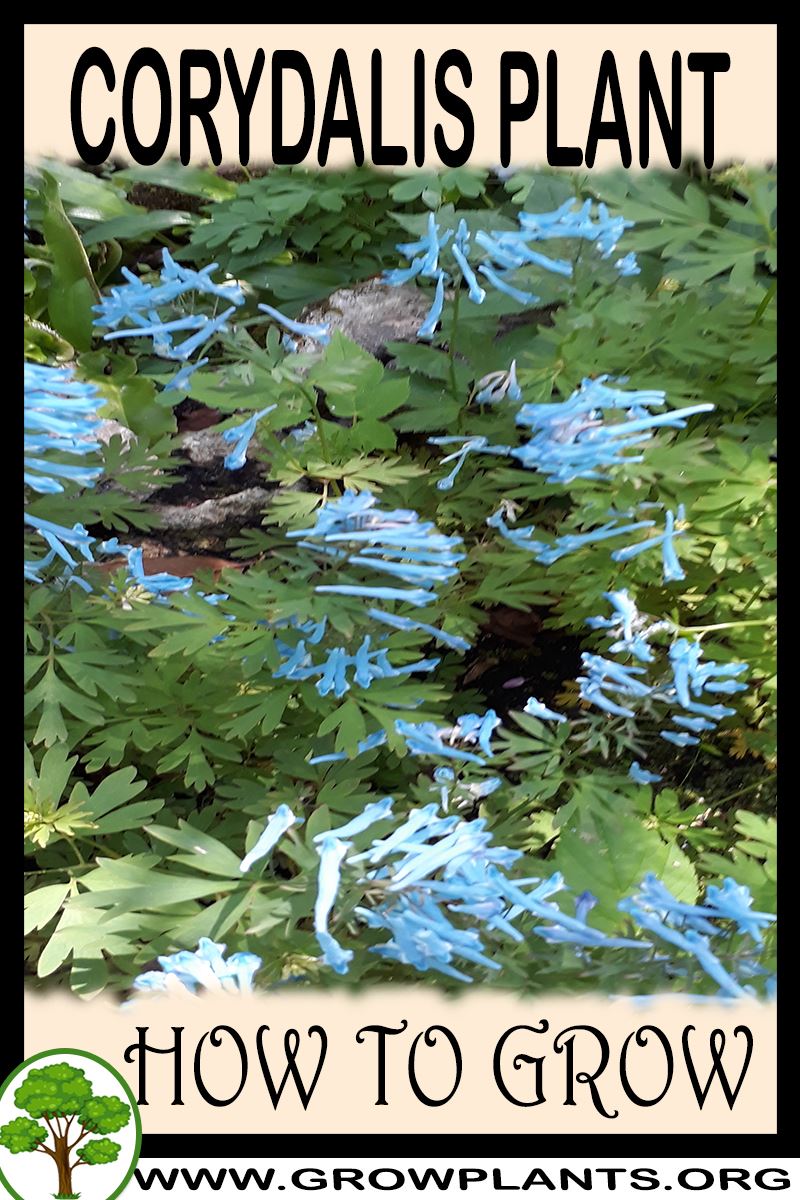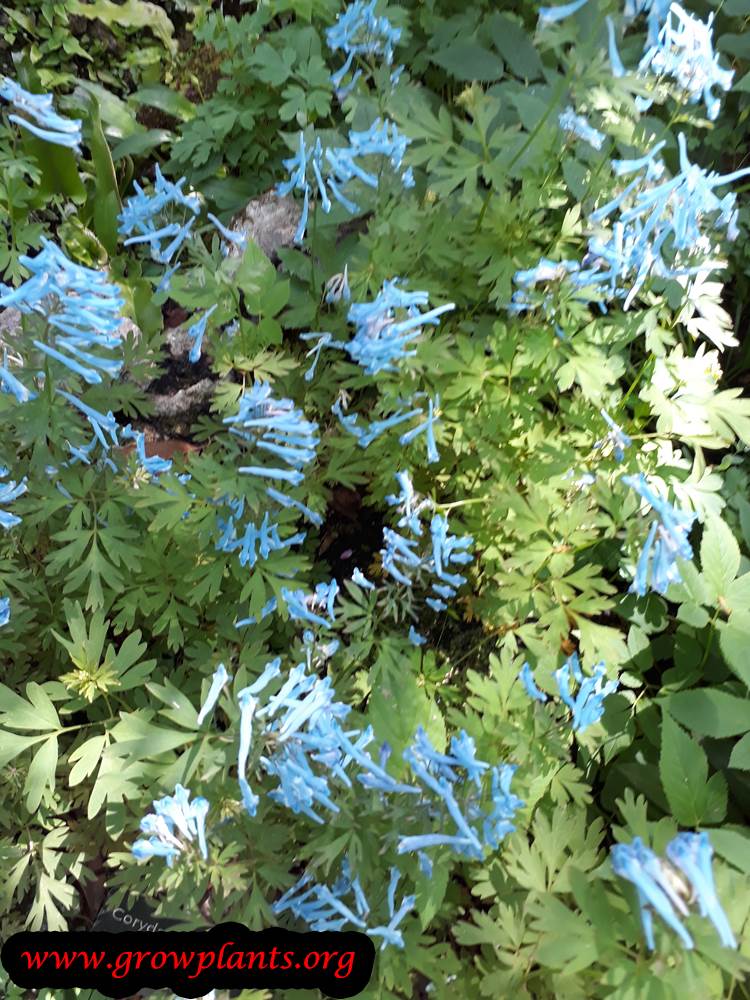


Plant Profile & Key Characteristics
Overview: Corydalis (fumewort) is a low herbaceous plant of 30-50 cm (12-20 in), with soft, ferny green foliage. It is a deciduous perennial grown as a fragrant, shade-tolerant ornamental groundcover.
Quick Specifications
| Specification | Attribute |
|---|---|
| Plant Type / Life Cycle | Perennial |
| Foliage Type | Deciduous |
| Mature Size | 30-50 cm (12-20 in) |
| Growth Rate | Moderate to fast |
| Root System | Rhizomatous, spreading |
| Toxicity | Toxic if ingested (contains isoquinoline alkaloids) |
| Hardiness | USDA zones 6-8 |
Growth Form & Structure
- Height & Spread: Low mounds of 30-50 cm (12-20 in); grows well in containers and shady beds.
- Growth Habit & Form: Spreading, clump-forming herbaceous groundcover that can be aggressive in favourable spots.
- Lifespan & Maturity: Fast to moderate growing, dying back in dormancy and returning to flower in spring and summer.
Anatomy & Physical Features
- Leaves & Foliage: Green, triangular, deeply lobed ferny leaves, sometimes flushed yellow or purple.
- Flower Characteristics: Fragrant, cone-shaped (spurred) flowers in blue, purple, pink, red, yellow, sometimes multi-coloured.
Primary Uses & Landscape Value
- Functional & Ornamental Roles: Fragrant ornamental groundcover for shade gardens, woodland borders and containers.
Care Guide: Planting, Soil & Watering
Overview: A shade-loving woodland perennial. It likes moist but well-drained, humus-rich soil in part to full shade, with generous, even moisture.
Quick Care Requirements
| Requirement | Ideal Condition |
|---|---|
| Planting Season | In the cool season – autumn, winter or spring |
| Growth Rate | Moderate to Fast |
| Soil Type | Well-draining, humus-rich, moisture-retentive |
| Water Need | Moderate to High – keep evenly moist |
Planting & Establishment
- Best Planting Season: Plant from autumn to spring in cool temperate climates (zone 6-8).
- How to Plant:
- Hole Preparation: Make a hole as wide as the root ball and equally deep.
- Soil Amendments: Work in leaf mould or compost for a rich, moisture-holding yet free-draining soil.
- Planting Depth: Set the crown at soil level and do not bury it.
- Growth Speed & Expectations: Fast to moderate; it spreads readily and can be aggressive.
Soil, Watering & Drainage Care
- Soil Mix & Drainage Needs: Humus-rich, well-drained soil in shade; it is container-friendly in a moisture-retentive mix.
- Watering Schedule & Technique:
- Young / Newly Planted: Keep consistently moist.
- Established: Water regularly to maintain even moisture; do not let it dry out.
- Seasonal Adjustments: Water more during warm active growth and less as it dies back.
Climate, Light & Hardiness
Corydalis (fumewort) grows in temperate climates and is hardy outdoors in USDA zones 6 through 8. It prefers half shade to full shade with some light, and dies back naturally each year as a deciduous perennial.
Quick Climate Specifications
| Climate Zones | Temperate |
|---|---|
| USDA Hardiness Zones | 6–8 |
| Light Conditions | Half Shade to Full Shade (with some light) |
Sunlight & Light Exposure
Optimal Light Setup
Grow in half shade to full shade with some filtered light - typical of a woodland-floor perennial; too much direct sun, especially in warmer parts of its range, can stress the foliage.
Temperature Extremes & Hardiness
USDA Hardiness & Regional Limits
Hardy outdoors in USDA zones 6 through 8, where it dies back to the ground each year and re-emerges from its rootstock in spring.
Wind, Humidity & Microclimate
Microclimate Recommendations
Best in a cool, sheltered woodland-style spot that mimics its natural understory habitat.
Growing in Pots, Balconies & Indoors
Corydalis is a delicate, shade-loving perennial (30-50 cm / 12-20 in). The grower confirms it can be grown indoors, and because it prefers half to full shade it adapts well to the softer light of a bright room or a shaded balcony – no scorching sun needed.
Quick Details
- Container Size: A medium pot; it also suits shallow, wide planters (general guidance)
- Indoor Suitability: Suitable indoors – give bright, indirect light rather than harsh sun
- Best Spot: Half shade to full shade with some light
- Soil & Drainage: Aerated, organic-rich mix, kept moist but free-draining
- Watering in Pots: Average to generous – keep evenly moist; do not let it dry out or sit waterlogged
Indoors & On the Windowsill
- Indoors: Grows well in a bright room out of direct midday sun – an east- or north-facing sill is ideal. Some Corydalis rest (die back) after flowering; ease off watering during that dormant spell and it will return.
- Safety: The plant contains alkaloids and is toxic if eaten – keep it away from children and pets.
On a Balcony or Patio
- Light & shelter: A shaded or part-shaded balcony suits it perfectly; keep it out of hot afternoon sun and drying wind, and watch that pots do not dry out.
Choosing the Pot, Soil & Long-Term Care
- Pot & drainage: A pot with strong drainage holes; skip a standing saucer to avoid root rot. Glazed or plastic pots hold the steady moisture this plant likes.
- Potting mix: Use a well-aerated, organic-rich mix – potting compost with perlite or vermiculite (or peat/coir blended with grit) so water drains freely.
- Feeding: Potted plants are fed more often than those in the ground because nutrients wash out with each watering – a balanced liquid feed through the growing season keeps them going.
- Repotting: Refresh the mix or pot up about every two years; for perennials, lightly prune the root ball and top growth when you do.
Fertilizing & Feeding
A light feeder: this deciduous, fragrant-flowered ground cover dies back seasonally, so light balanced feeding while it is in active leaf and flower growth is enough, with no feeding needed once foliage dies back for its rest period.
Quick Fertilizing Specs
| Feeding Level | Light feeder |
|---|---|
| Main Nutrient Priority | Light, balanced feeding that supports foliage and flowering without encouraging its aggressive spread |
| Best Feeding Period | Spring into early summer while leaves and flowers are actively growing |
| Organic Options | Compost or well-rotted organic matter worked into well-drained soil |
| Reduce/Stop Feeding | Feeding stops once foliage dies back for the season |
| Micronutrients | Usually adequate from a complete fertilizer in well-drained soil |
| Soil pH | Tolerates a range of well-drained soil |
Feeding by Growth Stage
Spring leaf emergence
Support emergence of the triangular, deeply lobed foliage as this ground cover breaks dormancy.
| Nutrient direction | A light, balanced fertilizer supports steady leaf development as new growth emerges. |
|---|---|
| Timing | In early spring as new growth emerges, matching its autumn-to-spring planting window. |
| Frequency | A light feeding as growth begins is usually enough for this light feeder. |
| Fertilizer types | A light, balanced complete fertilizer, Compost or organic matter worked into the soil |
| Precautions | This plant can be aggressive and spread readily, so avoid overfeeding, which can encourage excess spread beyond its intended area. |
Spring to summer bloom
Sustain the fragrant, multi-colored cone-shaped flower display through spring and into summer.
| Nutrient direction | Light, balanced feeding maintains bloom quality without pushing excess leafy growth. |
|---|---|
| Timing | Through spring and into summer while the plant is in flower. |
| Frequency | Feeding needs are minimal once the plant is established and blooming. |
| Fertilizer types | A light, balanced complete fertilizer, An organic feed worked lightly into the surface soil |
| Precautions | Keep soil evenly moist to support flowering and avoid heavy feeding, which favors spread over bloom quality. |
Summer to winter dieback and rest
Let the plant rest once its deciduous foliage dies back after flowering.
| Nutrient direction | None – withhold fertilizer once foliage has died back. |
|---|---|
| Timing | From summer dieback through autumn and winter until new growth resumes. |
| Frequency | No feeding at this stage. |
| Fertilizer types | No feeding at this stage – resume light balanced feeding only when new growth resumes |
| Precautions | Do not fertilize during dieback and dormancy; feeding a plant with no active foliage wastes nutrients. |
Nutrient Deficiency Signs & Corrections
Pale, thin foliage and reduced flowering while the plant is actively growing.
| Possible causes | low available soil nitrogen, leaching from watering in well-drained soil, competition from the plant’s own dense, spreading growth |
|---|---|
| Appears first on | older, lower leaves |
| What to check | recent feeding history, soil organic matter, density of surrounding growth |
| Possible correction | Apply a light, balanced fertilizer as spring growth begins and monitor for improvement. |
New leaves look pale or yellowish while veins stay greener.
| Possible causes | high soil pH limiting iron availability, waterlogged or poorly drained soil, root stress from compacted soil |
|---|---|
| Appears first on | newest leaves |
| What to check | soil pH and drainage, standing water after watering, root health |
| Possible correction | Improve drainage and soil pH balance; apply a chelated iron product per its label if symptoms persist during active growth. |
Vigorous foliage but few flowers during the bloom period.
| Possible causes | excess nitrogen favoring leafy, spreading growth over flowering, insufficient light, aphid or slug pressure diverting plant energy |
|---|---|
| Appears first on | whole-plant flowering pattern |
| What to check | recent fertilizer balance, light exposure, signs of aphids, slugs, or snails |
| Possible correction | Favor light, balanced feeding over nitrogen-heavy feeding, and manage aphids or mollusk pests if present. |
Pruning, Training & Seasonal Maintenance
Corydalis is a low, clump-forming woodland perennial that tolerates only light, cosmetic trimming – it has no woody structure to shape. The main jobs are deadheading spent flower stems during the spring–summer bloom and keeping its noted aggressive, spreading habit in check; because next year’s flowers arise fresh from the rootstock rather than from old growth, tidying up never reduces future bloom, but cutting back leaves while they are still green does weaken the plant.
Quick Pruning & Maintenance Specs
| Pruning Tolerance | Low–Moderate (cosmetic only) |
| Primary Pruning Window | Spring–Summer, alongside the bloom period |
| Typical Frequency | Occasional deadheading through the growing season |
| Main Objective | Deadhead to tidy and limit self-seeding; contain spread |
| Young Plant Priority | None – avoid disturbing until established |
| Mature Plant Priority | Deadhead; divide congested, spreading clumps |
| Best Tool Type | Precision snips or fingers |
| Avoid Heavy Pruning During | While foliage is still green and actively growing |
Pruning by Plant Age & Size
Newly Established
No pruning beyond removing any damaged foliage; let the clump root in undisturbed.
Young / Formative
No structural training – Corydalis is a herbaceous ground cover with no framework to build.
Mature / Established
Routine deadheading through bloom, plus dividing or cutting back the clump’s edges to restrain its noted aggressive spread.
Seasonal Pruning Schedule
Post-Flowering (Spring–Summer)
Objective: tidy and limit reseeding. Remove: spent flower stems. Do not remove: green, still-functional foliage. Response: neater plant; deadheading has no effect on next year’s bloom since flowers form fresh each season.
Ongoing Sanitary
Remove yellowing or dead leaves as they appear through the season.
Special Growth to Remove
- Spent flower stems – deadhead to tidy and reduce self-seeding given the plant’s aggressive habit.
- Dead or yellowing foliage.
Container & Small-Space Pruning
Corydalis is also grown indoors and in pots; in a container its spread is naturally limited, so maintenance is the same light deadheading and tidy, just on a smaller scale.
Tools
- Precision snips – the only cut size this soft-stemmed perennial needs.
Tool Hygiene & Disease Risk
Routine: clean, sharp tools are sufficient. Its listed problems (aphids, slugs, snails) are not tool-transmitted, so no special disinfection is needed.
Cut Placement & Technique
Deadhead by snipping the flower stem down to the surrounding foliage rather than leaving a bare stub.
Heavy Pruning & Rejuvenation
Hard cutback is not the way to rejuvenate this plant; instead, divide congested clumps in the dormant season to renew vigor and control spread.
Post-Pruning Care
Water lightly after tidying in hot weather; no feeding is needed as a result of routine deadheading.
Common Pruning Mistakes
- Cutting back green, still-photosynthesizing foliage before it naturally declines.
- Skipping deadheading and letting the plant self-seed unchecked, worsening its already aggressive spread.
When NOT to Prune
Avoid cutting back foliage while it is still green and growing, and avoid heavy disturbance during the peak spring–summer bloom if flowers are wanted for display.
Recommended Tools (by task)
- Deadheading spent flower stems and trimming spreading foliage: precision_snips – the only cut size a soft herbaceous perennial like this needs.
Propagation Guide
Corydalis is usually increased by dividing established clumps (or tubers, in the tuberous species within this genus), and it also self-seeds readily on its own, matching this site’s note that this plant can be aggressive in the garden. Vegetative propagation is not required, and overall difficulty is moderate, mainly because the seed can be slow and exacting.
Quick Propagation Specs
| Best Propagation Method | Division of the clump (or tuber) while dormant |
| Alternative Methods | Fresh seed sown outdoors |
| Propagation Difficulty | Moderate |
| Seed True-to-Type | Variable; this genus self-seeds and can hybridize |
| Vegetative True-to-Type | Yes |
| Best Propagation Season | Division while dormant, in autumn or very early spring; seed sown fresh in late summer to autumn |
| Seed Germination Time | Often slow, sometimes not appearing until the following spring |
| Germination Temperature | Cool, similar to autumn/winter soil conditions |
| Seed Sowing Depth | Shallow, barely covered |
Growing from Seed
Seed Handling & Viability
Corydalis seed is often short-lived and loses viability quickly once it dries out, so sowing fresh seed soon after collection generally gives the best results. This plant self-seeds readily in the garden on its own (noted as aggressive on this site), so deliberate sowing is rarely necessary once a plant is established.
Dormancy & Pre-Sowing Treatment
Many Corydalis need a cold period before they will germinate; sowing fresh seed outdoors in late summer or autumn so it experiences winter cold is a reliable way to satisfy this.
Sowing Season
Late summer to autumn, in step with this plant’s own autumn/winter/spring planting window.
Sowing Depth & Orientation
Sow shallowly and cover only lightly.
Germination Conditions
Cool, moist, humus-rich soil in shade to half shade.
Germination Time
Can be slow and irregular, sometimes not appearing until the spring after sowing.
Division, Offsets, Pups & Suckers
Clump-forming Corydalis can be lifted and divided; some species in this genus form small tubers rather than fibrous clumps, and these divide in much the same way once dormant.
- Best timing: while dormant, in autumn or very early spring before new growth pushes.
- Lift the clump and gently separate it into sections, keeping healthy roots (or, for tuberous types, a tuber piece with a visible growth point) attached to each division.
- Very small divisions establish slowly, so favour reasonably sized sections with several shoots or an intact tuber.
- Replant promptly at the same depth and keep evenly moist until new growth confirms establishment.
Bloom & Flower Guide
Quick Details
- Bloom Season: Spring into summer
- Flower Appearance: Slender tubular flowers with a backward-pointing spur, carried in upright spikes; colours include blue, purple, pink, red and yellow, sometimes bicoloured
- Edibility: Not edible – Corydalis contains alkaloids and is considered toxic if eaten
Detailed Blooming Overview
Corydalis (fumewort) is grown as an ornamental ground cover for its delicate, tubular flowers held above fern-like foliage. Each bloom is a narrow tube ending in a spur, clustered into airy spikes, and many kinds carry a light fragrance. It flowers through spring and into summer, often pausing in the heat of high summer.
Flower Characteristics
- Tubular, spurred flowers in spikes, in shades of blue, purple, pink, red or yellow, sometimes more than one colour
- Delicate and often lightly fragrant, above finely divided leaves
- Visited by bees and other long-tongued pollinators
Bloom Care & Thinning
- Managing the bloom: deadheading spent spikes tidies the plant and can prompt further flowering; some kinds rest and may go dormant after flowering in dry heat
- Site: dappled shade and cool, moist but well-drained soil suit it best for a long bloom
- Safety: keep the plant clear of anything grown for eating – all parts are toxic if ingested
Pests, Diseases & Troubleshooting
Overview: Corydalis are dainty woodland/rock-garden perennials (Papaveraceae) with ferny foliage and spurred flowers, generally easy but prone to a few problems: aphids and slugs/snails on the soft growth, downy and powdery mildew and rust on the leaves, and — most importantly for the blue-flowered C. flexuosa group — crown/root rot when kept hot and wet during summer dormancy. Cool, humus-rich, well-drained soil and slug control keep them thriving.
Quick Troubleshooting Overview
| Issue / Pest | Main Symptom | Primary Solution |
|---|---|---|
| Aphids | Sticky, curled new shoots; honeydew | Water jet, insecticidal soap, beneficials |
| Slugs & snails | Chewed young leaves and shoots, slime trails | Night hand-pick, iron-phosphate bait, barriers |
| Downy mildew | Yellow blotches with grey mould beneath | Space plants, avoid wet foliage, copper |
| Powdery mildew | White powder on leaves in humidity | Airflow, base water, sulfur/bicarbonate |
| Rust | Rusty pustules on leaf undersides | Remove leaves, airflow, fungicide if severe |
| Crown / root rot | Sudden collapse in hot, wet summer dormancy | Cool, well-drained soil; keep drier when dormant |
Common Pests & Management
- Aphids (Aphis/Myzus spp.):
- Symptoms: Soft green clusters on tender shoots, buds and the ferny new growth; curling, yellowing, honeydew and virus transmission.
- Prevention & Control: Hose off gently (the foliage is delicate) and rely on lady beetles and lacewings; insecticidal soap clears heavy colonies, and lean feeding limits soft growth.
- Slugs & snails (Deroceras, Helix spp.):
- Symptoms: Ragged holes in the soft ferny leaves and grazed young shoots, with silvery slime trails; damage is worst in the cool, damp, shaded conditions Corydalis prefers.
- Prevention & Control: Hand-pick after dark, remove damp hiding spots, and use iron-phosphate bait or copper barriers around emerging clumps; protect new spring growth especially.
- Spider mites (occasional, Tetranychus spp.):
- Symptoms: Fine stippling and dulling with faint webbing if plants are hot, dry and stressed — against their preferred cool, moist culture.
- Prevention & Control: Keep plants cool and evenly moist (their natural preference), hose the foliage, and use insecticidal soap only if mites appear.
- Vine weevil (Otiorhynchus sulcatus) on container plants:
- Symptoms: Adults notch leaf margins at night; the far more damaging C-shaped white larvae eat roots and tubers, causing sudden wilting and collapse of potted plants.
- Prevention & Control: Inspect and hand-pick adults at night, and drench pots with entomopathogenic nematodes to kill the root-feeding larvae; check the rootball when repotting.
Diseases & Fungal Issues
- Downy mildew (Peronospora corydalis and allies):
- Symptoms: Angular yellow blotches on the upper leaf with a greyish downy mould beneath in cool, wet conditions; can defoliate quickly.
- Treatment & Management: Improve spacing and airflow, avoid overhead watering and prolonged leaf wetness, remove infected leaves, and apply a copper fungicide preventively in prolonged damp spells.
- Powdery mildew (Erysiphe spp.):
- Symptoms: White powdery coating on leaves in humid, crowded, or dry-root conditions; foliage yellows and dies back early.
- Treatment & Management: Improve airflow, keep roots evenly moist, remove affected leaves, and treat with sulfur or potassium-bicarbonate.
- Rust (Puccinia spp.):
- Symptoms: Rusty-brown pustules on leaf undersides with yellow flecks above; leaves yellow and drop.
- Treatment & Management: Remove and destroy infected leaves, improve airflow, avoid overhead watering, and use an appropriate fungicide if rust recurs.
- Crown & root rot (Pythium/Phytophthora/Sclerotinia) — key for blue C. flexuosa:
- Symptoms: Sudden wilting and collapse with rotted crown and roots; the blue-flowered Corydalis flexuosa group is notorious for rotting when kept hot and wet during its summer dormancy.
- Treatment & Management: Grow in cool, humus-rich, sharply drained soil in light shade, keep the crown drier and undisturbed during summer dormancy, avoid waterlogging, and remove collapsed plants; do not replant into the same rotted spot.
Growing Difficulties & Abiotic Problems
- Summer dormancy & rot (esp. C. flexuosa)
- Cause & Symptoms: Blue Corydalis naturally die back in summer heat and rot if kept hot and soggy while dormant — often mistaken for death or disease.
- Correction Strategy: Site in cool light shade with excellent drainage, ease off watering as they go dormant, keep the crown from baking or sitting wet, and expect fresh growth to return in cool weather.
- Leaf scorch & heat stress
- Cause & Symptoms: The soft ferny foliage yellows, scorches and collapses early in hot sun or dry soil.
- Correction Strategy: Grow in cool, moist, shaded woodland conditions with humus-rich soil and mulch; avoid hot, exposed sites.
- Short-lived / erratic self-seeding
- Cause & Symptoms: Some species are short-lived but self-seed; clumps may fade after a few years.
- Correction Strategy: Allow some seeding to renew colonies, divide at the right season, and grow in their preferred cool, moist niche.
- Chlorosis in poor soil
- Cause & Symptoms: Pale, yellow foliage in thin or waterlogged soil.
- Correction Strategy: Enrich with leaf mould and organic matter, ensure drainage, and feed lightly.
What Helps – Products & Tools
Culture leads for these woodlanders: cool, humus-rich, sharply drained soil in light shade, plus slug control, prevents most trouble — and keeping blue Corydalis drier during summer dormancy prevents the crown rot that kills them. Insecticidal soap and neem handle aphids and mites; iron-phosphate bait manages slugs, and nematode drenches control vine-weevil larvae in pots. For foliage disease use sulfur or potassium-bicarbonate (powdery mildew) and copper (downy mildew/rust). Follow the label and protect pollinators.