
GrowPlants is reader-supported. When you buy through links on this page we may earn an affiliate commission, at no extra cost to you. Product suggestions are pulled from live listings — always check the current label, price and reviews before buying.
A hedge trimmer earns its keep on any hedge you cut more than once a season – it turns an hour of hand-shearing into a few minutes of powered cutting. This guide covers the main types, how to size one to your hedge, and when hand shears are genuinely the better choice instead. Growing single shrubs rather than a clipped hedge? See our loppers & pruning saws guide instead – that’s for individual branches, not a hedge face.
Quick recommendations


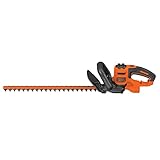
Electric, cordless or petrol?
| Type | Best for | Trade-off |
|---|---|---|
| Corded electric | small to medium hedges near a power outlet | cheapest and lightest, but limited by cable length and reach |
| Cordless (battery) | most garden hedges, including ones away from an outlet | freedom of movement, but runtime and charge time limit long sessions |
| Petrol | large hedges, long runs, or frequent professional-style use | most power and no battery limit, but heavier, louder and needs fuel mixing |
Blade length and tooth gap
- Blade length — shorter blades (45–50 cm) suit tight, detailed work and smaller hedges; longer blades (60–75 cm) cover flat hedge faces faster but are harder to manoeuvre around corners and curves.
- Tooth gap — a narrow gap gives a cleaner cut on fine-leaved hedges (box, privet); a wider gap is needed for thicker stems (laurel, leylandii) and clogs less on new growth.
- Double-sided blades cut on both the forward and return stroke, which is faster; single-sided blades only cut one way but can give a cleaner finish close to a wall or fence.
When to use hand shears instead
A powered trimmer is built for long, repeated cuts along a hedge face. For shaping a single shrub, topiary detail work, or a hedge you trim only once a year and lightly, hand shears or secateurs give more control and are easier to store. Reach for a trimmer once you’re cutting the same hedge several times a season, or the hedge run is long enough that hand shears become genuinely tiring.
Sizing a trimmer to your hedge
- Short, occasional hedge: a lightweight corded or cordless trimmer with a shorter blade is plenty.
- Long garden hedge, trimmed a few times a year: a cordless trimmer with a longer blade and a spare battery covers most sessions without a cable in the way.
- Large or multiple hedges, frequent maintenance: petrol gives the runtime and power to get through a big job in one session.
Safety
- Wear eye protection and sturdy gloves; thrown clippings and debris are the most common minor injury.
- Check the hedge for nesting birds before a seasonal cut-back, and check local guidance on bird-nesting season.
- Keep the cable clear of the cutting path on corded trimmers; use a residual-current device (RCD) for outdoor power tools.
- Never reach above shoulder height without secure, stable footing – use a stable platform rather than overstretching from a ladder.
Related guides
- All garden tools
- Powered pruning tools hub
- Best pruning shears — for single shrubs and detail work
- Best loppers & pruning saws — for individual thick branches
- Hedging plants
Quick questions
Do I need a hedge trimmer, or will shears do? If you’re cutting a continuous hedge face several times a season, a trimmer saves real time; for a single shrub or an occasional light trim, shears give more control.
Cordless or corded? Cordless suits most gardens – it’s free of cable limits and covers the typical hedge length on a charge; corded is a cheaper option if the hedge is always near an outlet.
What blade gap do I need? Narrow for fine-leaved hedges like box or privet, wider for thicker-stemmed hedges like laurel or leylandii.