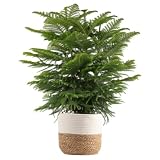
Norfolk Island pine (Araucaria heterophylla) is one of the best-known indoor conifers while young, prized for its symmetrical tiers of branches. It’s worth knowing upfront that it isn’t a true long-term houseplant – it eventually grows into a very large tree – but given bright light and steady humidity it will thrive indoors for years while it’s a manageable size.
Indoor light
Give it the brightest spot you have – a bright window is ideal, protected from harsh, intense afternoon sun which can yellow or brown the needles. Too little light causes leggy, sparse growth and bare-looking lower branches, since the tree stretches toward whatever light it can find.
Watering
Keep the soil evenly moist – don’t let it dry out fully, but don’t leave it waterlogged either. Water thoroughly, then let the top of the mix begin to dry before watering again, and reduce watering somewhat in the cooler winter months.
Humidity
Norfolk Island pine prefers moderate to high humidity, and dry indoor air – especially from winter heating – is a common cause of browning. A pebble tray, grouping plants together, or occasional misting all help, particularly through winter.
Temperature and indoor seasonal behavior
Normal room temperature suits it well; keep it away from cold drafts and away from heating vents that dry the air right around the foliage. Growth slows in the cooler, lower-light winter months – this is normal, not a sign of a problem, and watering should ease off slightly to match the slower growth.
Container care
Use a well-draining potting mix in a pot with drainage holes, and avoid a standing-water saucer. Repot and refresh the mix roughly every couple of years while the tree is young and actively filling its pot; as it grows, plan on moving it to progressively larger containers, since this species ultimately needs far more room than a typical houseplant.
Browning and branch decline
This is the single most important thing to know about this species indoors: a lost or fully browned lower branch will not regrow. Browning and branch drop are most often caused by low humidity, insufficient light, drafts, or watering swings between too dry and too wet – so the priority is preventing damage in the first place rather than expecting recovery. Isolated brown, limpet-like bumps on the needles and stems point to scale insects, the most common indoor pest on this species, rather than a care issue.
Quick questions
Will my Norfolk Island pine’s brown lower branches grow back? No – lost or fully browned branches don’t regenerate on this species, so preventing browning (light, humidity, even watering) matters more than trying to fix it after the fact.
Is Norfolk Island pine a permanent houseplant? Only while young – it’s popular indoors for several years, but it eventually grows into a very large tree that outgrows any room or pot.
Why has growth slowed in winter? This is normal – growth naturally slows in the cooler, lower-light months, so ease off watering slightly rather than treating it as a problem.
Related guides
- Norfolk Island pine plant profile · light requirements for houseplants · increasing humidity for houseplants
If the plant needs repotting, see our guide to choosing the right pot or planter.