
GrowPlants is reader-supported. When you buy through links on this page we may earn an affiliate commission, at no extra cost to you. Product suggestions are pulled from live listings — always check the current label, price and reviews before buying.
A small, well-chosen set of hand tools does 90% of everyday gardening — planting, transplanting, weeding and cultivating the soil surface. This guide covers the core kit, how the tools differ by task, and what makes one worth buying (materials, handles, ergonomics) so you buy a set that lasts rather than a drawer of duplicates. For cutting tools see pruning shears and loppers & saws; for soil testing see soil pH & moisture meters.
Quick recommendations
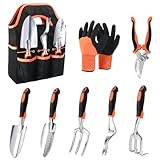


The core hand-tool set
| Tool | What it’s for |
|---|---|
| Hand trowel | digging planting holes, scooping soil and compost, potting up |
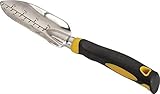
| Transplanter (narrow trowel) | a long, narrow blade with depth marks for setting seedlings and bulbs precisely |
| Hand fork | loosening soil, lifting weeds, working in amendments around roots |
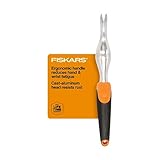
| Hand weeder (fishtail/dandelion) | levering out tap-rooted weeds whole, roots and all |
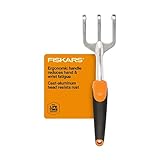
| Hand cultivator (claw) | breaking up crusted soil and mixing in topdressings between plants |
| Hori-hori / soil knife | an all-rounder: digs, cuts, divides, weeds and plants |
Choosing tools by task
- Planting & potting: a sturdy trowel is the workhorse; add a narrow transplanter for seedlings and bulbs where depth and spacing matter.
- Weeding: a fishtail weeder for tap-rooted weeds (dandelions), a hand fork or cultivator for shallow annual weeds between plants.
- Soil prep in beds & containers: a hand fork or cultivator loosens and aerates without a full-size fork.
- One-tool minimalist: a hori-hori covers digging, weeding, dividing and cutting.
Trowels & transplanters


Materials: what lasts
- Stainless steel — rust-resistant, slides through soil, easy to clean; the sweet spot for most gardeners.
- Carbon steel — very strong and holds an edge, but must be dried and oiled or it rusts.
- Forged one-piece heads — far stronger than stamped sheet metal, which bends in heavy soil. For a tool you’ll lean on (trowel, weeder), forged is worth it.
- Avoid flimsy stamped tools for anything but the lightest work — bent blades and snapped necks are the usual failure point.
Handles & ergonomics
- Look for a comfortable, non-slip grip and a shape that keeps the wrist neutral — gardening is repetitive, and wrist strain adds up.
- Ergonomic/assist handles help those with arthritis or a weaker grip.
- A brightly coloured or wrapped handle is far easier to find when you set it down in a bed (a genuine daily annoyance-saver).
- Match handle size to your hand; a too-large grip tires you faster.
Weeders, forks & cultivators

Maintenance
- Knock off soil and dry tools after use — the simplest way to prevent rust.
- Oil carbon-steel tools; a wipe of oil on any blade before storage helps.
- Occasionally sharpen trowel and hori-hori edges so they slice soil rather than drag.
- Store in a dry place, ideally hung or in a tool caddy so edges aren’t knocked.
Common mistakes
- Buying a giant “40-piece” set of duplicates instead of a few quality core tools.
- Choosing stamped sheet-metal tools for heavy soil — they bend.
- Leaving carbon-steel tools damp — rust.
- Ignoring handle comfort — the tool you reach for is the comfortable one.
Related guides
- All garden tools
- Best pruning shears & loppers & pruning saws
- Soil pH & moisture meters
- pruning flowering shrubs
Quick questions
What hand tools does a beginner actually need? A sturdy trowel, a hand fork and a weeder cover most jobs; add a transplanter for seedlings/bulbs and a hori-hori if you want one do-it-all tool.
Stainless or carbon steel? Stainless for low-maintenance rust resistance; carbon steel for maximum strength if you’ll dry and oil it.
Are ergonomic handles worth it? Yes if you garden often or have grip/wrist issues — they noticeably reduce strain.