
GrowPlants is reader-supported. When you buy through links on this page we may earn an affiliate commission, at no extra cost to you. Product suggestions are pulled from live listings — always check the current label, price and reviews before buying.
Houseplants live in a closed world: a pot of finite mix, watered on your schedule, with none of the natural nutrient recycling that happens outdoors. That makes the right fertilizer — and a gentle hand — central to keeping them healthy. This guide covers which nutrients indoor plants need, how the fertilizer types differ, and how to choose and apply feed without overdoing it.
What nutrients matter for houseplants
Indoor plants need the same core nutrients as any plant, shown as the N-P-K ratio on the label:
- Nitrogen (N) for lush green foliage — the priority for most leafy houseplants.
- Phosphorus (P) for roots and, in flowering houseplants, blooms.
- Potassium (K) for overall vigour and stress resistance.
Most general houseplant feeds are balanced or slightly nitrogen-forward, which suits foliage plants like pothos, monstera, philodendron and ferns. Flowering houseplants and certain specialists differ — orchids, for example, have their own needs, covered in our orchid fertilizer guide. For the meaning of the numbers, see NPK explained.
Recommended indoor plant fertilizers
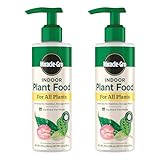


Fertilizer types for indoor use
| Type | How it works | Best for | Trade-off |
|---|---|---|---|
| Liquid / water-soluble | Diluted into the watering can; fast and easy to control | Most houseplants — the popular default | Needs repeating; easy to over-apply if undiluted |
| Slow-release granules / pellets | Mixed into the mix or top-dressed; feed for months | Low-maintenance routines, larger pots | Less control; can build up salts in a closed pot |
| Fertilizer spikes / sticks | Pushed into the mix, dissolve gradually | Convenience for a few plants | Uneven distribution around the roots |
| Organic feeds (worm castings, seaweed) | Gentle, feed soil life, low burn risk | Sensitive plants, cautious feeders | Milder, slower; some have an odour indoors |
Gentle liquid feeds
How to choose
- Mostly foliage plants? A balanced or slightly higher-nitrogen liquid houseplant feed covers the majority of collections.
- Flowering houseplants? A feed with more phosphorus and potassium supports blooming; see also our guide to feeding flowering plants.
- Forget to feed? A slow-release granule mixed into the pot is forgiving.
- Nervous about burning plants? Choose an organic feed or simply dilute a standard feed more than the label suggests and feed a little more often.
Application timing
- Growing season (spring–summer): most houseplants are actively growing and feed regularly — typically every 2–4 weeks with a diluted liquid, or once with a slow-release product, following the label.
- Autumn–winter: growth slows for many species; reduce or pause feeding to avoid salt build-up in the pot.
- Newly bought or repotted plants: wait several weeks — fresh mix already contains nutrients, and feeding stressed roots can harm them.
Container reality: why “less is more” indoors
Because a houseplant pot never drains its nutrients into the wider soil, unused fertilizer salts accumulate around the roots. This is the single biggest difference from garden feeding. Signs of over-feeding include a white crust on the soil or pot rim, brown leaf tips and edges, and wilting despite moist soil. If you see these, flush the pot thoroughly with plain water and pause feeding. A good potting mix helps buffer this — see our soil & growing media guide.
Common mistakes to avoid
- Feeding at full strength — most houseplants do better with a diluted feed.
- Feeding in winter dormancy — unused feed turns into damaging salts.
- Feeding dry roots — water first, then feed.
- Feeding a sick plant to “fix” it — pests, light and watering are far more often the cause than hunger.
- Never flushing the pot — an occasional deep watering clears accumulated salts.
Safety and label-first guidance
Keep fertilizers in their original labelled container and out of reach of children and pets — many houseplant feeds and spikes are hazardous if swallowed. Follow the dilution and frequency on the label rather than any generic rate, and wear gloves with concentrated products.
Useful related guides
- All plant fertilizers & nutrition
- NPK explained & fertilizer types
- Soil & growing media
- Orchid fertilizer
- Best fertilizer for tomatoes & vegetables
Quick questions
How often should I fertilize houseplants? Most feed every 2–4 weeks in spring and summer and little or nothing in winter. Always follow the product label — concentrations vary widely.
Can I use one fertilizer for all my houseplants? A balanced general houseplant feed suits most foliage plants. Orchids, cacti/succulents and heavy bloomers do better with feeds formulated for them.
What are the signs of over-fertilizing? A white crust on the soil surface, brown leaf tips, and wilting in moist soil. Flush the pot with plain water and pause feeding.