
Cuttings and seedlings lose moisture through their leaves before they have roots to replace it – so the single biggest key to rooting cuttings and germinating seeds is humidity. A propagator (a seed tray with a clear humidity dome) traps moisture around the plants so they don’t dry out and wilt, and a heated propagator adds the bottom warmth that speeds everything up. This guide covers propagators, humidity domes and trays, and how to use them without inviting rot.
As an Amazon Associate GrowPlants earns from qualifying purchases. We recommend product types that genuinely suit the plant; prices and availability are set by Amazon.
Quick recommendations
- Best all-round: an unheated propagator with an adjustable-vent dome
- Best for faster results: a heated propagator
- Best value: humidity domes to fit standard seed trays
- Best for a windowsill: a compact propagator
How we chose
We looked at how well the dome holds humidity, whether it has adjustable vents (essential to prevent mould), height for growing seedlings/cuttings, sturdiness, and fit with standard trays and heat mats. Ventilation control is the feature that separates a good propagator from a mould box.
Recommended options
Unheated propagators
A tray plus a vented clear dome – the simple, reliable choice for most seeds and cuttings, especially on a warm windowsill or over a heat mat.


Heated propagators
Combine a built-in heat mat with a humidity dome for warmth and moisture together – the fastest route for tropical seeds and difficult cuttings.
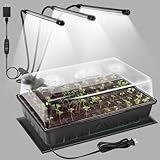
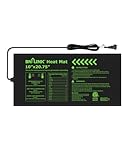
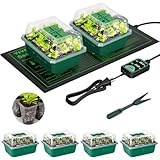
Humidity domes & seed trays
Domes that fit standard 10×20 trays let you build your own propagator and scale up cheaply. Choose ones with vents.
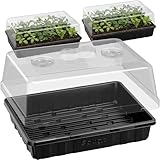

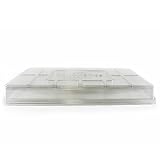
Unheated vs heated at a glance
| Type | Best for | Note |
|---|---|---|
| Unheated propagator | Most seeds/cuttings in a warm room | Add a heat mat for warmth |
| Heated propagator | Tropical seeds, tricky cuttings, cool rooms | Warmth + humidity in one |
| Dome + tray (DIY) | Scaling up cheaply | Choose vented domes |
How to use a propagator
- Keep the medium moist, not wet – soggy mix plus a closed dome causes damping-off (seedling collapse).
- Crack the vents daily for airflow; fully closed domes breed mould.
- Over a heat mat for warm-season seeds; on a bright sill or under a grow light.
- Harden off gradually: once germinated/rooted, open the vents more each day, then remove the dome, so plants adjust to normal humidity.
Common mistakes
- Sealing the dome completely – no airflow means mould and damping-off.
- Keeping the mix waterlogged.
- Leaving the dome on too long after germination, so seedlings get soft and leggy.
- No bottom heat for tropical seeds that need it (add a heat mat).
FAQ
Do I need a propagator? For cuttings and many seeds, yes – the humidity dome stops them drying out before they root, dramatically improving success.
Heated or unheated propagator? Unheated is fine in a warm room; choose heated (or add a heat mat) for tropical seeds, difficult cuttings or cool spaces.
Why did my seedlings collapse/rot? Usually damping-off from a mix that’s too wet and a dome with no ventilation – keep it moist not soggy and open the vents.
When do I remove the dome? Gradually after germination or rooting: open vents more each day, then take it off so plants harden to room humidity.
Final recommendation
A vented propagator (unheated in a warm room, heated for tropical seeds and tricky cuttings) is one of the best-value propagation buys. Keep the medium moist not wet, use the vents, add a heat mat for warmth, and move seedlings to grow lights once they’re up.
As an Amazon Associate GrowPlants earns from qualifying purchases. GrowPlants does not sell these products.
See also: best seedling heat mats · seed-starting & potting soil · all propagation equipment.