
A Hoya is a succulent and a vine, and almost every problem people have with one comes from forgetting one half of that description. The thick, fleshy, waxy leaves store water the way any succulent does, so the plant does not want the constant soaking you would give a soft-leaved tropical. But it also climbs and trails like a jungle vine, which means it wants warmth, humidity and something to spill down from. Hold both ideas at once and the wax flower becomes one of the most forgiving houseplants you can own.
Climate, temperature and why a pot is the right answer
Hoya belongs to the tropics and subtropics, and it will also grow outdoors in a Mediterranean climate. It is reliable in hardiness zone 10b and warmer, and with genuine winter protection a plant can be carried through zone 10a. In practice, treat it as a frost-free plant that prefers to stay above 10 °C (50 °F). Below that it does not necessarily die, but it stops growing, and cold wet roots are far more dangerous to a succulent than cold dry air. That is also why a container is recommended even where the ground would do — a potted Hoya can be moved indoors, out of a cold snap, or into better light when it refuses to flower.
 Better-Gro Special Orchid Mix - Orchid Bark Potting Mix - 4 Quarts
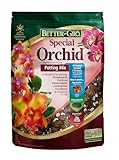 Better-Gro Special Orchid Mix - Orchid Bark Potting Mix - 8 Quarts
Hoya does best in a chunky, fast-draining mix similar to orchid bark: As an Amazon Associate we earn from qualifying purchases.
There is one specific trap worth knowing about. Almost every Hoya sold has been raised in a greenhouse, in warm, humid, sheltered conditions. Take it straight out into a colder season and the change alone will set it back badly – the plant has never met wind, dry air or a cold night. Buy for outdoor planting in spring. Buy for indoor growing at any time of year, unless your house itself is cold in winter. Planting season by zone follows the same logic: spring in zone 10a, and possibly up to mid-summer; spring to summer in zone 10b; spring to autumn in zone 11; and all year in zone 12 and above.
Light: shade for the leaves, brightness for the flowers
This is the point where most Hoya owners go wrong in one direction or the other. The plant grows happily in half shade to shade, and direct full sun in summer will burn the leaves – a Hoya on a hot windowsill gets bleached, scorched patches that never recover, because the leaves are evergreen and carry the damage for years.
But shade alone gives you a green vine and nothing else. Hoya needs light to bloom, and without enough of it, it simply will not. The target is bright but indirect: near a window out of the midday sun, or in the dappled shade of something taller outdoors. If you have to choose between a plant that looks perfect and a plant that flowers, move it toward the light.
Watering, humidity and water quality
Hoya wants an average amount of water in well-drained soil, kept moist rather than wet. Well-drained is not a throwaway phrase here: the succulent leaves already hold a reserve, so waterlogged roots buy the plant nothing and rot it quickly.
Humidity is the part people skip. Hoya likes high humidity, and misting the plant is genuinely useful – not just decoration. Spray the aerial roots along the stems as well as the foliage; those roots exist to take up moisture from damp air, and in a dry living room they have nothing to work with. If the plant hangs, put something underneath it that stays damp rather than drying out completely, so there is a pocket of moist air around it.
Use soft water
Hoya does better on soft water – rainwater, or otherwise clean water with a low concentration of dissolved ions. This matters more here than for most houseplants because the plant lives in the same pot for years: every watering with hard tap water leaves its mineral load behind, and in a container those salts have nowhere to go, accumulating around the roots until the plant declines for no visible reason. Collected rainwater solves it outright.
Hanging or trellis – and why hanging usually wins
A Hoya has no tendrils. It cannot grip a support by itself the way a passionflower or a pea can, so it will not climb a trellis unless you tie it there. Its natural inclination is to grow downward and weep.
Work with that. Hanging the plant high – from a ceiling hook or a bracket – is the recommended way to grow it, for three separate reasons:
- It is easier for the plant, which is simply doing what it wants to do rather than being trained against its habit.
- It looks far better, with the stems and flower clusters falling clear of the pot.
- It reduces pest problems, because a plant suspended in mid-air is much harder for crawling insects to reach than one sitting on a shelf or on the ground.
Trellising is still sometimes a necessity: a Hoya can reach up to 10 m, so even a hanging plant eventually needs some of its length trained onto a support rather than left to trail into the furniture.
Feeding: rarely, and never in a cold winter
Hoya is not a hungry plant. Feed it once or twice a year, applied as a spray to the foliage, and match the feed to the stage the plant is at: a fertiliser intended for growth while the plant is young and building length and leaf, and one intended for blooming once it is established. If the leaves are yellowing, a shortage of nitrogen is the usual cause and a high-nitrogen feed is the fix – do not assume yellow leaves always mean overwatering.
Do not fertilise during a cold winter. A plant sitting below its comfortable temperature is not growing and cannot use the feed; all you achieve is more salt in the pot, which is the last thing a Hoya needs.
Why your Hoya will not bloom
The flowers are the whole point: small, waxy, star-shaped, with a second little star at the centre, carried in clusters that range from a flat umbel to an almost perfect ball. They are fragrant, and depending on the cultivar they come in pink, red, purple, white, green or yellow.
Outdoors the season runs spring to autumn, with the peak in spring and summer and only occasional autumn flowering. Indoors, under the right conditions, a Hoya can bloom all year round. When it does not, run through this list in order:
- Not enough light – by far the most common reason, and the first thing to change.
- Watering – either too little or too much will stop flowering.
- Lack of nutrients – a plant that has been in the same pot for years without a single feed.
- Dry air – the same low humidity that leaves the aerial roots shrivelled.
Never repot a Hoya in flower
If the plant is blooming, leave it alone. Repotting during bloom causes the flowers to drop; the root disturbance is a large enough shock that the plant abandons the display it was investing in. Wait until flowering has finished. For the same reason, be conservative with the pruning shears: remove old and dead branches and leaves, but leave the short flower stalks alone, because a Hoya reflowers from the same stalks year after year and cutting them off costs you next season’s blooms.
Propagation: cuttings, water and layering
Cuttings are the standard way to increase a Hoya, and there is a good reason beyond convenience. Seed is very hard to find, and a specific flower colour or a variegated leaf will only come true from vegetative propagation – take a cutting and you know exactly what you are going to get. Outdoors, work in spring to early summer; indoors you can take cuttings at any time of year.
One preparation step is worth doing first: put the mother plant in high humidity for a while before you cut. A well-hydrated, actively growing stem roots far more readily than a stressed one.
Cuttings into soil
- Take either a stem or a leaf. If you use a leaf, cut it with a piece of stem attached and at least three leaves on that stem – a lone leaf blade has no growth point to build a plant from.
- Leave the cutting in the shade for a few days until the cut tissue heals. Do not rush this. An open wound pushed into damp soil rots; a callused one roots.
- Set it into the soil and leave it to grow.
- Keep the soil moist and the air humid. A greenhouse, or any enclosed humid space, raises the success rate considerably, because a cutting with no roots yet loses water through its leaves faster than it can replace it.
Cuttings in water
- Cut the stem and, again, wait a few days before putting it in water so the cut can heal.
- Use soft water – rainwater or clean water low in dissolved ions. Rooting in hard water is where most water-propagated Hoyas stall.
- Change the water every couple of days to keep it fresh.
- Once the cutting has more than five roots, you can start adding a little fertiliser to the water.
- Move it on into moist soil and keep it there.
Layering – the highest success rate
The safest method of all does not involve cutting anything off. Bend a branch over, pin it down and cover that section with soil, then keep the soil moist. The buried section roots while the branch is still attached to and fed by the parent plant, so there is no window in which a rootless cutting has to survive on its own. Once it has rooted, separate it.
Pests, and one safety note
The pests to watch for are aphids and mealybugs. Both cluster where you are least likely to look – on new growth, in leaf axils and among the flower clusters – so check those places rather than the upper leaf surfaces. Mealybugs in particular hide in the tangle of a mature vine, which is another argument for hanging the plant.
Hoya is poisonous to people and to pets, but the risk is narrow: it is only a problem if the plant is eaten, and touching it is not dangerous. Still, keep it out of reach of small children and animals – which, conveniently, is exactly what hanging it from the ceiling does.
For the full plant profile see our Hoya plant growing page.
See also: rooting hormone for cuttings
See also: rooting hormone for cuttings


