



Plant Profile & Key Characteristics
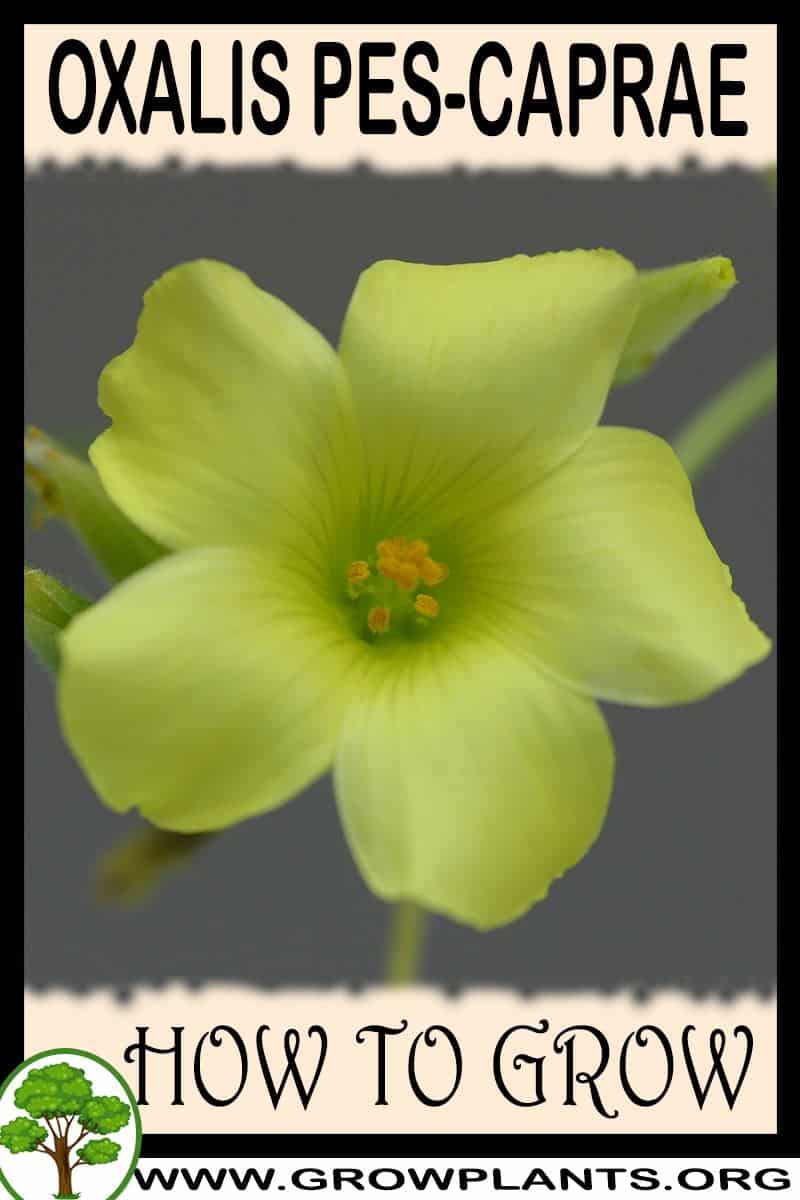
Overview: Oxalis pes-caprae (Bermuda buttercup, sour grass) is a bulbous perennial geophyte 10-30 cm tall with bright yellow flowers. Its leaves, flowers and bulb are edible, though it is mostly grown as an ornamental and is a notorious invasive weed.
Quick Specifications
| Specification | Attribute |
|---|---|
| Plant Type / Life Cycle | Perennial (geophyte, summer-dormant) |
| Foliage Type | Deciduous (summer-dormant) |
| Mature Size | 10-30 cm (4-12 in) |
| Growth Rate | Moderate to fast |
| Root System | Bulbous geophyte |
| Toxicity | Contains oxalic acid – edible only in small amounts; large quantities can be harmful (soluble oxalates) |
| Hardiness | USDA zones 9-11 |
Growth Form & Structure
- Height & Spread: 10-30 cm (4-12 in); grows well in pots and indoors as a houseplant (start pots at ~3-6 L / 0.8-1.6 gal).
- Growth Habit & Form: Low clump-forming geophyte from small bulbs; can spread and become invasive.
- Lifespan & Maturity: Perennial that returns and multiplies from its bulbs each season.
Anatomy & Physical Features
- Leaves & Foliage: Edible green obcordate (heart-shaped) leaflets in threes with small purple-brown dots; hollow edible stems.
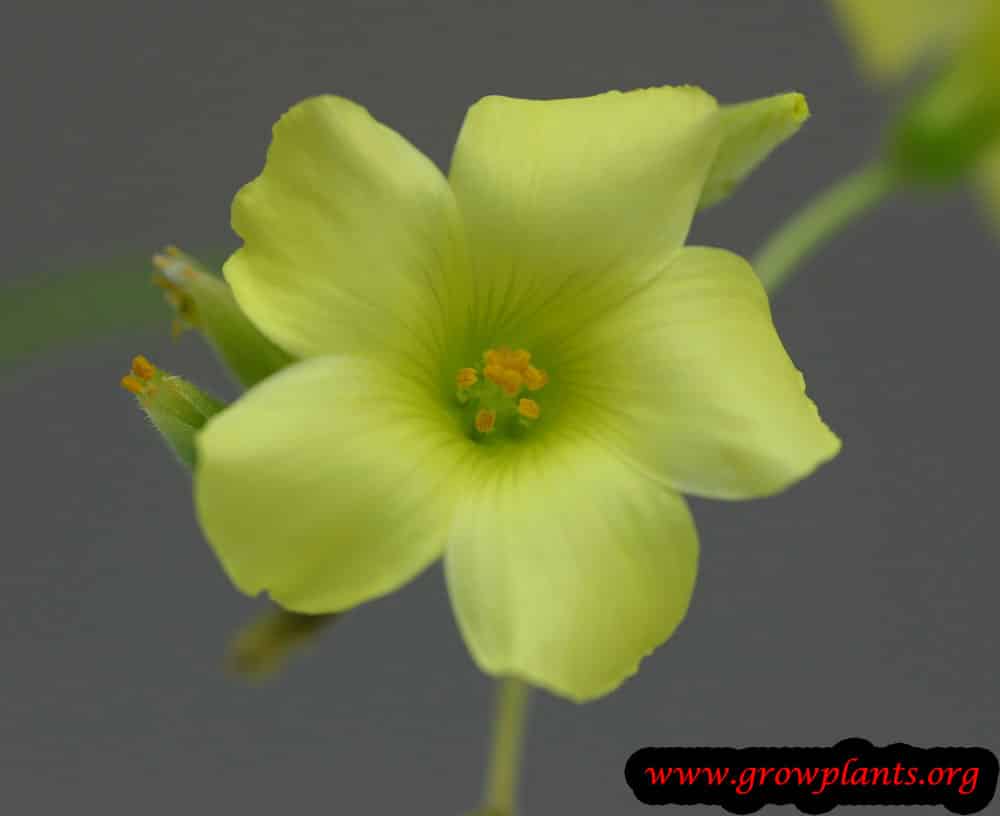
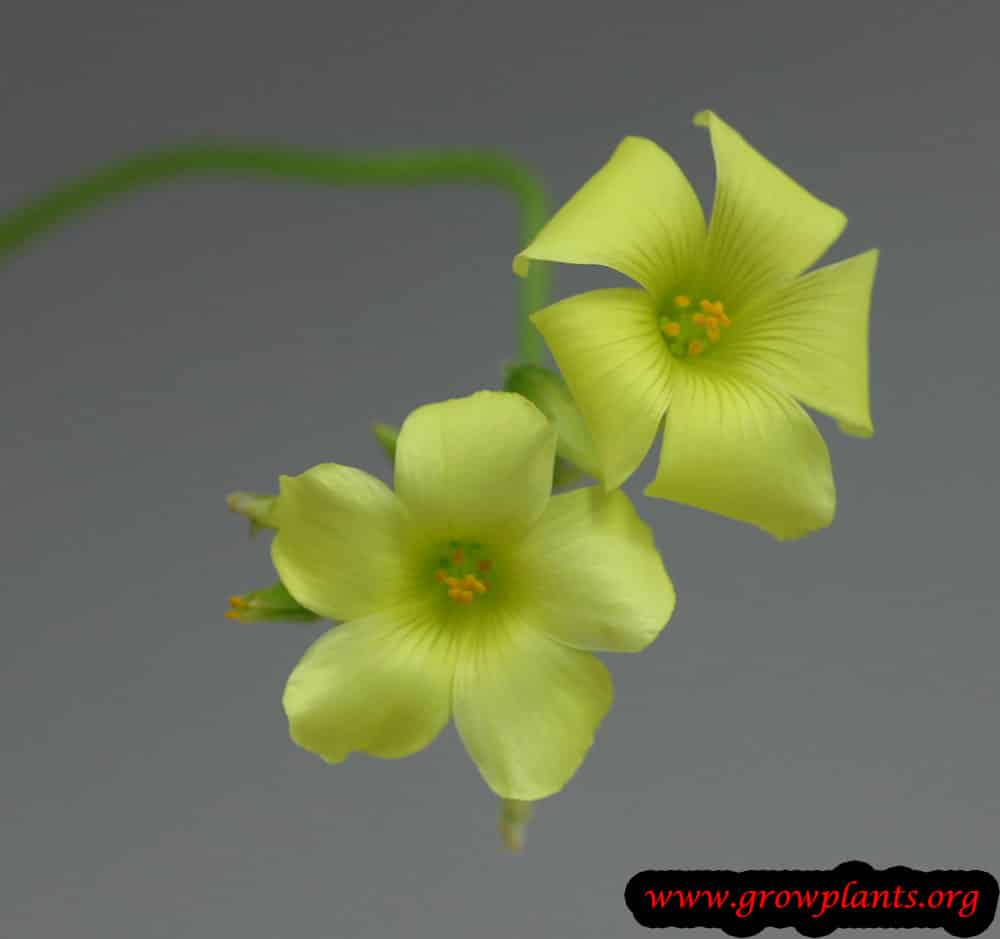
- Flower Characteristics: Edible shiny yellow five-petalled flowers 2-4 cm, in clusters (full detail in the Bloom guide).
Primary Uses & Landscape Value
- Edible Uses: Leaves and flowers eaten raw in salad or cooked; the small sour bulbs cooked, pickled or eaten raw.
- Functional & Ornamental Roles: Ornamental and groundcover, but an aggressive spreader that can become weedy.
Care Guide: Planting, Soil & Watering
Overview: Oxalis pes-caprae (Bermuda buttercup) is a bulbous, summer-dormant geophyte that grows from small bulbs in rich, well-draining soil kept evenly moist during its active season. It appreciates regular moisture while in leaf, then rests through its dormancy.
Quick Care Requirements
| Requirement | Ideal Condition |
|---|---|
| Planting Season | Spring to summer in warm zones; autumn to winter where temperatures drop below freezing |
| Growth Rate | Moderate to Fast |
| Soil Type | Rich, well-draining soil that holds some moisture (peat / organic) |
| Water Need | Moderate to High – keep evenly moist during active growth |
Planting & Establishment
- Best Planting Season: Plant at the start of the growing season – spring to summer in mild climates, or autumn to winter where hard frosts occur; set bulbs 2–5 cm (1–2 in) deep.
- How to Plant:
- Hole Preparation: Dig the hole noticeably larger than the root ball – roughly two to three times its size – so the roots settle into loose soil; bulbs go 2–5 cm (1–2 in) deep.
- Soil Amendments: Mix organic matter, humus and dried leaves into the backfill for a rich, moisture-retentive but still free-draining bed, then mulch the surface to hold moisture.
- Planting Depth: Set the root ball at soil level and firm the soil gently – not too hard, but firm enough that the plant does not sink when watered.
- Growth Speed & Expectations: Growth is moderate to fast during the active season; the clump fills out and can be lifted and divided when dormant.
Soil, Watering & Drainage Care
- Soil Mix & Drainage Needs: Use a rich, well-draining mix that still retains some moisture; in containers use rich soil with organic matter and drainage holes, and the bulbs can be lifted and stored during dormancy. It grows in full sun to full shade with light.
- Watering Schedule & Technique:
- Young / Newly Planted: Water daily for about the first two weeks after planting (preferably in the morning) to settle the plant, keeping the soil consistently moist.
- Established: Keep the soil evenly moist through active growth, watering deeply but never leaving it waterlogged.
- Seasonal Adjustments: Reduce watering as the foliage dies back into dormancy and keep it on the dry side while resting; resume regular watering when new growth appears.
Climate, Light & Hardiness
Oxalis pes-caprae is a winter-growing geophyte for Mediterranean and subtropical climates, dying back in summer and regrowing through the cool season. It tolerates full sun through full shade (with some light) and can be grown indoors, though outdoor hardiness is limited to USDA zone 9–11.
Quick Climate Specifications
| Climate Zones | Mediterranean, subtropical |
|---|---|
| USDA Hardiness Zones | 9–11 |
| Light Conditions | Full sun to full shade (needs some light even in shade) |
Sunlight & Light Exposure
Optimal Light Setup
Adaptable from full sun to shaded spots as long as some light reaches the plant during its growing season.
Temperature Extremes & Hardiness
USDA Hardiness & Regional Limits
Hardy from zone 9 through 11, needing mild winters; grows actively autumn through spring and is summer-dormant.
Cold Damage & Winter Protection
Requires at least a month of temperatures under about 5°C (41°F) to reliably break dormancy and trigger its cool-season growth cycle.
Growing in Pots, Balconies & Indoors
Oxalis pes-caprae (Oxalis pes-caprae) is a compact, bulbous wood-sorrel that is tailor-made for pots – small, shallow-rooted and tidy, it suits a windowsill, a small container or the front of a balcony display. The grower confirms it grows well indoors, and it makes a genuinely good houseplant – a neat, low foliage-and-flower plant for a bright spot.
Quick Details
- Container Size: About 3-6 L (0.8-1.6 gal) to start (the grower’s guide), potting up as it fills
- Indoor Suitability: Good houseplant for a bright spot
- Best Spot: Full sun / half shade / full shade with light
- Soil & Drainage: Rich, free-draining mix with drainage holes; drainage matters for the bulbs
- Watering in Pots: Average to generous while in leaf; ease right off as it dies back into dormancy
Indoors & On the Windowsill
- As a houseplant: The grower grows it indoors successfully. Give it a bright windowsill; it also tolerates lower light, though flowering and leaf colour are best in good light.
- Dormancy indoors: Oxalis naturally rests after flowering – foliage dies back and the pot looks bare. Keep it cool and nearly dry through dormancy, then resume watering to bring it back.
- Safety: Oxalis foliage contains oxalates and can upset pets or children if eaten in quantity – site pots out of reach and do not treat it as edible.
On a Balcony or Patio
- Light & shelter: Happy on a bright balcony or patio in a small pot; being low and light it is easily blown over, so group pots or use a heavier container in exposed spots.
- Watering: Small pots dry quickly in sun and wind – check often while the plant is in active leaf.
Choosing the Pot, Soil & Long-Term Care
- Pot & drainage: Start around 3-6 L with good drainage holes (the grower stresses drainage for the bulbs). Use a pot with strong drainage holes and skip a standing water saucer – constantly wet feet are the quickest route to root rot.
- Potting mix: A rich, free-draining mix with organic matter, as the grower advises.
- Potting up & soil refresh: Each time the plant fills its pot, move up a size until it reaches the size you want; because potting mix loses vigour over time, refresh part of the soil when you pot on.
- Feeding: Potted plants exhaust their food faster than those in the ground, as watering leaches nutrients out; feed lightly but more regularly through the growing season.
Grower’s Container Tip
- Pot up in stages: The grower starts in a small pot (about 3-6 L) and steps up to a larger one each time the plant fills the current one, until it reaches the desired size – this keeps the soil fresh and makes care efficient. In the final large pot, swap out part of the soil every few years; from the side of a big pot it is easy to replace some soil without disturbing the whole plant.
- Lift the bulbs for dormancy: In the dormant season you can lift the bulbs out of the soil, store them, and replant when growth restarts.
Fertilizing & Feeding
Bermuda buttercup is a vigorous, summer-dormant bulb that spreads readily on its own – light, balanced feeding is enough, and heavy feeding mainly encourages a plant that is already prone to spreading aggressively.
Quick Fertilizing Specs
| Feeding Level | Light – a naturally vigorous bulb that spreads readily without extra encouragement |
|---|---|
| young_feeding | Light, balanced feeding as newly planted bulbs establish their first leaves |
| mature_feeding | Light, balanced feeding through the cool-season leaf growth and bloom period |
| Main Nutrient Priority | Balanced feeding is enough – heavy nitrogen mainly fuels this plant’s already vigorous, spreading habit |
| Best Feeding Period | Through active leaf growth in the cooler months, before summer dormancy sets in |
| Organic Options | A light topdressing of compost worked around the clump as growth resumes |
| Micronutrients | No routine micronutrient program is typically needed for this vigorous bulb |
| Soil pH | Prefers well-drained soil and tolerates a fairly wide pH range |
| Reduce/Stop Feeding | Feeding is unnecessary once the foliage yellows and the plant goes summer-dormant |
Feeding by Growth Stage
Establishment After Planting
Support root and early leaf development as newly planted bulbs get established.
| Nutrient direction | A light, balanced feeding worked into well-drained soil at planting supports steady early rooting and leaf growth. |
|---|---|
| Timing | At planting and through the first flush of leaves. |
| Frequency | Light feeding is enough while the bulbs are still settling in. |
| Fertilizer types | A balanced, complete fertilizer worked lightly into the soil at planting, Organic matter such as compost blended into the planting hole |
| Precautions | Avoid placing concentrated fertilizer in direct contact with the bulbs, which can cause damage. |
Active Growth and Bloom
Support the cool-season leaf growth and bright yellow flowers this bulb is known for, including where leaves, flowers, and bulbs are harvested for the table.
| Nutrient direction | Continued light, balanced feeding through active growth is enough to keep foliage, flowering, and bulb development healthy. |
|---|---|
| Timing | Through the cool-season active growth and bloom period. |
| Frequency | Light, infrequent feeding through this stage is generally enough. |
| Fertilizer types | A light, balanced feeding applied during active leaf growth, A diluted liquid feed is a gentle option for container-grown clumps |
| Precautions | Because this species already spreads aggressively, avoid heavy feeding that would only encourage further spread in the garden. |
Summer Dormancy
Let the bulb rest through its natural summer-deciduous dormant period.
| Nutrient direction | None – withhold fertilizer once the foliage yellows and the plant enters summer dormancy. |
|---|---|
| Timing | Through summer dormancy, after the foliage dies back. |
| Frequency | No feeding at this stage. |
| Fertilizer types | No feeding at this stage – the dormant bulb has no active leaves to support |
| Precautions | Do not fertilize dormant bulbs; resume light feeding only once new leaf growth appears in the cooler months. |
Nutrient Deficiency Signs & Corrections
Leaves look pale green to yellowish with weak, sparse growth during the active season.
| Possible causes | Nitrogen deficiency, Very poor, depleted soil around the bulbs, Bulbs planted too deep or in poorly draining soil restricting root function |
|---|---|
| Appears first on | Overall leaf color during active growth. |
| What to check | Soil richness and drainage, Planting depth of the bulbs, Recent feeding history |
| Possible correction | A light, balanced feeding at the start of active growth is usually enough to restore healthy leaf color. |
New leaves emerge pale to yellowish while the veins stay noticeably greener.
| Possible causes | Iron deficiency (chlorosis), High soil pH limiting iron availability, Waterlogged or poorly aerated soil |
|---|---|
| Appears first on | Newest leaves. |
| What to check | Soil pH, Drainage in the planting area or container, Whether yellowing is specific to new growth |
| Possible correction | Correct soil pH toward a more favorable range and apply a chelated iron product per its label if chlorosis is confirmed. |
Flowering and bulb development are weak, and older leaf margins take on a scorched, dry look.
| Possible causes | Potassium deficiency, Bulbs that are undersized, crowded, or overdue for division, Inconsistent watering through the active growth period |
|---|---|
| Appears first on | Older leaf margins and overall flower and bulb production. |
| What to check | Bulb size and how long since the clump was last divided, Watering consistency during active growth, Recent feeding history |
| Possible correction | A balanced feeding with adequate potassium, along with dividing overcrowded bulbs, typically improves flowering and bulb size. |
Pruning, Training & Seasonal Maintenance
Oxalis pes-caprae (Bermuda buttercup / soursob) is a summer-dormant, winter-growing geophyte that spreads aggressively by bulbils and is considered a serious invasive weed in many Mediterranean-type climates. It has no woody structure, so there is nothing to prune structurally – the entire maintenance task is deadheading before seed/bulbil set to control spread, plus clearing foliage once it yellows at the start of summer dormancy. Grooming timing does not affect next season’s flowering since new growth comes from the bulb, but in this species deadheading is as much about containment as tidiness.
Quick Pruning & Maintenance Specs
| Pruning Tolerance | Low – grooming only, no structural cuts |
| Primary Pruning Window | Autumn through spring, during active growth and bloom |
| Secondary Maintenance Window | Once foliage yellows heading into summer dormancy |
| Typical Frequency | Frequent deadheading through bloom if spread control matters |
| Main Objective | Preventing unwanted spread by seed/bulbil, secondarily tidiness |
| Young Plant Priority | Leave undisturbed while establishing from bulb |
| Mature Plant Priority | Deadhead promptly and consistently; clear foliage only after it yellows |
| Best Tool Type | Fingers or fine precision snips |
| Avoid Heavy Pruning During | While foliage is green and actively growing |
Pruning by Plant Age & Size
Newly Established
Leave a newly planted bulb undisturbed through its first season.
Young / Formative
No structural training – there is no framework. The main formative task is beginning deadheading as soon as flowering starts, given the species’ spread risk.
Mature / Established
Deadhead consistently through the long autumn–spring bloom season and remove foliage as it yellows into dormancy. Where the plant is unwanted, control is better achieved through bulb removal/herbicide during dormancy than through cutting.
Seasonal Pruning Schedule
Growth & Bloom Season (Autumn–Spring)
Objective: prevent seed and bulbil formation. Remove flower stalks at their base promptly after each flush fades, before seed set; leave green leaves in place. This does not reduce future flowering, which continues from the bulb.
Pre-Dormancy (as leaves yellow)
Objective: clean transition to summer rest. Clear only foliage that has already yellowed; the edible leaves can also be harvested at the base rather than left to simply die back, which serves the same purpose.
Special Growth to Remove
- Spent flower stems – deadhead at the base promptly, before seed/bulbil development, given this species’ documented invasiveness.
- Yellowed or dried foliage as dormancy begins.
Container & Small-Space Pruning
Growing this species in a container is one of the more reliable ways to enjoy it without it spreading into surrounding beds. Deadhead consistently regardless of pot size, and let the pot go dry and undisturbed through summer dormancy rather than watering or trimming it as if still active.
Tools
- Precision snips for flower stalks and leaf/stem harvest.
- Fingers for pinching spent blooms.
Tool Hygiene & Disease Risk
Routine – clean, sharp tools are sufficient; the powdery mildew/fungal issues noted for this species are not spread by grooming cuts. The bigger risk with this plant is spreading bulbils via soil or discarded cuttings, not disease.
Cut Placement & Technique
Remove flower stalks at their base as soon as blooms fade, before petals drop and seed/bulbils can form. Dispose of cut flower heads rather than composting them if spread is a concern. Take dead leaves off at their base once fully yellowed.
Heavy Pruning & Rejuvenation
Not applicable in the usual sense – there is no wood to renew. If the goal is control rather than renewal, removal is achieved by lifting bulbs during dormancy, not by cutting back foliage.
Post-Pruning Care
No extra feeding is needed after deadheading. Once foliage is cut back for dormancy, withhold water through the summer rest.
Common Pruning Mistakes
- Letting flowers go to seed/bulbil stage before deadheading, allowing this invasive species to spread further.
- Composting spent flower heads or bulb-bearing soil instead of disposing of them.
- Removing green leaves before natural yellowing, weakening the bulb.
When NOT to Prune
Do not remove green, actively growing foliage. Do not delay deadheading once flowers fade, since seed/bulbil formation happens quickly in this species. Avoid disturbing the bulb during summer dormancy.
Recommended Tools (by task)
- Deadheading & spread control → precision_snips – quick, clean removal of flower stalks before seed/bulbil set, and for harvesting the edible leaves/stems at their base.
Propagation & Spread
Oxalis pes-caprae spreads efficiently from bulbs and bulbils. Because it can spread aggressively, propagation guidance should emphasize containment rather than multiplication.
Quick Propagation Specs
| Primary Spread Structures | Bulbs and bulbils |
| Management Priority | Containment and prevention of unintended spread |
Containment
Handle soil and plant material carefully because small bulbs or bulbils can be moved unintentionally. Remove unwanted plants before propagules are dispersed, and dispose of contaminated soil or plant material responsibly according to local requirements.
Seed
Seed is not the primary practical route for routine propagation of this plant and should not be emphasized over its bulb and bulbil spread.
Bloom & Edible Flower Guide
Quick Details
- Bloom Season: Autumn through spring – a cool-season bloomer
- Time to First Bloom: Each season, once the bulbs break dormancy in the cooler months
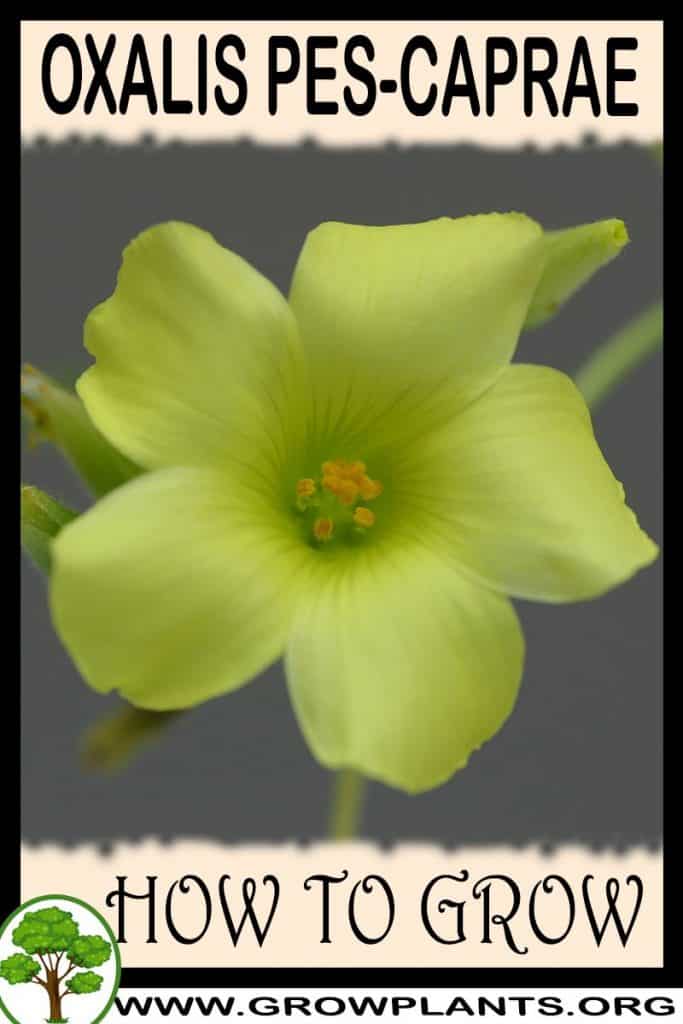
- Flower Appearance: Bright, shiny yellow five-petaled flowers, 2 to 4 cm across, in loose clusters
- Edibility: Edible – the tangy yellow flowers can be eaten raw or tossed into salads; because they are high in oxalic acid, enjoy them in small amounts
Detailed Blooming Overview
This wood-sorrel is a vigorous cool-season bulb whose glossy yellow flowers light up the garden from autumn into spring. The blooms open wide in sunshine and close in dull weather or at night. The tangy flowers can be scattered raw over salads, but like the rest of the plant they contain oxalic acid, so they are best used as a garnish rather than eaten in quantity.
Flower Characteristics
- Shiny yellow flowers with five petals, 2 to 4 cm across.
- Carried in small clusters above clover-like leaves.
- Open in sun and close in dull weather or at night.
Bloom Care & Thinning
- Managing the bloom: Give it full sun for the best flowering; note that it spreads readily by bulbils, so contain it if you do not want it to wander.
- Pollination: By bees and other pollinators.
- A note on eating: High in oxalic acid, so use the flowers as a light garnish rather than in quantity, and go easy if you are prone to kidney stones.
Fruit & Uses
Oxalis pes-caprae (soursob) is a genuinely edible plant: its leaves, hollow stems, flowers, and bulbs all share a lemony-sour flavor from natural oxalic acid content, and are eaten raw, cooked, or pickled. Because of that oxalic acid content, all parts should be enjoyed in normal culinary amounts rather than in excess.
Quick Edible Specs
| Edible Parts | Leaves, stems (hollow), flowers, bulbs (corms) |
|---|---|
| Main Use(s) | Culinary — sour/tangy salad green and pickling bulb (regionally known as ‘soursob’ or ‘suring’) |
| Eaten Raw or Cooked | Leaves, stems, flowers: raw (salad) or cooked; bulb: raw, cooked, or pickled |
| Preparation Required | None required for leaves/stems/flowers; bulb can be cooked or pickled, no special detoxification documented |
| Harvest Season | Leaves/stems: autumn through spring; bulb: spring or autumn |
| Time to First Harvest | After the plant is established (qualitative — see Propagation) |
| Safety/Toxicity Caveat | Contains oxalic acid (noted among the plant’s growing difficulties) — the source of its sour flavor; eat in normal culinary amounts, and those prone to kidney stones or gout should limit intake |
Leaves & Greens
Green leaves with small purple-brown dots, in the typical clover-like trio of heart-shaped leaflets joined at the base. Once established, leaves can be cut from the base of the plant. Used raw in salads for their sour, tangy flavor, or lightly cooked. Available autumn through spring while the plant is in active growth (it goes summer-dormant).
Shoots & Stems
The stems are edible and hollow, sharing the same tart flavor as the leaves. Typically used the same way — raw in salads or cooked alongside the leaves.
Flowers & Flower Buds
Bright, shiny-yellow flowers are edible and used raw, most often scattered into salads for color and their sour note.
Bulbs, Corms & Rhizomes
Small, white-to-brown, tear-shaped bulbs with a distinctly sour taste — the plant’s most distinctive edible part. Lifted in spring or autumn; eaten raw, cooked, tossed into salads, or pickled.
Harvesting
Leaves and stems can be cut through the autumn-to-spring growing season. Bulbs are lifted in spring or autumn; take care when digging, as the plant spreads readily and any small bulbs left behind will regrow (see Difficulties: invasive).
Preparation, Uses & Safety
All edible parts share a lemony-sour flavor from natural oxalic acid content. Leaves, stems, and flowers are used raw in salads or cooked; bulbs are eaten raw, cooked, or pickled. Enjoy in normal culinary quantities — because of the oxalic acid content, avoid excessive intake, and people with a history of kidney stones or gout should be cautious. Confirm correct identification before foraging, since several unrelated low-growing, yellow-flowered weeds have a similar look.
Pests, Diseases & Troubleshooting
Overview: Bermuda buttercup (Oxalis pes-caprae) is a bulb/tuber-forming wood sorrel whose signature disease is a bright orange rust, alongside powdery mildew and the sap-sucking insects – aphids, spider mites and whitefly – that trouble soft-leaved plants; underground, bulbs and tubers rot readily if kept wet in dormancy. This species is a notoriously invasive bulbil-spreader in mild climates. Airy, evenly-drained culture and prompt removal of rusted leaves keep it healthy.
Quick Troubleshooting Overview
| Issue / Pest | Main Symptom | Primary Solution |
|---|---|---|
| Oxalis rust | Bright orange pustules on leaf undersides | Remove infected leaves, improve airflow |
| Powdery mildew | White powdery coating on leaves | Airflow, avoid wet foliage, sulfur/bicarb spray |
| Aphids | Sticky, curled leaves and stems; honeydew | Water jet, insecticidal soap |
| Spider mites | Fine stippling and webbing in dry heat | Raise humidity, rinse, neem/soap |
| Whitefly & fungus gnats | White flies / gnats around potted plants | Sticky traps, let soil dry, soap/neem |
| Bulb / root rot | Mushy bulbs; failure to sprout | Dry dormancy, gritty mix, discard soft bulbs |
Common Pests & Management
- Aphids (Aphididae):
- Symptoms: Soft green, grey or black insects clustered on tender leaves, stems and flower stalks, causing curling, sticky honeydew and sooty mould, and able to spread viruses.
- Prevention & Control: Rinse off with a firm water spray and encourage ladybirds and lacewings; control ants. Use insecticidal soap or neem oil on stubborn colonies, covering leaf undersides and growing tips.
- Spider mites (Tetranychus urticae):
- Symptoms: Fine pale stippling and a dusty, bronzed look with delicate webbing on leaf undersides in hot, dry, still air – a frequent problem on indoor Oxalis such as the purple shamrock.
- Prevention & Control: Raise humidity and rinse the foliage regularly, then treat with insecticidal soap or neem oil on the undersides, repeating to catch hatchlings; a spell of cooler, more humid air alone often checks them.
- Whitefly (Trialeurodes vaporariorum):
- Symptoms: Tiny white moth-like insects that rise in a cloud when disturbed, feeding on leaf undersides with honeydew and sooty mould, mostly indoors and under glass.
- Prevention & Control: Use yellow sticky traps to monitor and thin adults and spray insecticidal soap or neem oil on the undersides, repeating; good ventilation limits them.
- Fungus gnats (Bradysia spp.):
- Symptoms: Small dark flies drifting around potted plants; their larvae live in constantly moist compost and can nibble fine roots and tubers of seedlings and weak plants.
- Prevention & Control: Let the top of the compost dry between waterings, use yellow sticky traps for adults, and apply a Bacillus thuringiensis israelensis (Bti) or beneficial-nematode drench for larvae in heavy cases.
Diseases & Fungal Issues
- Oxalis rust (Puccinia oxalidis):
- Symptoms: Bright orange to rusty-brown powdery pustules on the undersides of the leaves, with yellow flecking above; heavy infection distorts and drops foliage. The most characteristic disease of the genus.
- Treatment & Management: Pick off and destroy infected leaves at the first pustules, avoid wetting the foliage, and improve air circulation and spacing. Clear fallen debris; where rust is persistent a sulphur fungicide gives protection, but sanitation and airflow are primary.
- Powdery mildew (Erysiphales):
- Symptoms: A white powdery coating on leaves and stems in warm days with humid nights and stagnant air, as flagged in the source, yellowing and weakening affected leaves.
- Treatment & Management: Improve airflow and light, avoid overhead watering and excess nitrogen, and remove affected leaves. A potassium-bicarbonate or sulphur spray helps in stubborn cases.
- Bulb, tuber and root rot (Pythium / Fusarium / Sclerotinia spp.):
- Symptoms: Soft, brown, sometimes foul bulbs and tubers that fail to sprout or rot in growth, plus stem-base collapse, after wet, poorly drained soil or watering through dormancy.
- Treatment & Management: Grow in gritty, free-draining soil, water only in active growth, and keep bulbs and tubers dry during their rest; lift and store dry in wet climates. Discard any soft, rotten storage organs rather than replanting.
- Leaf spot / downy patches (various fungi):
- Symptoms: Brown or purple leaf spots and, in damp weather, downy patches, mostly cosmetic on vigorous plants.
- Treatment & Management: Remove affected leaves, keep foliage dry, and improve airflow; rarely needs more than tidy culture.
Growing Difficulties & Abiotic Problems
- Bulb / tuber rot from overwatering:
- Cause & Symptoms: The main killer: bulbs and tubers left wet – especially during their natural dormancy – rot instead of resting.
- Correction Strategy: Reduce or stop watering as the foliage dies back, use free-draining soil and pots with drainage, and resume watering only when new growth appears.
- Invasiveness / self-seeding spread:
- Cause & Symptoms: Many Oxalis, notably Bermuda buttercup, spread aggressively by bulbils and seed and can become hard-to-eradicate weeds, as the source warns.
- Correction Strategy: Grow contained in pots or confined beds, deadhead before seed sets, and remove stray bulbils carefully; never compost the bulbils of weedy species.
- Dormancy die-back (mistaken for death):
- Cause & Symptoms: Many species naturally collapse and lose their leaves after flowering, which is often mistaken for disease.
- Correction Strategy: Recognise this as normal rest: keep the pot dry and cool through dormancy and growth will return; do not overwater trying to ‘revive’ it.
- Leaf scorch and faded colour:
- Cause & Symptoms: In fierce midday sun tender or coloured forms (e.g. purple shamrock) can scorch, while too little light fades the colour and stretches the plant.
- Correction Strategy: Give bright light but shelter from harsh midday sun for coloured indoor types; for green species, more sun deepens vigour without scorch.
What Helps – Products & Tools
Keep to gentle tools: a water jet, insecticidal soap and neem oil for aphids, mites, whitefly and fungus gnats, yellow sticky traps and a Bti drench for gnats, and a sulphur or potassium-bicarbonate fungicide for the rust and powdery mildew that define this genus. The best preventives are gritty free-draining soil, airflow, dry dormancy and prompt removal of rusted leaves. Note the leaves contain oxalic acid, so keep them from pets and grazing.
Frequently Asked Questions
Is Oxalis pes-caprae (Bermuda buttercup) edible?
Yes. Oxalis pes-caprae is genuinely edible – its leaves, hollow stems, flowers, and bulbs all share a lemony-sour flavor from natural oxalic acid and are eaten raw, cooked, or pickled. Because of that oxalic acid, keep to normal culinary amounts, and if you’re prone to kidney stones or gout you should limit how much you eat.
How do you stop Bermuda buttercup from spreading?
Deadhead promptly: remove flower stalks at their base as soon as the blooms fade, before petals drop and seed or bulbils can form, and dispose of the cut flower heads rather than composting them. Also handle soil and plant material carefully, since small bulbs or bulbils can be moved unintentionally and start new plants elsewhere.
How often should you water Oxalis pes-caprae?
Water daily for about the first two weeks after planting, preferably in the morning, to settle the plant and keep the soil consistently moist. Once established, keep the soil evenly moist through active growth, watering deeply but never leaving it waterlogged, then reduce watering as the foliage dies back into dormancy and keep it on the dry side while resting – resuming regular watering only when new growth appears.
Can Oxalis pes-caprae be grown in pots or indoors?
Yes – it’s a compact, bulbous wood-sorrel that is tailor-made for pots: small, shallow-rooted and tidy, it suits a windowsill, a small container, or the front of a balcony display. It grows well indoors, making a genuinely good houseplant – a neat, low foliage-and-flower plant for a bright spot – and it’s best started in about a 3-6 L (0.8-1.6 gal) pot, potting up as it fills.
When does Oxalis pes-caprae bloom?
This wood-sorrel is a vigorous cool-season bulb whose glossy yellow flowers light up the garden from autumn into spring. The shiny yellow flowers have five petals, 2 to 4 cm across, and open in sun but close in dull weather or at night.