

Plant Profile & Key Characteristics
Overview: Micromeria thymifolia (Balkan mint) is a fast-growing, aromatic evergreen subshrub reaching 10–50 cm (4–20 in), grown as a fragrant ornamental groundcover and for its thyme-like, edible leaves.
Quick Specifications
| Specification | Attribute |
|---|---|
| Plant Type / Life Cycle | Perennial (subshrub) |
| Foliage Type | Evergreen |
| Mature Size | 10–50 cm (4–20 in) |
| Growth Rate | Fast to moderate |
| Toxicity | Non-toxic / edible (culinary herb) |
| Hardiness | USDA zones 6–10a |
Growth Form & Structure
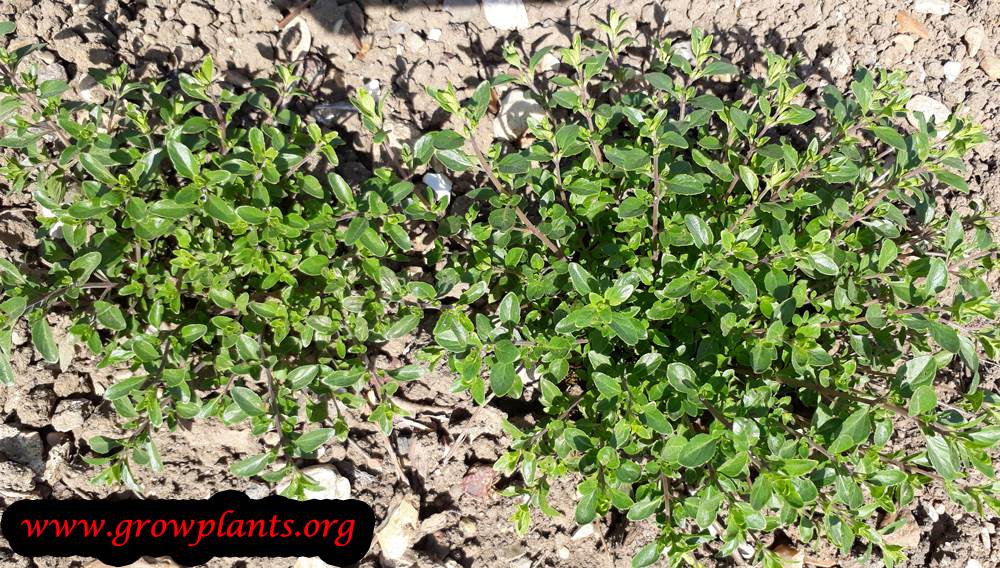
- Height & Spread: Forms a low mound 10–50 cm (4–20 in) tall; suited to containers.
- Growth Habit & Form: Low, aromatic subshrub / groundcover.
- Lifespan & Maturity: Fast-establishing evergreen perennial.
Anatomy & Physical Features
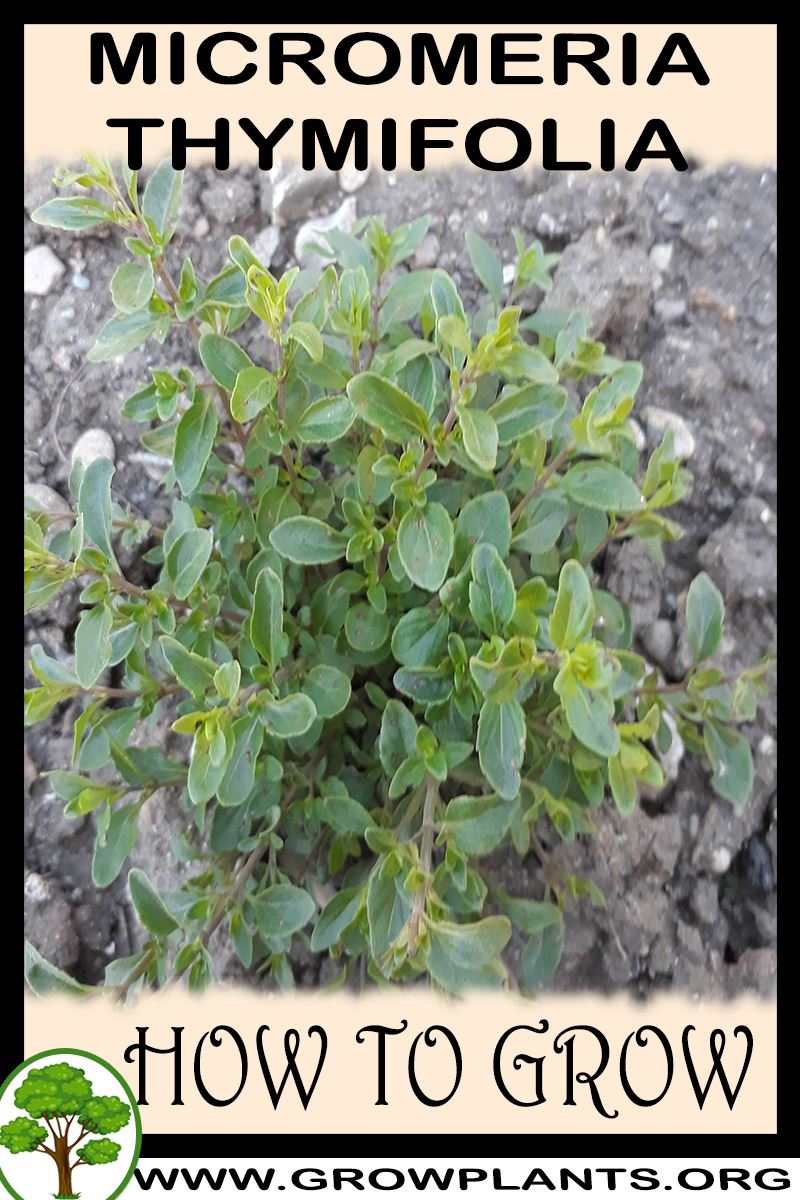
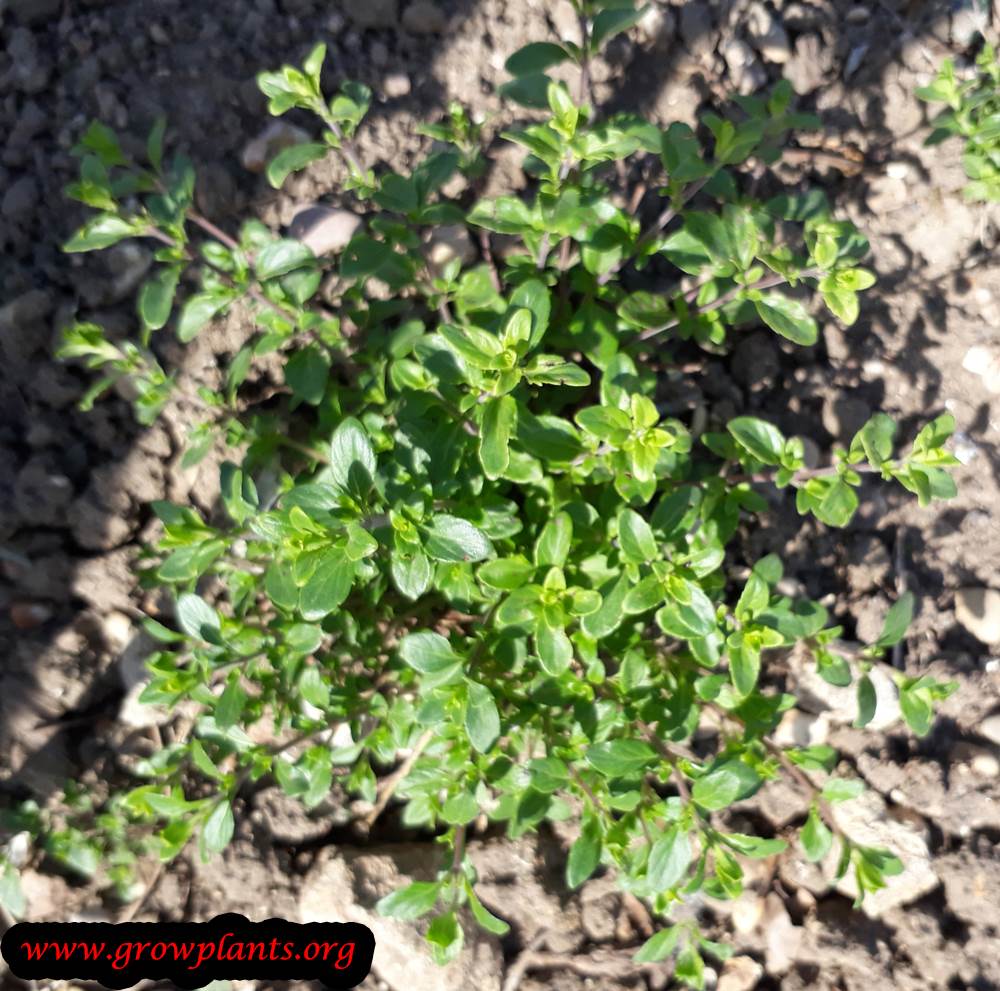
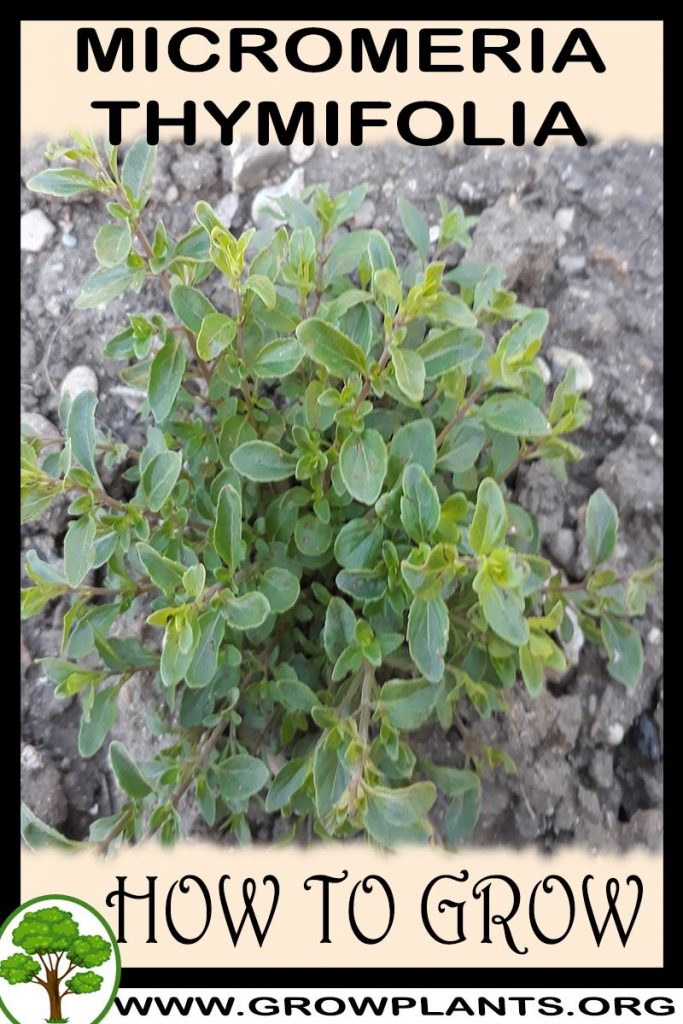
- Leaves & Foliage: Small (3–25 mm), green, elliptic and firm-textured, with a thyme-like scent.
- Flower Characteristics: Small white flowers on stalks in inflorescences. (See the Bloom accordion for detail.)
Primary Uses & Landscape Value
- Edible Uses: Leaves used as a culinary herb and spice.
- Functional & Ornamental Roles: Fragrant groundcover and container herb; pollinator plant.
Care Guide: Planting, Soil & Watering
Overview: Balkan mint is a low, fragrant Mediterranean subshrub and groundcover for full sun to part shade. It wants well-draining soil and only light to moderate watering, tolerating dry conditions once established.
Quick Care Requirements
| Requirement | Ideal Condition |
|---|---|
| Planting Season | In spring through autumn |
| Growth Rate | Moderate to fast |
| Soil Type | Well-draining |
| Water Need | Low to moderate; let the top of the soil dry between waterings |
Planting & Establishment
- Best Planting Season: Plant from spring through autumn.
- How to Plant:
- Hole Preparation: Loosen a hole a little wider than the root ball.
- Soil Amendments: Ensure sharp drainage; a lean, gritty soil suits it best.
- Planting Depth: Set the root ball at soil level and firm gently.
- Growth Speed & Expectations: Moderate to fast, reaching 10-50 cm.
Soil, Watering & Drainage Care
- Soil Mix & Drainage Needs: Free-draining soil; avoid waterlogging, which it will not tolerate.
- Watering Schedule & Technique:
- Young / Newly Planted: Keep lightly moist to help it establish.
- Established: Water moderately, letting the surface dry between waterings.
- Seasonal Adjustments: More in summer, less in winter.
Climate, Light & Hardiness
Micromeria thymifolia is an evergreen perennial ground cover well suited to Mediterranean, subtropical, and temperate climates, hardy through USDA zone 6–10a. It grows readily in full sun or half shade.
Quick Climate Specifications
| Climate Zones | Mediterranean, subtropical, temperate |
|---|---|
| USDA Hardiness Zones | 6–10a |
| Frost Tolerance | Moderate |
| Light Conditions | Full sun to half shade |
Sunlight & Light Exposure
Optimal Light Setup
Performs well in both full sun and half shade, making it a flexible ground cover for varied garden exposures.
Temperature Extremes & Hardiness
USDA Hardiness & Regional Limits
Reliably perennial across zone 6–10a; outside this range treat it as a container or annual planting.
Growing in Pots, Balconies & Indoors
Micromeria thymifolia (Balkan mint) is a small, fragrant, thyme-like herb and ground cover. The grower does not rate it as a houseplant, but its compact size makes it easy in a pot on a bright, sunny windowsill, balcony or patio.
Quick Details
- Container Size: A free-draining pot sized to the plant (general guidance – the grower confirms containers suit it, with no set volume)
- Indoor Suitability: Not a deep-indoor houseplant, but fine on a very bright, sunny windowsill
- Best Spot: Full sun to part shade
- Soil & Drainage: Well-drained mix
- Watering in Pots: Water moderately; let the top of the mix dry between waterings
Indoors & On the Windowsill
- Houseplant limits: The grower marks it as not a houseplant – indoors it needs direct light, so keep it to the sunniest sill rather than a dim room.
- Windowsill growing: A neat plant for a bright kitchen sill; pinch it for bushy growth and harvest the aromatic leaves.
- Overwintering: Hardy to about zone 6-10a, but a pot can be sheltered on a bright sill in the coldest areas.
On a Balcony or Patio
- Light, wind & heat: It is happy on a balcony or patio in good light. Pots dry quickly because walls and paving reflect heat, so check them often in warm spells; shelter tall stems from wind and mind the pot weight and drainage runoff.
- Practicalities: Its low, spreading habit suits a wide pot or the front of a mixed container in good light.
Choosing the Pot, Soil & Long-Term Care
- Pot & drainage: Use a pot with strong drainage holes and empty any standing saucer so the roots never sit in water and rot.
- Pot material: Terracotta breathes and dries quickly (handy for sun-loving Mediterranean plants); glazed or plastic pots hold moisture longer.
- Potting mix: Well-aerated, free-draining mix – a good potting mix, or peat/coir blended with perlite or vermiculite and some organic matter.
- Feeding: Potted plants use up nutrients faster because watering leaches them out, so feed a little more often than plants in open ground – lightly.
- Repotting: Refresh the mix or pot up every couple of years, lightly trimming the roots and top growth of perennials once the pot fills with roots.
Fertilizing & Feeding
A light feeder: this low, mounding Mediterranean subshrub is grown mainly as a fragrant evergreen groundcover with edible leaves, and its modest size and easy-going nature mean restrained, balanced feeding is enough to keep it healthy and compact.
Quick Fertilizing Specs
| Feeding Level | Light feeder |
|---|---|
| Main Nutrient Priority | A balanced complete fertilizer suits this compact groundcover’s modest growth habit |
| Best Feeding Period | During the active growing season in the warmer months |
| Organic Options | Compost or organic matter worked into well-drained soil |
| Reduce/Stop Feeding | Feeding eases off as growth slows going into the cooler part of the year |
| Micronutrients | Usually adequate from a complete fertilizer and organic matter in well-drained soil |
| Soil pH | Tolerates a wide range of well-drained soil |
Feeding by Growth Stage
Establishment after planting
Help newly planted Micromeria settle in and knit its roots into well-drained soil before it spreads as a groundcover.
| Nutrient direction | A balanced fertilizer supports steady root establishment without pushing soft, floppy growth in this low-growing subshrub. |
|---|---|
| Timing | At planting, during the active growing season. |
| Frequency | A light feeding at planting is usually enough while roots establish. |
| Fertilizer types | A balanced complete fertilizer, Compost or organic matter worked into the planting soil |
| Precautions | Favor drier, well-drained conditions once established, since this plant resents soggy roots. |
Active growth and light harvest
Keep this fragrant groundcover filling in evenly while its leaves are harvested for culinary use.
| Nutrient direction | Light, balanced feeding maintains steady foliage without diluting the fragrance and flavor of the leaves. |
|---|---|
| Timing | Through the warmer, active growing months. |
| Frequency | Feed sparingly through the growing season; this easy-going plant rarely needs more. |
| Fertilizer types | A balanced complete fertilizer at a light rate, Compost or organic matter as a top-dressing |
| Precautions | Avoid heavy feeding, which can push lax growth that flops instead of the plant’s naturally tight, mounding habit. |
Nutrient Deficiency Signs & Corrections
Leaves are paler and smaller than expected and new growth is sparse.
| Possible causes | low available soil nitrogen, leaching from watering in a fast-draining soil mix, thin, low-organic-matter soil |
|---|---|
| Appears first on | older, lower leaves |
| What to check | recent feeding history, soil organic matter content, overall growth rate for the season |
| Possible correction | Apply a balanced fertilizer at a light rate and work in organic matter to build soil fertility. |
New leaves turn yellow between the veins while the veins stay green.
| Possible causes | alkaline or compacted soil limiting iron availability, waterlogged roots from poor drainage, excess phosphorus tying up iron |
|---|---|
| Appears first on | newest growth at the shoot tips |
| What to check | soil drainage and structure, watering frequency, whether the soil is notably alkaline |
| Possible correction | Improve drainage and correct pH toward neutral; apply a chelated iron product per its label if the soil is known to be alkaline. |
Leaf tips and margins brown despite regular watering.
| Possible causes | fertilizer salt buildup in a container or raised bed, under-watering that concentrates salts, feeding more heavily than this light feeder needs |
|---|---|
| Appears first on | leaf margins and tips |
| What to check | recent feeding amounts, watering consistency, drainage of the growing container or bed |
| Possible correction | Ease off feeding, water thoroughly to flush accumulated salts, then resume only light feeding. |
Pruning, Training & Seasonal Maintenance
Micromeria thymifolia is a low, creeping evergreen subshrub grown as an aromatic groundcover, and its own facts point to a narrower, lighter pruning approach than a full shrub: summer is the recommended window, and the stated purpose is simply design (keeping the mat neat and even) plus removing dead stems – not a structural framework or annual rejuvenation cutback. Given its small stature (10–50 cm), pruning here is closer to a light shearing than true woody-shrub pruning.
Quick Pruning & Maintenance Specs
| Pruning Tolerance | Moderate (light shearing tolerated; avoid cutting into bare old wood) |
| Primary Pruning Window | Summer, per the plant’s own facts |
| Typical Frequency | One light shape/tidy pass per year, plus spot removal of dead stems as seen |
| Main Objective | Neat, even groundcover mat; remove dead stems |
| Young Plant Priority | Light pinching to encourage lateral spread and fill in as a mat |
| Mature Plant Priority | Summer tidy for shape; ongoing removal of dead stems |
| Best Tool Type | Precision snips or small hand shears for this fine, low-growing mat |
| Avoid Heavy Pruning During | Outside the summer window, and never into bare leafless wood |
Pruning by Plant Age & Size
Newly Established
Let a new planting root in and begin to spread before any trimming; remove only visibly dead material at this stage.
Young / Formative
Light pinching of trailing stems encourages denser lateral spread, helping the groundcover knit together into an even mat – no staking or vertical training applies to this creeping habit.
Mature / Established
A single light summer tidy keeps the mat’s shape even, supplemented by spot-removal of dead stems whenever noticed through the rest of the year.
Seasonal Pruning Schedule
Summer Canopy Management
Objective: reshape and even out the mat, per the plant’s stated pruning season. Remove: stray or uneven stems for design, plus any dead stems. Do not remove: healthy stems down into bare, leafless old wood, which this type of subshrub does not reliably resprout from. Response: a tidier, more even-textured mat. Flowering impact: minor if timed after the summer bloom flush; trimming while in full flower reduces the current display.
Ongoing Sanitary
Remove dead stems as they appear, at any time of year, independent of the summer shaping window.
Special Growth to Remove
The only routine removal is dead stems (called out explicitly in the plant’s facts) and any straggly runners that spoil the mat’s even design.
Container & Small-Space Pruning
In a container this groundcover benefits from more frequent light pinching than an in-ground planting to stop it trailing untidily over the pot’s edge; keep the same rule of cutting only into live growth.
Tools
Precision snips for spot dead-stem removal and small hand shears for the summer shape pass – no loppers or saw are ever needed on a plant this size.
Tool Hygiene & Disease Risk
Routine risk – clean, sharp tools are enough. Aphids and spider mites are the pests noted, and neither is spread via pruning cuts.
Cut Placement & Technique
Trim to just above a leafy node rather than into bare stem, and shear lightly and evenly across the mat surface for the summer tidy rather than cutting individual stems to different depths.
Heavy Pruning & Rejuvenation
Not really applicable at this plant’s scale – it is maintained with light, regular tidying rather than a hard rejuvenation cutback. If a patch becomes bare or woody at the center, it is generally better to propagate fresh divisions/cuttings to refill the gap than to hard-prune old wood.
Post-Pruning Care
Normal watering after trimming is sufficient; no extra feeding is needed for this modest, low-maintenance groundcover.
Common Pruning Mistakes
Shearing outside the recommended summer window or well into the bloom period, which reduces flowering; cutting into bare old wood expecting the mat to resprout there.
When NOT to Prune
Avoid trimming outside the summer window given in the plant’s own facts, and avoid cutting into leafless old growth at the base at any time.
Recommended Tools (by task)
- Summer shape tidy – hedge_shears: light, even pass across the low mat.
- Dead stem removal / spot tidying – precision_snips: targeted cuts on this fine-stemmed groundcover.
Propagation Guide
Micromeria thymifolia grows readily from seed, and the site notes vegetative reproduction is not required; softwood cuttings are the most practical way to multiply a specific plant, and because it spreads as a mat-forming ground cover, sections that have naturally rooted where stems touch the soil can also be lifted and divided. As a species rather than a named selection, seed comes true to type, and overall this is an easy plant to propagate.
Quick Propagation Specs
| Best Propagation Method | Seed or softwood stem cuttings |
| Alternative Methods | Division of naturally rooted mat sections |
| Propagation Difficulty | Easy |
| Seed True-to-Type | Usually true-to-type (species) |
| Vegetative True-to-Type | Yes |
| Best Propagation Season | Spring through early autumn, matching its planting window |
| Germination Temperature | 18–24°C (64–75°F) |
| Seed Sowing Depth | Surface-sow and press in lightly – the seed is very fine |
Growing from Seed
Sowing Season
Spring through autumn, matching the plant’s recommended planting window.
Sowing Depth & Orientation
Very fine seed – scatter on the surface and press in lightly.
Germination Conditions
Warm, evenly moist, well-drained soil in full sun to half shade; germination can be slow and uneven.
Seedling Care
Keep lightly moist while establishing and avoid heavy shade, matching this plant’s full-sun-to-half-shade preference.
Stem Cuttings
Cutting Type
Softwood tip cuttings.
Best Timing
Spring to early summer, before the plant’s noted summer pruning season.
Rooting Setup
A free-draining cutting mix kept lightly to moderately moist, matching this plant’s small-to-average water needs.
Rooting Hormone
Optional – typically not required for this easy-rooting genus.
Rooting Time
Usually a few weeks under warm conditions.
Division, Offsets, Pups & Suckers
As a mat-forming ground cover, stems that lie on the soil often root naturally where they touch down. These self-layered sections can be severed from the mother plant once they have their own roots and transplanted, ideally in spring.
Bloom & Flower Guide
Quick Details
- Bloom Season: Summer
- Time to First Bloom: In summer once established
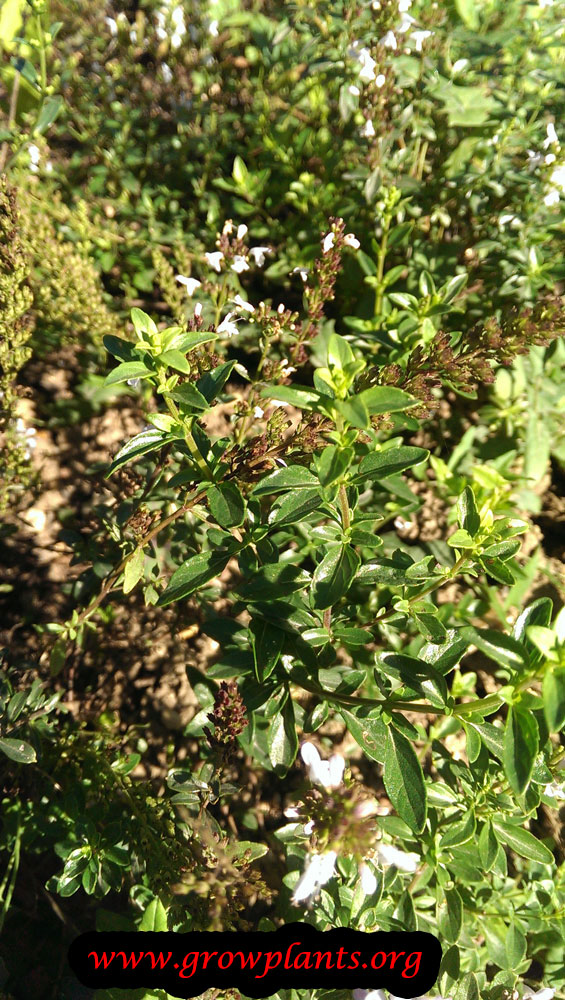
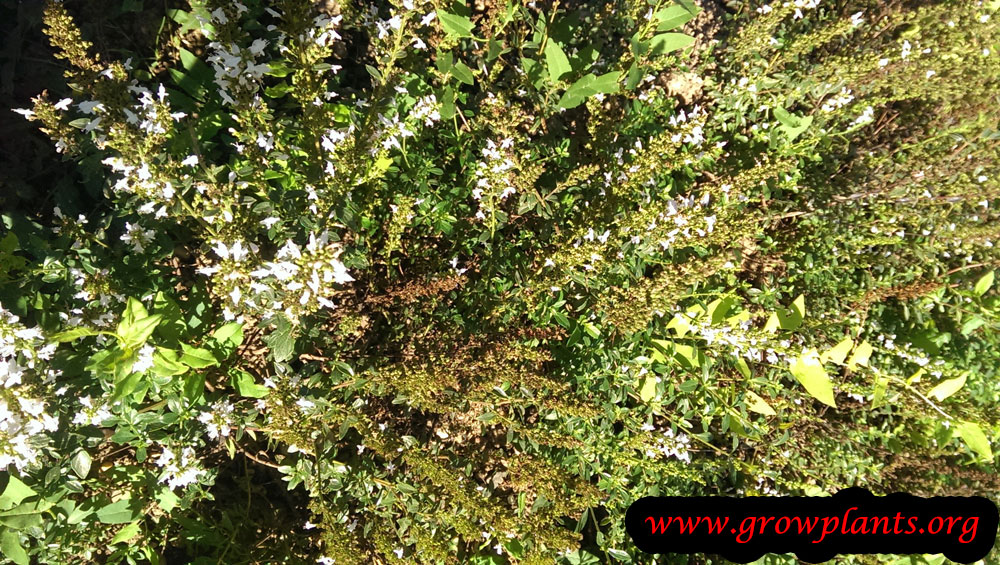
- Flower Appearance: Small white flowers in whorls along the stems
- Edibility: An aromatic ornamental ground cover; not grown as an edible flower
Detailed Blooming Overview
This low, aromatic member of the mint family carries small white flowers in whorls along its stems through the summer. It works beautifully as a fragrant ground cover, and – like most of its family – the flowers are a good draw for bees and other pollinators.
Flower Characteristics
- Small white flowers borne in whorls (clustered inflorescences) along the stems.
- Aromatic, in keeping with the plant’s thyme-like scent.
Bloom Care & Thinning
- Managing the bloom: Little is needed; a light trim after flowering keeps the plant neat and compact.
- Pollination: As a mint-family plant, the flowers are attractive to bees and other pollinators.
Fruit & Uses
The fragrant leaves of Micromeria thymifolia are the plant’s edible part, used fresh or dried as a culinary herb and spice much like its relatives thyme and savory. No cooking is required – leaves are simply picked and used as needed.
Quick Edible Specs
| Edible Parts | Leaves |
|---|---|
| Main Use(s) | Culinary herb / spice |
| Eaten Raw or Cooked | Raw or dried; no cooking needed |
| Preparation Required | None (rinse fresh leaves); optional drying for storage |
| Harvest Season | All year, with best flavor in spring and autumn |
| Time to First Harvest | Once the plant is established and has enough leaf growth to spare |
| Storage | Use fresh within a few days, or air-dry for longer-term storage as a dried herb |
| Safety/Toxicity Caveat | No toxicity is noted for this species; it is used in normal culinary herb quantities like other aromatic Lamiaceae herbs |
Leaves & Greens
Leaves are small, green, elliptic and hard-textured (about 3–25mm), with a fragrance similar to thyme. Because the plant is evergreen, leaves can be snipped as needed through most of the year, though growth and flavor are best in spring and autumn. Harvest by pinching or cutting leafy stem tips; this also helps keep the low, ground-covering habit tidy (see Pruning for shaping cuts). Use the leaves fresh, chopped into dishes, or air-dried for storage as a home-grown herb and spice.
Preparation, Uses & Safety
No preparation beyond rinsing is required for fresh use; for storage, dry the leaves in a shaded, well-ventilated spot and keep them in an airtight container out of direct light. There are no specific safety or toxicity concerns reported for this species when used in ordinary culinary herb amounts.
Pests, Diseases & Troubleshooting
Overview: Thyme-leaved savory (Micromeria thymifolia) is an aromatic Mediterranean subshrub in the mint family (a savory relative); its foliage oils make it quite pest-resistant, so its real risks are root rot in wet, heavy soil and the odd soft-bodied pest – aphids, spider mite and caterpillars. Grow it lean, sunny and sharply drained, and lean on cultural and edible-safe controls. A thyme-leaved Balkan savory grown much like thyme; treat it as a dry-loving aromatic subshrub.
Quick Troubleshooting Overview
| Issue / Pest | Main Symptom | Primary Solution |
|---|---|---|
| Root rot | Yellow, wilting in wet soil | Gritty drainage, full sun, water sparingly |
| Aphids | Colonies & honeydew on tips | Water jet, soap, beneficials |
| Spider mite | Stippling on hot, dry foliage | Raise humidity, hose down, oil |
| Caterpillars | Chewed, holed leaves | Hand-pick, Bt biocontrol |
| Powdery mildew / rust | Coating or orange pustules | Airflow, cut back, sulfur if severe |
Common Pests & Management
- Aphids (Aphis / Myzus spp.):
- Symptoms: Small green or black colonies on soft new shoots and flower stems, curling the tips and leaving honeydew (listed in the source).
- Prevention & Control: Rinse off with water; pinch out infested tips; encourage lady beetles, lacewings and hoverflies; insecticidal soap on the tips if they persist – soft controls suit this aromatic herb.
- Spider Mites (Tetranychus urticae):
- Symptoms: Fine pale stippling, bronzing and light webbing on foliage kept hot, dry and airless (listed in the source).
- Prevention & Control: Raise humidity and hose down; avoid drought stress; encourage predatory mites; a soap or light oil spray, repeated, in bad cases.
- Caterpillars / Armyworms (Spodoptera / various Lepidoptera):
- Symptoms: Chewed and holed leaves, sometimes with frass (the source’s “caterpillar” and “prodenia” – an old name for Spodoptera armyworm).
- Prevention & Control: Hand-pick and remove; keep beds weed-free; apply Bacillus thuringiensis (Bt) for serious outbreaks, safe on an edible/aromatic herb.
- Thrips & Whitefly (Thysanoptera / Aleyrodidae):
- Symptoms: Silvery scarring from thrips, or tiny white flies and honeydew from whitefly, mainly on crowded or under-glass plants.
- Prevention & Control: Use blue and yellow sticky traps; improve airflow; encourage natural predators; insecticidal soap if numbers build.
Diseases & Fungal Issues
- Powdery Mildew:
- Symptoms: White powdery coating on leaves in crowded, humid or shaded conditions.
- Treatment & Management: Space plants for airflow and full sun; cut back congested growth; water at the base; a potassium-bicarbonate or sulfur spray for stubborn cases.
- Rust (Puccinia spp.):
- Symptoms: Orange-brown pustules on leaf undersides in damp, crowded plantings, as on related mints and savories.
- Treatment & Management: Remove affected leaves; improve airflow; avoid overhead watering; cut back and clear debris; a sulfur fungicide only if severe.
- Root Rot (Phytophthora / Pythium spp.):
- Symptoms: Yellowing, wilting and collapse in wet, heavy soil – the main disease risk for this dry-loving Mediterranean subshrub.
- Treatment & Management: Grow in gritty, free-draining soil in full sun; water sparingly once established; never let it sit in wet ground.
Growing Difficulties & Abiotic Problems
- Root Rot from Wet / Heavy Soil:
- Cause & Symptoms: A Mediterranean plant that hates wet feet – it yellows and collapses in cold, heavy or overwatered soil.
- Correction Strategy: Provide sharp drainage, lean gritty soil and full sun; water only when dry; ideal for rockeries and dry banks.
- Legginess & Woody Decline:
- Cause & Symptoms: Sparse, woody, leggy growth with fewer aromatic leaves as the subshrub ages.
- Correction Strategy: Trim lightly after flowering to keep it bushy; avoid cutting into old bare wood; replace or take cuttings every few years.
- Frost Damage:
- Cause & Symptoms: Tender in hard frost, with scorched or killed top growth in cold winters.
- Correction Strategy: Site in a warm, sheltered, sunny spot or grow in pots that can be protected; trim out frost damage in spring.
What Helps – Products & Tools
This aromatic herb rarely needs much: insecticidal soap for aphids, thrips and whitefly, horticultural oil for spider mite, Bacillus thuringiensis (Bt) for caterpillars, sticky traps, and sulfur or potassium-bicarbonate sprays for mildew and rust – with sharp drainage and full sun doing most of the work against rot.