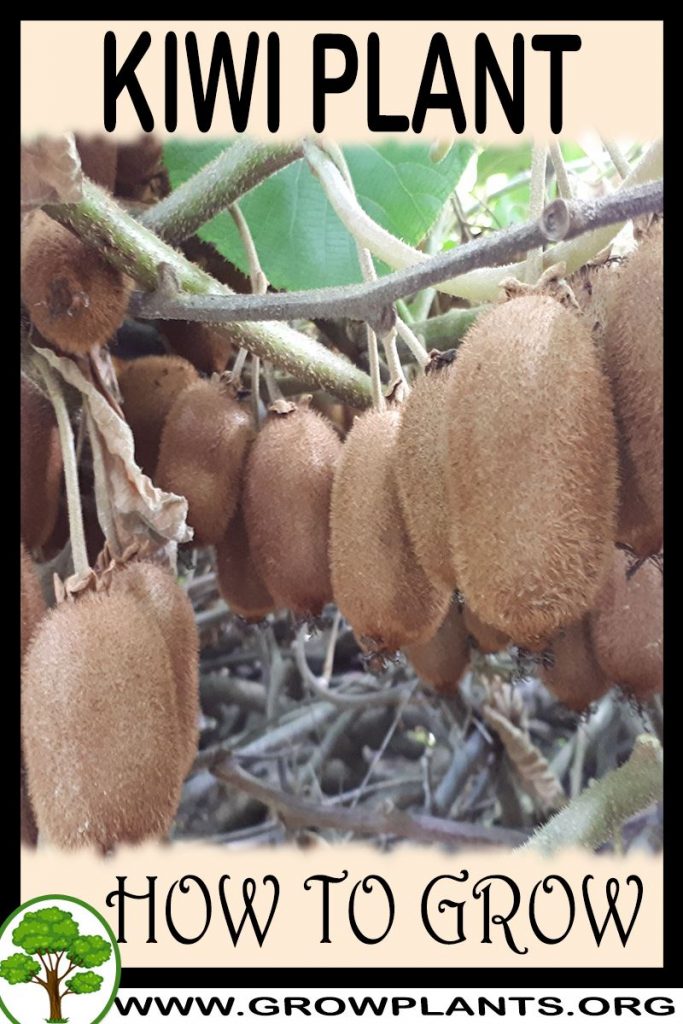
Plant Profile & Key Characteristics
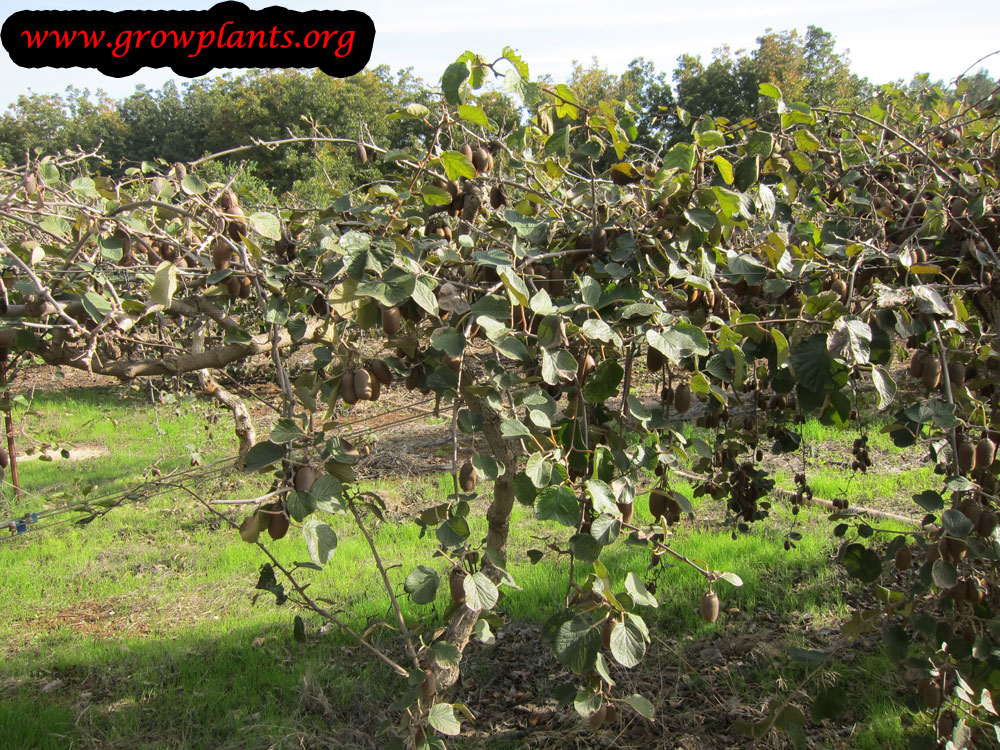
Overview: Kiwi fruit (kiwifruit, Chinese gooseberry, Actinidia) is a fast-growing deciduous climbing vine of 3–7 m, grown for its familiar fuzzy-skinned edible fruit and as an ornamental cover. It is a temperate-to-subtropical vine requiring strong support.
Quick Specifications
| Specification | Attribute |
|---|---|
| Plant Type / Life Cycle | Perennial (deciduous climbing vine) |
| Foliage Type | Deciduous |
| Mature Size | H: 3–7 m (10–21 ft) climbing |
| Growth Rate | Fast to moderate |
| Toxicity | Non-toxic / edible fruit (the fuzzy skin can trigger an allergy in sensitive people) |
| Hardiness | USDA zone 3–10 |
Growth Form & Structure
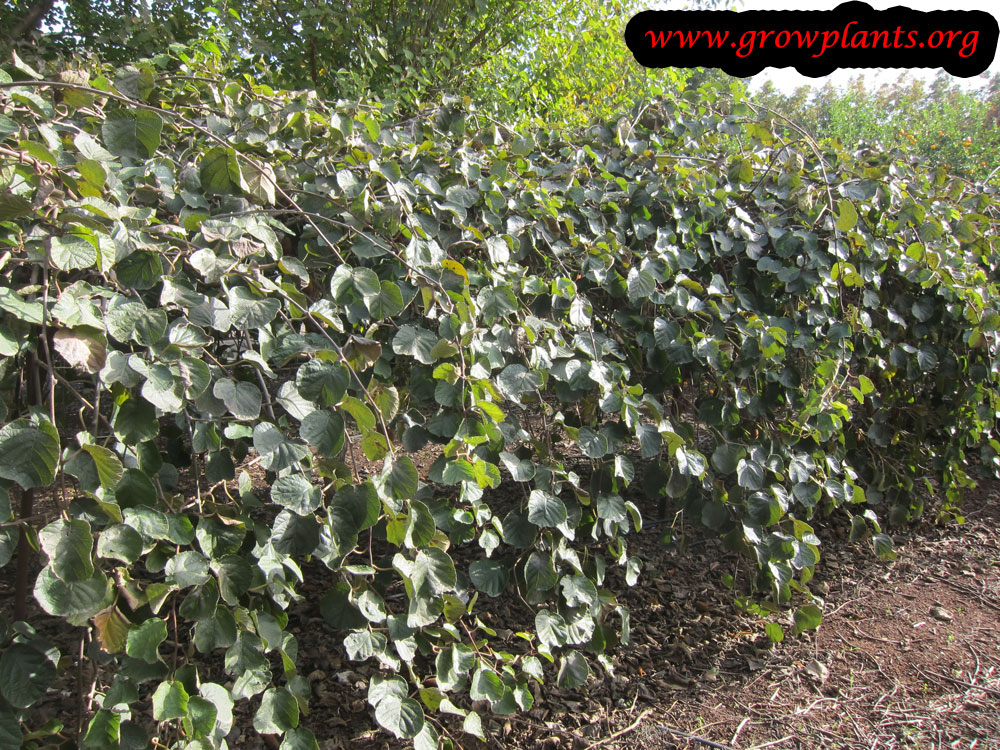
- Height & Spread: A vigorous climber of 3–7 m needing a strong trellis or pergola; can also be grown in large containers.
- Growth Habit & Form: Twining woody deciduous vine, vigorous and needing annual pruning and training.
- Lifespan & Maturity: Long-lived vine; begins bearing in about 2–3 years and needs winter chill to fruit well.
Anatomy & Physical Features
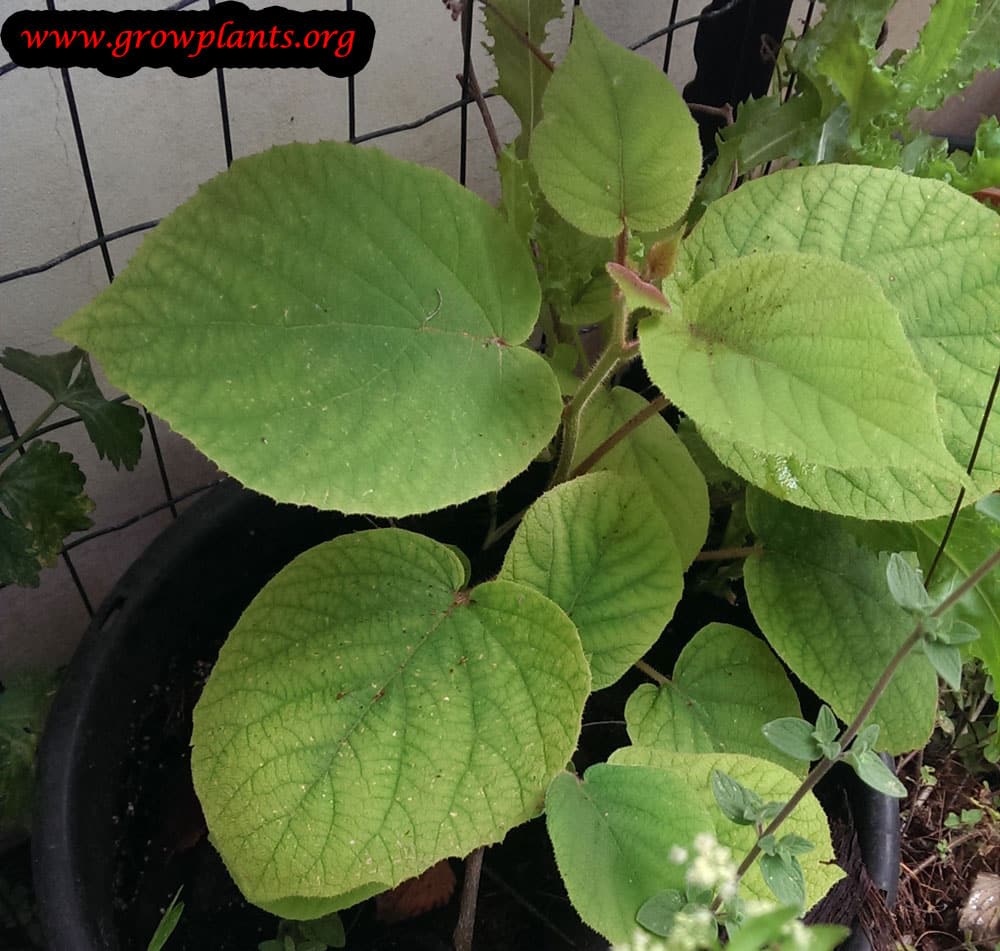
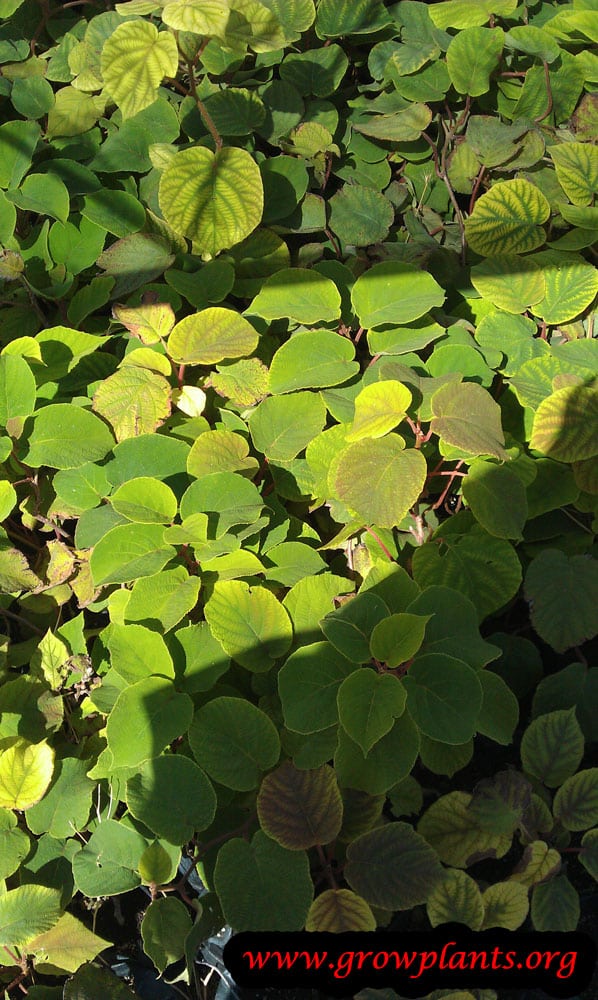
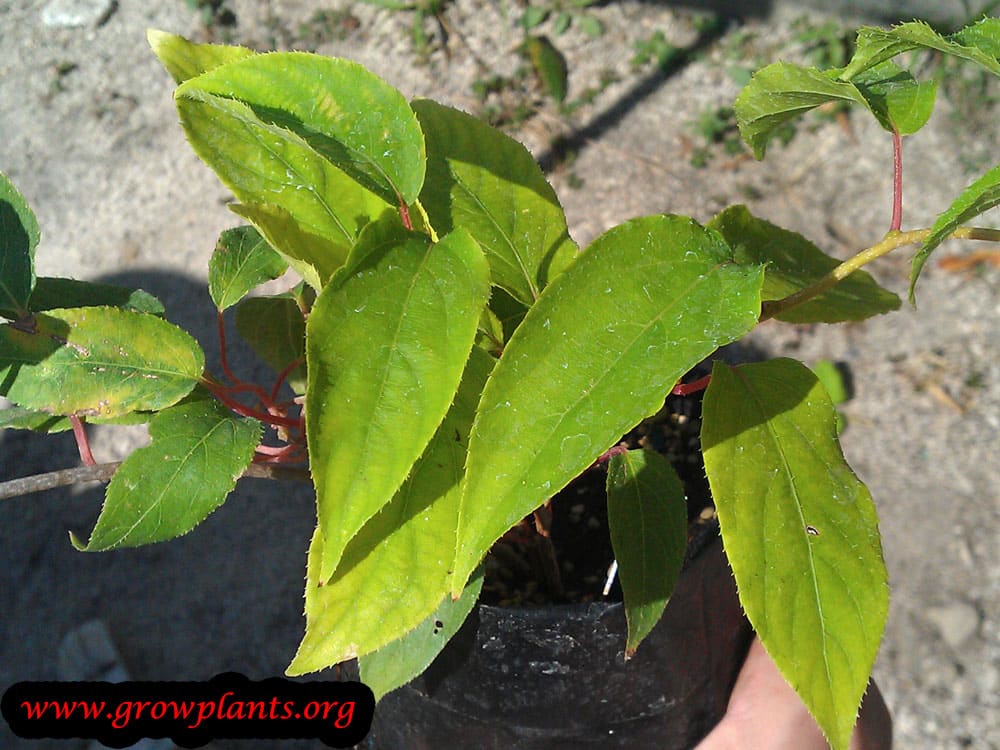
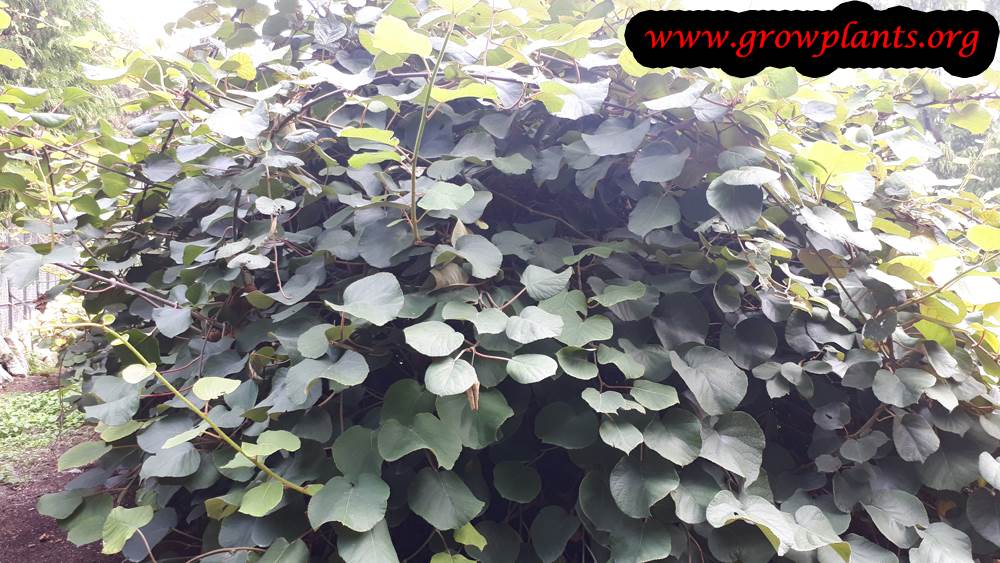
- Leaves & Foliage: Large, green, elliptic and hairy leaves.
- Flower Characteristics: White-cream flowers in clusters; plants are dioecious, so roughly one male vine is planted per eight females – bee- and fly-pollinated.
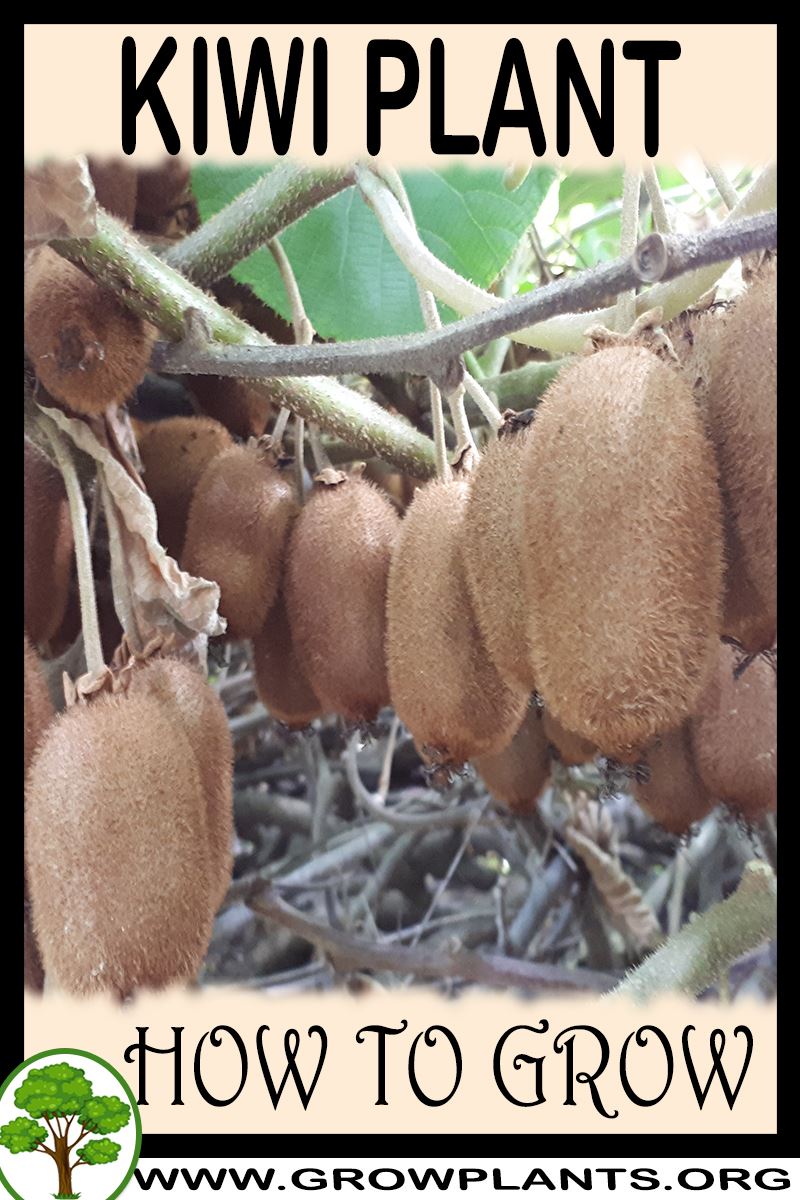
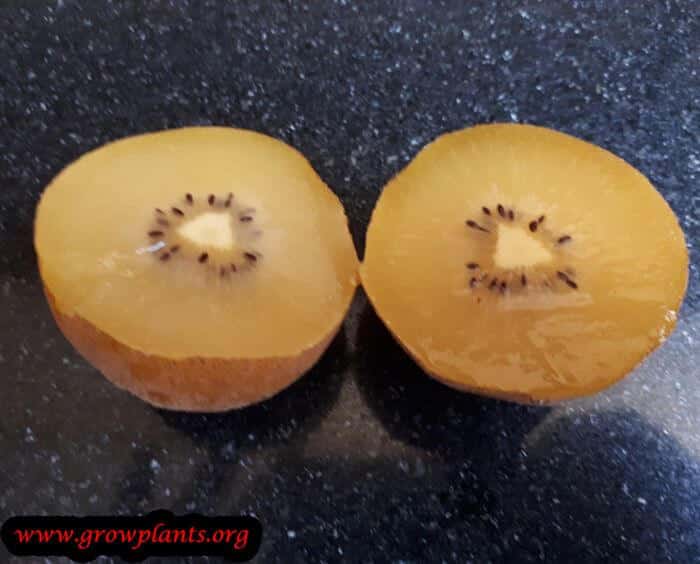
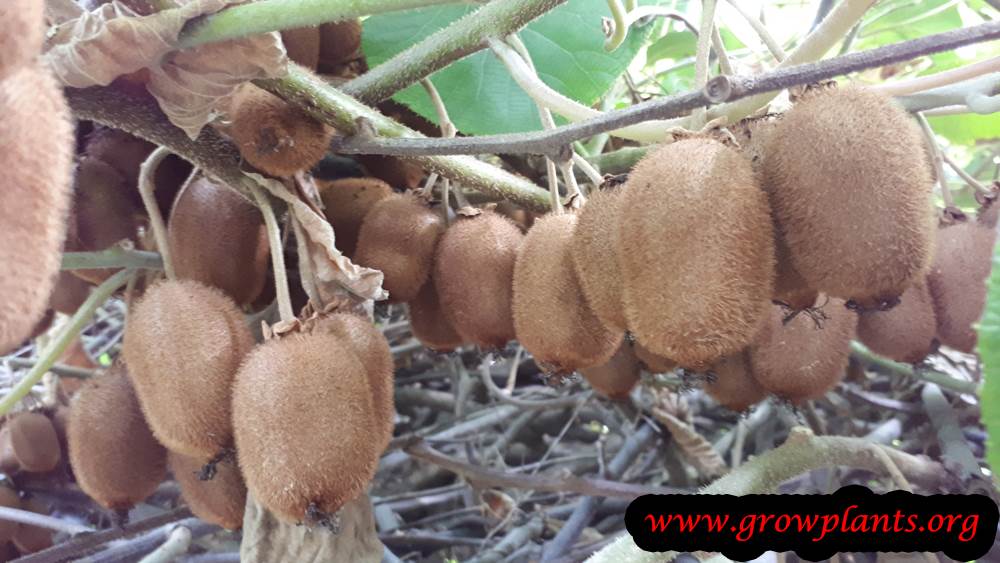
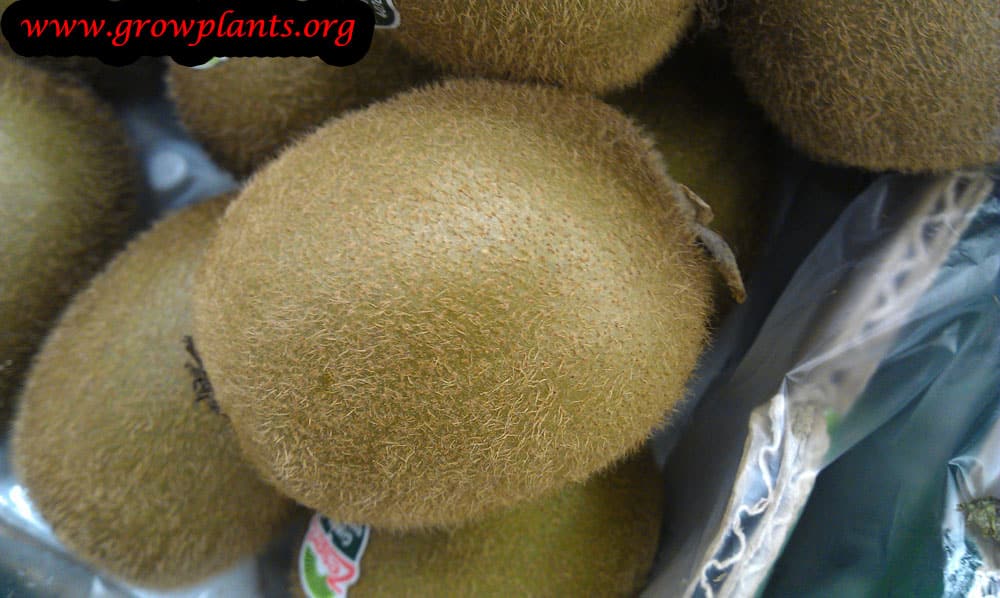
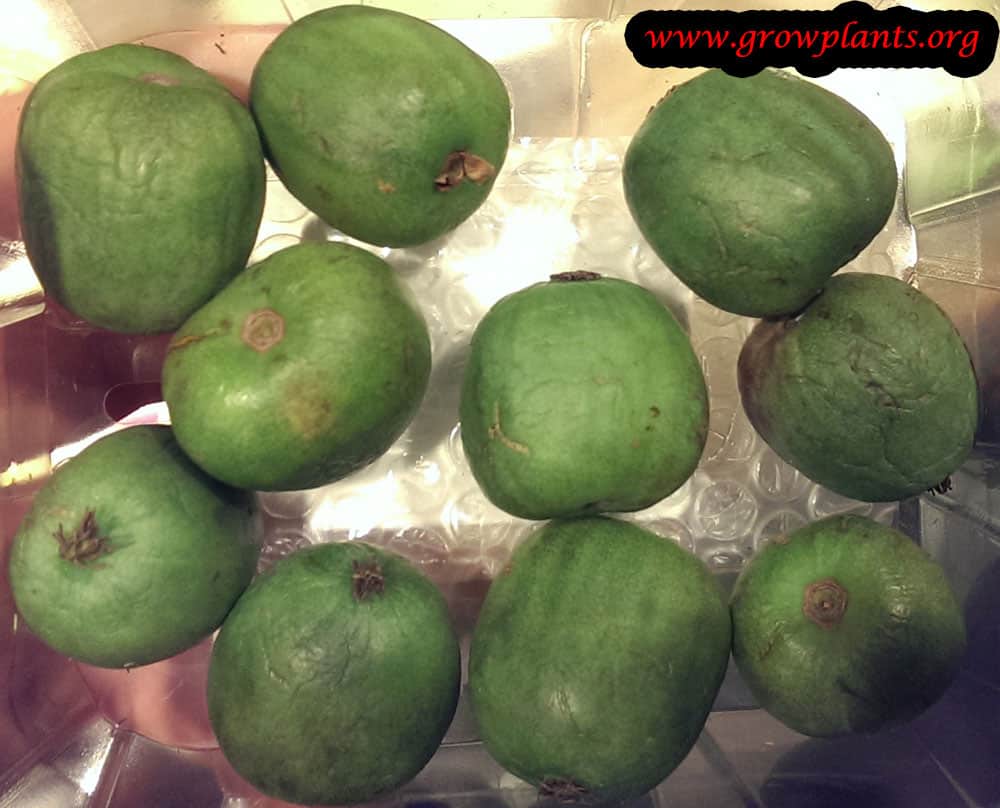
- Fruit Profile: Larger (4–10 cm) fruit with a hairy skin and green or yellow flesh; the fuzzy skin can cause allergy in some people.
Primary Uses & Landscape Value
- Edible Uses: Fruit eaten fresh, juiced or made into jams.
- Functional & Ornamental Roles: Edible fruiting vine that also works as an ornamental screen over sturdy trellises and pergolas.
Care Guide: Planting, Soil & Watering
Overview: Kiwi (Actinidia) is a fast-growing deciduous fruiting vine for temperate to Mediterranean climates (hardiness zone 3–10) that thrives in deep, rich, well-drained, slightly acidic soil. It takes moderate to generous, consistent water but resents waterlogged roots, so combine steady moisture with excellent drainage.
Quick Care Requirements
| Requirement | Ideal Condition |
|---|---|
| Planting Season | Spring, after the last frost |
| Growth Rate | Fast |
| Soil Type | Deep, rich, well-drained soil |
| Soil pH | Slightly acidic (about 5.0–6.5) |
| Water Need | Moderate to high — consistent moisture with sharp drainage |
Planting & Establishment
- Best Planting Season: Plant in spring after the last frost once the soil has warmed. Grow both male and female vines for fruit, and set up a strong trellis or pergola before the vine gets going.
- How to Plant:
- Hole Preparation: Dig a hole twice the width of the root ball to loosen the surrounding soil for the vigorous roots.
- Soil Amendments: Work plenty of organic matter into a deep, rich bed and ensure sharp drainage, as kiwi vines rot in wet ground.
- Planting Depth: Set the vine at the depth it grew in its pot, with the root collar at the soil surface.
- Growth Speed & Expectations: Fast and vigorous — a mature vine is large and heavy, so provide robust support and prune regularly to control it.
Soil, Watering & Drainage Care
- Soil Mix & Drainage Needs: Wants deep, rich, free-draining, slightly acidic soil; keep moisture consistent but never let the roots sit waterlogged.
- Watering Schedule & Technique:
- Young / Newly Planted: Keep the soil evenly moist while the young vine establishes its extensive root system.
- Established: Water regularly and deeply once established, holding moisture steady through the growing and fruiting season on freely draining soil.
- Seasonal Adjustments: More through summer heat and fruit development; much less over the dormant winter.
Climate, Light & Hardiness
Kiwi fruit is a deciduous vine suited to temperate, subtropical, and Mediterranean climates, with USDA hardiness spanning zone 3 through 10. It grows best in full sun and, as noted for this species, needs a period of winter chill to flower and fruit well.
Quick Climate Specifications
| Climate Zones | Temperate, subtropics, Mediterranean |
|---|---|
| USDA Hardiness Zones | 3–10 |
| Frost Tolerance | High |
| Light Conditions | Full Sun |
Sunlight & Light Exposure
Requires full sun for strong vine growth, good flowering, and reliable fruit set.
Temperature Extremes & Hardiness
USDA Hardiness & Regional Limits
Hardy across a broad range from zone 3 through 10, spanning cold–winter temperate climates to warmer subtropical and Mediterranean regions.
Cold Damage & Winter Protection
As a deciduous vine it goes dormant and sheds leaves for winter; late spring frosts after bud break are the main risk to young growth and flowers.
Chilling Requirement
The site specifically lists chill hours as part of its care needs, confirming this species requires a period of winter chill for proper dormancy break, flowering, and fruit set.
Wind, Humidity & Microclimate
Rainfall & Seasonal Moisture
Its wide climatic range suggests adaptability to varied seasonal moisture patterns, though consistent water during the growing season supports the large, fuzzy fruit.
Growing in Pots, Balconies & Indoors
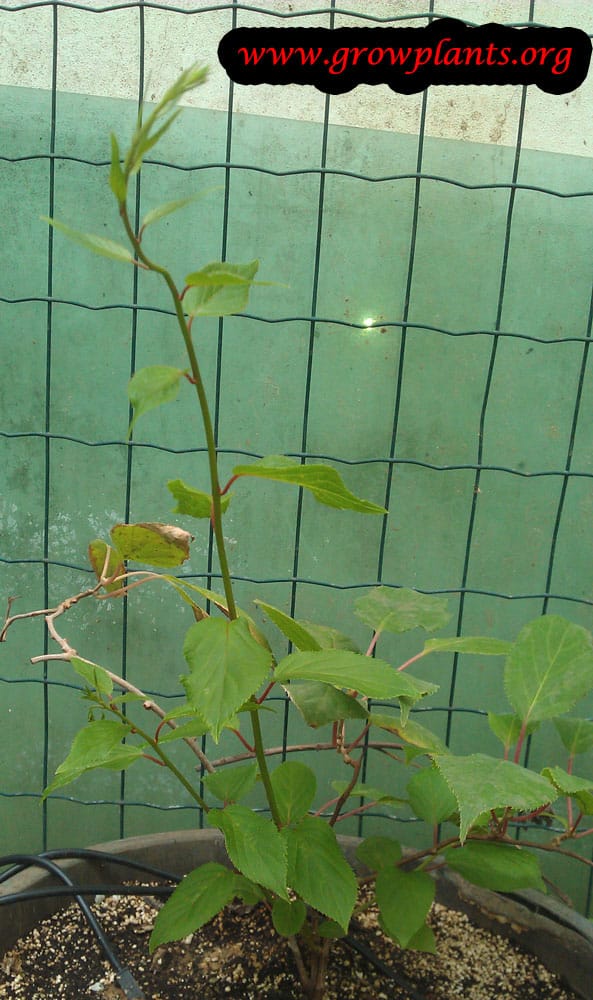
Kiwi fruit (Actinidia) is a large, sun-loving fruiting vine – the grower marks it as not a houseplant but confirms container growing is possible. Grown in a big pot against a sunny wall with a sturdy trellis, it can be productive on a patio or balcony.
Quick Details
- Container Size: A large, heavy pot for a vigorous vine
- Indoor Suitability: Not a houseplant – too big and light-hungry for indoors
- Best Spot: Full sun with a strong climbing support
- Soil & Drainage: Deep, rich, free-draining mix
- Watering in Pots: Water generously in growth; keep moist, never waterlogged
Indoors & On the Windowsill
- Not a houseplant: Marked No – a fruiting vine of 3-7 m that needs full sun and space to climb, which indoor conditions cannot supply.
- Windowsill: Not viable – too vigorous and too little light.
On a Balcony or Patio
- Light & support: The sunniest position and a heavy-duty trellis or pergola; secure the pot against wind.
- Watering & heat: Pots dry quickly in summer heat reflected off walls – water deeply and often.
- Overwintering & pollination: Protect potted roots from hard frost; most kiwis need both a male and a female vine to fruit.
Choosing the Pot, Soil & Long-Term Care
- Pot & drainage: A large, heavy-based pot with strong drainage holes; skip a standing-water saucer to avoid root rot. Terracotta breathes and dries fast, while glazed or plastic holds moisture longer.
- Potting mix: A well-aerated, organic-rich mix – peat or coir blended with perlite or vermiculite for free drainage.
- Feeding: Potted plants run their soil down fast as nutrients leach out, so feed more often than plants in open ground during active growth.
- Repotting: Refresh the mix or pot up about every two years; on established plants, lightly prune the root ball and top growth to keep them balanced.
Fertilizing & Feeding
A vigorous deciduous fruiting vine that needs steady moderate feeding to build its trellis framework, then a shift toward supporting fruit fill once mature female vines are bearing.
Quick Fertilizing Specs
| Feeding Level | Moderate |
|---|---|
| young_feeding | A newly planted vine benefits from a nitrogen-forward feed to help it establish quickly on its trellis or support structure. |
| mature_feeding | A bearing female vine shifts toward a more balanced-to-potassium feed to support fruit size and quality; male vines grown only for pollination need comparatively less feeding once established. |
| Main Nutrient Priority | Nitrogen drives the vigorous early cane growth this vine is known for; potassium becomes more important on fruiting female vines as fruit develops. |
| Best Feeding Period | Feed during the active growing season and taper off well before the vine enters winter dormancy so new growth has time to harden. |
| Organic Options | Compost or aged manure worked into the root zone in early spring suits this vigorous grower well. |
| Micronutrients | A complete fruiting-plant fertilizer that supplies iron, manganese, and zinc helps prevent pale new growth, especially on vines in alkaline soil. |
| Soil pH | Prefers well-drained soil in a slightly acidic to near-neutral range; alkaline soil commonly triggers iron chlorosis in this genus. |
| Reduce/Stop Feeding | Taper feeding toward the end of the growing season so canes can harden off before the vine’s winter dormancy and chilling period. |
Feeding by Growth Stage
Establishment
Help a newly planted vine root in and begin building the permanent framework it will need to reach and cover its trellis.
| Nutrient direction | A nitrogen-forward, balanced feed to support root and cane establishment |
|---|---|
| Timing | The first growing seasons after planting, before the vine has filled its trellis space. |
| Frequency | Light, regular feeding through the growing season supports establishment without forcing weak, overly soft growth. |
| Fertilizer types | A balanced or nitrogen-forward fertilizer suited to young fruiting vines, Compost or aged manure worked into the planting area |
| Routine trace nutrients | iron, manganese |
| Precautions | Since fruiting depends on having both a female vine and a male pollinator vine nearby, feed newly planted vines of both types consistently so neither lags behind the other in establishing. |
Vegetative Growth
Support the vine’s characteristically vigorous cane and foliage growth as it fills out its trellis ahead of fruiting.
| Nutrient direction | A nitrogen-emphasis feed to fuel active cane extension |
|---|---|
| Timing | Spring into early summer while canes are actively extending. |
| Frequency | Regular feeding through the spring growth flush, tapering as canes mature later in the season. |
| Fertilizer types | A nitrogen-forward fruiting-vine fertilizer applied in spring, A balanced complete fertilizer as an alternative on already-fertile soils |
| Routine trace nutrients | iron, manganese, zinc |
| Precautions | Avoid feeding late in the season, since vigorous late growth fails to harden properly before cold weather and becomes vulnerable to winter damage. |
Fruiting
Support fruit sizing and fill on mature, bearing female vines without pushing excess soft foliage growth.
| Nutrient direction | A balanced feed shifting toward potassium as fruit develops and matures |
|---|---|
| Timing | From fruit set through harvest on mature, bearing vines. |
| Frequency | Moderate feeding through the fruiting season, reduced once fruit begins ripening. |
| Fertilizer types | A balanced fruiting-plant fertilizer with a potassium lean, A potassium-supplemented feed for vines carrying a heavy fruit load |
| Routine trace nutrients | iron, manganese, zinc |
| Precautions | Excess nitrogen during fruiting favors leafy growth over fruit quality and can also delay ripening. |
Nutrient Deficiency Signs & Corrections
New leaves emerge pale yellow with the veins remaining distinctly green.
| Possible causes | Alkaline or high-pH soil limiting iron availability to the roots, Waterlogged or poorly aerated soil restricting root function, An iron shortfall in the feeding program |
|---|---|
| Appears first on | Newest growth at the shoot tips first |
| What to check | Test or estimate the soil pH around the root zone, Check drainage and recent watering history, Confirm the fertilizer being used supplies iron |
| Possible correction | Work to lower soil pH toward the vine’s preferred range and apply a chelated iron product per its label if new growth stays pale. |
Female vines flower normally but set little to no fruit.
| Possible causes | No male pollinator vine flowering nearby at the same time, Poor pollinator activity during bloom, A nutrient imbalance, particularly excess nitrogen, favoring leaf growth over fruit set |
|---|---|
| Appears first on | Whole vine, evident at fruit set rather than in foliage |
| What to check | Confirm a compatible male vine is present and blooming at the same time as the female, Observe pollinator activity during bloom, Review whether feeding has been unusually nitrogen-heavy |
| Possible correction | Ensure a suitable male pollinator is present and blooming in sync, encourage pollinator activity, and moderate nitrogen relative to potassium during bloom and fruit set. |
Leaf margins scorch or turn brown, most noticeable on older leaves during fruit development.
| Possible causes | Insufficient potassium relative to the vine’s fruit load, Sandy or fast-draining soil that readily leaches potassium, Excess nitrogen crowding out potassium uptake |
|---|---|
| Appears first on | Older leaf margins first |
| What to check | Review whether potassium has been included in recent feeding, Assess soil type and how readily it drains and leaches nutrients, Compare the balance of nitrogen versus potassium in the fertilizer used |
| Possible correction | Shift toward a more potassium-forward feed during fruiting and correct any nitrogen-heavy imbalance. |
Pruning, Training & Seasonal Maintenance
Kiwi fruit is a vigorous deciduous vine that requires firm, deliberate annual pruning to fruit well and stay manageable on its support. As with other Actinidia, fruit forms on current-season shoots arising from one-year-old canes, so dormant-season cane selection and renewal directly set next year’s crop; cutting is best done in the dormant window (autumn to winter) and finished before the sap-bleeding period close to spring bud break. A defining complication for this species is that plantings rely on a small proportion of male vines (commonly around one male to every eight female vines) purely for pollen – pruning must maintain that male framework in proportion rather than treating every vine identically, since losing or over-cutting the male vines has an outsized effect on the whole planting’s fruit set.
Quick Pruning & Maintenance Specs
| Pruning Tolerance | High – needs substantial, deliberate annual cutting to remain productive |
| Primary Pruning Window | Dormant season, autumn to winter, completed before spring bud break |
| Secondary Maintenance Window | Summer, control of excess vine growth |
| Typical Frequency | Annual dormant renewal pruning, with summer touch-ups |
| Main Objective | Renew female fruiting canes yearly; maintain the smaller male framework needed for pollination; keep the vine on its support |
| Young Plant Priority | Train one main trunk to the top wire/pergola and establish permanent lateral arms |
| Mature Plant Priority | Select new one-year canes on female vines for fruiting; lightly maintain male vines mainly for flower production, not fruiting wood |
| Best Tool Type | Bypass secateurs and loppers for canes; a saw only for an old, thickened trunk/cordon |
| Avoid Heavy Pruning During | Late winter close to bud break (heavy sap bleeding) and through flowering/fruit set |
Pruning by Plant Age & Size
Newly Established
Remove only damaged growth; train a single strong leader to the top of the support rather than heading it back.
Young / Formative
Train on a sturdy pergola or T-bar trellis built for a heavy, long-lived vine: one trunk to the top wire, then permanent lateral arms from which annual fruiting canes are grown – a cordon-type system. Male vines are trained the same way structurally but are planted and kept in the roughly 1:8 ratio needed for pollination, not for their own fruit.
Mature / Established
On female vines, select and retain well-placed one-year canes each dormant season for the coming crop, and remove canes that already fruited. On male vines, pruning is lighter and aimed at keeping a healthy, well-flowering framework rather than fruiting-cane renewal, since they are grown purely to supply pollen.
Seasonal Pruning Schedule
| Dormant / Winter | Main renewal pruning on female vines (select next season’s fruiting canes, remove spent canes); light maintenance pruning on male vines |
| Ongoing Sanitary | Remove dead or damaged wood as it appears |
| Summer Canopy Management | Thin or shorten excess vigorous shoots shading fruiting canes or ripening fruit, without cutting the current season’s fruiting laterals |
Flowering & Fruiting Wood
Female vines fruit on current-season shoots from buds on one-year-old canes; removing too much of that young wood in winter reduces the coming crop, while failing to renew spent canes crowds out next year’s fruiting wood. Because a chill-hour requirement and reliable pollination both matter for fruit set, over-pruning the male vines (which supply the pollen) or mistiming cuts relative to flowering can reduce yield across the whole planting, not just on the vine that was cut.
Structural Pruning & Training
- Maintain the permanent trunk and lateral arms on both male and female vines once established.
- On female vines, select strong, well-spaced one-year canes for fruiting and remove weak or overlapping ones.
- Thin summer canopy density on this vigorous vine so light reaches fruiting wood and ripening fruit.
Special Growth to Remove
- Spent fruiting canes on female vines, cut back each dormant season to make room for renewal wood.
- Tangled or crowding non-fruiting shoots on both sexes.
- Dead or winter-damaged wood, removed at the next dormant pruning.
Container & Small-Space Pruning
Not well suited to containers given its vigor, eventual size, and pollination-ratio planting requirement; where space is constrained, keep the permanent framework small from the outset and prune harder each dormant season to hold the vine to a compact support.
Tools
- Bypass secateurs – the bulk of annual cane selection and renewal cuts.
- Loppers – thicker canes and dense growth.
- Pruning saw – only for an old, thickened trunk or cordon.
- Soft ties/stakes – training leaders and canes onto the pergola/trellis.
Tool Hygiene & Disease Risk
Routine: clean, sharp tools are sufficient; no tool-transmissible disease is flagged for this species.
Cut Placement & Technique
Cut canes back to a strong bud or to their origin on the permanent arm, avoiding long stubs. Tie new growth to the support structure rather than letting it hang unsupported, and handle harvested/pruned fuzzy-skinned material with care, as the fruit skin can cause skin irritation for sensitive individuals.
Heavy Pruning & Rejuvenation
Tolerated well on this vigorous vine: a neglected planting can be cut back hard to its permanent framework and will regrow strongly, at the cost of most of that season’s crop while fruiting wood is rebuilt. Rejuvenate female and male vines on a similar schedule so the pollination ratio in the planting is preserved.
Post-Pruning Care
No special feeding push is needed after routine pruning. After a hard rejuvenation cut, thin the resulting flush of regrowth the next summer so the vine doesn’t regrow into an unmanageable tangle.
Common Pruning Mistakes
- Pruning too close to spring bud break, causing heavy sap bleeding.
- Over-cutting or neglecting male vines, reducing pollination and fruit set across the whole planting.
- Leaving old fruited canes on female vines instead of renewing with one-year wood, cutting yield.
When NOT to Prune
Avoid major cuts during flowering and fruit set, and avoid cutting late in dormancy right before bud break because of heavy sap bleeding.
Recommended Tools (by task)
- bypass_secateurs – the main tool for annual cane selection and renewal on both male and female vines.
- loppers – thicker canes and congested growth on a vigorous vine.
- soft_ties_stakes – training the permanent leader and canes onto the pergola/trellis.
Pruning Troubleshooting
| Problem | Possible Cause | What to Check | Corrective Action |
| Poor fruit set despite healthy female vines | Male vines over-pruned or under-represented relative to the roughly 1:8 ratio | Flowering vigor and proportion of male vines in the planting | Prune male vines lightly, only for health, and maintain planting ratio rather than treating them like fruiting vines |
| Excess tangled shoot growth shading fruit | Insufficient summer thinning | Canopy density over fruiting canes | Thin/shorten excess shoots in summer, retaining current fruiting laterals |
| Declining yield year over year | Spent canes not renewed at dormant pruning | Proportion of one-year vs. older wood retained on female vines | Increase renewal – remove more spent canes, retain more one-year wood |
Propagation Guide
Kiwi fruit is propagated mainly by grafting or hardwood cuttings to guarantee a known, fruiting cultivar and sex – the site’s own data confirms this is necessary for self-fruitful selections that don’t need a separate male vine (commercial plantings otherwise use around one male per eight female plants, per the site). Seedlings vary widely and take years to reveal their sex, so seed is essentially never used to raise fruiting plants. Grafting is the standard commercial method, while hardwood cuttings and layering are more accessible for home propagation; difficulty ranges from moderate for cuttings/layering to specialist for grafting.
Quick Propagation Specs
| Best Propagation Method | Grafting (commercial, cultivar-true); Hardwood stem cuttings (home) |
| Alternative Methods | Layering |
| Propagation Difficulty | Moderate (cuttings/layering); Specialist (grafting) |
| Vegetative True-to-Type | Yes |
| Best Propagation Season | Winter dormant season |
| Cutting Rooting Time | Several weeks to a couple of months |
Stem Cuttings
Cutting Type
Hardwood cuttings taken during dormancy from known female or male vines.
Best Timing
Winter, while the vine is dormant.
Cutting Preparation
Take cuttings with several nodes from healthy, mature wood.
Rooting Setup
Insert into a free-draining rooting medium and keep consistently moist.
Rooting Hormone
Often helpful for hardwood material but not strictly required.
Rooting Time
Several weeks to a couple of months.
Grafting & Budding
Why Grafting Is Used
To ensure a known cultivar and sex, including self-fruitful selections, and commercially to convert or add pollinizer vines onto an existing planting.
Preferred Grafting Methods
Whip or cleft grafting, including field-grafting onto established vines.
Best Grafting Season
Late winter to early spring, before growth resumes.
Graft Aftercare
Protect the union from drying out and remove any rootstock growth below the graft.
Air & Ground Layering
Vigorous trailing shoots can be layered by pinning a stem to moist soil and separating once rooted, offering another way to clone a known female or male vine.
Bloom & Flower Guide
Quick Details
- Bloom Season: Spring into summer
- Flower Appearance: Small white-to-cream flowers in clusters; male and female flowers are borne on separate vines
- Edibility: The flower is not eaten – kiwi is grown for its fruit, not its blooms
Detailed Blooming Overview
Kiwi is dioecious, which shapes everything about its bloom: the fragrant white-to-cream flowers open on separate male and female vines in spring, and you need both for the female to fruit. The male carries the pollen, the female carries the flowers that become fruit, and pollinators – or a helping hand – move pollen between them.
Flower Characteristics
- White-to-cream flowers, small, borne in clusters.
- Male and female flowers on separate plants.
Bloom Care & Thinning
- Pollination: Worked by bees and flies; plant a male within reach of your females, or hand-pollinate, to secure a good set.
- Plan the pairing: Because the sexes are separate, always grow at least one male vine alongside the fruiting females.
Fruit & Uses
Kiwifruit produces oval fruits (about 4–10 cm) with fuzzy brown-green skin surrounding sweet-tart green or gold flesh; the flesh is eaten fresh, usually scooped with a spoon or peeled and sliced, while the fuzzy skin itself is generally not eaten. The fruit is enjoyed raw, or used in juices and jams.
Quick Edible Specs
| Edible Parts | Fruit flesh (skin is fuzzy and not normally eaten) |
|---|---|
| Main Use(s) | Culinary – fresh eating, juice, jam/preserves |
| Eaten Raw or Cooked | Raw |
| Preparation Required | Peel, or halve and scoop out the flesh; the hairy skin can irritate sensitive individuals if eaten |
| Harvest Season | Summer / Autumn |
| Time to First Harvest | Takes several years of growth before the vine bears fruit (see Propagation for cultivar/grafting notes) |
| Safety/Toxicity Caveat | The fuzzy peel can cause mouth or skin irritation or an allergic reaction in sensitive people; kiwifruit flesh itself is also a recognized food allergen for some individuals |
Fruit
Fruits are oval, roughly 4–10 cm, with fuzzy skin in green or yellow (gold-type) tones and juicy green or yellow flesh studded with small edible black seeds. Fruit is generally picked while still firm and left to soften over subsequent days, then eaten once it yields gently to pressure. Birds are a common pest on ripening fruit. The fruit is eaten fresh – halved and spooned out, or peeled and sliced – and is also juiced or cooked into jams.
Harvesting
Harvest runs through summer into autumn; fruit is picked by hand and typically finishes ripening off the vine rather than all at once on it. Kiwi vines need both a male and female plant to set fruit (site notes roughly one male to eight females) – see Propagation for details.
Preparation, Uses & Safety
Most people peel the fruit or scoop the flesh out with a spoon rather than eating the fuzzy skin; the skin’s fine hairs can irritate the mouth or throat, and kiwifruit is a known food allergen for some people, so those with known sensitivity should be cautious. Beyond fresh eating, the flesh is commonly juiced or made into jams/preserves. No cooking is required for normal eating.
Pests, Diseases & Troubleshooting
Overview: Kiwifruit (the Actinidia genus, family Actinidiaceae) covers vigorous fruiting vines whose defining problem is bacterial canker (PSA), alongside scale, leafrollers, mites, birds and cats chewing young canes (drawn by the vine’s catnip-like scent), plus extreme intolerance of waterlogging and spring frost. Lead with cultural management – free-draining mounds, frost-safe sites, sanitised dry-weather pruning and preventive copper – as these matter far more than routine pest sprays.
Quick Troubleshooting Overview
| Issue / Pest | Main Symptom | Primary Solution |
|---|---|---|
| Bacterial canker (PSA) | Reddish cankers oozing on canes, leaf spots with yellow halos, wilting | Sanitation, resistant cultivars, prune in dry weather, copper preventively |
| Scale insects | Brown/grey bumps on canes and fruit; honeydew and sooty mould | Dormant/horticultural oil, prune out, control ants |
| Cats | Chewed, flattened, shredded young canes; plants rolled on | Fence or cage young plants; protect stems from cats |
| Root/crown rot | Wilting and collapse in wet soil (very intolerant of waterlogging) | Plant on mounds, sharp drainage, never waterlog |
| Frost damage | Blackened new shoots and flowers after late spring frost | Site above frost pockets, shelter, delay pruning |
| Birds | Pecked, gouged ripening fruit | Net vines as fruit ripens; harvest promptly |
Common Pests & Management
- Scale insects (Hemiberlesia rapax / Lepidosaphes spp.):
- Symptoms: Brown, grey or oystershell-shaped bumps encrust the canes, leaves and even the fruit surface (downgrading the crop); soft scales add honeydew and sooty mould, and heavy infestations weaken vines.
- Prevention & Control: Prune out and thin congested canes to open the vine, apply horticultural or dormant oil to smother crawlers, and control ants that farm scale. Encourage parasitic wasps and ladybirds; inspect fruit-bearing wood, as scale on fruit is a common downgrade.
- Cats (Felis catus (attracted by actinidine)):
- Symptoms: Young vines are chewed, clawed, rubbed, flattened and rolled on by cats attracted to the plant’s catnip-like scent, which can shred and kill new plants (silver vine, A. polygama, is strongest, but others are affected).
- Prevention & Control: Protect young plants with a wire cage, cloche or fence until the stems are woody and out of reach; keep cats off the base. Established, tall-trained vines are largely safe once the vulnerable low growth has matured.
- Leafrollers & caterpillars (Tortricid larvae (various)):
- Symptoms: Leaves rolled and webbed together with a caterpillar inside, chewed foliage, and surface scarring of young fruit where larvae feed under the rolled leaf.
- Prevention & Control: Hand-pick rolled leaves and larvae, encourage parasitic wasps and birds, and use a Bacillus thuringiensis (Bt) spray for heavy infestations while sparing beneficials.
- Spider mites & thrips (Tetranychus urticae / Thrips spp.):
- Symptoms: Fine stippling, bronzing and webbing on leaves (mites) in hot, dry conditions, and silvery russeting/scarring on leaves and young fruit skin (thrips).
- Prevention & Control: Keep vines watered and unstressed, hose dusty foliage, and treat outbreaks with insecticidal soap or horticultural oil; monitor thrips with sticky traps and tolerate minor russeting.
- Root-knot nematodes (Meloidogyne spp.):
- Symptoms: Poor vigour, yellowing and stunting with galls/knots on the roots, especially in warm, sandy soils.
- Prevention & Control: Plant into clean soil, keep vines vigorous and well-mulched, and improve soil with organic matter to boost antagonistic organisms; avoid moving infested soil.
- Birds (various species):
- Symptoms: Pecked and gouged fruit as it ripens, and knocked fruit under the vine.
- Prevention & Control: Net vines as fruit approaches ripeness and harvest promptly; scare devices give only temporary relief.
Diseases & Fungal Issues
- Bacterial canker (PSA) (Pseudomonas syringae pv. actinidiae):
- Symptoms: The most serious kiwifruit disease: reddish or rusty cankers on canes and trunk that ooze white-to-red bacterial exudate, angular brown leaf spots with bright yellow halos, wilting and dieback of canes, and blackened, collapsing buds and flowers. It spreads in cool, wet, windy weather and through pruning wounds.
- Treatment & Management: There is no cure, so prevention and sanitation are everything: plant tolerant cultivars and clean stock, prune only in dry weather and disinfect tools between vines, remove and destroy infected wood well below cankers, avoid excess nitrogen and overhead irrigation, and apply protective copper sprays at leaf fall and bud movement. Shelter from wind-driven rain reduces spread.
- Botrytis / fruit rot (Botrytis cinerea):
- Symptoms: Grey mould on flowers and a soft, greying storage rot of the fruit, entering through wounds and the stem end, worst in damp, cool conditions and in storage.
- Treatment & Management: Keep the canopy open and airy, avoid fruit injury at harvest, handle and store fruit cool and dry, and remove mummified fruit and prunings. Protective sprays at flowering may be used where rot pressure is high.
- Crown, collar & root rot (Phytophthora / Armillaria spp.):
- Symptoms: Wilting, yellowing, poor growth and collapse with darkened, rotted roots and crown, in wet, heavy or poorly drained soil; kiwifruit is extremely intolerant of waterlogging.
- Treatment & Management: Prevent by planting on raised mounds or ridges in free-draining soil, never letting the root zone stay waterlogged, and keeping the crown dry. There is no easy cure; remove dead vines and improve drainage before replanting.
- Sclerotinia / bleeding sap (Sclerotinia sclerotiorum):
- Symptoms: Rotting of flowers and shoots with white fluffy mould and hard black sclerotia; separately, vines may ‘bleed’ sap heavily from wounds if pruned in late winter/spring.
- Treatment & Management: Remove infected tissue and debris, improve airflow, and prune early in the dormant season (not as sap rises) to avoid heavy bleeding from cuts.
Growing Difficulties & Abiotic Problems
- Waterlogging & root rot:
- Cause & Symptoms: Kiwifruit is exceptionally sensitive to wet feet: vines yellow, wilt and die in waterlogged or poorly drained soil even briefly.
- Correction Strategy: Plant on raised mounds or ridges in deep, free-draining soil, never site in a spot that puddles, and water deeply but ensure excess drains away fast.
- Spring frost damage:
- Cause & Symptoms: Tender new shoots, leaves and flowers are blackened and killed by late spring frosts, badly reducing the crop.
- Correction Strategy: Site vines above frost pockets on slopes where cold air drains away, provide shelter, delay pruning slightly to hold back budburst, and protect with covers or irrigation on frost nights where practical.
- Iron chlorosis:
- Cause & Symptoms: Yellowing leaves with green veins on alkaline or waterlogged soils, common in kiwifruit.
- Correction Strategy: Improve drainage and organic matter, keep soil slightly acidic, and apply chelated iron for a quick correction; choose a suitable site for these acid-loving vines.
- Sunburn & wind damage:
- Cause & Symptoms: Scalded bark on exposed trunks/leaders and torn, shredded young shoots on this vigorous but brittle vine in strong wind.
- Correction Strategy: Provide shelter or windbreaks, protect exposed trunks from sunburn, and train and tie in the vigorous growth on a strong support to prevent wind breakage.
What Helps – Products & Tools
Kiwifruit needs a preventive, sanitation-led approach centred on bacterial canker (PSA): tolerant cultivars, clean dry-weather pruning with disinfected tools, and protective copper sprays at leaf fall and budburst. Beyond that, keep horticultural/dormant oil for scale and mite outbreaks, Bt for leafrollers, netting for birds, and physical cages to protect young canes from cats. Above all, plant on free-draining mounds and shelter from frost and wind – most serious problems here are cultural, not chemical.