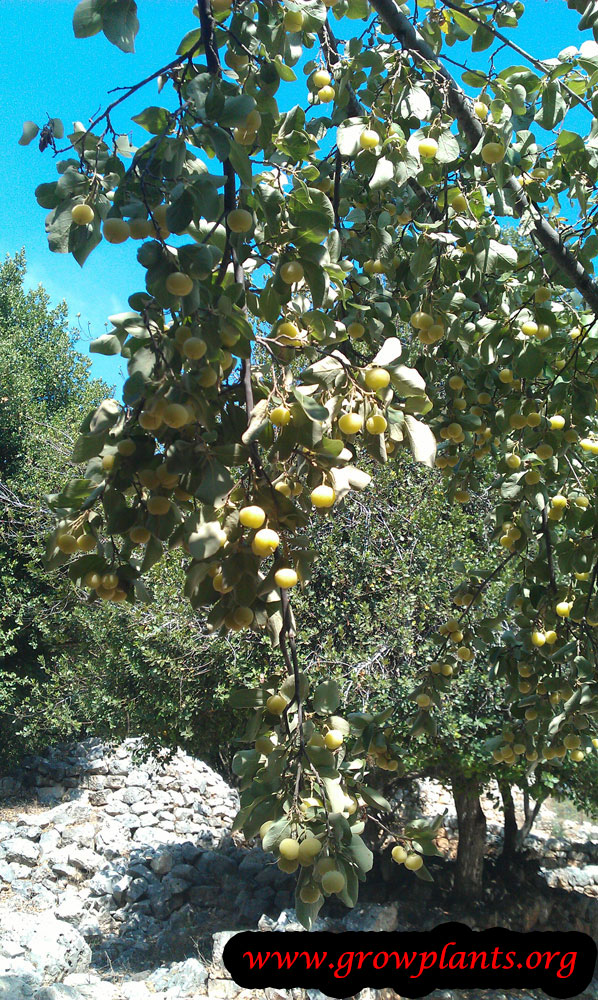





Plant Profile & Key Characteristics
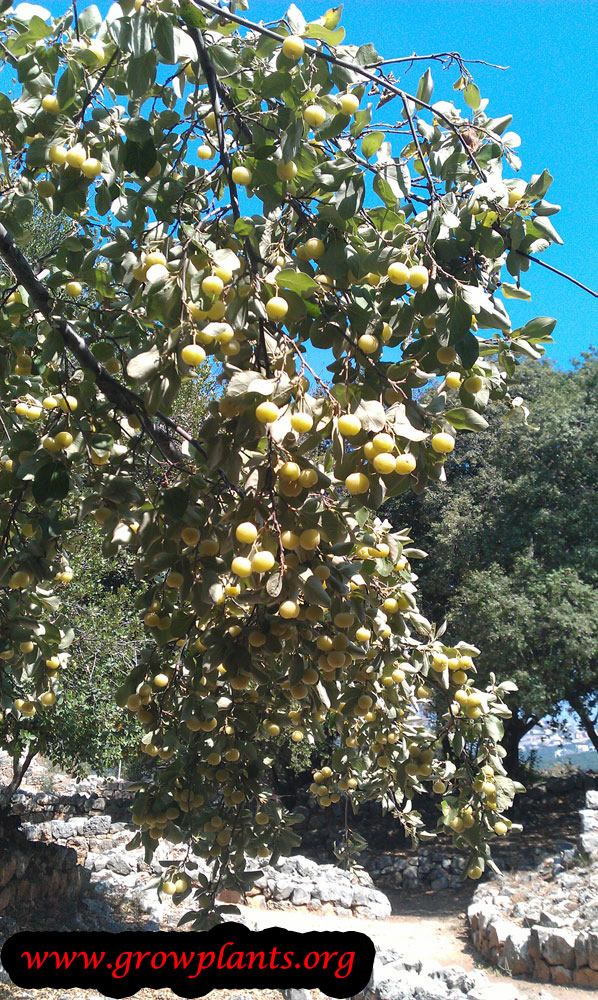
Overview: Storax (Styrax officinalis) is a deciduous shrub to small tree 3-7 m tall, grown as a fragrant ornamental and medicinal plant. It is a drought-tolerant perennial of Mediterranean, desert and temperate climates, also used for bonsai.
Quick Specifications
| Specification | Attribute |
|---|---|
| Plant Type / Life Cycle | Perennial (deciduous shrub / small tree) |
| Foliage Type | Deciduous |
| Mature Size | 3-7 m (9-21 ft) |
| Growth Rate | Slow to moderate |
| Toxicity | Poisonous (fruit not edible; historically used as a fish poison) |
| Hardiness | USDA zones 8-11a |
Growth Form & Structure
- Height & Spread: 3-7 m (9-21 ft) in ground; also grown in a container or as bonsai.
- Growth Habit & Form: Deciduous shrub to small tree.
- Lifespan & Maturity: Slow to moderate; long-lived and drought tolerant once established.
Anatomy & Physical Features
- Leaves & Foliage: Green elliptic leaves.
- Flower Characteristics: Fragrant white flowers with yellow stamens in clusters in spring (full detail in the Bloom guide).
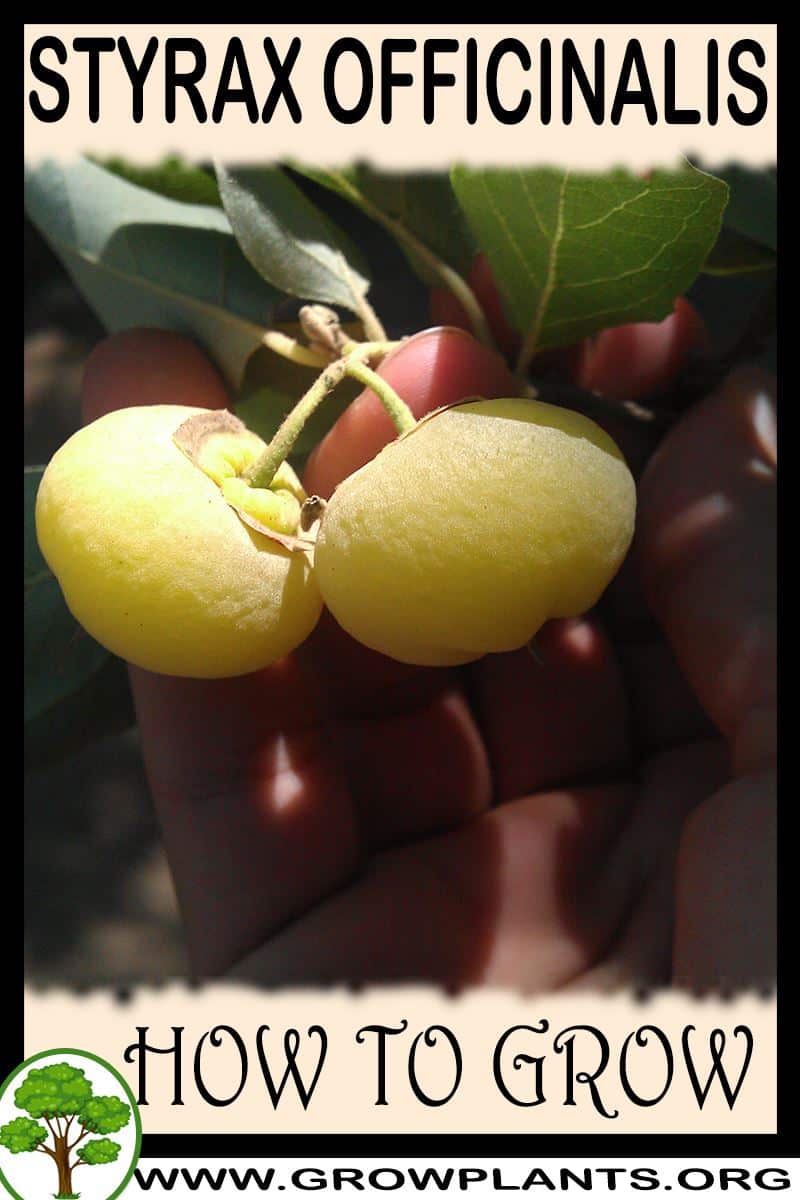
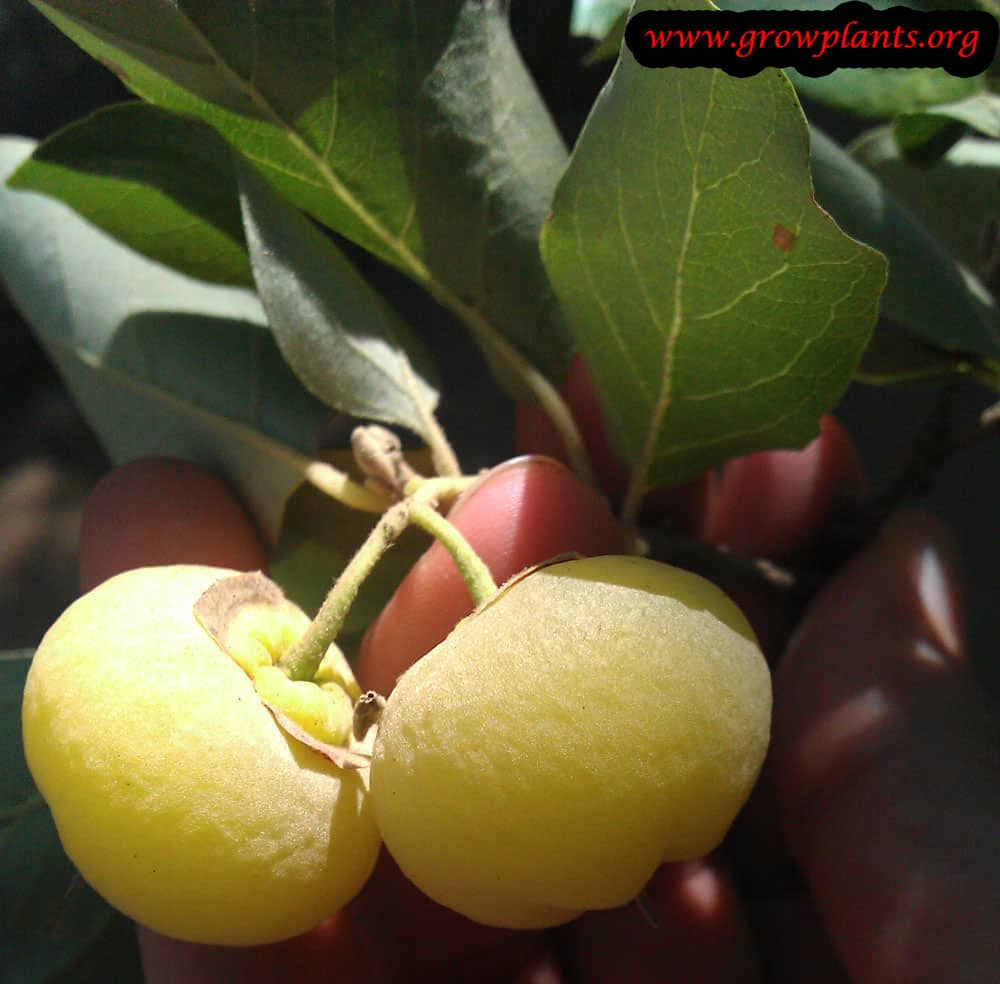
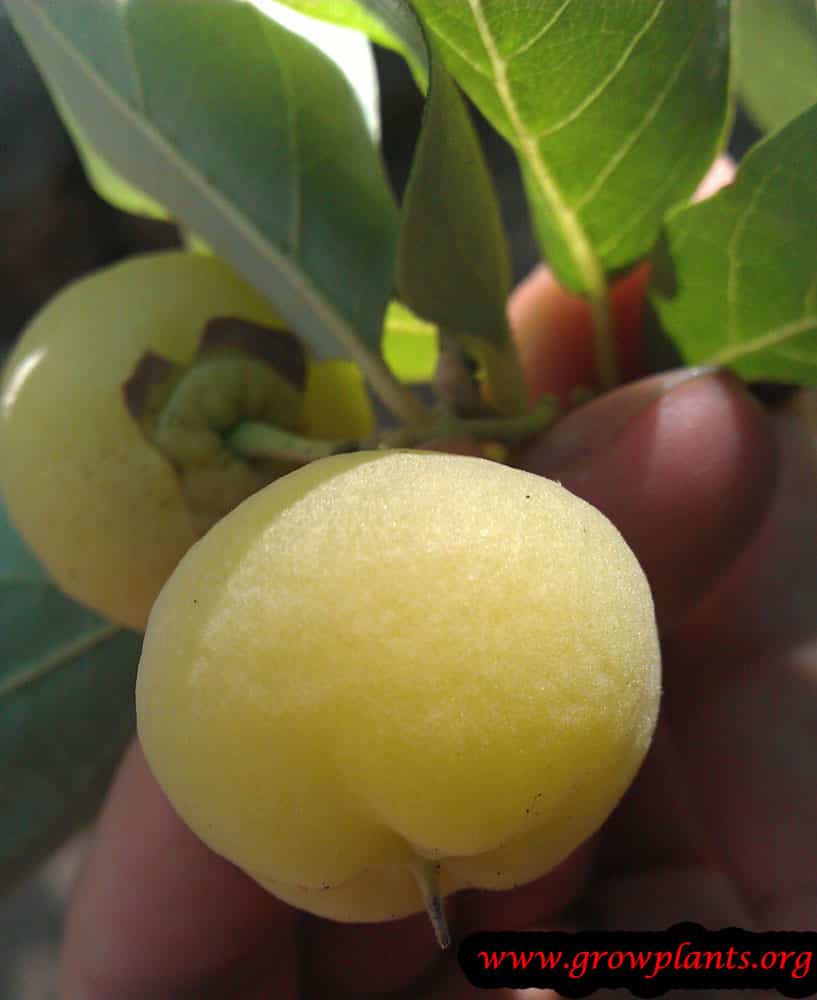
- Fruit Profile: Round yellow-cream fruit; not edible (full detail in the Fruit guide).
Primary Uses & Landscape Value
- Functional & Ornamental Roles: Fragrant, drought-tolerant ornamental; medicinal use and bonsai subject.
Care Guide: Planting, Soil & Watering
Overview: Storax is a moderate- to slow-growing deciduous shrub or small tree that thrives in full sun to light shade with well-draining soil. Once established it is notably drought-tolerant, needing only low to moderate watering and disliking heavy, waterlogged ground.
Quick Care Requirements
| Requirement | Ideal Condition |
|---|---|
| Planting Season | Spring, summer or autumn in the milder part of the year |
| Growth Rate | Moderate to slow |
| Soil Type | Well-draining soil; tolerant of poorer, stony ground |
| Water Need | Low to moderate – drought-tolerant once established |
Planting & Establishment
- Best Planting Season: Plant in spring, summer or autumn, avoiding the coldest weather; suited to hardiness zones 8–11a.
- How to Plant:
- Hole Preparation: Dig a hole about twice the width of the root ball and the same depth, loosening the surrounding soil.
- Soil Amendments: Blend a little compost or organic matter into the backfill; on heavy ground add grit to sharpen drainage.
- Planting Depth: Set the plant at the same depth it grew in its pot, with the crown at soil level; do not bury the stem.
- Growth Speed & Expectations: Growth is moderate to slow, building steadily into a rounded, fragrant-flowering shrub or small tree over several seasons.
Soil, Watering & Drainage Care
- Soil Mix & Drainage Needs: Provide well-draining soil that does not stay wet; in containers use a free-draining mix with grit, ensuring excess water escapes to protect the roots.
- Watering Schedule & Technique:
- Young / Newly Planted: Water regularly after planting through the first season to help the root system establish.
- Established: Water occasionally and deeply, letting the soil dry well between waterings; mature plants cope with dry spells.
- Seasonal Adjustments: Water more in hot, dry weather while young; established plants need little in cool seasons, and being deciduous they rest over winter.
Climate, Light & Hardiness
Styrax officinalis is a drought-tolerant Mediterranean shrub to small tree, well adapted to Mediterranean, desert, subtropical, and temperate climates, growing best in full sun to half shade. It has good general cold hardiness for its zone range.
Quick Climate Specifications
| Climate Zones | Mediterranean, Desert, Subtropics, Temperate |
|---|---|
| USDA Hardiness Zones | 8–11a |
| Frost Tolerance | Moderate |
| Light Conditions | Full Sun / Half Shade |
Sunlight & Light Exposure
Optimal Light Setup
Grows well in full sun to half shade, typical of a Mediterranean-climate shrub/small tree.
Temperature Extremes & Hardiness
USDA Hardiness & Regional Limits
Hardy across zones 8 through 11a, matching its native Mediterranean and desert-adjacent range.
Cold Damage & Winter Protection
As a deciduous species within this range, normal winter leaf drop and dormancy is expected and not a sign of damage.
Frost Sensitivity
Tolerates the light-to-moderate frosts typical of zone 8–9 winters without special protection once established.
Wind, Humidity & Microclimate
Dry-Air Tolerance
Well suited to dry Mediterranean and desert-adjacent air, consistent with its drought-tolerant habit.
Growing in Pots, Balconies & Indoors
Storax (Styrax officinalis) is a deciduous large shrub or small tree (3-7 m) with fragrant white flowers. The grower says it is not a houseplant but can be grown in a container – practical mainly while young, as it eventually wants open ground. Note the plant is poisonous.
Quick Details
- Container Size: A large tub while young; it will outgrow pots in time
- Indoor Suitability: Not a houseplant – an outdoor small tree
- Best Spot: Full sun to half shade, outdoors
- Soil & Drainage: Free-draining mix
- Watering in Pots: Small to average amount – drought-tolerant once established
Indoors & On the Windowsill
- Not a houseplant: The grower confirms it will not grow indoors; it is an outdoor small tree.
- Windowsill: Far too large for a sill – grow it outside.
On a Balcony or Patio
- Light, wind & heat: Give it the brightest spot it will tolerate; walls and railings reflect heat and dry pots quickly, so check moisture often and shelter or stake exposed growth.
- While young: A young plant does well in a large sunny patio pot; give it good light and steady – not excessive – moisture, and shelter from strong wind.
Choosing the Pot, Soil & Long-Term Care
- Pot & drainage: A large tub with strong drainage holes; it suits pot life only while young. Use strong drainage holes and skip a standing-water saucer to avoid root rot. Terracotta breathes and dries faster; glazed or plastic holds moisture longer.
- Potting mix: A well-aerated, organic-rich mix – potting soil or peat/coir with perlite or vermiculite for free drainage.
- Feeding: Feed lightly in the growing season.
- Long term: Plan to move it to open ground as it grows; it cannot stay potted for life.
- Safety: The plant is poisonous – keep it away from children and pets and never treat any part as edible.
Fertilizing & Feeding
A light feeder: this slow-to-medium growing, drought-tolerant, fragrant-flowered shrub or small tree needs only modest feeding through spring growth and bloom, then a rest through winter dormancy.
Quick Fertilizing Specs
| Feeding Level | Light feeder |
|---|---|
| Main Nutrient Priority | Balanced feeding kept light to match this drought-tolerant plant’s naturally slow-to-moderate pace |
| Best Feeding Period | Spring growth through the spring bloom period |
| Organic Options | A light top-dressing of compost worked into well-drained soil |
| Reduce/Stop Feeding | Ease off after bloom finishes and stop as the plant enters winter dormancy |
| Micronutrients | Usually supplied by a complete fertilizer; correct only a diagnosed deficiency |
| Soil pH | Prefers well-drained soil; tolerant of typical garden conditions |
Feeding by Growth Stage
Spring growth flush
Support modest new stem and leaf growth as this slow-to-medium growing, drought-tolerant shrub breaks winter dormancy.
| Nutrient direction | A light, balanced feeding is enough to support healthy growth without forcing a naturally unhurried grower. |
|---|---|
| Timing | As new growth begins in spring. |
| Frequency | A single light feeding as growth resumes is usually sufficient. |
| Fertilizer types | A balanced complete fertilizer used sparingly, A light top-dressing of compost |
| Precautions | Keep feeding light; this drought-tolerant plant is adapted to lean conditions and overfeeding can cause soft, disease-prone growth. |
Fragrant spring bloom
Support the fragrant white flowers with yellow stamens that this shrub produces in clusters each spring.
| Nutrient direction | Balanced feeding with modest nitrogen supports flowering without pushing excess vegetative growth. |
|---|---|
| Timing | During the spring bloom period. |
| Frequency | Minimal additional feeding is usually needed while the shrub is in flower. |
| Fertilizer types | A balanced complete fertilizer used sparingly |
| Precautions | Avoid a high-phosphorus formula for more flowers; balanced feeding earlier in spring is what actually supports bloom. |
Winter dormancy
Let this deciduous shrub rest through its winter dormant period without pushing tender new growth.
| Nutrient direction | None – withhold fertilizer while the plant is dormant. |
|---|---|
| Timing | During the winter dormant season. |
| Frequency | No feeding at this stage; resume only as spring growth begins. |
| Fertilizer types | No feeding at this stage; hold off fertilizing until the plant breaks dormancy in spring. |
| Precautions | Do not fertilize a dormant plant; unused nutrients can leach away over winter or encourage cold-sensitive growth. |
Nutrient Deficiency Signs & Corrections
Older leaves fade to pale green or yellow and growth slows further than this naturally unhurried plant’s usual pace.
| Possible causes | low available soil nitrogen, nitrogen leached by rain or watering, thin, low-organic-matter soil |
|---|---|
| Appears first on | older, lower leaves |
| What to check | recent feeding history, soil organic matter, watering and drainage |
| Possible correction | Apply a light, nitrogen-containing complete fertilizer and build soil organic matter over time. |
New leaves turn yellow while their veins stay green.
| Possible causes | high soil pH limiting iron availability, waterlogged or compacted soil restricting root uptake, naturally low soil iron |
|---|---|
| Appears first on | newest growth at the shoot tips |
| What to check | soil pH and drainage, root health and compaction, recent fertilizer history |
| Possible correction | Correct pH toward the plant’s preferred range and apply a chelated iron product per its label. |
Wilting or dieback despite the plant’s naturally drought-tolerant nature.
| Possible causes | overwatering a plant adapted to well-drained, drier soil, poorly drained soil causing root rot, overfeeding pushing soft growth that is more prone to stress |
|---|---|
| Appears first on | leaves and stem tips throughout the canopy |
| What to check | soil drainage and recent watering frequency, signs of rot at the root crown, recent fertilizer amounts |
| Possible correction | Improve drainage, reduce watering frequency to match this drought-tolerant plant’s needs, and ease off feeding until it recovers. |
Pruning, Training & Seasonal Maintenance
Storax is a slow-to-medium growing, drought-tolerant deciduous shrub-to-small-tree that flowers in spring on wood formed the previous year. It tolerates moderate structural pruning well, and the safest general window for framework and deadwood work is autumn/winter dormancy; however, since flower buds are already set on the prior year’s wood by then, any cut aimed purely at maximizing the spring flower display is better made right after flowering instead.
Quick Pruning & Maintenance Specs
| Pruning Tolerance | Moderate – structural cuts tolerated, but timing affects that year’s bloom |
| Primary Pruning Window | Autumn/winter dormancy for framework, deadwood and size control |
| Secondary Maintenance Window | Immediately after spring flowering, for display-focused shaping |
| Typical Frequency | Light annual dormant-season tidy; occasional post-bloom shaping |
| Main Objective | Establish/maintain a clean framework; balance structure work against flower loss |
| Young Plant Priority | Establish a single or multi-trunk framework early, while flower loss matters least |
| Mature Plant Priority | Light structural upkeep; save major shaping for right after bloom |
| Best Tool Type | Bypass secateurs and loppers; pruning saw for older framework limbs |
| Avoid Heavy Pruning During | Just before the spring bloom, if flower display is a priority that year |
Pruning by Plant Age & Size
Newly Established
Use the first dormant seasons after planting (spring/summer/autumn planting windows) to establish the framework, since a young plant not yet valued for its bloom can absorb structural cuts without a meaningful ornamental cost.
Young / Formative
Trained as a single-leader small tree or, more traditionally for the species, a multi-trunk/multi-stem large shrub; choose the form early and remove competing leaders or weak, crowded stems during winter dormancy while the plant is young.
Mature / Established
Once the framework is set, keep dormant-season work light (deadwood, crossing/rubbing branches, size control) and move any significant reshaping to just after the spring flowering finishes.
Seasonal Pruning Schedule
| Dormant/Winter | Framework establishment (young plants), deadwood removal, and light size/structure control; on a young plant this has little flower-display cost; on a flowering-age plant it will reduce that spring’s bloom in proportion to how much old wood is removed. |
| Post-Flowering | Best window for any cut aimed at preserving/maximizing next year’s bloom – shape or thin here instead of in winter once the tree is flowering-age. |
Flowering & Fruiting Wood
Fragrant white flowers form on wood grown the previous season; the fruit that follows is ornamental only (not edible). A dormant winter cut removes some of that already-formed flowering wood, so on a mature specimen grown for its spring flower display, prefer shaping right after bloom over heavy winter cuts.
Structural Pruning & Training
Establish and then maintain either a single-trunk small-tree form or a more natural multi-stem large-shrub form; thin crossing or inward-growing branches to keep an open, well-lit canopy; height and spread respond well to moderate structural pruning during dormancy.
Special Growth to Remove
Remove any dead or storm-damaged wood as noticed; on plants grown as seedlings/seed-propagated (no grafting is used for this species) there are no rootstock suckers to manage, only ordinary basal shoots, which can be removed if a clean single trunk is wanted or left if a multi-stem form is preferred.
Container & Small-Space Pruning
Explicitly suited to bonsai/container culture; in this setting pruning is combined with root pruning at repotting, and structural/branch pruning is scaled down significantly compared with an in-ground specimen, with more frequent light pinching of new shoots to maintain a small, refined framework rather than the size and spread of a garden specimen.
Tools
- Bypass secateurs – general shaping and small-branch removal
- Loppers – medium framework branches
- Pruning saw – older, thicker limbs when establishing or renovating structure
- Grafting knife – fine bonsai-style cuts where container-trained
Tool Hygiene & Disease Risk
Routine care is generally sufficient – keep tools clean and sharp; no elevated species-specific disease-transmission risk is noted, though the whole plant is recorded as poisonous, so gloves and care with sap contact are worth noting for the person pruning even though this is a safety, not a disease, concern.
Cut Placement & Technique
Make framework cuts just outside the branch collar rather than flush with the trunk; avoid leaving long stubs; on bonsai-trained specimens use precise, clean cuts sized to the small branch diameters involved.
Heavy Pruning & Rejuvenation
Tolerates a moderate rejuvenation cutback of overgrown or leggy growth, best done right after flowering so the plant has a full season to regrow and reset flower buds before the following winter; avoid repeated severe cutbacks, which stress a naturally slow-to-medium growing, drought-adapted species.
Post-Pruning Care
Water in after any significant cut, particularly during its typical dry-summer/Mediterranean-climate growing conditions; watch newly exposed interior wood for sunburn after opening up the canopy, since this species is often grown in full sun/half shade with a naturally moderate canopy density.
Common Pruning Mistakes
- Heavy dormant-season shaping on a flowering-age tree when the spring display matters, removing buds already set on old wood
- Treating bonsai/container pruning the same as in-ground pruning, over-cutting a plant with a much smaller root reserve
- Repeated severe cutbacks that stress this slow-to-moderate growing, drought-tolerant species
When NOT to Prune
Avoid heavy structural pruning immediately before the spring bloom on a mature, flowering-age specimen if the display is a priority; also avoid major cuts during active summer heat/drought stress, given its drought-tolerant but not pruning-stress-tolerant nature.
Recommended Tools (by task)
- bypass_secateurs – general shaping, post-bloom cuts
- loppers – medium framework branches during dormant-season structural work
- pruning_saw – thicker limbs on a young tree’s framework establishment or an older renovation
- grafting_knife – fine, precise cuts on bonsai/container-trained specimens
Pruning Troubleshooting
| Problem | Possible Cause | What to Check | Corrective Action |
| Reduced spring flowering after winter pruning | Structural cuts removed wood that had already set flower buds | Timing and severity of the last dormant-season cut | Shift significant shaping to right after bloom in future years |
| Weak, over-thick central growth / poor light penetration | Crossing/interior branches never thinned | Canopy density and interior branch crowding | Selectively thin crossing or inward branches during dormancy |
| Dieback after a hard cutback | Cutback too severe for a slow-growing, drought-adapted species | Extent of the cut relative to overall canopy, and recent water stress | Water adequately post-cut and avoid repeating severe cutbacks in consecutive years |
Propagation Guide
Styrax officinalis is grown almost exclusively from seed, as the site notes vegetative propagation is not required for this species – seedlings and nursery plants are the other common starting points. Seed grows true for this species (no named cultivars are involved), but germination is typically slow and uneven due to seed-coat and embryo dormancy, making overall propagation Moderate rather than Easy.
Quick Propagation Specs
| Best Propagation Method | Seed |
| Alternative Methods | Semi-hardwood cuttings (occasional, for select forms; not required) |
| Propagation Difficulty | Moderate |
| Seed True-to-Type | Yes |
| Best Propagation Season | Autumn sowing (to allow natural winter chilling) or spring after cold treatment |
| Seed Germination Time | Often several months and staggered; can be slow even under good conditions |
| Germination Temperature | Cool, moist chilling followed by average room warmth, roughly 15–20°C (59–68°F) |
Growing from Seed
Seed Handling & Viability
Collect seed from fully ripe fruit and clean away the fleshy pulp before sowing or storing; as with many Styrax species, viability may decline if seed is allowed to dry out fully, so sowing reasonably fresh or keeping seed cool and slightly moist in storage is the more cautious approach.
Dormancy & Pre-Sowing Treatment
Seed of this genus commonly shows a hard seed coat combined with embryo dormancy. A period of cold, moist stratification (and sometimes a preceding warm period) generally improves and speeds germination; light nicking or scarification of the seed coat may also help, used cautiously to avoid damaging the embryo.
Sowing Season
Sow outdoors in autumn so seed experiences natural winter chilling, or stratify seed artificially and sow in spring.
Germination Conditions
Germination is often irregular and prolonged; keep the sowing medium consistently moist but not waterlogged and be patient, as germination can be spread out over an extended period rather than occurring all at once.
Seedling Care
Once germinated, grow seedlings on in Full Sun to Half Shade with well-drained soil before transplanting; growth in the first seasons is typically slow to medium, matching the species’ overall growth habit.
Stem Cuttings
Cutting Type
Semi-hardwood cuttings are occasionally used, mainly where a particular form is wanted (for example, material selected for bonsai training), though this is not necessary for general propagation.
Rooting Hormone
Optional; a rooting hormone may improve success but is not strictly required.
Rooting Time
Rooting is slower and less reliable than seed for this species, typically taking several weeks to a few months under warm, humid conditions.
Bloom & Flower Guide
Quick Details
- Bloom Season: Spring
- Time to First Bloom: On establishing young trees, usually after a few years
- Flower Appearance: Fragrant, nodding, bell- to star-shaped white flowers with bright yellow stamens, hanging in small clusters
- Edibility: Not eaten – grown as a fragrant ornamental (the tree is also a traditional source of storax resin)
Detailed Blooming Overview
Storax is grown for its beautifully fragrant, pendulous white spring flowers, which have long been valued alongside the aromatic resin the tree produces.
Flower Characteristics
- White, fragrant flowers with bright yellow stamens.
- Bell- to star-shaped and nodding, borne in small hanging clusters.
Bloom Care & Thinning
- Pruning: It flowers on the previous season’s wood, so prune only lightly after flowering.
- Best display: Give it a sunny, well-drained spot for the fullest, most fragrant bloom.
Pests, Diseases & Troubleshooting
Overview: Styrax officinalis is a hardy, deciduous Mediterranean shrub or small tree that is largely free of serious pests, so this profile is built from the genus and family and from what troubles comparable woody ornamentals. Its realistic problems are occasional sap-suckers (scale, aphids, mites), bark or ambrosia beetles on stressed wood, and above all root rot and chlorosis where drainage is poor. Right siting and drainage prevent nearly everything.
Quick Troubleshooting Overview
| Issue / Pest | Main Symptom | Primary Solution |
|---|---|---|
| Scale insects | Bumps on twigs and leaves, honeydew, sooty mould | Horticultural oil, prune, dormant oil |
| Aphids | Sticky curled new growth | Water blast, insecticidal soap |
| Ambrosia / bark beetles | Tiny entry holes, sawdust, dieback on stressed wood | Keep tree vigorous, prune out and destroy affected wood |
| Caterpillars | Chewed leaves and frass | Handpick, Bt while small |
| Root rot | Wilting and dieback in wet soil | Sharp drainage, avoid overwatering |
| Chlorosis | Yellow leaves with green veins | Improve drainage, chelated iron on alkaline soil |
Common Pests & Management
- Scale insects (soft & armoured scale):
- Symptoms: Small immobile brown, grey or waxy bumps on twigs, branches and leaf undersides; soft scales exude honeydew that blackens with sooty mould, and heavy colonies weaken shoots.
- Prevention & Control: Prune out badly encrusted wood, apply horticultural oil in the growing season to smother crawlers and a dormant-season oil on bare wood, and control ants; conserve the parasitic wasps and lady beetles that attack scale.
- Aphids (Aphis spp.):
- Symptoms: Clusters of soft insects on tender new shoots causing sticky, curled, distorted growth and sooty mould.
- Prevention & Control: Rinse colonies off with water, conserve natural enemies, and spray insecticidal soap on heavy flushes; avoid excess nitrogen that fuels soft growth.
- Ambrosia and bark beetles:
- Symptoms: Tiny round entry holes with fine sawdust (frass) on the trunk and branches, and twig or branch dieback – these beetles target stressed, drought-weakened or injured wood.
- Prevention & Control: Keep the tree vigorous and unstressed with proper watering and mulching, avoid bark wounds, and promptly prune out and destroy infested wood; there is no effective spray once borers are inside, so plant health is the defence.
- Caterpillars (leaf-chewing moths):
- Symptoms: Chewed leaves, notched margins and frass, with green or hairy caterpillars on the foliage.
- Prevention & Control: Handpick, spray Bacillus thuringiensis (Bt) while larvae are small, and encourage birds and parasitic wasps; damage is usually cosmetic on an established plant.
- Spider mites (Tetranychus spp.):
- Symptoms: Fine stippling and a dull bronzed look with fine webbing in hot, dry, dusty conditions.
- Prevention & Control: Hose down foliage to knock off mites and reduce dust, avoid drought stress, and treat serious cases with horticultural oil or insecticidal soap on the undersides.
Diseases & Fungal Issues
- Root and crown rot (Phytophthora, Armillaria):
- Symptoms: Wilting, sparse pale foliage, branch dieback and eventual decline in soils that stay wet; roots and crown darken and decay.
- Treatment & Management: This dry-climate plant strongly dislikes wet feet – plant in well-drained soil, never bury the crown, and avoid overwatering and heavy irrigation. There is no cure once advanced, so improve drainage and remove severely affected plants.
- Leaf spot (fungal):
- Symptoms: Brown or purplish spots on leaves that may merge and cause early leaf drop in wet seasons.
- Treatment & Management: Rake up and destroy fallen leaves, improve airflow, and water at the base rather than overhead; fungicides are seldom warranted, as sanitation controls it.
- Twig blight / dieback:
- Symptoms: Dieback of shoot tips and small branches, often following stress, wounds or fungal leaf infection.
- Treatment & Management: Prune out dead and blighted wood back to healthy tissue, disinfecting tools between cuts, and keep the tree vigorous; avoid unnecessary wounding.
- Powdery mildew (occasional):
- Symptoms: A white powdery film on leaves in humid, shaded, crowded conditions.
- Treatment & Management: Improve air movement and light, avoid overhead watering, and remove affected growth; rarely serious enough to need a sulphur fungicide.
Growing Difficulties & Abiotic Problems
- Wet-soil decline:
- Cause & Symptoms: Yellowing, poor growth and dieback where the soil is heavy or poorly drained – the main risk for this Mediterranean species.
- Correction Strategy: Plant in free-draining soil or on a slope or raised bed, water sparingly once established, and avoid summer overwatering; it is well adapted to dry, sunny conditions.
- Chlorosis:
- Cause & Symptoms: Yellow leaves with green veins on very alkaline or waterlogged soils where iron is unavailable.
- Correction Strategy: Confirm with a soil test, improve drainage and organic matter, and correct with a chelated iron foliar feed; slight acidification helps on very high-pH soils.
- Drought stress on young plants:
- Cause & Symptoms: Leaf scorch and wilting on the margins during hot dry spells before the deep root system develops.
- Correction Strategy: Mulch the root zone and water young plants deeply through establishment; mature plants are notably drought-tolerant and need little summer water.
- Frost on young growth:
- Cause & Symptoms: Damage to soft new shoots from late frost.
- Correction Strategy: Site in a sheltered spot and protect young plants during late cold snaps; the plant is otherwise hardy within its Mediterranean-climate range.
What Helps – Products & Tools
This tough Mediterranean plant needs minimal intervention: horticultural oil and dormant oil for scale, insecticidal soap for aphids and mites, Bacillus thuringiensis (Bt) for caterpillars, and prompt pruning of any beetle-affected wood. For soil issues, sharp drainage plus chelated iron for chlorosis matter far more than any fungicide.