


Plant Profile & Key Characteristics
Also known as: shield plant
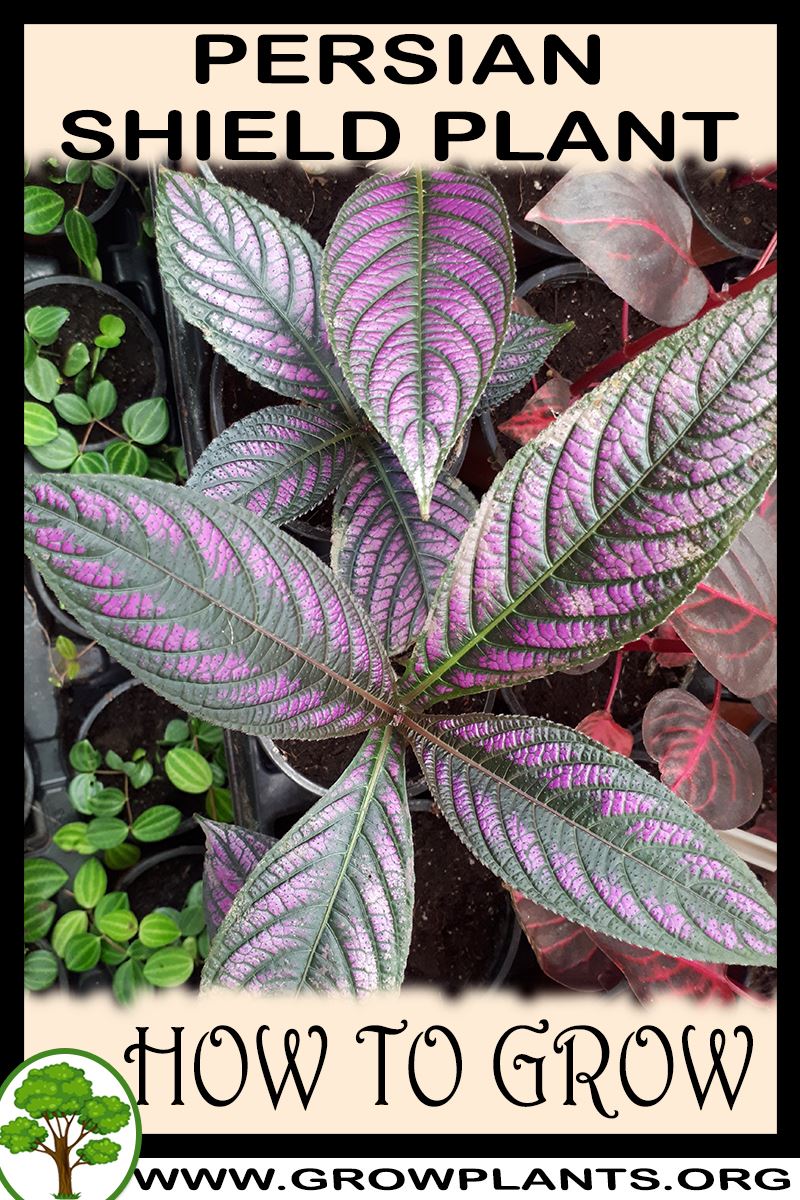
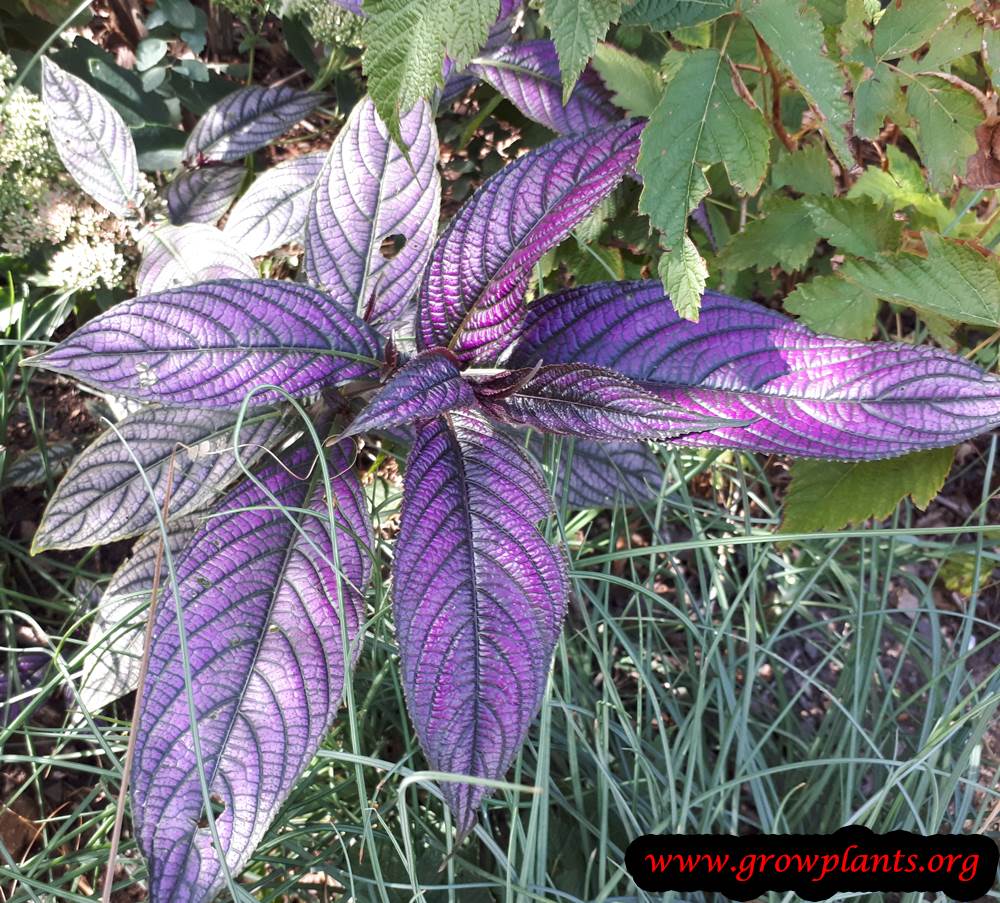
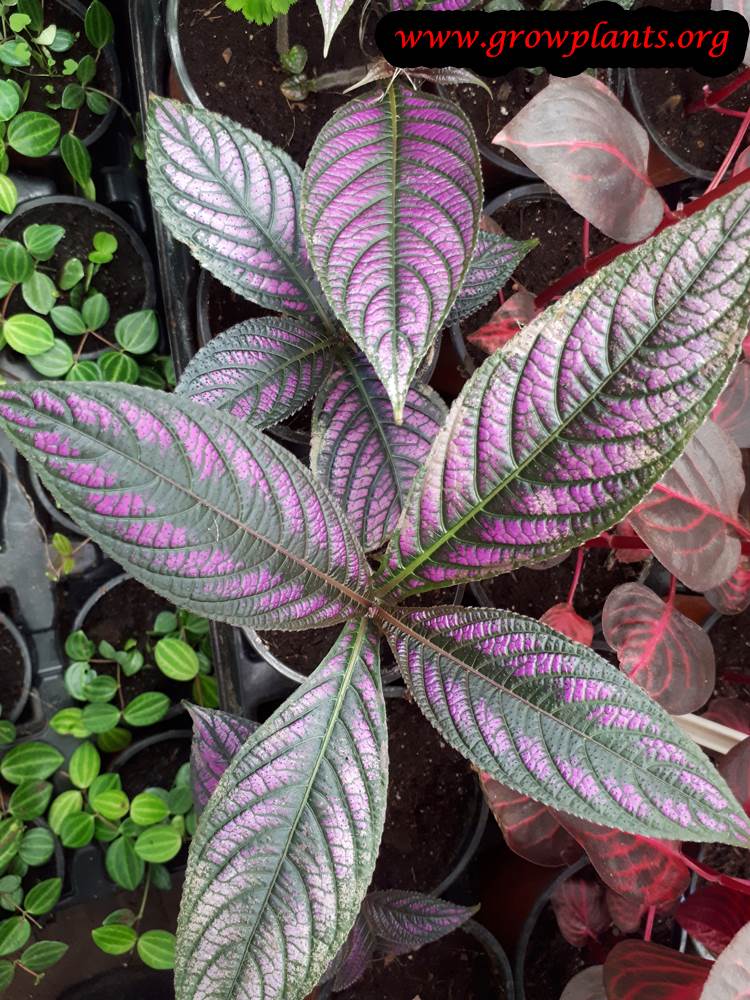
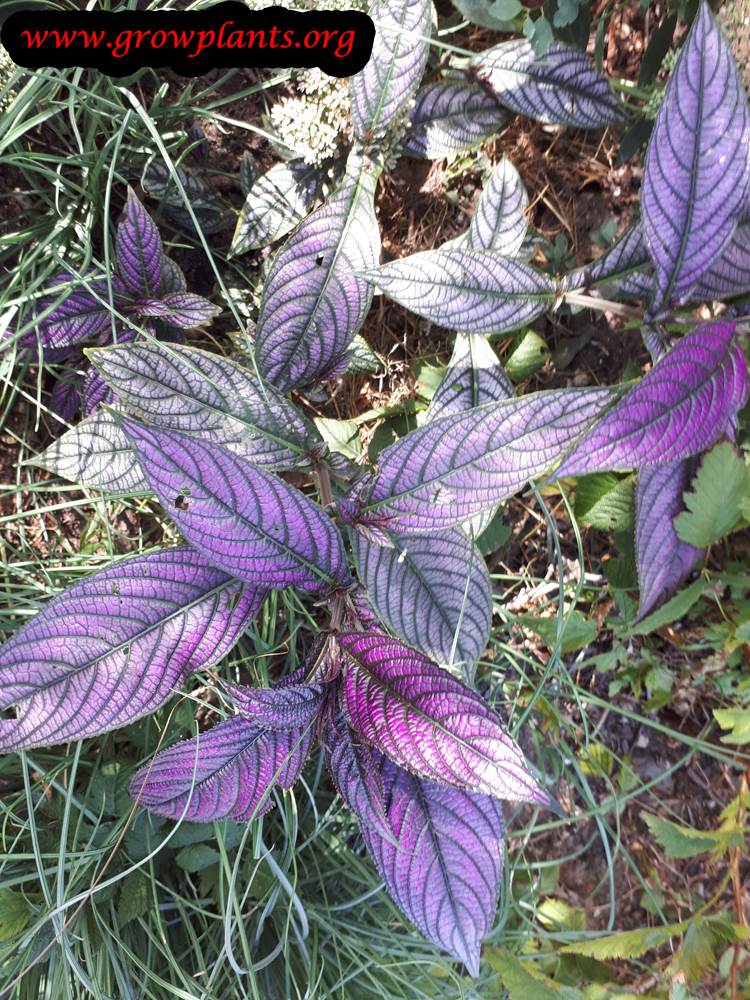
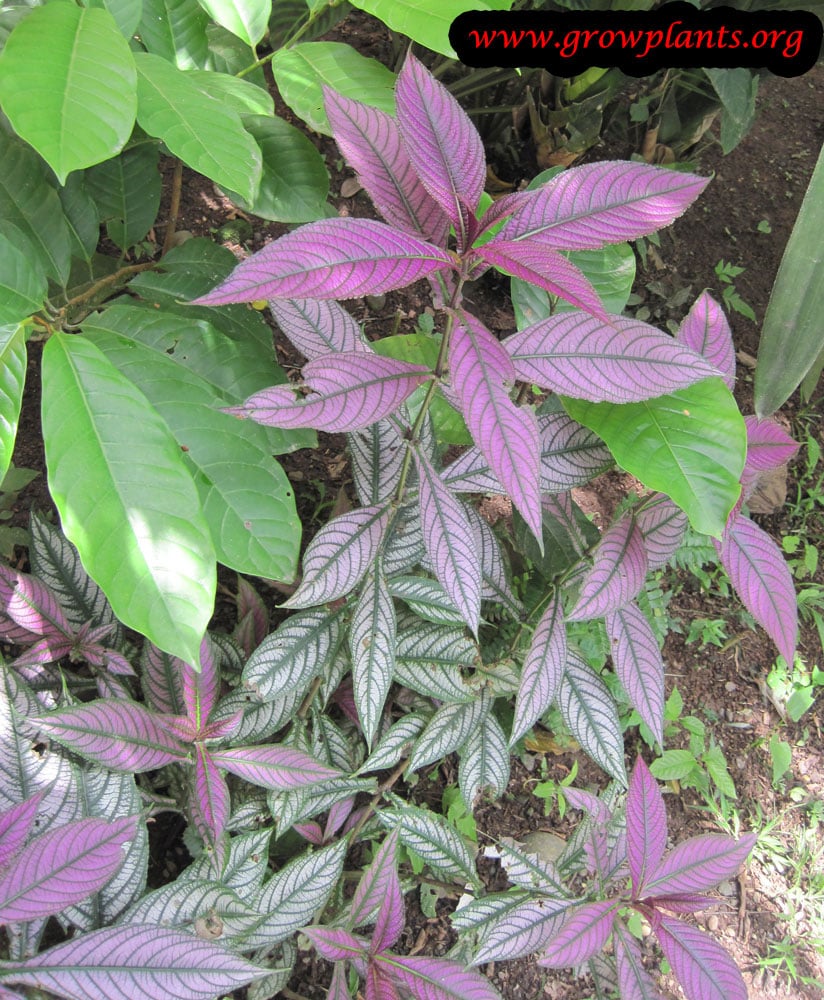
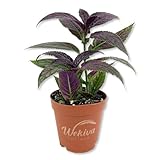
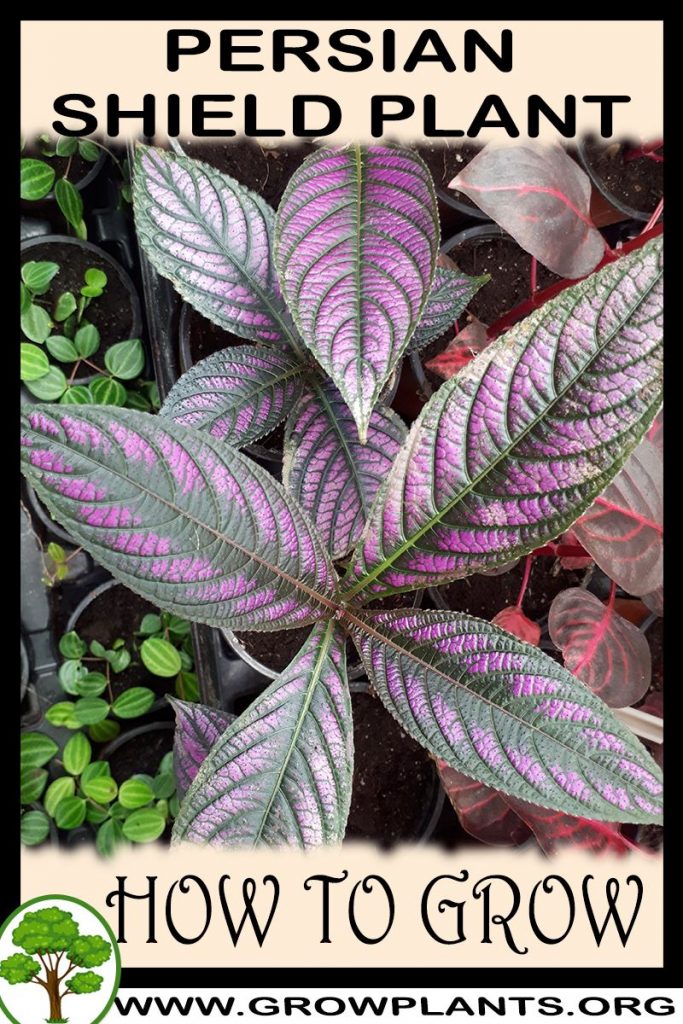
Overview: Persian shield (Strobilanthes dyerianus) is an evergreen foliage shrub 0.3-1 m tall, grown for its iridescent purple leaves striped with green-blue. It is a perennial in warm zones and grown as an annual or houseplant where winters are cold.
Quick Specifications
| Specification | Attribute |
|---|---|
| Plant Type / Life Cycle | Perennial (grown as annual / houseplant in cold climates) |
| Foliage Type | Evergreen |
| Mature Size | 0.3-1 m (12-40 in) |
| Growth Rate | Moderate |
| Hardiness | USDA zone 11+ as perennial, 4-10a as annual |
Growth Form & Structure
- Height & Spread: 0.3-1 m (12-40 in) in ground; in a container use about 5-12 L (1.5-3 gal).
- Growth Habit & Form: Bushy foliage shrub, best pinched to stay compact and colourful.
- Lifespan & Maturity: Perennial in warm zones; grown as an annual or houseplant elsewhere.
Anatomy & Physical Features
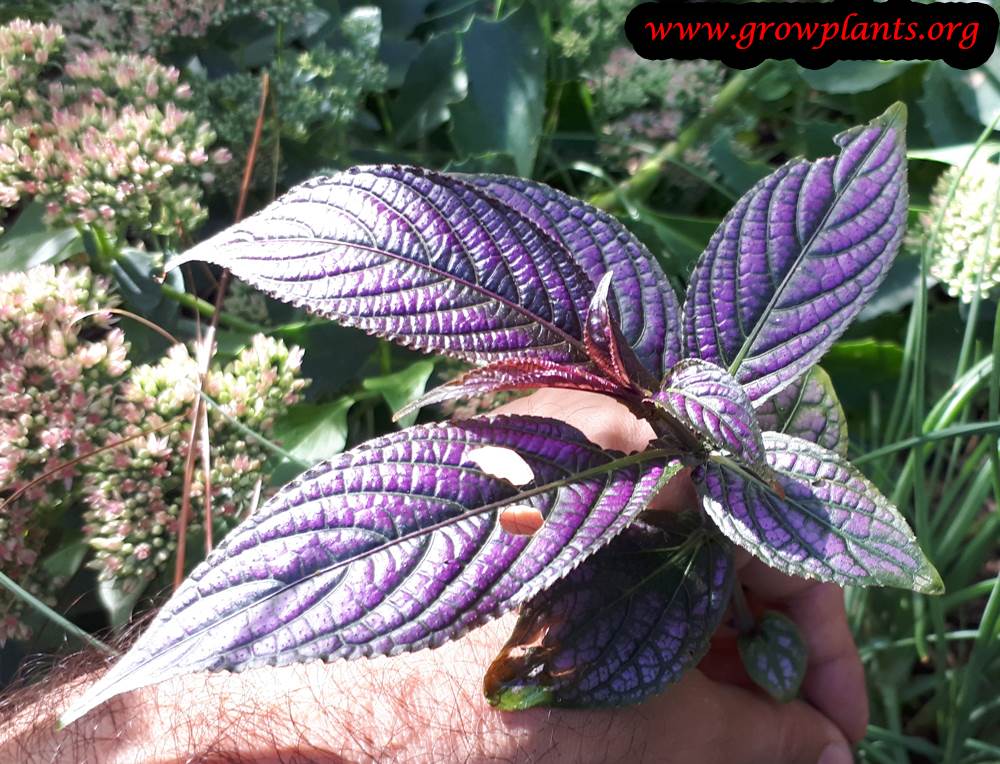
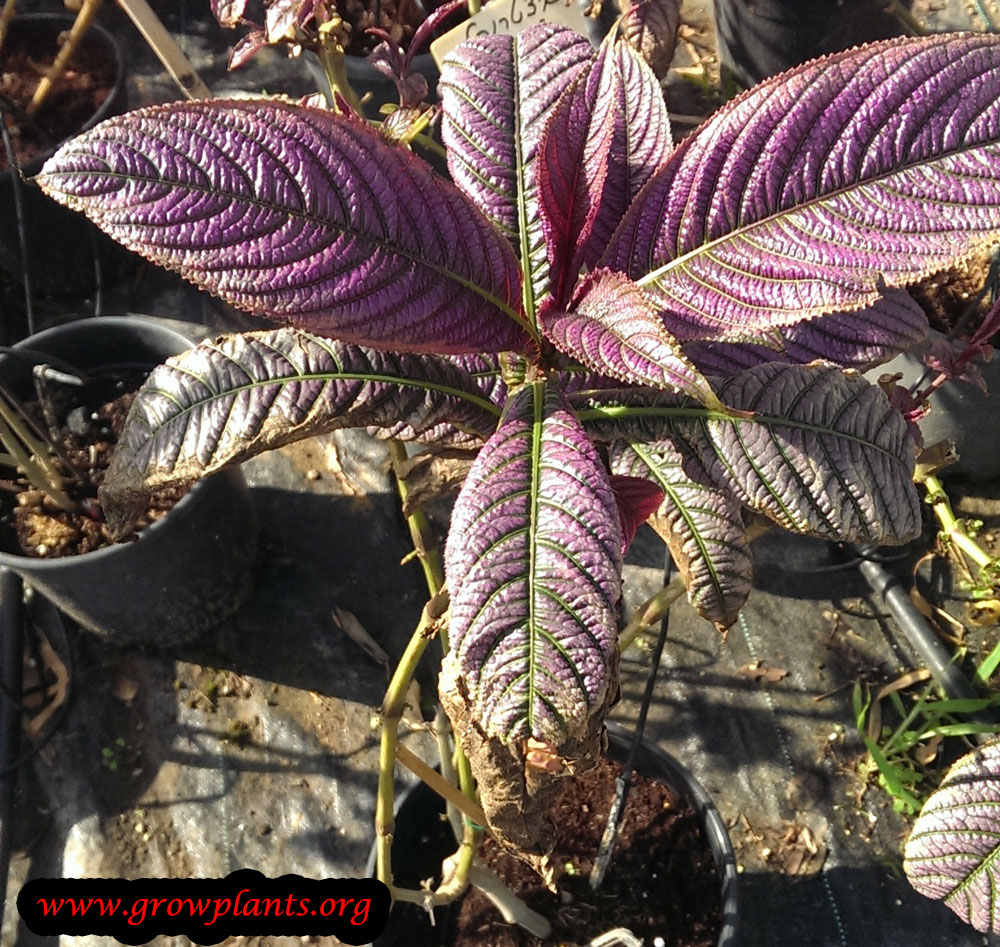
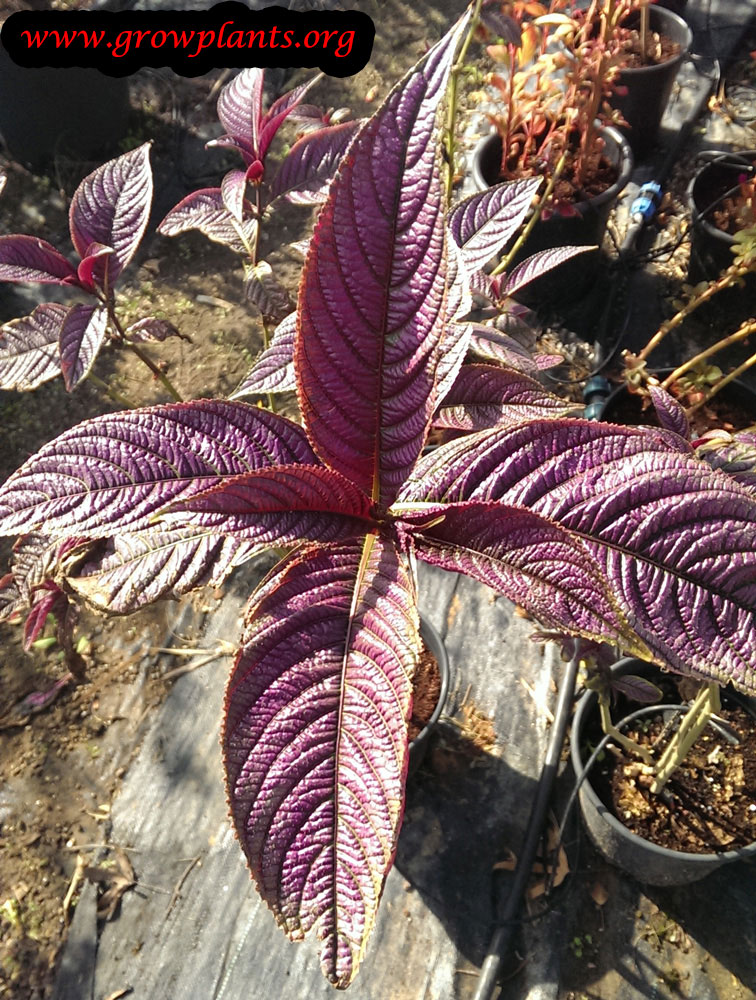
- Leaves & Foliage: Iridescent purple elliptic leaves striped and shaded with green-blue and a metallic sheen – the main ornamental feature.
- Flower Characteristics: Small purple tubular / cone-shaped flowers on spikes; minor next to the foliage (full detail in the Bloom guide).
Primary Uses & Landscape Value
- Functional & Ornamental Roles: Foliage bedding, borders, containers and houseplant; a bold colour accent.
Care Guide: Planting, Soil & Watering
Overview: Persian shield is a moderate-growing evergreen prized for its iridescent purple foliage, thriving in warmth and high humidity with rich, moisture-retentive soil and full sun to shade (out of harsh midday sun). It likes steady, generous watering in the warm season while the soil stays moist but never waterlogged.
Quick Care Requirements
| Requirement | Ideal Condition |
|---|---|
| Planting Season | Spring in cooler zones; spring to summer or year-round in frost-free areas |
| Growth Rate | Moderate |
| Soil Type | Rich, organic, moisture-retentive, well-draining soil |
| Water Need | Moderate to high – keep the soil consistently moist without letting it sit wet |
Planting & Establishment
- Best Planting Season: Plant in spring in hardiness zones 4–10b, spring to summer in zone 11, and at any time of year in zone 12+; indoors it can be started spring through autumn.
- How to Plant:
- Hole Preparation: Dig a hole as deep as the root ball and up to twice as wide, then part-fill it so the plant sits at the right height.
- Soil Amendments: Mix organic matter – humus, compost and dried leaves – through the backfill for a rich, moisture-holding soil, and mulch after planting to keep the surface moist.
- Planting Depth: Set the root ball level with the surrounding soil and firm gently – without packing it hard – keeping the crown at the surface, not buried.
- Growth Speed & Expectations: Growth is moderate, filling out into a bushy, richly coloured mound through the warm season under good warmth, humidity and light.
Soil, Watering & Drainage Care
- Soil Mix & Drainage Needs: Provide rich, well-aerated soil that holds moisture; in containers use a good potting mix or peat-based blend lightened with perlite or vermiculite, with free drainage so the roots stay moist but not sodden.
- Watering Schedule & Technique:
- Young / Newly Planted: Water daily for the first two weeks after planting to establish it, keeping the soil evenly moist as roots take hold.
- Established: Water regularly and generously so the soil never dries out fully, letting only the surface dry before watering again.
- Seasonal Adjustments: Increase watering and misting in warm, dry weather to keep humidity up; ease back in cooler conditions, and keep it warm and out of dry, cold air over winter.
Climate, Light & Hardiness
Persian shield is a tender tropical/subtropical foliage plant grown as a perennial in warm climates, as a houseplant, or as a colorful annual where winters freeze. It prefers full sun to half shade (with shade from hot afternoon sun) and is frost sensitive, needing warmth and humidity to keep its purple leaf color vivid.
Quick Climate Specifications
| Climate Zones | Tropical, Mediterranean, Subtropics, Temperate (also grown indoors) |
|---|---|
| USDA Hardiness Zones | 11+ as a perennial; commonly grown as an annual in zones 4–10a; can overwinter with care in zone 10b |
| Optimal Temp Range | Warm, indoor-comfortable temperatures; leaf color fades below about 20°C (68°F) |
| Frost Tolerance | Very Low |
| Light Conditions | Full Sun (not in hot areas) / Half Shade / Full Shade |
Sunlight & Light Exposure
Optimal Light Setup
Full sun is fine in mild climates, but in hot regions the plant does better in half to full shade.
Shade & Heat Management
In hot-summer areas, protect from intense afternoon sun to prevent leaf stress; indoors, bright indirect light keeps colors strongest.
Temperature Extremes & Hardiness
USDA Hardiness & Regional Limits
Reliably perennial only in zone 11 and warmer. In zones 4–10a it is commonly grown as a warm-season annual, and in zone 10b it can persist with dedicated winter protection – the site's zone data is the primary reference here.
Cold Damage & Winter Protection
Leaf color visibly declines once temperatures fall below approximately 20°C (68°F), well before any frost damage occurs; keep it warm and away from cold drafts or cold windows when grown indoors.
Frost Sensitivity
Frost sensitive and unlikely to survive freezing temperatures outdoors without protection.
Wind, Humidity & Microclimate
Humidity Preferences
Needs consistently high humidity; dry air causes leaves to turn brown.
Dry-Air Tolerance
Poor – low humidity is a direct cause of leaf browning, so indoor growers should mist or use a humidity tray in dry rooms.
Microclimate Recommendations
A warm, humid, sheltered spot (or bright indoor location away from drafts) keeps color and foliage quality best.
Growing in Pots, Balconies & Indoors
Persian shield (Strobilanthes dyerianus) is a tender tropical foliage plant and, as the grower confirms, an excellent houseplant grown for its iridescent purple leaves. Compact (0.3-1 m), it thrives in a container indoors, on a shaded patio, or as a summer plant that is overwintered indoors in cold climates.
Quick Details
- Container Size: At least 5-12 L (1.5-3 gal), per the grower
- Indoor Suitability: A genuine houseplant – grown indoors for its foliage
- Best Spot: Bright, filtered light; half shade outdoors (full sun only in cool areas); a grow light can help indoors where natural light is limited
- Soil & Drainage: Rich, organic, well-ventilated mix with good drainage
- Watering in Pots: Average amount – keep the soil evenly moist and let excess drain away
Indoors & On the Windowsill
- A true houseplant: The grower confirms it grows well indoors. Give it bright, indirect light to keep the purple colour vivid, and warm, humid air – it dislikes cold draughts.
- Windowsill growing: A bright sill (out of harsh midday sun) is ideal; pinch tips to keep it bushy.
- Overwintering: In cold climates bring it indoors before frost – it is frost-tender and makes a fine winter foliage plant.
On a Balcony or Patio
- Light, wind & heat: Give it the brightest spot it will tolerate; walls and railings reflect heat and dry pots quickly, so check moisture often and shelter or stake exposed growth.
- Shade & moisture: Outdoors it prefers half shade and steady moisture; hot sun and dry pots scorch the leaves.
Choosing the Pot, Soil & Long-Term Care
- Pot & drainage: A pot of at least 5-12 L (1.5-3 gal) as the grower advises. Use strong drainage holes and skip a standing-water saucer to avoid root rot. Terracotta breathes and dries faster; glazed or plastic holds moisture longer.
- Potting mix: A well-aerated, organic-rich mix – potting soil or peat/coir with perlite or vermiculite for free drainage.
- Feeding: Potted plants use up their soil faster as nutrients leach out with watering – feed lightly and regularly through the growing season.
- Repotting: As a perennial, change the soil about every two years and keep drainage sharp so it never sits wet.
Fertilizing & Feeding
A moderate feeder for a plant grown for its vivid purple foliage: rich soil and organic matter plus regular light feeding through active growth keeps the leaf color vibrant, with feeding held back after repotting and again as light and warmth drop.
Quick Fertilizing Specs
| Feeding Level | Moderate feeder |
|---|---|
| Main Nutrient Priority | Balanced feeding with adequate nitrogen to support rich purple foliage color |
| Best Feeding Period | Spring through the warm active growing season |
| Organic Options | Compost, humus, and organic matter worked into rich, well-drained soil |
| Reduce/Stop Feeding | Ease off after repotting and again as light and temperature drop |
| Micronutrients | Routine iron and manganese in a complete fertilizer support even leaf color |
| Soil pH | Prefers rich, well-drained, organic-matter-heavy soil |
Feeding by Growth Stage
Establishment after planting or repotting
Let roots settle into fresh, rich soil before asking the plant to put energy into new growth.
| Nutrient direction | None – freshly worked-in organic matter is enough while roots recover. |
|---|---|
| Timing | The first few weeks after planting or repotting. |
| Frequency | No feeding at this stage; resume once new growth confirms the roots have settled in. |
| Fertilizer types | No feeding at this stage – rely on the organic matter already mixed into the soil. |
| Precautions | Do not fertilize freshly disturbed roots; this is described as a sensitive plant, and fertilizer on stressed roots can cause more harm than good. |
Active growth in warmth and humidity
Keep the signature purple, blue-striped foliage full and vividly colored through the growing season.
| Nutrient direction | A balanced complete fertilizer with adequate nitrogen supports lush foliage, with routine iron and manganese helping keep leaf color even. |
|---|---|
| Timing | Through the warm season, indoors or out, while the plant is actively producing new leaves. |
| Frequency | Regular light feedings through active growth, easing off if warmth or light drops. |
| Fertilizer types | A balanced complete houseplant fertilizer, Compost or organic matter worked in as a seasonal top-dressing |
| Routine trace nutrients | iron, manganese |
| Precautions | Cooler temperatures and low humidity already dull this plant’s color and can brown its leaves, so avoid compounding stress with heavy feeding during cool or dry spells. |
Cool or low-light slowdown
Avoid stressing the plant with fertilizer while cooler temperatures and reduced light already dull leaf color and slow growth.
| Nutrient direction | None – growth is minimal in cool, low-light conditions, so fertilizer is not needed. |
|---|---|
| Timing | Cooler months or any stretch of consistently low light and reduced humidity. |
| Frequency | No feeding during this slowdown; resume light feeding once warmth, light, and new growth return. |
| Fertilizer types | No feeding at this stage; hold off fertilizing until active growth resumes. |
| Precautions | Withhold fertilizer now – feeding a plant that isn’t actively growing risks salt buildup and won’t restore lost color, which comes back with better light, warmth, and humidity instead. |
Nutrient Deficiency Signs & Corrections
Overall pale or washed-out foliage color and slowed new leaf production, most visible on older leaves.
| Possible causes | low available soil nitrogen, nutrient leaching from frequent watering, old, depleted potting mix |
|---|---|
| Appears first on | older, lower leaves |
| What to check | time since last feeding or repotting, watering frequency and drainage, age and condition of the potting mix |
| Possible correction | Apply a balanced complete fertilizer with adequate nitrogen and consider refreshing old potting mix. |
New leaves emerge pale or yellowish while their veins stay green, dulling the plant’s purple coloring.
| Possible causes | high potting mix pH tying up iron or manganese, waterlogged, poorly draining soil, root stress in an old or compacted pot |
|---|---|
| Appears first on | newest leaves |
| What to check | drainage and how quickly the pot dries, potting mix age and compaction, recent repotting or root disturbance |
| Possible correction | Improve drainage and refresh the potting mix, then apply a chelated iron or manganese product per its label if color doesn’t recover. |
Leaf tips and margins brown or crisp even though the plant is watered regularly.
| Possible causes | fertilizer salt buildup in the pot, infrequent flushing of the potting mix, low humidity concentrating dissolved salts at leaf edges |
|---|---|
| Appears first on | leaf tips and margins |
| What to check | recent feeding frequency and strength, how long since the pot was last flushed with plain water, ambient humidity |
| Possible correction | Ease off feeding, flush the pot thoroughly with water to move salts through, and raise humidity around the plant. |
Pruning, Training & Seasonal Maintenance
Persian shield is grown for its purple foliage, and pruning here is purely cosmetic and structural – there is no fruiting crop or persistent woody framework to protect. It tolerates frequent light pinching and, being fast-growing and easy to root from cuttings, also tolerates an annual hard cutback well. The most effective single prune of the year is a rejuvenation cut at the start of active growth (early spring, or after overwintering indoors/undercover in marginal zones), which removes winter legginess and forces the dense, compact, brightly colored growth the plant is grown for.
Quick Pruning & Maintenance Specs
| Pruning Tolerance | High |
| Primary Pruning Window | Early spring rejuvenation cut, at the start of active growth |
| Secondary Maintenance Window | Light pinching/tip-pruning year-round for shape |
| Typical Frequency | One structural cutback per year, plus ongoing pinching |
| Main Objective | Compactness and dense, colorful new foliage; control legginess |
| Young Plant Priority | Pinch growing tips early to build a bushy framework from the start |
| Mature Plant Priority | Annual rejuvenation cutback to renew color and prevent sprawling, sparse growth |
| Best Tool Type | Precision snips for a soft-stemmed subshrub |
| Avoid Heavy Pruning During | Cold snaps in marginal outdoor zones; deep winter dormancy/rest period |
Pruning by Plant Age & Size
Newly Established
Pinch growing tips on young plants (including new cutting-grown starts) to encourage branching from the base rather than a single leggy stem.
Young / Formative
No formal training system – this is simple pinching/tip-pruning to build a full, multi-stemmed mound rather than any staked or trained form.
Mature / Established
Cut back by roughly a third to a half each spring to refresh color and density; between cutbacks, pinch stray or overly long shoots to keep the mound even.
Seasonal Pruning Schedule
Pre-Growth/Early-Spring
Objective: rejuvenate a plant that has become leggy or faded over winter (whether outdoors as a perennial in warm zones or overwintered indoors as a houseplant/annual elsewhere). Remove: weak, stretched, or discolored stems, cutting back to strong buds or leaf nodes. Do not remove: all foliage at once on a stressed or newly overwintered plant – stage it if the plant looks weak. Expected response: a flush of new, more intensely colored growth within a few weeks in warm conditions. Flowering impact: minimal concern, since flowering is incidental to this plant’s ornamental value.
Ongoing Sanitary
Pinch and shape lightly through the growing season; remove any browned foliage caused by low humidity or dry air, which is an environmental issue rather than a sign of disease.
Structural Pruning & Training
No formal training system applies. Structural work is limited to pinching for bushiness and an annual cutback to control size and legginess; the plant does not need branch-selection or framework pruning.
Special Growth to Remove
Remove leggy, stretched stems (common under lower indoor light) and any spent flower spikes, since the flowers are secondary to the foliage display and removing them keeps the plant tidy and directs energy back into leaf growth.
Container & Small-Space Pruning
In containers, the annual cutback matters even more, since Persian shield in a pot tends to stretch faster than in the ground – prune to keep the plant proportionate to its pot. Combine the spring cutback with the recommended two-year soil refresh, trimming back old, exhausted roots at the same time to reinvigorate the plant.
Tools
Precision snips for pinching tips and taking cuttings; light garden shears or snips are enough for the annual cutback given the plant’s soft, non-woody stems.
Tool Hygiene & Disease Risk
Routine – clean, sharp snips are sufficient. The plant’s recorded issues (moth, aphids, mealybug) are pest problems, not pathogens spread by pruning cuts.
Cut Placement & Technique
Pinch just above a leaf node to encourage two new shoots to replace one; for the annual cutback, cut stems back to a strong pair of nodes rather than leaving long bare stubs.
Heavy Pruning & Rejuvenation
Well tolerated – as a fast-growing, easily propagated subshrub, Persian shield responds well to a hard annual cutback and regrows quickly into fuller, more colorful growth. This is the main technique for keeping a plant that would otherwise become sparse and leggy looking full.
Post-Pruning Care
Keep humidity up after a hard cutback, since low humidity/dry air is already noted to brown this plant’s leaves and freshly cut plants are more vulnerable while regrowing; water normally and avoid extra feeding solely to force the flush, since the cutback itself already triggers vigorous regrowth.
Common Pruning Mistakes
Never cutting back and letting the plant become permanently leggy and washed-out in color; pruning hard right before a cold snap in marginal outdoor zones; mistaking dry-air leaf browning for a pruning or disease problem when it is a humidity issue.
When NOT to Prune
Avoid a hard cutback during a cold snap or while the plant is dormant/resting over winter, and avoid removing all foliage from an already stressed or weak plant in one pass.
Recommended Tools (by task)
- precision_snips – pinching tips, taking cuttings, and the general annual cutback on this soft-stemmed subshrub.
Propagation Guide
Stem cuttings are the most practical way to propagate Persian shield, and the site gives a detailed protocol for rooting them either in water or in moist peat soil with hormone; where it is grown as an annual, restarting from cuttings (or a new plant) each season is standard. Seed is also a workable, well-documented alternative, and grafting is not needed; overall difficulty is Easy given how readily the cuttings root.
Quick Propagation Specs
| Best Propagation Method | Stem Cuttings |
| Alternative Methods | Seed |
| Propagation Difficulty | Easy |
| Seed True-to-Type | Usually true-to-type (species) |
| Vegetative True-to-Type | Yes |
| Best Propagation Season | Spring to summer |
| Seed Germination Time | 1–3 weeks |
| Germination Temperature | At least 25°C (77°F) |
| Seed Sowing Depth | 0.5–1 cm (0.25–0.5 in) |
Growing from Seed
Seed Handling & Viability
Store seed in a dry, dark spot at room temperature until sowing.
Sowing Season
Spring to summer.
Sowing Depth & Orientation
Sow about 0.5–1 cm (0.25–0.5 in) deep, into vermiculite or another moisture-retentive material. If sowing in trays or rows, space seedlings roughly 15 x 20 cm (6 x 8 in) apart.
Germination Conditions
Needs a temperature of at least 25°C (77°F), high humidity and moist soil in half shade.
Germination Time
About 1–3 weeks.
Seedling Care
Water with an average to fairly generous amount, keeping the medium consistently moist.
Stem Cuttings
Best Timing
Take cuttings during the warm growing season; as an annual, this is essentially the only way (besides buying a new plant) to carry the plant forward.
Rooting Setup
Cuttings need high humidity, a temperature of at least 25°C (77°F) and light shading close to full shade. Two routes work: root in water, changing the water every few days, or root in moist peat soil.
Rooting Hormone
A root-growth hormone is used when rooting in soil; cuttings rooted in water can succeed without it.
Rooting Time
Given warm, humid conditions, cuttings typically form roots within a few weeks.
Bloom & Flower Guide
Quick Details
- Bloom Season: Spring to summer, mainly in warm conditions
- Time to First Bloom: On mature plants in warm climates; indoor and cool-climate plants often do not bloom at all
- Flower Appearance: Small pale violet, funnel- to trumpet-shaped flowers held on short spikes
- Edibility: Not eaten – grown as an ornamental foliage plant
Detailed Blooming Overview
Persian shield earns its place for its iridescent purple foliage, and the pale violet, funnel-shaped flowers are a bonus that appears mainly on established plants in warm, bright conditions. Many growers rarely see it bloom indoors.
Flower Characteristics
- Purple, funnel- to trumpet-shaped flowers.
- Carried on short spikes above the colorful foliage.
Bloom Care & Thinning
- Managing the bloom: Many growers pinch out flower spikes to keep the plant bushy and focused on its foliage.
- Encouraging flowers: Bright light and warmth give the best chance of bloom.
Pests, Diseases & Troubleshooting
Overview: Strobilanthes (Persian shield) is a tender Acanthaceae grown for its shimmering purple foliage, and its problems are mostly sap-sucking insects (aphids, whitefly, mites and mealybugs) that thrive in the warm sheltered conditions it likes, plus the odd leaf-chewing caterpillar. Its colour and vigour depend far more on humidity, warmth and light than on any pest, so cultural care is central.
Quick Troubleshooting Overview
| Issue / Pest | Main Symptom | Primary Solution |
|---|---|---|
| Aphids | Curled sticky new growth, clustered insects | Water blast, insecticidal soap, beneficials |
| Whiteflies | White flies rising when disturbed, honeydew | Yellow sticky traps, soap/oil on undersides |
| Spider mites | Fine stippling and webbing in dry warm air | Raise humidity, rinse, miticidal oil |
| Mealybugs | White cottony fluff in leaf axils and nodes | Alcohol swab, horticultural oil |
| Caterpillars | Chewed holes and frass on leaves | Handpick, Bt while larvae are small |
| Faded colour / leaf drop | Dull leaves, dropping in dry or dim air | Raise humidity and light, keep warm and evenly moist |
Common Pests & Management
- Aphids (Aphis / Myzus spp.):
- Symptoms: Clusters of small soft insects on the tender new shoots, causing curled, sticky, distorted growth and sooty mould.
- Prevention & Control: Rinse colonies off with water, conserve lady beetles and lacewings, and spray insecticidal soap on the new growth; avoid excess nitrogen that fuels soft aphid-prone shoots.
- Whiteflies (Trialeurodes / Bemisia spp.):
- Symptoms: Tiny white flies that rise in a cloud when the plant is brushed, with honeydew and sooty mould on lower leaves and yellowing.
- Prevention & Control: Hang yellow sticky traps, rinse leaf undersides, and spray insecticidal soap or light horticultural oil repeatedly to catch new emergents; use Encarsia wasps under glass.
- Spider mites (Tetranychus urticae):
- Symptoms: Fine pale stippling and a dull, faded look on the colourful leaves with fine webbing on undersides in warm dry air; a leading cause of dull, dropping foliage indoors.
- Prevention & Control: Raise humidity and rinse foliage regularly, improve airflow, and treat active mites with miticidal soap or light oil on the undersides; mist and steady moisture discourage them.
- Mealybugs (Planococcus spp.):
- Symptoms: White cottony, waxy clusters in leaf axils and at stem nodes, with sticky honeydew and sooty mould.
- Prevention & Control: Swab colonies with rubbing alcohol on a cotton bud and rinse, isolate the plant, and treat with horticultural or neem oil, repeating to reach hidden crawlers; control ants.
- Caterpillars / loopers (Trichoplusia, various moths):
- Symptoms: Chewed holes and notches in the leaves with dark frass and green caterpillars on the undersides – the ‘moth’ damage noted in the source.
- Prevention & Control: Handpick caterpillars, and spray Bacillus thuringiensis (Bt) while they are small; encourage natural parasites and remove affected leaves. Damage is usually cosmetic on a vigorous plant.
Diseases & Fungal Issues
- Root rot (Pythium / Rhizoctonia):
- Symptoms: Wilting, yellowing and a soft, darkened base with decayed roots in soggy, poorly drained soil or overwatered pots.
- Treatment & Management: Grow in a free-draining mix, water thoroughly then let the surface dry, and never leave the pot waterlogged. Remove rotted roots and repot; ease off watering in cool weather.
- Leaf spot (fungal / bacterial):
- Symptoms: Brown or black spots, sometimes with a yellow halo, on leaves kept too wet in still, humid conditions.
- Treatment & Management: Improve airflow, avoid wetting the foliage in the evening, remove affected leaves, and space plants; a copper fungicide is only needed for persistent spotting.
- Damping-off (on cuttings & seedlings):
- Symptoms: Cuttings or seedlings rot and collapse at the base in over-wet, poorly ventilated propagation.
- Treatment & Management: Use fresh clean media, water carefully, provide airflow, and avoid overcrowding; this plant roots easily from cuttings under clean, moderately moist conditions.
- Powdery mildew / rust (occasional):
- Symptoms: A white powdery film or orange pustules on leaves in humid, crowded, poorly ventilated settings.
- Treatment & Management: Increase spacing and air movement, remove affected leaves, and avoid overhead watering; sulphur fungicide is reserved for stubborn mildew.
Growing Difficulties & Abiotic Problems
- Faded colour & leaf drop:
- Cause & Symptoms: The iridescent purple dulls and leaves drop in low humidity, dim light or dry drafts – the main complaint with this plant.
- Correction Strategy: Provide bright, indirect to part-sun light to keep the colour vivid, raise humidity, keep it warm and evenly moist, and avoid cold dry drafts; pinch regularly to keep it bushy.
- Legginess:
- Cause & Symptoms: Open, straggly, sparse growth in low light or without pinching.
- Correction Strategy: Grow in good light and pinch the shoot tips frequently to force branching and a fuller, more colourful plant; take cuttings to renew old leggy specimens.
- Cold sensitivity:
- Cause & Symptoms: Blackened, wilted foliage after chilling or frost; it is a tender tropical.
- Correction Strategy: Keep above its warm comfort range, protect or bring indoors before cold weather, and treat it as a tender annual or overwinter cuttings in cool climates.
- Leaf-tip / margin browning:
- Cause & Symptoms: Crispy brown leaf edges from dry air, underwatering or salt buildup.
- Correction Strategy: Raise humidity, keep the soil evenly (not excessively) moist, and flush the pot occasionally to leach salts.
What Helps – Products & Tools
Persian shield responds to soft tools: insecticidal soap and horticultural or neem oil for aphids, whitefly, mites and mealybugs, Bacillus thuringiensis (Bt) for caterpillars, yellow sticky traps for monitoring, and rubbing alcohol for spot-treating mealybugs. A copper or sulphur fungicide covers leaf spot and mildew, but humidity, light and warmth do most of the work.
Frequently Asked Questions
Is Persian shield a perennial or an annual?
Persian shield is reliably perennial only in USDA zone 11 and warmer. In cooler zones (roughly 4-10a) it is commonly grown as a warm-season annual, and in zone 10b it can sometimes persist with dedicated winter protection. Where winters are cold, it is typically grown as an annual or as a houseplant instead.
Why does my Persian shield lose its vivid purple color?
The color mostly fades from cold, dry air, or low light. Leaf color visibly declines once temperatures fall below about 20°C (68°F), well before any frost damage occurs, and dry air causes the leaves to brown since the plant needs consistently high humidity. Low humidity, dim light, or dry drafts are the main cause of dulled color and leaf drop, so keep it warm, humid, and in bright light to keep the purple vivid.
How do you propagate Persian shield?
Stem cuttings are the easiest method. Root them either in water, changing the water every few days, or in moist peat soil, using a root-growth hormone if rooting in soil (cuttings rooted in water can succeed without it). Given warm, humid conditions, cuttings typically form roots within a few weeks, and overall propagation difficulty is easy.
How do you keep Persian shield full and bushy instead of leggy?
Pinch the growing tips regularly, starting when plants are young, to encourage branching from the base rather than a single leggy stem. Each spring, cut mature plants back by roughly a third to a half to refresh color and density, pinching stray or overly long shoots in between. Legginess mainly comes from low light or skipping pinching, so good light plus frequent tip-pinching is what forces a fuller, more colorful plant.
What pests commonly attack Persian shield?
The main problems are sap-sucking insects – aphids, whitefly, spider mites and mealybugs – that thrive in the same warm, sheltered conditions the plant likes, plus occasional leaf-chewing caterpillars. For aphids, rinse colonies off with water, conserve lady beetles and lacewings, and spray insecticidal soap on new growth. For spider mites, raise humidity and rinse foliage regularly, improve airflow, and treat active mites with miticidal soap or light oil on the leaf undersides.