Plant Profile & Key Characteristics
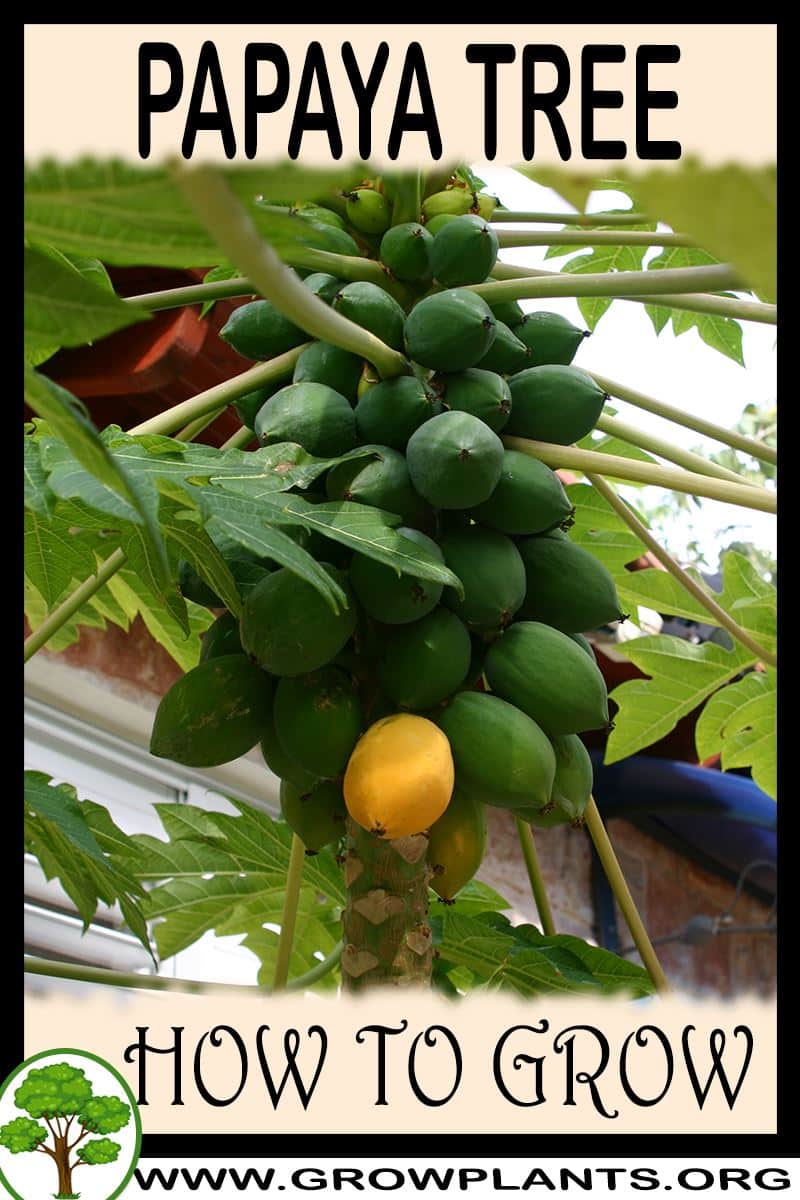
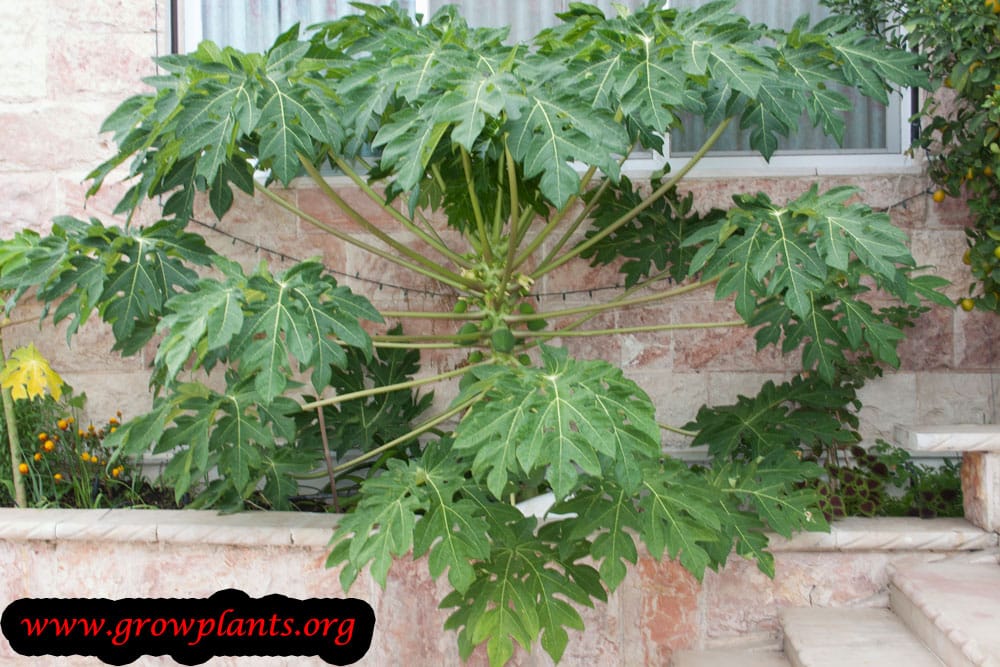
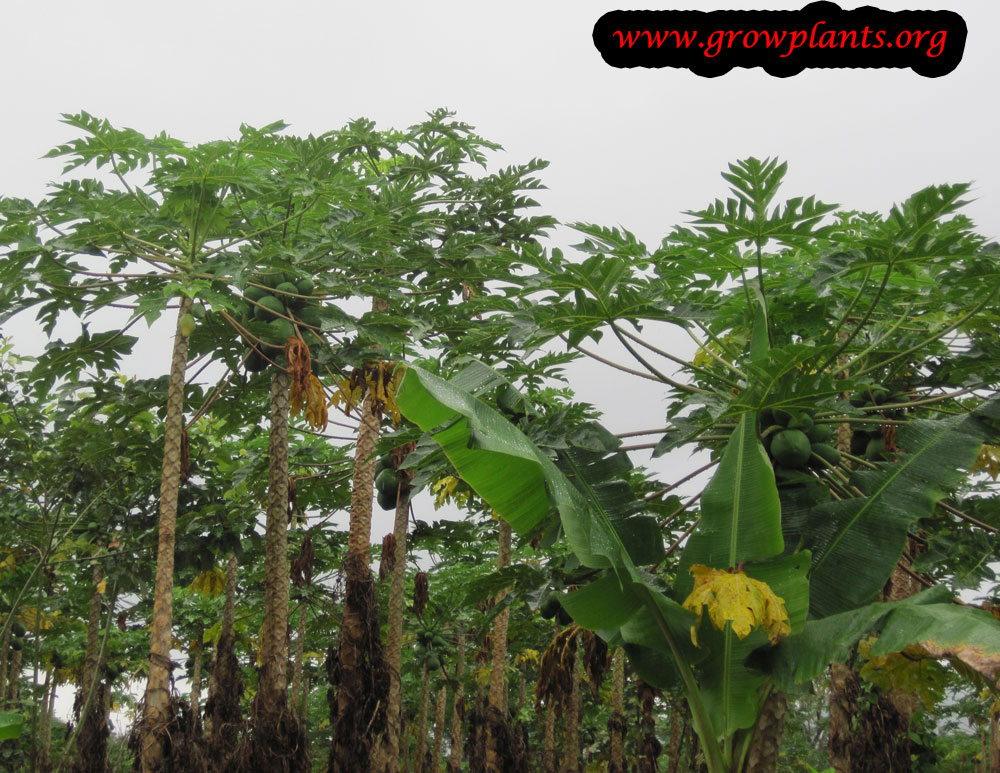
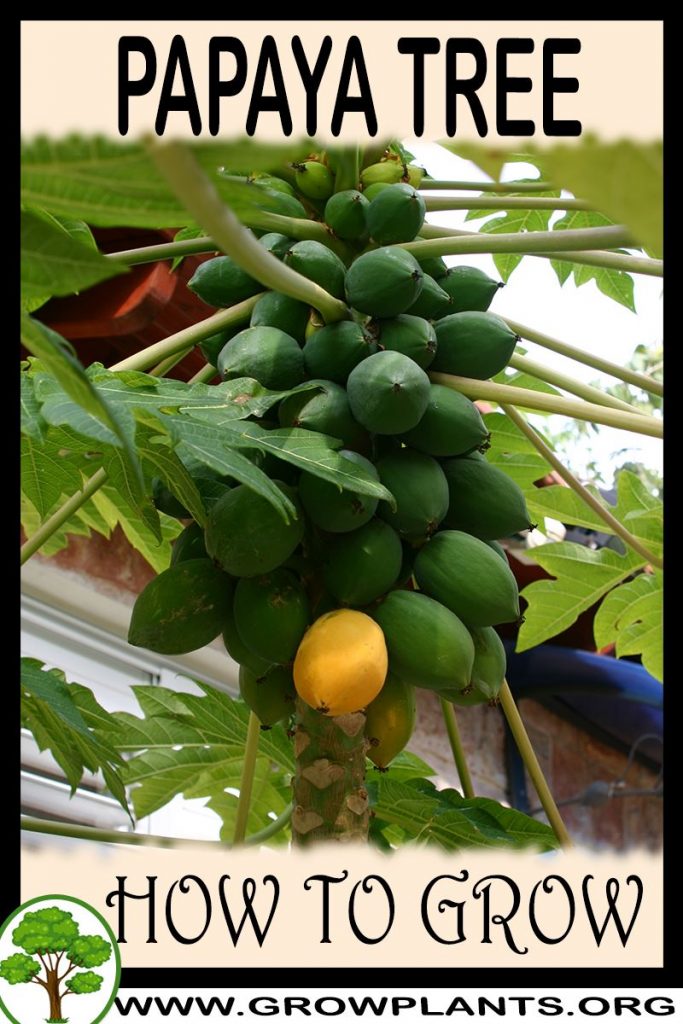
A fast-growing evergreen, soft-wooded tree reaching about 2-7 m (6-21 ft), topped by a crown of large lobed leaves. A short-lived, frost-tender perennial grown mainly for its sweet edible orange fruit.
Quick Specifications
| Specification | Attribute |
|---|---|
| Plant Type / Life Cycle | Perennial (short-lived) |
| Foliage Type | Evergreen |
| Mature Size | 2-7 m tall (6-21 ft) |
| Growth Rate | Fast to moderate |
| Root System | Shallow, relatively weak roots (plants can be wind-thrown) |
| Toxicity | Ripe fruit edible / non-toxic (unripe fruit yields an irritant latex) |
| Hardiness | USDA zone 9+ |
Growth Form & Structure
- Height & Spread: 2-7 m (6-21 ft); can be grown in a large container
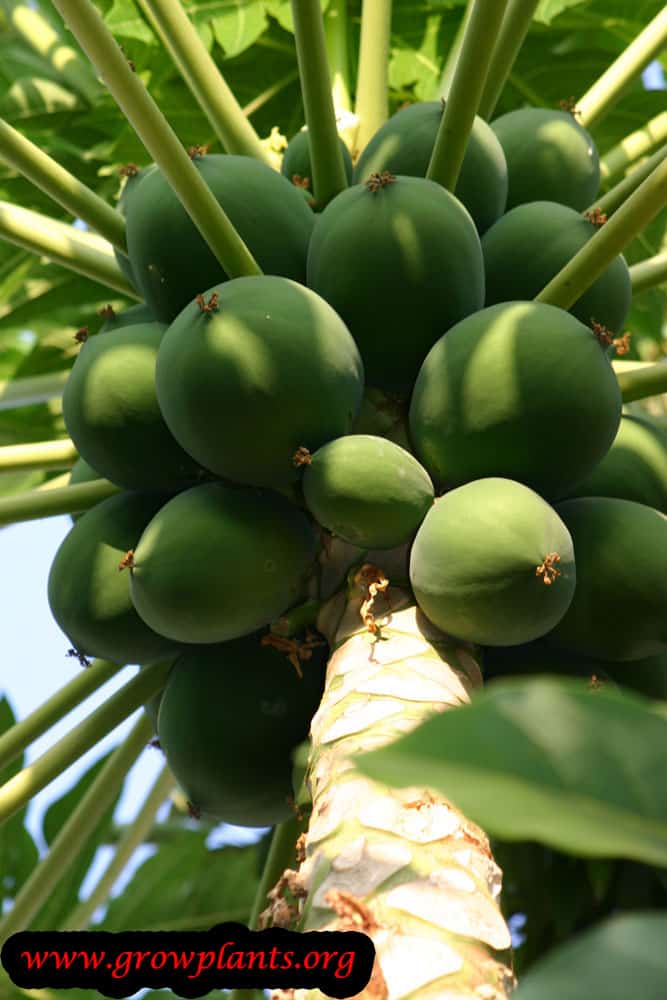
- Growth Habit & Form: Usually a single hollow trunk crowned with large palmate-lobed leaves; plants may be male, female or hermaphrodite
- Lifespan & Maturity: Short-lived, bearing fruit roughly 4-10 months from establishment
Anatomy & Physical Features
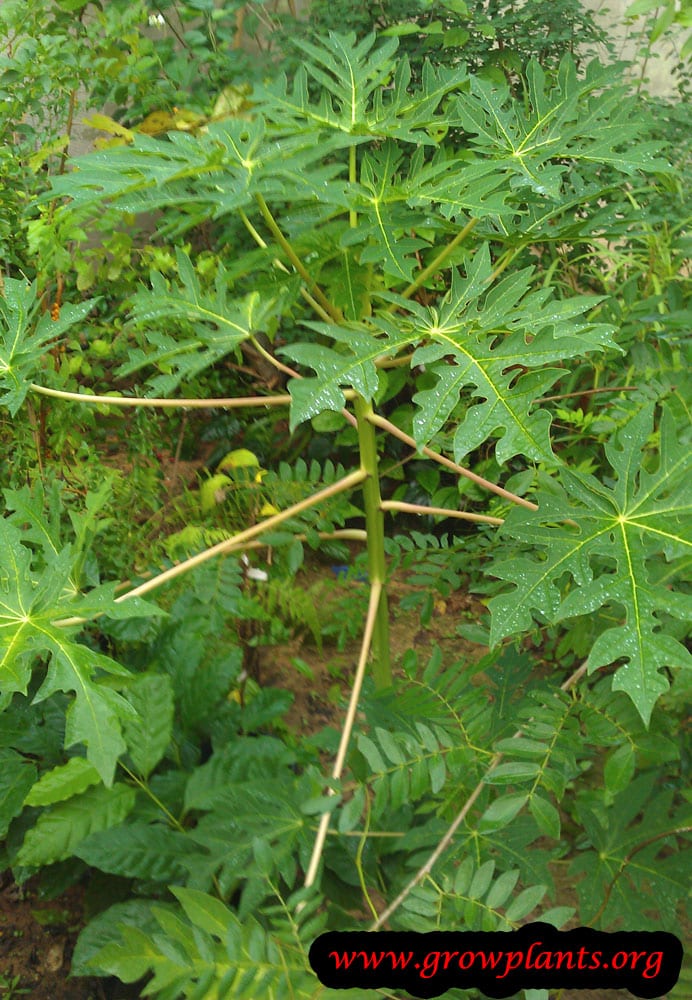
- Leaves & Foliage: Large (20-90 cm) deeply lobed leaves on long stalks
- Flower Characteristics: Yellow flowers; male and female on separate trees or hermaphrodite; bee-pollinated
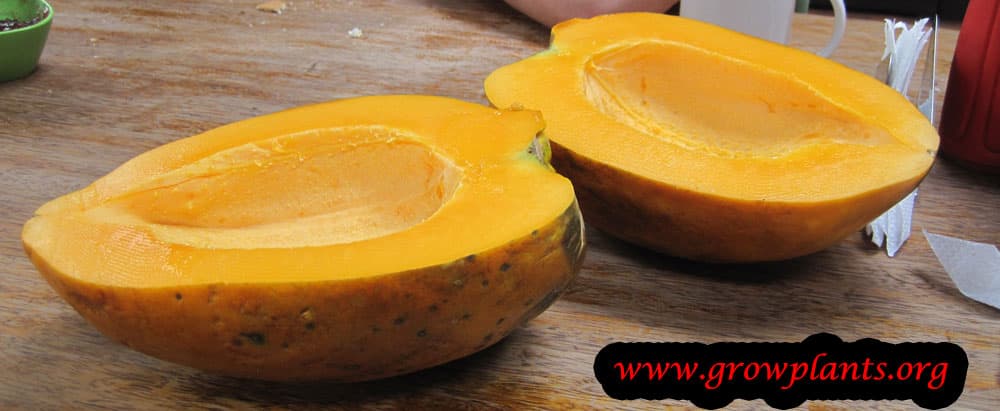
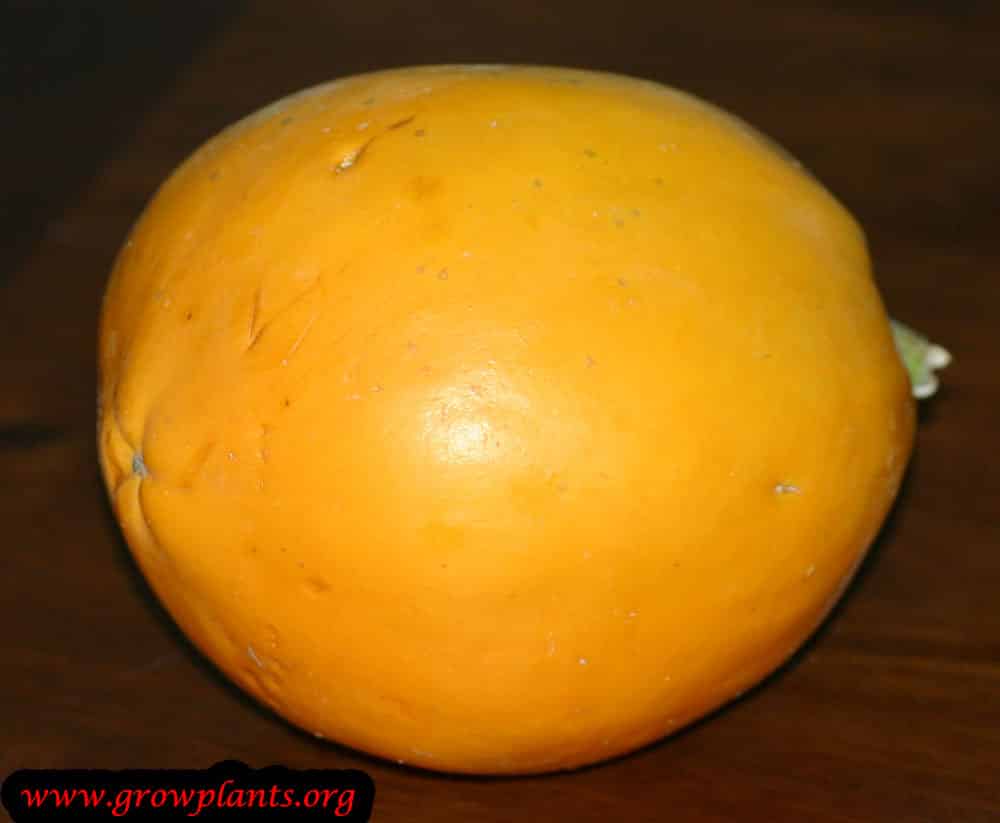
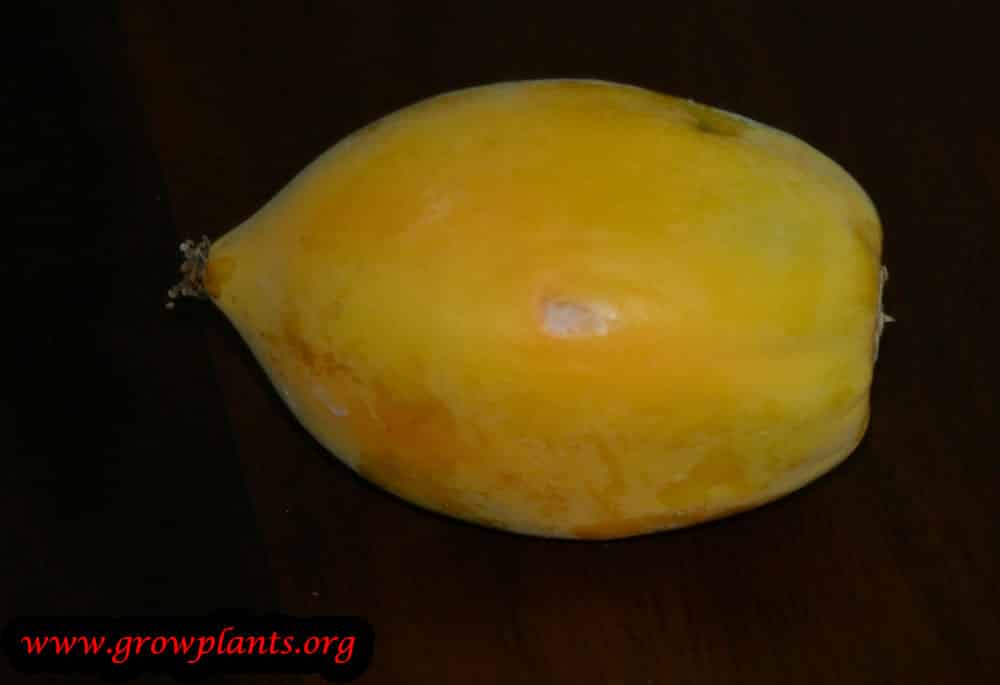
- Fruit Profile: Round to oval fruit 3-50 cm, yellow-orange, with sweet, soft flesh
Primary Uses & Landscape Value
- Edible Uses: Eaten fresh, juiced or dried; unripe fruit cooked as a vegetable
- Functional & Ornamental Roles: Fruit tree with bold ornamental foliage; container specimen
Care Guide: Planting, Soil & Watering
Overview: A fast-growing, frost-tender tree for warm, sheltered, frost-free sites. It needs rich, deeply free-draining soil and steady moisture, but rots in waterlogged ground.
Quick Care Requirements
| Requirement | Ideal Condition |
|---|---|
| Planting Season | Year-round in frost-free climates (best in warm weather) |
| Growth Rate | Fast to moderate |
| Soil Type | Rich and well-draining |
| Water Need | Moderate – keep evenly moist but never waterlogged |
Planting & Establishment
- Best Planting Season: Plant at any time in frost-free areas, ideally in warm weather; choose a wind-sheltered spot, as fruit-laden plants snap in strong wind.
- How to Plant:
- Hole Preparation: Dig a hole wider than the root ball.
- Soil Amendments: Work in plenty of compost and organic matter, and ensure sharp drainage (raise or mound the bed if the soil is heavy).
- Planting Depth: Set the root collar at soil level – burying the stem invites collar and root rot.
- Growth Speed & Expectations: Fast to moderate; a slender tree reaching about 2–7 m.
Soil, Watering & Drainage Care
- Soil Mix & Drainage Needs: Rich but very free-draining soil; these plants are extremely prone to root and collar rot, so drainage is critical. Can be grown in a large planter.
- Watering Schedule & Technique:
- Young / Newly Planted: Keep consistently moist while establishing.
- Established: Water regularly and deeply, letting the surface dry slightly; avoid standing water.
- Seasonal Adjustments: More in heat; much less in cool or wet weather.
Climate, Light & Hardiness
Papaya is a fast-growing tropical to subtropical fruit plant that needs a warm, frost-free, wind-sheltered site in full sun. It is highly cold-sensitive - even a light frost injures foliage and the soft stem - and the site data places it in hardiness zone 9 and warmer.
Quick Climate Specifications
| Climate Zones | Tropical, subtropical, warm Mediterranean |
|---|---|
| USDA Hardiness Zones | Approximately zone 9 and warmer |
| Optimal Temp Range | ~21–33°C (70–91°F) |
| Cold Damage Begins | Generally around 2–5°C (36–41°F) |
| Approx. Survival Minimum | Near 0°C (32°F), briefly, for established plants |
| Frost Tolerance | None to very low |
| Light Conditions | Full sun to light shade |
| Wind Tolerance | Low |
| Salt / Coastal Tolerance | Low |
Sunlight & Light Exposure
Optimal Light Setup
Grow in full sun for the strongest growth and best fruiting. The plant tolerates light or partial shade but grows and ripens fruit more slowly there.
Direct Sun Requirement
Papaya is sun-loving and benefits from all-day direct sun in most climates.
Shade & Heat Management
In very hot, dry regions a little afternoon shade eases leaf and fruit stress, but heavy shade weakens the plant and delays cropping.
Temperature Extremes & Hardiness
USDA Hardiness & Regional Limits
Reliable only in essentially frost-free climates (about zone 9 and warmer). Where winters bring frost it is treated as a short-lived plant or given overhead protection.
Cold Damage & Winter Protection
Growth slows sharply in cool weather, and foliage and stems are injured near freezing. Young plants are more cold-tender than established ones; cold tolerance also varies with plant age, exposure duration, and conditions.
Frost Sensitivity
Frost tolerance is none to very low - even a brief light frost can damage or kill the hollow, sappy stem.
Extreme Heat Tolerance
Handles high heat well when the root zone stays moist; sustained very high temperatures can reduce flowering and fruit set.
Frost-Free Growing Season
Fruit develops over roughly 4–10 months, so a long, warm, frost-free season is needed to carry a crop through to ripeness.
Wind, Humidity & Microclimate
Wind Tolerance
Wind tolerance is low: the tall, top-heavy plant and its heavy fruit load make it prone to snapping, so a wind-sheltered position matters.
Microclimate Recommendations
A warm, sheltered corner - for example against a sunny, wind-protected wall - helps in marginal areas. Container root zones heat and chill faster, so move potted plants under cover during cold snaps.
Growing in Pots, Balconies & Indoors
Papaya (Carica papaya) grows 2-7 m (6-21 ft) with a soft, fast-growing trunk. The grower confirms it can be grown in a container but is not a houseplant, and cautions a fruit-laden plant can break in wind.
Quick Details
- Container Size: A large tub (40-60 L / 10-15 gal) for a fruiting plant
- Indoor Suitability: Not a houseplant; grow it outdoors
- Best Spot: Full sun to half shade, sheltered from wind
- Soil & Drainage: Rich, free-draining mix; it can be allelopathic, so give it its own pot
- Watering in Pots: Average – keep evenly moist; papaya hates waterlogged roots
Indoors & On the Windowsill
- Houseplant limits: Not a houseplant – it needs full sun and grows too fast and tall for a room.
- Overwintering: A potted papaya can be moved to a bright, warm, frost-free spot for the cool season in cold climates.
On a Balcony or Patio
- Light, wind & support: Give it the sunniest, most sheltered spot and stake it, since the soft trunk laden with fruit can snap in wind. Pots dry quickly in sun – check moisture daily in hot weather. A drip irrigation kit with a timer can take over that watering check automatically.
Choosing the Pot, Soil & Long-Term Care
- Pot & drainage: Use a pot with plenty of drainage holes; skip a standing water saucer to avoid root rot. Terracotta breathes and dries faster, while glazed or plastic pots hold moisture longer.
- Potting mix: A well-aerated, organic-rich mix – peat or coir blended with perlite or vermiculite for drainage.
- Feeding: Potted plants need feeding more often than those in the ground, as nutrients leach out with each watering – feed lightly through the active growing season.
- Repotting: Refresh the mix or pot up about every two years; for an established specimen, replace part of the soil and lightly prune the roots and top growth.
Growing this plant in a greenhouse
A greenhouse can give papaya tree frost protection, cold protection, humidity control and extra warmth. In the right climate it may also be kept growing through winter, depending on how much warmth and light are provided. Active growth needs a minimum of around 15°C, so a dedicated greenhouse thermometer/hygrometer makes it easier to confirm that threshold is being held rather than guessing.
Greenhouse at a glance
| Greenhouse suitability | Conditional - depends on your climate |
|---|---|
| Main benefits | frost protection, cold protection, humidity control, extra warmth |
| Season extension | earlier spring & later autumn |
| Outdoor protection advisable below | about 10°C |
| Maintain greenhouse minimum | around 15°C for active growth |
| Suitable types | heated greenhouse, glass greenhouse, polycarbonate greenhouse |
| Heating | Heating is recommended in cold climates for continuous growth. |
Related greenhouse guides
- Greenhouses: How to Choose the Right Greenhouse
- Best Greenhouse Heaters
- Greenhouse Climate Control: Temperature, Ventilation and Humidity
- Polycarbonate Greenhouses: What to Look for Before Buying
Fertilizing & Feeding
Papaya is a soft-stemmed, fast-growing plant that fruits relatively quickly after establishment, so steady, balanced feeding through active growth supports both its rapid growth and its extended flowering and fruiting period.
Quick Fertilizing Specs
| Feeding Level | Moderate. |
|---|---|
| young_feeding | Balanced feeding to support this plant’s naturally fast, soft-stemmed growth. |
| mature_feeding | Balanced feeding, shifting toward potassium as fruit develops and sizes up. |
| Main Nutrient Priority | Balanced nutrition suited to a fast-growing, soft-wooded plant grown for its edible fruit. |
| Best Feeding Period | Through active growth in frost-free, wind-sheltered conditions, where flowering and fruiting can continue across much of the year. |
| Organic Options | Compost or organic matter worked into the root zone to support steady, even growth. |
| Reduce/Stop Feeding | Ease back if growth slows in cooler weather. |
Feeding by Growth Stage
Establishment
Help a newly planted papaya root into a wind-sheltered, frost-free spot, since exposed sites can break its brittle stems once it carries fruit.
| Nutrient direction | Light, balanced feeding while the plant settles into its new site. |
|---|---|
| Timing | At planting, and through the first period of new root and leaf growth. |
| Frequency | A light feeding as the plant settles in is usually enough before moving to its regular seasonal rhythm. |
| Fertilizer types | A balanced fertilizer used lightly, Compost worked into the planting area to support establishment |
| Precautions | Choose a wind-sheltered, frost-free site, since this plant’s stems are prone to breaking under wind or a full fruit load. |
Vegetative growth
Support this plant’s naturally fast growth as it builds up its tall, soft trunk and large lobed leaves.
| Nutrient direction | Balanced feeding to keep pace with fast, soft-stemmed growth without overencouraging especially soft, breakage-prone growth. |
|---|---|
| Timing | Through the active growing season. |
| Frequency | Regular light feedings through the growing season support this fast grower well. |
| Fertilizer types | A balanced fertilizer used regularly through the season, For container-grown plants, a diluted balanced liquid feed |
| Precautions | Avoid pushing especially soft, lush growth with heavy nitrogen, since the trunk is already prone to breaking under wind or fruit weight. |
Flowering and fruiting
Support flowering – whether on separate male and female plants or on hermaphrodite plants that carry both – and the round-to-oval fruit that follows, pollinated by bees.
| Nutrient direction | Balanced feeding shifting toward potassium support as fruit develops and sizes up. |
|---|---|
| Timing | Through the flowering and fruiting period, which can continue across much of the growing season in favorable conditions. |
| Frequency | Feed through the active flowering and fruiting period, easing back if growth slows. |
| Fertilizer types | A balanced-to-potassium fertilizer as fruit develops, Consistent soil moisture through flowering and fruiting |
| Precautions | Thin crowded fruit clusters where fruits press against each other, since this can lead to rot, and keep plants out of strong wind. |
Nutrient Deficiency Signs & Corrections
Pale foliage and noticeably slowed growth in a plant that is normally a fast grower.
| Possible causes | Insufficient nitrogen feeding for the growth stage, Poor soil fertility at the planting site, Root stress from wind damage or stem breakage |
|---|---|
| Appears first on | Older leaves first, spreading through the plant. |
| What to check | Recent feeding history, Whether the site is adequately wind-sheltered, Stem and root health |
| Possible correction | Add a balanced feeding and confirm the site gives enough shelter from wind. |
Fruit that stays undersized or develops unevenly relative to the plant’s usual production.
| Possible causes | Low soil potassium unable to keep pace with this plant’s fruiting cycle, Feeding that stayed nitrogen-heavy rather than shifting toward potassium at fruit set, Inconsistent soil moisture during fruit development |
|---|---|
| Appears first on | Developing fruit. |
| What to check | Whether feeding shifted toward potassium as fruit began developing, Soil moisture consistency, Fruit size compared with prior harvests |
| Possible correction | Shift toward a potassium-leaning feed as fruit develops and keep soil moisture even. |
Older, lower leaves yellowing between the veins while veins stay green.
| Possible causes | Low soil magnesium, common in fast-growing, soft-stemmed plants with a heavy fruit load, Potassium-heavy feeding that outcompetes magnesium uptake, Waterlogged soil limiting root function |
|---|---|
| Appears first on | Older, lower leaves. |
| What to check | Balance between potassium and magnesium in recent feeding, Soil drainage, Whether yellowing is confined to older leaves |
| Possible correction | Use a complete fertilizer that includes magnesium rather than a straight potassium product. |
Misshapen or lumpy fruit despite otherwise healthy-looking growth.
| Possible causes | A boron shortage affecting fruit development, Poor pollination during flowering, Water stress during fruit set |
|---|---|
| Appears first on | Developing fruit. |
| What to check | Whether a complete fertilizer program has been used, including trace elements, Pollinator activity during flowering, Soil moisture consistency during fruit set |
| Possible correction | Confirm consistent watering through fruit set and consider a chelated boron product per its label if the pattern continues. |
Pruning, Training & Seasonal Maintenance
Papaya grows as a single soft, herbaceous ‘trunk’ with one growing point at the top, bearing fruit directly along the stem below the crown of leaves – it has no woody branch framework, so pruning tolerance is low and the source guidance is explicitly against cutting the stem/branches. Routine maintenance is limited to removing old, yellowing lower leaves as the plant grows taller, and if the soft trunk is accidentally broken, cutting cleanly and sealing the wound with a paste rather than leaving it open.
Quick Pruning & Maintenance Specs
| Pruning Tolerance | Low |
| Primary Pruning Window | Ongoing, as lower leaves senesce (all year) |
| Typical Frequency | Continuous light maintenance |
| Main Objective | Remove spent lower leaves; treat trunk breaks if they occur |
| Young Plant Priority | Protect the single growing tip – no formative structural pruning |
| Mature Plant Priority | Old-leaf removal; monitor and support the fruit-bearing trunk |
| Best Tool Type | Precision snips or bypass secateurs |
| Avoid Heavy Pruning During | Effectively always – the growing point should not be routinely cut |
Pruning by Plant Age & Size
Newly Established
No pruning beyond removing transplant-damaged leaves; the single growing tip must be protected since the plant cannot rebuild lost height quickly.
Young / Formative
No branch-training system applies – papaya normally grows as a single unbranched stem. Some growers deliberately top very young plants to induce branching for a shorter, multi-stemmed plant with more fruiting points, but this is an optional technique, not standard care, and sacrifices the height/vigor of the main stem.
Mature / Established
Remove lower leaves as they yellow and die back naturally with age; do not prune the stem for height control under normal circumstances.
Seasonal Pruning Schedule
Ongoing Sanitary (All Year)
- Objective: remove senescent lower leaves as the plant grows
- Remove: yellowed or dead leaves below the active crown
- Do not remove: healthy leaves near the crown, or the growing tip
- Expected response: none intended, purely maintenance
- Flowering/fruiting impact: none if limited to clearly dead leaves – removing too many green leaves reduces the photosynthetic support for the fruit ripening along the stem
Special Growth to Remove
Old, yellowing lower leaves are the main routine removal, cut close to the trunk without damaging the soft stem tissue. If wind or a heavy fruit load breaks a stem, the source guidance recommends cutting it cleanly and sealing the wound with a paste.
Container & Small-Space Pruning
Papaya can be grown in large containers, typically using naturally shorter/dwarf cultivars – pot culture doesn’t change the pruning approach (still just old-leaf removal), but a containerized plant is more exposed to wind and top-heavy once fruiting, so shelter or staking is more important than any cutting-based size control, since the single stem cannot be headed back without losing the growing point.
Tools
- Precision snips or bypass secateurs for old-leaf removal
- No saw, loppers, or shears – there is no woody branch structure to cut
Tool Hygiene & Disease Risk
Increased. Papaya is commonly affected by sap-transmissible viral disease in commercial growing regions, and the plant’s soft tissue and sap make cross-contamination between plants a real concern when working on multiple papayas – clean tools between plants, and remove any leaf showing unusual mottling or distortion promptly.
Cut Placement & Technique
Cut old leaves close to the trunk without tearing the soft bark; if the main stem itself is broken, make a clean cut at the break and seal the wound with paste per the source guidance to prevent rot entering the soft tissue.
Heavy Pruning & Rejuvenation
Not a routine practice, but papaya has a documented ability to resprout from the base or lower trunk if the growing point is killed by cold damage or storm breakage – some growers deliberately cut back a damaged or overly tall, leggy plant near the base and allow a basal shoot to take over as the new main stem, effectively rejuvenating the plant. This is a recovery/rejuvenation option specific to papaya, not a routine technique to apply to a healthy plant.
Post-Pruning Care
After sealing a broken stem with paste, monitor the wound for rot and reduce watering slightly until it has dried and calloused, since the species prefers wind-free, frost-free conditions and a stressed soft stem is more vulnerable to rot.
Common Pruning Mistakes
Cutting the stem to control height on a healthy plant, which removes the single growing point and stops the plant producing; stripping too many green leaves at once, which reduces the leaf area supporting fruit ripening along the trunk.
When NOT to Prune
Never cut a healthy stem/growing point; avoid stripping green, still-functional leaves while fruit is actively ripening along the trunk below them.
Recommended Tools (by task)
- precision_snips – removing old lower leaves close to the soft trunk
- blade_disinfectant – cleaning tools between plants given papaya’s susceptibility to sap-transmissible viral disease
- soft_ties_stakes – staking a young or container plant against wind, since the single soft stem has no branch structure to fall back on
Pruning Troubleshooting
| Problem | Possible Cause | What to Check | Corrective Action |
| Trunk snapped in wind or from a heavy fruit load | Insufficient shelter/staking for a soft single-stemmed plant | Site wind exposure and staking | Cut cleanly at the break, seal with paste, and add staking or windbreak going forward |
| Plant not recovering after storm/cold damage to the growing tip | Growing point killed but base/lower trunk still alive | Whether green tissue remains at the base | Cut back near the base and allow a basal shoot to develop as the new main stem |
| Leaves showing unusual mottling or distortion | Possible viral infection | Leaf pattern versus normal senescent yellowing | Remove affected leaves/plant promptly and disinfect tools before working on other papayas |
Propagation Guide
Papaya is most easily and reliably grown from seed, which germinates readily under warm conditions; because papaya plants can turn out male, female, or hermaphrodite, seedling sex and exact fruit type are unpredictable until the tree flowers, so vegetative propagation from a known hermaphrodite or productive female plant is used mainly when it matters to guarantee what you get. Overall propagation difficulty is Easy by seed.
Quick Propagation Specs
| Best Propagation Method | Seed |
| Alternative Methods | Cuttings from a known hermaphrodite or female plant |
| Propagation Difficulty | Easy |
| Seed True-to-Type | Variable – seedling sex is unpredictable, and fruit type can vary in open-pollinated seed |
| Vegetative True-to-Type | Yes |
| Best Propagation Season | Warm months; possible year-round in frost-free conditions |
| Seed Germination Time | Typically 2–4 weeks |
| Germination Temperature | About 25–30°C (77–86°F) |
| Seed Sowing Depth | About 1 cm (0.4 in) |
Growing from Seed
Seed Handling & Viability
Wash seeds free of the surrounding gelatinous pulp before sowing; removing the pulp improves germination and lowers the risk of rot.
Sowing Season
Seed can be started whenever warmth is reliable; in a frost-free climate this can be essentially all year, matching the site’s planting-season guidance.
Sowing Depth & Orientation
Sow shallowly, about 1 cm (0.4 in) deep.
Germination Conditions
Keep the medium warm, roughly 25–30°C (77–86°F), and consistently moist; cooler conditions slow germination and make it more uneven.
Germination Time
Usually around 2–4 weeks, though timing can be irregular.
Seedling Care
Since sex cannot be told from the seedling, it is common to start a few extra seedlings per spot and thin once plants begin flowering, keeping at least one hermaphrodite or female plant for fruiting.
Stem Cuttings
Cutting Type
Lateral shoots or basal suckers taken from an already-flowering, known hermaphrodite or female tree; papaya’s soft, semi-woody trunk is not used for typical hardwood cuttings.
Best Timing
Warm growing season.
Rooting Setup
A free-draining, warm, humid rooting medium.
Rooting Hormone
Not strictly necessary but can help and speed rooting.
Rooting Time
Several weeks; rooting from cuttings is less reliable than raising plants from seed.
Bloom & Edible Flower Guide
Quick Details
- Bloom Season: Year-round in frost-free conditions
- Time to First Bloom: Fast – often within the first year, roughly 6-12 months from seed
- Flower Appearance: Waxy yellow flowers; trees may be female, male, or bisexual
- Edibility: Yes – male papaya flowers are cooked and eaten as a vegetable in parts of Southeast Asia; they are bitter and always eaten cooked, not raw
Detailed Blooming Overview
Papaya flowers reveal the plant’s sex – female, male, or bisexual – and this can even shift with conditions. Female and bisexual plants set the fruit; the slender male flower sprays do not, but they are gathered and cooked as a vegetable in several cuisines.
Flower Characteristics
- Waxy, lightly fragrant yellow flowers.
- Separate female, male, and bisexual plants (some trees can shift sex expression).
- Male flowers hang in long, branched sprays; female flowers sit close against the stem.
Bloom Care & Thinning
- Pollination: Bees and other insects, with some wind; bisexual and self-fertile types can set fruit alone, while female plants need a pollen source nearby.
Fruit & Uses
Papaya is grown for its fruit, which turns yellow to orange as it ripens and is eaten fresh, juiced or dried once ripe; unripe green papaya is also widely used as a cooked or shredded-raw vegetable in some cuisines. The small black seeds are edible in small amounts but are a minor, secondary use.
Quick Edible Specs
| Edible Parts | Fruit (ripe and unripe), seeds (minor use) |
| Main Use(s) | Ripe: fresh eating, juice, dried fruit; unripe/green: cooked or shredded-raw as a vegetable |
| Eaten Raw or Cooked | Ripe fruit raw; unripe/green fruit raw (shredded) or cooked |
| Preparation Required | Ripe: none, can be picked slightly under-ripe and left to finish ripening indoors; unripe: peel/deseed for vegetable dishes |
| Harvest Season | Year-round |
| Time to First Harvest | Within about a year of planting (see Propagation for details) |
| Storage | Ripe fruit best used promptly; also suited to drying and juicing |
| Safety/Toxicity Caveat | Milky latex/sap from unripe fruit and the plant can irritate skin; avoid consuming raw sap |
Fruit
The round-to-oval fruit (3–50 cm) ripens from green through yellow/orange, occasionally with some green remaining. It can be picked before fully ripe and left to finish ripening at home. Ripe fruit is eaten fresh, juiced or dried. Unripe green fruit is also a well-established food – used shredded raw in salads or cooked as a vegetable in several cuisines – a widely known culinary supplement rather than a site-sourced detail.
Seeds, Pods & Nuts
The small black seeds inside the fruit are edible in small quantities and have a peppery taste, sometimes used sparingly as a seasoning; this is a minor, supplementary use and not the main reason the plant is grown.
Preparation, Uses & Safety
Ripe fruit needs no preparation beyond slicing and deseeding. Unripe green fruit used as a vegetable is typically peeled and deseeded before shredding or cooking. The plant’s milky latex (most concentrated in unripe fruit and stems) can irritate skin and should not be eaten raw or in quantity.
Pests, Diseases & Troubleshooting
Overview: Papaya’s greatest threat is not an insect but a virus — papaya ringspot virus (PRSV) — which is spread by aphids and can destroy a planting; alongside it come papaya fruit fly, papaya mealybug, whiteflies, mites and warm-wet fungal diseases (anthracnose, Phytophthora, powdery mildew). Because papaya has shallow roots and no tolerance for wet feet or cold, most trouble is prevented by good drainage, virus-free resistant stock, sanitation and biological control rather than by spraying.
Quick Troubleshooting Overview
| Issue / Pest | Main Symptom | Primary Solution |
|---|---|---|
| Papaya ringspot virus (PRSV) | Yellow mosaic, ringed fruit, streaked stems | Resistant/virus-free stock, rogue plants, aphid & weed control |
| Papaya fruit fly | Maggots in fruit, premature drop, exit holes | Bag fruit, destroy fallen fruit, bait traps |
| Papaya mealybug | White waxy crust on leaves and fruit, sooty mold | Parasitic wasps, water wash, neem/oil |
| Anthracnose | Sunken ringed lesions on ripening fruit | Clean harvest, sanitation, copper sprays |
| Phytophthora rot | Stem-base and root rot, wilt, fruit rot in wet soil | Raised mounds, drainage, remove sick plants |
| Waterlogging / cold | Wilt and collapse in wet soil; yellowing in cold | Free-draining site, careful watering, frost shelter |
Common Pests & Management
- Papaya fruit fly (Toxotrypana curvicauda / Bactrocera spp.):
- Symptoms: Adults resemble slender wasps; females lay eggs into developing fruit and larvae (maggots) tunnel through the flesh and seed cavity, causing premature yellowing, internal rot and fruit drop with exit holes.
- Prevention & Control: Bag young fruit with paper or fine mesh sleeves as soon as they set; collect and destroy all fallen and infested fruit; hang protein-bait or pheromone fruit-fly traps to monitor and reduce adults. Sanitation and bagging are far more effective than sprays.
- Papaya mealybug (Paracoccus marginatus):
- Symptoms: Colonies of white, waxy insects coating leaves, stems and fruit; heavy honeydew, sooty mold, leaf crinkling, defoliation and a characteristic thick white crust on fruit; can be severe in warm climates.
- Prevention & Control: Introduce and protect the highly effective parasitic wasps (Acerophagus/Anagyrus) that control this pest biologically; wash colonies off with water; remove and destroy heavily infested material. Neem or horticultural oil and insecticidal soap help on smaller plants; avoid broad-spectrum sprays that kill the parasitoids.
- Whiteflies (Bemisia tabaci):
- Symptoms: Tiny white flying insects on leaf undersides; yellowing, honeydew and sooty mold, and — most importantly — transmission of damaging viruses.
- Prevention & Control: Use yellow sticky traps to monitor; encourage natural enemies; remove infested lower leaves. Insecticidal soap or horticultural oil on leaf undersides suppresses populations.
- Red spider mite (Tetranychus spp.):
- Symptoms: Fine yellow stippling, bronzing and webbing on leaf undersides in hot, dry weather; heavy infestations cause leaf drop and scarred fruit.
- Prevention & Control: Hose down foliage and avoid dusty, drought-stressed plants; conserve predatory mites. Treat outbreaks with horticultural oil or insecticidal soap, targeting undersides.
- Aphids (Myzus persicae / Aphis gossypii):
- Symptoms: Small soft insects on tender growth and leaf undersides; some curling and honeydew, but their real danger is transmitting papaya ringspot virus as they probe from plant to plant.
- Prevention & Control: Because virus spread happens in seconds, blanket insecticides do not stop it — instead use reflective mulch to deter landing, control weeds, rogue out infected plants, and rely on beneficials; insecticidal soap only reduces resident colonies.
Diseases & Fungal Issues
- Papaya ringspot virus (PRSV):
- Symptoms: The single most devastating papaya disease: bright yellow mosaic and mottling of leaves, downward leaf distortion, dark greasy streaks on petioles and stems, and concentric ring spots on fruit with poor flavor; spread by aphids and by tools/hands.
- Treatment & Management: There is no cure. Use certified virus-free seedlings and resistant/tolerant varieties where available; remove and destroy infected plants promptly; isolate new plantings from old, infected ones; control aphids and weeds. Disinfect hands and tools between plants.
- Anthracnose (Colletotrichum gloeosporioides):
- Symptoms: Sunken, water-soaked circular spots on ripening fruit that enlarge into dark lesions with pink spore masses; also causes fruit rot in storage and stem-end rot; worst in warm, wet, humid weather.
- Treatment & Management: Harvest fruit at the correct maturity and handle gently to avoid wounds; remove mummified fruit and dead leaves; improve airflow. Preventive copper or approved fungicides during wet periods, and prompt cooling of harvested fruit, limit losses.
- Phytophthora root, stem and fruit rot (Phytophthora palmivora):
- Symptoms: Water-soaked lesions and collapse at the stem base, root rot, sudden wilting, and firm brown rot with white mold on fruit; a killer in waterlogged or poorly drained soil.
- Treatment & Management: Plant on raised mounds with excellent drainage; never let water pool at the trunk; avoid overwatering and overhead irrigation; remove and destroy affected plants. Phosphonate or mefenoxam treatments help protect valuable trees.
- Powdery mildew (Oidium caricae / Erysiphe):
- Symptoms: White powdery patches on leaves, young stems and fruit; leaves yellow and distort, and severe cases reduce vigor and fruit quality, especially on young plants in mild, humid conditions.
- Treatment & Management: Space plants for airflow and full sun; remove badly affected leaves. Sulfur, potassium bicarbonate or horticultural oil sprays check its spread.
- Black spot (Asperisporium caricae):
- Symptoms: Numerous small dark brown-to-black angular spots on leaf undersides and small sunken spots on fruit; heavy infection yellows and drops lower leaves, weakening the plant.
- Treatment & Management: Remove and destroy fallen infected leaves; improve airflow and avoid overhead watering; copper fungicide gives control where pressure is high.
Growing Difficulties & Abiotic Problems
- Waterlogging and root rot:
- Cause & Symptoms: Papaya has shallow, sensitive roots that suffocate and rot in wet, compacted or poorly drained soil, causing wilting, yellowing and collapse even without a named pathogen; standing water for even a day or two can be fatal.
- Correction Strategy: Plant on raised beds or mounds in free-draining soil; water deeply but infrequently and never let the root zone stay saturated; keep the trunk base dry and mulched but not piled against the stem.
- Cold damage:
- Cause & Symptoms: Chilling injury shows as yellowing, leaf drop, distorted growth and poor fruit set below about 10-15°C; frost kills the growing tip or the whole plant.
- Correction Strategy: Site in the warmest, most sheltered, frost-free spot; protect young plants with covers during cold snaps; accept that fruit ripening slows or stalls in cool weather.
- Boron deficiency and fruit distortion:
- Cause & Symptoms: Bumpy, lumpy or distorted fruit with latex pockets, and dieback of growing tips, often on sandy or high-pH soils where boron is low; carpelloidy (cat-facing) and poor set can also stem from cold or nutrient imbalance.
- Correction Strategy: Correct with a carefully measured boron application (boron is toxic in excess, so follow soil-test guidance); maintain balanced feeding and steady moisture for smooth, well-formed fruit.
What Helps — Products & Tools
The essentials for papaya are virus-free, resistant planting stock plus rigorous sanitation. Keep fruit-fly bait/pheromone traps and paper/mesh fruit bags for the fruit fly; conserve the parasitic wasps that control papaya mealybug and use neem or horticultural oil and insecticidal soap only as spot treatments. For disease, copper fungicide addresses anthracnose and black spot, sulfur or potassium bicarbonate handles powdery mildew, and phosphonate products protect against Phytophthora. Raised, free-draining beds and reflective mulch are the best defenses of all.