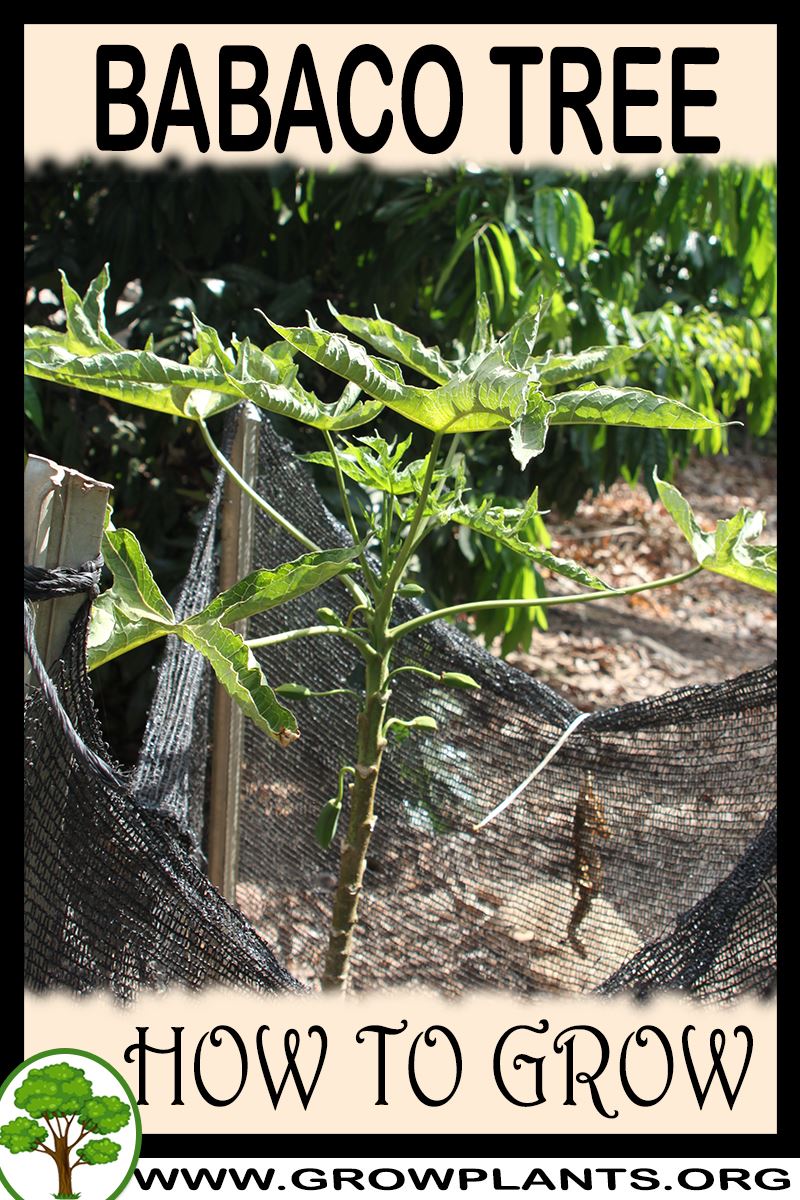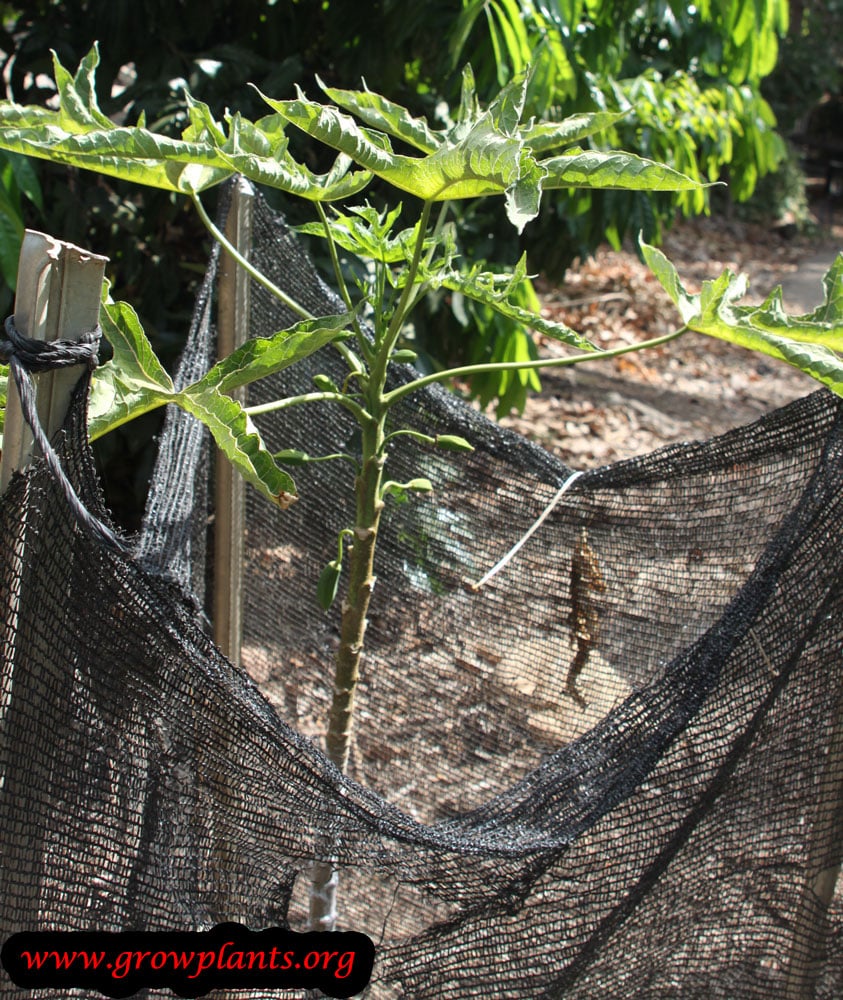


Plant Profile & Key Characteristics
Overview: Babaco is a soft-wooded evergreen relative of papaya growing 2-5 m (6-15 ft) tall, grown for its large, seedless yellow-green fruit. A fast-growing tender perennial (USDA zone 10+), it bears fruit parthenocarpically from female-only flowers.
Quick Specifications
| Specification | Attribute |
|---|---|
| Plant Type / Life Cycle | Perennial (evergreen, soft-wooded) |
| Foliage Type | Evergreen |
| Mature Size | 2-5 m (6-15 ft) tall |
| Growth Rate | Fast to moderate |
| Toxicity | Non-toxic / edible fruit |
| Hardiness | USDA zone 10+ |
Growth Form & Structure
- Height & Spread: 2-5 m (6-15 ft) tall on a single soft trunk; can be container-grown.
- Growth Habit & Form: Single-stemmed, soft-wooded herbaceous ‘small tree’ topped with large leaves.
- Lifespan & Maturity: Bears fruit quickly, about 4-6 months from establishment.
Anatomy & Physical Features
- Leaves & Foliage: Large, lobed green leaves clustered near the top of the stem.
- Flower Characteristics: Small yellow trumpet-shaped female flowers on the main stem; self-fruitful without pollination.
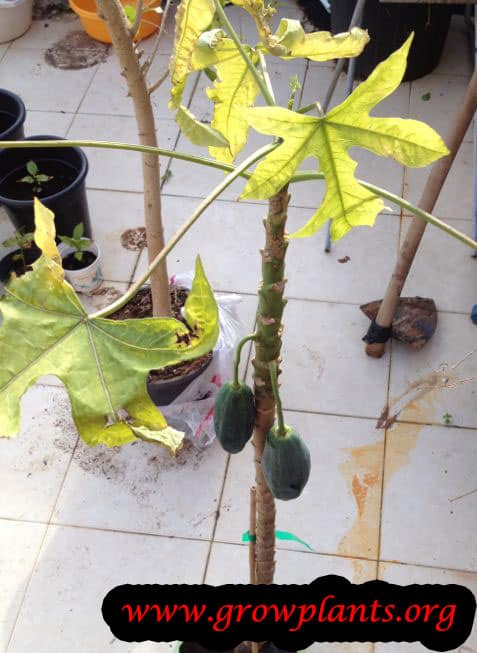
- Fruit Profile: Oval yellow-green seedless fruit 5-20 cm long with mild, juicy flesh.
Primary Uses & Landscape Value
- Edible Uses: Fruit eaten raw, juiced or dried.
- Functional & Ornamental Roles: Ornamental fruiting plant for frost-free gardens and large containers.
Care Guide: Planting, Soil & Watering
Overview: Babaco is a fast-growing, soft-stemmed papaya relative (zone 10+) for warm, humid, sheltered spots in full sun. It wants a rich, free-draining soil kept evenly moist, and protection from wind because the sappy trunk snaps easily under a load of fruit.
Quick Care Requirements
| Requirement | Ideal Condition |
|---|---|
| Planting Season | Year-round in a frost-free, sheltered site |
| Growth Rate | Moderate to Fast |
| Soil Type | Rich, well-draining |
| Water Need | Moderate |
Planting & Establishment
- Best Planting Season: Plant at any time of year in a warm, wind-sheltered position protected from strong gusts.
- How to Plant:
- Hole Preparation: Dig a hole wider than the root ball in loosened, free-draining ground; a sheltering wall or windbreak nearby helps.
- Soil Amendments: Enrich with compost and organic matter to feed the fast growth while keeping drainage sharp.
- Planting Depth: Set the root ball level with the soil; do not bury the soft stem, which is prone to rot.
- Growth Speed & Expectations: A moderate-to-fast grower reaching 2-5 m (6-15 ft).
Soil, Watering & Drainage Care
- Soil Mix & Drainage Needs: Provide rich but well-drained soil; the fleshy roots and stem rot in waterlogged ground, so ensure excess water drains away.
- Watering Schedule & Technique:
- Young / Newly Planted: Keep evenly moist while establishing.
- Established: Water moderately and regularly, letting the surface dry slightly between waterings.
- Seasonal Adjustments: More water in heat, less in cool weather; maintain humidity around the plant.
Climate, Light & Hardiness
Babaco is a fast-growing, herbaceous papaya relative for tropical, Mediterranean, and subtropical climates, wanting full sun and, importantly, a wind-sheltered site. Cold tolerance is limited, typical of the papaya family, at roughly zone 10 and warmer.
Quick Climate Specifications
| Climate Zones | Tropical, Mediterranean, Subtropical |
|---|---|
| USDA Hardiness Zones | 10+ |
| Approx. Survival Minimum | approximately −1°C (30°F) at the zone 10 boundary, briefly, for an established plant |
| Frost Tolerance | Low |
| Light Conditions | Full Sun |
| Wind Tolerance | Low |
Sunlight & Light Exposure
Optimal Light Setup
Full sun for best growth.
Direct Sun Requirement
Yes.
Best Exposure / Orientation
A sunny, well wind-sheltered site – this is important (see Wind Tolerance below).
Temperature Extremes & Hardiness
USDA Hardiness & Regional Limits
Zone 10+ is typical of the papaya family, to which this species belongs.
Cold Damage & Winter Protection
Site in a warm, sheltered spot; protect from cold near the edge of its range.
Frost Sensitivity
Low frost tolerance, consistent with its papaya-family origin.
Extreme Heat Tolerance
Good in genuinely warm climates.
Wind, Humidity & Microclimate
Humidity Preferences
Prefers reasonably high humidity.
Wind Tolerance
Low – site data specifically flags this as a wind-sensitive plant, and notes the soft, fruit-laden stems can snap in wind or under fruit weight; a sheltered site is essential, not optional.
Microclimate Recommendations
Choose a site with strong wind protection (e.g. a walled garden, hedge windbreak, or courtyard) in addition to warmth and sun.
Growing in Pots, Balconies & Indoors
Babaco (Vasconcellea × heilbornii) is a soft-stemmed papaya relative of 2-5 m (6-15 ft). The grower confirms it grows well in a container but is not a houseplant, and warns a fruit-laden plant can snap in wind – so shelter and support it.
Quick Details
- Container Size: A roomy tub (30-50 L / 8-13 gal)
- Indoor Suitability: Not a houseplant; grow it outdoors
- Best Spot: Full sun, sheltered from wind
- Soil & Drainage: Rich, free-draining mix; keep its own space as it can be allelopathic to neighbours
- Watering in Pots: Average – keep evenly moist, never waterlogged
Indoors & On the Windowsill
- Houseplant limits: Not a houseplant – it needs full sun and is too soft and tall for indoor life.
- Overwintering: A potted plant can be moved to a bright, frost-free spot for the cool season in cold climates.
On a Balcony or Patio
- Light, wind & support: Give it full sun but shelter it well – the soft stem and heavy fruit make it prone to breaking in wind. Stake it, and check moisture as pots dry fast.
Choosing the Pot, Soil & Long-Term Care
- Pot & drainage: Use a pot with plenty of drainage holes; skip a standing water saucer to avoid root rot. Terracotta breathes and dries faster, while glazed or plastic pots hold moisture longer.
- Potting mix: A well-aerated, organic-rich mix – peat or coir blended with perlite or vermiculite for drainage.
- Feeding: Potted plants need feeding more often than those in the ground, as nutrients leach out with each watering – feed lightly through the active growing season.
- Repotting: Refresh the mix or pot up about every two years; for an established specimen, replace part of the soil and lightly prune the roots and top growth.
Fertilizing & Feeding
Babaco is a soft-stemmed, fast-growing relative of papaya that produces seedless fruit without needing a pollinator, and it fruits quickly after establishment, so steady, balanced feeding through active growth supports both its soft growth and its fast-developing fruit.
Quick Fertilizing Specs
| Feeding Level | Moderate. |
|---|---|
| young_feeding | Balanced feeding to support this plant’s naturally fast, soft-stemmed growth. |
| mature_feeding | Balanced feeding, shifting toward potassium as the seedless fruit develops. |
| Main Nutrient Priority | Balanced nutrition suited to a fast-growing, soft-wooded plant rather than a slow-hardening woody tree. |
| Best Feeding Period | Through active growth, which can continue over an extended season in sheltered, humid, wind-protected conditions. |
| Organic Options | Compost or organic matter worked into the root zone to support steady, even growth. |
| Reduce/Stop Feeding | Ease back if growth slows in cooler weather, since this plant is sensitive to wind and cold stress. |
Feeding by Growth Stage
Establishment
Help a newly planted babaco root into a wind-sheltered, humid spot, since exposed or windy sites can break its brittle, fruit-laden stems later on.
| Nutrient direction | Light, balanced feeding while the plant settles into its new site. |
|---|---|
| Timing | At planting, and through the first period of new root and leaf growth. |
| Frequency | A light feeding as the plant settles in is usually enough before moving to its regular seasonal rhythm. |
| Fertilizer types | A balanced fertilizer used lightly, Compost worked into the planting area to support establishment |
| Precautions | Choose a wind-sheltered site, since this plant’s soft stems are prone to breaking under wind or the weight of fruit once it matures. |
Vegetative growth
Support this plant’s naturally fast growth as it builds up its soft, upright stems and yellow trumpet-shaped flowers.
| Nutrient direction | Balanced feeding to keep pace with fast, soft-stemmed growth without overencouraging especially soft, breakage-prone growth. |
|---|---|
| Timing | Through the active growing season. |
| Frequency | Regular light feedings through the growing season support this fast grower well. |
| Fertilizer types | A balanced fertilizer used regularly through the season, For container-grown plants, a diluted balanced liquid feed |
| Precautions | Avoid pushing especially soft, lush growth with heavy nitrogen, since stems are already prone to breaking under wind or fruit weight. |
Flowering and fruiting
Support the yellow flowers and the oval, seedless fruit that follows without needing a separate pollinator plant, since babaco sets fruit on its own.
| Nutrient direction | Balanced feeding shifting toward potassium support as fruit develops, which happens relatively quickly once the plant is established. |
|---|---|
| Timing | Through the flowering and fruiting period, which can continue across much of the growing season in favorable conditions. |
| Frequency | Feed through the active flowering and fruiting period, easing back if growth slows. |
| Fertilizer types | A balanced-to-potassium fertilizer as fruit develops, Consistent soil moisture through flowering and fruiting |
| Precautions | Support or stake heavily fruiting plants and keep them out of strong wind, since a full fruit load can snap the soft stems. |
Nutrient Deficiency Signs & Corrections
Pale foliage and noticeably slowed growth in a plant that is normally a fast grower.
| Possible causes | Insufficient nitrogen feeding for the growth stage, Poor soil fertility at the planting site, Root stress from wind damage or stem breakage |
|---|---|
| Appears first on | Older leaves first, spreading through the plant. |
| What to check | Recent feeding history, Whether the site is adequately wind-sheltered, Stem and root health |
| Possible correction | Add a balanced feeding and confirm the site gives enough shelter from wind. |
Fruit that stays small or soft, undersized fruit relative to the plant’s usual production.
| Possible causes | Low soil potassium unable to keep pace with this plant’s fast fruiting cycle, Feeding that stayed nitrogen-heavy rather than shifting toward potassium at fruit set, Inconsistent soil moisture during fruit development |
|---|---|
| Appears first on | Developing fruit. |
| What to check | Whether feeding shifted toward potassium as fruit began developing, Soil moisture consistency, Fruit size compared with prior harvests |
| Possible correction | Shift toward a potassium-leaning feed as fruit develops and keep soil moisture even. |
Older, lower leaves yellowing between the veins while veins stay green.
| Possible causes | Low soil magnesium, common in fast-growing, soft-stemmed plants with a heavy fruit load, Potassium-heavy feeding that outcompetes magnesium uptake, Waterlogged soil limiting root function |
|---|---|
| Appears first on | Older, lower leaves. |
| What to check | Balance between potassium and magnesium in recent feeding, Soil drainage, Whether yellowing is confined to older leaves |
| Possible correction | Use a complete fertilizer that includes magnesium rather than a straight potassium product. |
Pruning, Training & Seasonal Maintenance
Babaco is a soft-stemmed, single-growing-point herbaceous plant (no persistent woody trunk) that carries its yellow flowers and seedless fruit along the main stem. It tolerates almost no structural pruning – the source guidance is explicit that the stems should not be cut – so maintenance is limited to removing old leaves and, if a stem accidentally snaps under wind or the weight of a heavy fruit load, sealing the break; because babaco is a sterile hybrid propagated only vegetatively, a badly damaged plant is generally better replaced from a cutting than rejuvenated by hard pruning.
Quick Pruning & Maintenance Specs
| Pruning Tolerance | Low |
| Primary Pruning Window | Any time old leaves need removing (all year) |
| Typical Frequency | Ongoing, light – as old leaves senesce |
| Main Objective | Remove spent leaves and, if needed, treat accidental stem breaks |
| Young Plant Priority | No structural training – protect the single growing stem |
| Mature Plant Priority | Old-leaf removal; stake or shelter to prevent wind/fruit-load breakage |
| Best Tool Type | Precision snips or bypass secateurs for leaf removal |
| Avoid Heavy Pruning During | Effectively always – the source guidance is not to prune the stems/branches at all |
Pruning by Plant Age & Size
Newly Established
No pruning – just remove any leaves damaged in transplanting. The single growing point must be protected since the plant has no backup structure to regrow a lost tip.
Young / Formative
No structural training system applies. Focus instead on windbreak or staking support, since babaco is explicitly noted to be prone to breaking in wind or under fruit weight – this is a support task, not a pruning one.
Mature / Established
Continue removing old, yellowing leaves as they senesce. Do not prune the stem for size or shape control.
Seasonal Pruning Schedule
Ongoing Sanitary (All Year)
- Objective: remove old leaves as they die back
- Remove: yellowed or dead leaves
- Do not remove: healthy leaves, the growing tip, or any part of the fruiting stem
- Expected response: none intended – purely tidying
- Flowering/fruiting impact: none if limited to dead leaf removal
Special Growth to Remove
Old, senescent leaves are the only routine removal. If a stem breaks (from wind or heavy fruit load), the source guidance recommends cutting the break cleanly and covering the wound with a sealing paste rather than leaving it open.
Container & Small-Space Pruning
Babaco is well suited to container growing. In a pot, leaf removal is the same light task as in-ground, but wind protection matters even more since a containerized plant is more exposed and top-heavy when carrying fruit – site pots in a sheltered spot rather than relying on pruning for size control.
Tools
- Precision snips or bypass secateurs for removing old leaves
- No saw, loppers, or shears – there is no woody structure to cut
Tool Hygiene & Disease Risk
Routine. The plant’s listed pests (ants, spider mite) are not tool-transmitted; clean, sharp tools for leaf removal are sufficient.
Cut Placement & Technique
Cut old leaves close to the stem without nicking the main stem tissue; if a stem break must be treated, make a clean cut at the break point and seal the exposed wound with a paste/sealant per the source guidance, rather than leaving it open to rot or pest entry.
Heavy Pruning & Rejuvenation
Not tolerated. Babaco has a single growing point and is a sterile hybrid that must be propagated vegetatively – there is no reliable expectation that a hard-cut or badly damaged plant will regrow true, so a severely broken or storm-damaged plant is better replaced with a rooted cutting than pruned back hard.
Post-Pruning Care
After sealing a stem break, keep the area protected from further wind stress and monitor the paste-sealed wound for rot, especially given the plant’s preference for humid, wind-sheltered conditions.
Common Pruning Mistakes
Cutting the main stem to control height or shape – this can permanently damage or kill the single-growing-point plant; leaving a broken stem unsealed, inviting rot into the soft tissue.
When NOT to Prune
Never prune the branches/stem structurally, per the source guidance – and avoid unnecessary leaf removal during active fruiting, since the plant relies on its leaf canopy to support the developing fruit load.
Recommended Tools (by task)
- precision_snips – removing old leaves close to the soft stem without damaging it
- soft_ties_stakes – staking/support against wind and fruit-load breakage, the main real risk for this plant
Pruning Troubleshooting
| Problem | Possible Cause | What to Check | Corrective Action |
| Stem snapped in wind or under fruit weight | Insufficient wind shelter or staking for a top-heavy, fruit-laden plant | Site exposure and whether the plant was staked/sheltered | Cut cleanly at the break, seal with paste, and add wind shelter or staking going forward |
| Plant not recovering after stem damage | Single growing point lost with no woody structure to regenerate from | Whether the growing tip itself was damaged | Propagate a replacement plant vegetatively rather than expecting the damaged plant to rejuvenate |
Propagation Guide
Babaco is propagated only vegetatively, by stem or cane cuttings, since it is a naturally sterile interspecific hybrid that bears seedless fruit and carries only female flowers – the site itself lists vegetative reproduction as necessary, with no seed method offered. Propagation is moderate in difficulty: cuttings root readily in the right warm, sheltered conditions, but young plants need protection from wind while they establish.
Quick Propagation Specs
| Best Propagation Method | Stem/cane cuttings |
| Propagation Difficulty | Moderate |
| Vegetative True-to-Type | Yes |
| Best Propagation Season | All year, matching this plant’s all-year planting season |
| Cutting Rooting Time | Several weeks under warm conditions |
Stem Cuttings
Cutting Type
Sections of the fleshy stem or cane are used, as is typical for this papaya-relative family; since the plant flowers but sets only seedless fruit, cuttings are the sole means of reproducing it.
Best Timing
Cuttings can be taken and rooted at any time of year given this plant’s all-year planting season, though establishing during a settled warm period is easiest.
Cutting Preparation
Take firm, healthy stem sections and allow the cut surfaces to callus briefly before inserting into a well-drained rooting medium, as this genus is prone to basal rot in overly wet conditions.
Rooting Setup
Root cuttings in a well-drained mix with average moisture and full sun, and keep them sheltered from wind, echoing this plant’s own preference for a wind-free, humid setting and its tendency for branches to break under wind or fruit weight once mature.
Rooting Hormone
Rooting hormone is optional; cane cuttings of this type generally root without it, though it may improve consistency.
Rooting Time
Rooting time is not documented for this species; allow several weeks under warm conditions.
Bloom & Flower Guide
Quick Details
- Bloom Season: Year-round in frost-free conditions
- Flower Appearance: Small yellow trumpet-shaped flowers along the main stem
- Edibility: The flower is not eaten; babaco is grown for its seedless edible fruit
Detailed Blooming Overview
Babaco carries only female flowers, yet it still fruits: it is parthenocarpic, setting its seedless fruit without any pollination. The small yellow trumpet-shaped blooms appear along the main stem over a long season.
Flower Characteristics
- Small yellow trumpet-shaped flowers.
- Borne along the main stem.
- Female flowers only.
Bloom Care & Thinning
- Pollination: Not required – the plant sets its seedless fruit on its own (parthenocarpic / self-fruiting).
Fruit & Uses
Babaco is grown for its seedless, oval yellow-green fruit, which is eaten fresh, juiced or dried. Because it has no seeds to remove, the whole fruit – including the thin peel – is easy to eat.
Quick Edible Specs
| Edible Parts | Fruit (seedless, peel included) |
| Main Use(s) | Fresh eating, juice, dried fruit |
| Eaten Raw or Cooked | Raw |
| Preparation Required | None; can be picked slightly under-ripe and left to finish ripening indoors |
| Harvest Season | Year-round |
| Time to First Harvest | Within about half a year of planting (see Propagation for details) |
| Storage | Fresh fruit keeps reasonably well; also suited to drying and juicing for longer storage |
| Safety/Toxicity Caveat | None known |
Fruit
The oval, seedless fruit (5–20 cm) ripens gradually and can be harvested nearly year-round. It may be picked before it is fully ripe and left to finish ripening at home. Being seedless, the fruit is simply sliced and eaten fresh, or processed into juice or dried fruit.
Preparation, Uses & Safety
No preparation is required for fresh eating beyond slicing; the peel and flesh are both eaten. Babaco is also commonly juiced or dried for longer storage. No safety concerns are noted for this fruit.
Pests, Diseases & Troubleshooting
Overview: Babaco (mountain-papaya hybrid) is a fast, soft-stemmed fruit plant most at risk from Phytophthora root and collar rot in wet or cold soil; sap-sucking pests (spider mites, aphids, whitefly), root-knot nematodes and aphid-spread papaya ringspot virus are the other main concerns. Grow it high and dry with good drainage and control aphids to keep virus out.
Quick Troubleshooting Overview
| Issue / Pest | Main Symptom | Primary Solution |
|---|---|---|
| Spider mites | Stippled, bronzed leaves in dry heat | Humidity; oil/soap; predatory mites |
| Aphids & whitefly | Curled tips, honeydew, virus spread | Beneficials; sticky traps; soap/oil |
| Root-knot nematodes | Stunting, root galls | Clean media; rotation; containers |
| Phytophthora collar rot | Wilting, softened dark stem base | Plant high; sharp drainage; avoid wet feet |
| Ringspot / mosaic virus | Mottled, distorted leaves, stunting | Rogue plants; control aphids; clean stock |
| Powdery mildew | White coating on leaves | Airflow; sulfur/bicarbonate |
Common Pests & Management
- Spider mites (two-spotted mite) (Tetranychus urticae):
- Symptoms: Fine pale stippling or bronzing on upper leaf surfaces, later a dull sandblasted look; delicate webbing on undersides and shoot tips in hot dry spells. Confirm by tapping foliage over white paper and watching for moving specks.
- Prevention & Control: Mites thrive in hot, dusty, drought-stressed conditions, so keep plants well watered and raise humidity where practical; hose down foliage and remove badly affected leaves. Introduce predatory mites (Phytoseiulus) under cover. If needed, apply insecticidal soap or horticultural oil, ensuring thorough coverage of leaf undersides and repeating to catch newly hatched mites.
- Aphids (Aphidoidea):
- Symptoms: Clusters of small soft-bodied green, black or grey insects on new shoots, buds and leaf undersides; curled or distorted young growth, sticky honeydew and a black sooty mould film; ants farming the colonies. Look-alikes include whitefly nymphs (flat, static) and psyllids.
- Prevention & Control: Encourage and protect ladybirds, lacewings, hoverflies and parasitic wasps; knock colonies off with a strong jet of water and pinch out badly infested tips. Avoid excess nitrogen, which drives soft aphid-prone growth. If numbers stay high, treat with insecticidal soap or a horticultural/neem oil, spraying leaf undersides in the cool of the evening to protect pollinators.
- Whitefly (Aleyrodidae):
- Symptoms: Clouds of tiny white moth-like insects rising when foliage is disturbed; pale mottling, honeydew and sooty mould, with scale-like nymphs on leaf undersides. A vector of several plant viruses.
- Prevention & Control: Use yellow sticky traps to catch adults and monitor build-up; encourage Encarsia parasitic wasps and predatory beetles, especially under cover. Remove heavily infested lower leaves. Insecticidal soap or horticultural oil sprayed to leaf undersides, repeated every few days, breaks the life cycle.
- Root-knot nematodes (Meloidogyne spp.):
- Symptoms: Above ground, stunting, wilting in heat and yellowing despite feeding; below ground, knotty galls and swellings on the roots that impair water and nutrient uptake.
- Prevention & Control: Prevent by using clean media/soil and resistant rootstocks, rotating planting ground, and adding organic matter to boost beneficial soil life; solarise infested beds. Grow in containers of fresh mix where nematodes are a known problem; there is no easy chemical cure for the home grower.
Diseases & Fungal Issues
- Phytophthora root and collar rot (Phytophthora spp.):
- Symptoms: Wilting, yellowing and collapse with a water-soaked, darkened, softened collar and stem base; roots turn brown and rot. Waterlogging and cold wet soil trigger it, and it can kill quickly.
- Treatment & Management: This soft-stemmed plant will not tolerate wet feet: plant high in free-draining soil or containers, water carefully and never let it stand waterlogged, and keep the collar dry. Remove affected plants; the key is drainage and moderate watering, as there is no reliable rescue once the stem base rots.
- Papaya ringspot / mosaic virus (Papaya ringspot virus (potyvirus)):
- Symptoms: Mosaic mottling, yellowing and distortion of leaves, ringspots on stems and fruit, and stunted, unproductive plants; spread by aphids probing the foliage.
- Treatment & Management: There is no cure: rogue out infected plants promptly and start with clean stock. Control aphids and remove nearby weed and cucurbit hosts to slow spread, and keep plants vigorous; reflective mulch can deter incoming aphids.
- Anthracnose (Colletotrichum spp.):
- Symptoms: Sunken dark spots on leaves and, especially, on ripening fruit, which rots; worst in warm, humid, wet conditions.
- Treatment & Management: Harvest promptly, remove infected fruit and debris, and keep foliage dry with good airflow; a copper fungicide gives protection in humid spells.
- Powdery mildew (Erysiphales):
- Symptoms: White to greyish powdery patches on upper leaf surfaces, stems and sometimes buds; leaves may yellow, distort and drop in severe cases. Worst in warm days, cool nights and crowded, shaded plantings.
- Treatment & Management: Improve airflow with correct spacing and thinning, site in good light, and avoid wetting foliage late in the day; water at the roots. Remove and destroy affected leaves and clean up debris. Resistant varieties help. Organic sprays of potassium bicarbonate, sulfur or a diluted horticultural oil check spread if applied early and repeated.
Growing Difficulties & Abiotic Problems
- Cold and frost damage:
- Cause & Symptoms: Blackened, wilted soft growth and stem dieback after cold; babaco is subtropical/highland and frost-tender though it dislikes extreme heat too.
- Correction Strategy: Grow in a frost-free, sheltered spot or under cover and protect during cold snaps; the ideal is a mild, humid, equable climate without hard frost or fierce heat.
- Waterlogging and wind rock:
- Cause & Symptoms: Wilting and collapse in soggy soil (leading to root rot), and the tall, soft, shallow-rooted stem is easily rocked or snapped by wind.
- Correction Strategy: Provide free-draining soil and moderate, even watering, and stake the plant and shelter it from strong wind; mulch and support the heavy fruiting stem.
- Sunscald on fruit and stem:
- Cause & Symptoms: Pale, then brown sunken patches on fruit and exposed stem tissue in strong direct sun.
- Correction Strategy: Retain enough leaf canopy to shade the fruit and stem, and provide light shade in the most intense sun; avoid sudden exposure after pruning.
What Helps — Products & Tools
Babaco is managed mainly through siting and drainage: plant high with sharp drainage and use Trichoderma against Phytophthora, control aphids and whitefly (to limit virus) with insecticidal soap, neem or horticultural oil plus sticky traps, use predatory mites or oil for spider mites, and a copper fungicide for anthracnose. Clean, virus-tested stock and nematode-free media prevent the incurable problems.