

Plant Profile & Key Characteristics
Overview: A small evergreen tropical tree (Gustavia superba, ‘Heaven Lotus’) growing 3-6 m tall with large glossy wedge-shaped leaves. Grown mainly as a fragrant flowering ornamental and for its edible fruit.
Quick Specifications
| Specification | Attribute |
|---|---|
| Plant Type / Life Cycle | Perennial (evergreen tree) |
| Foliage Type | Evergreen |
| Mature Size | 3-6 m tall (10-20 ft) |
| Growth Rate | Slow to moderate |
| Toxicity | Non-toxic / fruit edible |
| Hardiness | USDA zone 12+ |
Growth Form & Structure
- Height & Spread: 3-6 m in the ground; can also be grown in a large container.
- Growth Habit & Form: Small upright tree; the fragrant flowers are borne mostly on mature branches.
- Lifespan & Maturity: Begins to bear fruit in about 3-4 years.
Anatomy & Physical Features
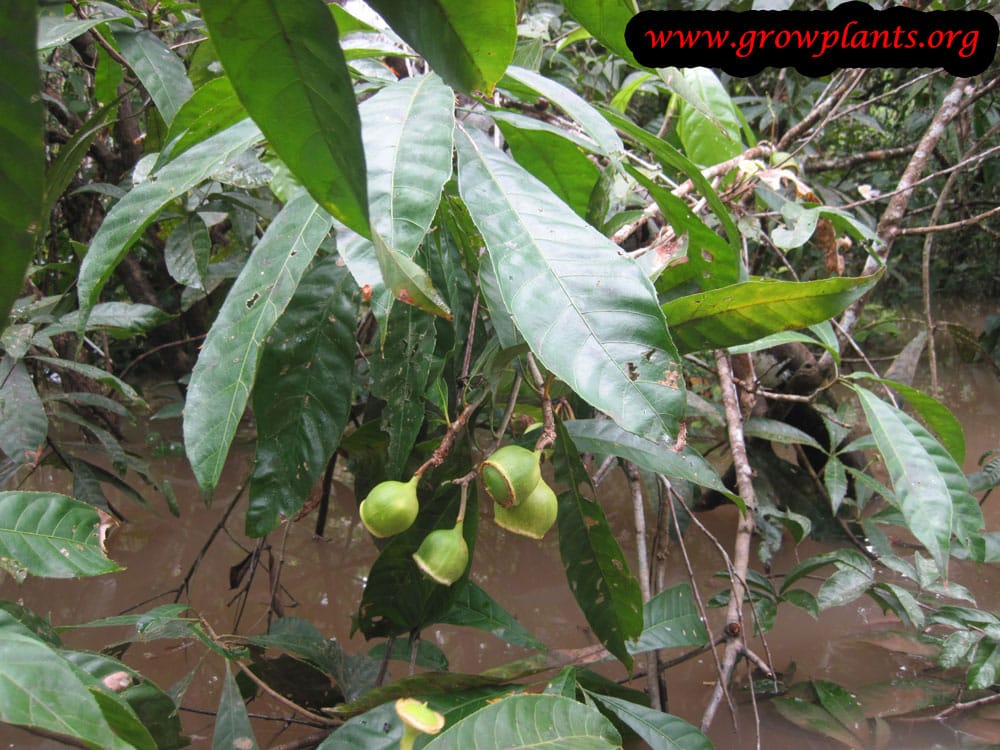
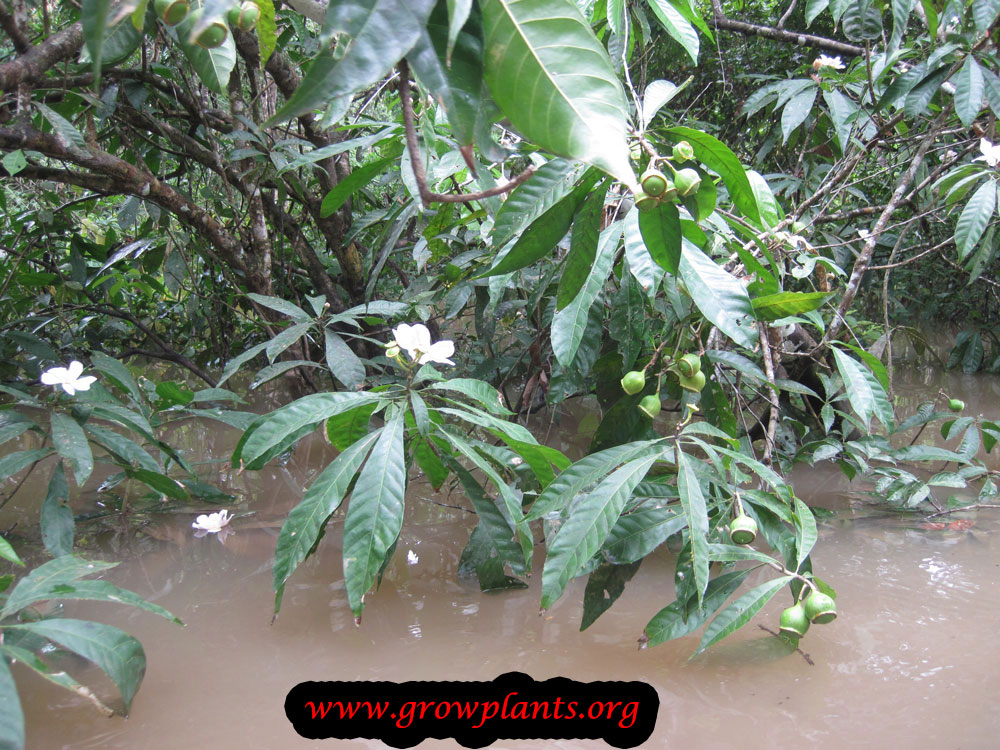
- Leaves & Foliage: Large, glossy, green wedge-shaped leaves.
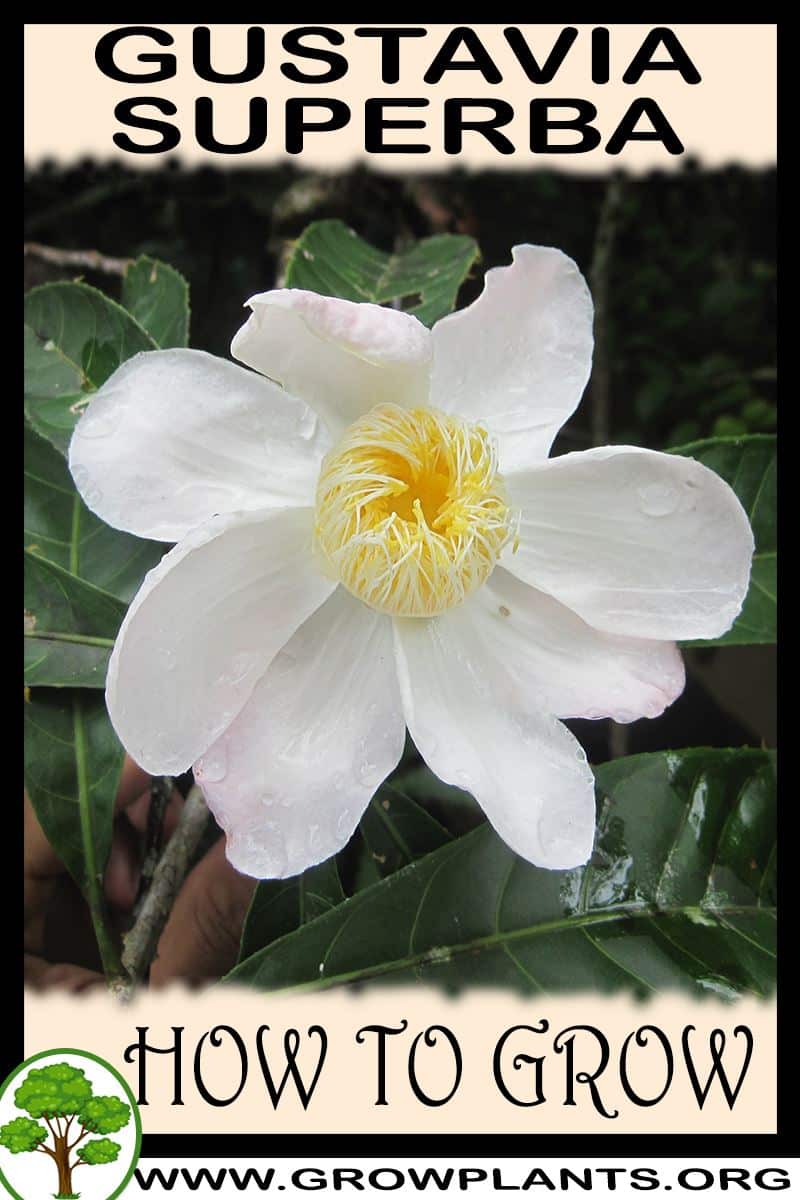
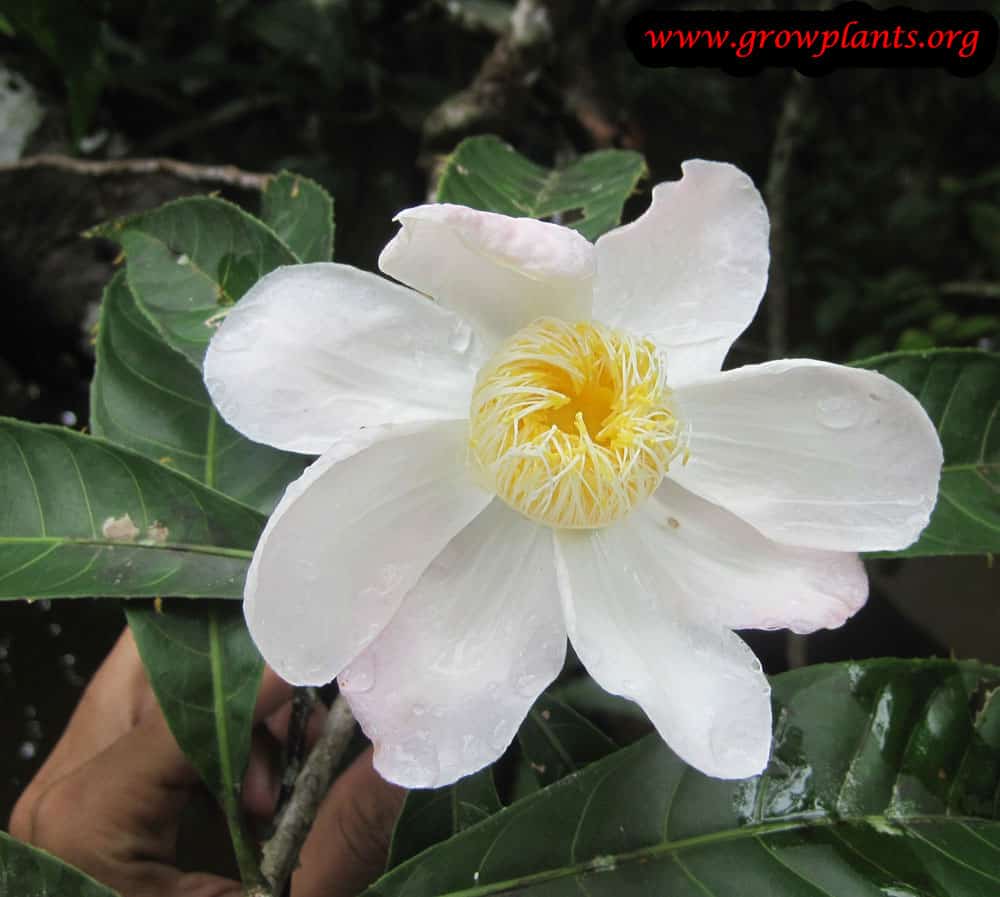
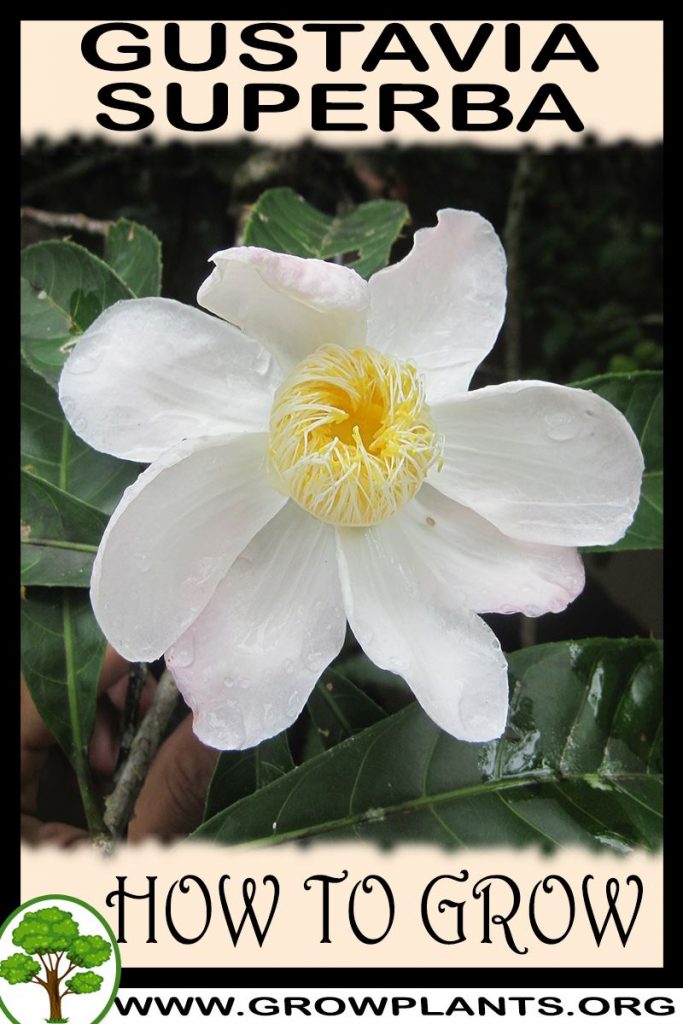
- Flower Characteristics: Fragrant white to pink flowers with 6-8 petals, borne mostly on mature branches.
- Fruit Profile: Fruit with a brown skin and yellow-to-orange flesh described as meaty in flavour.
Primary Uses & Landscape Value
- Edible Uses: Fruit eaten raw or cooked.
- Functional & Ornamental Roles: Fragrant flowering ornamental tree for tropical gardens.
Care Guide: Planting, Soil & Watering
Overview: Gustavia superba is a tropical tree that needs constant warmth, high moisture and rich, well-draining soil. It grows in full sun in frost-free, humid climates and should be kept evenly moist year-round.
Quick Care Requirements
| Requirement | Ideal Condition |
|---|---|
| Planting Season | Year-round in warm, frost-free (tropical) climates |
| Growth Rate | Slow to Moderate |
| Soil Type | Rich, moist and well-draining |
| Water Need | High; keep the soil consistently moist |
Planting & Establishment
- Best Planting Season: In its tropical range it can be planted year-round; elsewhere plant during warm weather, as it needs temperatures above about 10°C.
- How to Plant:
- Hole Preparation: Dig a hole a little wider than the root ball in a warm, sheltered, humid spot, and set the tree at the same depth it grew.
- Soil Amendments: Enrich the soil generously with compost and organic matter to hold moisture while still draining freely.
- Planting Depth: Plant so the root collar sits at soil level; do not bury the trunk.
- Growth Speed & Expectations: Slow to moderate, gradually forming a small ornamental tree.
Soil, Watering & Drainage Care
- Soil Mix & Drainage Needs: Wants rich, moisture-retentive but well-draining tropical soil; avoid both drought and stagnant waterlogging.
- Watering Schedule & Technique:
- Young / Newly Planted: Keep newly planted trees evenly and consistently moist while they establish.
- Established: Water regularly and generously to keep the soil moist — this is a high-moisture tropical species that dislikes drying out.
- Seasonal Adjustments: Maintain moisture year-round in warm climates; water more in heat, and protect from any cold, which it will not tolerate.
Climate, Light & Hardiness
Gustavia superba is a true tropical fragrant-flowering and lightly edible-fruited tree, restricted to consistently warm, humid, frost-free climates. It grows in full sun and cannot tolerate cold below roughly 10°C (50°F).
Quick Climate Specifications
| Climate Zones | Tropical |
|---|---|
| USDA Hardiness Zones | Approximately 12 and warmer |
| Approx. Survival Minimum | Around 10°C (50°F) |
| Frost Tolerance | None |
| Light Conditions | Full Sun |
Sunlight & Light Exposure
Optimal Light Setup
Full sun is required for good growth.
Temperature Extremes & Hardiness
USDA Hardiness & Regional Limits
Restricted to roughly USDA zone 12 and warmer, among the most cold-sensitive species in this dataset.
Cold Damage & Winter Protection
Site data indicates temperatures need to stay above about 10°C (50°F); cooler conditions than this are likely to cause chilling injury even without frost.
Frost Sensitivity
Not frost tolerant; this species needs consistently warm, tropical conditions year-round.
Growing in Pots, Balconies & Indoors
Gustavia superba is a small tree of 3-6 m (10-20 ft). The grower says it isn’t a houseplant but grows well in a container – a handsome patio tree where it can get full sun and plenty of water.
Quick Details
- Container Size: A large, deep container (grower didn’t state a size)
- Indoor Suitability: Not a houseplant; a patio container tree
- Best Spot: Full sun
- Soil & Drainage: Aerated, organic-rich mix that drains freely
- Watering in Pots: Water generously and often – it likes plenty of moisture and pots dry fast; never let it dry out, but keep drainage sharp.
Indoors & On the Windowsill
- Houseplant limits: Not a houseplant – it needs full sun and steady moisture beyond indoor conditions.
- Windowsill growing: Too large for a sill; grow it in a container outdoors.
- Overwintering: Frost-tender, so in cold areas keep it potted and shelter it frost-free over winter.
On a Balcony or Patio
- Light & water: Give it full sun and keep it well watered – it likes plenty of moisture and pots dry fast in reflected heat.
Choosing the Pot, Soil & Long-Term Care
- Pot & drainage: A deep pot with strong drainage holes; skip a standing-water saucer to avoid root rot. Terracotta breathes and dries faster, while glazed or plastic hold moisture longer.
- Potting mix: Well-aerated, organic-rich mix – peat or coir with perlite and a little organic matter; it must drain freely.
- Feeding: Potted plants use up their food faster because nutrients leach out with each watering, so feed a little more often than plants in open ground.
- Repotting: Refresh part of the mix and pot up every couple of years; for established plants, lightly prune the root ball and top growth when you repot.
Fertilizing & Feeding
Grown mainly for its large fragrant flowers and glossy foliage, with edible fruit as a secondary trait, so a light, standard fruit-tree feeding routine is enough.
Quick Fertilizing Specs
| Feeding Level | Light – an ornamental-first tree that doesn’t need heavy feeding. |
|---|---|
| young_feeding | A nitrogen-forward complete fertilizer while the tree builds its canopy. |
| mature_feeding | A balanced fertilizer once the tree is flowering and setting fruit. |
| Main Nutrient Priority | Balanced feeding, with potassium and boron support around bloom and fruit set. |
| Best Feeding Period | The warm active-growth months. |
| Organic Options | Compost or aged organic matter worked into consistently moist soil. |
| Micronutrients | Iron and manganese are typically covered by a complete fruit-tree fertilizer. |
| Soil pH | No strong pH preference is documented; prefers consistently moist, warm conditions. |
| Reduce/Stop Feeding | Ease off feeding as growth slows outside the warm growing months. |
Feeding by Growth Stage
Newly Planted Tree
Help a young tree establish its roots in warm, consistently moist soil.
| Nutrient direction | Keep feeding light and balanced while the root system establishes. |
|---|---|
| Timing | The first growing season after planting, once new growth resumes. |
| Frequency | A few light feedings spread across the active growing season is enough. |
| Fertilizer types | A balanced, complete fertilizer for young trees, Compost worked into the planting area |
| Precautions | Keep soil consistently moist and warm; avoid heavy feeding until the tree shows steady new growth. |
Young, Non-Bearing Tree
Build a full, glossy canopy before the tree reaches flowering size.
| Nutrient direction | Favor a nitrogen-forward, complete fertilizer to support steady leaf and branch growth. |
|---|---|
| Timing | Through the tree’s active growing seasons, before it reaches bearing age. |
| Frequency | Regular light feedings during the warm growing months. |
| Fertilizer types | A nitrogen-forward complete fertilizer for young trees, Composted organic matter |
| Routine trace nutrients | iron, manganese |
| Precautions | This tree is sensitive to cold and drying out – keep it warm and evenly moist rather than compensating with extra fertilizer. |
Established, Approaching Fruiting
Shift the tree onto balanced feeding as it matures toward its first fragrant bloom.
| Nutrient direction | Move to a balanced, complete fertilizer rather than a heavily nitrogen-leaning one. |
|---|---|
| Timing | As the tree matures, in the seasons leading up to its first bloom. |
| Frequency | A modest, evenly spaced feeding routine through the growing season. |
| Fertilizer types | A balanced, complete fruit-tree fertilizer, Mulch renewed around, not against, the trunk |
| Routine trace nutrients | iron, manganese |
| Precautions | Flowers form mostly on mature branches, so avoid heavy pruning alongside heavy feeding, which can delay flowering. |
Mature, Fruit-Bearing Tree
Support the tree’s fragrant flowering and the development of its edible fruit.
| Nutrient direction | Keep a balanced feeding approach with some potassium support as fruit develops. |
|---|---|
| Timing | Around the tree’s bloom window, continuing through fruit development. |
| Frequency | A light, balanced feeding routine through the growing season. |
| Fertilizer types | A balanced, complete fruit-tree fertilizer with modest potassium emphasis, Organic mulch to build soil fertility over time |
| Routine trace nutrients | iron, manganese |
| Precautions | Avoid heavy nitrogen at bloom time, which can favor leafy growth over flowering and fruit set. |
Nutrient Deficiency Signs & Corrections
Yellowing between the veins on newer leaves while the veins stay green.
| Possible causes | High soil pH limiting iron availability, Waterlogged or compacted soil limiting root uptake, A genuine iron shortfall in poor soil |
|---|---|
| Appears first on | the newest leaves |
| What to check | Soil pH if testable, Drainage and moisture consistency, Whether older leaves stay green while new ones yellow |
| Possible correction | Improve drainage first; if pH is elevated, correct it gradually and consider a chelated iron product per its label. |
Overall pale green foliage and slower new growth than expected.
| Possible causes | Insufficient nitrogen in the soil, Nitrogen leaching in consistently moist soil, Root stress from waterlogging limiting uptake |
|---|---|
| Appears first on | older leaves first |
| What to check | Growth rate versus prior seasons, Soil moisture and drainage balance, Recent feeding history |
| Possible correction | Apply a balanced or nitrogen-leaning fertilizer and monitor for improved new-growth color. |
Browning or scorch along the edges of older leaves during fruit development.
| Possible causes | Potassium depletion during fruiting, Drought or heat stress reducing uptake, Salt buildup interfering with potassium availability |
|---|---|
| Appears first on | older leaves, at the margins |
| What to check | Whether scorch coincides with fruit development, Watering consistency, Soil salinity if irrigated with hard water |
| Possible correction | Feed with a balanced, potassium-inclusive fertilizer and maintain even soil moisture. |
Pruning, Training & Seasonal Maintenance
Gustavia superba is pruned lightly and mainly for design, and one detail from the growing guidance matters more here than for most other trees in this collection: its fragrant flowers grow mostly on mature branches rather than on new growth. That makes the tree tolerant of light, year-round shaping but a poor candidate for heavy structural or renewal cuts, since removing mature wood removes the very branches that flower – and, since the fruit follows the flower, the fruit as well.
Quick Pruning & Maintenance Specs
| Pruning Tolerance | Low–Moderate |
| Primary Pruning Window | All year, for light design pruning |
| Main Objective | Shape the tree while preserving the mature branch wood that carries the flowers and fruit |
| Young Plant Priority | Establish basic form before branches mature into flowering wood, since later corrections cost more flowering potential |
| Mature Plant Priority | Minimal intervention – light shaping only, protecting established flowering branches |
| Best Tool Type | Bypass secateurs for light shaping cuts |
| Avoid Heavy Pruning During | Any time, as a general rule for this species – heavy cuts remove mature flowering wood regardless of season |
Pruning by Plant Age & Size
Newly Established
Remove only damaged growth; this is also the easiest stage to correct form, before branches mature into the flowering wood that later pruning should largely leave alone.
Young / Formative
Light structural shaping to set the tree’s eventual form is best done now, while branches are not yet the flower-bearing mature wood the species relies on; avoid repeated heavy corrections later.
Mature / Established
Keep interventions light – remove only dead, damaged, or clearly misplaced growth, since the established branch framework is the tree’s flowering and fruiting asset and is not something to prune away for shape alone.
Flowering & Fruiting Wood
Flowers form mostly on mature branches rather than on the current season’s new shoots – the reverse of the pattern in many fruiting trees, where new growth is what flowers. This means hard pruning or renewal cuts that remove mature wood don’t just delay one season’s bloom; they remove the specific branches capable of flowering at all until new wood matures enough to take over, which can take considerably longer than a single growing season.
Structural Pruning & Training
Because the tree’s value is in preserving mature flowering wood, structural work should be limited to removing genuinely crossing, damaged, or poorly placed branches while the tree is young, rather than ongoing reshaping of an established canopy.
Container & Small-Space Pruning
At a modest 3–6 m mature size with a high water requirement, Gustavia can be container-grown, but height and form control should be handled while the plant is young for the same reason as in-ground specimens – once branches mature and begin flowering, cutting them back for size control sacrifices bloom.
Tools
Bypass secateurs are sufficient for the light, occasional shaping this species needs; heavier tools are rarely warranted given how little structural pruning is recommended.
Tool Hygiene & Disease Risk
Routine – no pruning-relevant pest or disease is noted for this species (the iguana browsing mentioned is a wildlife issue, not a tool-transmissible one), so clean, sharp secateurs are all that’s needed.
Cut Placement & Technique
Make any necessary cuts back to a healthy lateral or the branch collar; avoid heading cuts into mature wood, which is exactly the wood this species relies on for flowering.
Heavy Pruning & Rejuvenation
Not recommended – because flowering is concentrated on mature branches, hard rejuvenation pruning would remove the tree’s flowering capacity for an extended period rather than simply delaying one season’s bloom. State this clearly to anyone tempted to renovate the canopy: light, selective cuts only.
Post-Pruning Care
Maintain the consistently moist conditions this species needs; no special aftercare beyond that is indicated, given how minor the recommended pruning is.
Common Pruning Mistakes
Cutting back mature branches for size or shape without realizing they carry the flowers; treating this tree like a hard-pruning tropical fruit tree and losing years of bloom as a result.
When NOT to Prune
Avoid any heavy or renewal-style pruning on established mature wood at any time of year, since that wood is the tree’s flowering and fruiting asset; if size or shape correction is genuinely needed, do it while the tree is young rather than once branches have matured.
Recommended Tools (by task)
- Light shaping and dead-wood removal at any stage – bypass_secateurs: the only tool this low-intervention species typically needs
Propagation Guide
Gustavia superba is most often started from seed, since the site’s own data lists seed as the standard way to begin new plants and does not indicate that grafting or vegetative propagation is required. Named cultivars are not a consideration for this species, so seed-grown plants are expected to come true, and overall propagation difficulty is best rated Moderate mainly because detailed germination data for this species is limited.
Quick Propagation Specs
| Best Propagation Method | Seed |
| Alternative Methods | Vegetative reproduction (site lists this as possible, though the specific technique is not detailed) |
| Propagation Difficulty | Moderate |
| Seed True-to-Type | Yes |
| Vegetative True-to-Type | Yes |
| Best Propagation Season | All year, consistent with this tropical species’ year-round planting season in hardiness zone 12+ |
Growing from Seed
Seed Handling & Viability
The site does not give specific seed storage guidance for this species. As a general caution for large-seeded tropical fruit trees, seed of this type often keeps best when sown reasonably soon after extraction from the ripe fruit rather than stored for long periods.
Sowing Season
Consistent with the plant’s year-round planting season in its tropical hardiness range, seed can generally be sown at any time where conditions stay warm and humid.
Germination Conditions
The species is described as needing consistently moist soil and temperatures above 10°C (50°F) to grow well; warm, evenly moist conditions of this kind are also a reasonable basis for germinating and establishing seedlings, though the site does not give germination-specific figures.
Seedling Care
Young plants should be kept in full sun with a generous, consistent water supply, matching this species’ stated preference for full sun and a large amount of water once established.
Vegetative Reproduction
The site notes that vegetative reproduction is a possible way to start this plant, though it does not specify a technique. Grafting or cutting propagation is not described as necessary to preserve fruit quality or type, so seed remains the simpler, better-documented option for most growers.
Bloom & Flower Guide
Quick Details
- Bloom Season: Summer to autumn
- Flower Appearance: Large, fragrant, lotus-like flowers with 6-8 petals and a showy centre of stamens
- Edibility: The flowers are ornamental and fragrant; they are not eaten
Detailed Blooming Overview
Gustavia superba, aptly nicknamed heaven lotus, is grown above all for its beautiful, fragrant flowers. Appearing in summer and autumn, the large lotus-like blooms open mostly on the older, mature branches, filling the air with scent – the plant’s chief ornamental gift.
Flower Characteristics
- Fragrant, in white or pink, with six to eight petals surrounding a prominent central cluster of stamens.
- Borne mainly on mature branches.
Bloom Care & Thinning
- Managing the bloom: Prune only lightly for shape; flowering favours the older wood, so avoid removing too much of it.
- Light and moisture: Full sun with warmth and generous watering supports the best flowering.
Fruit & Uses
Note: this is a little–documented, mostly local/wild edible rather than a widely known food crop – treat the following as general guidance and start with a small amount. The fruit’s inner flesh is eaten, either fresh or cooked, once fully ripe.
Quick Edible Specs
| Edible Parts | Fruit |
|---|---|
| Main Use(s) | Culinary – fresh eating, cooking (minor/local use) |
| Eaten Raw or Cooked | Both – eaten raw or cooked |
| Preparation Required | Peel away the brown outer skin to reach the edible yellow–orange flesh; not well documented as a cultivated food crop |
| Harvest Season | Autumn/winter |
| Time to First Harvest | Several years for a young tree to begin fruiting (see Propagation) |
| Storage | Best used soon after harvest; collect promptly as fruit falls or ripens |
| Safety/Toxicity Caveat | No specific toxicity documented for the ripe flesh, but this is not an established mainstream food crop – confirm identification and sample cautiously |
Fruit
The fruit has a brown outer peel and a yellow–to–orange inner flesh that has been described as having a meaty texture. Fruit is simply gathered once ripe (fallen fruit is a normal way to collect it), the brown skin peeled away, and the inner flesh eaten either raw or cooked.
Harvesting
Fruit ripens in autumn/winter and is generally collected once it has fallen or comes free easily; birds compete for the ripe crop, so timely collection matters.
Preparation, Uses & Safety
Peel away the brown skin to reach the yellow–orange flesh, which can be eaten raw or cooked. Because this species is grown mainly as an ornamental, fragrant flowering tree rather than a mainstream food crop, and documented culinary use is limited, treat it as a minor, locally–used edible: confirm identification and try a small amount first.
Pests, Diseases & Troubleshooting
Overview: Gustavia superba is a small tropical rainforest tree in the Brazil-nut family (Lecythidaceae), rarely grown ornamentally, so documented pest records are sparse and the profile below is drawn from its family and general wet-tropical tree behaviour. Expect the usual sap-feeders of soft tropical foliage (scale, mealybug) plus stem-boring beetles and humidity-driven leaf-spot fungi, and manage it with good drainage, airflow and sanitation.
Quick Troubleshooting Overview
| Issue / Pest | Main Symptom | Primary Solution |
|---|---|---|
| Scale insects | Waxy bumps on stems/leaves, sooty mould | Prune, horticultural oil on crawlers |
| Mealybugs | Cottony masses on shoots and leaf axils | Wash off, oil/soap, encourage predators |
| Borers | Holes, frass, wilting or dying branches | Keep tree vigorous; prune and destroy infested wood |
| Leaf-spot fungi | Brown/black blotches on leaves in wet weather | Airflow, sanitation, copper fungicide if severe |
| Root rot | Wilting, dieback in soggy soil | Improve drainage; avoid waterlogging |
Common Pests & Management
- Scale insects (Coccidae / Diaspididae):
- Symptoms: Fixed brown, tan or waxy bumps along stems and leaf undersides; yellowing and twig dieback; soft scales excrete honeydew that blackens with sooty mould.
- Prevention & Control: Prune out heavily encrusted wood and scrape light infestations; conserve parasitic wasps and ladybirds; spray horticultural oil to smother crawlers with thorough coverage.
- Mealybugs (Pseudococcidae):
- Symptoms: White cottony clusters in leaf axils and shoot tips; sticky honeydew and sooty mould; stunted, distorted new growth on young trees.
- Prevention & Control: Wash off with a firm water spray or dab with dilute alcohol; release lacewings/ladybirds; treat persistent colonies with neem or horticultural oil.
- Wood / stem borers (Cerambycidae, Buprestidae):
- Symptoms: Entry holes with sawdust-like frass, tunnels under bark, and wilting or dieback of individual branches; borers typically attack stressed or wounded trees.
- Prevention & Control: Keep the tree vigorous and well-watered (stress attracts borers); avoid bark wounds; prune out and burn infested branches promptly.
- Caterpillars / leaf-chewers:
- Symptoms: Chewed leaf margins and holes on soft foliage in the wet season; usually cosmetic on an established tree.
- Prevention & Control: Hand-pick or tolerate light feeding; use a targeted Bacillus thuringiensis (Bt) spray only for heavy defoliation of young trees.
Diseases & Fungal Issues
- Fungal leaf spot / anthracnose:
- Symptoms: Brown to black spots and blotches, sometimes with yellow halos, on leaves in the humid tropics; heavy infection causes premature leaf drop.
- Treatment & Management: Improve air movement, avoid wetting foliage late in the day, and rake up fallen leaves. A copper-based fungicide protects new growth during prolonged wet spells.
- Root and collar rot (Phytophthora, Pythium):
- Symptoms: Wilting, thinning canopy and dieback in poorly drained or waterlogged soil despite ample moisture; dark, decayed roots and base.
- Treatment & Management: Plant in free-draining ground, never let the root zone stagnate, and remove badly affected trees. Improving drainage is the essential fix.
Growing Difficulties & Abiotic Problems
- Waterlogging / poor drainage:
- Cause & Symptoms: Though a wet-forest species, it still needs oxygen at the roots; stagnant, compacted soil causes yellowing and dieback.
- Correction Strategy: Plant in rich but free-draining soil, mulch to keep roots cool and evenly moist, and avoid compaction.
- Cold / chill damage:
- Cause & Symptoms: As a strictly tropical tree it is damaged by cool temperatures and any frost, showing blackened foliage and dieback.
- Correction Strategy: Grow only in frost-free, warm, humid conditions (or a heated glasshouse), sheltered from cold wind.
- Sun scorch on young foliage:
- Cause & Symptoms: A forest understory-to-canopy species whose young leaves can scorch in full exposure, showing bleached, brown patches.
- Correction Strategy: Give young trees light shade and establish them before exposing to full sun.
What Helps — Products & Tools
For this tropical tree keep horticultural/neem oil and insecticidal soap for scale and mealybug, a copper fungicide for wet-season leaf spot, and Bt for occasional caterpillars. The most important "tools" are good drainage, warmth and vigour, which prevent borers and root rot. Because ornamental records for this species are limited, verify any serious pest against local tropical-tree advice.