Plant Profile & Key Characteristics
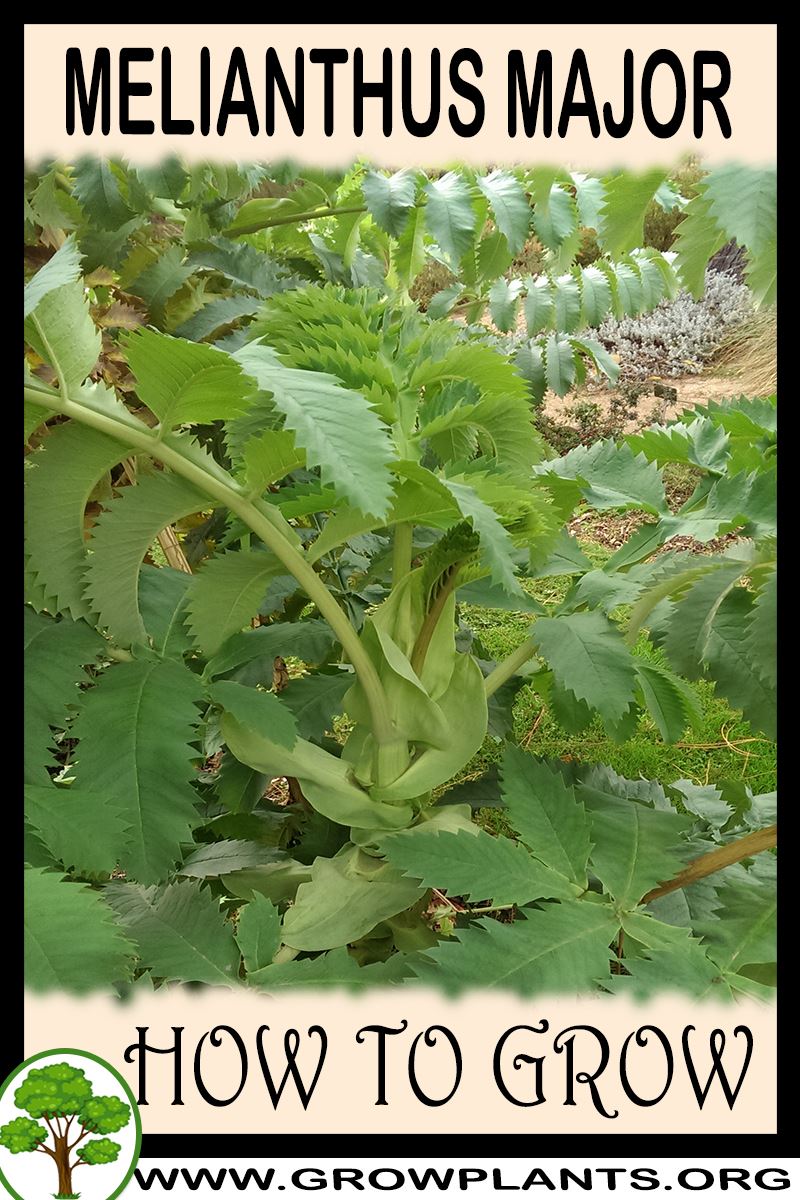
Overview: Melianthus major (honey bush) is a fast-growing evergreen shrub reaching 1–3 m (3–10 ft), grown as a bold ornamental for its blue-green foliage and drought tolerance; it attracts nectar-feeding birds and insects. All parts are poisonous if ingested.
Quick Specifications
| Specification | Attribute |
|---|---|
| Plant Type / Life Cycle | Perennial (shrub) |
| Foliage Type | Evergreen |
| Mature Size | 1–3 m (3–10 ft) |
| Growth Rate | Fast |
| Root System | Suckering — spreads by underground suckers to form clumps |
| Toxicity | Toxic — all parts poisonous if ingested |
| Hardiness | USDA zones 8–11 |
Growth Form & Structure
- Height & Spread: 1–3 m (3–10 ft), spreading by suckers into clumps; also suited to large containers.
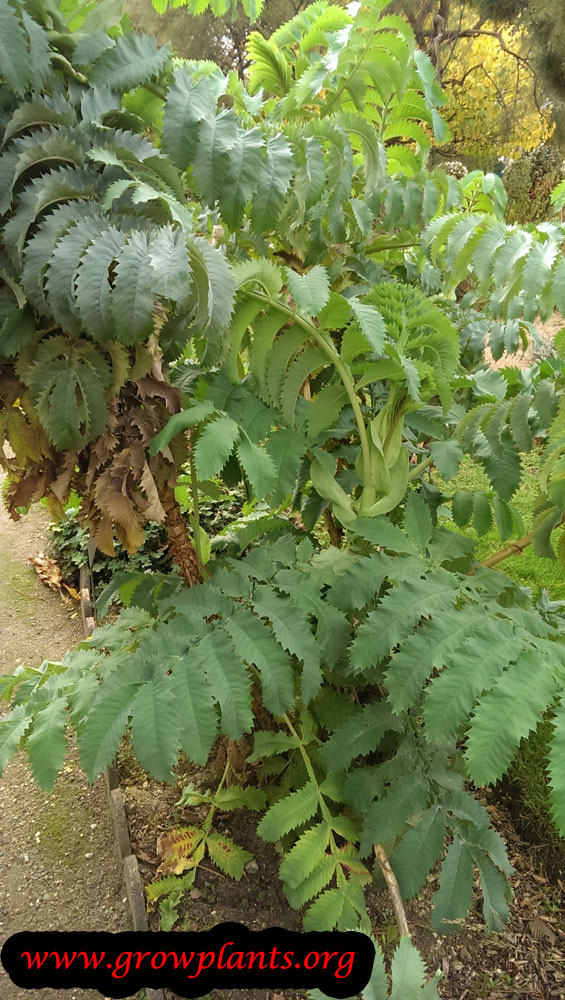
- Growth Habit & Form: Sprawling, multi-stemmed shrub with a bold, architectural outline.
- Lifespan & Maturity: Fast-growing perennial that can be cut back hard to renew.
Anatomy & Physical Features
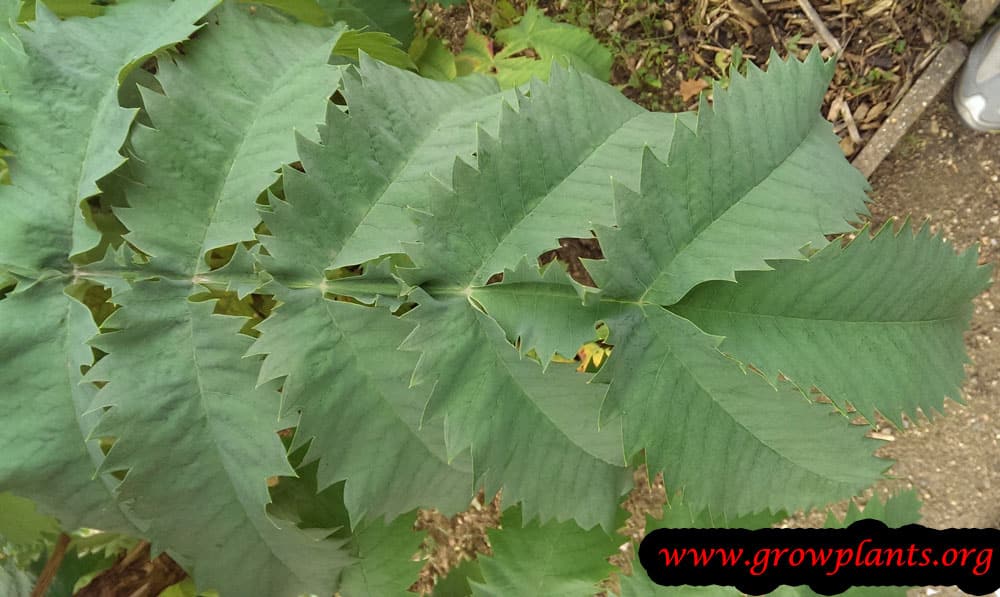
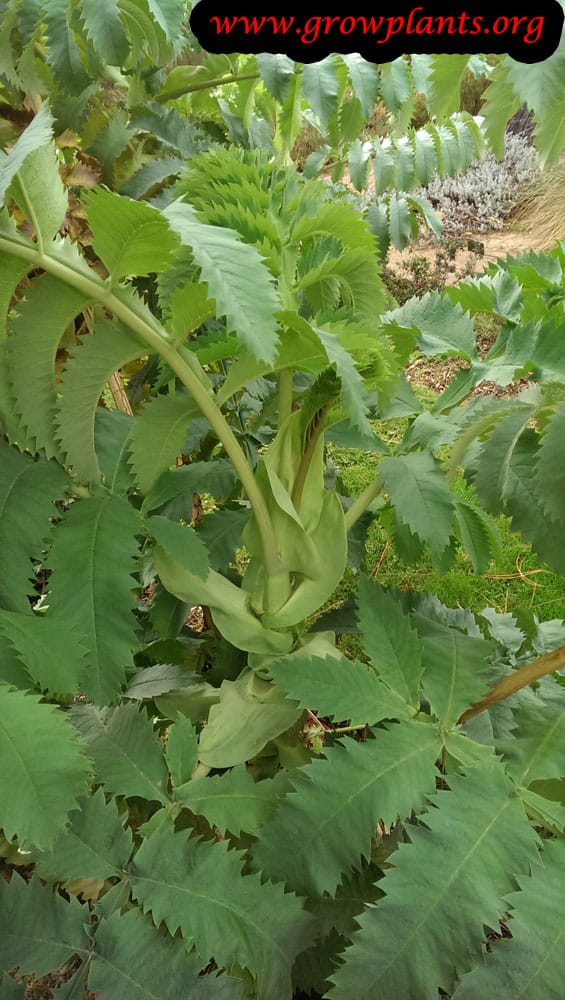
- Leaves & Foliage: Large blue-green (sometimes purple-tinged), pinnate leaves with sharply serrated edges and a strong scent when handled.
- Flower Characteristics: Deep-red, nectar-rich tubular flowers in tall spikes. (See the Bloom accordion for detail.)
Primary Uses & Landscape Value
- Functional & Ornamental Roles: Architectural foliage accent, nectar/pollinator plant and drought-tolerant border or container shrub.
Care Guide: Planting, Soil & Watering
Overview: Honey bush (Melianthus major) is a fast-growing evergreen shrub (zones 8–11) that grows best in full sun and is drought tolerant once established. It wants rich, well-draining soil and only low to moderate watering.
Quick Care Requirements
| Requirement | Ideal Condition |
|---|---|
| Planting Season | Spring through autumn |
| Growth Rate | Fast |
| Soil Type | Rich, well-draining |
| Water Need | Low to Moderate — drought tolerant once established |
Planting & Establishment
- Best Planting Season: Plant in spring, summer or autumn.
- How to Plant:
- Hole Preparation: Dig a hole wider than the root ball in a sunny, free-draining spot with room to spread.
- Soil Amendments: Enrich the backfill with compost or organic matter while keeping it well-draining.
- Planting Depth: Set the root ball at its original depth with the collar at soil level, firm gently and mulch.
- Growth Speed & Expectations: Fast — reaches about 1–3 m (3–10 ft) and can be cut back to control its spread.
Soil, Watering & Drainage Care
- Soil Mix & Drainage Needs: Rich but well-draining soil is best to prevent root rot; it also grows in a container with a free-draining mix and drainage holes.
- Watering Schedule & Technique:
- Young / Newly Planted: Water regularly at first to help roots establish.
- Established: Water lightly to moderately, letting the top of the soil dry between waterings; it tolerates dry spells well.
- Seasonal Adjustments: A little more in summer heat and much less in cool, wet weather.
Climate, Light & Hardiness
Honey bush is a drought-tolerant evergreen shrub suited to subtropical, mediterranean, desert, and temperate climates. It needs full sun and is hardy across a moderate range of winter cold.
Quick Climate Specifications
| Climate Zones | Subtropics, Mediterranean, desert, temperate |
|---|---|
| USDA Hardiness Zones | 8–11 |
| Frost Tolerance | Low–Moderate |
| Light Conditions | Full Sun |
Sunlight & Light Exposure
Optimal Light Setup
Full sun is required for compact, healthy growth and the best blue-green foliage color.
Temperature Extremes & Hardiness
USDA Hardiness & Regional Limits
Hardy in USDA zones 8–11; toward the colder end of this range, top growth may be cut back by frost but the rootstock can resprout in spring.
Frost Sensitivity
Moderately frost-sensitive; a hard freeze damages foliage and stems, though established plants in zone 8 often recover from the base.
Wind, Humidity & Microclimate
Dry-Air Tolerance
As a drought-tolerant species suited to desert and Mediterranean climates, it copes well with dry air once established.
Growing in Pots, Balconies & Indoors
Honey bush is grown for its magnificent, blue-grey, saw-toothed foliage. The grower rates it for containers but not indoors – it is a fast, large, sun-loving plant that makes a dramatic patio specimen in a big tub.
Quick Details
- Container Size: A large tub, 30-50 L (8-13 gal); it grows fast and big
- Indoor Suitability: Not a houseplant (grower); a bold, sun-loving foliage plant for outdoor pots
- Best Spot: Full sun and plenty of it – the more direct light, the better.
- Soil & Drainage: Aerated, organic-rich mix (quality potting mix, or peat/coir with perlite or vermiculite); it must drain freely.
- Watering in Pots: Let the top few centimetres of mix dry between waterings; pots drain fast, so check often, but never leave it waterlogged.
Indoors & On the Windowsill
- Not a houseplant: The grower marks it unsuitable indoors; it grows too large and fast, and needs full sun to look its best.
- Overwintering: It is root-hardy in mild areas but tender to hard frost – in cold climates cut it back and move the pot to a frost-free spot, or protect the roots over winter.
On a Balcony or Patio
- Light & size: Give it full sun and room – it grows quickly into a big plant, so use a large, stable tub. It tolerates dry spells once established.
- Watering: Modest water suits it; let the mix dry somewhat between waterings and ensure sharp drainage.
Choosing the Pot, Soil & Long-Term Care
- Pot & drainage: A large tub with strong drainage holes; skip a standing-water saucer. Terracotta breathes and dries fast, which suits this drought-tolerant plant.
- Potting mix: Use a well-aerated, organic-rich mix – quality potting mix, or peat/coir blended with perlite or vermiculite.
- Feeding: As nutrients wash out of pots faster than open ground, feed potted plants regularly through the growing season with a balanced fertiliser.
- Repotting: Pot up as it grows; cut it back hard in late winter to keep fresh foliage and a manageable size.
Fertilizing & Feeding
Honey bush is a fast-growing, drought-tolerant shrub prized for its striking blue-green foliage and pollinator-attracting flowers; it thrives on rich soil built up with organic matter and generally needs only light supplemental feeding.
Quick Fertilizing Specs
| Feeding Level | Light; a drought-tolerant shrub that grows vigorously without heavy fertilizer input. |
|---|---|
| Main Nutrient Priority | Balanced nutrition that favors strong foliage and stem growth along with the pollinator-attracting flower spikes. |
| Best Feeding Period | During the main spring and summer growth and bloom period. |
| Organic Options | Rich, well-drained soil built up with compost or aged organic matter suits this plant especially well. |
| Reduce/Stop Feeding | Ease off feeding as growth slows heading into cooler weather. |
Feeding by Growth Stage
Establishment
Help a newly planted Honey bush build roots and its first flush of the distinctive pinnate, serrated foliage.
| Nutrient direction | Light, balanced nutrition to support root and early leaf development in rich, well-drained soil. |
|---|---|
| Timing | In the weeks after planting. |
| Frequency | A light feeding at planting, worked into rich soil, is usually enough to get this fast grower started. |
| Fertilizer types | A balanced complete fertilizer used lightly, Compost or other organic matter worked into the planting hole |
| Precautions | Avoid overwatering alongside feeding, since this plant prefers well-drained soil and modest water once established. |
Spring and summer growth and bloom
Support the fast-growing foliage mound and the tall spikes of red, tonsil-like flowers that attract pollinators.
| Nutrient direction | Balanced, restrained nutrition – this vigorous, somewhat invasive-prone shrub grows quickly even without rich feeding. |
|---|---|
| Timing | Through the main spring and summer growing and flowering season. |
| Frequency | Feed sparingly during active growth; established plants in decent soil rarely need more. |
| Fertilizer types | A balanced complete fertilizer used sparingly, A light compost top-dressing in place of concentrated fertilizer |
| Precautions | Because this species can spread aggressively, avoid heavy feeding that encourages even more vigorous growth than needed. |
Cool-season rest
Allow growth to slow naturally as temperatures drop.
| Nutrient direction | None – withhold fertilizer during the slow season. |
|---|---|
| Timing | Through the cooler part of the year when growth is minimal. |
| Frequency | No feeding at this stage. |
| Fertilizer types | No feeding – resume light feeding once spring growth resumes |
| Precautions | Do not fertilize while the plant is not actively growing. |
Nutrient Deficiency Signs & Corrections
The normally blue-green or purple-tinted leaves look dull, pale or plain green.
| Possible causes | Too little sun for good foliage color development, A general nutrient shortage in very poor or depleted soil, Overwatering in poorly drained soil stressing the roots |
|---|---|
| Appears first on | New foliage across the plant. |
| What to check | Sun exposure at the planting site, Soil drainage and recent watering, Overall vigor and recent feeding history |
| Possible correction | Confirm the site gets full sun and drains well, then give a light balanced feeding if color and vigor stay poor. |
Stems grow thin, floppy or overly leggy rather than forming a full, bushy mound.
| Possible causes | Too much shade for this sun-loving species, Excess nitrogen pushing soft, weak stems, Overcrowding limiting light and airflow to individual stems |
|---|---|
| Appears first on | New stems throughout the plant. |
| What to check | How much direct sun the site receives, Recent nitrogen-heavy feeding, Plant spacing and pruning history |
| Possible correction | Move to or confirm full sun, ease back on nitrogen, and prune to encourage a bushier habit rather than adding more fertilizer. |
The plant produces abundant foliage but few or no flower spikes.
| Possible causes | Excess nitrogen favoring leafy growth over flowering, Insufficient plant maturity, since younger plants may not yet flower well, Too little sun for good bud formation |
|---|---|
| Appears first on | Overall flowering across the plant. |
| What to check | Recent nitrogen-heavy feeding, Plant age and size, Sun exposure |
| Possible correction | Reduce nitrogen-heavy feeding, confirm full sun exposure, and allow the plant time to mature before expecting a full flower display. |
Pruning, Training & Seasonal Maintenance
Melianthus major is a fast-growing shrub grown mainly for its bold, blue-grey pinnate foliage, with red flower spikes as a secondary feature. It tolerates hard, even near-ground, pruning and is often treated as a cut-back perennial where winters are cold. The most effective and safest window for a hard renewal cutback is early-to-mid spring, once frost risk has passed — not autumn or winter, since leaving the previous season’s growth in place over winter helps buffer the crown from cold, and cutting right before or during winter exposes fresh wounds to frost dieback.
Quick Pruning & Maintenance Specs
| Pruning Tolerance | High |
| Primary Pruning Window | Early-to-mid spring, once hard frosts are past |
| Secondary Maintenance Window | Light shaping in summer to control spread |
| Typical Frequency | Annual hard cutback in colder parts of its range; occasional shaping where winters are mild |
| Main Objective | Renew foliage, control size and spread, remove frost-damaged growth |
| Young Plant Priority | Light shaping only; let the plant establish |
| Mature Plant Priority | Annual (or as-needed) hard renewal cutback |
| Best Tool Type | Loppers/pruning saw for thick basal stems, secateurs for thinner growth |
| Avoid Heavy Pruning During | Autumn into winter — removes the crown’s natural frost buffer and invites dieback on fresh cuts |
Pruning by Plant Age & Size
Newly Established
Minimal pruning; let the plant build size in its first season(s).
Young / Formative
No formal training system applies — it is an informal multi-stem shrub. Occasional tip removal can encourage bushiness, but is optional.
Mature / Established
Annual (or as-needed, in milder climates) hard renewal cutback in spring to control legginess, refresh the dramatic foliage, and manage the plant’s spreading tendency.
Seasonal Pruning Schedule
Pre-Growth/Early-Spring (primary window)
Objective: remove frost-damaged or leggy growth and rejuvenate the plant once the risk of hard frost has passed. Remove: frost-blackened stems, and for a full rejuvenation, cut most or all stems back hard near the base. Do not remove: the previous season’s top growth before winter is over — it offers some frost protection to the crown until then. Expected response: a vigorous new flush of the plant’s characteristic blue-grey foliage. Flowering impact: minimal — flower spikes form on the new growth produced after this cut.
Summer Canopy Management
Objective: control the plant’s spreading habit. Remove: unwanted spreading shoots beyond the desired clump. Expected response: a more contained planting.
Ongoing Sanitary
Remove any dead or damaged foliage as noticed.
Flowering & Fruiting Wood
Melianthus major is grown chiefly for its foliage; its red flower spikes appear on the current season’s growth, produced after the spring cutback. Because flowering wood is made fresh each year rather than carried over from the previous season, the hard spring renewal cut does not sacrifice that year’s bloom — unlike old-wood spring bloomers, there is no trade-off between rejuvenation and flowering here.
Structural Pruning & Training
No formal training framework is used. At the base of the clump, remove any wandering rhizome shoots or suckers beyond the intended planting area, since this species is noted as capable of spreading/self-seeding — this doubles as both structural tidiness and spread control.
Special Growth to Remove
- Root suckers or spreading rhizome shoots beyond the desired clump footprint — manage the plant’s noted spreading tendency by removing unwanted basal shoots.
- Frost-blackened foliage, cleared out each spring before or during the main cutback.
Container & Small-Space Pruning
Tolerates container growing well, and containment is actually a useful way to limit its spreading habit. Potted specimens still benefit from the same early-spring hard cutback for size and foliage renewal; a full-size plant (up to 3m/10ft in the ground) will need a correspondingly large container or will simply stay more compact when pot-bound.
Tools
- Loppers — thick basal stems during the hard renewal cutback.
- Bypass secateurs — thinner shoots and any spent flower spikes.
- Garden spade — dividing out or removing unwanted spreading rhizome shoots at the base.
Tool Hygiene & Disease Risk
Routine — no significant disease risk is noted for this species; standard clean-tool practice is sufficient.
Cut Placement & Technique
For the hard renewal cut, cut stems back close to the base, just above strong basal buds. For light shaping, cut just above a healthy leaf node.
Heavy Pruning & Rejuvenation
Well tolerated — an at-or-near-ground cutback in early spring is the standard rejuvenation method for this plant, and it resprouts vigorously, quickly rebuilding its dramatic foliage display over the growing season.
Post-Pruning Care
Water to support the flush of new growth after a hard cutback. No need to feed simply because the plant was cut back — this vigorous grower does not require fertilizing to recover.
Common Pruning Mistakes
- Cutting hard in autumn or winter instead of spring, which removes the crown’s natural frost buffer and exposes fresh cuts to cold damage.
- Leaving spreading rhizome shoots unchecked where a contained planting is wanted.
- Treating the plant as a flowering shrub and prioritizing bloom timing, when its real value and pruning logic center on foliage renewal.
When NOT to Prune
Avoid hard pruning from autumn through winter — this removes the crown’s natural cold buffer and leaves fresh cuts exposed to frost dieback. Avoid cutting right before or during an expected cold snap even in spring.
Recommended Tools (by task)
- loppers — thick basal stems for the annual hard renewal cutback.
- bypass_secateurs — thinner growth and spent flower spikes.
- garden_spade — removing unwanted spreading rhizome shoots at their point of origin.
Pruning Troubleshooting
| Problem | Possible Cause | What to Check | Corrective Action |
| Dieback after cutting | Pruned in autumn/winter, exposing fresh cuts to frost | Timing of the cut relative to frost dates | Shift the hard cutback to early spring instead |
| Plant spreading beyond bounds | Root/rhizome suckers left unchecked | Perimeter of the clump for new shoots | Remove wandering shoots at the base with a spade |
| Leggy, sparse foliage | No renewal cutback performed for several seasons | Stem age/woodiness at the base | Perform a hard spring cutback to rejuvenate |
Propagation Guide
Melianthus major is easiest to propagate vegetatively – by semi-ripe cuttings or by removing rooted basal suckers – though the site notes this is easy rather than strictly necessary, since seed also gives a reasonably true plant. Overall propagation difficulty is easy.
Quick Propagation Specs
| Best Propagation Method | Semi-ripe stem cuttings or division of rooted suckers |
| Alternative Methods | Seed |
| Propagation Difficulty | Easy |
| Seed True-to-Type | Mostly uniform (species) |
| Vegetative True-to-Type | Yes |
| Best Propagation Season | Spring or autumn for cuttings and division; spring for seed |
| Seed Germination Time | Not well documented; can be slow and somewhat uneven |
Growing from Seed
Seed Handling & Viability
Species-specific data is limited; treat seed conservatively and sow it relatively fresh where possible.
Dormancy & Pre-Sowing Treatment
Seed coat can be hard in this genus, so a light scarification or a soak before sowing may improve and even out germination.
Sowing Season
Spring, in warm conditions.
Germination Conditions & Time
Warm conditions with a well-drained mix; germination can be slow and uneven, so allow generous time.
Seedling Care
Grow seedlings on in full sun, matching the light this species prefers once established.
Stem Cuttings
Cutting Type
Semi-ripe (semi-hardwood) stem cuttings.
Best Timing
Summer, from firm current-season growth.
Cutting Preparation
Take short tip cuttings, retaining a few leaves and stripping the lower ones.
Rooting Setup
A well-drained propagation mix, matching this plant's preference for well-drained, rich soil, with moderate humidity.
Rooting Hormone
Not usually needed – the site notes vegetative propagation is easy – but hormone can speed rooting.
Rooting Time
Typically several weeks.
Division, Offsets, Pups & Suckers
This shrub tends to spread and send up basal suckers, which is part of why the site recommends pruning to design and control its growth. Well-rooted suckers or basal offshoots can be removed with roots attached and replanted, ideally in spring or autumn; only take sections with adequate roots of their own, as not every sucker will be viable on its own. Keep new divisions moist and slightly shaded until established.
Bloom & Flower Guide
Quick Details
- Bloom Season: Spring into summer
- Time to First Bloom: Usually within the first year or two, once the shrub is established
- Flower Appearance: Deep brownish-red flowers, oddly mouth-like, packed into tall upright spikes
- Edibility: Not edible – the whole plant is toxic; grown as a dramatic foliage and nectar plant only
Detailed Blooming Overview
Grown mainly for its bold, blue-grey serrated foliage, honey bush also throws up striking upright spikes of deep red-brown flowers in spring and summer. The flowers are brimming with nectar – so much so that they can drip – and are a strong draw for nectar-feeding birds such as sunbirds. Handsome as it is, every part of the plant is toxic, so it is enjoyed at arm’s length rather than in the kitchen.
Flower Characteristics
- Deep brownish-red, mouth-like flowers in tall, cone-like upright spikes.
- Exceptionally nectar-rich, sometimes visibly dripping.
- Pollinated by nectar-feeding birds such as sunbirds.
Bloom Care & Thinning
- After flowering: Spent spikes can be cut back; hard pruning also refreshes the foliage.
- Wildlife: Leave the spikes to flower to feed visiting nectar birds.
- Safety: All parts are toxic if eaten; wear gloves when cutting back and keep away from children and pets.
Pests, Diseases & Troubleshooting
Overview: Honey bush is a vigorous, largely trouble-free architectural perennial whose main issues are environmental rather than pests: frost cutting back the foliage, root rot in wet soil, and aggressive suckering. Sap-suckers such as aphids and, under glass, whitefly and spider mite are the only insects of note, and are easily handled culturally.
Quick Troubleshooting Overview
| Issue / Pest | Main Symptom | Primary Solution |
|---|---|---|
| Aphids | Colonies on new shoots, honeydew | Water jet, soap, beneficials |
| Snails / slugs | Holes in young growth, slime | Hand-pick, iron-phosphate bait |
| Spider mite / whitefly | Stippling or white flies under glass | Humidity, sticky traps, oil sprays |
| Root / crown rot | Wilt in wet soil, dark roots | Sharp drainage, water sparingly |
| Frost | Blackened top growth in winter | Mulch crown, cut back, reshoots |
Common Pests & Management
- Aphids (Aphis / Macrosiphum spp.):
- Symptoms: Colonies of soft green or black insects on the soft new shoots and around the dark flower spikes, causing sticky honeydew and some distortion of the youngest growth.
- Prevention & Control: Dislodge with a firm water spray; pinch out infested tips; encourage lady beetles, lacewings and hoverflies; insecticidal soap or light horticultural oil only if colonies persist.
- Snails & Slugs (Helix / Deroceras spp.):
- Symptoms: Ragged holes and slime trails on young shoots and fresh basal growth, worst in damp, shaded conditions and on emerging spring growth.
- Prevention & Control: Hand-pick after dark; set beer traps; ring plants with grit, copper tape or wool pellets; use iron-phosphate baits, which are safe around pets and wildlife, if pressure is high.
- Whitefly (Trialeurodes vaporariorum):
- Symptoms: Tiny white flies rising from the foliage when disturbed, with yellow stippling and honeydew – mainly a problem on plants grown under glass or indoors.
- Prevention & Control: Hang yellow sticky traps; improve ventilation; release Encarsia parasitic wasps under cover; oil or soap sprays to leaf undersides for heavy infestations.
- Two-Spotted Spider Mite (Tetranychus urticae):
- Symptoms: Fine pale stippling, a dusty look and delicate webbing on leaf undersides in hot, dry, sheltered spots; leaves bronze and dry.
- Prevention & Control: Raise humidity and hose down foliage; avoid drought stress; encourage predatory mites; use horticultural oil or a soap spray, repeating to catch new hatchlings, in bad cases.
Diseases & Fungal Issues
- Root & Crown Rot (Phytophthora / Pythium spp.):
- Symptoms: Wilting, yellowing and collapse despite moist soil, with dark, soft roots – the main disease risk, triggered by heavy or waterlogged ground.
- Treatment & Management: Plant in free-draining soil in full sun; water only when needed and never keep the crown wet; improve heavy soils with grit and organic matter before planting.
- Rust (Puccinia spp.):
- Symptoms: Occasional orange-brown pustules on leaf undersides with yellow flecking above, in crowded, humid conditions.
- Treatment & Management: Improve airflow and remove affected leaves; avoid overhead watering; rarely serious enough to need a sulfur fungicide.
- Powdery Mildew:
- Symptoms: White powdery film on leaves in still, shaded, humid sites; minor and cosmetic.
- Treatment & Management: Open up the planting for air and light; cut back affected growth; a potassium-bicarbonate or sulfur spray if it spreads.
Growing Difficulties & Abiotic Problems
- Frost Damage:
- Cause & Symptoms: The lush blue-grey foliage is cut back or blackened by hard frost, dying to the ground in cold winters.
- Correction Strategy: Treat as a root-hardy perennial in cold areas – mulch the crown, expect it to reshoot from the base, and cut away frosted top growth in spring.
- Root Rot from Overwatering:
- Cause & Symptoms: Sudden wilting and yellowing where soil stays wet; the plant prefers a warm, well-drained position.
- Correction Strategy: Water deeply but infrequently once established; ensure sharp drainage; never leave it sitting in wet ground.
- Suckering / Spread:
- Cause & Symptoms: Vigorous suckering rhizomes let it spread and colonise ground quickly (the source notes it as invasive).
- Correction Strategy: Site where it has room, or contain the roots; dig out unwanted suckers while young.
- Unpleasant Smell & Toxic Sap:
- Cause & Symptoms: The foliage releases a strong peanut-buttery-to-unpleasant scent when brushed, and the sap is toxic if ingested.
- Correction Strategy: Site away from narrow paths; wear gloves when pruning and keep cuttings away from children and pets.
What Helps – Products & Tools
This plant rarely needs much: insecticidal soap or horticultural oil for aphids, spider mite and whitefly, yellow sticky traps and Encarsia under glass, iron-phosphate slug bait for young growth, and – most importantly – sharp drainage and winter mulch to prevent root rot and carry it through cold.
Frequently Asked Questions
What is another common name for Melianthus major?
Melianthus major is commonly known as honey bush.
What is the best way to propagate Melianthus major?
Melianthus major is easiest to propagate vegetatively, either from semi-ripe stem cuttings taken in summer from firm current-season growth, or by removing well-rooted basal suckers and replanting them ideally in spring or autumn. Rooting typically takes several weeks, and overall propagation difficulty is easy.
When and how should I prune Melianthus major?
Prune Melianthus major in early-to-mid spring, once frost risk has passed – not in autumn or winter, since cutting right before or during winter exposes fresh wounds to frost dieback. It tolerates hard, even near-ground, pruning, and an annual hard cutback resprouts vigorously, quickly rebuilding its dramatic foliage display over the growing season.
Is Melianthus major poisonous?
Yes, all parts of Melianthus major are poisonous if ingested, so it’s grown purely as an ornamental rather than for any culinary use. Wear gloves when pruning and keep cuttings away from children and pets.