Plant Profile & Key Characteristics
Overview: A herbaceous plant 20-90 cm (8-36 in) tall grown for its rose-like bell flowers in many colours. Usually grown as an annual (a short-lived perennial in frost-free climates) and prized as a cut flower.
Quick Specifications
| Specification | Attribute |
|---|---|
| Plant Type / Life Cycle | Annual or short-lived Perennial |
| Foliage Type | Evergreen (herbaceous, while in growth) |
| Mature Size | 20-90 cm tall (8-36 in) |
| Growth Rate | Moderate to Fast |
| Toxicity | Non-toxic |
| Hardiness | Perennial in USDA zones 10-11; grown as an annual in zones 2-10a |
Growth Form & Structure
- Height & Spread: 20-90 cm (8-36 in) tall; grows well in containers at least 40% larger than the root ball.
- Growth Habit & Form: Upright herbaceous stems topped with flowers.
- Lifespan & Maturity: Fast-growing but usually treated as an annual, blooming spring through autumn.
Anatomy & Physical Features
- Leaves & Foliage: Green, tapering (acuminate) leaves.
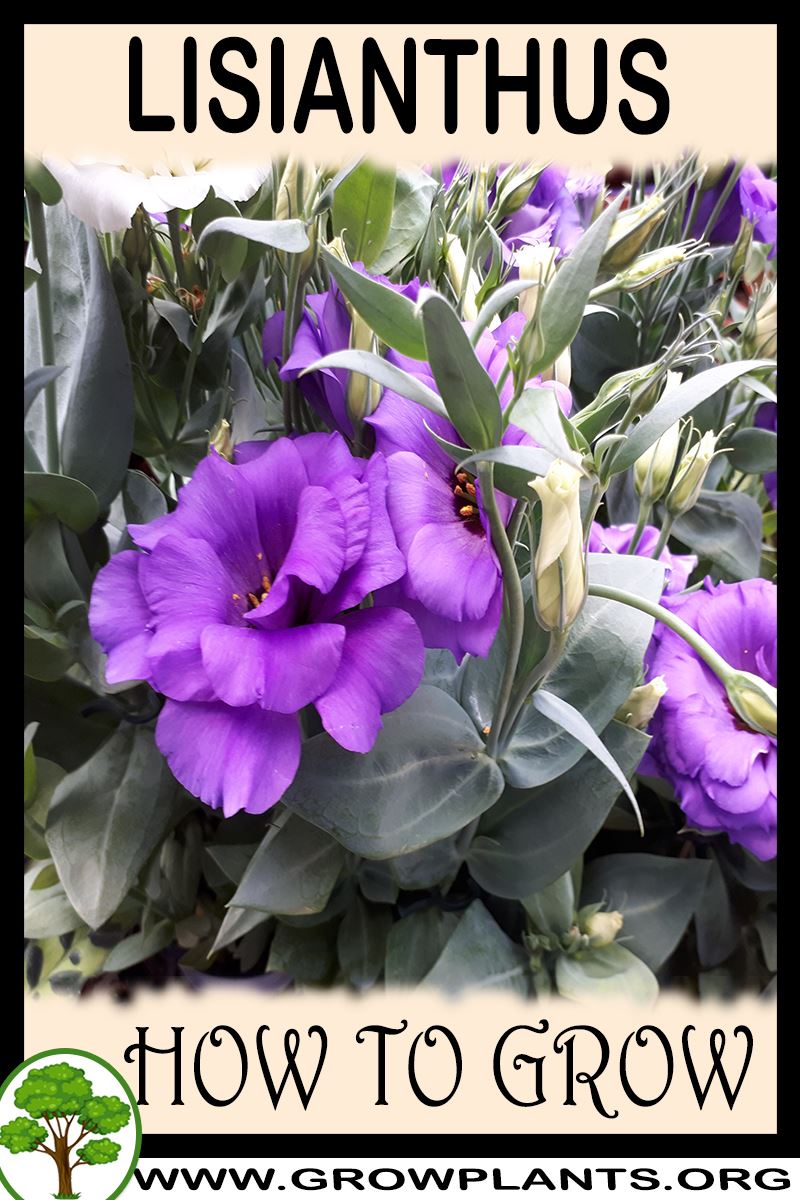
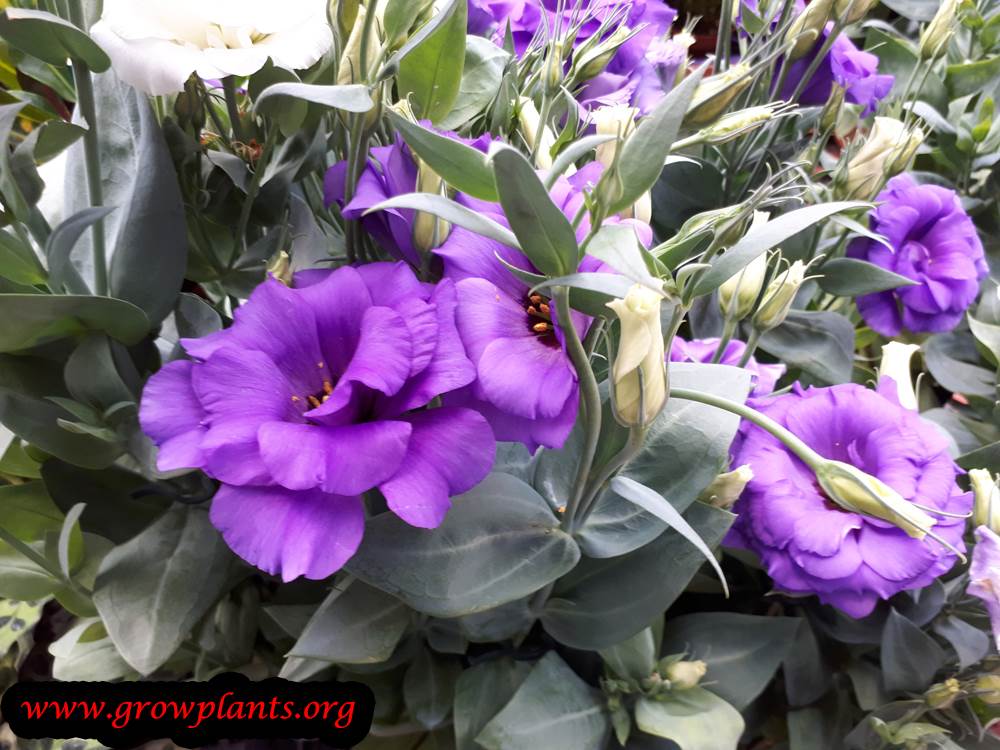
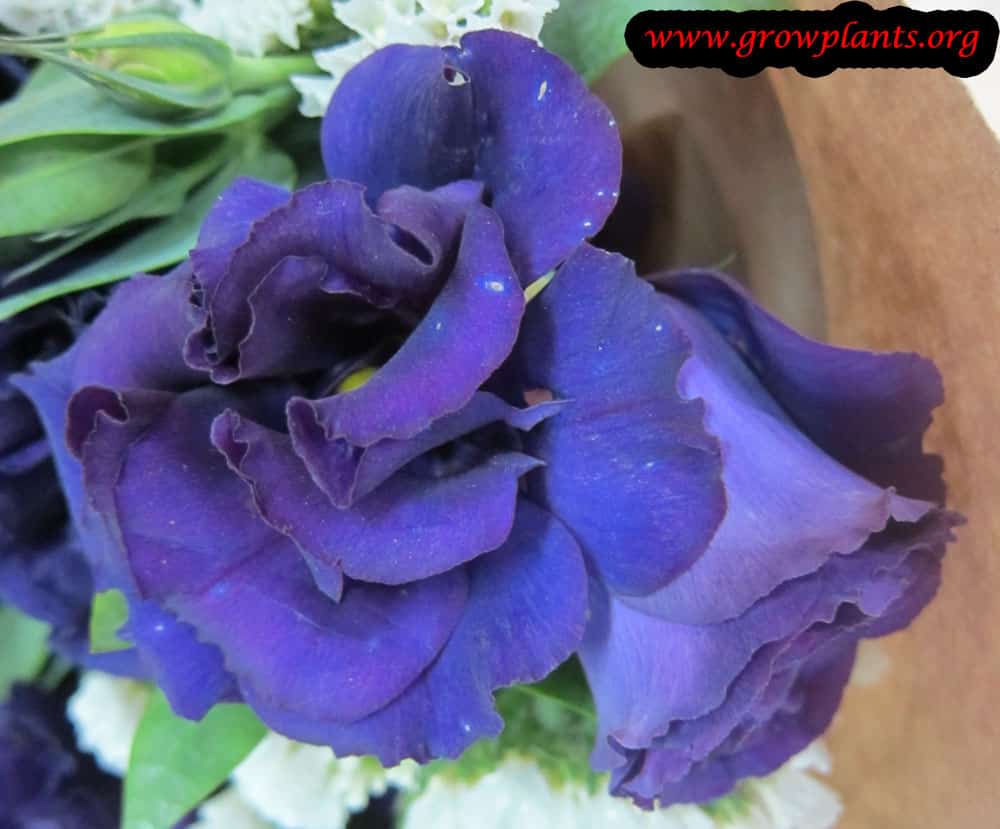
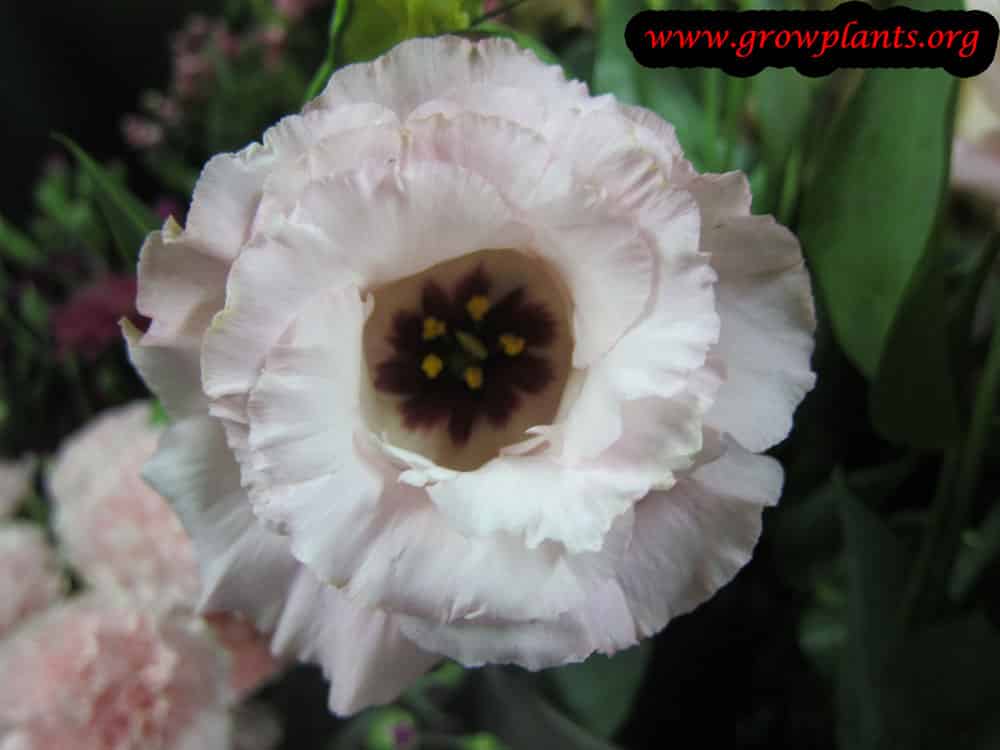
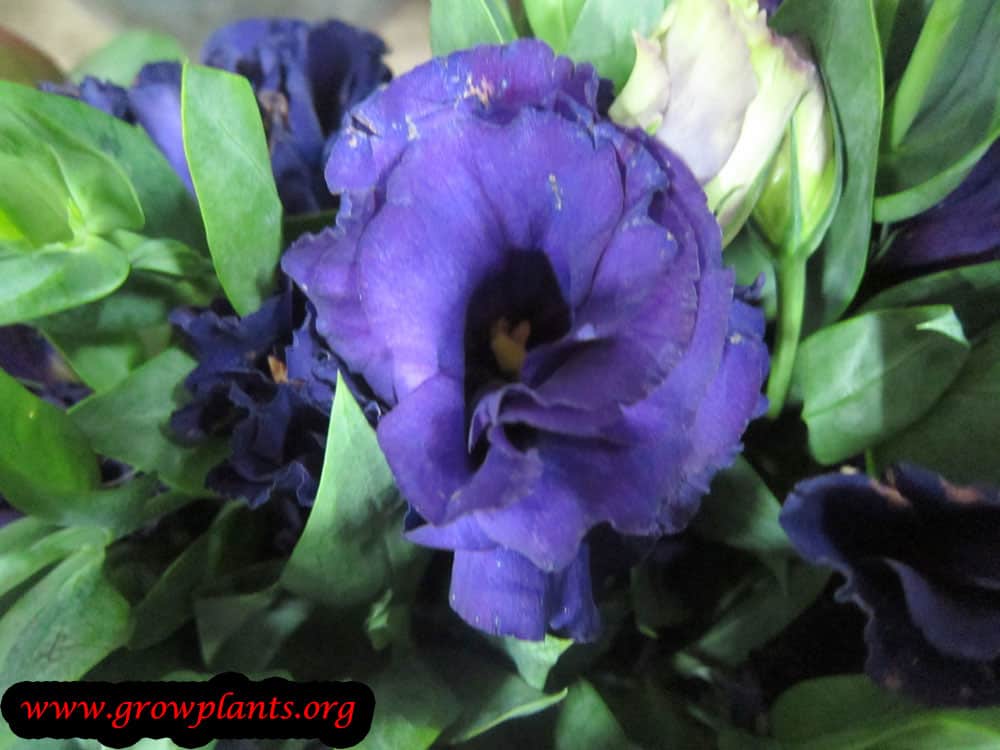
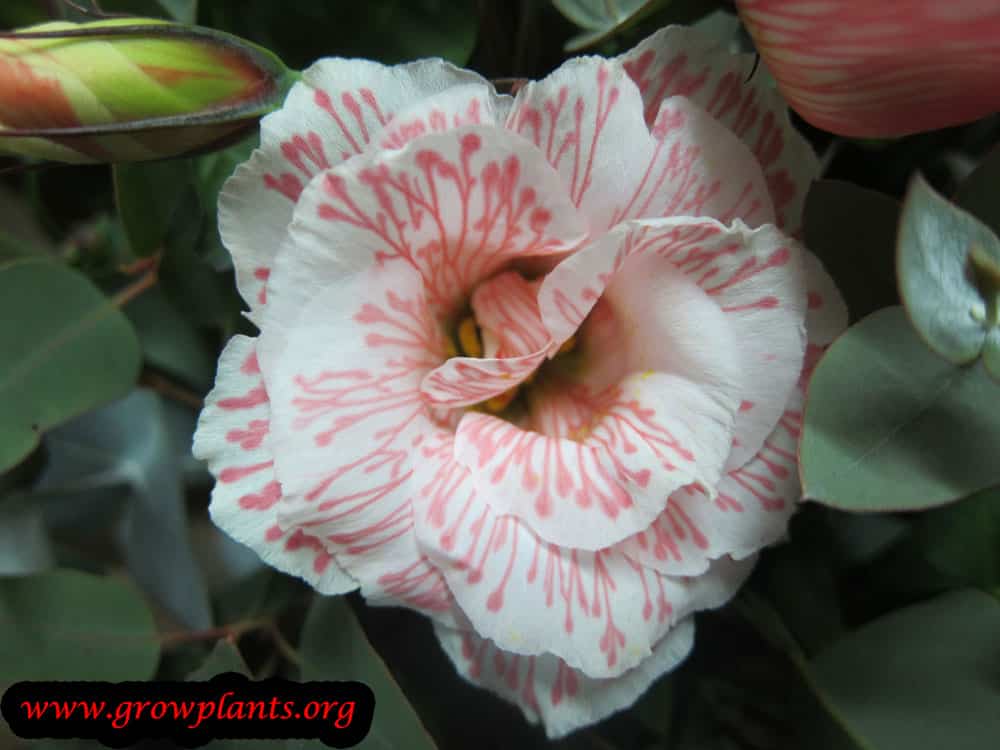
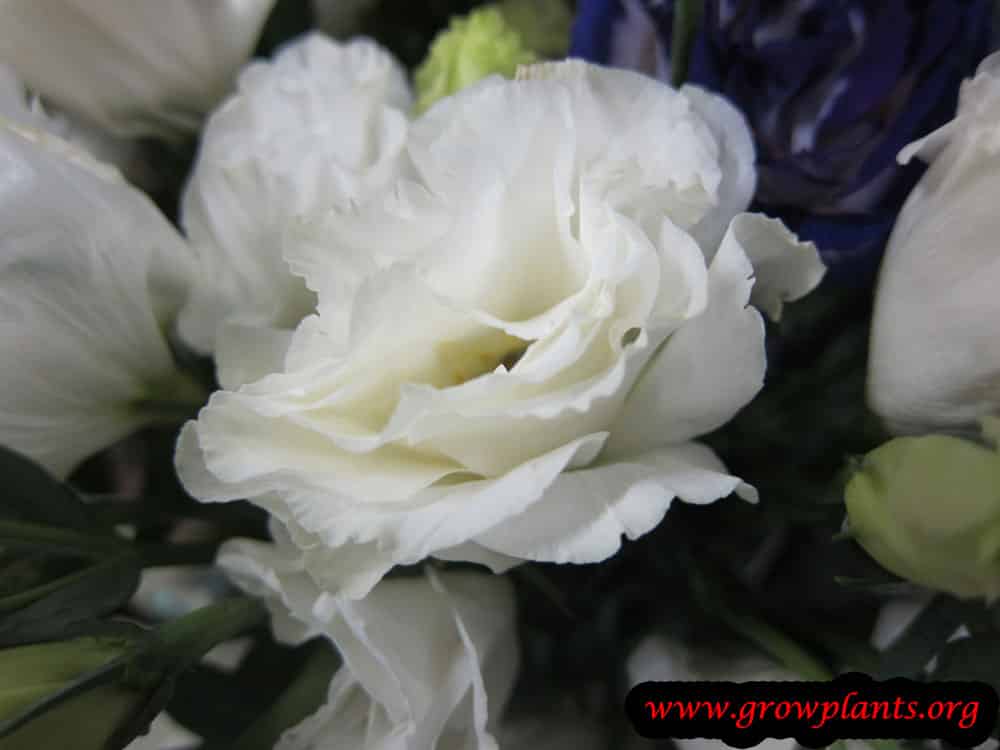
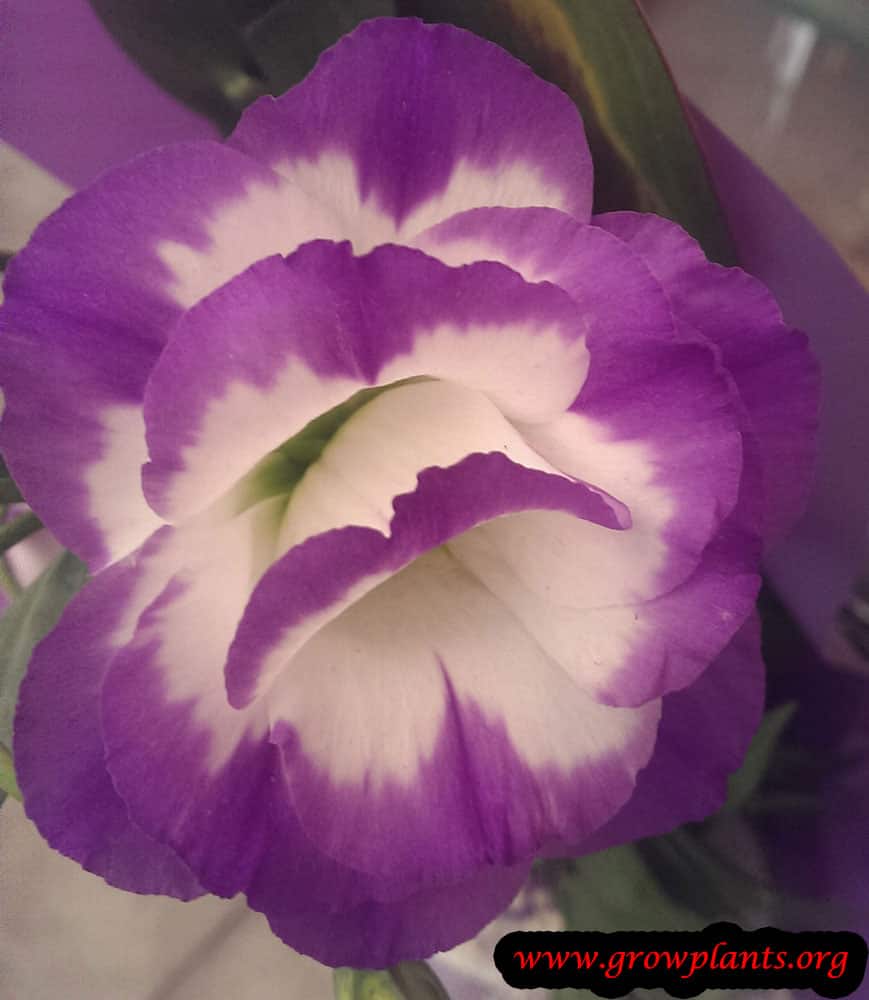
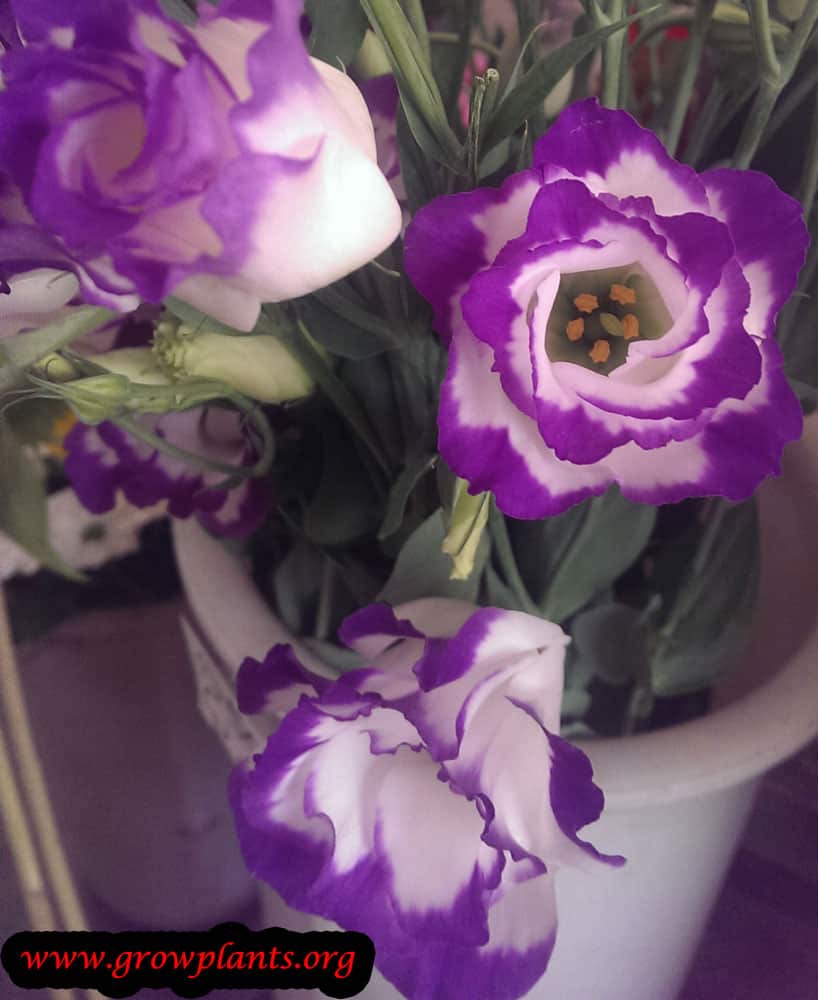
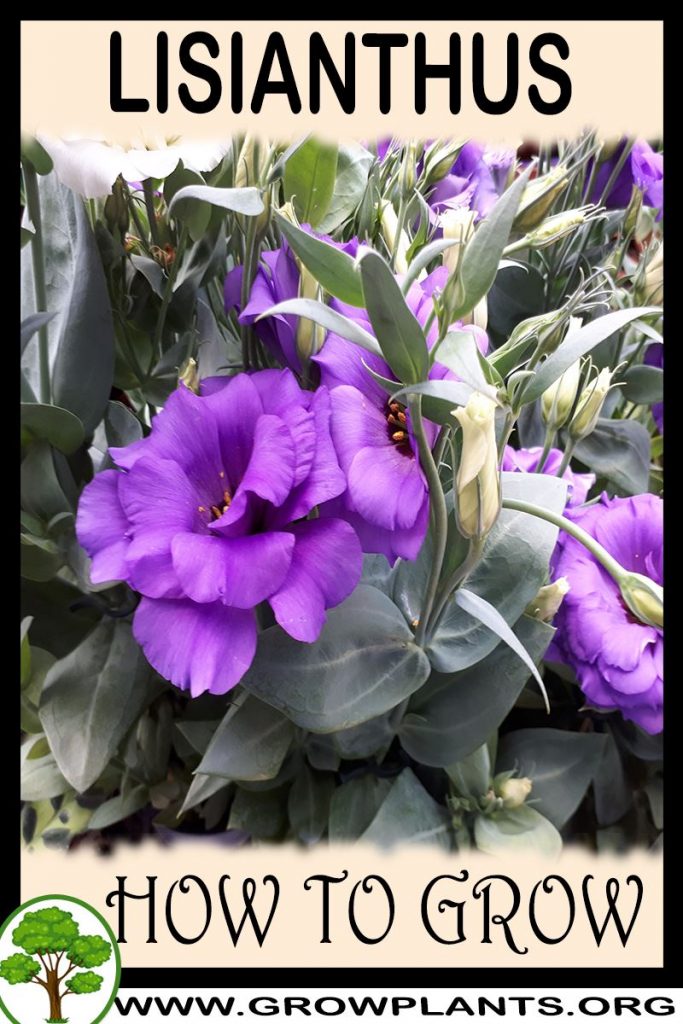
- Flower Characteristics: Bell-shaped single, double or full flowers in blue, purple, pink, green, red, yellow or white, often bicoloured (full detail in the Bloom guide).
Primary Uses & Landscape Value
- Functional & Ornamental Roles: A premier cut flower and ornamental for beds and containers; needs full sun and is not suited to indoor growing away from a bright window.
Care Guide: Planting, Soil & Watering
Overview: Lisianthus (Eustoma) is grown as an annual or short-lived perennial across temperate, Mediterranean, desert, subtropical and tropical climates for its long-lasting bell flowers. It wants rich, moist but well-draining soil and full sun, but is sensitive to overwatering – water must reach the roots, not the flowers.
Quick Care Requirements
| Requirement | Ideal Condition |
|---|---|
| Planting Season | Warm season; timing varies with climate (see below) |
| Growth Rate | Moderate to Fast |
| Soil Type | Rich, moist but well-draining, with organic matter and mulch |
| Soil pH | Slightly acidic to neutral (about 6.5-7.0) |
| Water Need | Moderate – keep evenly moist but never waterlogged |
Planting & Establishment
- Best Planting Season: Plant in the warm season, adjusting to climate: in zones 2-10a grow it as a spring annual; in zones 10b-12 plant spring to autumn, and in hot, desert-like summers plant in spring or autumn. In the tropics, plant in the drier season.
- How to Plant:
- Hole Preparation: Dig a hole a little larger than the root ball on rich, freely draining ground.
- Soil Amendments: Enrich the soil with organic matter and add mulch and leaf litter; sharpen drainage so water never stands, since wet soil invites fungal problems.
- Planting Depth: Set the root ball level with the soil surface, without burying the crown.
- Growth Speed & Expectations: A moderate-to-fast grower reaching about 20-90 cm (8-36 in); flowers make excellent, long-lasting cut blooms.
Soil, Watering & Drainage Care
- Soil Mix & Drainage Needs: Use rich, moisture-retentive but well-draining soil; in pots choose a container about 40% larger than the root ball with good drainage holes, as overwatering will kill the plant.
- Watering Schedule & Technique:
- Young / Newly Planted: Keep the soil evenly moist while the plant establishes, watering directly at the base.
- Established: Water at the roots, not over the flowers or foliage, and never let the soil become waterlogged – excess water is fatal. Shelter the blooms from direct rain (for example under a tree) while keeping the plant in full sun.
- Seasonal Adjustments: Ease off watering in cool or wet weather and water more attentively during heat, always aiming water at the roots.
Climate, Light & Hardiness
Lisianthus grows across temperate, mediterranean, desert, subtropical, and tropical climates, generally as a perennial only where winters stay frost-free, and as a warm-season annual elsewhere. It needs full sun (afternoon shade in desert heat) and dislikes prolonged heat above roughly 23°C (73°F) during germination and early growth.
Quick Climate Specifications
| Climate Zones | Temperate, Mediterranean, desert, subtropics, tropics |
|---|---|
| USDA Hardiness Zones | 10–11 as a perennial; grown as an annual in zones 2–10a and 12–13 |
| Frost Tolerance | Low |
| Light Conditions | Full Sun (afternoon shade in desert climates) |
Sunlight & Light Exposure
Optimal Light Setup
Full sun is preferred; in desert conditions, some afternoon shade prevents heat and flower stress.
Temperature Extremes & Hardiness
USDA Hardiness & Regional Limits
Persists as a perennial only in frost-free zones 10–11; outside that range it is grown as a warm-season annual in zones 2–10a, or in hot zones 12–13 where it is instead limited by extreme heat rather than cold.
Frost Sensitivity
Frost-sensitive; freezing temperatures end the growing cycle where grown as an annual.
Extreme Heat Tolerance
Seed germination and early seedling growth stall or fail above about 23°C (73°F) - in hot-spring locations, sowing earlier (late winter) avoids this heat check; once established, mature plants tolerate typical summer heat in their recommended climates.
Wind, Humidity & Microclimate
Humidity Preferences
Seeds and seedlings need consistently high humidity to germinate reliably.
Growing in Pots, Balconies & Indoors
Lisianthus bears exquisite rose-like blooms and the grower rates it for containers. Indoors it will only succeed right at a bright, sunny window – it needs a great deal of sun – and it much prefers its water at the roots, never on the flowers.
Quick Details
- Container Size: A pot about 40% larger than the root ball (grower); well-drained
- Indoor Suitability: Windowsill only (grower): indoors it needs a bright, sunny window – it demands lots of sun
- Best Spot: Full sun and plenty of it – the more direct light, the better.
- Soil & Drainage: Aerated, organic-rich mix (quality potting mix, or peat/coir with perlite or vermiculite); it must drain freely.
- Watering in Pots: Keep the mix evenly moist, letting the surface dry slightly between waterings; pots dry faster than open ground.
Indoors & On the Windowsill
- Windowsill only: The grower is explicit: indoors it grows only on a sunny windowsill, because it demands a lot of direct sun. Deeper in a room the light is far too weak to flower.
- Water at the roots: Water the mix directly and keep moisture off the flowers and foliage; overwatering will kill it, and wet blooms spoil quickly.
On a Balcony or Patio
- Light & shelter: Give it full sun (a little afternoon shade only in desert heat), but shelter the delicate flowers from rain and wind – the grower suggests a spot under an overhang or eave that still gets strong light.
- Watering: Keep the mix evenly moist but never waterlogged; direct water to the base of the plant.
Choosing the Pot, Soil & Long-Term Care
- Pot & drainage: Per the grower, use a pot about 40% larger than the root ball, in moist but well-drained mix; skip a standing-water saucer to avoid the root rot it is prone to.
- Potting mix: A well-aerated, organic-rich mix that drains freely.
- Feeding: Feed regularly while in growth and bud for strong, long-lasting flowers.
- Deadheading: The grower advises pruning off spent flowers to keep new buds coming.
Fertilizing & Feeding
A moderate feeder: this sensitive cut-flower favorite wants rich, organic-matter-fed soil plus steady balanced feeding through vegetative growth and bloom, with feeding withheld once the flowering flush winds down.
Quick Fertilizing Specs
| Feeding Level | Moderate feeder |
|---|---|
| Main Nutrient Priority | Balanced feeding with adequate nitrogen through vegetative growth, shifting to steady balanced feeding at bloom |
| Best Feeding Period | From establishment through the extended bloom season |
| Organic Options | Rich soil, mulch, and organic matter worked in at planting |
| Reduce/Stop Feeding | Feeding is withheld once the bloom flush fades or through any dormant rest |
| Micronutrients | Usually met by rich, organic soil and a complete fertilizer; correct only diagnosed issues |
| Soil pH | Prefers soil from slightly acidic to neutral |
Feeding by Growth Stage
Establishment in rich, organic soil
Get this sensitive plant off to a steady start in rich, well-drained, organic-matter-amended soil.
| Nutrient direction | A balanced feeding paired with generous organic matter suits this plant’s preference for rich soil. |
|---|---|
| Timing | At transplanting and through early establishment. |
| Frequency | A light, gentle feeding at planting is usually enough to start. |
| Fertilizer types | A balanced complete fertilizer at a gentle rate, Mulch and organic matter worked into the bed |
| Precautions | This plant is noted as sensitive; avoid concentrated fertilizer directly against young roots or crowns. |
Vegetative growth
Build sturdy stems and foliage ahead of the flowering display.
| Nutrient direction | Balanced feeding with adequate nitrogen supports steady stem and foliage development. |
|---|---|
| Timing | Through the growth period leading up to bud set. |
| Frequency | An occasional feeding supports steady development. |
| Fertilizer types | A balanced complete fertilizer, Mulch renewed as needed |
| Precautions | Water directly at the root zone rather than overhead; this plant is easily stressed by wet foliage and flowers. |
Extended bell-flower bloom
Support the extended bell-shaped flower display valued for garden and cut-flower use.
| Nutrient direction | Continued balanced feeding, favored over any high-phosphorus “bloom booster” product, sustains the flower display. |
|---|---|
| Timing | Through the bloom season. |
| Frequency | An occasional light feeding sustains the extended bloom. |
| Fertilizer types | A balanced complete fertilizer |
| Precautions | Deadhead spent flowers rather than leaving them, and keep feeding moderate to avoid weak, floppy stems. |
Post-bloom or dormant rest
Let the planting rest once the bloom flush fades or through a dormant period where grown as a short-lived perennial.
| Nutrient direction | None – withhold fertilizer once flowering has finished and growth is inactive. |
|---|---|
| Timing | After the bloom flush fades, or during winter dormancy in perennial climates. |
| Frequency | No feeding during this rest period. |
| Fertilizer types | No feeding at this stage; do not fertilize until active growth resumes. |
| Precautions | Withhold fertilizer now; feeding this sensitive plant while it is not actively growing risks root and crown stress. |
Nutrient Deficiency Signs & Corrections
Foliage pales and stem and flower development lags.
| Possible causes | low available soil nitrogen, nitrogen leaching from frequent watering, soil that has not been enriched with organic matter |
|---|---|
| Appears first on | older, lower leaves |
| What to check | recent feeding history, soil organic matter, watering and drainage |
| Possible correction | Apply a balanced complete fertilizer with adequate nitrogen during vegetative growth. |
Older leaf margins yellow or scorch and flower stems seem weaker than expected for a cut-flower crop.
| Possible causes | low soil potassium, heavy nitrogen feeding without balancing potassium, leaching in frequently watered soil |
|---|---|
| Appears first on | older leaf margins |
| What to check | recent fertilizer balance, watering frequency and leaching, overall stem sturdiness |
| Possible correction | Switch to a balanced fertilizer that supplies adequate potassium alongside nitrogen. |
Leaves yellow or wilt and the plant declines despite what looks like adequate watering.
| Possible causes | overwatering, since this plant is notably sensitive to excess water on the roots, poorly drained soil holding water around the crown, root or crown rot from consistently wet conditions |
|---|---|
| Appears first on | whole plant, with lower leaves yellowing first |
| What to check | soil drainage, recent watering frequency and placement, root and crown condition when checked |
| Possible correction | Improve drainage, direct water to the roots rather than the foliage, and avoid feeding a stressed, waterlogged plant until it recovers. |
Pruning, Training & Seasonal Maintenance
Lisianthus is a herbaceous annual or short-lived perennial grown for its bell-shaped flowers, and it does not build any woody framework to prune. “Pruning” here really means grooming — removing spent flowers and dead leaves — which can be done year-round while the plant is in growth. Because this species reblooms readily when spent flowers are removed before they fully die back, regular deadheading directly increases flower count; cutting stems for use as cut flowers, done when blooms are almost fully open, has the same reblooming effect.
Quick Pruning & Maintenance Specs
| Pruning Tolerance | Low (grooming/deadheading only, no structural pruning) |
| Primary Pruning Window | Ongoing through the growing season (spring-autumn bloom) |
| Typical Frequency | As flowers fade, every few days during bloom |
| Main Objective | Extend and increase bloom, remove spent/dying material |
| Young Plant Priority | None — let seedlings/transplants establish before any grooming |
| Mature Plant Priority | Deadhead promptly; harvest stems for cut flowers near full bloom |
| Best Tool Type | Precision snips |
| Avoid Heavy Pruning During | N/A — this plant is never structurally pruned |
Pruning by Plant Age & Size
Newly Established
No pruning needed. Remove only visibly damaged or rotting leaves; the plant is sensitive and benefits from being left alone while roots establish.
Young / Formative
No structural training applies. If grown from seed/cutting and stems are weak, light tip pinching once several true leaves are present can encourage a bushier habit, but this is optional and not required for flowering.
Mature / Established
Ongoing removal of spent flowers and dead leaves is the only recurring task; for cut-flower use, harvest stems when flowers are almost fully open rather than letting them fade on the plant.
Seasonal Pruning Schedule
Ongoing Sanitary (spring through autumn bloom)
Objective: maximize flower production and plant tidiness. Remove: fading or fully spent flowers, yellowed/dead leaves. Do not remove: healthy buds or unopened flowers. Expected response: increased flower production as the plant redirects energy from seed-set to new blooms. Flowering impact: directly positive — prompt deadheading is the main lever for a longer bloom display.
Special Growth to Remove
- Spent flowers — remove before they fully die back to boost reblooming; alternatively cut for use as a cut flower near full bloom, which has the same effect.
- Dead or yellowing leaves, especially in humid or overwatered conditions where fungal issues are more likely.
Container & Small-Space Pruning
Lisianthus is commonly grown in pots (sized about 40% larger than the root ball). Container culture needs the same deadheading regimen as in-ground plants; there is no separate compactness pruning since the plant’s habit is already upright and non-sprawling.
Tools
- Precision snips — the only tool needed; stems are soft and non-woody, so a clean small-bladed snip for deadheading and cut-flower harvest is sufficient.
Tool Hygiene & Disease Risk
Routine — keep blades clean. This species is noted as sensitive and prone to fungal problems in overly wet soil/foliage, so avoid working on wet plants and dispose of any obviously diseased material rather than composting it nearby.
Cut Placement & Technique
Deadhead by snipping the spent flower stem back to just above the next set of leaves or a side bud. When harvesting for cut flowers, cut low on the stem while the flower is almost fully open (not fully dead) to encourage the plant to push new blooms.
Post-Pruning Care
Water at the roots rather than overhead — rain or overhead water on the flowers/foliage damages blooms and raises fungal risk in this moisture-sensitive species. No feeding is needed simply because spent flowers were removed.
Common Pruning Mistakes
- Letting spent flowers dry out and set seed on the plant, which slows further blooming.
- Deadheading or cutting flowers while foliage is wet, raising fungal disease risk in a species already noted as sensitive to overwatering.
- Watering over the flowers instead of at the roots, which both damages blooms and encourages fungal problems.
When NOT to Prune
Avoid deadheading or cutting while foliage/flowers are wet from rain or overhead watering, and avoid disturbing very newly transplanted seedlings until they show active growth.
Recommended Tools (by task)
- precision_snips — the only cut this plant needs: deadheading spent flowers and harvesting stems for cut-flower use.
Propagation Guide
Lisianthus (Eustoma) is best propagated from stem cuttings, which the site notes are easier than seed – seed germination is slow, exacting, and often difficult for home growers. Named color forms are best kept true by cuttings, and overall difficulty is moderate: straightforward by cuttings, but difficult and demanding by seed.
Quick Propagation Specs
| Best Propagation Method | Stem cuttings |
| Alternative Methods | Seed (slow, exacting, best for the patient grower) |
| Propagation Difficulty | Moderate (easier by cuttings, difficult from seed) |
| Seed True-to-Type | Cultivar-dependent – named color selections may not come true |
| Vegetative True-to-Type | Yes |
| Best Propagation Season | Seed: sown late autumn to early winter after cold treatment (or late winter where spring is hot) |
| Seed Germination Time | 2–4 weeks, depending on temperature and light hours |
| Cutting Rooting Time | Typically several weeks under warm, humid conditions |
| Germination Temperature | Sowing environment about 10–22°C (50–71°F); keep soil below about 23°C (75°F) or the seed reverts to dormancy |
| Seed Sowing Depth | On the soil surface, or about 1mm deep with a light cover |
Growing from Seed
Seed Handling & Viability
Save seed in a dry, dark place, ideally refrigerated, until sowing time.
Dormancy & Pre-Sowing Treatment
This species is genuinely hard to start from seed and benefits from a cold, moist pre-treatment of roughly 2–3 months, especially in hot-summer climates. One method: place sterile peat or vermiculite that has been soaked in water (briefly warmed, for example a few minutes in a microwave) into a small nylon bag, seal it well, wrap it in aluminum foil, and store in the refrigerator (not the coldest part). Check in the first few days to confirm there is enough moisture in the bag, then leave it undisturbed until sowing time.
Sowing Season
Late autumn to early winter, after the seed has been through the cold treatment above. In locations with hot spring weather, sow in late winter instead, since seed is harder to start once conditions warm up.
Sowing Depth & Orientation
Sow on the soil surface or about 1mm deep with only a light cover. A peat-based mix with vermiculite works well, and it helps to cover the seed itself with a thin layer of vermiculite. Sow into separate small pots rather than a shared tray.
Germination Conditions
Needs high humidity and consistently moist soil, with temperature kept below about 23°C (75°F) – above that the seed can lapse back into dormancy instead of germinating. Growing the pot under a plastic wrap cover helps hold humidity and moisture; water from below rather than opening the covering, and provide plenty of light (a grow light indoors can help).
Germination Time
2–4 weeks, though this varies with temperature and light hours.
Seedling Care
Wait until seedlings have developed 2–5 true leaves (beyond the seed leaves) and temperatures are above 15°C (59°F) before transplanting into soil or a larger pot.
Stem Cuttings
Cutting Type
Non-flowering stem tip cuttings from healthy, actively growing shoots.
Best Timing
Take cuttings during active vegetative growth, avoiding stems that are already flowering or have hardened.
Cutting Preparation
Cut just below a node and remove the lower leaves, leaving a few leaves at the tip.
Rooting Setup
Insert into a light, well-drained, consistently moist propagation mix and keep humidity high, similar to the moist, humid conditions this species needs for germination.
Rooting Hormone
Not documented by the site; a rooting hormone can be beneficial for more even rooting but is not strictly required.
Rooting Time
Typically several weeks under warm, humid conditions.
Bloom & Flower Guide
Quick Details
- Bloom Season: Spring through autumn
- Flower Appearance: Large bell- to rose-shaped flowers, single, double, or fully double
- Edibility: Ornamental – a prized cut flower, not eaten
Detailed Blooming Overview
Lisianthus, or prairie gentian, is grown for its elegant, rose-like blooms that last remarkably well both in the garden and in the vase. It flowers across the warm months, and with a little care to keep water off the petals it rewards you with wave after wave of colour.
Flower Characteristics
- Colours span blue, purple, pink, green, red, yellow, and white, often bicoloured – commonly white paired with purple or pink and usually with a darker centre.
- Blooms range from single to fully double, held on upright stems.
Bloom Care & Thinning
- Encouraging more flowers: Cut or deadhead blooms just before they fade – removing them near full-open both tidies the plant and pushes it to produce more flowers.
- Watering: Water at the roots rather than over the flowers; rain and overhead water spoil the delicate petals, so a sheltered but sunny spot is ideal.
Bloom Health & Protection
- Grey mould (Botrytis): Damp, still conditions can spot and rot the flowers; good airflow, keeping water off the blooms, and a suitable fungicide if it appears will help.
- Aphids: These may settle on buds; insecticidal soap or neem oil keeps them down.
Pests, Diseases & Troubleshooting
Overview: Lisianthus is a beautiful but disease-prone crop, especially under protection and in humid, wet or crowded conditions; its defining problems are soil-borne wilts and rots (Fusarium, Pythium/Rhizoctonia stem and root rot), Botrytis grey mould and downy mildew, alongside sap-sucking and virus-vectoring insects (thrips, aphids, whitefly, fungus gnats). Success rests on clean media, careful water management, strong airflow and rigorous sanitation rather than reactive spraying.
Quick Troubleshooting Overview
| Issue / Pest | Main Symptom | Primary Solution |
|---|---|---|
| Fusarium wilt | Yellowing/wilting one side; brown vascular streaks | Clean media, resistant lines, rogue plants |
| Botrytis (grey mould) | Fuzzy grey mould on flowers/stems | Airflow, deadhead, avoid wet foliage |
| Downy mildew | Yellow leaf blotches, grey down beneath | Airflow, dry leaves, copper/protectants |
| Thrips | Silvered petals, distortion, virus spread | Blue sticky traps, spinosad, rogue virus plants |
| Aphids / whitefly | Sticky honeydew, sooty mould, virus spread | Beneficials, soap/oil, sticky traps |
| Fungus gnats | Black flies at soil; larvae damage roots | Let media dry, BTI, sticky traps |
Common Pests & Management
- Thrips (Frankliniella occidentalis):
- Symptoms: Silvery flecking and streaking on petals and leaves, distorted buds and browning; slender insects hide deep in flowers and shoot tips. Critically, they transmit tospoviruses (TSWV/INSV), so they are a disease vector as well as a feeding pest.
- Prevention & Control: Monitor with blue sticky traps and screen vents. Remove weeds and spent flowers that harbour thrips and virus. Encourage predatory mites and minute pirate bugs. Use spinosad or insecticidal soap on hot spots, rotating actives; rogue out any virus-symptomatic plants immediately.
- Aphids (Myzus persicae / Aphis spp.):
- Symptoms: Colonies of soft green or black insects on buds and soft new growth, with honeydew, sooty mould and distorted growth; they also spread several viruses.
- Prevention & Control: Inspect and knock off with a water jet, encourage ladybirds, lacewings and parasitic wasps, and avoid excess nitrogen. Treat persistent colonies with insecticidal soap or horticultural oil; keep the crop weed-free to cut virus sources.
- Whitefly (Trialeurodes vaporariorum / Bemisia tabaci):
- Symptoms: Tiny white flies rising in clouds from leaf undersides, with yellow flecking, honeydew and sooty mould; Bemisia also transmits viruses.
- Prevention & Control: Screen and use yellow sticky traps, release Encarsia parasitoids, and treat leaf undersides with insecticidal soap or horticultural oil, repeating weekly. Maintain good sanitation between crops.
- Fungus gnats (Bradysia spp.):
- Symptoms: Small dark flies running over the media surface; their larvae feed on roots and organic matter in wet mix, weakening seedlings and opening the door to root rots.
- Prevention & Control: Let the top of the media dry between waterings, improve drainage, and use yellow sticky traps. Drench with Bacillus thuringiensis subsp. israelensis (BTI) or apply beneficial nematodes/predatory mites (Stratiolaelaps) for larvae.
- Leafminers (Liriomyza spp.):
- Symptoms: Pale winding tunnels within leaves and pale feeding punctures; disfiguring in heavy attacks and weakening to young plants.
- Prevention & Control: Remove and destroy mined leaves, use sticky traps to monitor adults, and conserve parasitic wasps by avoiding broad-spectrum insecticides.
Diseases & Fungal Issues
- Fusarium wilt & stem rot (Fusarium oxysporum / F. solani):
- Symptoms: Yellowing and wilting, often on one side or one shoot first, with brown discoloured vascular tissue inside the stem, plus basal stem canker and rot; plants collapse. It is soil- and media-borne and spreads in warm, wet conditions.
- Treatment & Management: Use clean, pathogen-free media and sanitised benches and tools, and avoid replanting into infected soil. Grow resistant/tolerant cultivars, keep the root zone from staying saturated, and rogue and destroy infected plants. Biofungicide drenches (Trichoderma, Bacillus) help protect clean crops; there is no cure once vascular wilt is established.
- Grey mould (Botrytis) (Botrytis cinerea):
- Symptoms: Fuzzy grey-brown mould on flowers, buds, soft stems and any damaged tissue, with water-soaked spotting and flower blight in cool, damp, still, crowded conditions; a major post-harvest and greenhouse problem.
- Treatment & Management: Maximise airflow and spacing, keep humidity down (venting/heating), water early so foliage dries, and remove all faded flowers and dead tissue promptly. Avoid injury; a targeted botryticide can be used under high pressure, rotating chemistries to avoid resistance.
- Downy mildew (Peronospora chlorae):
- Symptoms: Angular pale-yellow blotches on the upper leaf surface with a greyish downy growth on the undersides in cool, humid, wet conditions; leaves yellow and die.
- Treatment & Management: Reduce leaf wetness and humidity, improve airflow and spacing, and clear infected debris. Protective sprays (copper or specific downy-mildew fungicides) help under sustained wet weather; ventilate protected crops well.
- Root & stem-base rot (Pythium / Rhizoctonia / Phytophthora spp.):
- Symptoms: Damping-off of seedlings, blackened rotting roots and stem bases, wilting and collapse in wet, poorly drained or overwatered media.
- Treatment & Management: Use sterile, free-draining media and clean water, avoid overwatering and waterlogging, and don’t plant too deep. Biofungicide drenches protect young plants; remove and destroy collapsed plants and improve drainage.
- Viruses (spotted wilt group) (Tomato spotted wilt / Impatiens necrotic spot virus):
- Symptoms: Ring spots, necrotic flecks, line patterns, stunting and distorted, off-colour flowers; spread by thrips (and some by aphids/whitefly), incurable in the plant.
- Treatment & Management: There is no cure: control the insect vectors (especially thrips), remove weeds that host virus, and immediately rogue and bag symptomatic plants. Start with clean stock and keep vector populations very low.
Growing Difficulties & Abiotic Problems
- Rosetting (heat stress):
- Cause & Symptoms: Plants stall in a flat rosette and refuse to bolt or flower after exposure to prolonged high temperatures during young-plant growth.
- Correction Strategy: Keep young plants cool during establishment, avoid heat spikes in the plug stage, and choose heat-tolerant series; provide steady moderate temperatures to promote stem elongation and flowering.
- Calcium deficiency / tip & bud burn:
- Cause & Symptoms: Brown, scorched leaf tips and margins and deformed or aborting buds, linked to low calcium uptake in humid, low-transpiration or erratic-watering conditions.
- Correction Strategy: Keep watering and feeding even, maintain adequate calcium and airflow (transpiration moves calcium), and avoid extremes of humidity and drought that block calcium movement.
- Chlorosis & nutrient imbalance:
- Cause & Symptoms: Yellowing leaves from iron/nutrient deficiency in high-pH media or from poor root function in cold, wet mix.
- Correction Strategy: Maintain correct media pH and a balanced feed, apply chelated iron where high pH causes iron chlorosis, and keep roots healthy with good drainage.
- Overwatering & poor drainage:
- Cause & Symptoms: Wilting despite wet media, yellowing and root death from saturated, airless root zones – the trigger for most root rots.
- Correction Strategy: Use free-draining media, water to need rather than schedule, and ensure containers and beds drain freely; let the surface dry slightly between waterings.
What Helps – Products & Tools
Lisianthus is managed more by environment than by spray: prioritise clean media, sanitation, airflow and even watering. Where products are needed, use blue sticky traps and spinosad for thrips; insecticidal soap and horticultural oil for aphids and whitefly; BTI drenches for fungus-gnat larvae; and for disease a copper or downy-mildew fungicide, a rotation of botryticides for grey mould, and biofungicide drenches (Trichoderma/Bacillus) to protect against Fusarium and root rots. Rogue virus-symptomatic plants promptly.