Plant Profile & Key Characteristics
Overview: Sweet woodruff (Galium odoratum) is a low, mat-forming herbaceous perennial reaching 15-30 cm, grown as a fragrant shade groundcover. It is evergreen to deciduous depending on climate and spreads readily by rhizomes.
Quick Specifications
| Specification | Attribute |
|---|---|
| Plant Type / Life Cycle | Perennial |
| Foliage Type | Evergreen to semi-evergreen (deciduous in cold) |
| Mature Size | 15-30 cm (6-12 in) tall, spreading |
| Growth Rate | Fast to Moderate |
| Root System | Rhizomatous, spreading (can be invasive) |
| Toxicity | Contains coumarin; used as a flavouring in small amounts, large quantities not advised |
| Hardiness | USDA zones 5-9 |
Growth Form & Structure
- Height & Spread: 15-30 cm (6-12 in) tall, spreading widely by rhizomes to form a carpet; also grown in containers.
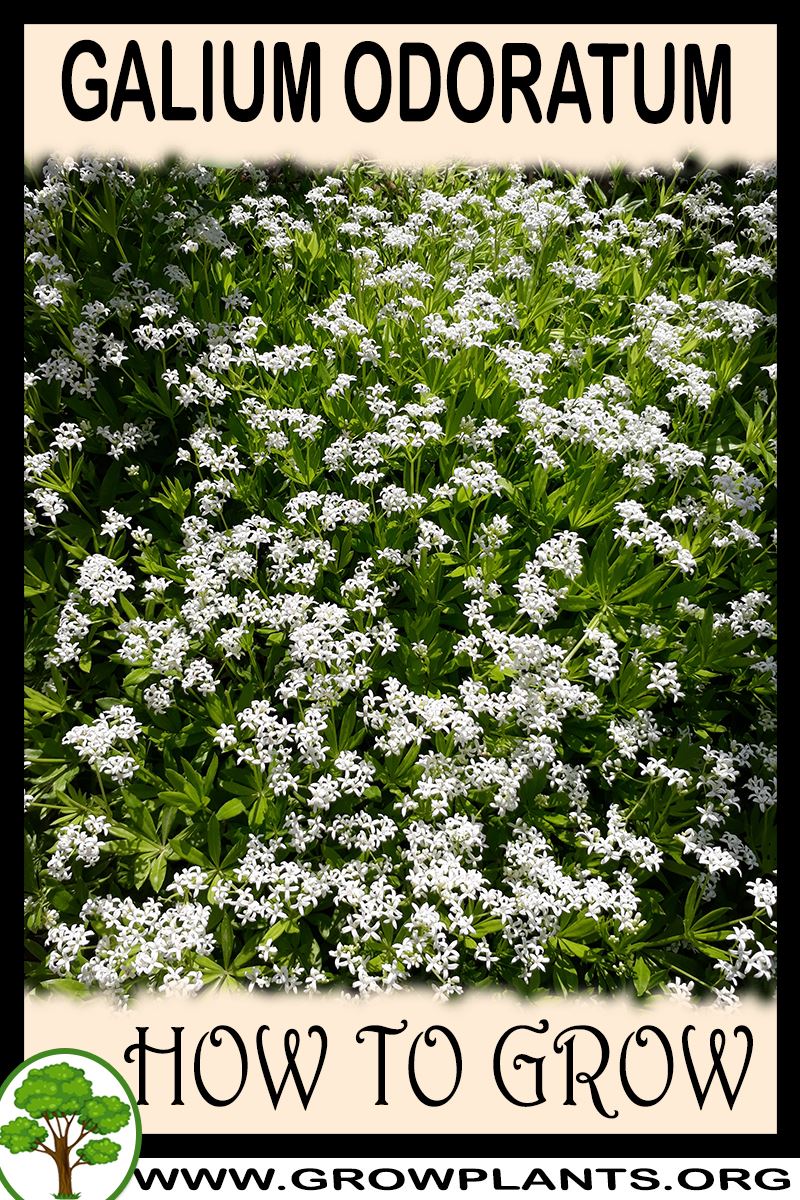
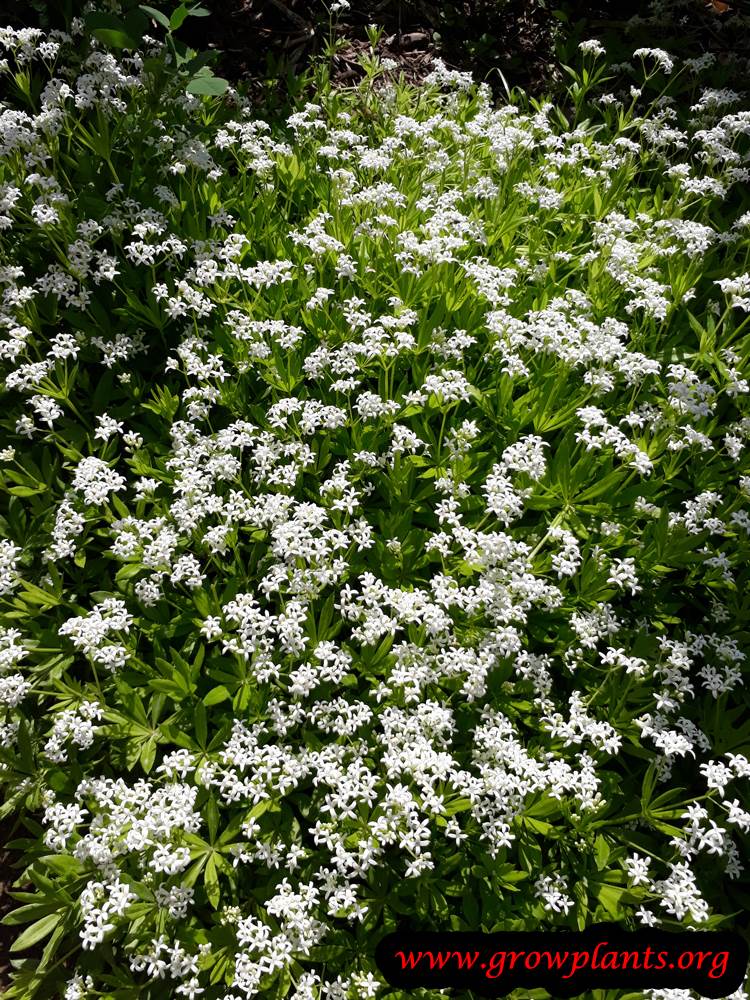
- Growth Habit & Form: Low, spreading groundcover with whorled foliage forming a dense mat.
- Lifespan & Maturity: Perennial that spreads to form colonies; blooms in spring and summer.
Anatomy & Physical Features
- Leaves & Foliage: Fragrant green leaves in whorled rings (ruff-like); dried foliage smells of fresh hay.
- Flower Characteristics: Small white, cross/star-shaped flowers borne in clusters.
Primary Uses & Landscape Value
- Edible Uses: Dried leaves are used in moderation to flavour drinks (traditionally May wine) and preserves.
- Functional & Ornamental Roles: Shade groundcover, aromatic and cottage-garden plant, suited to containers.
Care Guide: Planting, Soil & Watering
Overview: Sweet woodruff (Galium odoratum) is a fragrant, shade-loving ground cover that thrives in half to full shade in rich, moist soil. It likes consistently damp ground and spreads quickly to carpet a woodland floor.
Quick Care Requirements
| Requirement | Ideal Condition |
|---|---|
| Planting Season | Spring to summer |
| Growth Rate | Moderate to fast |
| Soil Type | Rich, moist, humus-rich |
| Water Need | Moderate to high; keep the soil moist |
Planting & Establishment
- Best Planting Season: Plant in spring or summer in a shaded, damp spot beneath trees or shrubs.
- How to Plant:
- Hole Preparation: Dig a hole as wide as the root ball, spacing plants to let them knit together.
- Soil Amendments: Work in leaf mould or compost for a rich, moisture-holding, humus-rich soil.
- Planting Depth: Set the crown level with the soil surface and firm in gently.
- Growth Speed & Expectations: A quick, spreading grower only 15-30 cm tall; it runs freely and can become invasive, so give it room or contain it.
Soil, Watering & Drainage Care
- Soil Mix & Drainage Needs: Prefers a rich, moisture-retentive woodland soil; it will not thrive in hot, dry ground.
- Watering Schedule & Technique:
- Young / Newly Planted: Keep the soil reliably moist while plants establish.
- Established: Water regularly so the soil stays damp, especially in dry weather.
- Seasonal Adjustments: More water in summer heat; less in winter.
Climate, Light & Hardiness
Galium odoratum (sweet woodruff) is a cold-hardy, shade-loving groundcover for temperate and subtropical climates, needing half to full shade and tolerating USDA zone 5–9.
Quick Climate Specifications
| Climate Zones | Temperate, subtropical |
|---|---|
| USDA Hardiness Zones | 5–9 |
| Frost Tolerance | High |
| Light Conditions | Half Shade to Full Shade |
Sunlight & Light Exposure
Optimal Light Setup
Deep to partial shade suits this true woodland-floor plant best.
Direct Sun Requirement
Not applicable; full sun is not part of its comfortable range.
Temperature Extremes & Hardiness
USDA Hardiness & Regional Limits
Zone 5–9.
Cold Damage & Winter Protection
Very winter hardy as a dormant, cold-temperate groundcover.
Extreme Heat Tolerance
Moderate; benefits from shade and consistent moisture to handle the warmer parts of its range.
Wind, Humidity & Microclimate
Humidity Preferences
Prefers the humid, sheltered microclimate typical of woodland-floor plantings.
Rainfall & Seasonal Moisture
Needs consistently moist, rich soil.
Growing in Pots, Balconies & Indoors
Sweet woodruff is a low, shade-loving carpeter with whorled leaves and starry white flowers that smell of new-mown hay when dried. The grower rates it for both containers and indoor growing – one of the few here that genuinely tolerates a shadier spot.
Quick Details
- Container Size: A shallow pot, trough or basket – it spreads to fill the surface
- Indoor Suitability: Suitable indoors (grower); a shade-tolerant carpeter for a low-light spot
- Best Spot: Partial to full shade – a cooler, shaded balcony or a bright spot out of harsh midday sun.
- Soil & Drainage: Rich, moisture-retentive but free-draining mix (organic potting mix with some coir); it dislikes drying out.
- Watering in Pots: Keep the mix consistently moist – this one likes water – but make sure it drains freely; never let a potted plant go bone-dry.
Indoors & On the Windowsill
- A real houseplant: The grower confirms it grows indoors. Because it naturally grows in woodland shade, it copes with a low-light room far better than sun-lovers – give it bright indirect light to full shade and keep the mix moist.
- Spreading habit: It fills a pot by spreading roots, so it makes a neat indoor groundcover in a wide, shallow container; divide it when it gets congested.
On a Balcony or Patio
- Light & exposure: Ideal for a shaded or north-facing balcony where sun-lovers sulk; keep it out of hot direct sun, which scorches the foliage, and never let the pot dry out.
- Vigour: The grower flags it as invasive – a pot is the perfect way to enjoy it while keeping its running roots in check.
Choosing the Pot, Soil & Long-Term Care
- Pot & drainage: A wide, shallow pot or trough with drainage holes; keep the mix moisture-retentive, as this woodlander dislikes drying out.
- Potting mix: Use a well-aerated, organic-rich mix – quality potting mix, or peat/coir blended with perlite or vermiculite.
- Feeding: A light feed through the growing season is plenty – it is not a hungry plant.
- Repotting: Divide and refresh the mix every year or two to keep it from becoming pot-bound.
Fertilizing & Feeding
A light feeder: this woodland groundcover thrives on rich, moist soil and organic matter, needing only modest supplemental feeding during active growth and none while it rests.
Quick Fertilizing Specs
| Feeding Level | Light feeder |
|---|---|
| Main Nutrient Priority | Balanced feeding with adequate nitrogen for lush, fragrant foliage |
| Best Feeding Period | Spring through the active growing season |
| Organic Options | Leaf mold, compost, and other woodland-style organic matter |
| Reduce/Stop Feeding | Feeding is withheld once the plant dies back or growth slows for the cool season |
| Micronutrients | Usually met by rich, organic soil and a complete fertilizer; correct only diagnosed issues |
| Soil pH | Tolerates a wide range; naturally at home in rich, near-neutral woodland soil |
Feeding by Growth Stage
Establishment after planting
Help newly planted divisions or starts root into the rich, moist soil this groundcover prefers.
| Nutrient direction | A balanced, gentle feeding paired with organic matter worked into the bed. |
|---|---|
| Timing | At planting and through the first season as the groundcover fills in. |
| Frequency | A light feeding at planting is usually enough to start it off. |
| Fertilizer types | A balanced complete fertilizer at a gentle rate, Leaf mold or compost worked into the planting bed |
| Precautions | Keep new plantings evenly moist; this shade-loving groundcover does not tolerate drying out while establishing. |
Active spread and foliage growth
Support the dense, fragrant, whorled foliage as this vigorous spreader fills its space.
| Nutrient direction | Balanced feeding with adequate nitrogen keeps the ground cover lush without overpowering the bed. |
|---|---|
| Timing | Through the warm active growing season. |
| Frequency | An occasional light feeding is enough given how readily this plant spreads. |
| Fertilizer types | A balanced complete fertilizer, Compost or leaf mold as a light top-dressing |
| Precautions | Because this species spreads readily and can become invasive, avoid heavy feeding that pushes even faster expansion. |
Dieback and cool-season rest
Let the planting rest through its autumn/winter cutback period without pushing new growth.
| Nutrient direction | None – withhold fertilizer while the foliage dies back and growth is inactive. |
|---|---|
| Timing | Autumn into winter, during and after seasonal cutback. |
| Frequency | No feeding during this rest period. |
| Fertilizer types | No feeding at this stage; do not fertilize until active growth resumes in spring. |
| Precautions | Withhold fertilizer now; feeding dormant growth wastes nutrients and can encourage rot in the resting crowns. |
Nutrient Deficiency Signs & Corrections
Foliage pales to light green or yellow and the groundcover fills in slowly.
| Possible causes | low available soil nitrogen, nitrogen leaching from consistently moist soil, thin soil low in organic matter |
|---|---|
| Appears first on | older, lower leaves |
| What to check | recent feeding history, soil organic matter and richness, drainage and how quickly the site dries |
| Possible correction | Apply a balanced complete fertilizer and refresh organic matter such as leaf mold or compost. |
New leaves turn yellow between distinctly green veins.
| Possible causes | high or alkaline soil pH limiting iron uptake, waterlogged, poorly aerated soil, root stress from compacted planting sites |
|---|---|
| Appears first on | newest leaves |
| What to check | soil pH, drainage and soil compaction, root health where the bed stays wet |
| Possible correction | Correct soil pH toward neutral and improve drainage; apply a chelated iron product per its label if the condition persists. |
Leaf margins brown or scorch and the planting looks stressed despite regular watering.
| Possible causes | fertilizer salt buildup in the root zone, over-fertilizing a naturally light-feeding groundcover, inconsistent watering that concentrates salts |
|---|---|
| Appears first on | leaf tips and margins |
| What to check | recent fertilizer amounts and frequency, watering consistency, soil drainage |
| Possible correction | Ease off feeding, water thoroughly to flush accumulated salts, then return to lighter, less frequent feeding. |
Pruning, Training & Seasonal Maintenance
Galium odoratum (sweet woodruff) is a low, mat-forming herbaceous groundcover spreading by underground rhizomes; it needs no structural pruning at all. The only real tasks are tidying tired or dead foliage — usually in autumn or winter — and periodically trimming back the spreading edge of the mat, since the species is noted to be invasive and can outrun its allotted space if left unchecked.
Quick Pruning & Maintenance Specs
| Pruning Tolerance | High (regrows readily from the rhizome mat) |
| Primary Pruning Window | Autumn / winter – cut back dead or tatty foliage |
| Typical Frequency | Once yearly tidy, plus spot edge-trimming as needed |
| Main Objective | Tidiness and containing spread, not shaping |
| Best Tool Type | Precision snips / hand shears for mat trimming |
Pruning by Plant Age & Size
Newly Established
No pruning — let new divisions or plugs knit together and spread to fill in.
Young / Formative
No training system applies to a spreading groundcover; simply keep the planting area edges defined while it establishes.
Mature / Established
Shear or snip the whole mat back lightly in autumn or winter to remove tired foliage and keep growth fresh; trim back any rhizome runners that have crept beyond the intended bed line.
Special Growth to Remove
Because the plant spreads by rhizomes and self-seeds readily (flagged as invasive), trim or pull runners/stolons that cross bed edges or paths before they root in and establish new patches.
Container & Small-Space Pruning
Grows well in pots; because container space is limited, trim the mat back harder and more often than an in-ground planting, and divide and reduce the rhizome mass every couple of years at repotting to keep it in bounds.
Tools
Precision snips for spot dead-foliage removal, or light hand shears for a whole-mat trim — no loppers or saw are ever needed on this fine, herbaceous groundcover.
Tool Hygiene & Disease Risk
Routine — only aphids and spider mites are noted; ordinary clean tools are sufficient.
Cut Placement & Technique
Trim above the crown/rhizome level rather than scalping into bare soil, so the mat can resprout evenly.
Heavy Pruning & Rejuvenation
The whole mat can be cut back hard in dormancy without harm — it is fast-to-medium growing and regenerates readily from the rhizome network.
Post-Pruning Care
Water lightly if cutting back during a dry spell; no fertilizing is needed for regrowth.
Common Pruning Mistakes
Letting the spreading mat go untrimmed at bed edges, allowing it to become weedy in adjacent areas; cutting back so late in spring that it interferes with the spring flower display.
When NOT to Prune
Avoid a full cutback during the spring–summer bloom period if the fragrant white flowers are wanted, and avoid trimming during periods of heat stress.
Recommended Tools (by task)
- precision_snips – spot removal of dead foliage and trimming stray rhizome runners at bed edges.
Propagation Guide
Sweet woodruff is easiest to propagate by dividing rooted pieces of its spreading rhizomatous mat, which establish quickly given how vigorously (and, per this site, invasively) the plant spreads; it also self-seeds readily, though seed can germinate slowly and unevenly. Overall it is an easy plant to propagate, especially vegetatively.
Quick Propagation Specs
| Best Propagation Method | Division of rooted rhizome sections |
| Alternative Methods | Seed; stem-tip cuttings |
| Propagation Difficulty | Easy |
| Seed True-to-Type | Usually true-to-type |
| Vegetative True-to-Type | Yes |
| Best Propagation Season | Division in spring or autumn |
Growing from Seed
Sweet woodruff self-seeds readily in the garden (a large part of why it is noted as invasive here). Germination can be slow and uneven; sowing outdoors in autumn, so seed experiences a natural cold winter period, or giving stored seed a cold, moist spell before sowing, tends to improve and even out germination.
Stem Cuttings
Given its vigorous, mat-forming, creeping-stem habit, short stem-tip cuttings taken during the growing season will generally root in a moist, humid rooting medium, though this is rarely necessary given how easily the plant divides.
Division, Offsets, Pups & Suckers
Lift a section of the spreading mat and separate it into rooted pieces, each with roots and a few nodes/shoots attached. Replant shallowly and keep moist until re-established – given the plant’s vigorous, invasive spreading habit, divisions take hold quickly, in spring or autumn.
Bloom & Edible Flower Guide
Quick Details
- Bloom Season: Spring into summer
- Flower Appearance: Tiny white four-petalled (cross-shaped) flowers in loose clusters above whorled leaves
- Edibility: Edible in moderation – the fragrant flowering tops traditionally flavour ‘May wine’ and cordials (they contain coumarin, so are used only in small amounts)
Detailed Blooming Overview
Sweet woodruff carpets shady ground and, in spring into summer, sprinkles tiny white cross-shaped flowers in airy clusters above its ruff-like whorls of leaves. As it dries, the plant releases a sweet, hay-and-vanilla scent (coumarin), and the fragrant flowering tops are the classic flavouring for German ‘May wine’ and cordials. Because coumarin can be harmful in quantity, it is used only in small amounts.
Flower Characteristics
- Tiny white flowers with four petals arranged in a cross, in loose clusters.
- Held above whorls of narrow leaves; sweetly scented, especially as it dries.
- A traditional edible flavouring, used sparingly.
Bloom Care & Thinning
- Harvesting: Pick the flowering tops for flavouring; a light wilt or dry brings out the scent.
- Managing the bloom: Shear over after flowering to keep it neat and to check its spread, as it can be invasive.
Fruit & Uses
Caution first: the fragrant leaves contain coumarin and are used only as a light flavoring in small quantities, wilted or dried – not eaten as a leafy green. Their main traditional use is to flavor beverages (most famously German Maiwein/May wine) and herbal teas, and to scent linens and potpourri.
Quick Edible Specs
| Edible Parts | Leaves (as flavoring) |
|---|---|
| Main Use(s) | Culinary flavoring (wine, tea, syrups); also used decoratively for scent (potpourri, linen sachets) |
| Eaten Raw or Cooked | Not eaten as a food itself – infused/steeped, then removed |
| Preparation Required | Wilt or dry the cut leaves briefly before use; use sparingly; remove leaves before serving |
| Harvest Season | Spring, ideally just before or during flowering (see Blooming) when fragrance is strongest |
| Time to First Harvest | Leaves can be cut once the ground-cover patch is established and filling in |
| Storage | Dry leaves in a single layer out of direct sun; store dried leaves in a sealed, dark container |
| Safety/Toxicity Caveat | Contains coumarin – use only small amounts occasionally, not as a bulk green; excessive intake is discouraged |
Leaves & Greens
The whorled, fragrant leaves develop their characteristic sweet, hay-like/vanilla scent as they wilt or dry – fresh leaves are far less aromatic. Traditionally a handful of wilted sprigs is steeped briefly in white wine (Maiwein) or other beverages, or dried for use in tea blends, then strained out before drinking. Cutting leaves for this purpose is light and occasional, similar to picking a culinary herb, and does not need to be timed against flowering for plant health.
Preparation, Uses & Safety
Always use in small quantities and remove the leaves after a short infusion rather than eating them outright – this is a flavoring/aromatic herb, not a salad green. Because of its coumarin content, avoid steeping large amounts or drinking concentrated, undiluted infusions regularly. No cooking is required, only brief wilting/drying and steeping.
Pests, Diseases & Troubleshooting
Overview: Sweet woodruff is one of the most trouble-free shade groundcovers – its coumarin-scented foliage is largely ignored by pests and disease. The only real issues are the ones you invite by growing it wrongly: scorch and dieback in hot dry sun, occasional slug damage on soft spring growth, and crown rot in badly drained soil, while its main ‘fault’ is spreading too enthusiastically.
Quick Troubleshooting Overview
| Issue / Pest | Main Symptom | Primary Solution |
|---|---|---|
| Slugs & snails | Young spring shoots rasped and holed | Iron-phosphate bait; clear damp litter (usually minor) |
| Aphids | Occasional soft insects on new growth | Rinse off; rarely needs treatment |
| Spider mites | Fine speckling only in hot, dry, sunny sites | Move to shade/moisture; hose foliage |
| Powdery mildew | White bloom on leaves in dry, crowded, stressed plants | Improve moisture/airflow; shear back |
| Leaf scorch | Bleached, browned foliage in sun and dry soil | Grow in shade with moist humus-rich soil |
| Invasive spread | Runs by rhizome and self-seed beyond bounds | Edge/barrier; pull excess; site where it can roam |
Common Pests & Management
- Aphids (Aphidoidea):
- Symptoms: Only occasionally, small colonies of soft green aphids appear on the tender new shoots in spring, with a little sticky honeydew; damage is negligible on this vigorous carpeter.
- Prevention & Control: Simply rinse them off with water or leave them to natural predators – woodruff is robust enough to shrug off light aphid activity without intervention.
- Slugs & snails (Gastropoda):
- Symptoms: Soft emerging spring shoots and low leaves can be rasped and holed in damp shady conditions, though the coumarin-scented foliage is not a favourite food.
- Prevention & Control: Clear damp hiding places and use iron-phosphate pellets or traps only if seedlings or fresh growth are being grazed; established mats easily outgrow minor damage.
- Two-spotted spider mite (Tetranychus urticae):
- Symptoms: Fine pale stippling and bronzing appear only when woodruff is wrongly grown in hot, dry, sunny positions that stress it; healthy shade plants are not affected.
- Prevention & Control: The real fix is cultural – move it to cool, moist shade. Hosing the foliage discourages mites; sprays are almost never warranted on a correctly sited plant.
Diseases & Fungal Issues
- Powdery mildew (Erysiphe spp.):
- Symptoms: A white powdery film can develop on the leaves of plants stressed by drought or growing in stagnant, crowded, dry conditions, causing some yellowing.
- Treatment & Management: Improve soil moisture and airflow, and shear stressed patches back to encourage fresh clean growth. Fungicide is rarely justified on a groundcover – correct the growing conditions instead.
- Rust (Puccinia spp.):
- Symptoms: Rarely, yellow spots with orange-brown pustules on the leaf undersides appear in damp conditions; it is uncommon and seldom serious.
- Treatment & Management: Remove affected foliage and improve airflow; the plant readily regrows clean. No chemical control is normally needed.
- Crown & root rot (Phytophthora / Pythium):
- Symptoms: In heavy, waterlogged soil the crowns and roots can rot, causing patches of the mat to yellow, wilt and die out.
- Treatment & Management: Grow in humus-rich but free-draining woodland soil; improve drainage on heavy ground and avoid overwatering. Remove rotted patches and let healthy runners recolonise.
Growing Difficulties & Abiotic Problems
- Leaf scorch in sun / drought:
- Cause & Symptoms: Full sun and dry soil bleach and brown the delicate foliage, causing it to crisp and die back – its commonest problem, and entirely cultural.
- Correction Strategy: Grow in partial to full shade in cool, moisture-retentive, humus-rich soil; mulch and water in dry spells. In the right spot it needs no other care.
- Invasive spreading:
- Cause & Symptoms: Woodruff spreads energetically by underground rhizomes and self-seeding, quickly colonising beyond its intended area.
- Correction Strategy: Plant where it can roam freely, or contain it with a physical edging/barrier; pull out excess runners and shear off seed heads to limit spread.
- Summer die-back:
- Cause & Symptoms: In hot dry summers the foliage may brown and go semi-dormant, recovering when cool moist conditions return.
- Correction Strategy: Keep the soil cool and moist with shade and mulch; the plant naturally refreshes with new growth once heat and drought ease.
What Helps – Products & Tools
Sweet woodruff barely needs a product cupboard – occasional iron-phosphate slug bait for fresh spring growth, and a simple water rinse for the rare aphid or mite. Its health is a matter of siting (cool, moist shade) rather than spraying; powdery mildew and rot are corrected by improving conditions, not by fungicide.