Plant Profile & Key Characteristics
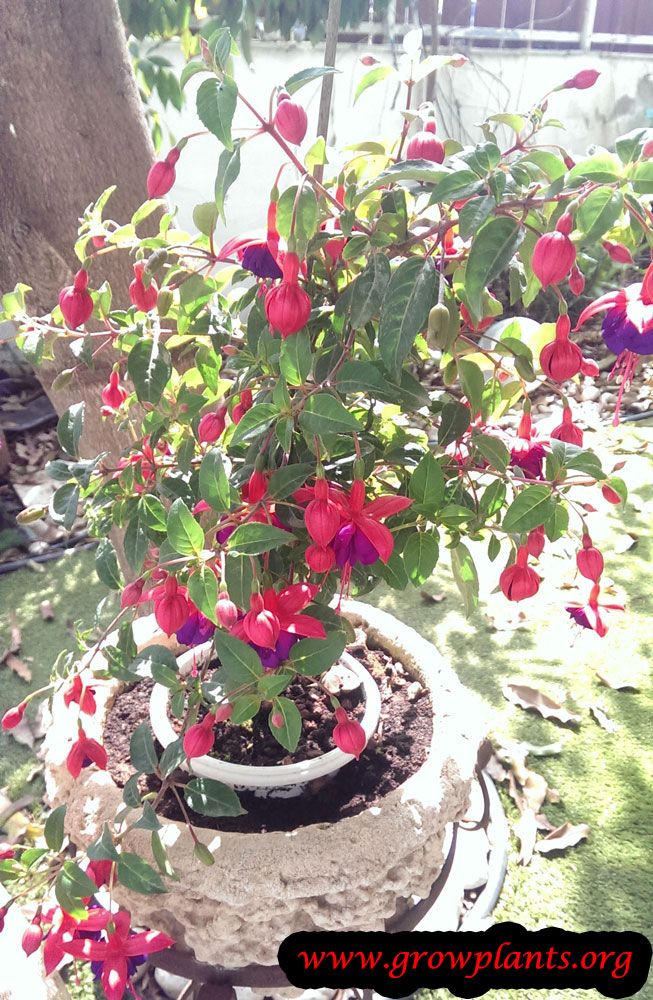
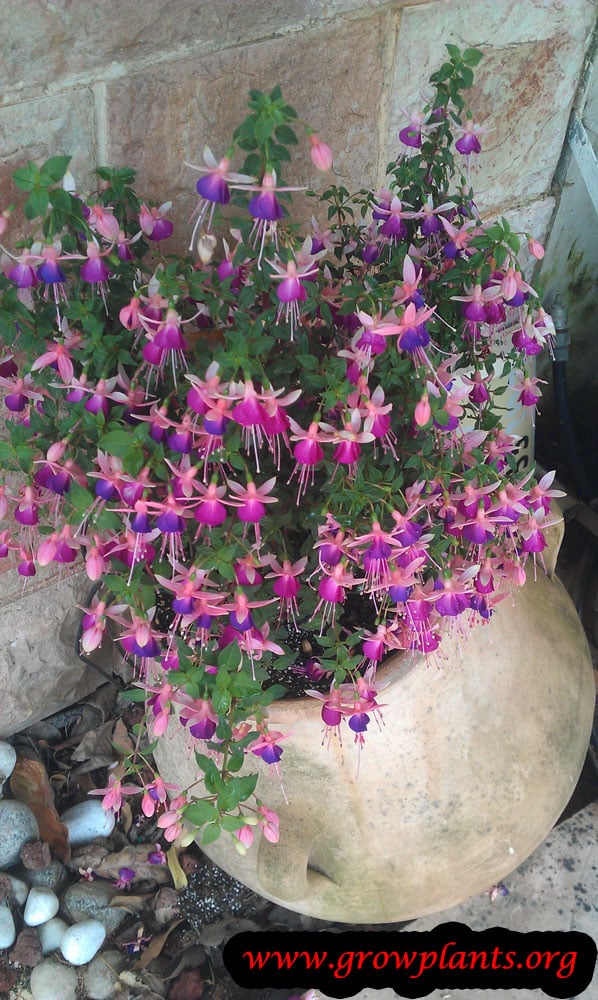
Overview: Fuchsia hybrida is a shrub 20–70 cm (8–28 in) tall grown as a tender perennial (or annual) for its distinctive pendent, two-tone flowers. It is a favourite for containers, hanging baskets and shaded borders and attracts pollinators.
Quick Specifications
| Specification | Attribute |
|---|---|
| Plant Type / Life Cycle | Perennial (evergreen) or annual |
| Foliage Type | Evergreen (deciduous or dies back in cold) |
| Mature Size | 20–70 cm (8–28 in) |
| Growth Rate | Moderate |
| Root System | Fibrous |
| Toxicity | Non-toxic; berries edible |
| Hardiness | USDA 5–10a (10b with care) |
Growth Form & Structure
- Height & Spread: 20–70 cm (8–28 in); excellent in 5–10 L (1–2 gal) containers and hanging baskets.
- Growth Habit & Form: Bushy, soft-wooded shrub with arching stems that display its hanging flowers; trains well in baskets.
- Lifespan & Maturity: Moderate; blooms within a few months from a cutting, more slowly from seed.
Anatomy & Physical Features
- Leaves & Foliage: Green elliptic leaves with lightly serrated margins.
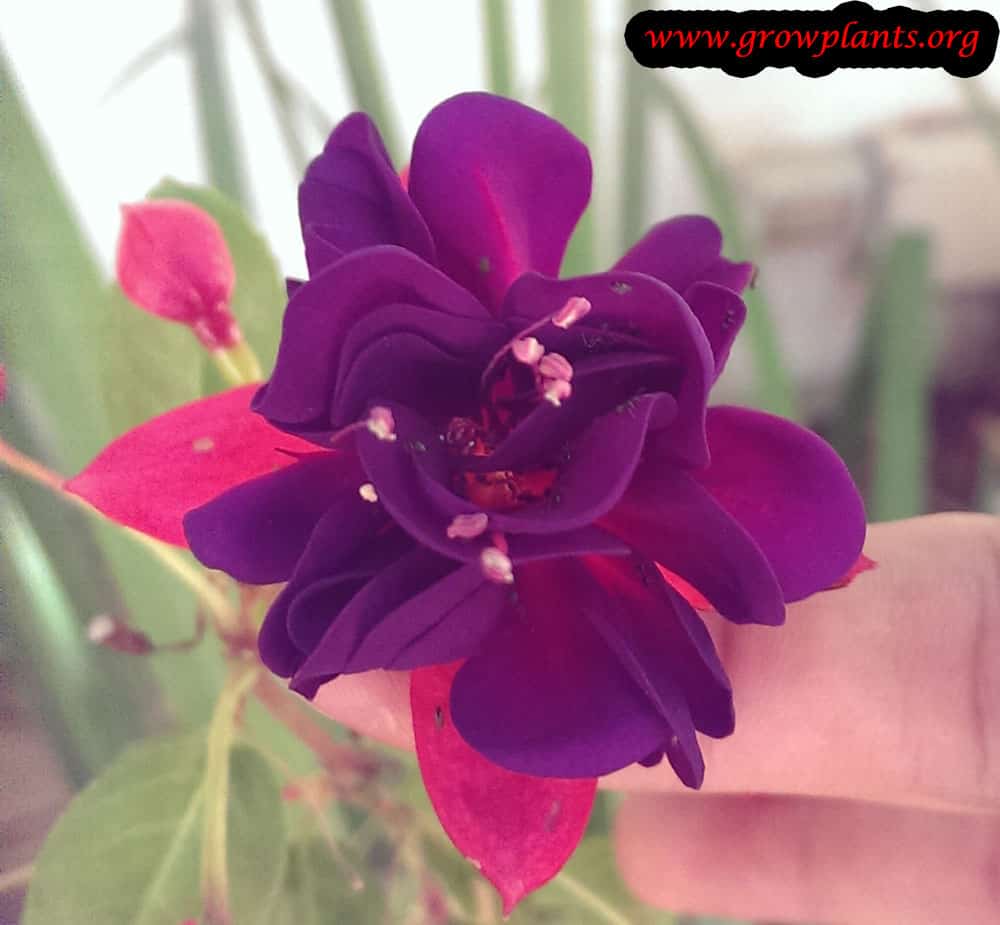
- Flower Characteristics: Pendent flowers in red, purple, white, pink and fuchsia – usually bicoloured – with a tubular centre and four flared petals.
- Fruit Profile: A small edible dark berry follows the flowers.
Primary Uses & Landscape Value
- Functional & Ornamental Roles: Ornamental container, hanging-basket, houseplant and shade-border plant; attracts bees and hummingbirds.
Care Guide: Planting, Soil & Watering
Overview: Fuchsias thrive in cool, frost-protected conditions with rich, organic, consistently moist soil and shelter from the hottest afternoon sun. They need steady moisture through the growing season and sharp drainage to avoid soggy roots, and they can struggle or die back in a heat wave.
Quick Care Requirements
| Requirement | Ideal Condition |
|---|---|
| Planting Season | Spring to summer in zones 5-10a; autumn to winter in zone 10b |
| Growth Rate | Moderate (slower from seed) |
| Soil Type | Rich, organic, moisture-retentive and well-draining |
| Water Need | Moderate to high – keep evenly moist, never bone-dry |
Planting & Establishment
- Best Planting Season: Plant in spring to summer in hardiness zones 5-10a, or autumn to winter in zone 10b – aim for the milder part of the year so it establishes before heat stress.
- How to Plant:
- Hole Preparation: Dig a hole wider than the root ball so the loosened roots can spread into friable soil.
- Soil Amendments: Work in plenty of organic matter, chopped dead leaves and humus to feed the plant and hold moisture.
- Planting Depth: Set the plant at the same depth it grew in its pot and cover the root ball lightly; do not bury the stem.
- Growth Speed & Expectations: Moderate growth to 20-70 cm (8-28 in); plants started from seed grow slowly and are unlikely to flower in their first year.
Soil, Watering & Drainage Care
- Soil Mix & Drainage Needs: Use a rich, well-ventilated mix with good drainage – potting mix or peat-based soil blended with perlite or vermiculite – so roots stay moist but never waterlogged. Mulch, especially in summer, keeps the soil cool and moist.
- Watering Schedule & Technique:
- Young / Newly Planted: Keep the soil evenly moist while the plant settles in, watering it in with the mulch in place.
- Established: Water regularly so the soil does not dry out, particularly through the blooming season.
- Seasonal Adjustments: Increase watering in hot spells above about 35C (95F); ease back in cool weather and while dormant.
Climate, Light & Hardiness
Fuchsia hybrida is a cool-climate flowering shrub for temperate, subtropical, and Mediterranean gardens, or indoors as a houseplant; it prefers full sun only where summers stay cool, shifting to half or full shade in warmer climates, and is hardy to about zone 5–10a, with 10b possible given attentive care.
Quick Climate Specifications
| Climate Zones | Temperate, subtropics, Mediterranean, or indoor as houseplant |
|---|---|
| USDA Hardiness Zones | 5–10a; possible in 10b with attentive care |
| Frost Tolerance | Low to Moderate |
| Light Conditions | Full Sun (cool climates) to Half Shade or Full Shade with light (warm climates) |
Sunlight & Light Exposure
Optimal Light Setup
In cool-summer climates full sun works well, but in warm-summer climates the plant needs half to full shade (with some light) to avoid leaf and flower scorch.
Direct Sun Requirement
Only appropriate where summers stay cool.
Shade & Heat Management
The plant's own notes warn it may die in a heat wave, and that a hot, sunny spot in a warm climate can burn or kill it - shade becomes the priority as climate warms.
Temperature Extremes & Hardiness
USDA Hardiness & Regional Limits
Zone 5–10a is its comfortable outdoor range, extending marginally into 10b for gardeners giving it extra care.
Cold Damage & Winter Protection
In zone 5–10a it is planted spring-to-summer, while in the mildest zone 10b it can instead be planted autumn-to-winter, reflecting a genuinely frost-light climate there.
Frost Sensitivity
Frost-tender top growth, though many types die back and resprout from the base in mild-frost climates.
Extreme Heat Tolerance
Poor; heat waves are a real risk to this species, and it needs increased water and shade once temperatures climb past roughly 35°C (95°F).
Wind, Humidity & Microclimate
Humidity Preferences
Benefits from higher humidity, especially during heat.
Microclimate Recommendations
In warm climates, an east-facing or otherwise shaded, cool microclimate meaningfully extends how well this plant performs through summer.
Growing in Pots, Balconies & Indoors
Fuchsias are made for containers, and the grower confirms they also grow well indoors with the right care. Their dangling, ballerina flowers are perfect for pots, baskets and a bright, cool windowsill – just keep them out of scorching sun and away from hot, dry air.
Quick Details
- Container Size: 5-10 L (1-2 gal), per the grower
- Indoor Suitability: A genuine houseplant (grower) given bright light and cool, humid air; a classic pot and basket plant
- Best Spot: Partial to full shade – a cooler, shaded balcony or a bright spot out of harsh midday sun.
- Soil & Drainage: Aerated, organic-rich mix (quality potting mix, or peat/coir with perlite or vermiculite); it must drain freely.
- Watering in Pots: Keep the mix consistently moist – this one likes water – but make sure it drains freely; never let a potted plant go bone-dry.
Indoors & On the Windowsill
- A real houseplant: The grower rates fuchsia as suitable indoors. Give it plenty of bright, indirect light and, crucially, keep it away from radiators and heat sources – it wants cool, humid, airy conditions.
- Windowsill growing: Compact cultivars flower happily on a bright sill out of harsh midday sun; mist or stand on a pebble tray to lift humidity.
- Overwintering: It is frost-tender, which is a key reason to pot it: in cold climates move it to a cool, bright, frost-free room over winter, water less, and bring it back out once frosts pass.
On a Balcony or Patio
- Light & heat: It loves a bright but sheltered spot with morning sun or dappled shade; strong afternoon sun and reflected wall heat can scorch it and dry the pot fast – the grower notes it may suffer above about 35C (95F).
- Watering: Keep the mix moist, never bone-dry, especially in flower and in heat; water so it drains through, and don’t let it sit in a tray.
Choosing the Pot, Soil & Long-Term Care
- Pot & drainage: A 5-10 L (1-2 gal) pot per the grower, with strong drainage holes; he advises against a saucer under the pot so water drains away freely and roots never stand wet.
- Potting mix: A well-aerated, organic-rich mix with good drainage – quality potting mix, or peat/coir with perlite or vermiculite.
- Feeding: Potted fuchsias flower hard and leach nutrients quickly – feed regularly through the growing season for continuous bloom.
- As a perennial: Per the grower, every two years swap out the soil and prune back part of the roots and top growth; when grown as an annual, start with fresh mix each season.
Grower’s Container Tip
- Grower’s routine: Keep the mix moist but ensure water always runs out of the pot, and skip the saucer beneath it; then every second year refresh the soil and lightly prune both roots and stems to keep the plant vigorous and free-flowering.
Fertilizing & Feeding
Fuchsia hybrida is grown for its long, pendulous flower display through spring and summer, whether in the garden, in containers, or as a houseplant. It is a moderate feeder – steady, balanced feeding through its active growth and bloom period keeps flowering going, since this species blooms over an extended season rather than in one short flush; feeding is eased off and then withheld as the plant slows down or is cut back for its rest period.
Quick Fertilizing Specs
| Feeding Level | Moderate |
|---|---|
| Main Nutrient Priority | Balanced feeding with adequate nitrogen supports the leafy growth that carries flowers through a long bloom season; there is no need for a special high-phosphorus formula to improve flowering |
| Best Feeding Period | Spring through summer while the plant is actively growing and flowering |
| Soil pH | Prefers rich, moist, well-drained soil; tolerates a normal range of soil pH |
| Reduce/Stop Feeding | Ease off as the bloom season winds down in autumn, and stop feeding entirely once the plant is cut back or dies down for its rest period |
| Organic Options | Working organic matter such as compost or leaf mold into the planting hole, and mulching to keep soil moist, supports this plant’s preference for rich, moisture-retentive soil |
Feeding by Growth Stage
Spring establishment and growth
Build strong leafy growth in spring as the plant comes into active growth, whether newly planted, freshly potted, or resuming after winter
| Nutrient direction | Balanced feeding with adequate nitrogen supports vigorous leafy growth that will carry the coming bloom season |
|---|---|
| Timing | Spring, as new growth begins after planting, potting, or the end of winter rest |
| Frequency | Regular light feedings through this period support steady growth without letting the plant go hungry between applications |
| Fertilizer types | A balanced, complete liquid fertilizer suited to flowering container plants or garden perennials, A balanced controlled-release fertilizer worked into the potting mix or planting hole |
| Precautions | Avoid heavy feeding right after planting or repotting, since a stressed or limited root system cannot take up a large nutrient load |
Bloom and repeat bloom
Sustain the extended flowering display through the main growing season, since Fuchsia blooms in waves rather than a single short flush
| Nutrient direction | Steady, balanced feeding through the bloom season keeps new flowering shoots coming; keeping soil consistently moist during this period matters as much as feeding for sustaining flower production |
|---|---|
| Timing | From the start of flowering through the main summer bloom season |
| Frequency | Regular light feedings spaced through the bloom season keep flowering going, tapering off toward the end of the season |
| Fertilizer types | A balanced, complete liquid fertilizer applied through the growing season, A controlled-release balanced fertilizer as a base feeding for container plants, supplemented with light liquid feeding through bloom |
| Precautions | Avoid letting soil dry out during bloom, since drought stress reduces flowering independent of feeding; ease off feeding as days shorten and bloom naturally slows |
Rest period
Let the plant rest after bloom finishes, whether it is cut back and overwintered as a perennial or has completed its life cycle as an annual
| Nutrient direction | None – withhold fertilizer during the rest period |
|---|---|
| Timing | Autumn into winter, after flowering has finished and the plant is cut back or has died down for the season |
| Frequency | No feeding at this stage |
| Fertilizer types | No feeding at this stage; resume light feeding once new growth resumes in spring for plants kept as perennials |
| Precautions | Do not fertilize a plant that has been cut back for rest or that is finishing its life cycle as an annual, since feeding now offers no benefit |
Nutrient Deficiency Signs & Corrections
Fewer flowers than expected during the main bloom season, along with pale or weak leafy growth
| Possible causes | Nitrogen deficiency limiting the leafy growth that carries flowers, Heat stress, since this species can struggle and even decline in a heat wave regardless of feeding, Inconsistent soil moisture, since dry spells reduce flowering directly, Insufficient light for the plant’s position |
|---|---|
| Appears first on | New growth and the current season’s flower production |
| What to check | Recent feeding history through the growing season, Soil moisture consistency, Temperatures the plant has been exposed to, Light exposure at the site |
| Possible correction | Resume regular light feeding during active growth if the plant has been underfed, and address soil moisture and heat exposure, since both affect flowering as much as or more than fertilizer |
New leaves yellow between the veins while the veins stay green
| Possible causes | Iron deficiency associated with alkaline or waterlogged potting mix that limits iron uptake, Overwatering or poor drainage causing root stress that reduces nutrient uptake broadly, Cool growing temperatures temporarily slowing nutrient uptake |
|---|---|
| Appears first on | Newest leaves |
| What to check | Potting mix or soil pH and drainage, Whether yellowing is confined to new growth, which points toward iron, Recent watering frequency and growing temperature |
| Possible correction | Improve drainage and correct watering first; if chlorosis persists in an otherwise healthy, well-fed plant, a chelated iron product applied per its label can help |
Fine stippling or a dusty, mottled look on leaves along with generally weak growth
| Possible causes | Spider mite or whitefly infestation, common pests on this species, unrelated to a nutrient shortage, Underlying nutrient deficiency making the plant more prone to weak, pest-susceptible growth, Low humidity, which favors spider mites and stresses the plant independent of feeding |
|---|---|
| Appears first on | Undersides of leaves and new growth |
| What to check | Visible pests on the undersides of leaves, Recent feeding and watering history, Humidity around the plant, especially indoors |
| Possible correction | Treat the pest issue directly, since fertilizer will not resolve pest damage; only add light balanced feeding if the plant remains weak once pests are managed |
Pruning, Training & Seasonal Maintenance
Fuchsia hybrida is a soft-wooded shrub grown for continuous, showy flowers borne mainly on new growth, so pruning strategy centers on generating fresh flowering wood rather than shaping permanent structure. Where it is grown as a perennial (mild-winter zones) or overwintered indoors, a firm cutback in early spring before new growth starts is the single most useful cut, followed by light pinching and deadheading through the whole bloom season. Where grown as a warm-season annual, only ongoing deadheading and light shaping apply.
Quick Pruning & Maintenance Specs
| Pruning Tolerance | Moderate–High (tolerates a firm annual cutback) |
| Primary Pruning Window | Early spring, before new growth begins – renewal cutback |
| Secondary Maintenance Window | Ongoing through spring–summer–autumn – pinching & deadheading |
| Typical Frequency | One structural cut per year, light grooming continuously |
| Main Objective | Maximize current-season flowering wood; maintain bushiness |
| Young Plant Priority | Pinch growing tips to build a branched framework early |
| Mature Plant Priority | Annual renewal cutback plus season-long deadheading |
| Best Tool Type | Precision snips / bypass secateurs (soft, brittle stems) |
| Avoid Heavy Pruning During | Heat-wave stress and late in the season once frost is near |
Pruning by Plant Age & Size
Newly Established
Let young plants root in; pinch the growing tip once or twice after a few sets of leaves to encourage branching rather than a single leggy stem.
Young / Formative
No formal training frame is used for standard bushy plants — repeated pinching builds a multi-branched, compact shape. Standard-trained (tree-form) fuchsias instead need a single leader staked upright with all side shoots removed until the desired head height, then pinched to build a rounded crown.
Mature / Established
Cut the previous season’s growth back by about a third to a half in early spring to stimulate vigorous new flowering shoots; through the season, deadhead spent flowers and pinch leggy stems to keep the plant floriferous.
Flowering Wood
Flowers form on the current season’s new growth, not on older wood, so the spring renewal cut directly increases the amount of flowering wood produced that year. Deadheading spent flowers does not reduce future bloom (it is already on new wood); pruning too late in the growing season, however, leaves too little time to produce and flower new shoots before cool weather.
Structural Pruning & Training
Being soft-wooded, Fuchsia hybrida has no permanent scaffold to protect — annual renewal essentially resets the plant’s structure. Pinch to control legginess and remove any weak, thin interior shoots that won’t support flowers well.
Special Growth to Remove
Deadhead spent flowers and developing seed pods regularly to keep the plant blooming; on standard (tree-form) plants, remove any basal shoots that arise below the head to keep the single clear stem.
Container & Small-Space Pruning
Fuchsia hybrida is very commonly grown in pots and indoors. Pinch young container plants more frequently than in-ground specimens to prevent legginess in the limited root space, and give overwintered pot plants the same hard spring cutback before they resume growth.
Tools
Precision snips or bypass secateurs for pinching and deadheading; the stems are soft and brittle, so no loppers or saw are needed.
Tool Hygiene & Disease Risk
Routine — aphids, spider mite, whitefly and leafhoppers are the noted pest pressures rather than transmissible pathogens; clean, sharp tools are sufficient.
Cut Placement & Technique
Pinch just above a leaf node to force two new shoots; deadhead by cutting the spent flower stalk back to just above the next node or side shoot rather than leaving a bare stub.
Heavy Pruning & Rejuvenation
Tolerates a hard annual cutback well — this is standard practice, not a rare rescue measure — but handle the brittle stems carefully to avoid tearing bark at the cut.
Post-Pruning Care
Water normally after cutting back; avoid heavy feeding immediately after a hard prune since the plant is already being pushed into vigorous regrowth. Watch soil moisture closely in hot weather, as the plant is noted to struggle or die in heat waves.
Common Pruning Mistakes
Skipping the early-spring renewal cut and only deadheading, which leaves the plant leggy with fewer flowers; pruning too late in the season, leaving no time to produce a new flush of blooming wood; over-pinching non-standard plants into an unnaturally tight shape that reduces flower display.
When NOT to Prune
Avoid pruning during a heat wave or drought stress, and avoid a hard cutback too close to the first frost or too early before the last frost has passed.
Pruning Troubleshooting
| Problem | Possible Cause | What to Check | Corrective Action |
| Leggy, sparsely flowered plant | No spring renewal cut or insufficient pinching | Length of unbranched stems, age since last cutback | Cut back by a third to a half in early spring; resume regular pinching |
| Flowering tails off mid-season | Spent flowers not deadheaded | Presence of old flowers/seed pods | Deadhead promptly to redirect energy into new buds |
Recommended Tools (by task)
- precision_snips – pinching growing tips and deadheading individual flowers on soft new growth.
- bypass_secateurs – the annual spring renewal cutback of thicker season-old stems.
Propagation Guide
Stem cuttings are the best and fastest way to propagate Fuchsia hybrida, rooting readily in warm, humid conditions and producing a plant that blooms within a few months, whereas seed-grown plants (being hybrids) will not come true to the parent and, if grown as an annual, typically will not have time to flower in the same year. Vegetative propagation is effectively necessary to keep a particular flower colour/form, and overall the plant is easy to root from cuttings, though seed raising is more involved.
Quick Propagation Specs
| Best Propagation Method | Stem cuttings |
| Alternative Methods | Seed |
| Propagation Difficulty | Easy (cuttings); Moderate (seed) |
| Seed True-to-Type | Hybrid offspring vary |
| Vegetative True-to-Type | Yes |
| Best Propagation Season | Cuttings during the warm growing season; seed sown spring–summer, or started indoors in early winter |
| Seed Germination Time | 3–5 weeks |
| Cutting Rooting Time | Not specified on site; soft stem cuttings of Fuchsia typically root within a few weeks under warm, humid conditions |
| Germination Temperature | 20–25°C (68–77°F) |
| Seed Sowing Depth | On the soil surface or 0.5cm (0.25in) |
Growing from Seed
Seed Handling & Viability
Seeds are small; store saved seed in a dry, dark location until sowing.
Sowing Season
Spring to summer; can also be started indoors in early winter.
Sowing Depth & Orientation
Sow on the surface or under a very shallow 0.5cm (0.25in) covering; sowing onto vermiculite helps germination. Space plants at roughly 15x20cm (6–8in).
Germination Conditions
Use a potting mix or peat-based mix with vermiculite, kept at 20–25°C (68–77°F), with high humidity, light constant moisture and plenty of light.
Germination Time
3–5 weeks.
Seedling Care
Seedlings are delicate; let them grow a little before transplanting, keep humidity high, water with a fine spray (roughly twice a day), and give them more light as they develop.
Stem Cuttings
Cutting Type
Stem/tip cuttings.
Cutting Preparation
Keep cuttings above 20–25°C (68–77°F) at all times, and make sure any water used is not cold.
Rooting Setup
Root in high humidity, ideally in full shade. If rooting in water, change the water every few days; if rooting directly in soil, keep the soil moist and mist it, using a peat-based soil mix.
Rooting Hormone
Beneficial – using a rooting hormone is recommended for more reliable results.
Rooting Time
Not given specifically on site; under the warm, humid conditions described above, soft Fuchsia stem cuttings typically root within a few weeks, and cutting-grown plants can reach flowering within a few months – much sooner than plants grown as annuals from seed.
Bloom & Edible Flower Guide
Quick Details
- Bloom Season: Spring to summer (autumn to spring in frost-free zone 10b)
- Time to First Bloom: In its first season for many plants; it blooms on new growth
- Flower Appearance: Pendant “ballerina” flowers with a tubular centre and a flared skirt, often bicoloured in red, purple, pink, white or fuchsia
- Edibility: Edible – fuchsia flowers (and the berries) are non-toxic and edible, mild and slightly tart; nice as a garnish
Detailed Blooming Overview
Fuchsia’s dangling, two-toned flowers bloom over a long season on new growth, and they are a firm favourite with hummingbirds and other pollinators. Lightly fragrant and endlessly varied in colour, they keep coming as long as the plant is growing well.
Flower Characteristics
- Flowers have a cone-like centre with four outer petals forming the skirt; colours include red, purple, white, pink and fuchsia, usually more than one at once.
Bloom Care & Thinning
- Keeping it flowering: Pinch the shoot tips early to build more flowering branches, and feed regularly for continuous bloom.
- Prolonging the display: Remove developing berries and spent flowers to keep new buds forming.
Bloom Health & Protection
- Gray mould (Botrytis): Can spot and rot the blooms in humid, still air. What helps: improve airflow and clear away fallen flowers.
- Fuchsia gall mite: Where present, it distorts shoot tips and flower buds. What helps: prune out affected growth and choose more resistant types.
Fruit & Uses
Safety note: edibility here is a general-genus supplement, not confirmed site data – treat as a minor garden novelty rather than a reliable food crop. The small berries that follow the flowers are technically edible and can be eaten raw or made into jam, and the flowers themselves are edible and used fresh as a garnish; neither is a significant or dependable harvest on ornamental hybrids like this one.
Quick Edible Specs
| Edible Parts | Berries (fruit), flowers |
|---|---|
| Main Use(s) | Culinary (fresh snacking, jam/preserves from berries; garnish/salad decoration from flowers) |
| Eaten Raw or Cooked | Raw (berries and flowers); berries can also be cooked into jam |
| Preparation Required | None for fresh eating; remove stems/sepals before use |
| Harvest Season | Follows the bloom season (spring to summer; see Blooming) |
| Time to First Harvest | Berries form only after flowers are pollinated and fade – not every bloom flush sets fruit |
| Storage | Best eaten fresh; berries are soft and do not keep long |
| Safety/Toxicity Caveat | Not toxic, but flavor and texture vary widely by plant – taste a berry before relying on a harvest |
Fruit
After flowering, Fuchsia hybrida can set small, oblong berries a centimeter or two long that ripen from green to dark purple or nearly black. Ripe berries are soft to the touch and pull away easily. Flavor ranges from mildly sweet and grape-like to bland or slightly resinous depending on the individual plant, since ornamental hybrids are selected for flower display, not fruit quality. Ripe berries can be eaten out of hand or cooked down with sugar into a jam; taste-test a berry first, as quality is inconsistent.
Flowers & Flower Buds
The colorful pendant flowers are edible and have a light, slightly tart flavor. They are typically used whole or petals-only as a fresh garnish on salads and desserts rather than as a substantial food.
Preparation, Uses & Safety
No cooking or processing is required for either part. Rinse berries and flowers before eating to remove dust or spray residue, and only eat flowers/fruit from plants known not to have been treated with non-food-safe pesticides or fertilizers. This is a minor, inconsistent edible use rather than a plant grown for food – do not rely on it as a crop.
Pests, Diseases & Troubleshooting
Overview: Fuchsias are prized flowering shrubs whose defining pest is the fuchsia gall mite, with whitefly, aphids and vine weevil close behind, and whose signature disease is fuchsia rust; grey mould and root rot follow from cool damp or overwet conditions. Most trouble is manageable with vigilance, airflow, clean growing and prompt removal of the first galled or rusted growth. Hybrid fuchsias are the familiar showy bedding and basket types – vigorous and free-flowering but tender and among the most gall-mite- and whitefly-prone.
Quick Troubleshooting Overview
| Issue / Pest | Main Symptom | Primary Solution |
|---|---|---|
| Fuchsia gall mite | Reddened, thickened, distorted, galled shoot tips and flowers | Cut out and destroy galls; severe cases need repeat action |
| Whitefly | Tiny white flies rising from leaf undersides; honeydew | Yellow sticky traps, Encarsia, insecticidal soap |
| Aphids | Colonies on tips; honeydew; curled young growth | Blast off, beneficials, insecticidal soap |
| Vine weevil | Notched leaves (adults); wilting from root grubs | Nematodes, sticky barriers, fresh mix |
| Fuchsia rust | Orange pustules under leaves; yellow blotches on top | Remove affected leaves, airflow, fungicide if severe |
| Bud / flower drop | Buds and flowers fall before opening | Steady moisture, avoid heat/dryness stress |
Common Pests & Management
- Fuchsia gall mite (Aculops fuchsiae):
- Symptoms: The most serious and distinctive fuchsia pest: microscopic mites deform the growing tips, leaves and flowers into thickened, reddened, blistered, galled and hairy masses that look almost like a disease or peach-leaf-curl; growth is stunted and flowering ruined.
- Prevention & Control: Act early – cut out and destroy all galled growth well below the damage, disinfecting tools, and bin (never compost) the prunings. Isolate affected plants, as the mites spread on hands, insects and wind. Horticultural oil or sulphur/miticide sprays suppress it, but badly infested plants are often best destroyed; grow resistant species/cultivars where the mite is established.
- Glasshouse whitefly (Trialeurodes vaporariorum):
- Symptoms: Clouds of tiny white moth-like insects that fly up when leaves are disturbed, with scale-like nymphs on leaf undersides, sticky honeydew and sooty mould; a very common fuchsia pest under glass and in warm spots.
- Prevention & Control: Hang yellow sticky traps, introduce the parasitic wasp Encarsia formosa under cover, and treat undersides with insecticidal soap or a light horticultural oil on a regular cycle to break the life-cycle. Keep plants uncrowded and inspect new stock.
- Aphids (Aphis / Myzus spp.):
- Symptoms: Colonies of green or dark soft-bodied insects on shoot tips, buds and leaf undersides, with honeydew, sooty mould and curled, distorted young growth.
- Prevention & Control: Blast off with water, encourage ladybirds and lacewings, and use insecticidal soap or a light oil for heavy infestations, spraying in the evening to spare pollinators.
- Vine weevil (Otiorhynchus sulcatus):
- Symptoms: Adults notch the leaf margins at night, but the serious damage comes from the pale C-shaped grubs eating the roots of container fuchsias, causing sudden wilting and collapse – a major killer of potted plants.
- Prevention & Control: Drench pots with parasitic nematodes (Steinernema/Heterorhabditis) in warm moist compost, check the rootball for grubs at repotting and remove them, use sticky barriers for adults, and refresh the compost. Vigilance with container plants is essential.
- Two-spotted spider mite (Tetranychus urticae):
- Symptoms: Fine stippling, a dull bronzed cast and faint webbing on leaves grown hot, dry and airless, especially under glass.
- Prevention & Control: Raise humidity and airflow, rinse foliage, and treat with insecticidal soap or a light miticidal oil; predatory mites work well under cover.
Diseases & Fungal Issues
- Fuchsia rust (Pucciniastrum epilobii):
- Symptoms: The signature fuchsia disease: bright orange-brown powdery pustules on the leaf undersides with corresponding yellow, brown or reddish blotches on the upper surface; heavy infection yellows and drops leaves and weakens the plant. (Its alternate host is willowherb.)
- Treatment & Management: Pick off and destroy infected leaves at the first sign, improve air movement and spacing, avoid wetting the foliage and crowding, and clear fallen leaves and nearby willowherb. A suitable fungicide (e.g. sulphur or a rust product) helps on valued plants in bad years, but sanitation and airflow are primary.
- Botrytis (grey mould) (Botrytis cinerea):
- Symptoms: Fuzzy grey-brown mould on flowers, buds and soft or damaged growth in cool, damp, crowded, still conditions, causing rotting and dieback.
- Treatment & Management: Improve ventilation and spacing, avoid overhead watering and waterlogging, remove faded flowers and dead leaves promptly, and lower humidity. A protective fungicide helps under persistent damp.
- Root and stem rot (Phytophthora / Pythium spp.):
- Symptoms: Wilting despite wet compost, yellowing lower leaves, blackened stem bases and dark mushy roots, especially in overwet or poorly drained pots.
- Treatment & Management: Use free-draining compost and pots that drain, water when the surface begins to dry, and avoid standing water. Repot early rot into fresh mix with damaged roots removed, and take cuttings as insurance; discard collapsed plants.
Growing Difficulties & Abiotic Problems
- Bud and flower drop:
- Cause & Symptoms: Fuchsias drop buds and flowers when stressed – from irregular watering (drought then flood), heat, dry air, sudden moves or being pot-bound; this is very common on tender bedding and basket fuchsias in hot, dry spells.
- Correction Strategy: Keep the compost evenly moist (never dry out a flowering fuchsia), provide humidity and some shade from fierce midday heat, avoid moving plants in bud, and pot on before they become root-bound.
- Leaf yellowing / poor colour:
- Cause & Symptoms: Nutrient shortage (nitrogen or magnesium), waterlogged roots, or too little light pale the foliage and reduce flowering.
- Correction Strategy: Feed regularly through the growing season with a balanced then high-potash fertiliser for bloom, correct any waterlogging, and give bright light out of scorching sun; a magnesium (Epsom salts) supplement greens up interveinal yellowing.
- Sunscald / heat stress:
- Cause & Symptoms: Intense direct sun and heat scorch the leaves and wilt the plant, and baskets dry out fast.
- Correction Strategy: Site in bright, part-shaded, sheltered positions in hot climates, water and mist to keep humidity up, and mulch or self-water baskets to buffer moisture.
- Frost tenderness:
- Cause & Symptoms: Tender fuchsias are killed by frost and cannot survive cold winters outdoors.
- Correction Strategy: Overwinter frost-free (dormant and barely moist, or as rooted cuttings), and only put plants out after frost danger passes.
What Helps – Products & Tools
Vigilance and airflow are the core defences. For pests, cutting out gall-mite growth is essential (and resistant varieties where the mite is common), with yellow sticky traps and Encarsia for whitefly, insecticidal soap/horticultural oil for aphids and mites, and parasitic nematodes for vine weevil in pots. Against fuchsia rust and botrytis, sanitation and spacing lead, backed by sulphur/rust and grey-mould fungicides; steady watering and feeding prevent bud drop and yellowing.