

Plant Profile & Key Characteristics
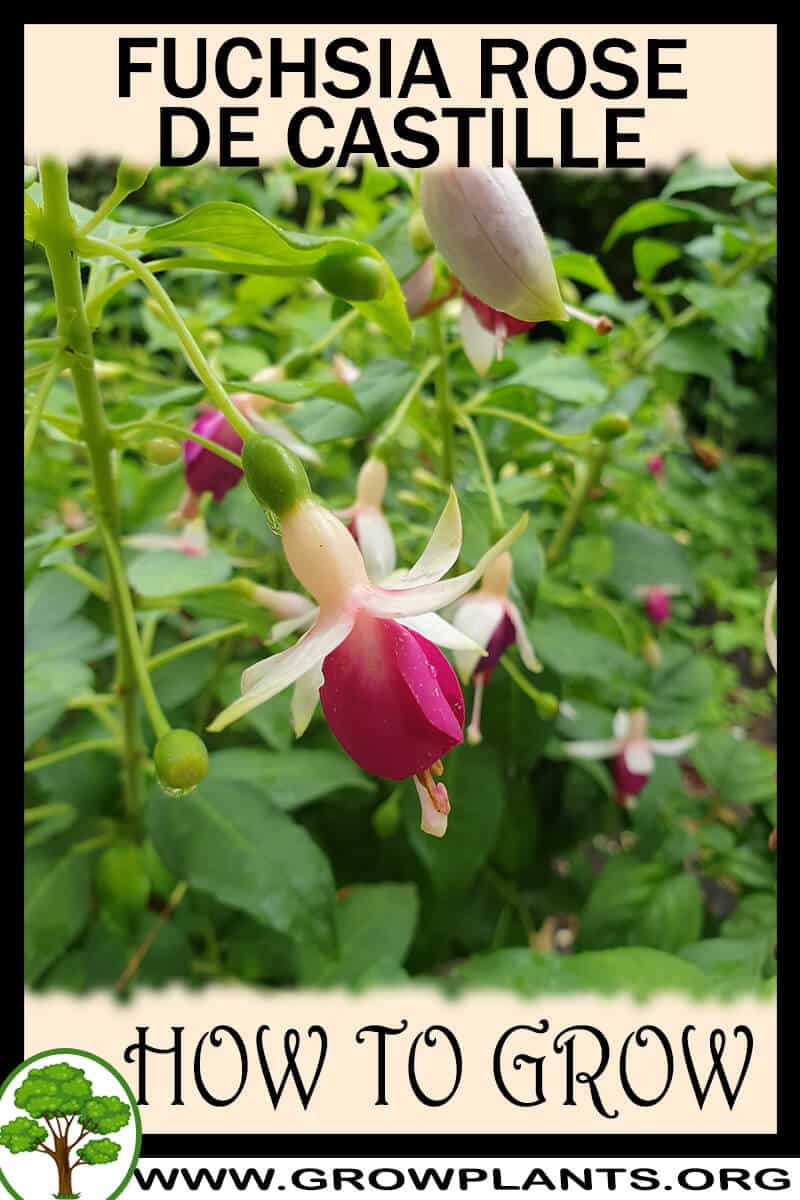
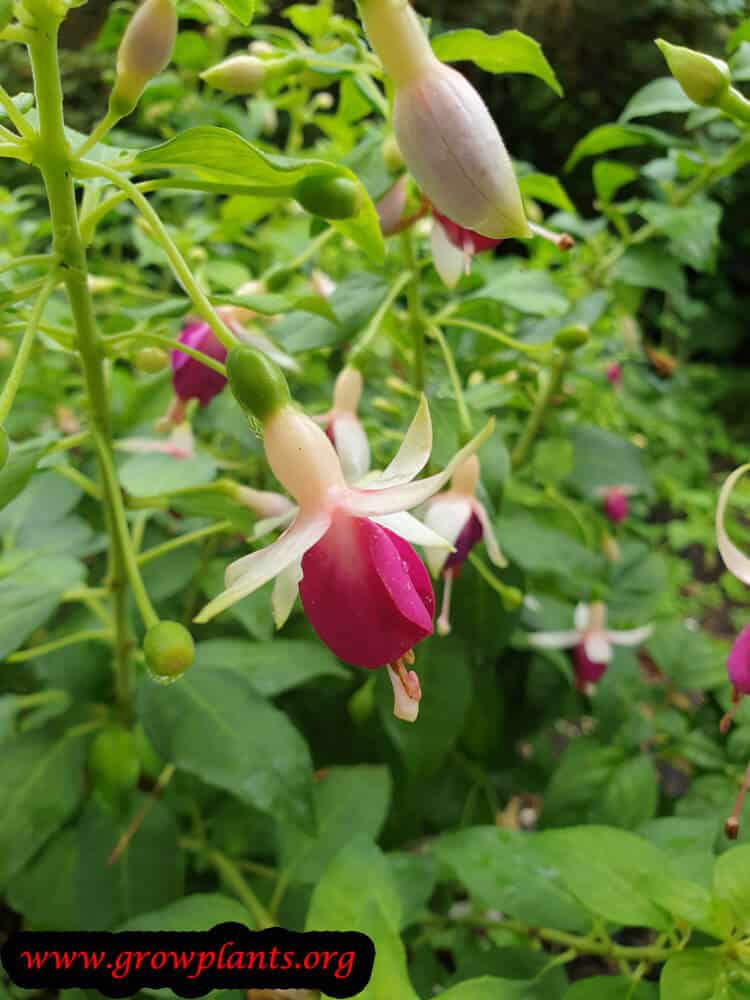
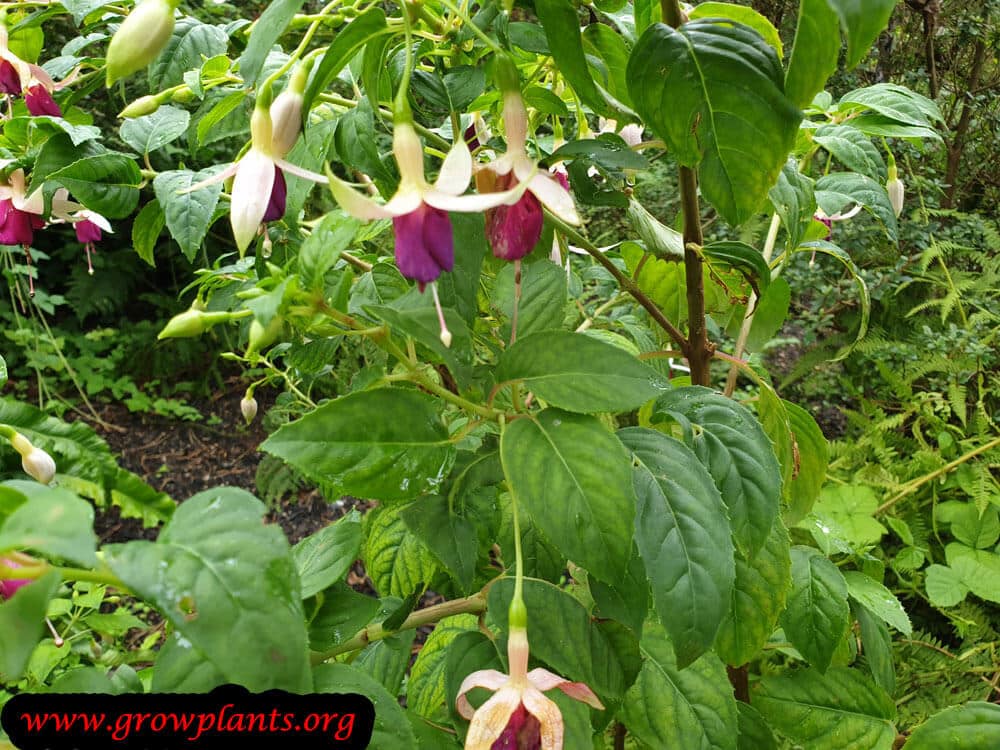
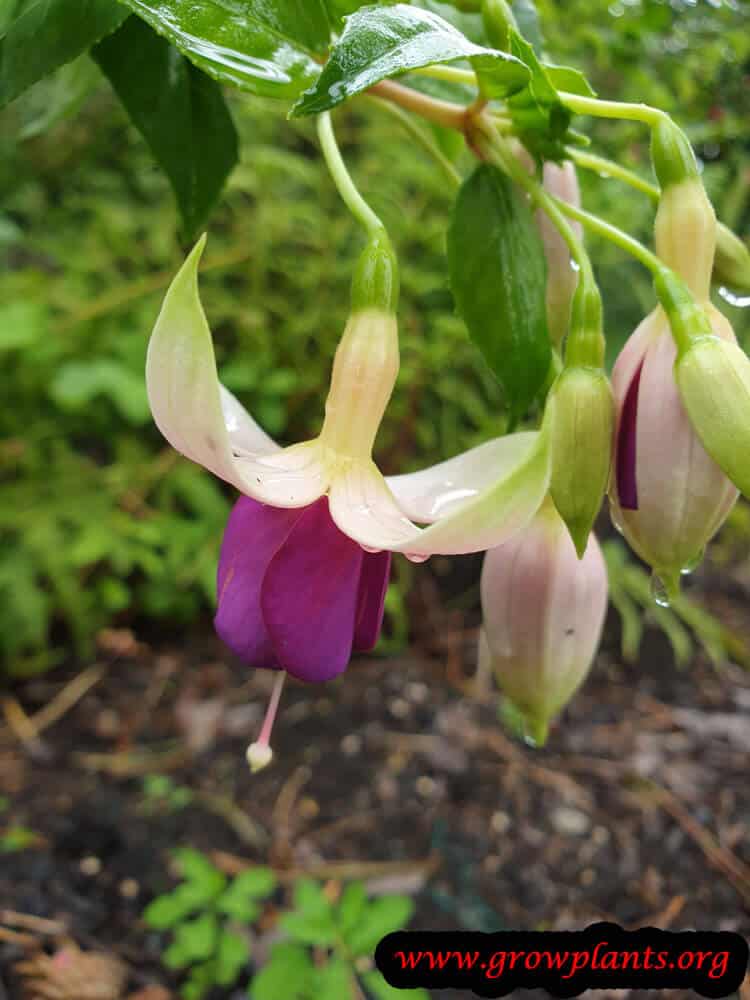
Overview: ‘Rose de Castille’ is a fuchsia cultivar, a shrub 20–70 cm (8–28 in) tall grown as a tender perennial or annual for its pendent purple, white and pink flowers. It is well suited to containers, hanging baskets and shaded borders and attracts pollinators.
Quick Specifications
| Specification | Attribute |
|---|---|
| Plant Type / Life Cycle | Perennial (evergreen or deciduous) or annual |
| Foliage Type | Evergreen to deciduous |
| Mature Size | 20–70 cm (8–28 in) |
| Growth Rate | Moderate |
| Root System | Fibrous |
| Toxicity | Non-toxic; berries edible |
| Hardiness | USDA 8–10 |
Growth Form & Structure
- Height & Spread: 20–70 cm (8–28 in); ideal for 5–10 L (1–2 gal) containers and hanging baskets.
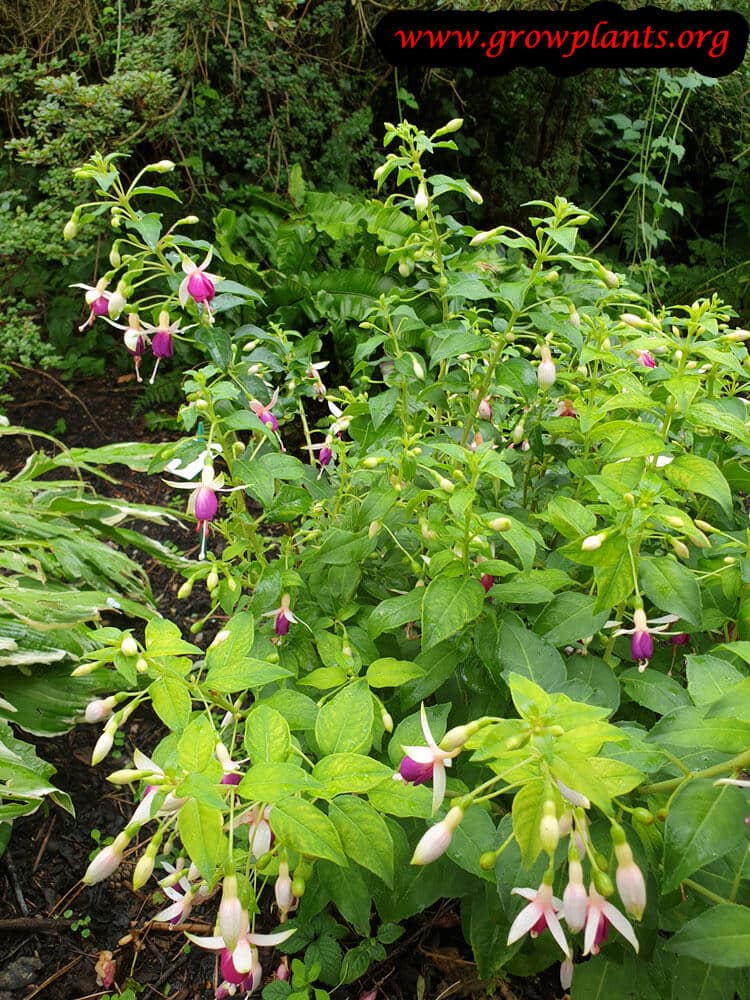
- Growth Habit & Form: Bushy soft-wooded shrub with arching flowering stems.
- Lifespan & Maturity: Moderate; flowers within a few months from cuttings.
Anatomy & Physical Features
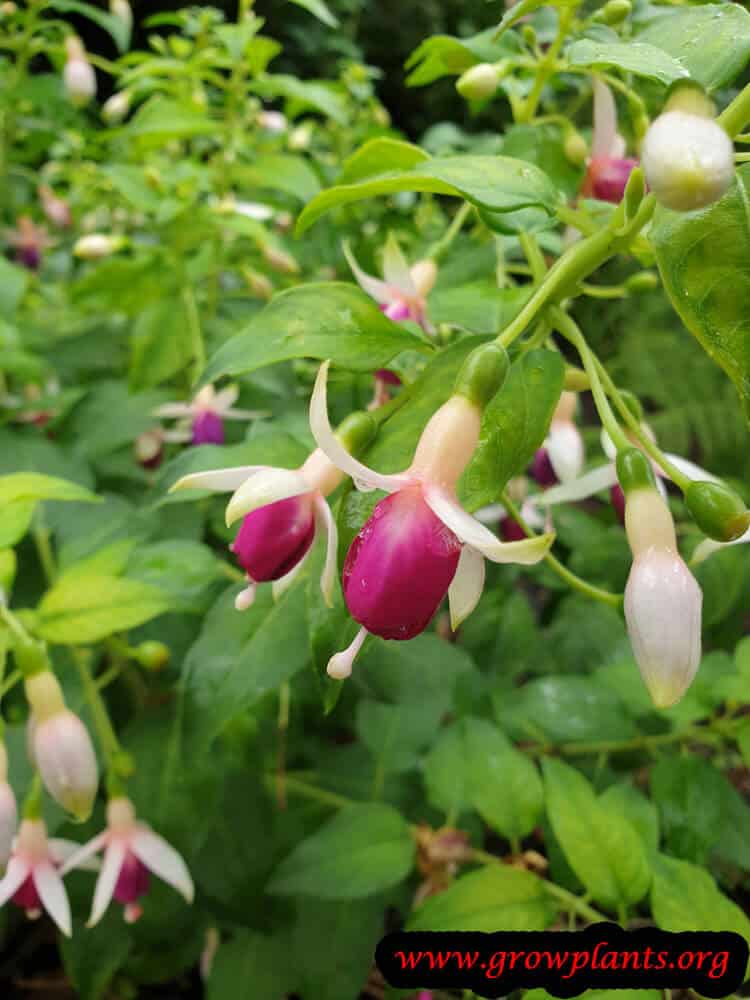
- Leaves & Foliage: Green elliptic leaves with lightly serrated margins.
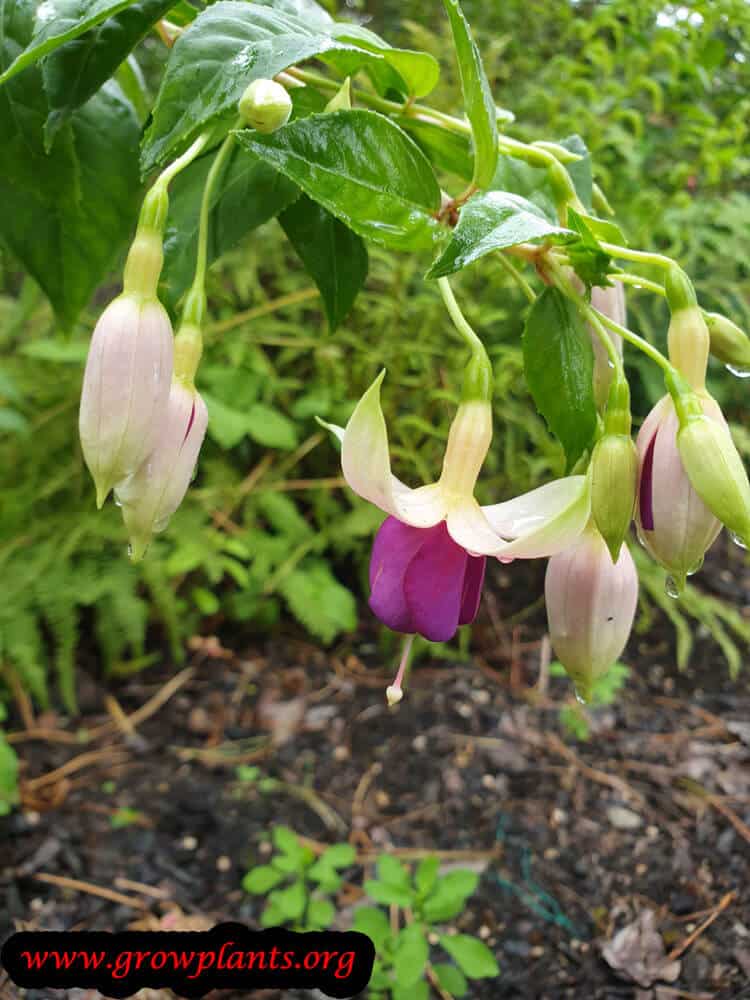
- Flower Characteristics: Pendent bicoloured flowers in purple with white and pink.
Primary Uses & Landscape Value
- Functional & Ornamental Roles: Ornamental container, hanging-basket, houseplant and shade-border plant; attracts pollinators.
Care Guide: Planting, Soil & Watering
Overview: Fuchsias thrive in cool, frost-protected conditions with rich, organic, consistently moist soil and shelter from the hottest afternoon sun. They need steady moisture through the growing season and sharp drainage to avoid soggy roots, and they can struggle or die back in a heat wave.
Quick Care Requirements
| Requirement | Ideal Condition |
|---|---|
| Planting Season | Spring to summer in zones 8-10a; autumn to winter in zone 10b |
| Growth Rate | Moderate (slower from seed) |
| Soil Type | Rich, organic, moisture-retentive and well-draining |
| Water Need | Moderate to high – keep evenly moist, never bone-dry |
Planting & Establishment
- Best Planting Season: Plant in spring to summer in hardiness zones 8-10a, or autumn to winter in zone 10b, in the milder part of the year.
- How to Plant:
- Hole Preparation: Dig a hole wider than the root ball so the loosened roots can spread into friable soil.
- Soil Amendments: Work in plenty of organic matter, chopped dead leaves and humus to feed the plant and hold moisture.
- Planting Depth: Set the plant at the same depth it grew in its pot and cover the root ball lightly; do not bury the stem.
- Growth Speed & Expectations: Moderate growth to 20-70 cm (8-28 in); slower from seed.
Soil, Watering & Drainage Care
- Soil Mix & Drainage Needs: Use a rich, well-ventilated mix with good drainage – potting mix or peat-based soil blended with perlite or vermiculite – so roots stay moist but never waterlogged. Mulch, especially in summer, keeps the soil cool and moist.
- Watering Schedule & Technique:
- Young / Newly Planted: Keep the soil evenly moist while the plant settles in, watering it in with the mulch in place.
- Established: Water regularly so the soil does not dry out, particularly through the blooming season.
- Seasonal Adjustments: Increase watering in hot spells above about 35C (95F); ease back in cool weather and while dormant.
Climate, Light & Hardiness
Fuchsia rose de castille is a cool-climate shrub that grows outdoors in temperate, Mediterranean, and mild subtropical regions, or indoors as a houseplant wherever summers run hot. It thrives in full sun only where summers stay cool, needs half to full (bright) shade for protection once temperatures climb, and is generally hardy to only approximately USDA zone 8–10, with summer heat waves posing more risk to this variety than typical winter cold.
Quick Climate Specifications
| Climate Zones | Temperate, subtropical, and Mediterranean climates outdoors; also grown as an indoor houseplant |
|---|---|
| USDA Hardiness Zones | Approximately 8–10 (planting timing shifts from spring–summer in zone 8–10a to autumn–winter in the milder zone 10b) |
| Optimal Temp Range | Cool to mild, roughly 15–25°C (59–77°F); sustained heat above about 30–35°C (86–95°F) stresses the plant |
| Cold Damage Begins | Foliage and flowers are generally damaged by hard frost at or below about 0°C (32°F) |
| Frost Tolerance | Low |
| Light Conditions | Full Sun in cool climates / Half Shade / Full Shade with bright light in hot climates |
Sunlight & Light Exposure
Optimal Light Setup
Give this fuchsia full sun only where summers remain cool; in most other climates, morning sun with afternoon shade, or bright filtered light all day, keeps flowering strong without scorching the foliage.
Direct Sun Requirement
Several hours of direct sun are welcomed in cool-summer climates, but direct midday sun in hot climates can burn leaves and flowers and, in extreme cases, kill the plant.
Shade & Heat Management
In warm-summer climates, move toward half shade or full but bright shade, since the source data notes the plant may be sunburned or even killed in a heat wave. Afternoon shade, mulch, and a consistently moist root run reduce heat stress considerably.
Best Exposure / Orientation
An east- or north-facing spot with gentle morning sun and shelter from the hottest afternoon exposure suits this variety best in warm regions; in mild, cool-summer or coastal areas a more open, sunnier position works well.
Temperature Extremes & Hardiness
USDA Hardiness & Regional Limits
This variety is generally hardy to only around USDA zone 8–10. Recommended planting timing reflects that limit: spring-to-summer planting in zone 8–10a, versus autumn-to-winter planting in the milder zone 10b where frost risk is minimal.
Cold Damage & Winter Protection
Precise frost-survival thresholds are not established in the source data, so winter cold should be treated cautiously: keep the root zone mulched, avoid exposed sites at the cold edge of zone 8, and expect foliage and flower damage from any hard frost. Where grown outside its hardiness range, the plant will not persist through freezing winters.
Frost Sensitivity
Frost sensitive overall; this is primarily suited to frost-free-to-mild-frost climates rather than bred for hard winter cold.
Extreme Heat Tolerance
Heat tolerance is limited - the source data specifically warns the plant may be sunburned or die in a heat wave, so afternoon shade, mulch, and consistently moist soil are important safeguards during hot spells.
Wind, Humidity & Microclimate
Humidity Preferences
Fuchsias generally favor moderate to high humidity; propagation guidance for this variety calls for high humidity and consistently moist (not cold) conditions, reflecting an overall preference for humid, temperate-type air over hot, dry conditions.
Dry-Air Tolerance
Dry air combined with heat is poorly tolerated and increases the risk of leaf scorch and flower drop; when grown indoors, keep the plant away from heating vents and hot, dry draughts.
Microclimate Recommendations
Favor a sheltered, part-shaded microclimate with good air movement but no hot, drying wind - for example, the shaded side of a building or beneath high tree canopy in warm climates, or a bright but unheated indoor spot away from heaters in winter.
Growing in Pots, Balconies & Indoors
Fuchsia ‘Rose de Castille’ is a compact flowering shrub (20-70 cm / 8-28 in), perfect for pots and hanging baskets. The grower says it can be grown indoors given enough light and kept away from heaters, so treat it as a bright, cool windowsill plant; it is at its best on a sheltered, part-shaded balcony or patio, and is classically overwintered indoors in cold climates.
Quick Details
- Container Size: About 5-10 L (1-2 gal); good for pots and hanging baskets
- Indoor Suitability: Possible indoors with enough light and away from heaters (grower’s note) – a bright, cool sill
- Best Spot: Full sun in cool climates (it can scorch or die in hot-summer sun), otherwise half shade to full shade with light
- Soil & Drainage: Well-ventilated, well-drained, rich mix – potting mix, or peat with perlite/vermiculite
- Watering in Pots: Average to plenty – keep the soil moist, especially in bloom and heat; never bone-dry, but drain freely
Indoors & On the Windowsill
- Indoors with light: The grower says it can be grown indoors if it gets enough light and is kept away from heaters. A bright, cool window suits it; hot, dry indoor air and heat drop the buds.
- Windowsill growing: Its compact size suits a sill or a hanging pot by a bright window; pinch the tips to keep it bushy and flowering.
- Overwintering: This is a key reason to pot it – in cold climates bring the container into a cool, bright, frost-free place for winter, water sparingly, and cut it back before growth restarts in spring.
On a Balcony or Patio
- Light & heat: In cool climates it takes full sun; where summers are hot, give half to full shade with light, as the grower warns strong sun can scorch or even kill it. It also suffers in heatwaves, so keep it cool, shaded and well-watered then.
- Practicalities: Ideal for hanging baskets and railing pots; these dry fast, so check moisture daily in warm weather and never let it wilt in bloom. A drip irrigation kit with a timer can take over that watering check automatically.
Choosing the Pot, Soil & Long-Term Care
- Pot & drainage: Around 5-10 L with strong drainage holes; the grower advises no saucer under the pot so water drains straight through and the roots don’t sit wet.
- Potting mix: Well-ventilated, well-drained and rich in organic matter – potting mix, or peat with perlite or vermiculite; use fresh mix when grown as an annual.
- Feeding: In a pot, feed twice in the season – once before blooming and again mid-bloom – since potted plants leach nutrients faster than those in the ground.
- Repotting: Grown as a perennial, refresh the soil about every two years, pruning back part of the roots and top growth at the same time.
Growing this plant in a greenhouse
A greenhouse can give fuchsia rose de castille frost protection and cold protection. In the right climate it may also be kept growing through winter, depending on how much warmth and light are provided.
Greenhouse at a glance
| Greenhouse suitability | Good - clearly useful |
|---|---|
| Main benefits | frost protection, cold protection |
| Season extension | earlier spring & later autumn |
| Outdoor protection advisable below | about 5°C |
| Maintain greenhouse minimum | around 5°C for active growth |
| Suitable types | unheated greenhouse, polycarbonate greenhouse, lean-to |
| Heating | Heating is optional - useful mainly for winter growing in cold areas. |
Related greenhouse guides
- Greenhouses: How to Choose the Right Greenhouse
- Best Lean-To Greenhouses
- Polycarbonate Greenhouses: What to Look for Before Buying
Fertilizing & Feeding
A moderate feeder that blooms over a long season, so balanced feeding through spring and summer, paired with mulch to keep roots cool and moist, supports its pendant, multicolored flowers without pushing weak, heat-stressed growth.
Quick Fertilizing Specs
| Feeding Level | Moderate feeder |
|---|---|
| Main Nutrient Priority | Balanced feeding with adequate nitrogen through the long bloom season |
| Best Feeding Period | Spring through the summer bloom season, in cool to mild conditions |
| Organic Options | Mulch and organic matter worked into rich soil to keep roots cool and moist |
Feeding by Growth Stage
Spring growth
Build a full framework of foliage and new stems as growth resumes in cool spring conditions.
| Nutrient direction | A balanced fertilizer with adequate nitrogen supports vigorous stem and leaf growth heading into bloom. |
|---|---|
| Timing | As new growth resumes in spring. |
| Frequency | A light feeding as growth resumes, repeated if foliage looks thin. |
| Fertilizer types | A balanced complete fertilizer, Organic matter and mulch worked into rich soil |
| Precautions | This plant favors cool conditions and can suffer or die in a heat wave; keep soil consistently moist and avoid feeding heavily right before hot weather. |
Extended bloom season
Sustain the pendant, multicolored flowers through their long spring-to-summer bloom season and encourage continued flowering.
| Nutrient direction | Continue balanced feeding with adequate nitrogen through the bloom season; a high-phosphorus product is not needed to drive bloom. |
|---|---|
| Timing | Through the extended bloom period from spring into summer, or autumn to spring in mild climates. |
| Frequency | A light feeding as bloom begins, with an additional light feeding partway through the bloom season to sustain flowering. |
| Fertilizer types | A balanced complete fertilizer at a light rate, Mulch renewed as needed to keep soil consistently moist |
| Precautions | Keep the soil from drying out during bloom, and increase watering rather than feeding during hot spells to avoid stressing the plant. |
Cool-season rest
Let the plant rest through cool weather, whether it holds its leaves or dies back where grown as deciduous or annual.
| Nutrient direction | None – withhold fertilizer while the plant is not in active growth. |
|---|---|
| Timing | Through autumn pruning and winter, or whenever growth clearly slows in cool weather. |
| Frequency | No feeding during this rest period. |
| Fertilizer types | No feeding at this stage; do not fertilize until active growth resumes in spring. |
| Precautions | Do not fertilize a plant that has slowed or stopped growing; if grown near a heater indoors, keep it away from direct heat as well. |
Nutrient Deficiency Signs & Corrections
Older, lower leaves fade to pale green or yellow and flowering is sparse.
| Possible causes | low available soil nitrogen, soil low in organic matter, root-bound plant in a container that is too small |
|---|---|
| Appears first on | older, lower leaves |
| What to check | soil organic matter, recent feeding history, container size and root crowding |
| Possible correction | Apply a balanced fertilizer and refresh organic matter or repot as needed, then watch for greener regrowth. |
New leaves emerge yellow while the veins remain green.
| Possible causes | soil pH too high for good iron availability, waterlogged or compacted soil limiting root uptake, heat stress temporarily disrupting nutrient uptake |
|---|---|
| Appears first on | newest leaves |
| What to check | soil pH and drainage, watering consistency, recent heat exposure |
| Possible correction | Improve drainage, correct pH toward neutral where practical, or apply a chelated iron product per its label. |
Leaf margins brown or scorch on container-grown plants despite regular watering.
| Possible causes | fertilizer salt buildup from overfeeding in a container, inconsistent watering that concentrates salts, poor container drainage |
|---|---|
| Appears first on | leaf margins and tips |
| What to check | recent feeding amounts, container drainage, watering consistency |
| Possible correction | Ease off feeding, water thoroughly to flush accumulated salts, and return to lighter feeding afterward. |
Pruning, Training & Seasonal Maintenance
This small shrubby fuchsia tolerates moderate pruning. Its own care notes describe maintenance happening all year, best done after each blooming flush, focused on deadheading spent flowers and shaping. Because new flowers form on the current season’s growth, cutting back after a flush doesn’t sacrifice the display – it helps trigger the next one, which matters for a plant that can rebloom repeatedly across spring – summer (or autumn – spring in warm climates).
Quick Pruning & Maintenance Specs
| Pruning Tolerance | Moderate |
| Primary Pruning Window | After each blooming flush, all year |
| Secondary Maintenance Window | Pinching young growth in spring to build bushiness |
| Typical Frequency | Ongoing deadhead/shape, plus a heavier reset after each main bloom flush |
| Main Objective | Deadhead spent flowers and shape the plant |
| Young Plant Priority | Pinch tips repeatedly to build a bushy, well-branched framework |
| Mature Plant Priority | Post-flush cutback for shape and rebloom; remove dead/weak growth |
| Best Tool Type | Precision snips / bypass secateurs |
| Avoid Heavy Pruning During | Heat waves or extreme heat, and during active flowering if display is the priority |
Pruning by Plant Age & Size
Newly Established
Pinch the growing tip once rooted in to force side branching – classic fuchsia practice, consistent with the plant’s own “for design” pruning note.
Young / Formative
Repeated pinching of new shoots through the first season builds a dense, multi-branched shrub; there is no single-leader training at this small (20–70cm) scale.
Mature / Established
Post-flush cutback of spent flowering stems, ongoing deadheading, removal of dead or weak growth, and light shaping.
Seasonal Pruning Schedule
Post-Flowering
Objective: tidy spent blooms and reset for the next flush.
Remove: dead flowers/flower stems, weak or straggly growth.
Do not remove: healthy vegetative shoots that will carry the next flush.
Expected response: renewed branching and a fresh flowering flush.
Flowering/fruiting impact: positive – removing spent flowers redirects energy into new flowering shoots rather than seed formation.
Ongoing Sanitary
Monitor for aphids, spider mite, whitefly and leafhoppers, and remove visibly infested tips as needed.
Flowering & Fruiting Wood
Flowers form on the current season’s new growth, not on older persistent wood, so cutting back after each bloom flush doesn’t cost future flowers – it stimulates the branching that carries the next flush. This is why “prune after blooming” rather than a single fixed dormant-season date works for a plant that can rebloom multiple times a year.
Structural Pruning & Training
Shape and height control come from pinching and post-flush cutback. Remove crossing or overly long, straggly stems to keep an even, bushy shrub form. No formal leader or vase framework is needed at this modest size.
Special Growth to Remove
- Dead flowers and spent flower stems.
- Weak or leggy growth.
Not a grafted plant, so there is no rootstock-sucker concern.
Container & Small-Space Pruning
This plant is explicitly grown in small containers (5–10L) and, per its own care notes, repotted every two years with part of the roots and top growth pruned back at that time. When root-pruning at repot, reduce the top growth proportionally to rebalance the plant. Container specimens are more exposed to heat stress at the roots, so avoid combining a hard top prune with hot weather.
Tools
Precision snips for deadheading and pinching; bypass secateurs for thicker basal stems at the post-flush cutback and for the root pruning done at repot.
Tool Hygiene & Disease Risk
Increased. Several pests are present (aphids, spider mite, whitefly, leafhoppers) that can be spread on hands or tools between plants; clean tools when working on infested growth.
Cut Placement & Technique
Deadhead spent flowers back to the nearest healthy leaf pair or bud. Pinch tips just above a node to force branching. Cut post-flush stems back to a strong pair of leaves, not into bare wood.
Heavy Pruning & Rejuvenation
Moderate tolerance – a leggy or straggly plant can be cut back harder after a bloom flush to force fresh branching. Avoid doing this during a heat wave or the hottest part of summer, since the plant is noted as capable of dying in extreme heat, and hard pruning plus heat stress together compound the risk. Expect a return flush of growth and flowers within a few weeks in mild conditions.
Post-Pruning Care
Keep the soil consistently moist after a cutback – the plant’s own care notes warn against letting it dry out, especially in bloom season and once temperatures exceed 35°C (95°F). Provide light shade if pruning happens to coincide with hot weather, and monitor fresh growth for pest flare-ups.
Common Pruning Mistakes
- Hard cutback during a heat wave, compounding the plant’s known heat sensitivity.
- Letting spent flowers linger and set seed instead of deadheading.
- Skipping the pinch-training stage on young plants, resulting in a sparse, leggy shrub.
When NOT to Prune
Avoid heavy pruning during heat waves or extreme summer heat. Avoid a hard cutback right after repotting while roots are recovering. Skip major shaping cuts mid-flush if continuous bloom display is wanted.
Recommended Tools (by task)
- Precision snips – deadheading and pinching soft tips.
- Bypass secateurs – post-flush shaping cuts and the root pruning done at repot.
Pruning Troubleshooting
| Problem | Possible Cause | What to Check | Corrective Action |
| Sparse, leggy shrub | Insufficient pinching when young | Whether tip-pinching was done early | Resume regular pinching on new growth |
| Poor rebloom after cutback | Pruned during or right before heat stress | Recent weather relative to pruning timing | Time the post-flush prune for milder weather |
| Dieback after a hard prune | Hard cutback combined with heat stress | Recent weather and severity of the prune | Prune lighter in hot periods and water consistently |
| Pest buildup on fresh growth | Aphids/whitefly favor tender new shoots after pruning | Inspect regrowth closely | Treat pests promptly; avoid excess nitrogen that pushes soft growth |
Propagation Guide
Fuchsia rose de castille is best and most easily propagated by stem cuttings, which root readily and bring the plant into bloom within a few months. As a named cultivar it must be propagated vegetatively to stay true to type, since seed-grown plants will not reliably reproduce this exact flower form; overall difficulty is easy from cuttings.
Quick Propagation Specs
| Best Propagation Method | Stem cuttings |
| Alternative Methods | Seed |
| Propagation Difficulty | Easy (cuttings); Moderate (seed, and seedlings will not match the cultivar) |
| Seed True-to-Type | No – ‘Rose de Castille’ is a named cultivar, so seedlings will not reproduce the exact parent |
| Vegetative True-to-Type | Yes |
| Best Propagation Season | Following the plant’s spring-to-summer (or, in warm climates, autumn-to-spring) growth cycle |
Growing from Seed
Seed can be sown, but because this is a named cultivar the resulting seedlings will not reliably match the parent’s flower form or color combination. Seed-grown plants also grow more slowly, and in climates where the plant is treated as an annual, seed-grown plants typically will not reach bloom in their first year – cutting-grown plants bloom within a few months instead.
Stem Cuttings
Best Timing
Start cuttings at 20–25°C (68–77°F). In climates where the plant is grown as an annual, take cuttings indoors before winter to keep a plant for the next year.
Cutting Preparation
Take a stem cutting; keep the water used for the cutting or for misting from ever being cold.
Rooting Setup
Requires high humidity and full shade during rooting. Cuttings can be rooted in water, changing it every few days, or inserted into moist peat soil kept misted with a spray.
Rooting Hormone
Recommended – using a rooting hormone is advised for best results with soil-rooted cuttings.
Rooting Time
Cutting-grown plants typically reach bloom within a few months, notably faster than seed-grown plants.
Bloom & Edible Flower Guide
Quick Details
- Bloom Season: Spring to summer, and autumn to spring in warm climates
- Flower Appearance: Pendant, two-toned flowers in purple with white and pink, mostly bicoloured in the classic fuchsia form
- Edibility: Fuchsia flowers are edible with a mild, slightly tart flavour; pick clean, fresh blooms for the table.
Detailed Blooming Overview
This fuchsia hangs its dancer-like flowers all along the stems, each a bicoloured mix of purple with white and pink. The blooms are rich in nectar and draw in pollinators, and in warm climates the plant can flower from autumn right through to spring, while in cooler areas it blooms across spring and summer.
Flower Characteristics
- Pendant, two-toned flowers, purple with white and pink.
- Nectar-rich and attractive to pollinators.
Bloom Care & Thinning
- Keep it flowering: Remove spent blooms and the small berries that follow so the plant keeps making new flowers rather than seed.
- More flowers: It blooms on new wood, so pinching the shoot tips earlier on encourages a bushier, more floriferous plant; feed regularly through the season.
Bloom Health & Protection
- Fuchsia gall mite: This causes distorted, thickened growth at the shoot tips and buds; cutting out affected growth promptly is the main control.
- Aphids, whitefly and grey mould (botrytis): These trouble soft growth and blooms in damp, crowded conditions; insecticidal soap or neem oil and better airflow keep the flowers clean.
Pests, Diseases & Troubleshooting
Overview: Fuchsias are prized flowering shrubs whose defining pest is the fuchsia gall mite, with whitefly, aphids and vine weevil close behind, and whose signature disease is fuchsia rust; grey mould and root rot follow from cool damp or overwet conditions. Most trouble is manageable with vigilance, airflow, clean growing and prompt removal of the first galled or rusted growth. ‘Rose de Castille’ is a garden fuchsia cultivar (a hybrid); it follows the standard genus profile.
Quick Troubleshooting Overview
| Issue / Pest | Main Symptom | Primary Solution |
|---|---|---|
| Fuchsia gall mite | Reddened, thickened, distorted, galled shoot tips and flowers | Cut out and destroy galls; severe cases need repeat action |
| Whitefly | Tiny white flies rising from leaf undersides; honeydew | Yellow sticky traps, Encarsia, insecticidal soap |
| Aphids | Colonies on tips; honeydew; curled young growth | Blast off, beneficials, insecticidal soap |
| Vine weevil | Notched leaves (adults); wilting from root grubs | Nematodes, sticky barriers, fresh mix |
| Fuchsia rust | Orange pustules under leaves; yellow blotches on top | Remove affected leaves, airflow, fungicide if severe |
| Bud / flower drop | Buds and flowers fall before opening | Steady moisture, avoid heat/dryness stress |
Common Pests & Management
- Fuchsia gall mite (Aculops fuchsiae):
- Symptoms: The most serious and distinctive fuchsia pest: microscopic mites deform the growing tips, leaves and flowers into thickened, reddened, blistered, galled and hairy masses that look almost like a disease or peach-leaf-curl; growth is stunted and flowering ruined.
- Prevention & Control: Act early – cut out and destroy all galled growth well below the damage, disinfecting tools, and bin (never compost) the prunings. Isolate affected plants, as the mites spread on hands, insects and wind. Horticultural oil or sulphur/miticide sprays suppress it, but badly infested plants are often best destroyed; grow resistant species/cultivars where the mite is established.
- Glasshouse whitefly (Trialeurodes vaporariorum):
- Symptoms: Clouds of tiny white moth-like insects that fly up when leaves are disturbed, with scale-like nymphs on leaf undersides, sticky honeydew and sooty mould; a very common fuchsia pest under glass and in warm spots.
- Prevention & Control: Hang yellow sticky traps, introduce the parasitic wasp Encarsia formosa under cover, and treat undersides with insecticidal soap or a light horticultural oil on a regular cycle to break the life-cycle. Keep plants uncrowded and inspect new stock.
- Aphids (Aphis / Myzus spp.):
- Symptoms: Colonies of green or dark soft-bodied insects on shoot tips, buds and leaf undersides, with honeydew, sooty mould and curled, distorted young growth.
- Prevention & Control: Blast off with water, encourage ladybirds and lacewings, and use insecticidal soap or a light oil for heavy infestations, spraying in the evening to spare pollinators.
- Vine weevil (Otiorhynchus sulcatus):
- Symptoms: Adults notch the leaf margins at night, but the serious damage comes from the pale C-shaped grubs eating the roots of container fuchsias, causing sudden wilting and collapse – a major killer of potted plants.
- Prevention & Control: Drench pots with parasitic nematodes (Steinernema/Heterorhabditis) in warm moist compost, check the rootball for grubs at repotting and remove them, use sticky barriers for adults, and refresh the compost. Vigilance with container plants is essential.
- Two-spotted spider mite (Tetranychus urticae):
- Symptoms: Fine stippling, a dull bronzed cast and faint webbing on leaves grown hot, dry and airless, especially under glass.
- Prevention & Control: Raise humidity and airflow, rinse foliage, and treat with insecticidal soap or a light miticidal oil; predatory mites work well under cover.
Diseases & Fungal Issues
- Fuchsia rust (Pucciniastrum epilobii):
- Symptoms: The signature fuchsia disease: bright orange-brown powdery pustules on the leaf undersides with corresponding yellow, brown or reddish blotches on the upper surface; heavy infection yellows and drops leaves and weakens the plant. (Its alternate host is willowherb.)
- Treatment & Management: Pick off and destroy infected leaves at the first sign, improve air movement and spacing, avoid wetting the foliage and crowding, and clear fallen leaves and nearby willowherb. A suitable fungicide (e.g. sulphur or a rust product) helps on valued plants in bad years, but sanitation and airflow are primary.
- Botrytis (grey mould) (Botrytis cinerea):
- Symptoms: Fuzzy grey-brown mould on flowers, buds and soft or damaged growth in cool, damp, crowded, still conditions, causing rotting and dieback.
- Treatment & Management: Improve ventilation and spacing, avoid overhead watering and waterlogging, remove faded flowers and dead leaves promptly, and lower humidity. A protective fungicide helps under persistent damp.
- Root and stem rot (Phytophthora / Pythium spp.):
- Symptoms: Wilting despite wet compost, yellowing lower leaves, blackened stem bases and dark mushy roots, especially in overwet or poorly drained pots.
- Treatment & Management: Use free-draining compost and pots that drain, water when the surface begins to dry, and avoid standing water. Repot early rot into fresh mix with damaged roots removed, and take cuttings as insurance; discard collapsed plants.
Growing Difficulties & Abiotic Problems
- Bud and flower drop:
- Cause & Symptoms: Fuchsias drop buds and flowers when stressed – from irregular watering (drought then flood), heat, dry air, sudden moves or being pot-bound; this is very common on tender bedding and basket fuchsias in hot, dry spells.
- Correction Strategy: Keep the compost evenly moist (never dry out a flowering fuchsia), provide humidity and some shade from fierce midday heat, avoid moving plants in bud, and pot on before they become root-bound.
- Leaf yellowing / poor colour:
- Cause & Symptoms: Nutrient shortage (nitrogen or magnesium), waterlogged roots, or too little light pale the foliage and reduce flowering.
- Correction Strategy: Feed regularly through the growing season with a balanced then high-potash fertiliser for bloom, correct any waterlogging, and give bright light out of scorching sun; a magnesium (Epsom salts) supplement greens up interveinal yellowing.
- Sunscald / heat stress:
- Cause & Symptoms: Intense direct sun and heat scorch the leaves and wilt the plant, and baskets dry out fast.
- Correction Strategy: Site in bright, part-shaded, sheltered positions in hot climates, water and mist to keep humidity up, and mulch or self-water baskets to buffer moisture.
- Frost tenderness:
- Cause & Symptoms: Tender fuchsias are killed by frost and cannot survive cold winters outdoors.
- Correction Strategy: Overwinter frost-free (dormant and barely moist, or as rooted cuttings), and only put plants out after frost danger passes.
What Helps – Products & Tools
Vigilance and airflow are the core defences. For pests, cutting out gall-mite growth is essential (and resistant varieties where the mite is common), with yellow sticky traps and Encarsia for whitefly, insecticidal soap/horticultural oil for aphids and mites, and parasitic nematodes for vine weevil in pots. Against fuchsia rust and botrytis, sanitation and spacing lead, backed by sulphur/rust and grey-mould fungicides; steady watering and feeding prevent bud drop and yellowing.