


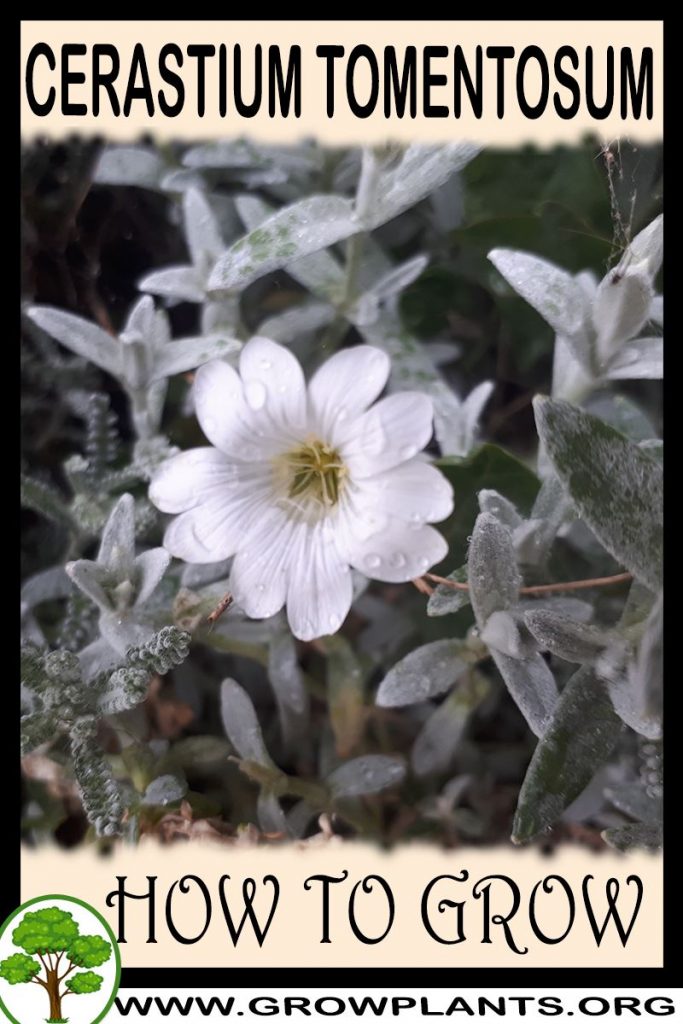
Plant Profile & Key Characteristics
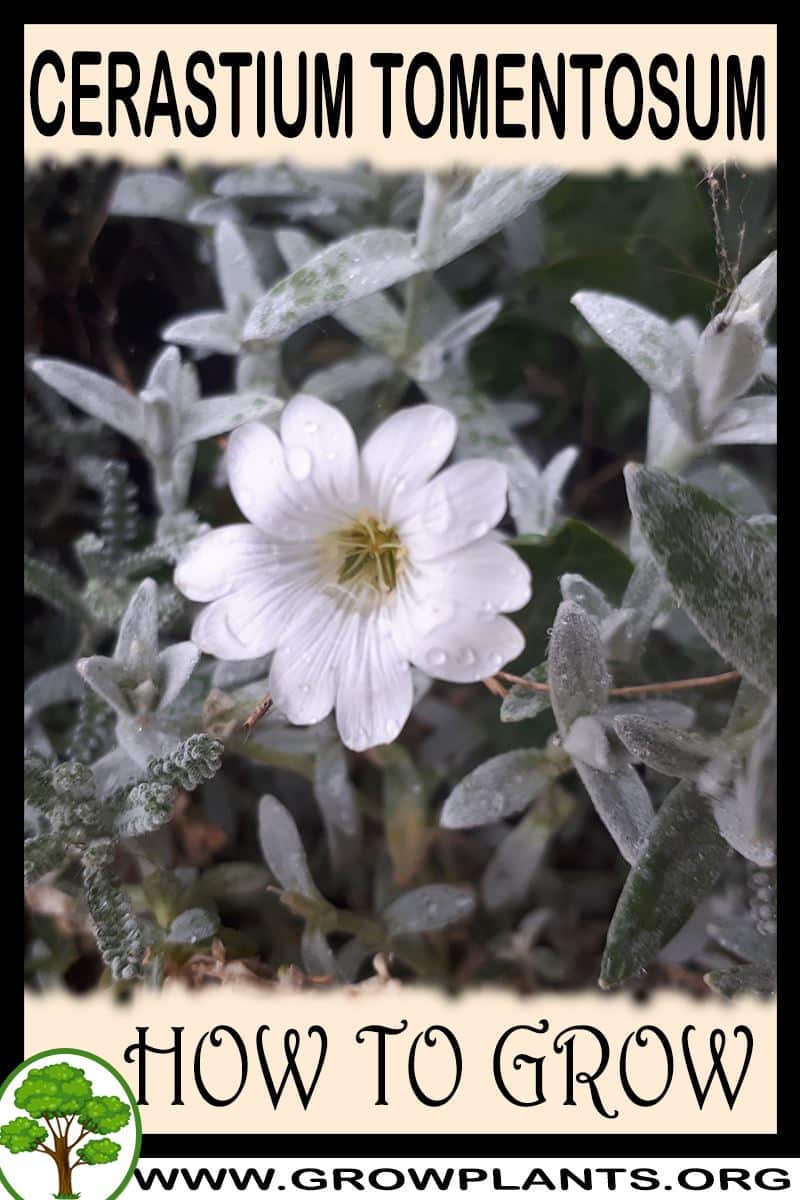
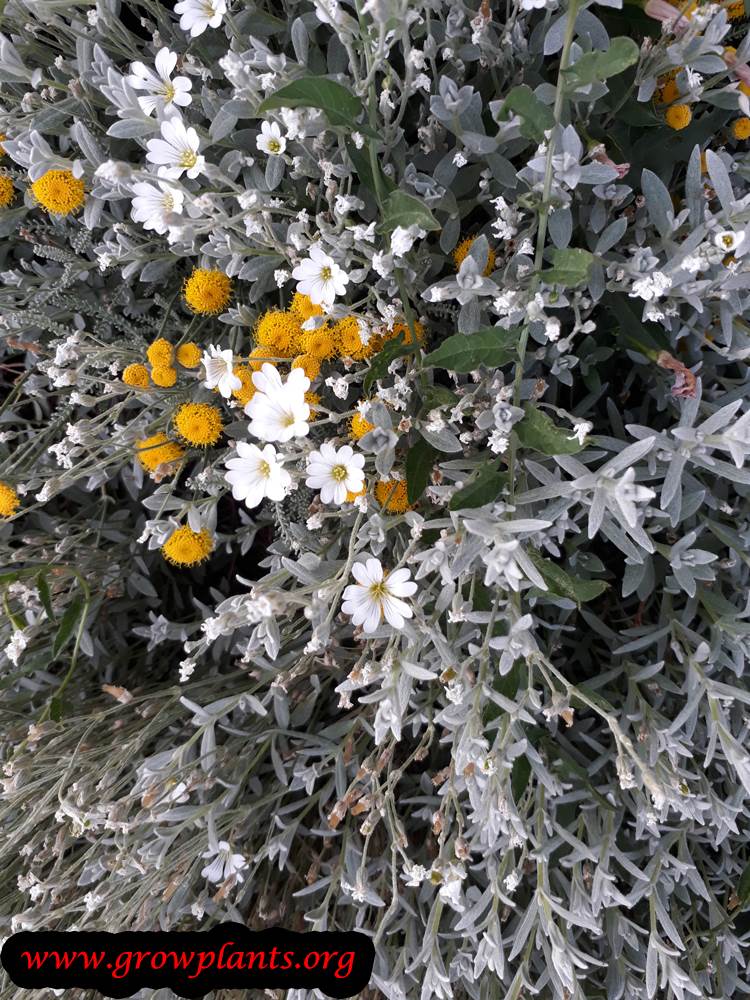
Overview: Cerastium tomentosum (snow-in-summer) is a low, mat-forming evergreen perennial groundcover, 10-30 cm (4-12 in) tall, with silvery grey-green foliage smothered in white flowers. It is grown as an ornamental groundcover, treated as an annual in hot climates, and can spread aggressively.
Quick Specifications
| Specification | Attribute |
|---|---|
| Plant Type / Life Cycle | Perennial (annual in hot climates) |
| Foliage Type | Evergreen |
| Mature Size | 10-30 cm tall (4-12 in), spreading |
| Growth Rate | Fast to moderate |
| Root System | Shallow, spreading mat-forming roots (can be aggressive). |
| Toxicity | Non-toxic. |
| Hardiness | USDA zones 3-8 (perennial); 8-10 (annual) |
Growth Form & Structure
- Height & Spread: Only 10-30 cm (4-12 in) tall but spreads widely into a dense mat; also grows in planters and containers.
- Growth Habit & Form: Low, spreading, mat-forming herbaceous groundcover.
- Lifespan & Maturity: Fast-growing perennial that quickly forms carpets; can be invasive and aggressive.
Anatomy & Physical Features
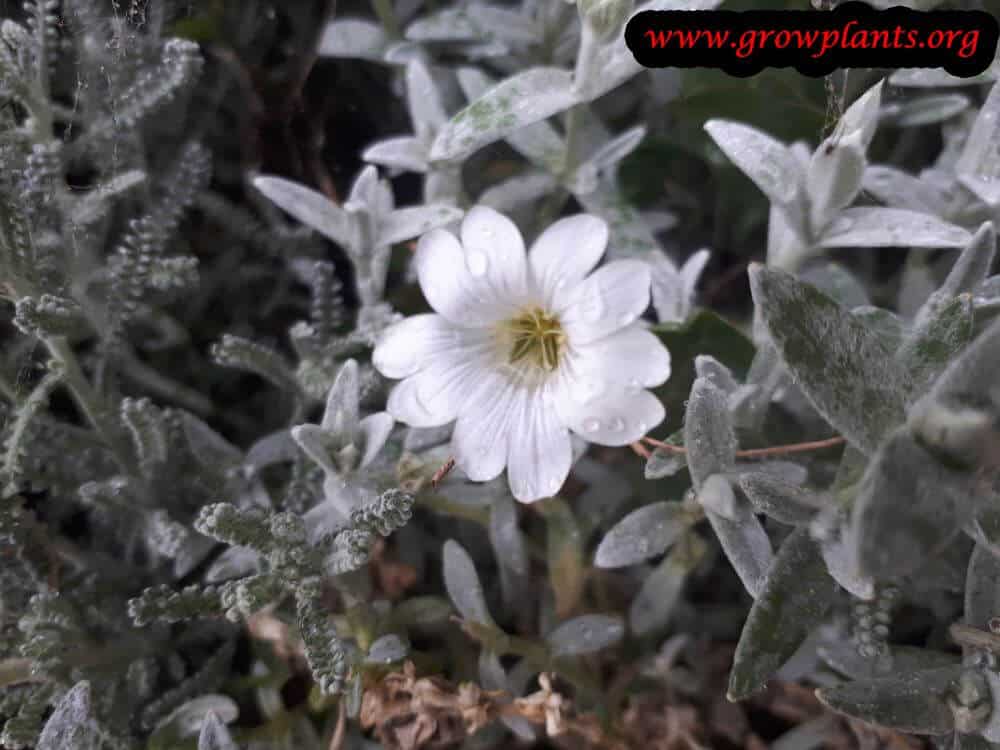
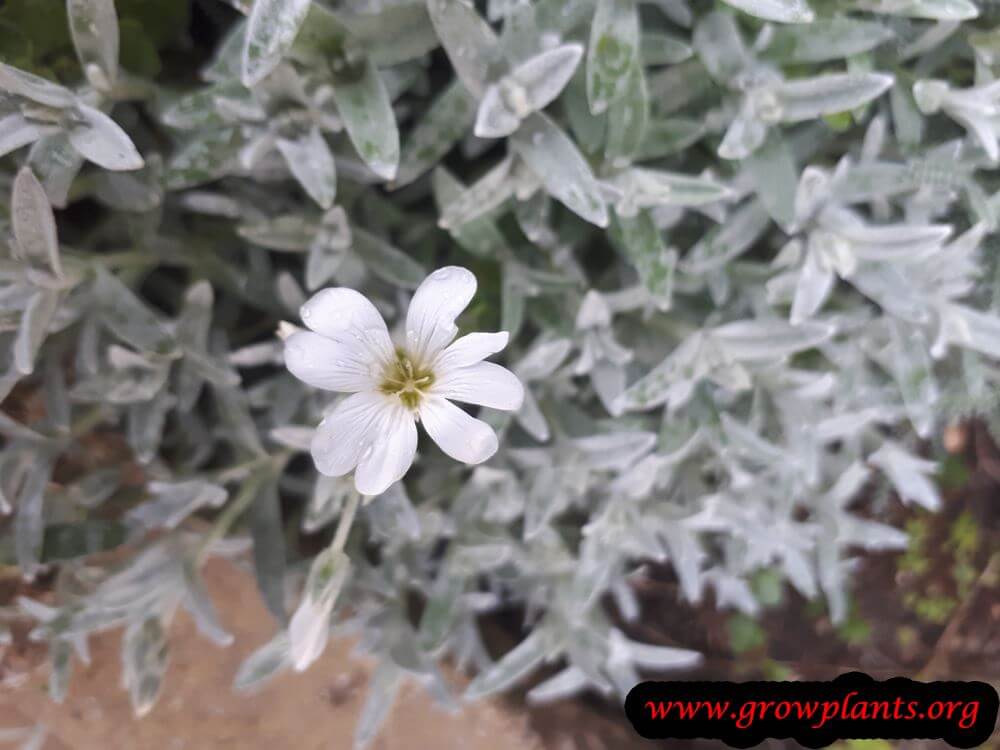
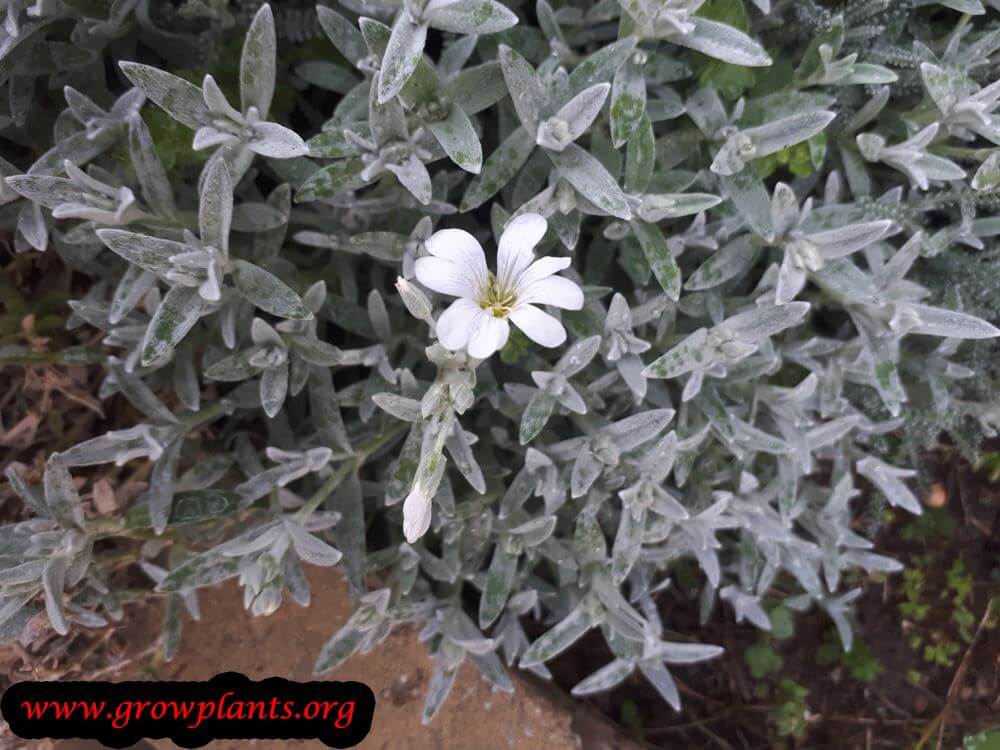
- Leaves & Foliage: Silvery green-grey, fleshy elliptic leaves; evergreen.
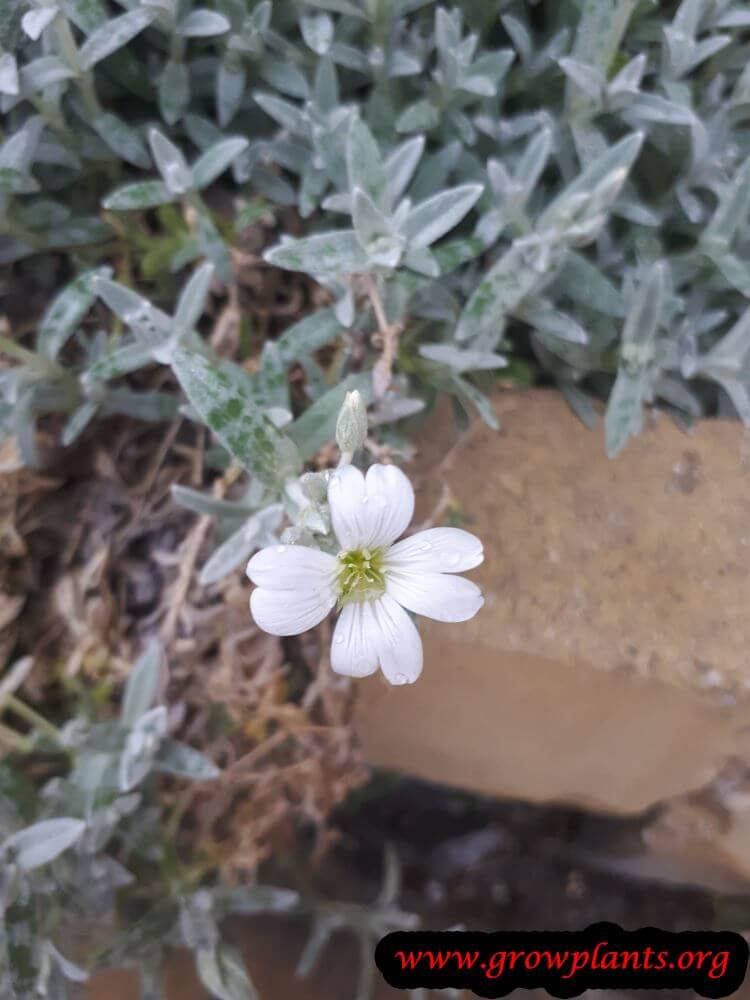
- Flower Characteristics: White flowers with a green-yellow centre, borne profusely in spring to summer.
Primary Uses & Landscape Value
- Functional & Ornamental Roles: Ornamental groundcover for banks, rock gardens, edging and dry sunny sites; valued for its silver foliage and white bloom.
Care Guide: Planting, Soil & Watering
Overview: Snow-in-summer is a fast-spreading, mat-forming perennial ground cover for temperate and cooler climates (hardiness zone 3-8, grown as an annual in zone 8-10), thriving in full sun. It needs a well-drained soil and only low to moderate water, tolerating poor, dry, gritty ground.
Quick Care Requirements
| Requirement | Ideal Condition |
|---|---|
| Planting Season | In spring or summer (in autumn in warmer zones 8-10) |
| Growth Rate | Moderate to fast |
| Soil Type | Well-drained, even poor or gritty soil |
| Water Need | Low to moderate – let the soil dry between waterings |
Planting & Establishment
- Best Planting Season: Plant in spring or summer; in warmer zones (8-10) plant in autumn.
- How to Plant:
- Hole Preparation: Dig a hole about twice the width of the root ball; space plants to let the mat spread.
- Soil Amendments: Add grit to heavy soil for drainage; rich soil is unnecessary and encourages floppy growth.
- Planting Depth: Set the root ball level with the soil surface.
- Growth Speed & Expectations: A fast, spreading grower forming a low silvery mat 10-30 cm (4-12 in) high – it can be aggressive.
Soil, Watering & Drainage Care
- Soil Mix & Drainage Needs: Sharp drainage is essential – it rots in wet ground; in pots use a gritty, free-draining mix.
- Watering Schedule & Technique:
- Young / Newly Planted: Water moderately to establish, keeping the soil lightly moist.
- Established: Water sparingly once established; it is drought-tolerant and prefers to dry out between waterings.
- Seasonal Adjustments: A little more in summer heat; keep drier in wet weather to prevent rot.
Climate, Light & Hardiness
Cerastium tomentosum (snow-in-summer) is a cold-hardy, drought-tolerant groundcover that behaves as a true perennial in cooler climates and as a heat-tolerant annual further south; it needs full sun and well-drained soil.
Quick Climate Specifications
| Climate Zones | Temperate, subtropical |
|---|---|
| USDA Hardiness Zones | 3–8 (grown as a perennial); 8–10 (grown as a warm-climate annual) |
| Frost Tolerance | High (as a perennial, dormant through zone 3–8 winters) |
| Light Conditions | Full Sun |
Sunlight & Light Exposure
Optimal Light Setup
Full sun is required for the tight, silvery-gray mat habit and best flowering; too little light causes legginess.
Direct Sun Requirement
Yes, a core requirement for this species.
Temperature Extremes & Hardiness
USDA Hardiness & Regional Limits
The site's dual zone rating reflects a real distinction: in zone 3–8 the plant survives winter and returns as a genuine perennial, while in the hotter zone 8–10 range it is more often grown or replanted as an annual because summer heat and humidity - rather than cold - shorten its life there.
Cold Damage & Winter Protection
Very winter hardy where grown as a perennial; little protection is needed within its rated zones.
Extreme Heat Tolerance
Moderate; it can decline in very hot, humid conditions, which is why it is often treated as an annual in the warmest part of its range.
Wind, Humidity & Microclimate
Dry-Air Tolerance
Good; it is a drought-tolerant groundcover.
Rainfall & Seasonal Moisture
Prefers well-drained soil and is intolerant of prolonged wet conditions, consistent with its drought-tolerant nature.
Growing in Pots, Balconies & Indoors
Snow-in-summer (Cerastium tomentosum) is not a houseplant – the grower confirms – but this low, silvery, sun-loving groundcover (10-30 cm) is charming in containers, trailing over the rim of a pot, wall or rockery trough. It is a hardy alpine that wants full sun and sharp drainage, so it belongs outdoors.
Quick Details
- Container Size: A shallow pot, trough or wall container – it spreads and cascades rather than growing tall
- Indoor Suitability: Not a houseplant; a hardy sun-lover that resents warm indoor air
- Best Spot: Full sun
- Soil & Drainage: Sharp, free-draining, even gritty soil
- Watering in Pots: Low – drought-tolerant; let it dry between waterings and avoid wet feet
Indoors & On the Windowsill
- Why not indoors: The grower does not rate it as a houseplant – it is a hardy alpine that needs full sun, cool air and sharp drainage, and it rots or stretches in warm, dim rooms.
- Overwintering: Fully hardy, the pot stays outside year-round; just keep it well-drained so the crown does not sit wet in winter.
On a Balcony or Patio
- Light & wind: Perfect for a hot, sunny, exposed spot where its silver foliage cascades over the edge; it copes with reflected heat and wind but must have sharp drainage.
- Practicalities: Shallow, wide containers show off its trailing habit; ensure water drains away fast.
Choosing the Pot, Soil & Long-Term Care
- Pot & drainage: Use a shallow, wide pot with generous drainage holes and no standing-water saucer – this plant hates wet feet. Terracotta is ideal because it breathes and dries out fast.
- Potting mix: A gritty, free-draining mix – loam or potting soil cut with coarse sand, perlite or grit; avoid heavy, water-holding composts.
- Feeding: Feed only lightly through the growing season; container plants lose nutrients to leaching, but this one prefers lean conditions to soft, overfed growth.
- Repotting: Pot up or refresh the mix every couple of years once roots fill the pot; take the chance to check drainage and trim any dead roots.
Fertilizing & Feeding
A light feeder by nature: this vigorous, drought-tolerant groundcover spreads aggressively on its own, and rich feeding only accelerates that spread rather than improving bloom.
Quick Fertilizing Specs
| Feeding Level | Light feeder |
|---|---|
| Main Nutrient Priority | A balanced fertilizer used sparingly; heavy nitrogen encourages excess spread over flowering |
| Best Feeding Period | Early in the growing season as new growth resumes |
| Organic Options | A light top-dressing of compost worked into well-drained soil |
| Reduce/Stop Feeding | Skip feeding for established, spreading patches that are already thriving |
| Micronutrients | Rarely an issue in well-drained soil with a complete fertilizer |
| Soil pH | Tolerates a wide range in well-drained soil |
Feeding by Growth Stage
Spring regrowth
Support fresh silvery foliage as the mat resumes growth after winter.
| Nutrient direction | A light, balanced fertilizer is enough to refresh growth without overdriving this already vigorous spreader. |
|---|---|
| Timing | As new growth resumes in spring. |
| Frequency | A single light feeding at the start of the season is usually plenty. |
| Fertilizer types | A balanced complete fertilizer applied sparingly |
| Precautions | Avoid heavy nitrogen, which pushes lush growth and increases this plant’s already aggressive spread. |
Spring to summer bloom
Support the flush of white, star-centered flowers across the mat.
| Nutrient direction | Minimal feeding is usually enough; this plant blooms reliably without rich fertilizer. |
|---|---|
| Timing | Through spring into summer as flowers open. |
| Frequency | Feeding is rarely needed once the mat is established and flowering. |
| Fertilizer types | A light balanced feeding only if growth looks sparse or pale |
| Precautions | Resist extra feeding during bloom; overfeeding favors foliage and spread over flowers. |
Post-bloom rest and heat
Let the mat rest after flowering, especially through hot or humid stretches when growth naturally slows.
| Nutrient direction | No supplemental feeding is needed once flowering finishes. |
|---|---|
| Timing | After the bloom flush fades, particularly during hot or humid weather. |
| Frequency | No feeding during this rest period. |
| Fertilizer types | No feeding at this stage; this drought-tolerant grower needs a rest, not more fertilizer, after blooming. |
| Precautions | Withhold fertilizer and instead focus on shearing back spent growth to keep the mat tidy. |
Nutrient Deficiency Signs & Corrections
Foliage looks thin and pale rather than its usual silvery-gray density.
| Possible causes | very low soil fertility, poor, depleted soil over time, competition from encroaching weeds or turf |
|---|---|
| Appears first on | overall foliage density and color |
| What to check | soil fertility history, surrounding plant competition, general mat vigor |
| Possible correction | Apply a light balanced fertilizer early in the season and improve soil organic matter. |
New growth yellows while older leaves stay green.
| Possible causes | high soil pH limiting iron uptake, waterlogged spots in otherwise well-drained beds, compacted soil restricting roots |
|---|---|
| Appears first on | newest growth |
| What to check | soil pH and drainage in the affected patch, compaction or standing water, root health |
| Possible correction | Improve drainage and soil pH balance; apply a chelated iron product per its label only if the issue persists. |
Leaf tips brown or the mat thins in patches despite regular care.
| Possible causes | fertilizer salt buildup from repeated feeding, poor drainage concentrating salts, drought stress concentrating soil salts |
|---|---|
| Appears first on | leaf tips and patchy areas of the mat |
| What to check | feeding history and amounts, drainage of the bed, recent rainfall or irrigation |
| Possible correction | Ease off feeding, water deeply to flush accumulated salts, and let the plant’s natural vigor carry it through recovery. |
Pruning, Training & Seasonal Maintenance
Snow-in-Summer is a fast-spreading, mat-forming groundcover whose main pruning need is a hard shear-back immediately after its spring/summer flowering flush – this keeps the mat dense and compact, prevents the sparse, woody dieback mats develop in their centers with age, and can trigger a flush of fresh silvery foliage. This timing differs from a simple autumn/winter tidy: shearing right after bloom, rather than waiting for dormancy, is what actually keeps the plant vigorous and helps control its spread, which is aggressive and invasive.
Quick Pruning & Maintenance Specs
| Pruning Tolerance | High (tolerates hard shearing) |
| Primary Pruning Window | Immediately after the spring/summer bloom flush |
| Secondary Maintenance Window | Light spring cleanup of winter-damaged growth (colder parts of its range) |
| Typical Frequency | Once a year, right after flowering; more often to control spread |
| Main Objective | Renew compact growth, prevent center die-out, control spread |
| Young Plant Priority | None – let the mat establish and fill in |
| Mature Plant Priority | Annual post-bloom shear; periodically lift and divide/replant vigorous sections |
| Best Tool Type | Hedge shears for the whole mat |
| Avoid Heavy Pruning During | Active bloom (removes the flower display) and summer drought stress |
Pruning by Plant Age & Size
Newly Established
No pruning – allow the mat to spread and cover.
Young / Formative
No structural training needed – it spreads on its own as a groundcover.
Mature / Established
Annual post-bloom shear-back is the main task; older, thin-centered mats benefit from digging, dividing, and replanting vigorous edge sections.
Seasonal Pruning Schedule
Post-Flowering (primary)
Objective: renew dense growth and prevent woody bare centers. Remove: shear the entire mat back by roughly a third to half immediately after bloom finishes. Expected response: dense new silvery growth, sometimes a light rebloom.
Pre-Growth / Early-Spring
Objective: clean up winter injury where the plant dies back over cold winters (zones 3–8 as a perennial). Remove: winter-killed or frost-damaged growth before new growth resumes.
Structural Pruning & Training
No shrub-style structure to build; the "structural" concern is mat density and spread. Shearing controls both, and periodic division/replanting manages the bare-center problem mat-forming perennials develop with age.
Container & Small-Space Pruning
Works well cascading over container edges or wall tops. Shear back after bloom in containers just as in the ground, to keep it from becoming leggy and to control its documented aggressive spread into neighboring soil.
Tools
Hedge shears – fastest, cleanest way to shear an entire mat uniformly after bloom.
Tool Hygiene & Disease Risk
Routine – clean tools are sufficient; no notable pruning-transmissible disease risk in this species.
Cut Placement & Technique
Shear uniformly across the mat rather than making individual stem-by-stem cuts, which aren’t practical or necessary for this groundcover habit.
Heavy Pruning & Rejuvenation
Tolerates a hard post-bloom shear-back well, and this is normal maintenance rather than just a rescue measure. A badly overgrown or thin-centered mat can be cut back hard and, if the center has died out, dug up and replanted from vigorous edge divisions.
Post-Pruning Care
Water normally after shearing; avoid heavy feeding – it’s an aggressive spreader already and doesn’t need encouragement. Regrowth typically fills in over a few weeks.
Common Pruning Mistakes
- Waiting until autumn/winter dormancy to cut back instead of shearing right after the spring/summer bloom, missing the window for dense regrowth before the season ends.
- Letting the mat go several years without shearing, leading to a sparse, woody, bare center.
When NOT to Prune
Avoid shearing while still in full bloom if the flower display is wanted uninterrupted, and avoid cutting back during summer drought stress.
Recommended Tools (by task)
- hedge_shears – uniform post-bloom shear-back across the whole groundcover mat.
Propagation Guide
Snow-in-summer grows readily from seed, which the site lists as the plant’s basic starting method, but as a mat-forming groundcover it is also very easy to increase by dividing rooted sections of an existing patch. Both routes are easy, and the plant’s own vigorous, spreading habit – noted on the site as invasive and aggressive – means new plants establish and fill in quickly however they are started.
Quick Propagation Specs
| Best Propagation Method | Seed |
| Alternative Methods | Division of the rooted mat |
| Propagation Difficulty | Easy |
| Seed True-to-Type | Yes (species) |
| Vegetative True-to-Type | Yes |
| Best Propagation Season | Spring or summer, matching the site’s planting season (also autumn in hardiness zone 8-10) |
| Seed Germination Time | Generally quick, often within a couple of weeks under warm conditions |
| Germination Temperature | Around 18–21°C (64–70°F) |
| Seed Sowing Depth | Surface-sown or barely covered; light can aid germination |
Growing from Seed
Sowing Season
Spring, or as noted on the site, autumn in hardiness zone 8-10.
Sowing Depth & Orientation
Surface-sow and press gently into the soil; covering only very lightly.
Germination Conditions
Average warmth, consistently moist soil, and a sunny position matching the mature plant’s own full-sun preference.
Germination Time
Fairly quick, often within a couple of weeks under warm conditions.
Seedling Care
Space or thin seedlings promptly given the plant’s fast-to-medium, spreading growth habit, so they don’t overcrowd each other early on.
Division, Offsets, Pups & Suckers
Established mats of snow-in-summer can be lifted and pulled apart into rooted sections at almost any time during active growth, ideally in spring or early summer. Each division should include some roots and several shoots; replant promptly and keep watered until new growth confirms establishment, which is usually quick given the plant’s fast growth rate. This is a reliable way to multiply an existing planting true to type, and also a useful way to deliberately control the spread of an aggressive patch by relocating sections rather than letting it self-spread.
Bloom & Flower Guide
Quick Details
- Bloom Season: Late spring into early summer
- Flower Appearance: Masses of small white star-shaped flowers with five notched petals and a green-yellow centre, over silvery foliage
- Edibility: Ornamental only
Detailed Blooming Overview
True to its name, this low, spreading ground cover disappears under a “snow” of small white flowers in late spring. Each bloom has five neatly notched petals around a green-yellow eye, and the sheet of white sits beautifully against the plant’s silvery, felted leaves.
Flower Characteristics
- Small, star-shaped white flowers with five notched petals.
- Green-yellow centre; carried in great quantity over grey, downy foliage.
Bloom Care & Thinning
- After flowering: Shear the plant back once the main flush fades to keep it dense and tidy and to freshen the foliage.
Pests, Diseases & Troubleshooting
Snow-in-summer is a tough, drought-tolerant silver groundcover that is largely pest-free but has one classic weakness: it ‘melts out’ and rots in the centre in hot, humid, wet conditions or on heavy soil. The real problems are crown and root rot and foliar mildew/rust in humidity, plus minor sap-suckers, so management is about sharp drainage, airflow and shearing to keep clumps open and healthy.
Quick Troubleshooting Overview
| Issue / Pest | Main Symptom | Primary Solution |
|---|---|---|
| Crown ‘melting out’ | Dead, rotted brown patches in the clump centre in hot humid wet spells | Sharp drainage; shear back; improve airflow |
| Root / crown rot | Wilting, blackened crown, collapse on wet heavy soil | Free-draining lean soil; avoid overwatering |
| Powdery mildew | White powdery coating on foliage in humid weather | Airflow; avoid overhead water; sulphur/bicarbonate |
| Rust | Orange-brown pustules on leaves | Remove affected foliage; airflow; sulphur if severe |
| Aphids | Colonies on soft growth, honeydew | Water jet; insecticidal soap; encourage predators |
| Aggressive spread | Smothers neighbours; roots where stems touch soil | Shear after bloom; edge and divide to contain |
Common Pests & Management
- Aphids (Aphis / Myzus spp.):
- Symptoms: Colonies of soft aphids on the softest new shoots and flower stems suck sap, distorting growth and leaving honeydew; usually minor and seasonal on this tough plant.
- Prevention & Control: Encourage ladybirds, lacewings and hoverflies; dislodge colonies with a water jet; treat persistent numbers with insecticidal soap or horticultural oil in the evening; avoid overfeeding that produces soft, aphid-prone growth.
- Spider mites (Tetranychus urticae):
- Symptoms: Fine stippling and a dull, bronzed look to the silvery foliage with faint webbing in hot, dry conditions, mainly on stressed plants.
- Prevention & Control: Keep plants watered in dry spells; hose foliage to knock back mites; remove badly affected growth; horticultural oil or insecticidal soap if needed; conserve predatory mites.
- Slugs and snails (Deroceras / Cornu spp.):
- Symptoms: Irregular holes and slime trails on new growth in damp weather, mainly on young plants and in wet, shaded spots; generally minor on established silver mats.
- Prevention & Control: Hand-pick after dark; remove damp hiding places; grit or copper barriers; iron-phosphate pellets around vulnerable young plants.
Diseases & Fungal Issues
- Crown and root rot (‘melting out’) (Rhizoctonia / Sclerotinia / Phytophthora spp.):
- Symptoms: The signature problem: in hot, humid, wet weather or on heavy soil the centre of the clump dies out in brown, rotted patches, and whole plants wilt and collapse as crowns and roots rot; poor winter drainage is a common trigger.
- Treatment & Management: Prevent with sharp drainage and a lean, sunny, airy site-add grit to heavy soil and never waterlog; shear the plant back hard after flowering to open the clump and remove congested, moisture-holding growth; divide and replant vigorous outer sections, discarding rotted centres; remove and destroy affected material.
- Powdery mildew (Golovinomyces / Podosphaera spp.):
- Symptoms: A white powdery film on foliage in humid, crowded or shaded conditions, dulling and weakening the silver leaves.
- Treatment & Management: Grow in full sun with good air movement and avoid crowding; avoid overhead watering; shear affected growth; sulphur or potassium-bicarbonate controls it where it becomes a nuisance.
- Rust (Puccinia spp.):
- Symptoms: Orange-brown pustules on leaves with yellow flecking, occasionally causing leaf yellowing and drop in damp seasons.
- Treatment & Management: Remove and destroy affected foliage and clear debris; improve airflow and avoid overhead wetting; sulphur fungicide for severe recurring infection.
- Botrytis / leaf spot (Botrytis cinerea):
- Symptoms: Grey mould and browning on old flowers and congested foliage in cool, damp, still weather.
- Treatment & Management: Shear off spent flowers and congested growth; improve air movement; avoid overhead watering; remove affected tissue.
Growing Difficulties & Abiotic Problems
- Centre die-out from heat and humidity:
- Cause & Symptoms: In hot, humid summers or wet, heavy soil the mat rots and dies out from the middle, leaving a bare, brown, unsightly centre-the plant’s most characteristic failing.
- Correction Strategy: Site in full sun on sharply drained, lean soil with good airflow; shear the whole plant back after flowering to rejuvenate it; divide every couple of years, replanting healthy outer growth; avoid summer overwatering.
- Root rot in heavy, wet soil:
- Cause & Symptoms: Cerastium demands drainage; heavy, waterlogged or overwatered soil, particularly in winter, rots the roots and crown and kills clumps.
- Correction Strategy: Plant on free-draining, even gravelly soil or a raised bank; improve heavy soil with grit; avoid overwatering and winter wet; do not mulch heavily over the crowns.
- Aggressive spreading:
- Cause & Symptoms: Vigorous stems root where they touch soil and the plant can smother smaller neighbours and outgrow its space.
- Correction Strategy: Shear back hard after flowering to contain and tidy it; edge and divide regularly; site where it can spread freely, such as banks, walls and gravel, rather than among delicate plants.
What Helps — Products & Tools
Care is mostly cultural: full sun, sharp drainage, airflow and a hard shear after bloom to prevent centre rot. Sulphur and potassium-bicarbonate control powdery mildew and rust; insecticidal soap and horticultural oil handle occasional aphids and mites, with iron-phosphate pellets for slugs. There is no spray cure for crown ‘melting out’-drainage, spacing and shearing are the real controls.