

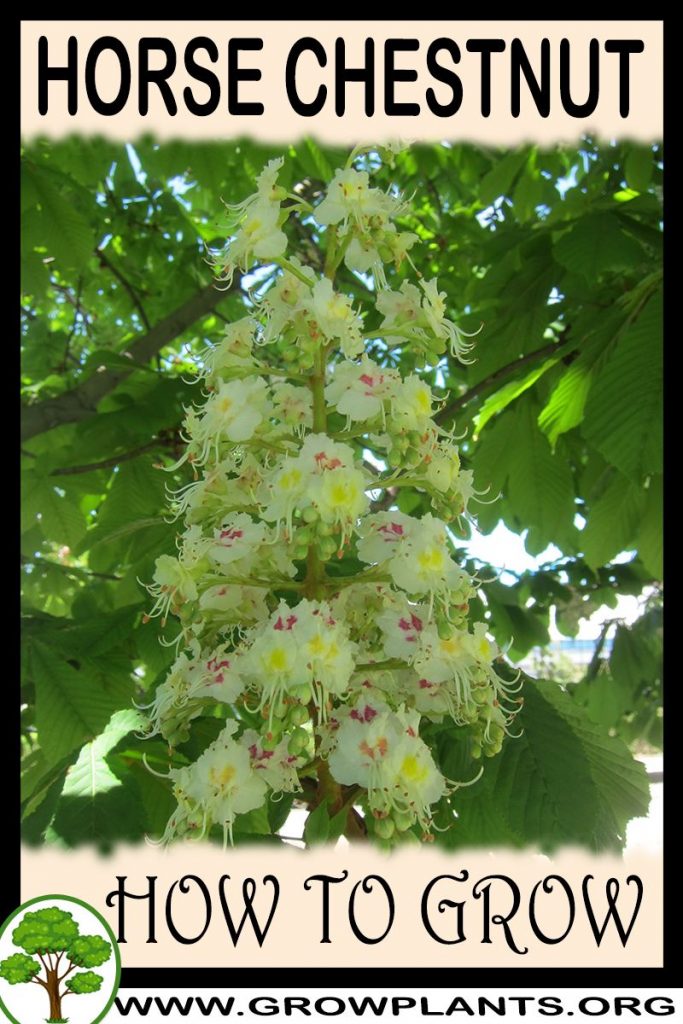
Plant Profile & Key Characteristics
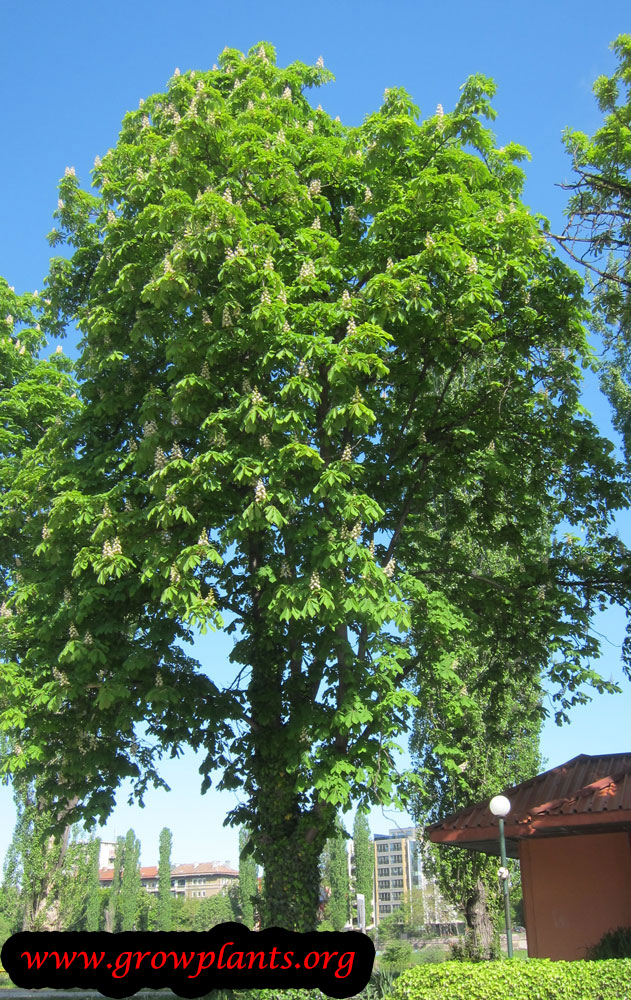
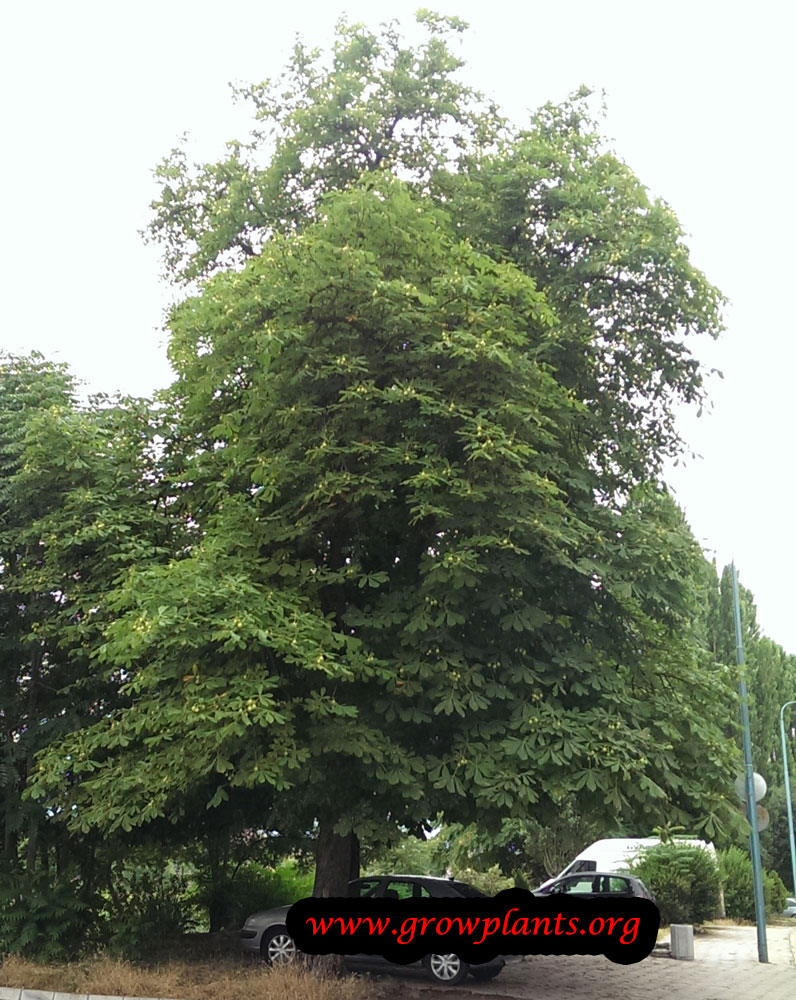
Overview: Horse chestnut is a large deciduous tree, reaching 10–30 m (30–100 ft), with a broad, domed canopy of big palmate leaves. This long-lived temperate perennial is grown as an ornamental shade and specimen tree (and historically as a medicinal plant); note that its seeds and other parts are poisonous.
Quick Specifications
| Specification | Attribute |
|---|---|
| Plant Type / Life Cycle | Perennial (deciduous tree) |
| Foliage Type | Deciduous |
| Mature Size | 10–30 m (30–100 ft) tall |
| Growth Rate | Moderate to fast |
| Root System | Deep, wide-spreading |
| Toxicity | Toxic – the seeds (‘conkers’), leaves and bark contain aesculin and are poisonous to people and pets |
| Hardiness | USDA zones 3–10a |
Growth Form & Structure
- Height & Spread: Grows into a large tree 10–30 m (30–100 ft) tall with a wide, rounded crown; far too big for containers, though young plants are sometimes trained as bonsai.
- Growth Habit & Form: Upright deciduous tree with a stout trunk and a broad, domed canopy.
- Lifespan & Maturity: A long-lived tree that takes many years to reach full height, flowering and setting seed once mature.
Anatomy & Physical Features
- Trunk & Bark: Stout trunk with greyish-brown bark; large, sticky buds open in spring.
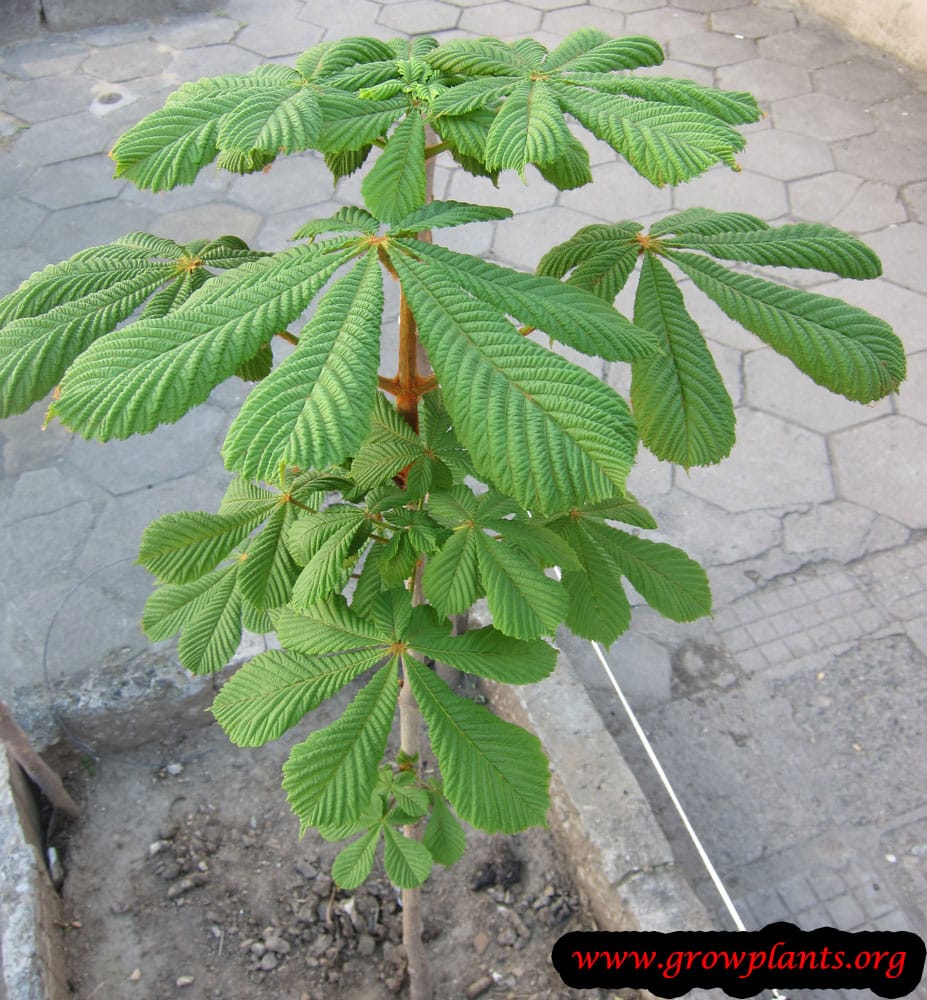
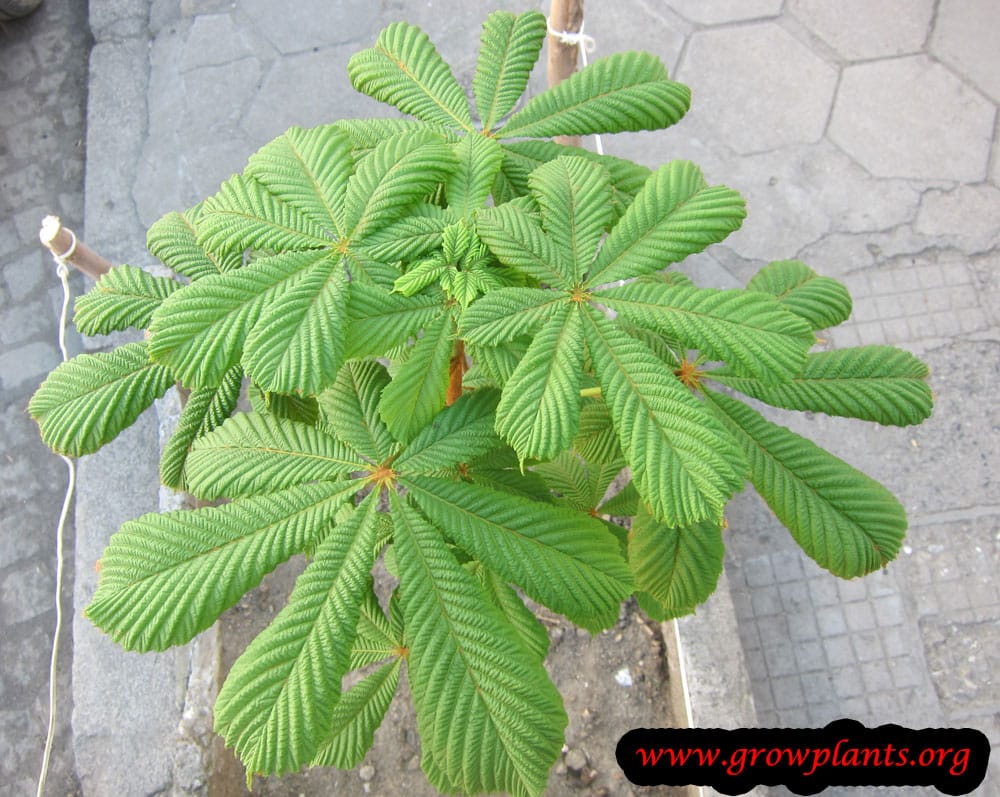
- Leaves & Foliage: Large palmate (hand-shaped) green leaves made up of 5–7 leaflets joined at the base.
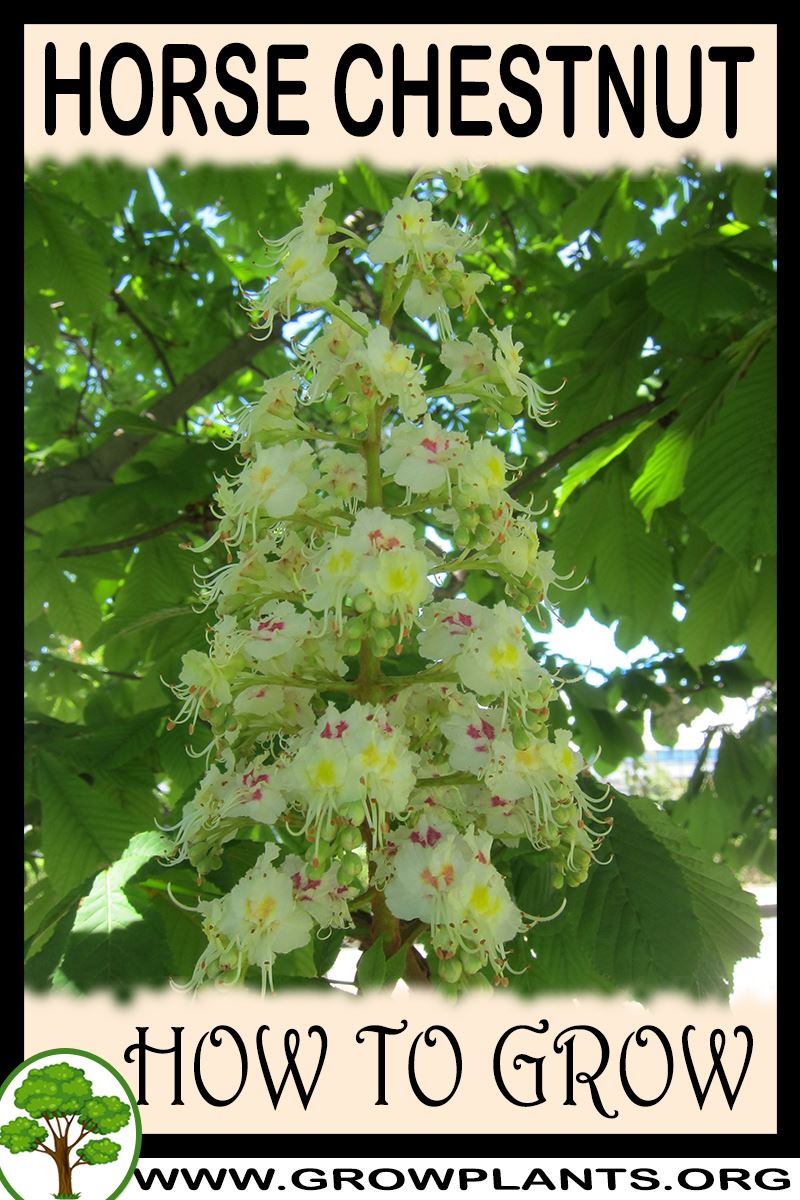
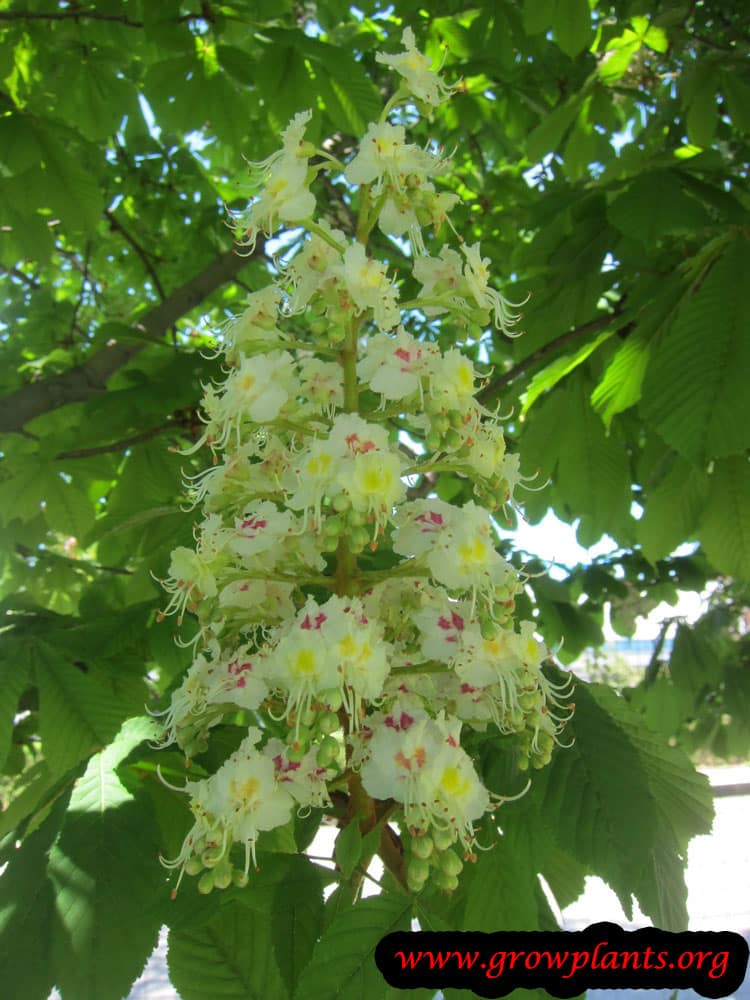
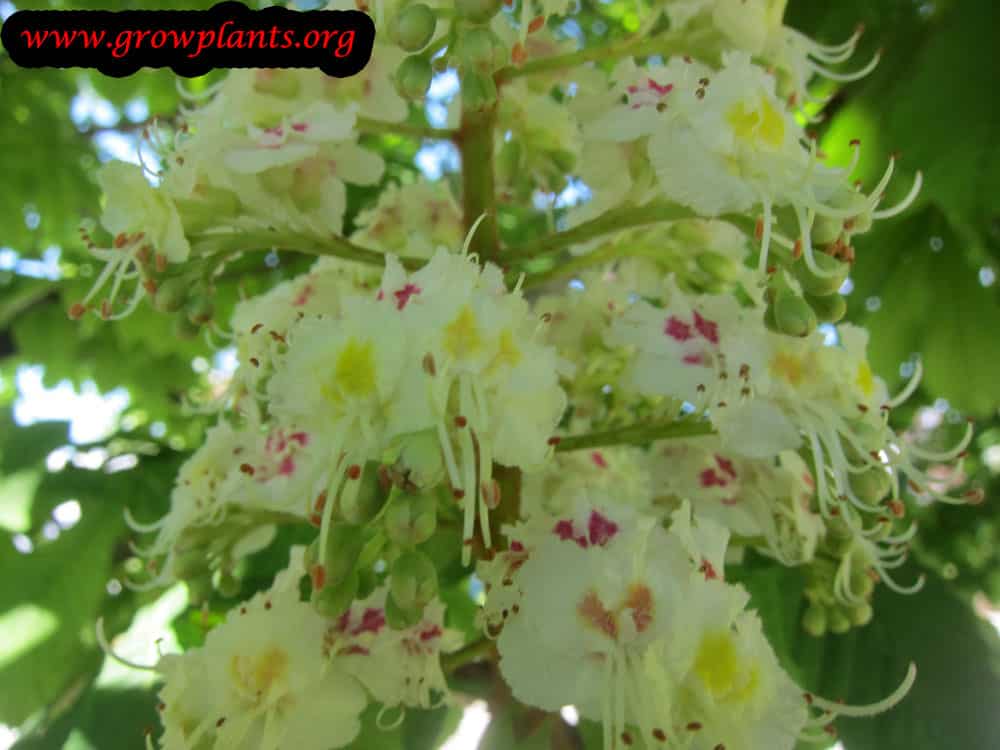
- Flower Characteristics: Showy upright panicles (‘candles’) of white flowers marked pink to red at the throat, in spring.
- Fruit Profile: A spiky green husk enclosing one or more glossy maroon seeds (‘conkers’) – inedible and poisonous.
Primary Uses & Landscape Value
- Functional & Ornamental Roles: Grown as an ornamental shade, avenue and specimen tree; has traditional medicinal uses, and young plants can be trained as bonsai.
Care Guide: Planting, Soil & Watering
Overview: Horse chestnut is a large, fast-growing deciduous tree for temperate climates (hardiness zones 3–10a) that thrives in full sun and needs plenty of room to spread. It does best in deep, fertile, well-drained soil kept reliably moist, and it dislikes drying out.
Quick Care Requirements
| Requirement | Ideal Condition |
|---|---|
| Planting Season | Winter through summer; best planted while dormant in winter to early spring |
| Growth Rate | Moderate to Fast |
| Soil Type | Deep, fertile, well-drained soil that holds moisture |
| Water Need | Moderate to High — keep evenly moist, avoid prolonged drought |
Planting & Establishment
- Best Planting Season: Plant while the tree is dormant in winter to early spring for the easiest establishment, though it can also go in through spring and summer with attentive watering. Choose an open, sunny position with ample space for a large canopy and roots.
- How to Plant:
- Hole Preparation: Dig a hole two to three times the width of the root ball and no deeper, loosening the surrounding soil so roots can spread.
- Soil Amendments: Improve poor or heavy soil with compost or organic matter, and ensure water drains freely rather than pooling.
- Planting Depth: Set the tree so the root collar sits level with the surrounding soil; do not bury the trunk base.
- Growth Speed & Expectations: A moderate to fast grower that develops into a large tree of roughly 10–30 m, so give it long-term space from the start.
Soil, Watering & Drainage Care
- Soil Mix & Drainage Needs: Prefers deep, fertile ground that stays moist yet drains well; avoid waterlogged sites, but note this tree is not suited to containers and needs open ground to thrive.
- Watering Schedule & Technique:
- Young / Newly Planted: Water deeply and regularly through the first few seasons so the root system establishes and never dries out.
- Established: Water during dry spells to keep the soil from drying out, watering deeply at the root zone rather than lightly at the surface.
- Seasonal Adjustments: Increase watering in summer heat and drought; a mature tree needs little supplemental water in cool, wet seasons.
Climate, Light & Hardiness
Horse chestnut is a strictly temperate deciduous tree that needs full sun and a genuinely cold winter, thriving where a distinct cold season is part of the climate. It is very cold-hardy across a wide USDA range.
Quick Climate Specifications
| Climate Zones | Temperate |
|---|---|
| USDA Hardiness Zones | 3–10a |
| Frost Tolerance | High |
| Light Conditions | Full Sun |
Sunlight & Light Exposure
Optimal Light Setup
Requires full sun for healthy growth and good flowering as a large shade tree species.
Temperature Extremes & Hardiness
USDA Hardiness & Regional Limits
Cold-hardy across USDA zones 3–10a, one of the broader and colder-tolerant ranges among temperate ornamental trees, reflecting its need for real winter cold.
Cold Damage & Winter Protection
As a fully deciduous tree adapted to cold climates, it drops leaves and goes fully dormant in winter; no winter protection is required once established, even in the colder part of its range.
Frost Sensitivity
Tolerates hard freezes without issue once dormant.
Extreme Heat Tolerance
At the warm edge of its range (zone 9–10a) hot summers are more limiting than winter cold, and generous watering becomes more important during heat.
Wind, Humidity & Microclimate
Rainfall & Seasonal Moisture
Prefers average to generous water availability through the growing season rather than a dry summer climate.
Growing in Pots, Balconies & Indoors
The horse chestnut is a large tree (10-30 m), so it is not a long-term container or indoor plant. The grower marks it as neither a houseplant nor a pot plant.
Quick Details
- Container Size: Not suited to containers long term
- Indoor Suitability: Not a houseplant – a full-size tree
- Best Spot: Full sun, open ground
- Soil & Drainage: a light, aerated potting mix – peat or coir blended with perlite or vermiculite, plus some organic matter/compost (for young/bonsai plants)
- Watering in Pots: Frequent while young in a tub – pots dry fast; avoid waterlogging
Indoors & On the Windowsill
- Not a houseplant: The grower marks it as unsuitable indoors – it is a full-size tree that needs open ground and full light.
- Safety: Parts of the plant are poisonous – not something to keep within reach indoors.
On a Balcony or Patio
- Not for pots: The grower does not recommend container growing – it simply gets too large.
- Hazard: Its nuts (conkers) are poisonous if eaten – keep them from children and pets.
- Young plants: A large tub can hold a sapling for a short spell, but plan its final position in open ground with room to spread.
Choosing the Pot, Soil & Long-Term Care
- Young / bonsai only: If you grow it in a pot at all, keep it to the juvenile stage in a large, free-draining tub with drainage holes.
- Potting mix: a light, aerated potting mix – peat or coir blended with perlite or vermiculite, plus some organic matter/compost.
- Feeding & watering: Potted plants exhaust their feed faster because water washes nutrients out, so feed a little more often than plants in open ground during active growth; potted trees also dry out fast, so water more attentively than one in the ground.
- Repotting: Refresh the top of the mix each growing season and pot up or divide roughly every couple of years, trimming crowded roots – but recognise that a vigorous tree will soon need the open ground.
Fertilizing & Feeding
A cold-hardy ornamental and medicinal shade tree that grows fast to medium in youth: nitrogen-supported feeding helps it establish, settling into moderate, balanced feeding once mature.
Quick Fertilizing Specs
| Feeding Level | Moderate feeder |
|---|---|
| Main Nutrient Priority | Nitrogen-supported feeding while establishing, then balanced feeding once established |
| Best Feeding Period | During the active growing season, especially while the tree is young |
| Reduce/Stop Feeding | Reduce feeding as the tree matures and its growth rate naturally slows |
Feeding by Growth Stage
Young tree establishment
Support root and canopy establishment as the tree adapts to cold-temperate conditions.
| Nutrient direction | A nitrogen-supported, complete fertilizer helps a newly planted tree establish during its fast-to-medium early growth phase. |
|---|---|
| Timing | During the active growing season while the tree is young. |
| Frequency | Feed through the growing season while establishment is underway. |
| Fertilizer types | A nitrogen-supported, complete fertilizer suited to establishing shade trees |
| Routine trace nutrients | iron, manganese |
| Precautions | Match watering to this species’ preference for consistent moisture, and avoid placing fallen, poisonous nuts near areas frequented by children or pets as part of general site care. |
Established tree growth
Maintain healthy canopy growth and the tree’s clustered white, pink, or red flowers on a mature specimen.
| Nutrient direction | A balanced, moderate feeding supports steady canopy growth and flowering once the tree is well established. |
|---|---|
| Timing | During the active growing season for an established tree. |
| Frequency | Established trees generally need only modest, occasional feeding. |
| Fertilizer types | A balanced, complete fertilizer applied at a moderate rate, if leaf color or growth suggest it is needed |
| Routine trace nutrients | iron, manganese |
| Precautions | Provide consistent moisture alongside feeding; this species prefers more generous water than drought-tolerant shade trees. |
Nutrient Deficiency Signs & Corrections
Slow growth and pale, undersized foliage in a young tree.
| Possible causes | insufficient nitrogen during establishment, root stress after transplanting, soil lacking organic matter |
|---|---|
| Appears first on | new growth |
| What to check | recent feeding history, time since planting, soil fertility |
| Possible correction | Apply a nitrogen-supported feeding during establishment and improve soil organic matter. |
New leaves emerge yellowish with darker green veins.
| Possible causes | iron availability limited by soil pH, root stress from waterlogged or compacted soil, genuinely low soil iron |
|---|---|
| Appears first on | newest foliage |
| What to check | soil drainage and moisture, soil pH if known, root health |
| Possible correction | Improve drainage first; if chlorosis persists, apply a chelated iron product per its label. |
Leaf scorch or early leaf drop, especially in dry periods.
| Possible causes | insufficient water for this moisture-preferring species, root stress from drought or heat, girdled or damaged roots limiting water uptake |
|---|---|
| Appears first on | leaf margins |
| What to check | watering consistency, especially in dry weather, root health and any physical damage, mulch coverage over the root zone |
| Possible correction | Increase watering consistency and mulch the root zone before considering any additional feeding. |
Pruning, Training & Seasonal Maintenance
Horse chestnut is a large, long-lived shade tree that tolerates only light, infrequent pruning once established. The main objective is a single dominant leader with clearance beneath the canopy for paths and structures; the safest window is the dormant season (autumn into winter), which avoids the heavy spring sap-rise and reduces exposure of fresh wounds during the wet, mild conditions that favour this species’ bark and leaf diseases. Because flower buds are set the previous season at the shoot tips, dormant pruning of young wood removes some of next spring’s flower "candles" on those specific shoots, though it does not affect the tree’s overall bloom.
Quick Pruning & Maintenance Specs
| Pruning Tolerance | Low on mature trees; Moderate while young and being trained |
| Primary Pruning Window | Late autumn to winter (dormant, after leaf drop) |
| Typical Frequency | Formative: annual while young. Mature: as-needed deadwood/hazard removal only, every few years |
| Main Objective | Single-leader structure, low-branch clearance, deadwood safety |
| Young Plant Priority | Establish and protect one central leader |
| Mature Plant Priority | Deadwood and hazard-limb removal; minimal structural work |
| Best Tool Type | Bypass secateurs and loppers while young; pruning saw and pole pruner for mature crown-raising |
| Avoid Heavy Pruning During | Spring sap-rise/leaf-out and mild wet weather (canker and leaf-blotch pressure) |
Pruning by Plant Age & Size
Newly Established
Remove only damaged, dead or crossing growth from the root ball area; do not head back a young leader or force branching so soon after transplant shock.
Young / Formative
Train to a single central leader by removing competing co-dominant stems and any branch with a narrow, included-bark union before it becomes structural. Raise the crown gradually over several seasons rather than all at once, taking no more than about a quarter of the live canopy in any one session.
Mature / Established
Limit work to removing dead, diseased or hazardous limbs, occasional further crown-raising for clearance, and correcting any rubbing or crossing branches that have developed. Avoid opening up the interior canopy for "airflow" — horse chestnut does not need or benefit from routine thinning once established.
Seasonal Pruning Schedule
Dormant/Winter
Objective: structural training and crown-raising. Remove low, competing or included-bark branches while the tree is leafless and structure is easy to read; avoid cutting during hard frost or on very wet days, since bacterial canker infection is favoured by wet conditions.
Ongoing Sanitary
Remove dead, broken or clearly diseased wood as soon as it is noticed, in any season, for safety — this is sanitary, not structural, pruning.
Flowering Wood
Horse chestnut sets large terminal buds at the end of each growing season; these overwinter and open the following spring into the tree’s characteristic upright flower clusters ("candles"). Removing a shoot tip in winter removes that particular flower bud, so avoid tipping or heading young leader growth if flowering display on that section matters — selective removal at the branch base, rather than heading, preserves more flower buds elsewhere on the tree.
Structural Pruning & Training
Priorities are a dominant single leader, elimination of narrow-angled/included-bark forks (horse chestnut is prone to these on vigorous young growth), and crown-raising for pedestrian or vehicle clearance beneath a tree that ultimately reaches 10-30 m. Canopy thinning for "airflow" is not warranted on this species and removes unnecessary live wood.
Tools
Bypass secateurs for pencil-thick young growth, loppers for branches up to a few centimetres during formative training, and a pruning saw for anything larger. Given the eventual size of this tree, a pole pruner is genuinely useful for raising the crown on established specimens without climbing.
Tool Hygiene & Disease Risk
Increased risk: horse chestnut is affected by bacterial bleeding canker (Pseudomonas syringae pv. aesculi) and fungal leaf blotch, both notable problems on this species. Avoid unnecessary wounds, do not prune in wet weather, and clean blades between cuts when working on visibly diseased wood or moving between trees.
Cut Placement & Technique
Cut just outside the branch collar — never flush — and avoid leaving stubs. For larger low limbs being removed for clearance, use a three-cut method to prevent bark tearing down the trunk.
Heavy Pruning & Rejuvenation
Not tolerated well: topping or hard rejuvenation pruning on a mature horse chestnut produces weak, densely clustered epicormic regrowth and large wounds that are slow to seal, increasing the risk of decay and canker entry. Avoid heavy pruning on established trees; if major reduction is unavoidable, spread it over multiple seasons and keep cuts as small as possible.
Post-Pruning Care
No feeding is needed after pruning. Monitor large cuts for die-back or canker symptoms (weeping, dark staining) over the following season, and do not apply wound paint — it does not improve wound closure on this species.
Common Pruning Mistakes
Topping a mature specimen; removing too much of the low canopy in a single session instead of raising it gradually; pruning during wet spring weather when canker infection risk is highest; flush cuts that damage the branch collar.
When NOT to Prune
Avoid pruning during spring sap-rise and leaf-out, and during prolonged wet, mild weather when bacterial canker is most active. Avoid heavy pruning in the first year after transplanting.
Recommended Tools (by task)
- bypass_secateurs — young formative growth and pencil-thin shoots.
- loppers — branches a few centimetres thick during structural training.
- pruning_saw — larger structural cuts and deadwood removal on established trees.
- pole_pruner — crown-raising and deadwood removal high in a tree that reaches 10-30 m at maturity.
- blade_disinfectant — given documented bacterial canker and fungal leaf-blotch pressure on this species.
Pruning Troubleshooting
| Problem | Possible Cause | What to Check | Corrective Action |
| Weeping, dark-staining bark near old cuts | Bleeding canker infection | Location relative to recent pruning wounds; presence of gum/ooze | Avoid further wounding nearby; consult an arborist rather than cutting into active cankers |
| Dense cluster of upright shoots below a cut | Epicormic regrowth after over-raising or heavy pruning | How much live canopy was removed and when | Thin epicormic shoots to a few well-placed ones; avoid repeating heavy removal |
| Splitting or failure at a branch fork | Included bark at a co-dominant union left untrained when young | Angle and bark condition at the union | Remove or subordinate one of the co-dominant stems while still small; larger unions may need cabling by an arborist |
Propagation Guide
Horse chestnut is propagated almost exclusively from its large seeds (conkers), which are easy to germinate but must be handled fresh since they do not tolerate drying out. Vegetative propagation is not required for the species and is rarely used; overall difficulty is easy provided the seed is sown promptly.
Quick Propagation Specs
| Best Propagation Method | Seed |
| Propagation Difficulty | Easy |
| Seed True-to-Type | Usually true-to-type |
| Best Propagation Season | Autumn, sown soon after the seed falls |
| Seed Germination Time | Germination follows the winter cold and typically occurs over several weeks in spring |
| Germination Temperature | Cold, moist conditions around 1–5°C (34–41°F) needed before spring germination, which then proceeds as temperatures rise above roughly 10°C (50°F) |
| Seed Sowing Depth | About 2.5–5cm (1–2in), enough to cover the nut |
Growing from Seed
Seed Handling & Viability
Conkers are recalcitrant – they lose viability quickly if allowed to dry out, so they should be sown fresh in autumn or kept cool and consistently moist (not dried) if storage is unavoidable.
Dormancy & Pre-Sowing Treatment
Seed sown immediately in autumn stratifies naturally outdoors over winter; if sowing is delayed, a period of cold, moist stratification is needed to break dormancy before spring germination.
Sowing Season
Autumn, as soon as possible after the nuts fall, in line with the site’s winter/spring/summer planting window.
Sowing Depth & Orientation
Cover with about 2.5–5cm (1–2in) of soil.
Germination Conditions
Cool, moist overwintering followed by rising spring temperatures triggers germination; protect sown seed from rodent predation, since conkers are a food source for squirrels and other wildlife.
Germination Time
Germination generally occurs the following spring, over a period of several weeks.
Seedling Care
Grow seedlings on in a nursery bed or deep containers before transplanting to their final position, given the tree’s eventual large size.
Bloom & Flower Guide
Quick Details
- Bloom Season: Spring
- Time to First Bloom: Usually starts flowering at around ten to twenty years old
- Flower Appearance: Showy white (sometimes pink or red) flowers with crimped, crepe-like petals, borne in large upright “candle” clusters
- Edibility: Toxic – the tree, including its conker (nut), contains poisonous aesculin and is not edible
Detailed Blooming Overview
In spring the horse chestnut lifts dozens of upright flower “candles” above its broad, hand-shaped leaves. Look closely and you will see a nectar-guide blotch at the base of each flower that turns from yellow to red once the flower has been pollinated – a signal that tells bees to move on to fresher blooms.
Flower Characteristics
- White (occasionally pink or red), with crimped, crepe-like petals, packed into tall upright panicles.
- Each flower carries a colour-changing nectar guide at its throat.
Bloom Care & Thinning
- Care: Little needed – simply enjoy the spring candles.
- Pollination: Bees work the flowers, guided by the yellow-to-red nectar marks.
- Safety: All parts, and especially the seeds (conkers), are poisonous to people and pets – do not eat.
Pests, Diseases & Troubleshooting
Overview: Horse chestnut is a large, familiar deciduous tree. Buckeyes and horse chestnuts are generally robust, but their large soft leaflets are prone to a cluster of leaf troubles — miners, leaf blotch, powdery mildew and plain heat/drought scorch — that all brown the foliage and are easily confused with one another, while the most serious threats are bark cankers. Management is cultural: keep the tree vigorous and un-stressed, rake up diseased leaf litter, and reserve chemicals for young or valued specimens.
Quick Troubleshooting Overview
| Issue / Pest | Main Symptom | Primary Solution |
|---|---|---|
| Horse-chestnut leaf miner | Brown blotch-mines; canopy browns by late summer | Rake & destroy fallen leaves to break the cycle |
| Guignardia leaf blotch | Reddish-brown blotches, yellow halo, tiny black dots | Sanitation; rake leaves; keep canopy airy |
| Powdery mildew | White powdery film on leaves in late season | Airflow; remove litter; sulfur fungicide if young |
| Bleeding canker | Dark rusty/tarry ooze on bark; dieback | Prune sympathetically; no cure — keep tree vigorous |
| Scale / aphids | Bumps or clusters on bark/leaves; honeydew, sooty mould | Tolerate; oil for scale; encourage predators |
| Leaf scorch | Brown, dry leaf margins in heat & drought | Deep-water in drought; mulch; not a disease |
Common Pests & Management
- Horse-chestnut leaf miner (Cameraria ohridella):
- Symptoms: The defining pest of horse chestnut — tiny moth larvae mine between the leaf surfaces, creating expanding brown blotches that coalesce until the whole canopy looks scorched and browns off prematurely by late summer. Damage is unsightly and weakens the tree over years, though it rarely kills outright.
- Prevention & Control: There is no practical spray for a large tree; the key cultural measure is to rake up and destroy (compost hot, burn or bin) the fallen leaves in which the pupae overwinter, breaking the cycle. Keep the tree otherwise vigorous; encourage predatory birds and parasitic wasps.
- Aphids (Drepanosiphum spp. and allies):
- Symptoms: Colonies on the undersides of leaves and soft shoots, most noticeable on young or stressed trees; they secrete honeydew that makes leaves sticky and blackens with sooty mould, and can drip onto anything below.
- Prevention & Control: Usually best tolerated on an established tree, where ladybirds, lacewings and hoverflies keep them in check; a strong water jet or insecticidal soap suffices on small or young trees.
- Horse-chestnut scale (Pulvinaria regalis):
- Symptoms: Conspicuous white, waxy egg masses on the trunk and main branches in early summer, with flat brown scales feeding on the bark; heavy infestations produce honeydew and sooty mould but are largely cosmetic on a healthy tree.
- Prevention & Control: Tolerate on large trees; brush off egg masses where reachable, encourage natural predators, and use horticultural oil on young trees to smother the crawlers.
- Japanese beetle & leaf-chewing beetles (Popillia japonica):
- Symptoms: Adults skeletonise the foliage, chewing away the soft tissue between the veins and leaving a lacy brown canopy, mainly a problem where this beetle is established.
- Prevention & Control: Hand-pick or knock beetles into soapy water in the cool of the morning; protect small trees with netting; avoid lure traps, which draw in more than they catch.
- Mites (spider & eriophyid):
- Symptoms: Fine stippling, bronzing or small galls/felt patches on leaves in hot, dry spells; largely cosmetic.
- Prevention & Control: Keep the tree well-watered in drought; rarely warrants treatment beyond a hose-down of small trees.
Diseases & Fungal Issues
- Bleeding canker (Pseudomonas syringae pv. aesculi; also Phytophthora spp.):
- Symptoms: The most serious disease of horse chestnut — dark, rusty-brown or black sticky ooze weeps from cracks in the trunk and main branches, the bark beneath dies in patches, and the crown thins and dies back; severe cases can girdle and kill.
- Treatment & Management: No chemical cure. Keep the tree as vigorous and unstressed as possible, avoid wounding the bark, prune out clearly dead wood with disinfected tools in dry weather, and have a professional monitor valued specimens — some trees wall off the infection and recover.
- Guignardia leaf blotch (Guignardia aesculi):
- Symptoms: Large irregular reddish-brown blotches with a bright yellow margin, often edged along the leaf, peppered with tiny black fruiting dots; it closely mimics leaf-miner damage and drought scorch but the yellow halo and black specks give it away.
- Treatment & Management: Mainly cosmetic — rake up and destroy fallen leaves to reduce overwintering spores, prune for airflow, and avoid wetting foliage; a fungicide is justified only on small or nursery trees.
- Powdery mildew (Erysiphe flexuosa):
- Symptoms: A white to greyish powdery film coating the leaves, usually from mid- to late season, sometimes distorting young growth.
- Treatment & Management: Improve air circulation, avoid heavy nitrogen feeding and drought stress, and rake up litter; sulfur or potassium-bicarbonate fungicide helps on young or valued trees.
- Anthracnose & other leaf spots:
- Symptoms: Brown blotching and spotting of leaves in wet springs, with some early leaf fall.
- Treatment & Management: Sanitation — rake and destroy fallen leaves — and airflow pruning usually suffice; seldom needs a fungicide.
- Wood-rot & canker fungi:
- Symptoms: Bracket fungi, cankers or dieback where the tree has been wounded or stressed, indicating internal decay.
- Treatment & Management: Avoid bark injury, prune correctly, and have a professional assess safety on large trees; keep the tree vigorous to resist invasion.
Growing Difficulties & Abiotic Problems
- Leaf scorch (heat & drought):
- Cause & Symptoms: The big soft leaflets lose water faster than stressed roots can supply in hot, dry, windy spells, so the margins and tips turn brown and crisp — often mistaken for disease. It is one of the commonest complaints on these trees.
- Correction Strategy: Deep-water in prolonged drought, especially young trees, mulch the root zone to conserve moisture, and site out of hot, exposed, reflected-heat positions.
- Chlorosis on alkaline / poor soil:
- Cause & Symptoms: On thin, chalky or waterlogged soils leaves yellow between green veins from locked-up iron and manganese.
- Correction Strategy: Improve soil with organic matter, correct drainage, mulch, and use a chelated-iron feed as a short-term fix on valued trees.
- Sunscald & frost cracks on young bark:
- Cause & Symptoms: Thin young bark can split or die on the sun-facing side from winter sun/frost swings, creating entry points for canker.
- Correction Strategy: Protect young trunks (a light wrap or shading), avoid wounding, and keep trees healthy so wounds close quickly.
- Waterlogging & root stress:
- Cause & Symptoms: Compacted or waterlogged ground stresses the roots, thins the canopy and predisposes the tree to canker and dieback.
- Correction Strategy: Relieve compaction, improve drainage, mulch (keeping mulch off the trunk), and avoid piling soil over the roots.
What Helps — Products & Tools
For a mature tree the best tools are a rake and a pair of clean, sharp pruners: gathering and destroying fallen leaves each autumn is the single most effective measure against both the leaf miner and leaf-blotch/anthracnose fungi, while correct pruning and un-stressed vigour are the real defence against bleeding canker (which has no chemical cure). On small, young or valued trees, horticultural oil handles scale, insecticidal soap knocks back aphids, and a sulfur or potassium-bicarbonate fungicide checks powdery mildew; deep watering and mulch counter drought scorch, and chelated iron corrects lime-induced chlorosis. Apply any spray following the label and in the cool of the evening to protect pollinators.