Plant Profile & Key Characteristics
Overview: An evergreen clumping perennial 30–60 cm tall, grown mainly as a fragrant ornamental and cut flower but also edible. It forms neat clumps of narrow garlic-scented leaves and lavender-pink flower umbels.
Quick Specifications
| Specification | Attribute |
|---|---|
| Plant Type / Life Cycle | Herbaceous perennial (geophyte) |
| Foliage Type | Evergreen |
| Mature Size | 30–60 cm H (12–24 in) |
| Growth Rate | Moderate to fast |
| Root System | Rhizomatous, forming small bulbs |
| Toxicity | Non-toxic / edible (leaves and bulb, garlic-flavoured) |
| Hardiness | USDA zones 7–10 |
Growth Form & Structure
- Height & Spread: Clumps 30–60 cm tall; grows well in planters, containers and indoors.
- Growth Habit & Form: Dense clumping habit of narrow, radial foliage with tall flower stems above.
- Lifespan & Maturity: Long-lived perennial, readily increased by division.
Anatomy & Physical Features
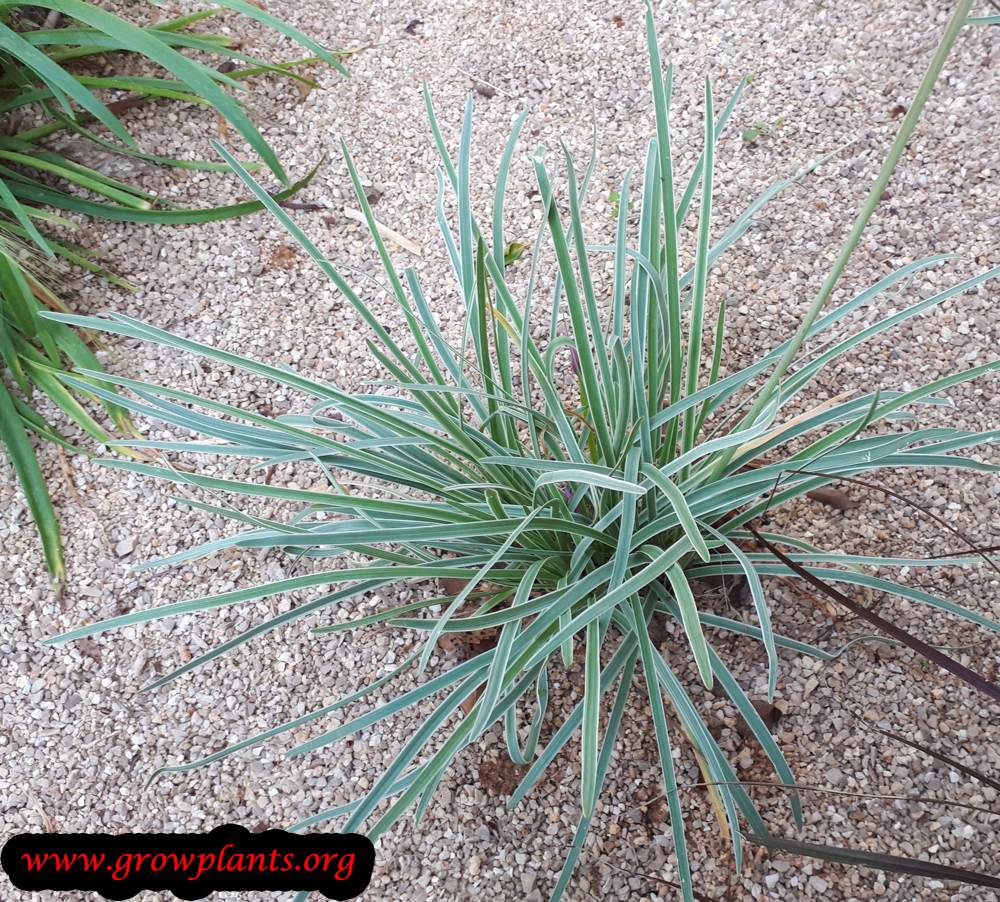
- Leaves & Foliage: Narrow, hollow green (or white-variegated) leaves in a radial clump, with a garlic scent when bruised.
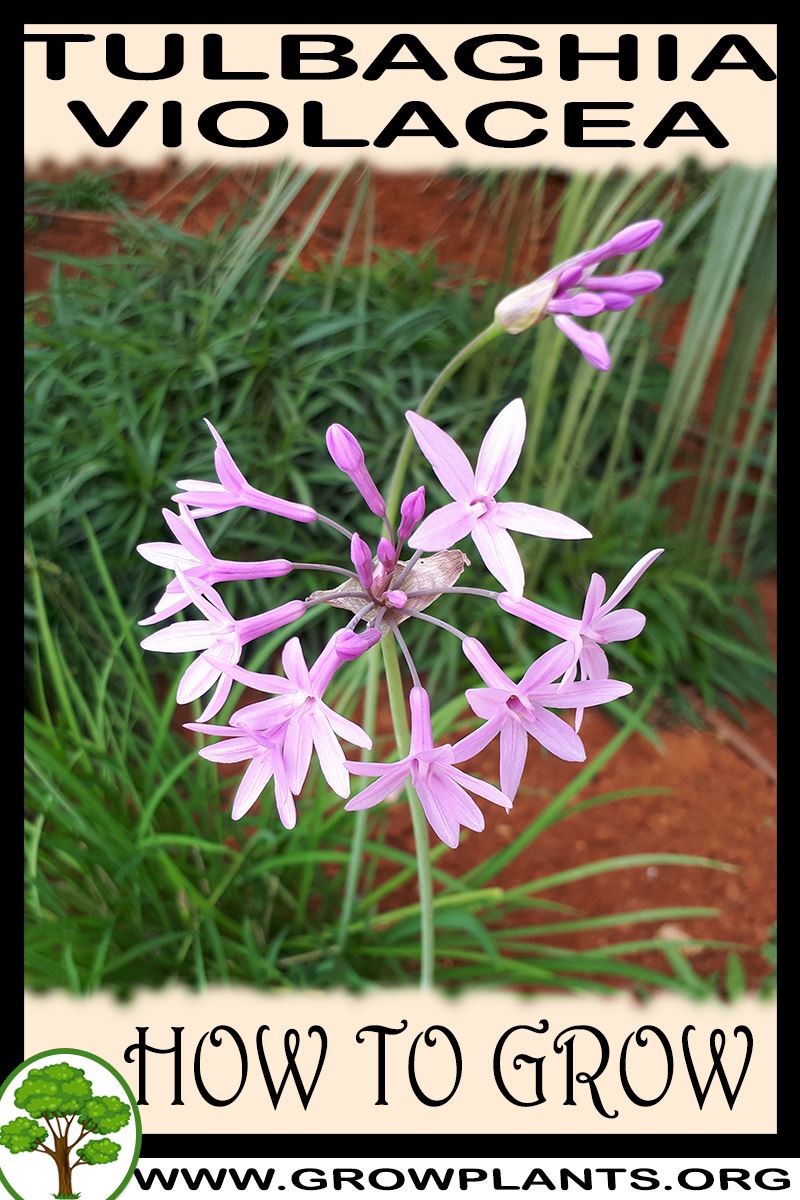
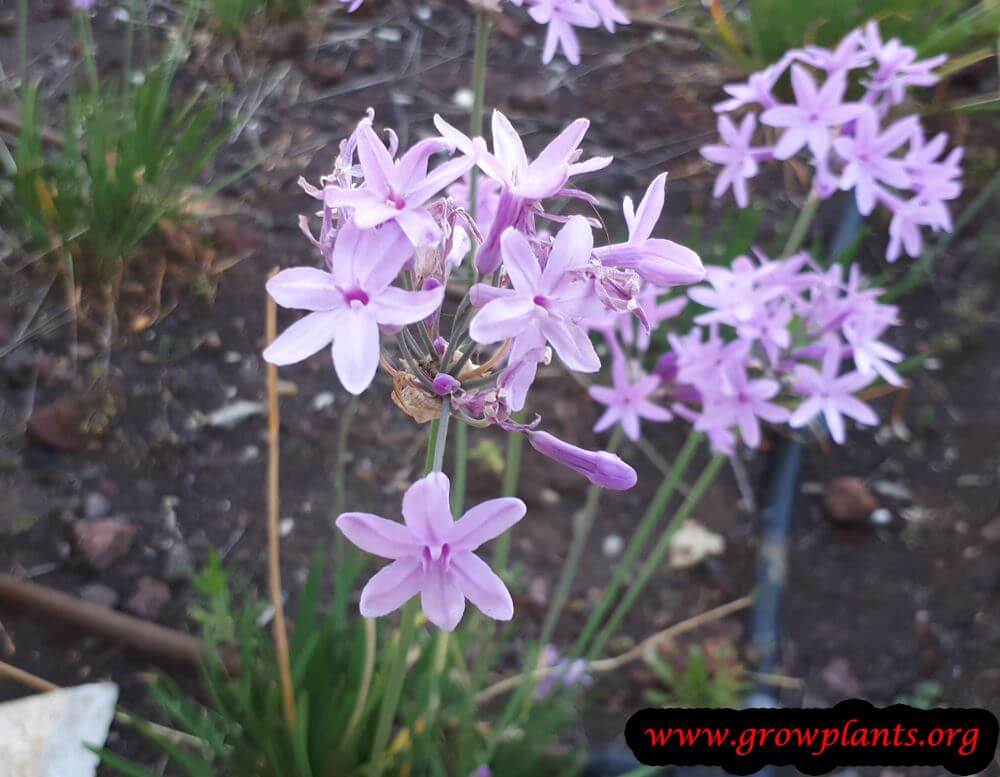
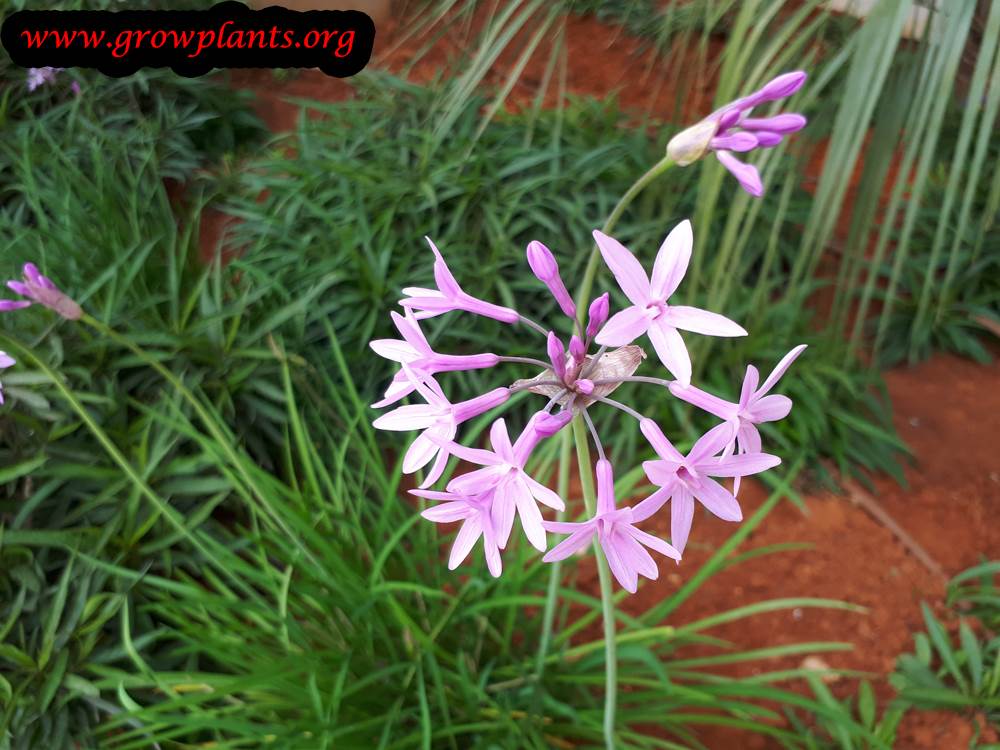
- Flower Characteristics: Small, fragrant pink-purple flowers in a rounded umbel on tall stems (full detail in the Bloom accordion).
Primary Uses & Landscape Value
- Edible Uses: Garlic-flavoured leaves used in salad, cooked or stir-fried; the small white-yellow bulb eaten raw, cooked or in salad.
- Functional & Ornamental Roles: Fragrant ornamental edging, cut flower, container and indoor plant; also used medicinally.
Care Guide: Planting, Soil & Watering
Overview: Society garlic is a tough, clumping perennial that thrives in full sun and free-draining, fertile soil. Once established it is quite drought-tolerant, needing only occasional deep watering and a mulch to keep its roots cool.
Quick Care Requirements
| Requirement | Ideal Condition |
|---|---|
| Planting Season | Spring through autumn |
| Growth Rate | Moderate to Fast |
| Soil Type | Rich, well-draining |
| Water Need | Low to Moderate; let the top few centimetres dry between waterings |
Planting & Establishment
- Best Planting Season: Plant from spring through autumn in mild climates, giving the clump time to settle in during the growing season.
- How to Plant:
- Hole Preparation: Dig a hole slightly wider than the root ball in free-draining ground.
- Soil Amendments: Enrich the soil with organic matter and finish with a mulch to conserve moisture.
- Planting Depth: Set the crown at soil level so it is neither buried nor exposed.
- Growth Speed & Expectations: A moderate-to-fast grower that forms tidy clumps around 30-60 cm (12-24 in) tall.
Soil, Watering & Drainage Care
- Soil Mix & Drainage Needs: Keep it in free-draining, fertile soil with a mulch on top; it also grows well in a container with good drainage.
- Watering Schedule & Technique:
- Young / Newly Planted: Water regularly to help the clump establish.
- Established: Water deeply but occasionally; it is drought-tolerant and dislikes constantly wet soil.
- Seasonal Adjustments: Reduce watering in winter and cool spells.
Climate, Light & Hardiness
Tulbaghia violacea (society garlic) is an evergreen, edible-ornamental bulb of Mediterranean, subtropical and temperate climates that is unusually flexible on light, growing from full sun to full shade in rich, well-drained soil. Its USDA zone 7–10 rating gives it solid winter cold tolerance.
Quick Climate Specifications
| Climate Zones | Mediterranean, Subtropical, Temperate |
|---|---|
| USDA Hardiness Zones | 7–10 |
| Frost Tolerance | Moderate |
| Light Conditions | Full Sun / Half Shade / Full Shade |
Sunlight & Light Exposure
Optimal Light Setup
Unusually adaptable - thrives anywhere from full sun to full shade.
Direct Sun Requirement
Not required; this species flowers and grows well without strong direct sun.
Shade & Heat Management
Its full-shade tolerance makes it an easy choice for the hottest, most exposed parts of a Mediterranean or subtropical garden.
Best Exposure / Orientation
Flexible - suited to sunny borders, shaded beds, containers, or even an indoor position, given the site notes it can also be grown as a houseplant.
Temperature Extremes & Hardiness
USDA Hardiness & Regional Limits
Hardy outdoors across USDA zones 7–10, covering genuine temperate winter cold through to mild Mediterranean and subtropical conditions.
Cold Damage & Winter Protection
Established plants within its zone range generally need no special winter protection; winter is also the site's recommended time to tidy dead leaves and thin overgrowth.
Frost Sensitivity
Moderate frost tolerance, consistent with its zone-7 rating.
Extreme Heat Tolerance
Also copes well with subtropical summer heat, especially where afforded some shade.
Wind, Humidity & Microclimate
Rainfall & Seasonal Moisture
Prefers rich, well-drained soil kept evenly moist with mulch, adapting to the differing rainfall patterns of its listed climate zones.
Microclimate Recommendations
Its wide light and site tolerance makes it useful for filling in tricky garden spots, from full sun borders to shaded corners, or as a container/indoor plant where outdoor conditions are unsuitable.
Growing in Pots, Balconies & Indoors
Tulbaghia violacea (society garlic) is a tough, clump-forming perennial that the grower confirms as both a houseplant and a container plant. It flowers over a long season, shrugs off drought, and even tolerates shade – an easy, forgiving pot subject indoors or out.
Quick Details
- Container Size: 10-20 L (3-5 gal); it flowers best a little pot-bound
- Indoor Suitability: A good houseplant per the grower – happy on a bright sill
- Best Spot: Full sun, part shade or even full shade; more sun means more flowers
- Soil & Drainage: Free-draining loam-based mix
- Watering in Pots: Low to moderate – drought-tolerant; let the surface dry between waterings
Indoors & On the Windowsill
- A good houseplant: The grower rates it as suitable indoors. Give it a bright window for the most flowers; it also tolerates lower light, making it forgiving as a room plant.
- On the windowsill: It stays neat and blooms well on a sunny sill; the grassy foliage smells of garlic when brushed – some enjoy it, so place it accordingly.
- Overwintering: Only half-hardy – in cold climates keep the pot frost-free indoors over winter, watering sparingly until growth resumes.
- A useful note: This is edible society garlic, not a toxic plant – the leaves and flowers are used as a mild garlic-flavoured herb.
On a Balcony or Patio
- Light & wind: Give it the brightest spot the balcony offers; shelter exposed plants from strong wind and stake any tall or top-heavy growth. Walls and paving reflect heat, so pots dry quickly – check moisture often in warm weather.
- Practicalities: A filled pot is heavy once watered, so make sure the balcony can take the weight and stand it where drainage runoff will not be a nuisance.
Choosing the Pot, Soil & Long-Term Care
- Pot & drainage: 10-20 L (3-5 gal) with strong drainage holes; skip a standing water saucer so the roots never sit wet. Terracotta breathes and dries fast, while glazed or plastic pots hold moisture longer.
- Potting mix: A free-draining loam-based mix with some grit; it is not fussy but dislikes waterlogging.
- Watering: Drought-tolerant once established – water moderately in growth and let the surface dry between waterings.
- Feeding: Potted plants exhaust their soil faster because nutrients leach out with every watering – feed lightly but regularly through the growing season.
- Repotting: Refresh the mix or pot up about every couple of years, teasing out and lightly trimming the roots of established plants.
Fertilizing & Feeding
Society garlic is an easy-going evergreen perennial grown mainly for its fragrant pink-purple flower clusters. It is not a demanding feeder – modest, balanced nutrition through its active growing season is enough to keep the clump full and flowering, and its edible leaves and small bulbs are a secondary bonus rather than the main reason it is grown.
Quick Fertilizing Specs
| Feeding Level | Light to moderate |
|---|---|
| Main Nutrient Priority | Balanced feeding through the active growing season supports healthy foliage and reliable flowering without needing a phosphorus-heavy bloom formula |
| Best Feeding Period | Through spring and summer while the clump is actively growing and flowering |
| Soil pH | Prefers rich, well-drained soil and is not particular about soil acidity |
| Reduce/Stop Feeding | Stop feeding as the plant slows down heading into its winter rest, when pruning of dead leaves and overgrowth takes place |
| Organic Options | A mulch over rich, well-drained soil supports this plant’s preferred growing conditions alongside light regular feeding |
Feeding by Growth Stage
Spring and summer active growth
Support healthy new leaf growth as the clump comes out of its winter rest and expands
| Nutrient direction | Balanced feeding supports steady leaf growth without pushing the plant beyond its naturally modest needs |
|---|---|
| Timing | Through spring and summer as new growth resumes and the clump expands |
| Frequency | Light, regular feedings suit this plant’s naturally modest feeding needs |
| Fertilizer types | A balanced, complete fertilizer suited to perennial garden plants, A diluted balanced liquid feed for container-grown plants |
| Precautions | Well-drained soil is important, since this plant is far less tolerant of soggy conditions than of dry ones; avoid heavy nitrogen that favors leaf growth over flowering |
Bloom period
Support the plant through its display of fragrant, umbel-shaped pink-purple flower clusters
| Nutrient direction | Continue the same balanced feeding carried over from spring growth rather than switching to a bloom-specific formula |
|---|---|
| Timing | During spring and summer as flower stems form and open |
| Frequency | Maintain the same light, steady feeding pace used earlier in the growing season |
| Fertilizer types | The same balanced, complete fertilizer used through spring growth |
| Precautions | Full sun to half shade generally gives the strongest flowering – feeding cannot fully compensate for a heavily shaded site |
Winter rest
Let the clump rest through winter, when dead leaves and overgrowth are pruned back
| Nutrient direction | None – withhold fertilizer while the plant rests through winter |
|---|---|
| Timing | Through winter, when growth slows and dead leaves and thin overgrowth are trimmed away |
| Frequency | No feeding at this stage |
| Fertilizer types | No feeding at this stage; resume feeding once active growth returns in spring |
| Precautions | Do not fertilize during this winter rest, since feeding now offers no benefit until active growth resumes |
Nutrient Deficiency Signs & Corrections
Leaves look pale or growth is noticeably weaker than expected during the active growing season
| Possible causes | Nitrogen deficiency from infrequent feeding through spring and summer, Soggy, poorly drained soil causing root stress, since this plant strongly prefers well-drained conditions, A crowded clump competing for nutrients and due for division, Insufficient light limiting overall vigor |
|---|---|
| Appears first on | Older leaves first |
| What to check | Feeding history through the active growing season, Soil drainage and whether water tends to sit around the roots, How long since the clump was last divided, Light exposure at the planting site |
| Possible correction | Resume light, regular balanced feeding through the growing season if the clump has been underfed; improve drainage if soggy soil is the cause, since feeding will not fix a drainage problem |
The clump produces healthy leaves but fewer flower clusters than expected
| Possible causes | Insufficient light, since flowering is strongest in full sun to half shade, Overfeeding with a nitrogen-heavy product that favors leaf growth over flowering, A young or recently divided clump that has not yet matured enough to flower well, Overly rich, constantly wet soil that favors foliage at the expense of blooms |
|---|---|
| Appears first on | Whole-clump effect rather than a single-leaf symptom |
| What to check | Sun exposure at the planting site, Recent fertilizer choice and whether it has been heavily nitrogen-weighted, Age of the clump since planting or last division, Soil drainage and moisture consistency |
| Possible correction | Improve light exposure first, since feeding cannot compensate for shade; otherwise maintain balanced, moderate feeding rather than a heavy nitrogen product and allow a young clump time to mature |
Pruning, Training & Seasonal Maintenance
Society garlic is an evergreen, clump-forming rhizomatous perennial that tolerates routine trimming well. Beyond simple deadheading, this species benefits from periodic clump thinning as it multiplies, since congested clumps flower less freely and are more prone to fungal issues at the base. The safest general maintenance window is winter, when growth has slowed; light tidying (spent flower stems, damaged leaves) can be done through the growing season without harming next bloom.
Quick Pruning & Maintenance Specs
| Pruning Tolerance | Moderate–High |
| Primary Pruning Window | Winter |
| Secondary Maintenance Window | Ongoing light deadheading through Spring–Summer bloom |
| Typical Frequency | Light trimming as needed; clump thinning every few years |
| Main Objective | Remove dead leaves, deadhead, and thin congested clumps |
| Young Plant Priority | Minimal cutting; let the clump bulk up |
| Mature Plant Priority | Winter tidy plus periodic clump thinning/division |
| Best Tool Type | Precision snips |
Pruning by Plant Age & Size
Newly Established
Avoid cutting back; remove only clearly dead leaf tips while the clump establishes.
Young / Formative
No structural training – a clumping rhizomatous perennial. Begin deadheading once flowering starts.
Mature / Established
Winter tidy of dead leaves; ongoing deadheading of spent umbels through the bloom season; thin or divide the clump every few years once it becomes dense.
Seasonal Pruning Schedule
Dormant/Winter
Objective: sanitation and clump renewal. Remove dead and damaged leaves and thin overly dense growth to improve air movement at the base. Expected response: fresh, healthier regrowth in spring.
Ongoing Sanitary
Deadhead spent flower umbels through spring and summer to keep the clump tidy; this does not affect subsequent flowering since umbels do not rebloom individually.
Structural Pruning & Training
Thinning is the main structural task here: as the rhizome clump multiplies, remove some of the crowded growth (or lift and divide) to maintain airflow and flowering vigor rather than letting the clump grow ever denser.
Special Growth to Remove
- Dead or yellowed leaves – removed in the winter tidy
- Spent flower stems/umbels – deadhead through the bloom season
- Excess congested growth – thin the clump periodically
Container & Small-Space Pruning
Grows well as a houseplant or in pots; container clumps become congested faster than in-ground plantings, so thin or divide more frequently, and trim leaves for a compact habit rather than letting them sprawl over the pot edge.
Tools
- Precision snips – leaves, spent flower stems, and thinning cuts
Tool Hygiene & Disease Risk
Routine – clean, sharp tools are sufficient; no significant transmissible disease is documented for this species.
Cut Placement & Technique
Cut leaves and flower stems close to the base; when thinning, remove whole shoots at ground level rather than shearing across the clump.
Heavy Pruning & Rejuvenation
A congested, poorly-flowering clump is best rejuvenated by lifting and dividing rather than by cutting back foliage alone; do this in winter while growth is slow.
Post-Pruning Care
No special feeding is needed after routine tidying; water normally and watch for improved airflow reducing base rot risk after thinning.
Common Pruning Mistakes
- Letting the clump grow indefinitely dense without thinning, reducing flowering and airflow
- Shearing the whole clump instead of removing individual spent stems and leaves
When NOT to Prune
Avoid heavy cutting back or division while the clump is in full active bloom; save clump division for the winter slow-growth period.
Recommended Tools (by task)
- precision_snips – deadheading, leaf tidy, and thinning cuts on this soft-stemmed perennial
- garden_spade – lifting and dividing a congested clump
Propagation Guide
Society garlic is most easily and quickly increased by lifting and dividing an established clump into its individual small bulb-offsets, which is also the only reliable way to keep a variegated leaf pattern, since seed-grown plants of variegated forms usually revert to plain green. Seed of the plain green species is a workable, fairly true-to-type alternative and needs no special treatment, though division gets you a flowering-size plant much faster.
Quick Propagation Specs
| Best Propagation Method | Division of clustering bulb offsets |
| Alternative Methods | Seed (plain green forms only) |
| Propagation Difficulty | Easy |
| Seed True-to-Type | Usually true-to-type for plain green forms; variegated forms often revert to green from seed |
| Vegetative True-to-Type | Yes |
| Best Propagation Season | Spring, summer, or autumn |
Growing from Seed
Seed of the plain green species germinates without any special pre-treatment under normal warm-season conditions and gives true-to-type plants. Seed collected from variegated-leaf plants, however, usually reverts to plain green, so keep named variegated selections going by division instead.
Division, Offsets, Pups & Suckers
Lift and divide congested clumps in spring, summer, or autumn, splitting the mass of small bulb-offsets into sections that each keep several leaf fans, roots, and their own small bulbs intact. Replant divisions right away into rich, well-drained soil with a mulch layer, matching the parent plant’s usual care, and they establish quickly given this plant’s naturally fast-to-medium growth rate.
Bloom & Edible Flower Guide
Quick Details
- Bloom Season: Spring through summer (often longer in mild climates)
- Time to First Bloom: Established clumps flower freely from their first season
- Flower Appearance: Small, fragrant, star-shaped pink-purple flowers held in loose umbels on slender stalks
- Edibility: Edible – the flowers (and the narrow leaves) have a mild garlic flavour and make a pretty edible garnish
Detailed Blooming Overview
Society garlic is a long-blooming clump-former that sends up wiry stems topped with rounded clusters of small, fragrant flowers through spring and summer. It flowers most freely in full sun, and the blooms are a favourite of butterflies and bees.
Flower Characteristics
- Small, star-shaped and fragrant, in pink to purple, arranged in an umbel at the tip of a slender stalk.
- The whole plant carries a mild garlic scent, which gives it its common name.
Bloom Care & Thinning
- Encouraging more bloom: Remove spent flower heads to keep new buds coming; divide crowded clumps every few years to keep them vigorous.
- In the kitchen: The flowers and leaves are edible with a gentle garlic taste – use them fresh as a garnish or in salads.
- Pollination: Attracts butterflies and bees.
Fruit & Uses
Society garlic (Tulbaghia violacea) is a genuinely edible ornamental herb: both the narrow, hollow leaves and the small bulb carry a mild garlic-onion flavour and are used as a seasoning or vegetable. Leaves and bulb can be eaten raw or cooked, most often prepared the way garlic chives or spring onion are used in the kitchen.
Quick Edible Specs
| Edible Parts | Leaves, bulb |
|---|---|
| Main Use(s) | Culinary (garlic-onion flavoured seasoning/vegetable); traditionally also used medicinally |
| Eaten Raw or Cooked | Both |
| Preparation Required | None beyond washing |
| Harvest Season | All year |
| Time to First Harvest | Individual leaves can be picked once a clump is established and actively growing (see Care for growth speed) |
| Safety/Toxicity Caveat | None significant known; use in normal culinary quantities, as with other Allium-relatives |
Leaves & Greens
The leaves are green, or green-and-white variegated in some forms, narrow and hollow, and grow in linked radial clusters. They can be picked individually at any time of year without disturbing the bulb, or taken together with the bulb when a whole plant is lifted. Raw leaves go into salads; they are also cooked or stir-fried, much like garlic chives.
Bulbs, Corms & Rhizomes
The bulb is small and white-yellow. It can be lifted for eating at any time of year and is eaten raw, cooked, or added to salads, with a flavour closer to mild garlic than onion. Because harvesting the bulb removes that plant (or division), it is more destructive than picking a few leaves at a time – see Propagation for how clumps are divided to renew stock.
Harvesting
Leaf harvest is cut-and-come-again and can continue year-round without killing the plant. Bulb harvest is a one-time removal of that plant or division, so it is common to take a few outer leaves for regular use and save whole-bulb harvest for when a clump is being divided anyway.
Preparation, Uses & Safety
No special preparation is required – both leaves and bulb are simply washed and can be used raw or cooked straight away. In South Africa, society garlic leaves and bulb are also traditionally used in home remedies, for example for coughs and colds; this is a traditional use only, not a medical claim. No toxicity is documented for this plant; the only general caution is the one that applies to any garlic/onion relative eaten in large raw amounts.
Pests, Diseases & Troubleshooting
Overview: Society garlic is a tough, drought-tolerant South African bulbous perennial whose oniony, garlic-scented foliage makes it one of the more pest-resistant border plants – the smell deters many insects and browsing animals. It is genuinely near trouble-free; its only real vulnerability is root and bulb rot in wet, poorly drained soil, with molluscs and a few sap-suckers as minor callers.
Quick Troubleshooting Overview
| Issue / Pest | Main Symptom | Primary Solution |
|---|---|---|
| Root / bulb rot | Yellowing, mushy base, collapse | Sharp drainage, ease off watering |
| Slugs & snails | Grazed young leaves | Handpick, barriers, iron-phosphate bait |
| Aphids | Sticky, distorted flower stalks | Water jet, insecticidal soap |
| Mealybugs | White tufts at leaf bases | Alcohol dab, insecticidal soap |
| Rust / leaf spot | Pustules or spots on leaves | Airflow, remove leaves, sulphur if severe |
Common Pests & Management
- Slugs and snails (Gastropoda):
- Symptoms: Occasional grazing of soft young leaves and flower stalks with slime trails in damp conditions, though the pungent foliage limits their interest.
- Prevention & Control: Handpick at night, clear hiding spots, use grit or copper barriers, and apply iron-phosphate bait only if damage is notable.
- Aphids (Aphidoidea):
- Symptoms: Small clusters of green aphids occasionally on flower stems and buds, with honeydew and slight distortion.
- Prevention & Control: Rinse off with water, rely on lady beetles and lacewings, and use insecticidal soap only for persistent colonies.
- Mealybugs (Pseudococcidae):
- Symptoms: White cottony tufts at leaf bases and around the crown, mainly on container or indoor plants, with sticky honeydew.
- Prevention & Control: Dab with alcohol, spray insecticidal soap or neem, and repeat to catch crawlers; improve airflow and avoid overwatering.
- Thrips (Thysanoptera):
- Symptoms: Fine silvery streaking and flecking on leaves and flowers in hot, dry spells, with distorted blooms in bad cases.
- Prevention & Control: Use blue sticky traps, encourage predatory mites and lacewings, keep plants unstressed, and treat heavy infestations with insecticidal soap or spinosad.
Diseases & Fungal Issues
- Root and bulb rot (Fusarium / Pythium / Phytophthora spp.):
- Symptoms: Yellowing, wilting fans, a soft, sometimes foul-smelling bulb and crown, and collapse where soil is heavy or overwatered; this is the plant’s main disease risk.
- Treatment & Management: Grow in gritty, free-draining soil, water sparingly and let soil dry between waterings, and lift and divide congested clumps, discarding any soft or rotted bulbs.
- Rust (Puccinia spp.):
- Symptoms: Orange-brown powdery pustules on the strappy leaves with surrounding yellowing, in humid crowded conditions.
- Treatment & Management: Remove infected leaves, improve airflow by dividing clumps, avoid overhead watering, and apply sulphur fungicide only if it persists.
- Fungal leaf spot (Cercospora / Alternaria spp.):
- Symptoms: Small brown or tan spots on leaves during prolonged wet weather, rarely serious.
- Treatment & Management: Pick off affected leaves, water at the base, and clear debris; chemical treatment is seldom needed on this resilient plant.
Growing Difficulties & Abiotic Problems
- Overwatering and poor drainage:
- Cause & Symptoms: As a drought-adapted plant, society garlic quickly rots in wet or compacted soil, showing yellowing and a soft base.
- Correction Strategy: Plant in free-draining soil or raised beds, water deeply but infrequently, and never let it sit in waterlogged ground or saucers.
- Sparse flowering or floppy growth:
- Cause & Symptoms: Too much shade or over-rich, over-watered conditions give lax foliage and few flowers.
- Correction Strategy: Grow in full sun on lean, well-drained soil, divide crowded clumps every few years, and avoid heavy feeding to keep blooming strong.
What Helps – Products & Tools
Society garlic barely needs products: sharp drainage and restrained watering prevent its main problem, root rot. Keep iron-phosphate bait for slugs, insecticidal soap or neem for the rare aphid, mealybug or thrips outbreak, and a sulphur fungicide only if rust ever appears. Honest verdict – this is a near pest-free plant.