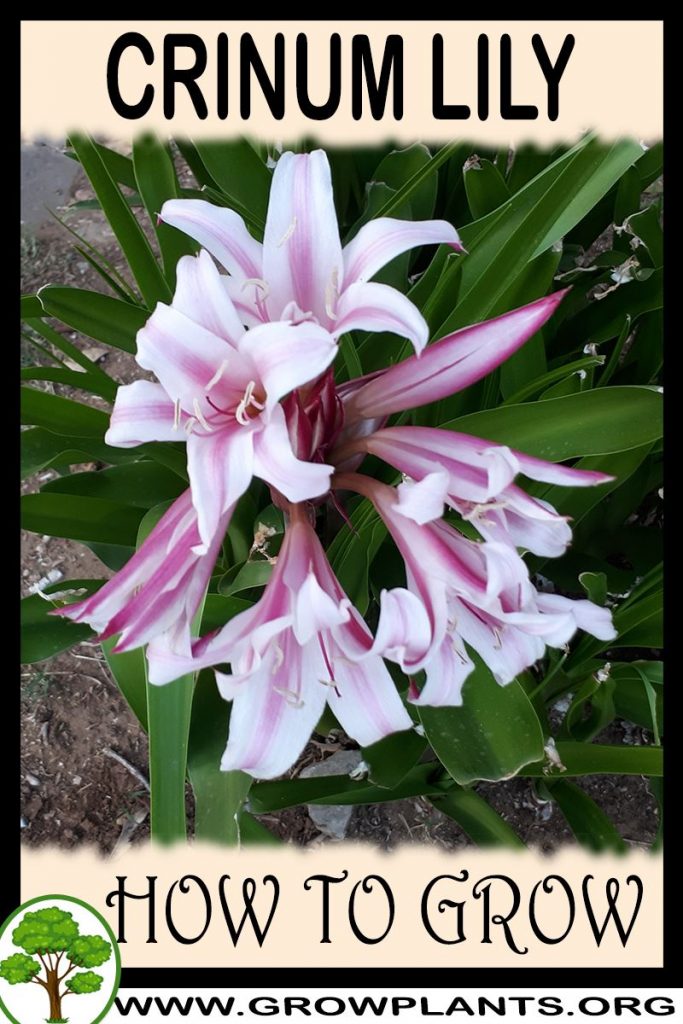
Plant Profile & Key Characteristics
Overview: Crinum (Swamp Lily) is a clump-forming bulbous perennial reaching about 0.5–1.4 m (2–5 ft) tall, with arching strap-like leaves. It is grown as an evergreen to semi-deciduous ornamental for its large, fragrant, trumpet-shaped flowers.
Quick Specifications
| Specification | Attribute |
|---|---|
| Plant Type / Life Cycle | Perennial bulbous geophyte |
| Foliage Type | Evergreen to semi-deciduous |
| Mature Size | 0.5–1.4 m (2–5 ft) tall |
| Growth Rate | Moderate (slow while young) |
| Root System | Bulbous geophyte |
| Toxicity | Toxic – all parts contain lycorine and related alkaloids (bulb most concentrated) |
| Hardiness | USDA zones 7+ |
Growth Form & Structure
- Height & Spread: Reaches 0.5–1.4 m (2–5 ft) tall in the ground, spreading into clumps of bulbs; in a container a single bulb grows in about 5–10 L (1–2 gal) of well-drained mix.
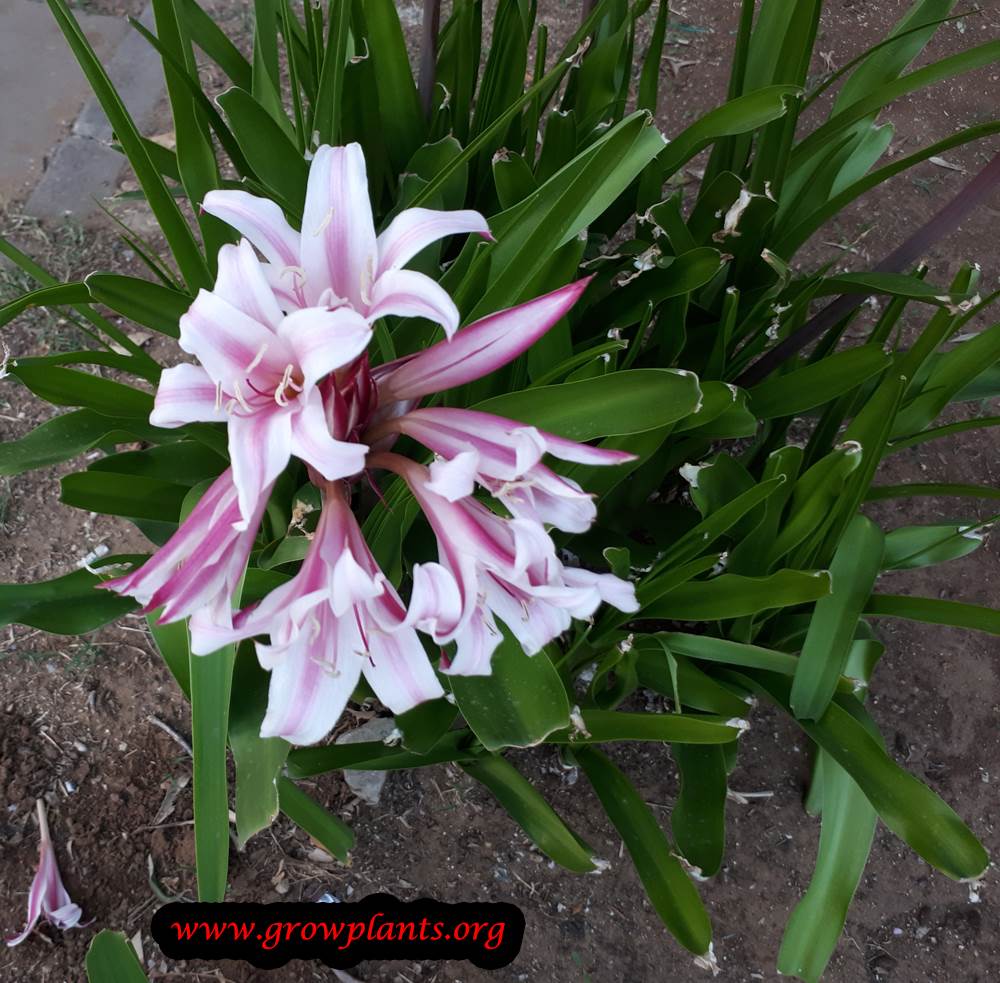
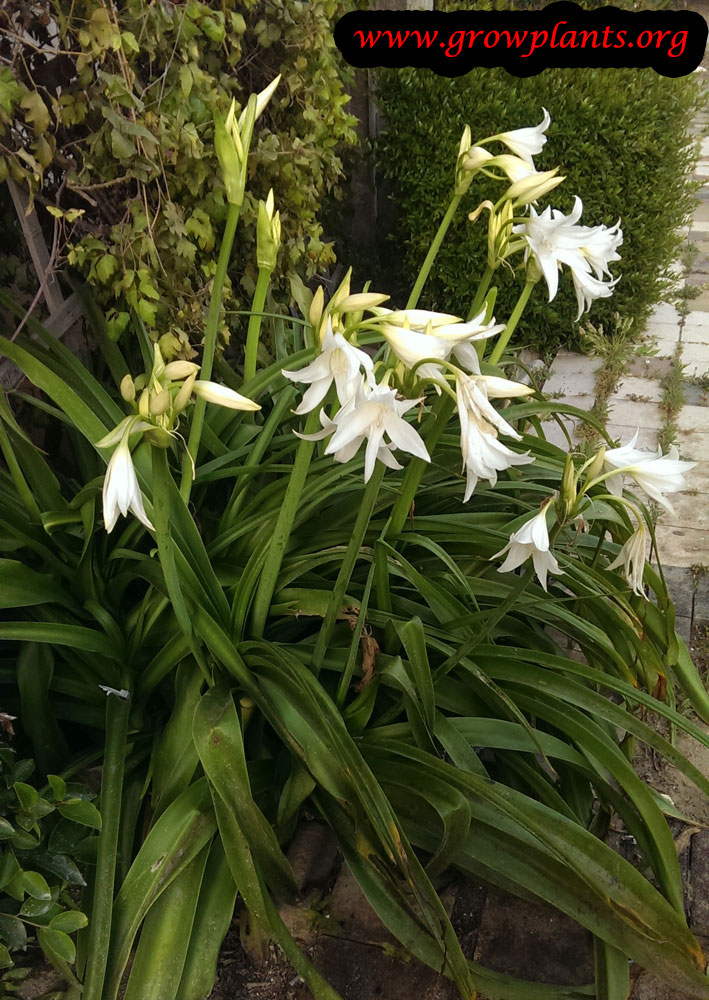
- Growth Habit & Form: Clump-forming bulbous perennial with a rosette of long, arching, strap-shaped leaves rising from a large bulb; can be vigorous and spreads by offsets.
- Lifespan & Maturity: Long-lived bulb; plants grown from seed take several years to reach flowering size.
Anatomy & Physical Features
- Leaves & Foliage: Green, red or purple linear, strap-like leaves in a spreading rosette.
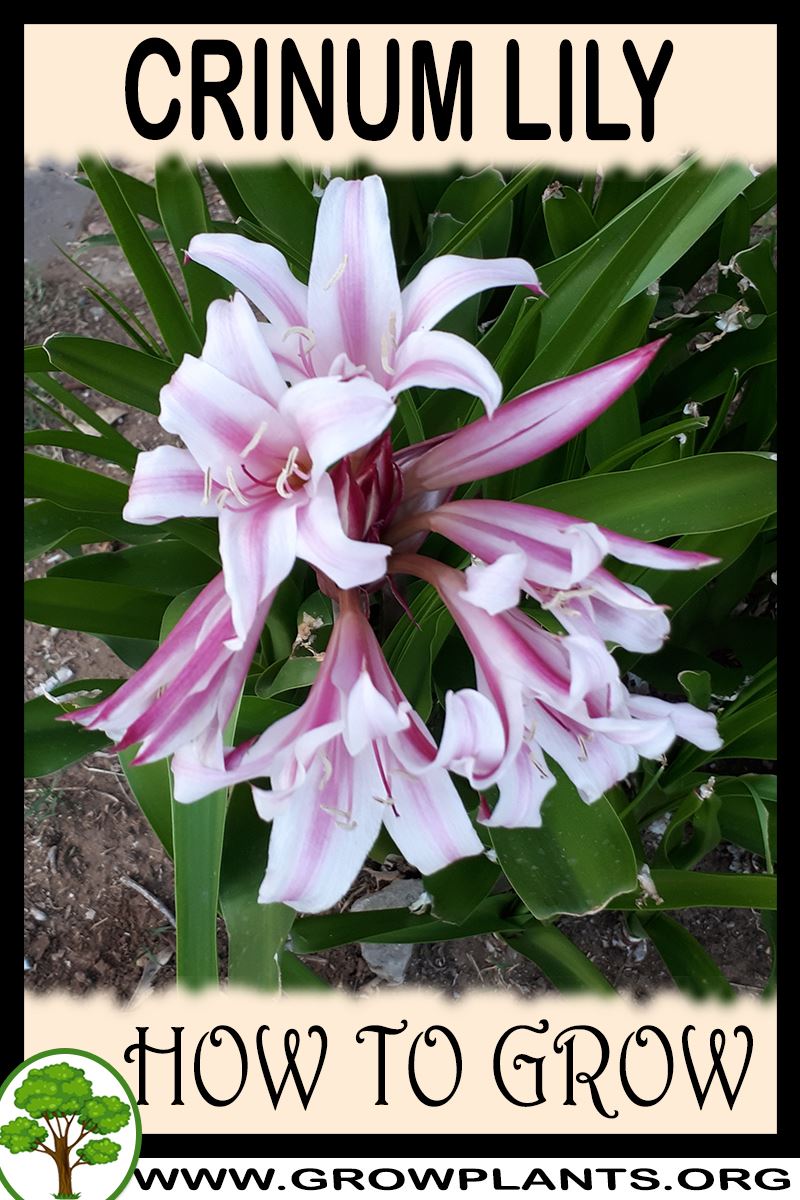
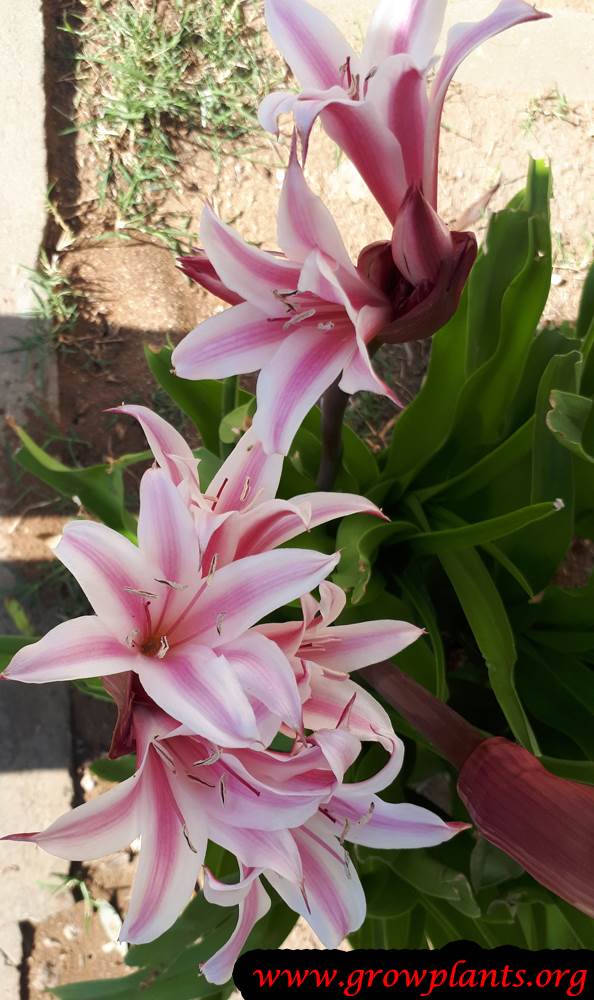
- Flower Characteristics: Fragrant, trumpet-shaped flowers in pink, white, red or purple, often bicoloured with a lighter or darker centre, in spring.
Primary Uses & Landscape Value
- Functional & Ornamental Roles: Ornamental fragrant flowering perennial for borders, poolside and pond-margin planting, and large containers; also grown as a cut flower.
Care Guide: Planting, Soil & Watering
Overview: Crinum lily (Swamp Lily) is a bulbous lily that thrives in rich, heavy, moisture-retentive soil and even tolerates boggy, swampy ground, growing best in full sun to part shade. It appreciates generous moisture and organic matter but rewards good drainage in cultivation.
Quick Care Requirements
| Requirement | Ideal Condition |
|---|---|
| Planting Season | Spring in cooler zones, spring through summer or autumn in milder zones, and year-round in frost-free tropical zones |
| Growth Rate | Moderate — slower while the bulb is young |
| Soil Type | Rich, heavy soil with plenty of organic matter; tolerates wet ground and even swampy sites |
| Water Need | Moderate to high — keep the soil moist |
Planting & Establishment
- Best Planting Season: Plant the bulb at the start of the growing season — spring in cooler areas, extending through summer and autumn in milder zones, and any time in frost-free climates; transplant during the dormant season.
- How to Plant:
- Hole Preparation: Dig a generous hole about five times the size of the bulb so the roots have plenty of loosened, enriched soil to grow into.
- Soil Amendments: Mix humus and organic matter through the backfill; a peat-based or otherwise heavy, moisture-holding soil suits it well, and a layer of chopped mulch helps keep the soil moist.
- Planting Depth: Set the bulb with about 2 cm (1 in) of soil over the top, leaving the neck near the surface.
- Growth Speed & Expectations: Growth is moderate and slower in the first years; clumps build up over time and can spread vigorously, so give them room.
Soil, Watering & Drainage Care
- Soil Mix & Drainage Needs: Give it rich, heavy, organic soil that holds moisture — unusually for a bulb it tolerates wet and even swampy ground. In containers a single bulb does well in a 5–10 L pot of quality potting mix; refresh tired soil every few years and increase the pot size once the roots fill it, or flowering will suffer.
- Watering Schedule & Technique:
- Young / Newly Planted: Keep the soil moist while the bulb settles and sends up its first leaves.
- Established: Water regularly to keep the soil consistently moist; the plant enjoys plentiful water and rich feeding through the growing season.
- Seasonal Adjustments: Water freely in the warm growing season and reduce it as the plant enters winter dormancy.
Climate, Light & Hardiness
Crinum lily (swamp lily) is an evergreen to semi-deciduous bulb of tropical, subtropical, temperate and Mediterranean climates that wants full sun to half shade and consistently moist, even swampy, rich soil. Its USDA zone 7+ rating gives it good winter cold tolerance for a swamp-loving bulb.
Quick Climate Specifications
| Climate Zones | Tropical, Subtropical, Temperate, Mediterranean |
|---|---|
| USDA Hardiness Zones | 7+ |
| Frost Tolerance | Moderate |
| Light Conditions | Full Sun / Half Shade |
Sunlight & Light Exposure
Optimal Light Setup
Full sun to half shade both suit this bulb well.
Direct Sun Requirement
Not mandatory - it performs well in either full sun or partial shade.
Best Exposure / Orientation
An open bed, pond margin, or bog-garden-style position fits its preference for consistently moist, heavy soil.
Temperature Extremes & Hardiness
USDA Hardiness & Regional Limits
Hardy outdoors from USDA zone 7 upward, spanning genuine temperate winters through to warm subtropical and tropical conditions.
Cold Damage & Winter Protection
Established plants generally need no extra protection within their hardy zone; a protective mulch over the bulb is a sensible precaution at the cold edge of zone 7.
Frost Sensitivity
Moderate frost tolerance, consistent with its zone-7 rating.
Extreme Heat Tolerance
Handles tropical and subtropical heat well, provided the constantly moist, rich soil it needs is maintained.
Wind, Humidity & Microclimate
Rainfall & Seasonal Moisture
Naturally suited to consistently wet, swampy or heavy soils with plentiful organic matter, rather than a dry-summer climate.
Microclimate Recommendations
Bog gardens, pond edges, or any low, moisture-retentive spot suit this species best.
Growing in Pots, Balconies & Indoors
Crinum lily (Crinum) is a large, bulbous plant of 0.5-1.4 m (2-5 ft). The grower does not rate it as a houseplant but gives detailed advice for growing it in pots, where a single bulb does well in a 5-10 L container.
Quick Details
- Container Size: About 5 L (1 gal) per bulb, and better 10 L (2 gal); size up as the clump grows
- Indoor Suitability: Not a houseplant – an outdoor container bulb
- Best Spot: Full sun to part shade
- Soil & Drainage: Well-drained soil, ideally a good potting mix
- Watering in Pots: Average to high – keep it moist in growth; never let it stand waterlogged
Indoors & On the Windowsill
- Not a houseplant: The grower does not grow it indoors – it is a big outdoor bulb for a sunny bed, patio or balcony container.
- Windowsill: It is too large and light-hungry for a windowsill; grow it in a roomy pot outdoors instead.
- Overwintering: In cold climates lift or move the container to a frost-free spot and keep it drier while dormant, then restart watering as it re-sprouts in the warm season.
- Safety: All parts, especially the bulb, are toxic if eaten – keep it away from children and pets.
On a Balcony or Patio
- Light & wind: Give it the brightest spot the balcony offers; shelter exposed plants from strong wind and stake any tall or top-heavy growth. Walls and paving reflect heat, so pots dry quickly – check moisture often in warm weather.
- Practicalities: A filled pot is heavy once watered, so make sure the balcony can take the weight and stand it where drainage runoff will not be a nuisance.
Choosing the Pot, Soil & Long-Term Care
- Pot & drainage: 5-10 L per bulb, sized up as the clump grows with strong drainage holes; skip a standing water saucer so the roots never sit wet. Terracotta breathes and dries fast, while glazed or plastic pots hold moisture longer.
- Potting mix: Well-drained soil – the grower advises a good potting mix or similar.
- Watering: Keep evenly moist in growth with average to generous water, but ensure it drains freely and never sits waterlogged.
- Feeding: Potted plants exhaust their soil faster because nutrients leach out with every watering – feed lightly but regularly through the growing season.
- Repotting: Refresh the mix or pot up about every couple of years, teasing out and lightly trimming the roots of established plants.
Grower’s Container Tip
- Grower’s potting method: A single bulb grows well in about 5 L (1 gal), and better in 10 L (2 gal), in well-drained soil or potting mix. Every few years check the soil is still good – if not, wash the old soil off the roots and repot in fresh mix. To keep it flowering over the years, make sure the root system has not filled the whole container; if it has, reduce the number of bulbs or move up to a larger pot.
Fertilizing & Feeding
Crinum lily, also known as swamp lily, is an aggressive, vigorous bulb that naturally colonizes wet, heavy, organically rich ground. It responds well to a two-part feeding approach that supports the flower first, then shifts to building up the bulb through the leaf growth that follows.
Quick Fertilizing Specs
| Feeding Level | Moderate |
|---|---|
| Main Nutrient Priority | A flowering-support feed as growth begins, followed by a leaf-growth feed once blooming finishes to rebuild bulb reserves |
| Best Feeding Period | From the start of active growth through the leaf-growth period that follows flowering |
| Soil pH | Thrives in rich, heavy, wet-land soil with generous organic matter rather than needing a particular pH |
| Reduce/Stop Feeding | Stop feeding once the plant enters dormancy and the foliage dies back |
| Organic Options | This bulb prefers rich soil with organic matter – a mulch of chopped organic material also helps hold soil moisture alongside regular feeding |
Feeding by Growth Stage
Growth onset and bloom support
Support the bulb as it begins its growth cycle and sends up its fragrant, trumpet-shaped flowers
| Nutrient direction | A flowering-support feed is applied right as the bulb visibly starts its active growth |
|---|---|
| Timing | At the point the bulb begins active growth, ahead of and through flowering |
| Frequency | A single well-timed feeding as growth starts supports the coming bloom |
| Fertilizer types | A fertilizer formulated to support flowering, applied as the bulb begins active growth |
| Precautions | Keep the soil rich, heavy, and consistently moist to wet through this stage; this vigorous grower can spread aggressively, so give it room |
Post-bloom leaf growth and bulb building
Rebuild bulb reserves through strong leaf growth once the flowers have faded
| Nutrient direction | A feed geared toward leaf growth follows flowering, helping the bulb bulk back up for its next cycle |
|---|---|
| Timing | Once the bloom stalks have faded and the plant shifts into producing new leaves |
| Frequency | A feeding as leaf growth resumes after flowering supports this rebuilding phase |
| Fertilizer types | A fertilizer geared toward leaf and foliage growth, applied once flowering finishes, A layer of chopped mulch to help hold soil moisture through this leafy growth stage |
| Precautions | Maintain rich, evenly moist soil; watch for common pests such as snails or bulb mites, which can be mistaken for a nutrient problem if leaf damage appears |
Dormant season rest
Allow the bulb to rest through dormancy before its next growth cycle
| Nutrient direction | None – withhold fertilizer while the bulb is dormant |
|---|---|
| Timing | During the plant’s dormant season, once the foliage has died back |
| Frequency | No feeding at this stage |
| Fertilizer types | No feeding at this stage; this is also the appropriate window for dividing or transplanting the bulb |
| Precautions | Do not fertilize a dormant bulb, since feeding offers no benefit until active growth resumes |
Nutrient Deficiency Signs & Corrections
The bulb flowers poorly, with fewer blooms than expected, or skips flowering in a given cycle
| Possible causes | No bloom-support feed applied as the bulb began its active growth, An immature bulb, or one recently divided, that has not yet rebuilt enough reserves, Pest damage such as bulb mites, bulb flies, or nematodes weakening the bulb, Insufficient sun for a planting sited in too much shade |
|---|---|
| Appears first on | Whole-plant effect at the start of a growth cycle rather than a single-leaf symptom |
| What to check | Whether a bloom-support feed was applied as growth began, Bulb age and division history, Signs of pest damage on the bulb or roots, Sun exposure at the planting site |
| Possible correction | Apply a bloom-support feed as active growth begins, treat any identified pest problem directly, and give young or divided bulbs time to mature before expecting full flowering |
Leaves that emerge after flowering are sparse or grow weakly instead of lush and vigorous
| Possible causes | The post-bloom leaf-growth feed not having been applied once flowering finished, Soil that has dried out or lost its organic richness, Grasshopper or other foliage-feeding pest damage reducing leaf area, Natural seasonal decline as the plant nears dormancy |
|---|---|
| Appears first on | New leaves emerging after the bloom stalk fades |
| What to check | Whether a leaf-growth feed was applied after flowering finished, Soil moisture and organic matter content, Visible chewing or pest damage on new leaves, Whether the plant is naturally approaching its dormant season |
| Possible correction | Apply a leaf-growth feed once flowering ends and keep soil rich and evenly moist; address any pest damage directly, since it will not be resolved by feeding alone |
Pruning, Training & Seasonal Maintenance
Crinum lily (Swamp lily) covers a broad group of large-bulbed, evergreen-to-semi-deciduous perennials grown across a wide hardiness range (zone 7 and up) and a wide bloom-color spread. As a genus trait, the large bulb stores enough energy to tolerate a full leaf cut-back in the dormant season and resprout strongly. The general approach across Crinum types is the same: leave foliage in place while it is green and feeding the bulb, then clear old leaves and spent bloom stems once the growing season winds down.
Quick Pruning & Maintenance Specs
| Pruning Tolerance | High (large bulb tolerates a full leaf cut-back) |
| Primary Pruning Window | Autumn – Winter (dormant season) |
| Typical Frequency | Once yearly, plus spot removal of damaged leaves |
| Main Objective | Remove old/dead leaves and spent bloom stems; sanitation |
| Young Plant Priority | Minimal cutting; let leaves build bulb size |
| Mature Plant Priority | Dormant-season cut-back; divide congested bulb clumps |
| Best Tool Type | Bypass secateurs |
| Avoid Heavy Pruning During | While leaves are still green |
Pruning by Plant Age & Size
Newly Established
Avoid cutting back leaves for the first year or two so the young bulb can build up size.
Young / Formative
No structural training – a clump-forming bulb. Remove only clearly dead leaf tissue.
Mature / Established
Annual dormant-season cut-back of old and dead leaves and spent bloom stems; divide the bulb clump every several years once flowering declines from overcrowding.
Seasonal Pruning Schedule
Dormant/Winter
Objective: clear old growth ahead of the new season. Cut back old and dead leaves and spent bloom stems once they have fully died back. Do not cut leaves that are still green.
Special Growth to Remove
- Old and dead leaves – cut back in the dormant season
- Spent bloom stems – remove once flowering has finished
Container & Small-Space Pruning
Crinums grow well in large pots; once the bulb clump fills the container, divide it rather than relying on cutting back alone, refreshing the potting mix at the same time.
Tools
- Bypass secateurs – the thick, fleshy leaves and bloom stems typical of this genus
Tool Hygiene & Disease Risk
Routine, with attention if bores or bulb mites (documented pests of this genus) are present – remove and dispose of visibly infested tissue rather than composting it.
Cut Placement & Technique
Cut dead leaves and bloom stems close to the base without cutting into the bulb neck.
Heavy Pruning & Rejuvenation
A full cut-back of all leaves in the dormant season is tolerated across this genus, and plants regrow from the bulb; rejuvenate an overcrowded, poorly-flowering clump by lifting and dividing bulbs rather than by cutting alone.
Post-Pruning Care
Resume normal watering and mulching as new growth emerges; avoid heavy feeding immediately after a hard cut-back since the bulb already carries the reserves needed for regrowth.
Common Pruning Mistakes
- Cutting back green leaves before they die back naturally, reducing bulb reserves
- Leaving a congested clump undivided for too many years, reducing flowering
When NOT to Prune
Avoid cutting green, actively growing foliage; wait until leaves have yellowed or browned before removing them.
Recommended Tools (by task)
- bypass_secateurs – cutting back thick dead leaves and spent bloom stems
- garden_spade – lifting and dividing an overcrowded bulb clump
Propagation Guide
As with other Crinum lilies, the fastest way to a flowering plant is dividing offset bulbs from an established clump once the leaves die back, since seed-grown Crinum keep the same flower type as the parent but take noticeably longer to reach blooming size and are harder to establish. Both methods are easy, but bulb division is the more efficient choice for most growers.
Quick Propagation Specs
| Best Propagation Method | Bulb division (offsets) |
| Alternative Methods | Seed |
| Propagation Difficulty | Easy |
| Seed True-to-Type | Usually true-to-type, but slower to reach flowering size than divided bulbs |
| Vegetative True-to-Type | Yes |
| Best Propagation Season | Bulbs can be divided year-round but autumn to mid-winter (as leaves die back) is best; seed is sown end of summer to autumn |
| Seed Germination Time | 2–10 weeks, sometimes longer |
| Germination Temperature | 15–25°C (60–77°F) |
| Seed Sowing Depth | About 0.5 cm (0.25 in) |
Growing from Seed
Seed Handling & Viability
Store seed in the refrigerator in a dark, dry location until sowing.
Dormancy & Pre-Sowing Treatment
Soak seeds for at least 24 hours before sowing.
Sowing Season
End of summer through autumn.
Sowing Depth & Orientation
Sow about 0.5 cm (0.25 in) deep, in peat or another heavy, moisture-retentive soil. Space seedlings destined for transplanting about 2 x 2 cm (1 x 1 in) apart, or about 10 x 10 cm (4 x 4 in) apart when sowing directly.
Germination Conditions
Keep at 15–25°C (60–77°F) in consistently moist, high-humidity soil, in half shade to full sun.
Germination Time
Typically 2–10 weeks, though it can take longer.
Seedling Care
Keep the soil moist with average to heavy watering — don’t let it dry out — in full sun, and keep temperatures within roughly 15–25°C (60–77°F).
Rhizomes, Tubers, Bulbs & Corms
Divide bulbs at almost any time of year, but autumn into mid-winter, once the leaves die back, is best — separate the offset bulbs from the mother plant at that point. When replanting, dig a hole roughly five times the bulb’s size, work in humus and organic matter, and set the bulb about 2 cm (1 in) below the surface; transplant during the dormant season.
Bloom & Flower Guide
Quick Details
- Bloom Season: Spring
- Time to First Bloom: Bulbs often need a season or two to settle in before they flower freely
- Flower Appearance: Large, fragrant, trumpet-shaped flowers in pink, white, red or purple, sometimes with a lighter or darker throat
- Edibility: Not edible – all parts of Crinum are toxic if eaten
Detailed Blooming Overview
In spring, established Crinum bulbs send up sturdy, leafless stalks topped with clusters of fragrant, trumpet-shaped blooms. The scent carries best in the evening, and a single bulb can open several flowers in succession over the flowering period.
Flower Characteristics
- Trumpet-shaped and fragrant, in pink, white, red or purple; many flowers are two-toned with a lighter or darker centre.
- Carried in an umbel at the top of a bare stalk, above the strap-like green (sometimes red- or purple-tinted) leaves.
Bloom Care & Thinning
- Deadheading: Remove spent flowers to keep the clump tidy, and let the foliage die back naturally to feed next season’s bulb.
- Pollination: The evening fragrance draws moths and other night-flying pollinators.
- Safety: All parts contain toxic alkaloids (lycorine) – handle bulbs with care and keep them away from children and pets.
Pests, Diseases & Troubleshooting
Overview: Crinum are large, vigorous amaryllid bulbs that are relatively trouble-free but share the classic problems of the amaryllis family: the amaryllis/lily borer caterpillar tunnelling in leaves and bulb, sap-sucking mealybug, and the fungal ‘red blotch’ (leaf scorch) that marks amaryllids. The bulb itself rots in cold, wet, poorly-drained ground. Manage this plant with good drainage, clean sanitation of tunnelled foliage, and vigilance for the borer.
Quick Troubleshooting Overview
| Issue / Pest | Main Symptom | Primary Solution |
|---|---|---|
| Amaryllis/lily borer | Leaves tunnelled, ragged; black frass; caterpillars bore to bulb | Squash caterpillars/eggs; cut out mined leaves; Bt |
| Mealybug | White cottony masses in leaf bases and on bulb neck | Wash off; insecticidal soap / horticultural oil |
| Grasshoppers | Large chewed notches and stripped leaf sections | Hand-pick; net young plants; tolerate light damage |
| Snails & slugs | Rasped holes in leaves; slime trails | Barriers, hand-pick, iron-phosphate bait |
| Red blotch / leaf scorch | Red streaks and blotches on leaves, scapes and bulb | Remove infected tissue; improve airflow; clean stock |
| Bulb rot | Soft, foul bulb; yellowing, collapsing leaves | Improve drainage; lift and cut out rot; dry soil |
Common Pests & Management
- Amaryllis / lily borer (Brithys crini):
- Symptoms: The signature pest of Crinum and its amaryllid relatives. Young caterpillars mine inside the leaves leaving translucent, blistered, tunnelled patches; as they grow they emerge to chew foliage ragged and then bore down through the neck into the bulb, packing tunnels with dark frass. A heavy attack can hollow out and destroy a bulb. The caterpillars are boldly banded (often black-and-yellow/white).
- Prevention & Control: Inspect regularly and act early: crush the clustered eggs and young caterpillars by hand, and cut off and destroy mined leaves before larvae reach the bulb. A biological Bacillus thuringiensis (Bt) spray kills young caterpillars; direct it into leaf whorls where they feed. Remove and burn badly-bored bulbs to stop the cycle.
- Mealybug (Pseudococcus / Planococcus spp.):
- Symptoms: White, cottony, waxy insects tucked into the leaf bases, the bulb neck and among the roots, with sticky honeydew and sooty mould. They weaken the plant and can move down onto the bulb of potted specimens.
- Prevention & Control: Wash colonies off with water or wipe with an alcohol-dipped cloth, then treat with insecticidal soap or horticultural/neem oil, repeating to catch new generations. Check the bulb and root zone of potted plants at repotting and drench if root-dwelling forms are found.
- Grasshoppers & locusts (Acrididae):
- Symptoms: Large, irregular chewed notches removed from leaf margins, and whole sections of the strappy leaves stripped in bad years. Damage is cosmetic on an established clump but disfiguring.
- Prevention & Control: Hand-pick where practical, net or cover vulnerable young plants, and encourage birds and other predators. Chemical control is rarely justified for a robust clump that outgrows the damage.
- Snails & slugs (Gastropoda):
- Symptoms: Rasped holes and chewed margins on the soft leaves, with tell-tale slime trails, worst in mild wet weather and on new growth near the ground.
- Prevention & Control: Clear hiding places, water in the morning, and use grit or copper barriers around clumps and pots. Hand-pick after dark or use iron-phosphate bait sparingly.
- Bulb mites (Rhizoglyphus spp.):
- Symptoms: Tiny, pale, slow mites that attack bulbs already damaged or rotting, riding along with fungal rot and accelerating its spread; the bulb becomes soft and crumbly.
- Prevention & Control: They are mostly secondary to damage and rot, so prevention is drainage and careful handling to avoid wounds. Discard heavily-infested, rotting bulbs; store and plant only firm, sound stock and keep the bulb neck dry.
Diseases & Fungal Issues
- Red blotch / leaf scorch (Stagonospora curtisii):
- Symptoms: The characteristic amaryllid fungal disease: red streaks, spots and blotches on the leaves, flower scapes and the outer scales of the bulb, sometimes deforming the emerging leaves and scape (‘red spot’). Worst in cool, damp, humid conditions.
- Treatment & Management: Cut away and destroy infected leaves and remove badly-marked outer bulb scales; improve airflow and avoid overhead watering that keeps foliage wet. Start with clean, sound bulbs. A protective fungicide can be used on valuable clumps with a history of the disease.
- Bulb rot (Fusarium / Sclerotium / Erwinia):
- Symptoms: The bulb turns soft, brown and foul-smelling, often starting at the base plate or from borer wounds; leaves yellow, wilt and pull away easily. Cold, waterlogged soil is the usual trigger.
- Treatment & Management: Prevent with sharp drainage and by planting the neck high and dry. Lift affected bulbs, cut out all rotten tissue back to firm, clean flesh, dust the cuts, and dry before replanting in fresh, well-drained soil – or discard if more than superficially rotten.
- Mosaic & other viruses (e.g. Crinum mosaic-type viruses):
- Symptoms: Pale mottling, streaking or mosaic patterns and yellow flecking on the leaves, sometimes with reduced vigour and distorted growth. Spread by sap-feeding insects and by division of infected clumps.
- Treatment & Management: There is no cure. Rogue out and destroy clearly virused plants, control aphids and other sap-suckers that spread it, and propagate only from healthy, vigorous stock. Sterilise cutting tools between plants when dividing.
Growing Difficulties & Abiotic Problems
- Bulb rot from waterlogging:
- Cause & Symptoms: Bulbs sitting in cold, heavy, poorly-drained soil suffocate and rot; leaves yellow and the clump collapses. Over-deep planting worsens it.
- Correction Strategy: Grow in free-draining soil with the bulb neck at or above the surface. Ease off watering in cool dormant periods; in wet-winter climates give the driest, best-drained position available.
- Leaf yellowing at dormancy:
- Cause & Symptoms: Many crinums naturally yellow and lose leaves in a dry or cool rest period – often mistaken for disease.
- Correction Strategy: Recognise the natural cycle: reduce watering as leaves fade, keep the bulb barely moist through rest, and resume watering as new growth appears.
- Slow to flower after moving:
- Cause & Symptoms: Crinum bulbs resent disturbance and often sulk and skip flowering for a season or two after being lifted, divided or replanted.
- Correction Strategy: Site the clump where it can stay put, plant firmly, feed after establishment, and be patient – undisturbed clumps flower best.
- Sunscald / leaf-tip scorch:
- Cause & Symptoms: Sudden strong sun on shade-grown plants, or drought stress, browns leaf tips and margins.
- Correction Strategy: Acclimatise to stronger light gradually and keep the root zone evenly moist in growth; light afternoon shade helps in the hottest climates.
What Helps – Products & Tools
Lean on hygiene and hand-work first: crush borer eggs and caterpillars, cut out mined leaves, and lift and clean rotting bulbs. Useful product types are a Bacillus thuringiensis (Bt) spray for the borer caterpillar; insecticidal soap and horticultural or neem oil for mealybug; iron-phosphate slug bait and grit/copper barriers for slugs and snails; and a protective fungicide plus clean bulb stock against red blotch. Sharp drainage is the best defence against bulb rot. Spray in the evening to protect pollinators.