Plant Profile & Key Characteristics
Overview: Godetia (farewell-to-spring) is a fast-growing herbaceous annual, 30–90 cm (1–3 ft) tall, grown purely as an ornamental for its showy satiny flowers and as a cut flower. It completes its life cycle in a single season and performs best in cool conditions across subtropical, temperate, Mediterranean and desert climates.
Quick Specifications
| Specification | Attribute |
|---|---|
| Plant Type / Life Cycle | Annual (herbaceous) |
| Mature Size | 30–90 cm tall (1–3 ft) |
| Growth Rate | Fast to moderate |
| Root System | Fibrous and shallow (annual) |
| Hardiness | USDA zone 2–9 (spring planting); zone 10–11 (autumn/winter planting) |
Growth Form & Structure
- Height & Spread: Upright bushy habit 30–90 cm (1–3 ft) tall; grows well in the ground or in 5–12 L (1.5–3 gallon) containers as a ‘living bouquet’.
- Growth Habit & Form: Slender, erect annual herb that branches into a leafy, flower-topped mound.
- Lifespan & Maturity: Annual – germinates, flowers and sets seed within one growing season; quick to reach flowering size.
Anatomy & Physical Features
- Leaves & Foliage: Green, lanceolate leaves.
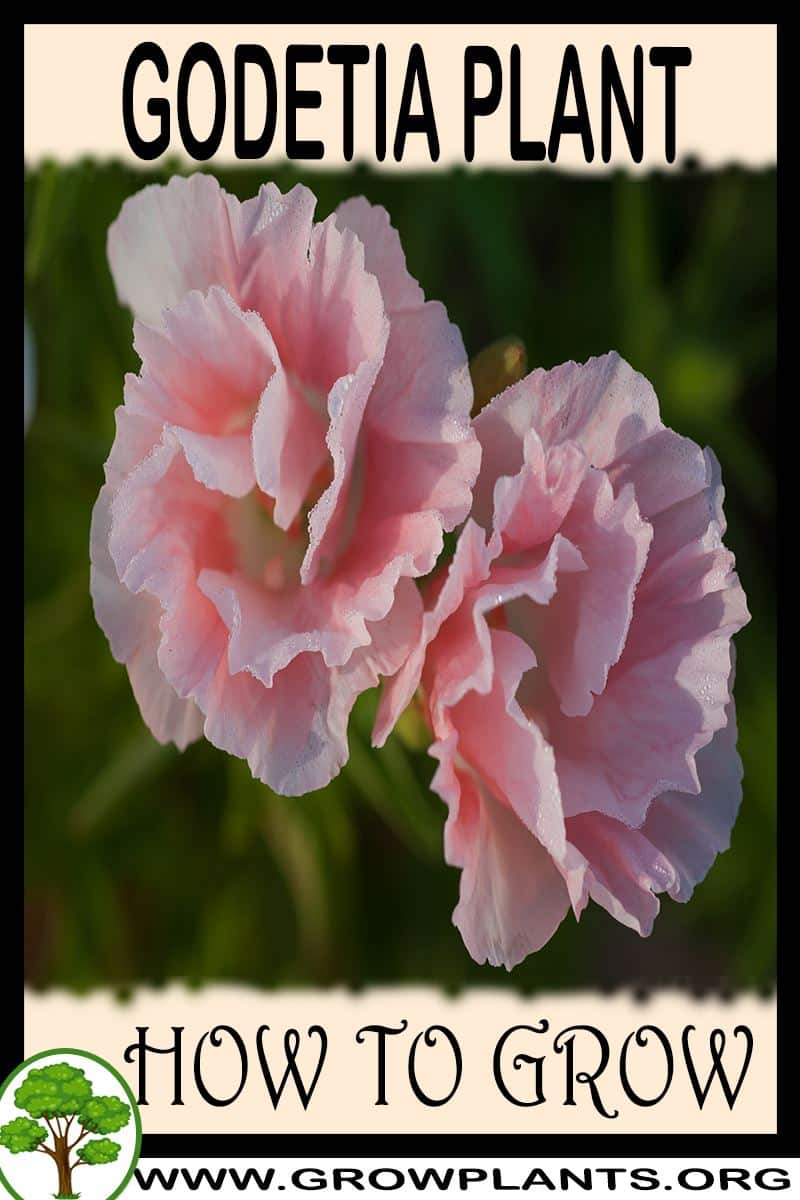
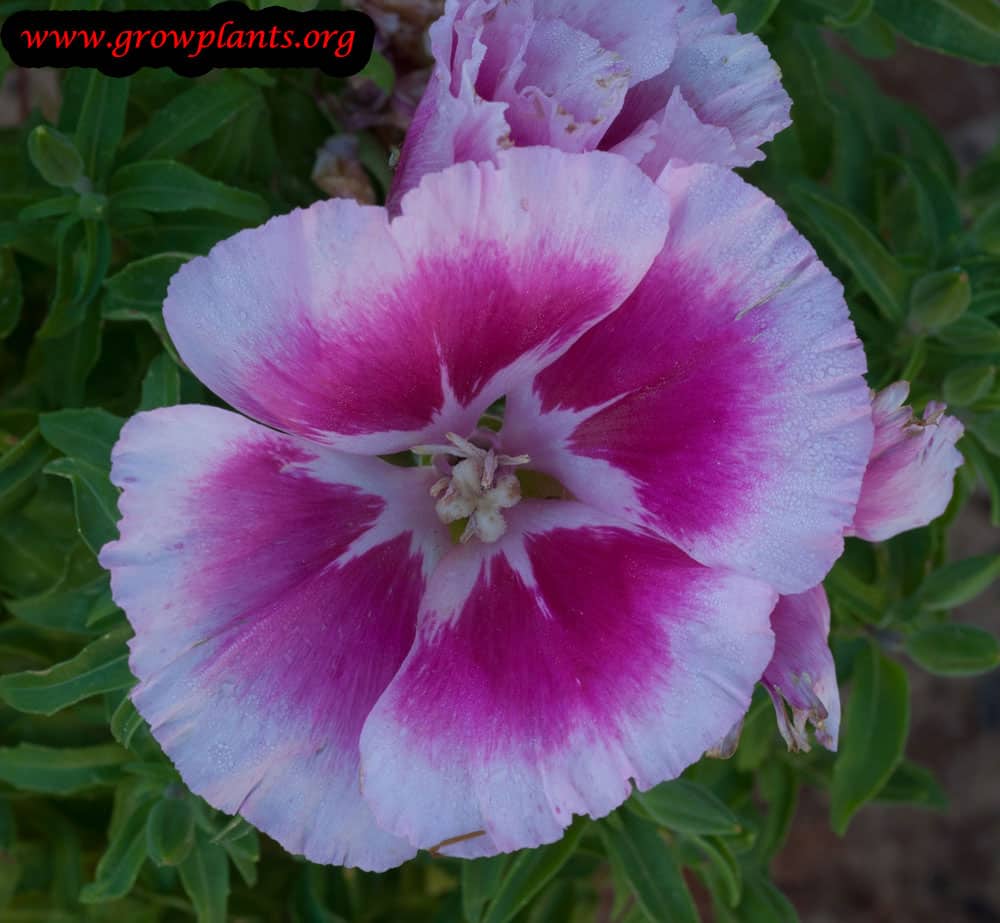
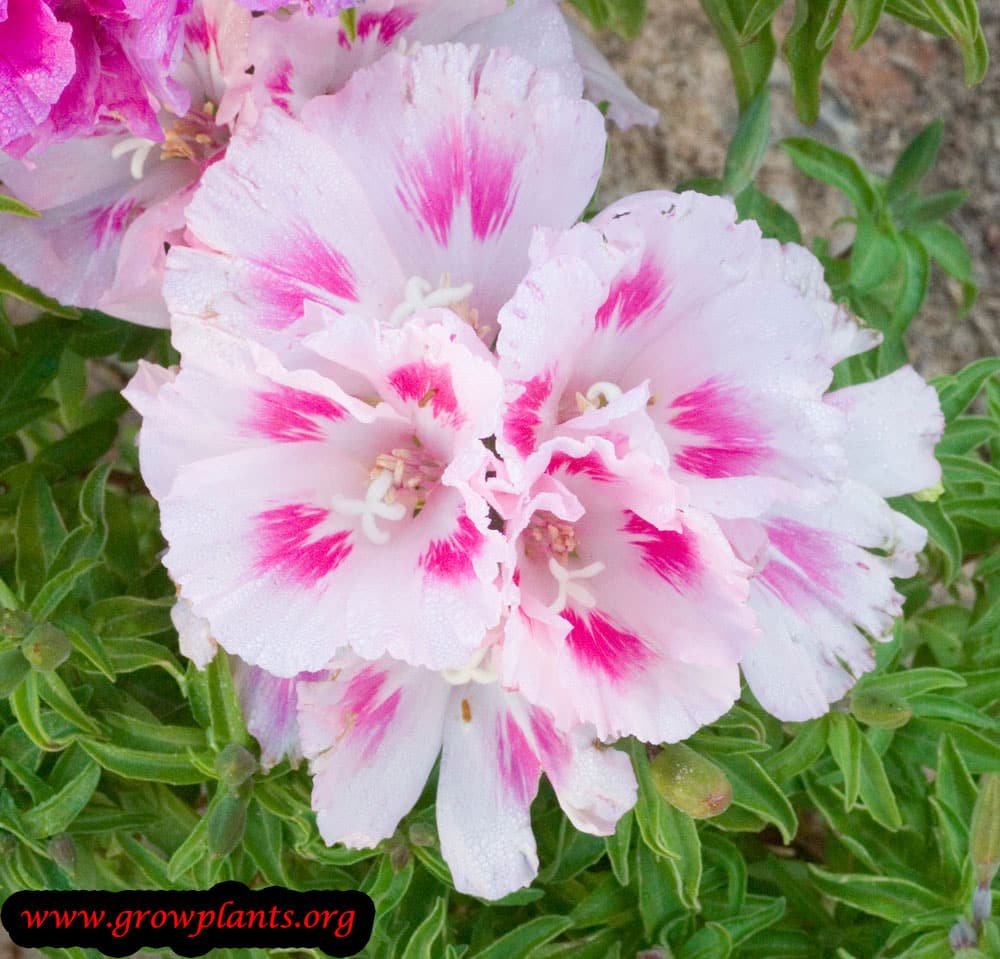
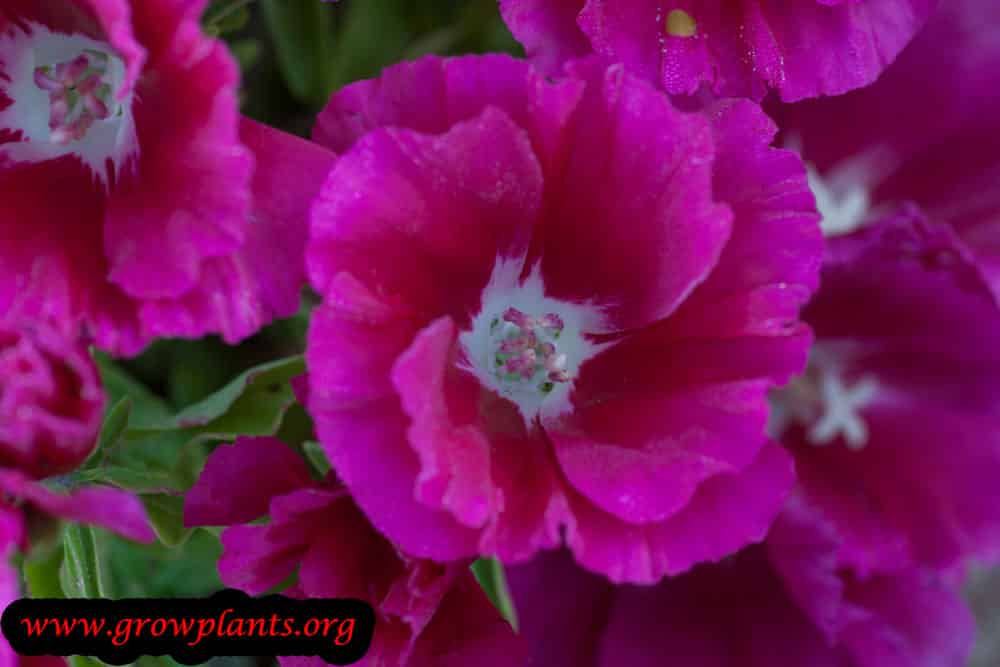
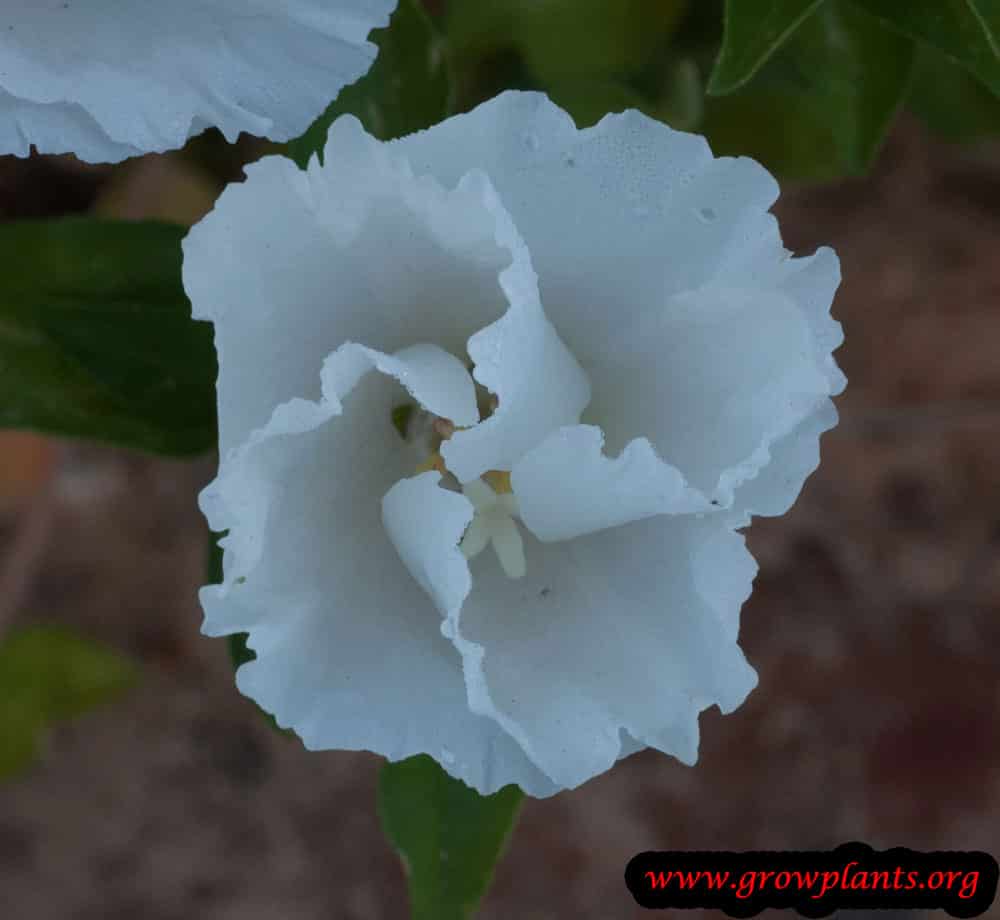
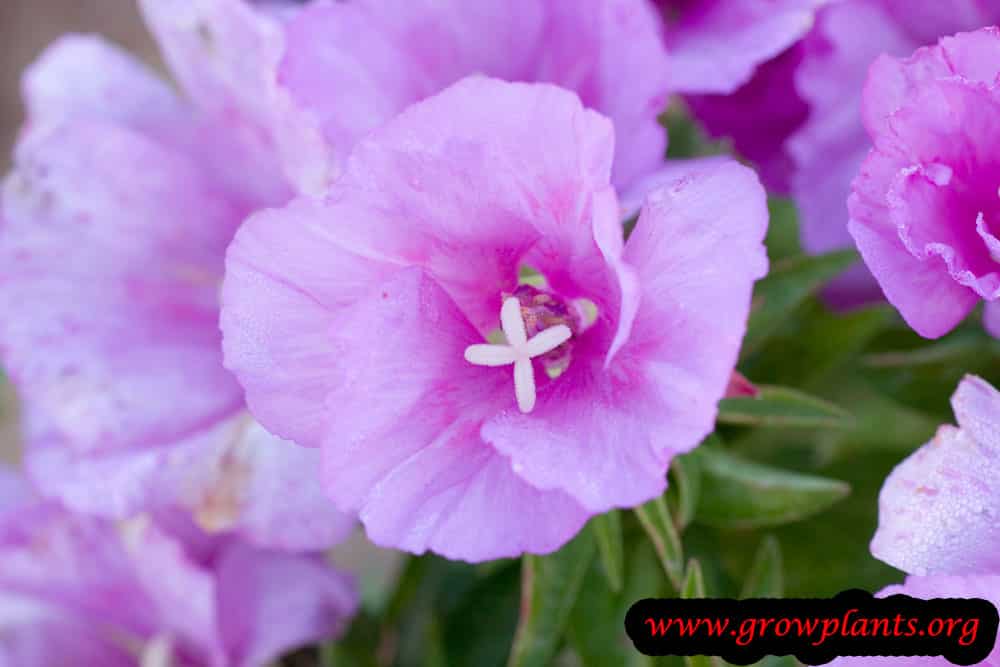
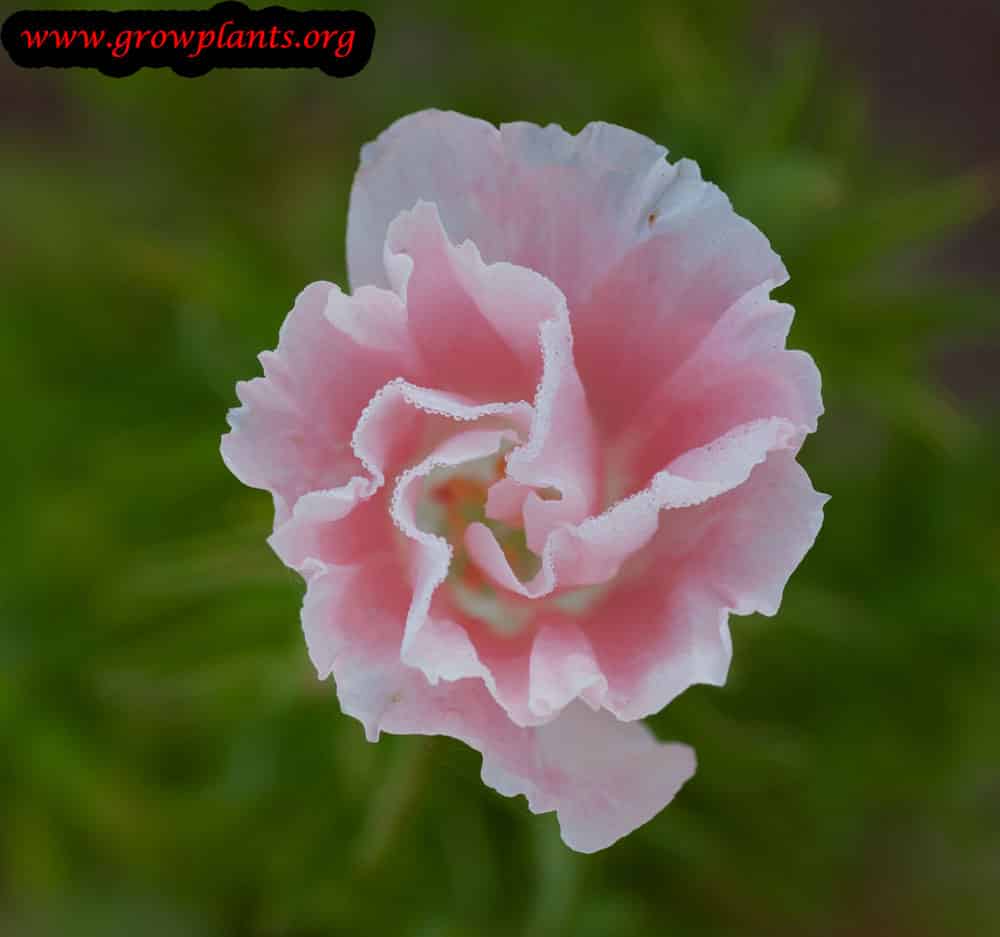
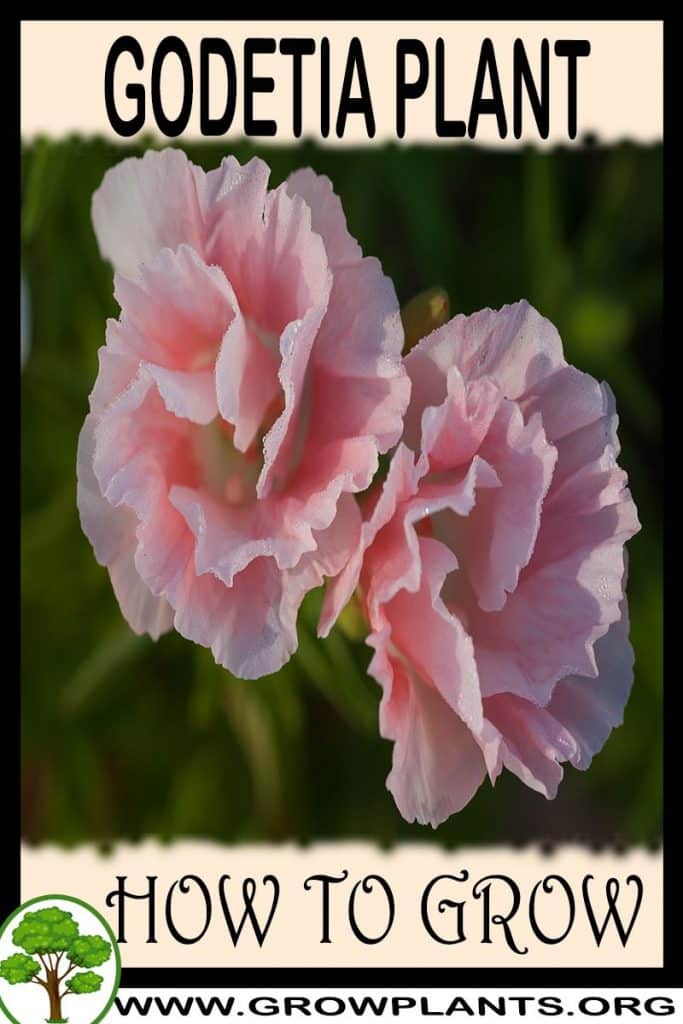
- Flower Characteristics: Showy, satiny, cup-shaped four-petalled flowers in pink, purple, white, orange or red – some bicoloured or heart-petalled – excellent for cutting (see the Bloom guide).
Primary Uses & Landscape Value
- Functional & Ornamental Roles: Ornamental bedding and border plant, container/’live bouquet’ subject, and a popular long-lasting cut flower.
Care Guide: Planting, Soil & Watering
Overview: Godetia (Clarkia amoena) is a cool-season annual that flowers best in full sun to light shade and dislikes heat and humid summers. Give it light, well-drained soil of moderate fertility and modest, even moisture – it prefers a little more water but copes with less.
Quick Care Requirements
| Requirement | Ideal Condition |
|---|---|
| Planting Season | Cool season (spring; or autumn–winter in mild-winter zones) |
| Growth Rate | Fast to moderate |
| Soil Type | Light, well-drained soil of moderate fertility |
| Water Need | Low to moderate – keep lightly moist, avoid waterlogging |
Planting & Establishment
- Best Planting Season: Sow or plant in spring in most regions (about zones 2–10a); in mild-winter zones (10b–11) plant in autumn to winter for spring bloom. It resents heat, so where summers are hot get plants established early or grow them through the cooler months.
- How to Plant:
- Hole Preparation: Space young plants, or thin seedlings, so air moves freely between them – this reduces the humidity problems it is prone to.
- Soil Amendments: A light, free-draining soil is ideal; enrich it moderately and feed just before bloom rather than overfeeding, which favours leaf over flower.
- Planting Depth: Set transplants at the same depth as their pots; sow seed shallowly, barely covered, and keep the surface moist until it germinates (best at about 15–25 °C).
- Growth Speed & Expectations: A fast to moderate grower that reaches about 30–90 cm and comes quickly into bloom – given cool conditions, expect flowers within a single season.
Soil, Watering & Drainage Care
- Soil Mix & Drainage Needs: Sharp drainage matters – heavy, wet soil rots the roots. In containers (about 5–12 L) use a well-aerated potting mix with grit or perlite, water to keep the mix just moist, and don’t leave it standing in a saucer.
- Watering Schedule & Technique:
- Young / Newly Planted: Keep the soil evenly moist while seedlings and new plants establish; don’t let them dry out, but don’t leave them soggy either.
- Established: Water moderately once established – it prefers steady moisture but survives on less; let the surface dry slightly between waterings.
- Seasonal Adjustments: Water more in warm, dry spells, and ease off in cool or wet weather to avoid rot; hot, humid conditions are its main enemy.
Climate, Light & Hardiness
Godetia is an annual ornamental grown for cut flowers across subtropical, temperate, Mediterranean, and desert climates, in full sun to half shade. It is clearly heat- and humidity-sensitive, so its usable zone range (roughly 2–11) is managed through zone-specific planting timing rather than year-round survival.
Quick Climate Specifications
| Climate Zones | Subtropics, temperate, Mediterranean, desert |
|---|---|
| USDA Hardiness Zones | Approximately 2–9 (spring planting) and 10–11 (autumn/winter planting) |
| Optimal Temp Range | Best germination around 15–25°C (60–78°F); seedlings prefer full sun without heat above about 25°C (78°F) |
| Cold Damage Begins | Around 0°C (32°F); frost damages seedlings and flowering growth |
| Frost Tolerance | Low (a frost-tender annual, not a hardy overwintering perennial) |
| Light Conditions | Full sun to half shade |
Sunlight & Light Exposure
Optimal Light Setup
Full sun to half shade both work, with the two options offering a real trade-off, detailed below.
Direct Sun Requirement
Full sun gives the heaviest bloom.
Shade & Heat Management
Half shade produces fewer flowers but helps the plant cope with heat: in hot climates it lets Godetia grow longer and survive higher temperatures than full sun exposure would allow, which is useful given its documented sensitivity to heat and high summer humidity.
Temperature Extremes & Hardiness
USDA Hardiness & Regional Limits
Godetia is grown across zones 2–11, but timing is everything: spring planting is used in zones 2–10a, while in the warm, frost-free zones 10b–11 it is instead planted in autumn to winter, since a hot summer there could otherwise kill it. Spring planting is still possible in the warm zones but risks failure if summer heat arrives.
Cold Damage & Winter Protection
As a frost-tender annual, exposure near or below freezing will damage or kill seedlings and blooming plants; planting windows are chosen specifically to dodge frost.
Frost Sensitivity
Low; the plant is not built to survive hard freezes, so cultivation relies on timing rather than cold tolerance.
Extreme Heat Tolerance
Low to moderate - Godetia is explicitly noted as sensitive to heat and high summer humidity, which is the main reason for autumn/winter planting in warm zones and for using half shade to extend bloom in hot conditions.
Wind, Humidity & Microclimate
Humidity Preferences
Prefers moderate humidity; high summer humidity is specifically flagged as a difficulty for this species.
Dry-Air Tolerance
Not well documented, though its Mediterranean- and desert-climate suitability suggests reasonable tolerance for drier air, as opposed to humid heat.
Rainfall & Seasonal Moisture
Suited to climates with a cool, moist growing season followed by a drier period, consistent with its Mediterranean and desert-climate use and its dislike of humid heat.
Microclimate Recommendations
In hot-summer regions, a partly shaded site combined with autumn/winter planting reduces heat and humidity stress; in cooler zones, an open, sunny spring bed is preferable.
Growing in Pots, Balconies & Indoors
Godetia (Clarkia amoena) is a sun-loving hardy annual grown for its papery flowers – lovely in outdoor pots and window boxes, but not a houseplant. Indoors, without strong light, it stretches and grows leggy, and the grower confirms it is not suited to life as a houseplant.
Quick Details
- Container Size: A medium pot or window box (roughly 2-5 L) with free drainage suits a few plants; being an annual it never needs potting up
- Indoor Suitability: Not a houseplant; at most a bright sill for raising seedlings
- Best Spot: Full sun, or light shade in hot climates (fewer flowers but a longer season)
- Soil & Drainage: Light, free-draining mix that is not too rich – over-feeding gives leaf at the expense of flower
- Watering in Pots: A small-to-average amount; keep just moist and never waterlogged – pots dry faster than open ground
Indoors & On the Windowsill
- Not a houseplant: The grower says it will not grow indoors as a houseplant; in a room it becomes drawn and flowers poorly.
- Windowsill: A very sunny sill is useful for starting seedlings, but for real flowering it needs to move outdoors into full light.
- Season: Being an annual there is nothing to overwinter – sow a fresh batch each growing season.
On a Balcony or Patio
- Excellent container annual: It is at its best in pots, troughs and window boxes in full sun; deadhead spent blooms to keep it flowering, and shelter taller stems from strong wind.
- Heat & water: Reflected heat from walls and railings dries pots quickly – check moisture often in warm weather, but avoid keeping the mix soggy.
Choosing the Pot, Soil & Long-Term Care
- Pot & drainage: Any pot or window box with strong drainage holes; skip a standing saucer to avoid root rot.
- Potting mix: A light, free-draining mix; keep it on the lean side, as rich soil produces foliage rather than flowers.
- Feeding: Feed sparingly – a light, balanced feed is plenty; too much nitrogen suppresses blooming.
Growing this plant in a greenhouse
A greenhouse can give godetia frost protection and cold protection.
Greenhouse at a glance
| Greenhouse suitability | Conditional - depends on your climate |
|---|---|
| Main benefits | frost protection, cold protection |
| Season extension | earlier spring & later autumn |
| Outdoor protection advisable below | about 5°C |
| Maintain greenhouse minimum | around 5°C for active growth |
| Suitable types | unheated greenhouse, polycarbonate greenhouse |
| Heating | Heating is optional - useful mainly for winter growing in cold areas. |
Related greenhouse guides
- Greenhouses: How to Choose the Right Greenhouse
- Polycarbonate Greenhouses: What to Look for Before Buying
Fertilizing & Feeding
Godetia is an annual grown for its showy flowers, often in containers as a live bouquet plant; a light feed timed ahead of bloom supports strong flowering, but this plant does not need or want rich, heavy feeding.
Quick Fertilizing Specs
| Feeding Level | light |
|---|---|
| Main Nutrient Priority | A balanced feed applied ahead of budding to support strong bloom |
| Best Feeding Period | Ahead of and during the bloom period, when this plant is often grown as a flowering container or bouquet piece |
| Organic Options | A light top dressing of aged compost, or an organic potting mix rich in organic matter for container-grown plants |
| Soil pH | Tolerates a wide range of soil as long as drainage is good |
| Reduce/Stop Feeding | Feeding naturally winds down as this annual finishes flowering and completes its life cycle, especially once heat or humidity sets in |
Feeding by Growth Stage
Early growth after sowing or transplanting
Support young plants as they establish before entering bud and bloom
| Nutrient direction | A light, balanced feed to support steady early growth |
|---|---|
| Timing | Shortly after seedlings are established, whether in the ground or in a container |
| Frequency | Light feeding is usually enough at this stage |
| Fertilizer types | A balanced, light-strength fertilizer or a light top dressing of aged compost |
| Precautions | Avoid rich, high-nitrogen feeding, which favors leafy growth over the flowers this plant is grown for |
Pre-bloom feeding and flowering
Feed ahead of budding to support the showy flower display this plant is grown for, including as a cut and container bouquet flower
| Nutrient direction | A light, balanced feed timed just before bud formation, continuing lightly through bloom |
|---|---|
| Timing | Just ahead of budding and continuing through the bloom period |
| Frequency | This plant rarely needs more than an occasional light feeding once it is budding and blooming well |
| Fertilizer types | A balanced fertilizer applied sparingly ahead of and during bloom; for container plantings, a diluted balanced feed suits the container feeding this plant often receives |
| Precautions | Do not over-fertilize, and take care with container plantings where nutrients can build up faster than in open ground; watch for heat and humidity stress, which this plant is sensitive to and which feeding will not fix |
Post-bloom decline
Let this annual complete its natural life cycle after its bloom period ends
| Nutrient direction | None – the plant is finishing its life cycle and no longer benefits from feeding |
|---|---|
| Timing | After flowering has largely finished, or once heat and humidity have stressed the plant late in the season |
| Frequency | No feeding at this stage |
| Fertilizer types | No feeding is needed as this annual completes its life cycle |
| Precautions | Do not fertilize a declining annual; withhold feeding and allow the plant to finish naturally or be cleared |
Nutrient Deficiency Signs & Corrections
Overall pale, light green leaves and fewer, smaller flowers than expected
| Possible causes | Nitrogen deficiency in very lean soil or a container that has not been fed, Root stress from poor drainage or a waterlogged container, Heat or humidity stress reducing overall vigor |
|---|---|
| Appears first on | Older, lower leaves first |
| What to check | Overall plant vigor and flower count compared with a typical season, Soil or potting mix drainage, Recent heat or humidity conditions |
| Possible correction | A light, balanced feeding ahead of and during bloom; avoid a heavy hand, since this plant naturally prefers lean conditions |
Tall, floppy, weak stems with fewer blooms than expected
| Possible causes | Excess nitrogen from overly rich soil or over-feeding, favoring foliage over flowers, Too much shade reducing stem strength and bloom, Crowding in a container or bed competing for light and causing stretching |
|---|---|
| Appears first on | New stem growth reaching for light |
| What to check | Recent feeding history and soil or potting mix richness, Amount of direct sun the planting receives, Spacing or crowding in the container or bed |
| Possible correction | Reduce feeding rather than increase it, and improve sun exposure and spacing; this plant blooms best in lean, well-drained conditions |
Pruning, Training & Seasonal Maintenance
Godetia is a soft-stemmed annual grown for its flowers, often as a cut flower or container/bouquet plant. It has no woody structure, so maintenance is limited to deadheading and light pinching rather than structural pruning. This plant’s own care notes are explicit that cutting flowers before they fade actually induces more blooms – deadheading here directly extends the flowering display rather than just tidying it.
Quick Pruning & Maintenance Specs
| Pruning Tolerance | High for deadheading/pinching; not applicable to structural cuts |
| Primary Pruning Window | Throughout the flowering season (spring–summer) |
| Typical Frequency | Ongoing while in bloom |
| Main Objective | Deadhead to induce further flowering; pinch young plants for bushier growth |
| Young Plant Priority | Pinch growing tips early for a bushier, more floriferous plant |
| Mature Plant Priority | Continuous deadheading; cutting for bouquets serves the same purpose |
| Best Tool Type | Precision snips |
Pruning by Plant Age & Size
Newly Established
Pinch the growing tip once established to encourage branching rather than a single tall stem.
Young / Formative
No structural training applies – this is a soft annual grown for its flowers, not a permanent framework plant.
Mature / Established
Deadhead as flowers fade – per this plant’s own notes, cutting spent blooms before they fully die back actively induces more flowering rather than merely tidying the plant.
Special Growth to Remove
Spent flower stems (deadheading); this plant is sensitive to heat and high summer humidity, so removing spent, stressed growth during a heat spell can help redirect the plant’s limited energy.
Container & Small-Space Pruning
This plant is explicitly grown in containers (5–12L per its own care notes); in a pot, prompt deadheading matters even more since a container has less root volume to support both seed-set and continued flowering.
Tools
Precision snips for both pinching and deadheading – stems are soft, no heavier tool is needed.
Tool Hygiene & Disease Risk
Routine. Aphids and spider mites are the recorded pests, not tool-transmitted pathogens.
Cut Placement & Technique
Deadhead just above the next leaf set or side-bud so the plant redirects energy there rather than leaving a bare stub.
Post-Pruning Care
No special aftercare beyond normal watering; this plant’s own notes recommend fertilizing before bloom, which supports the repeat flowering that deadheading is aiming to sustain.
Common Pruning Mistakes
Skipping deadheading, which lets the plant set seed and shut down flowering early, contrary to this plant’s own note that removing spent blooms actively induces more flowers; not pinching young plants, resulting in a leggy, flop-prone stem.
When NOT to Prune
No meaningful restriction during the growing season; avoid disturbing the plant heavily during a heat/humidity spike, to which it is noted as sensitive, beyond simple deadheading.
Recommended Tools (by task)
- precision_snips – the only tool needed, for pinching young growth and deadheading soft flower stems.
Propagation Guide
Godetia is grown almost exclusively from seed, sown directly in the garden or started for transplant; the site’s own data confirms seed as the recommended method, with vegetative propagation not required. Seed propagation is generally easy, though the young seedlings have sensitive roots that need careful handling at transplant time.
Quick Propagation Specs
| Best Propagation Method | Seed sowing (direct or started for transplant) |
| Alternative Methods | Stem cuttings (occasionally, to hold a specific flower color) |
| Propagation Difficulty | Easy |
| Seed True-to-Type | Usually true-to-type for the species; named cultivars such as Godetia grandiflora may vary slightly |
| Vegetative True-to-Type | Yes – cuttings reproduce the parent plant’s exact flower color |
| Best Propagation Season | Winter sowing with spring transplant after the last frost (hardiness zone 2–10a); autumn to winter sowing (zone 10b–11) |
| Seed Germination Time | 1–3 weeks |
| Germination Temperature | 15–25°C (60–78°F) |
| Seed Sowing Depth | 0.5–1 cm (0.25–0.5 in) |
Growing from Seed
Seed Handling & Viability
Store seed in a cool, dry location until sowing.
Sowing Season
In hardiness zone 2–10a, Godetia is usually sown in winter and transplanted in spring after the last frost; direct spring sowing is possible too, but a hot summer can kill the plant since it is sensitive to heat and high humidity. In zone 10b–11, sow in autumn to winter instead.
Sowing Depth & Orientation
Cover seed shallowly, about 0.5–1 cm (0.25–0.5 in). The seed does not strictly need burying, but it establishes better when kept in a cool spot.
Germination Conditions
Germination is best in full sun at 15–25°C (60–78°F); avoid letting germinating seed sit above 25°C (78°F). Keep the soil evenly moist with average watering.
Germination Time
Typically 1–3 weeks.
Seedling Care
Seedlings are sensitive to transplanting. Lift them with the full root ball once they have around 7 true leaves, and transplant with organic matter worked into the new spot to ease establishment.
Bloom & Flower Guide
Quick Details
- Bloom Season: Spring into summer
- Time to First Bloom: In its first year, roughly two to three months after sowing
- Flower Appearance: Satiny cup-shaped four-petalled flowers in pink, purple, white, orange, red or bicolours; some have heart-shaped petals
- Edibility: Grown as an ornamental and cut flower
Detailed Blooming Overview
Godetia, a close cousin of clarkia, is grown for its showy, silky cup-shaped flowers that open in flushes from spring into summer. It performs well in containers as a living bouquet and lasts well when cut.
Flower Characteristics
- Four-petalled flowers in pink, purple, white, orange, red or more than one colour, some cultivars with heart-shaped petals.
- Petals have a satiny, crepe-like sheen.
Bloom Care & Thinning
- Prolonging the display: deadhead spent blooms to keep the flush going.
- Position: full sun and a lean, well-drained soil suit it best; over-rich soil gives leaf at the expense of flower.
Pests, Diseases & Troubleshooting
Overview: Godetia (Clarkia amoena) is a fast, cool-season annual with few serious enemies; its main pests are sap-suckers such as aphids and, in hot dry sites, spider mites, while its diseases are the classic annual-bedding fungi – damping-off of seedlings, downy mildew, rust and grey mould (botrytis) in cool damp conditions. Most problems are avoided by growing it lean, sunny and airy with morning watering, so cultural care matters far more than sprays.
Quick Troubleshooting Overview
| Issue / Pest | Main Symptom | Primary Solution |
|---|---|---|
| Aphids | Curled shoot tips, sticky honeydew | Water blast, insecticidal soap; ladybirds |
| Spider mites | Fine stippling & webbing in hot dry spells | Raise humidity, hose foliage; miticidal soap |
| Damping-off | Seedlings collapse at soil line | Sterile mix, sow thinly, don’t overwater |
| Downy mildew | Yellow blotches, grey-purple mould underside | Airflow, avoid wet foliage; remove debris |
| Rust | Orange pustules on leaf undersides | Remove infected leaves; avoid overhead water |
| Botrytis (grey mould) | Fuzzy grey rot on flowers/stems in damp | Thin plants, deadhead, improve airflow |
Common Pests & Management
- Aphids (Aphis spp., Myzus persicae):
- Symptoms: Clusters of small green, pink or black soft-bodied insects on tender shoot tips, flower buds and leaf undersides, causing curled, distorted growth, sticky honeydew and, at worst, virus spread. Godetia’s soft annual growth is very attractive to them.
- Prevention & Control: Tolerate low numbers and let ladybirds, hoverflies and lacewings do the work; blast colonies off with a jet of water and pinch out badly infested tips. Avoid excess nitrogen that fuels soft growth. If needed, insecticidal soap or a light neem spray on the undersides controls them.
- Spider mites (Tetranychus urticae):
- Symptoms: Fine pale stippling and a dull, bronzed cast to leaves, with delicate webbing on undersides in hot, dry conditions; leaves yellow and dry from the bottom up. Godetia grown in hot, sheltered or dry sites is most affected.
- Prevention & Control: Keep plants well watered and mulched and raise humidity by hosing foliage in the morning – mites hate moist conditions. Remove badly affected leaves. Insecticidal soap or a sulphur/oil miticide gives control; treat early before webbing builds.
- Whitefly & leafhoppers (Trialeurodes vaporariorum, Cicadellidae):
- Symptoms: Tiny white flies rising in clouds when disturbed, or small wedge-shaped hoppers that flick away; both suck sap, cause light stippling and honeydew, and hoppers can transmit aster-yellows type problems in some regions. Usually a minor issue outdoors.
- Prevention & Control: Yellow sticky traps monitor and reduce adults; encourage general predators. Keep plants unstressed and remove weeds that harbour them. Insecticidal soap on the undersides is enough for the light infestations Godetia normally gets.
- Slugs & snails (Deroceras reticulatum, Cornu aspersum):
- Symptoms: Young seedlings and soft new growth are grazed overnight, leaving ragged holes and slime trails; whole seedlings can vanish in damp, sheltered plantings.
- Prevention & Control: Clear damp hiding places, water in the morning so the surface dries by night, and protect seedlings with barriers (grit, copper rings) or traps. Encourage ground beetles and birds; use iron-phosphate slug pellets sparingly if pressure is high.
Diseases & Fungal Issues
- Damping-off (Pythium spp., Rhizoctonia solani):
- Symptoms: Seeds fail to emerge, or seedlings suddenly topple with a water-soaked, pinched, brown stem at soil level. Worst in cold, wet, overcrowded, poorly-drained seedbeds and over-rich sowing mixes.
- Treatment & Management: Sow thinly in a sterile, free-draining mix, use clean containers and water, and avoid overwatering and low light. Provide gentle airflow and don’t sow too early into cold wet soil. Remove collapsed seedlings promptly; a light biological or copper drench can protect a valuable sowing.
- Downy mildew (Peronospora spp.):
- Symptoms: Pale yellow to brown angular blotches on the upper leaf surface with a matching grey-to-purplish downy mould on the underside; leaves yellow and drop in cool, damp, humid weather.
- Treatment & Management: Space plants for good airflow, water at the base in the morning to keep foliage dry, and remove and destroy infected leaves and end-of-season debris. Rotate planting sites. If persistent, a copper or suitable protectant fungicide helps during damp spells.
- Rust (Pucciniastrum spp.):
- Symptoms: Small raised orange-to-brown powdery pustules, mainly on the undersides of leaves, with yellow spots above; heavy infection yellows and kills foliage and weakens flowering.
- Treatment & Management: Remove and destroy infected leaves at first sign, avoid overhead watering and crowding, and clear all debris at season’s end (rust overwinters on it). Grow in an open, sunny, airy spot. Sulphur or a garden fungicide protects new growth where rust is a recurring problem.
- Botrytis / grey mould (Botrytis cinerea):
- Symptoms: Fuzzy grey-brown mould on fading flowers, buds and soft stems, with water-soaked rot spreading into healthy tissue in cool, damp, still conditions or dense plantings.
- Treatment & Management: Deadhead spent blooms, thin crowded plants and improve airflow; avoid wetting the flowers and remove infected material promptly. Don’t over-feed with nitrogen. Good hygiene usually controls it; a protectant fungicide is a last resort in prolonged damp weather.
- Powdery mildew (Erysiphe / Podosphaera spp.):
- Symptoms: A white powdery coating on leaves and stems, usually later in the season or under crowded, dry-root/humid-air conditions, causing yellowing and distortion.
- Treatment & Management: Space for airflow and full sun, water the roots (not the leaves), and avoid drought stress. Remove affected leaves. Potassium-bicarbonate, sulphur or a light horticultural-oil spray controls it if it takes hold.
Growing Difficulties & Abiotic Problems
- Heat & short life (cool-season annual):
- Cause & Symptoms: Godetia is a cool-season annual that flowers best in mild conditions; in hot, humid summers it stops blooming, browns and dies back quickly, and flowering is naturally brief.
- Correction Strategy: Sow so plants flower during cool weather, give morning sun with a little afternoon shade in hot areas, mulch to keep roots cool, and make successional sowings to extend the display. Accept that it is a short-lived annual and pull it once spent.
- Leggy, floppy growth & poor bloom:
- Cause & Symptoms: In rich soil or with too much nitrogen fertiliser, Godetia grows tall, soft and leafy with few flowers and flops over; too much shade has the same effect.
- Correction Strategy: Grow in full sun in lean-to-moderate, free-draining soil and avoid high-nitrogen feeds – a low, phosphorus-leaning feed encourages flowers. Provide light support or grow in blocks so plants hold each other up, and don’t over-water.
- Root rot from wet soil:
- Cause & Symptoms: In heavy, waterlogged soil the roots rot, giving sudden wilting, yellowing and collapse that can be mistaken for disease; container plants left standing in water are especially at risk.
- Correction Strategy: Plant in free-draining soil or raised beds and water only when the surface begins to dry. Improve heavy soil with grit/compost, and never let pots sit in a full saucer.
What Helps – Products & Tools
Godetia is an easy annual that rarely needs much intervention. Keep on hand insecticidal soap and neem oil for aphids, mites and whitefly; sulphur or potassium-bicarbonate fungicide for rust and powdery mildew; copper fungicide for downy mildew in damp spells; iron-phosphate slug pellets and barriers for slugs and snails; and clean, free-draining seed-starting mix to prevent damping-off. Cultural care – sun, airflow, lean soil and morning watering – does most of the work.